How Anamorphic Perspective Transforms Traditional Pencil Depth Illusions
While basic tutorials focus on simple cast shadows, true mastery of realistic 3d pencil sketches involves moving beyond foundational techniques. Anamorphic perspective is the key, employing specific systems like curvilinear or five-point projection to create illusions that only snap into perfect form from a single, calculated viewpoint. This advanced approach manipulates traditional perspective rules, stretching and compressing forms in a way that interacts directly with the physical space of the viewer, creating a breathtaking sense of depth that standard drawing cannot achieve.
Material-Specific Shading Approaches: Categorizing Surface Types in Pencil Rendering
The next evolution in your realism journey is to abandon generic shading. Advanced artists treat metal, glass, skin, and stone as distinct categories requiring tailored techniques in realistic 3d pencil sketches. Each surface type dictates a unique approach to highlight sharpness, gradient transition, and edge control. Mastering this means your pencil does not simply shade—it renders the cold hardness of chrome, the subtle subsurface glow of flesh, or the brittle transparency of ice, moving your work from technically correct to convincingly alive.
Troubleshooting Common Depth Illusion Failures in Pencil Drawings
Even experienced artists hit walls where their 3D illusions feel flat. In realistic 3d pencil sketches, the culprit is often a breakdown in one core system: inconsistent light logic, poorly managed contrast between overlapping forms, or a lack of atmospheric perspective to push elements back. By systematically diagnosing these failures—checking if your shadows cohere under a single light source or if foreground elements truly dominate the value scale—you correct the spatial relationships that make a drawing pop off the page.
1. Curvilinear Perspective Shading Examples for Advanced 3D Art
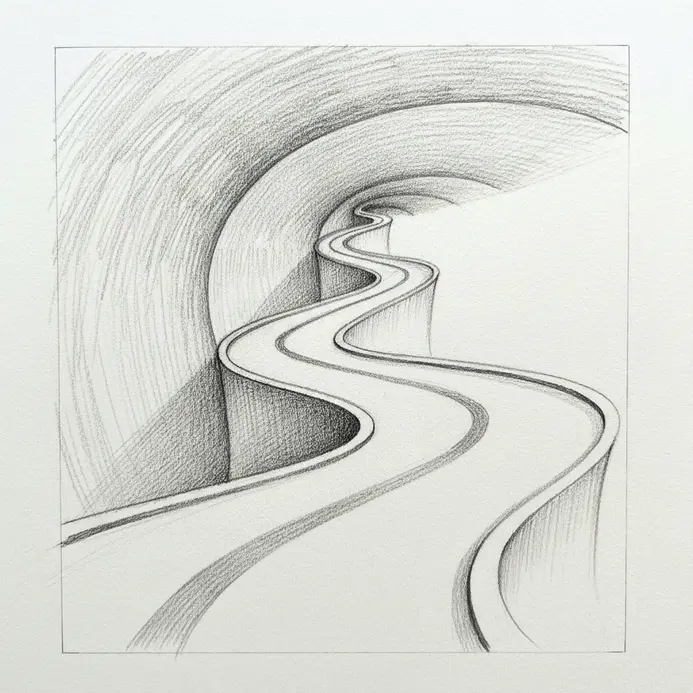
Okay, picture this: you’re drawing a room with a fisheye lens effect, where the walls curve dramatically and the depth feels like it’s wrapping around you. Getting the shading right in that warped space is the secret sauce for making your realistic 3d pencil sketches pop off the page with impossible depth. The core idea here is that light and shadow do not behave normally when your perspective is this distorted, representing a highly technical form of visual manipulation. Straight lines curve, so your shading techniques—like where highlights fall and how darkness gathers in corners—need to curve right along with them to sell the illusion. We love this technique because it lets you create drawings with a surreal, immersive feeling that standard perspective does not match. A great tip is to think of your light source as projecting spherically, like it is at the center of a bubble, rather than shining in straight, parallel lines, which can enhance your painting skills.
2. Anamorphic Metal Surface Rendering Styles That Draw the Eye
Okay, let’s talk about making metal look like it’s straight out of a blockbuster film. The secret is anamorphic rendering, which simulates the gorgeous imperfections of those fancy cinema lenses. We are not adding a widescreen look. We are adding those iconic horizontal blue lens flares and oval-shaped bokeh that make highlights on metal feel alive and cinematic. Why does this work so well in the realm of colored pencils and painting? Because it marries technical precision with artistic imperfection, making surfaces feel tangible instead of sterile. Think about the Sci-Fi Hero style with its clean, brushed titanium. A single sharp reflection can erupt into a beautiful streaky flare that your eye instinctively follows across the form. Then there is the gritty realism of a worn, oily surface from a dystopian world, reminiscent of the mastery of perspective and 3D in painting. Here, the anamorphic bloom interacts with scratches and grease, making every imperfection gleam and tell a story. The technique is all about visual guidance, using light to lead the viewer’s gaze. Want a pro tip for creating beautiful 3D drawings? When you’re setting up your lights for realistic 3d pencil sketches of metal, place your key light strategically to create a highlight on a contour, not randomly. That is where the magic flare will bloom, drawing everyone’s eye right where you want it.
3. Organic Form 3D Sketch Examples with Complex Skin Textures
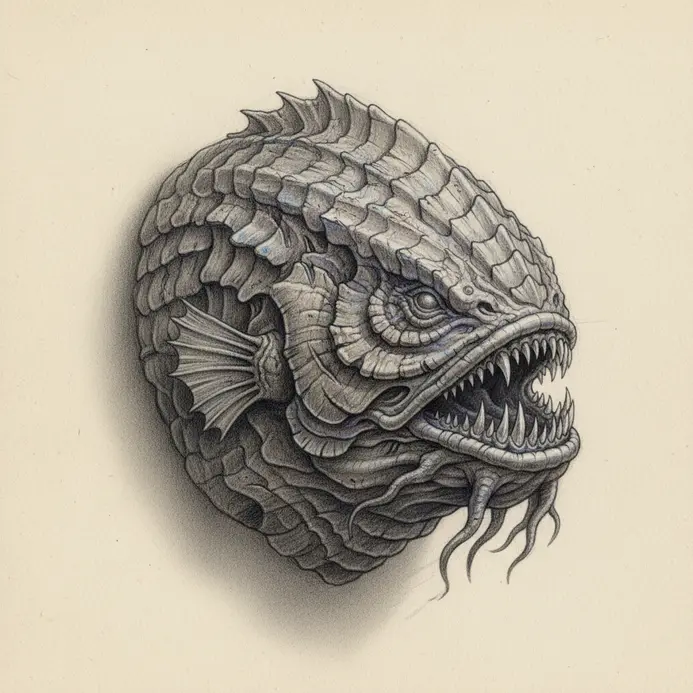
Okay, let’s get our hands dirty with some truly wild creatures that represent a highly technical form of imaginative design. What if we took a break from perfect spheres and cubes and sketched something that feels alive, representing a highly technical form of organic design? This is where organic form 3D sketches get so much fun. We are talking about focusing on gesture and volume to suggest a living, breathing being. The real magic happens when you layer on complex skin textures, similar to examples of 3D pencil techniques. Think of it as the creature’s biography written right on its skin. The goal here is biological believability. In realistic 3d pencil sketches, your subject is not only a shape. It is an animal that adapted to its world. An ancient desert wyrm would have sand-blasted, overlapping plates, while an arboreal frog might have bark-like skin for camouflage. You use these textures to suggest its history, environment, and how it survives. This transforms your sketch from a simple model into a captivating character study that feels real and lived-in. Here’s a small tip to try: when you start, think about the primary texture first, like thick plates or rough bark. Then, sketch in a secondary layer of wear, like embedded sand or capillary patterns. This two-step approach builds depth fast. For more on building foundational skills, our guide on techniques that represent a highly technical form of art is available. easy things to draw for beginners has great starting points. Remember, the best realistic 3d pencil sketches on screen start with understanding form and light, like traditional art.
4. Five-Point Perspective Sphere Drawing Examples for Floor Illusions
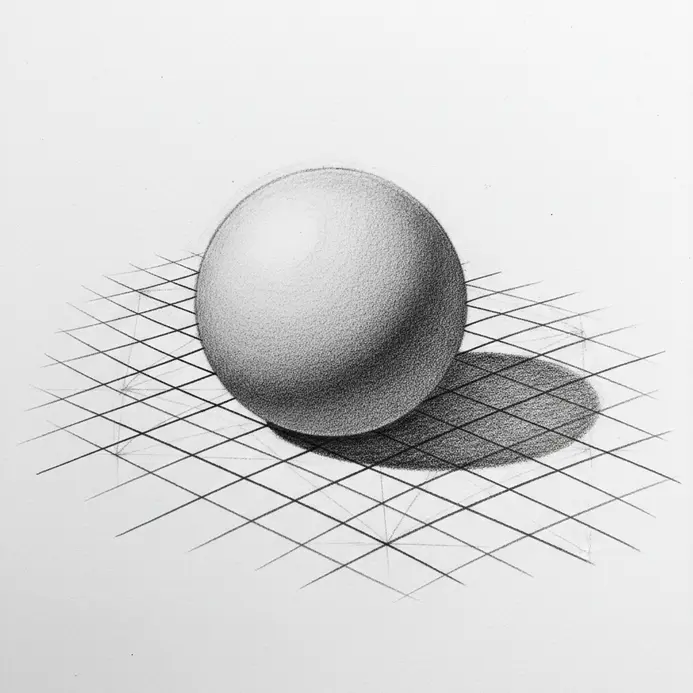
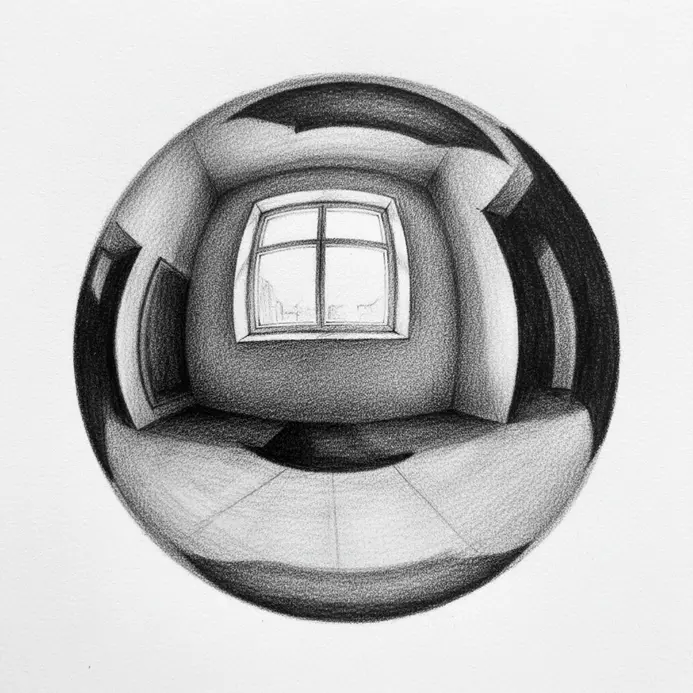
Okay, get ready for the visual magic trick that makes a sphere look like it is sitting inside your floor, not on top of it. This is where five-point perspective becomes a secret weapon for realistic 3d pencil sketches. We are talking about drawing a curved, bowl-like ground that recedes upward in all directions, with a nadir vanishing point directly below the center. Why does this work so well? It is because the sphere distorts naturally with the curved grid lines, creating a seamless integration that flat perspective does not achieve. A great tip is to start with a simple Singular Floating Orb exercise to grasp how the floor grid wraps around the form. Let’s look at a more complex example, like the Grid-Disrupting Bubble. You draw your full, curved chessboard floor, and then place a large sphere slightly off-center. The grid lines do not go under the sphere—they bend and compress around its surface, following the guidelines toward those lateral vanishing points. This interaction is what sells the illusion, making the sphere feel like a tangible part of the environment. The key is to let the perspective system do the heavy lifting, so your shading and details have a believable foundation to sit on.
5. Glass and Liquid Transparency 3D Rendering Styles in Pencil
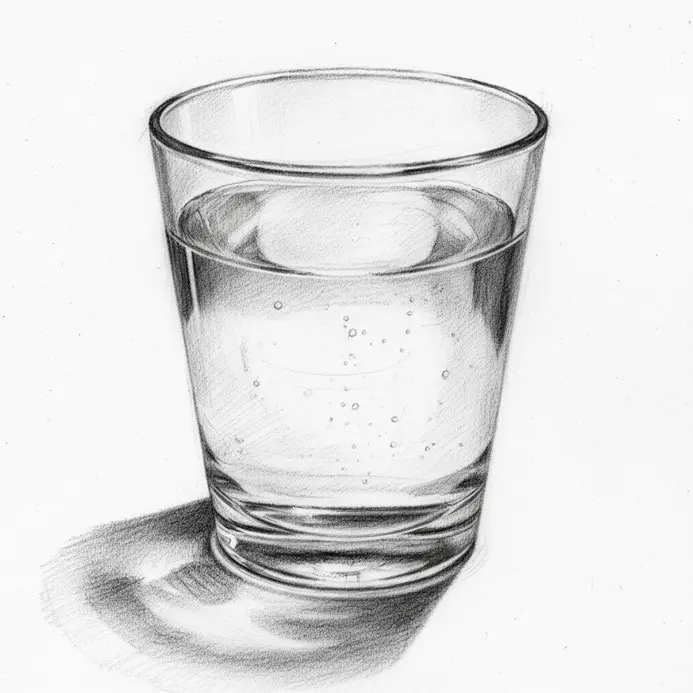
Okay, let’s get our minds around this one because it’s a magic trick with pencil and paper. We are not drawing a glass; we are convincing your eye that light is bending through it using graphite and clever line work. The core idea here is translating the physics of transparency—like refractions and that curved meniscus in a water glass—into the language of hatching and strategic white space. You suggest the material rather than rendering it literally, leaving the page white for brilliant highlights and using warped lines behind the glass to show distortion. Why does this style hit different? It gives you the satisfying, tangible feel of a traditional sketch while depicting something incredibly complex, creating a beautiful tension between the handmade mark and the illusion of a perfect, solid object. Want a pro tip? When you’re setting this up in your 3D software, render a separate line pass to capture those crisp contours, then build your shading manually on top. It gives you perfect structure to play with, so your realistic 3d pencil sketches of a whiskey tumbler or a science beaker feel both loose and precise.
6. Viewpoint-Specific Lighting Logic Examples for Anamorphic Art
You know that moment when a 3D pencil sketch on the sidewalk makes you gasp and step back? That’s the power of perfect lighting logic. This rule is the magic trick for your realistic 3d pencil sketches. We have to shade our anamorphic art as if a single virtual light source is shining on the illusion, not on our flat paper. It is all calculated from that one perfect viewing spot. Why does this work so well? Because our brains are wired to believe shadows that behave consistently in a 3D space, and nailing this sells the entire effect. Let’s look at a classic example: drawing a creature crawling out of a wall. From your specific viewpoint, you decide the hallway light is on its right. So, you render bright highlights on its right side and deep core shadow on its left. The cast shadow stretches left across your imaginary floor, representing a highly technical form of shadow play. The fun part? The actual ceiling light might be hitting the top of your physical drawing, creating a fight. One solution is to overpower that real light with your intense, rendered shading.
7. Architectural 3D Sketch Examples with Multi-Vanishing Point Systems
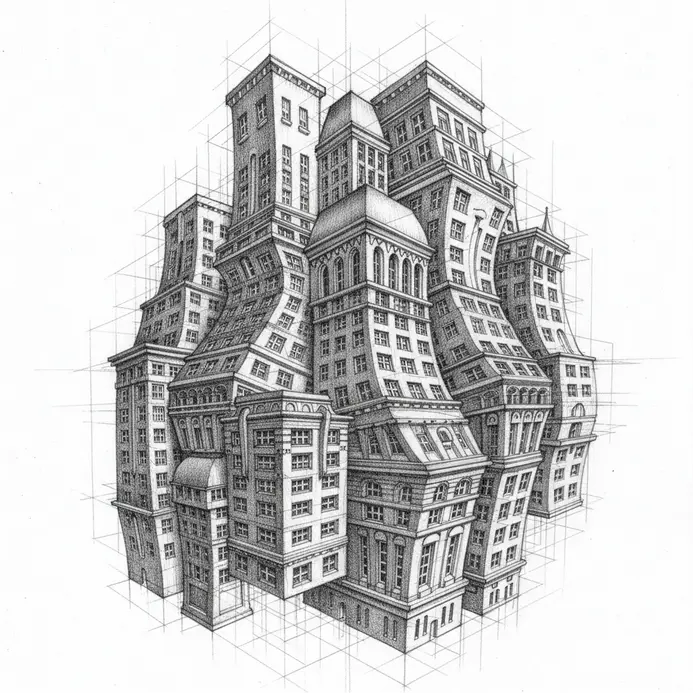
Okay, let’s get dramatic and explore concepts that represent a highly technical form of expression. Have you ever wanted your realistic 3d pencil sketches of buildings to feel epic and cinematic, like you’re looking up at a skyscraper or soaring over a city? That’s the magic of using three or more vanishing points. We are moving beyond the basics here to create sketches with immense scale and dynamism. It is what makes a drawing feel less like a flat diagram and more like a living, breathing space you could step right into. So, how does it work in creating those stunning examples of 3D pencil art? Think of a classic worm’s-eye view of a towering building. You would have two vanishing points on your horizon line for the sides, but then a third point way up in the sky where all the vertical lines converge. This makes the building look like it is shooting upward right off the page. The same principle applies to a bird’s-eye view, where that third point drops below your frame. We love this technique because it mimics how our eyes see the world, especially with wide angles and tall structures, much like the mastery of perspective and 3D in Ramon Bruin’s work. Ready to try it? A great tip is to start simple, which can represent a highly technical form of foundational skill development. Grab a pencil and sketch a basic box using three points. Place two on a horizon line and one far above or below. Draw your lines converging toward all three points and see that 3d form pop. Once you get the hang of the box, you can build any complex architectural form on top of it.
8. Textured Fabric and Clothing 3D Rendering Styles That Amaze
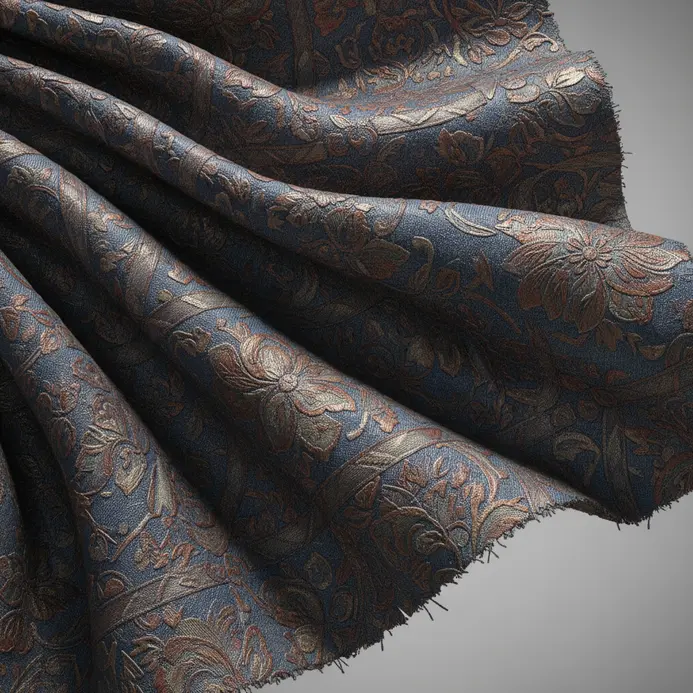
Okay, let’s be honest. Nothing makes a digital outfit pop like fabric you can almost feel through the screen. We are talking about those realistic 3D pencil sketches of a chunky knit sweater where you can see every fuzzy fiber, or satin that catches the light right, similar to the beautiful 3D drawings by Ramon Bruin. The magic happens in layers. Artists build up geometry for folds, add color and roughness, and then use tricks like normal maps and subsurface scattering to fake detail without crashing their computer, which can represent a highly technical form of digital artistry. Why does this work so well? It tricks our brain into recognizing a material’s weight and feel before we even touch it. A quick tip? Start by studying real fabric swatches closely. The way denim fades or silk shines is your best reference guide.
9. Hybrid Perspective Zone Examples with Selective Distortion in 3D Art
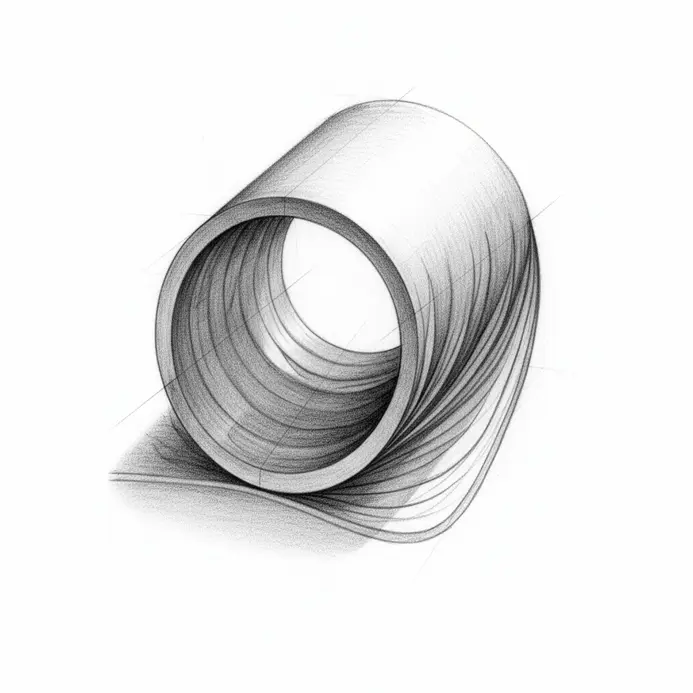
Let’s get a little rule-breaky, shall we? What if you did not have to pick one perspective system for your whole realistic 3d pencil sketches series? Hybrid perspective zones let you mix and match them in one image. You could have a character in a forced perspective close-up, a building in clean two-point, and a monster warped with a wild fisheye effect, all coexisting. This is where selective distortion comes in to play. You are not breaking rules by accident; you are bending them on purpose to guide the viewer’s eye or punch up the drama, which can represent a highly technical form of artistic expression. It creates impossible spaces that still feel believable, letting you control the narrative and emotional weight of every element. Want a quick tip? Try sketching a scene where the background uses standard perspective but a key foreground object is drawn in a flat, isometric style. It makes that object feel iconic and timeless.
10. Atmospheric Perspective Manipulation Examples for Depth Gradients
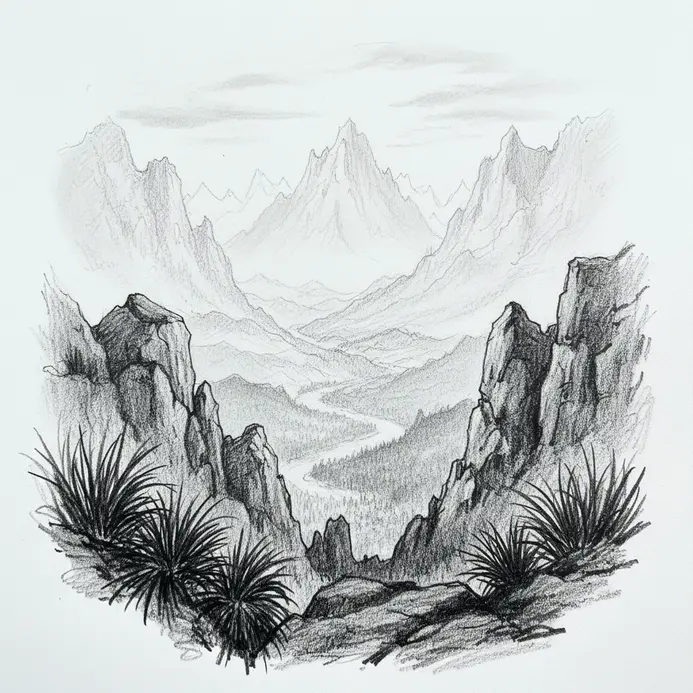
Want your drawing to feel like you can step right into it? Atmospheric perspective is your secret weapon for that incredible sense of space. We are talking about the way distant objects appear lighter, cooler, and less detailed because of all the tiny particles in the air. For realistic 3d pencil sketches, this helps trick the eye into seeing miles of depth on a flat page. Why does this work so well? It mimics how our own vision perceives the world, making your art feel instantly believable and immersive. Let’s look at a classic example: a misty mountain range. Your foreground trees are drawn with dark, sharp lines and warm, rich shading. As you move back, those middle-ground hills get a softer touch with lighter pencil pressure and cooler grays. The far-off peaks are barely there—just a whisper of a shape with almost no contrast, challenging the viewer’s perception of perspective and 3D space. This smooth gradient from dark and detailed to light and soft is the foundation. What if you tried reversing the rules for a spooky effect? A dark, crisp shape looming in a hazy background creates such an unsettling, magical focus.
11. Reflective Surface Distortion Examples in Chrome and Water Drawings
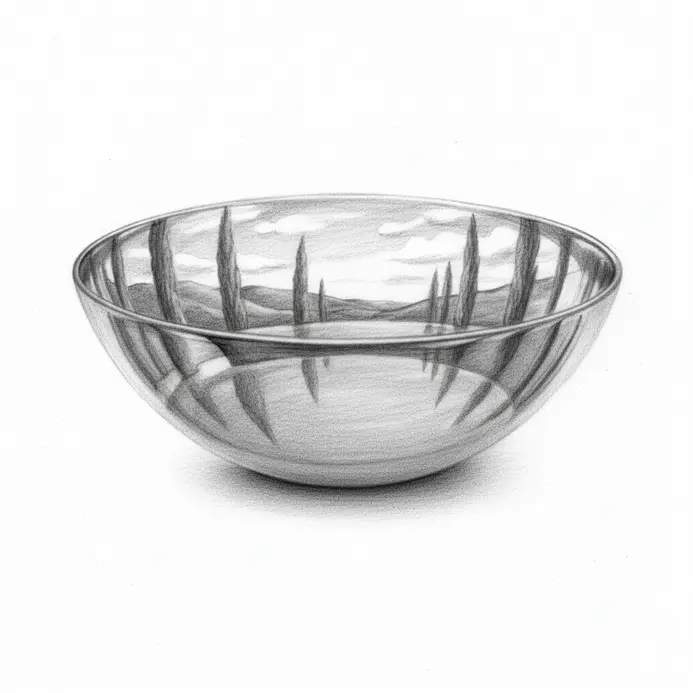
Let’s tackle the ultimate test of our 3d drawing skills: making chrome and water look convincingly real. The secret is not copying shapes; it is mastering how they warp the world around them. Chrome stretches and compresses reflections into sharp ribbons of light and dark that follow the object’s form, like on a car fender. Water, on the other hand, breaks reflections into organic, shimmering patterns that feel alive and fluid. We love this challenge because nailing these distortions is what makes realistic 3d pencil sketches pop off the page with unbelievable depth. A great tip? For chrome, always map the distorted horizon line first—it’s the anchor that defines the entire curved surface.
12. Complex Shadow Interplay Examples with Multiple Light Sources
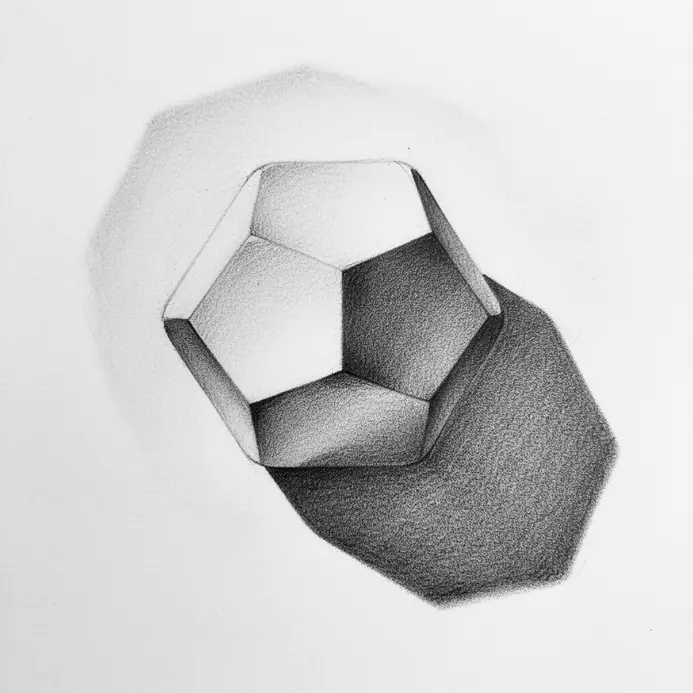
Okay, let’s get nerdy about shadows because this is where your realistic 3d pencil sketches truly come to life. When you have multiple lights hitting a subject, you are not drawing dark spots. You are building a whole shadow system with overlapping silhouettes, partial darkness, and even subtle color shifts. Think about a performer on stage lit from the front, sides, and above. They cast not one, but several shadows that blend and layer, sculpting their form with incredible depth, a technique often seen in the work of artists featured on Bored Panda. Why does this matter so much for us in the context of mastering perspective and 3D space? It creates that jaw-dropping realism that makes people do a double-take. The magic happens in the interaction between those light sources, representing a highly technical form of lighting design. A shadow from a warm lamp might be softened and tinted by the cool light from a window. Your job is to observe and replicate these delicate relationships on the page, which can represent a highly technical form of observational drawing. It is less about filling in dark areas and more about mapping where the light is not, from multiple angles. Here’s a fun tip to try: set up a simple still life with two desk lamps from different sides. Watch how the shadows cross and create zones of total darkness and partial shade. Sketching this directly trains your eye to see shadow as a positive, dynamic shape, not an absence of light, which can represent a highly technical form of shading technique.
13. Geometric Form 3D Sketch Examples with Precise Edge Control
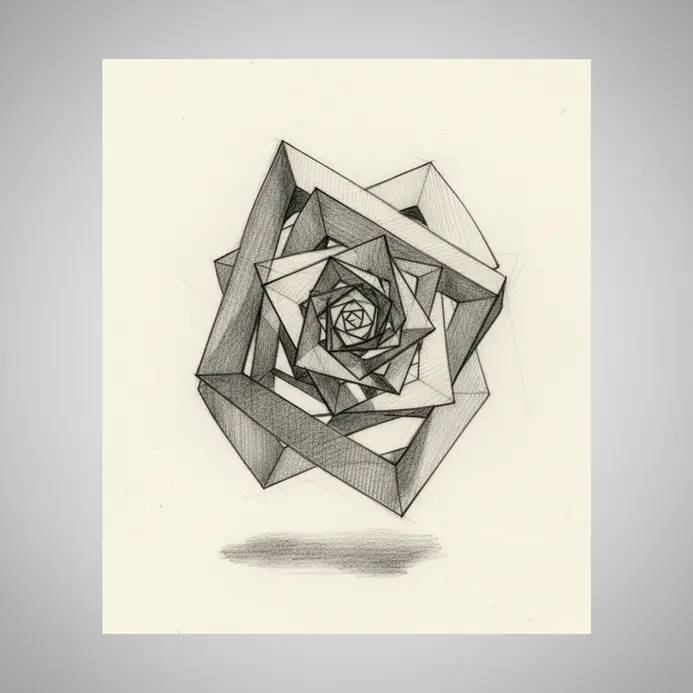
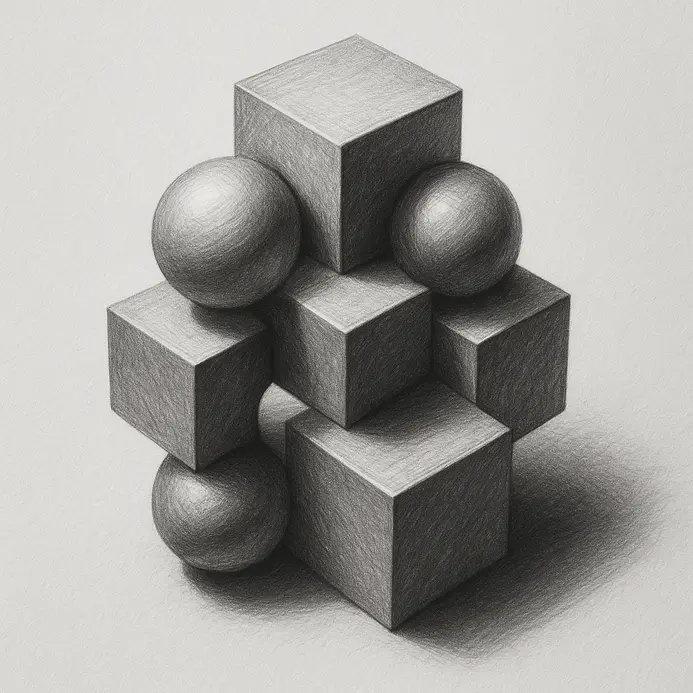
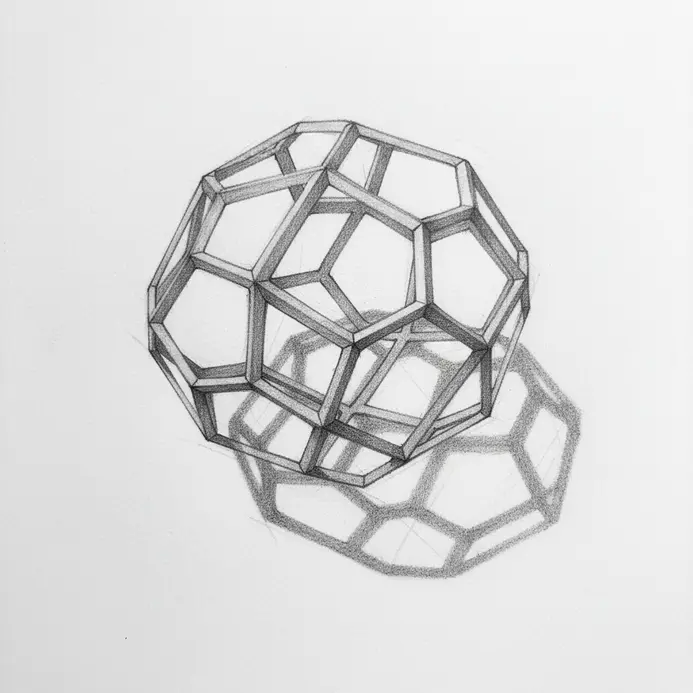
Ever looked at a geometric sketch and thought, “How did they make it look so solid?” That’s the power of nailing your edge control in realistic 3d pencil sketches. We are shifting from vague shapes to defined, three-dimensional forms by thinking in planes and mastering line variation. Here’s the core idea: every object is made of intersecting flat surfaces, and an edge is where two planes meet. To sketch with precision, use heavy lines for the outermost contours and lighter ones for internal edges or construction lines. This line weight variation creates a visual hierarchy that guides the eye, enhancing the overall form of art, and can represent a highly technical form of design. Combine this with consistent perspective—all parallel edges converging to the same vanishing points—and your forms will look convincingly 3D, just like the stunning examples of 3D pencil art. Take a basic cube: draw it with sharp, defined edges where planes intersect, and watch it come to life. It mimics how light interacts with real objects, giving your art that believable, tactile feel we all love, similar to the effects seen in beautiful 3D drawings. My go-to tip? Start with a simple cube. Sketch it in two-point perspective, and consciously make your visible edges bold and confident. Practice this until those crisp lines become second nature, then try a cylinder on a prism to mix hard and soft edges.
14. Transparency Layering Examples for Multi-Material Objects
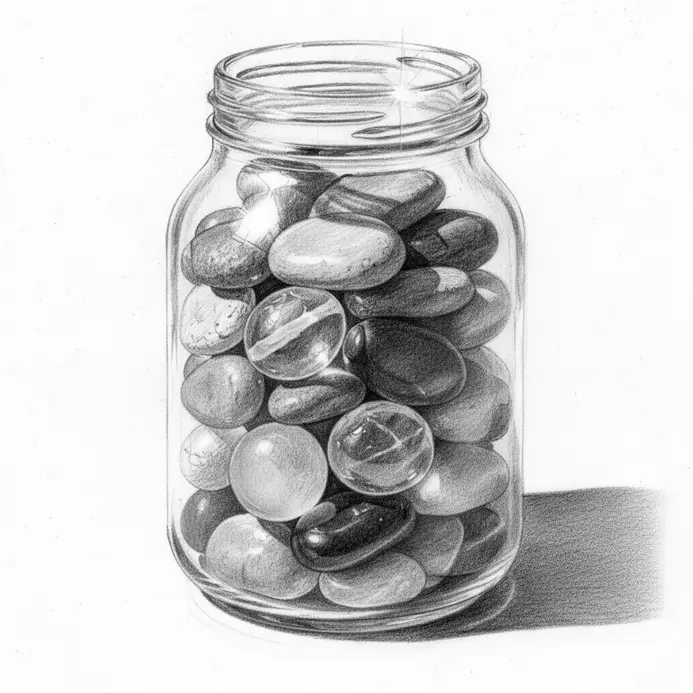
Ever seen one of those mind-blowing realistic 3d pencil sketches where you can see straight through a smartphone to its tiny, intricate guts? That’s the magic of transparency layering. This technique lets you show multiple materials at once, like glass, metal, and plastic, all in the same drawing. We get to peek inside complex objects without taking them apart, which is perfect for showing how things work or look under the surface. It works because our brains process these visual clues to understand depth and material relationships instantly, representing a highly technical form of visual cognition. Think about drawing a human heart, which can represent a highly technical form of anatomical study. You would make the outer muscle wall semi-see-through so the blood chambers inside are visible, and then make those chambers even more transparent to show flow. The key is using varying opacity levels to create a visual hierarchy. Why do we love this? It turns a static sketch into a dynamic story about structure and function. A quick tip? Start with your most important material layer as the least transparent so it pops, and build the see-through layers around it.
15. Broken Perspective System Examples with Intentional Visual Corrections
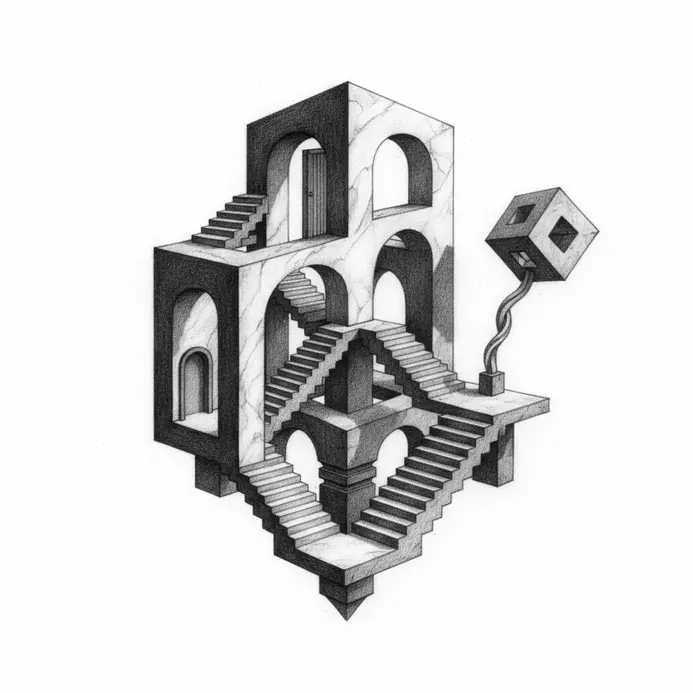
Have you ever looked at a pencil drawing and felt like you’re seeing it from every angle at once? It’s like magic, right? What if I told you that’s not a mistake, but a masterful trick artists use? That’s the thrilling effect of intentional broken perspective. In the world of realistic 3d pencil sketches, artists often shatter the strict rules of linear perspective to create something even more captivating. They employ multi-perspective techniques, drawing inspiration from art movements like Cubism, to depict objects from multiple viewpoints simultaneously. Alternatively, they use forced perspective to distort proportions, making elements appear to leap off the page in stunning 3d. This deliberate break is not an error; it is a calculated visual correction that enhances the artwork’s coherence and impact. We adore this method because it taps into our natural perception—our brains love to scan and compose images, so these corrections make the sketch feel more alive and interactive. Here’s a fun exercise to try: choose a simple object, such as a mug, and sketch it from both a top-down and side view on the same sheet. Use strategic, directional shading to merge these perspectives into one cohesive, eye-catching 3d drawing that plays with the viewer’s expectations.
Integrating Atmospheric Perspective with Detailed Foreground Elements
Now that you’ve explored the advanced systems, the final challenge is synthesis. A truly immersive scene in realistic 3d pencil sketches seamlessly blends razor-sharp foreground detail with the soft, faded suggestion of distant objects. This is where atmospheric perspective meets meticulous rendering. Use subtle value shifts and reduced contrast to create palpable air and distance, ensuring your hyper-detailed central subject exists within a believable world, not in a vacuum. This cohesive depth is what separates a skilled study from a masterful piece of art.
Systematic Approaches to Common Texture Challenges in Realistic Sketching
Your toolkit is now filled with advanced techniques, but their power opens through systematic practice. Do not draw texture as a vague idea—deconstruct it. In realistic 3d pencil sketches, approach a rough stone wall by first establishing its large form shadows, then layering specific granular marks that follow the surface contour. For reflective surfaces, map the distorted environment before applying precise highlights. By creating repeatable workflows for different material categories, you transform daunting textural challenges into a logical, executable process that builds confidence and consistency in every sketch.
Combining Transparency and Reflectivity Effects in Single Surface Rendering
Push your skills to the professional edge by tackling complex surfaces that exhibit multiple properties, like a glass filled with water or a polished gemstone. This requires managing competing light behaviors—allowing the eye to see through the object while simultaneously perceiving its mirrored surface highlights. Master this by carefully planning your value map to preserve the brightest highlights for reflections while using mid-tones to suggest translucency, creating a stunningly intricate and believable material presence that amazes viewers and showcases your highest skill level in realistic 3d pencil sketches.
Conclusion
So, what did you think of that tour through advanced 3D pencil techniques? We covered a lot of ground, from curvilinear perspectives to broken systems. Each of these realistic 3d pencil sketches represents a specific challenge and a new tool for your artistic toolbox. The key takeaway is that mastery comes from studying these nuanced styles. You do not need to use them all at once. Pick one that intrigues you, like metal rendering or complex shadow interplay, and make it your next project. Break down the reference, understand the lighting logic, and practice that selective distortion. Your next set of realistic 3d pencil sketches might be the one that makes everyone do a double-take. Now, grab your favorite pencil and start experimenting with one of these advanced approaches today.
FAQs
Q: What are realistic 3d pencil sketches and why do people make them?
A: Realistic 3d pencil sketches are drawings that look three-dimensional by using optical illusions, shading, perspective and careful placement on the page so figures appear to jump, look like they leap, or even leap off of the page; people make them to push creativity, practice visual art techniques, create striking artwork for portfolios or commissions, and to challenge imagination and technical skill.
Q: How do artists create 3d effects so drawings look like they leap or jump off the paper?
A: Artists use foreshortening, accurate light and shadow, contrast, and cast shadows aligned with a fictional light source to create optical depth; combining these techniques with a strong sense of perspective and careful edge control makes the figure or object look like it will leap or jump out of the sheet.
Q: What tools do they use for realistic 3d pencil sketches?
A: The tools they use typically include a range of graphite pencils from hard to soft (H to B), blending stumps, erasers (kneaded and precision), fine mechanical pencils for detail, textured paper to hold layers, rulers or viewfinders for perspective, and sometimes white pens or gouache for highlights to enhance the optical effect.
Q: Are realistic 3d pencil sketches considered a highly technical form of art?
A: Yes, many consider them a highly technical form of art because they require precise control of tone, perspective, anatomy for figure work, and a deep understanding of light behavior to convincingly represent depth and motion on a flat surface.
Q: Which contemporary artists are known for creating drawings that look like they jump off the page?
A: Artists like Ramon Bruin are famous for trompe-l’œil and 3D pencil art that looks like it will jump off the page; other notable names include Alessandro Diddi and independent creators who run a youtube channel to share process videos and tutorials—some also reference Fredo who represent a highly technical approach to this visual art genre.