
Essential Drawing Supplies for Traditional Folk Art
Begin your preparation by selecting smooth-finish sketching paper rated at 200 gsm or higher. Heavier stock resists buckling when you apply multiple pigment layers or wet washes. Traditional Indian folk compositions depend heavily on uniform line weight and sharp boundaries, making a non-textured surface essential for preventing nib snags. Pigment-based fine liners deliver permanent, lightfast edges that remain crisp beneath translucent washes. Choose high-opacity gouache or matte acrylics for the solid color blocks characteristic of regional styles. Gouache produces a velvety matte finish that completely masks underlying sketch lines, while acrylics offer permanent water resistance after drying. Equip yourself with a few basic dotting implements, such as a blunt brush handle or a clean cotton swab, to execute the precise pointillism that defines tribal patterns. Sourcing the right paper weight remains critical when assembling your materials for Easy Indian Drawing Ideas, as coated stock often rejects water-based pigments.
Selecting Beginner Friendly Motifs and Visual Layouts
New practitioners achieve faster results by selecting a singular iconic motif with an unmistakable, clean silhouette. Options like lotus forms, teardrop paisleys, or stylized elephants provide strong structural boundaries that remain readable even when surrounded by dense background textures. Skip multi-character narrative scenes during your first months, since they require advanced spatial planning and strict proportional consistency. Instead, position a single central shape and construct a mirrored border around it. Symmetrical arrangements drastically reduce decision fatigue by allowing direct pattern mirroring across the axis. Reserve roughly fifty percent of your workspace for the background filler techniques that anchor Warli and regional compositions. The most frequent error among newcomers involves neglecting a light boundary guide before placing the central element. Framing the design beforehand contains repetitive marks and secures the overall layout against edge drift.
1. Draw a Geometric Sun Warli Village Motif
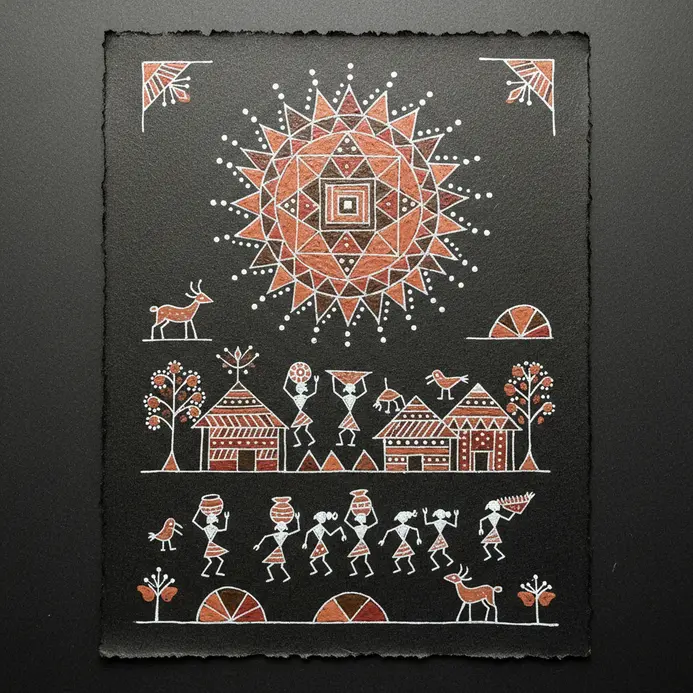
Watching a crisp geometric sun emerge on warm terracotta stock delivers immediate satisfaction. This Warli composition merges celestial geometry with settlement life through foundational shapes. You will construct the sun using a compass and ruler to produce perfectly spaced rays, then position triangular dwellings and two-triangle stick figures nearby. The dual-triangle figure construction remains the fundamental requirement for authentic tribal styling. Keeping your composition spacious allows negative space to define each structural element clearly. Practicing this project ranks among the most structured Easy Indian Drawing Ideas because it transforms basic geometry into narrative scenes. You might later branch into character design work, such as cartoon characters with curly hair, to explore contrasting techniques.
2. Madhubani Peacock with Floral Fillers: Expressive Patterns for First-Time Folk Artists
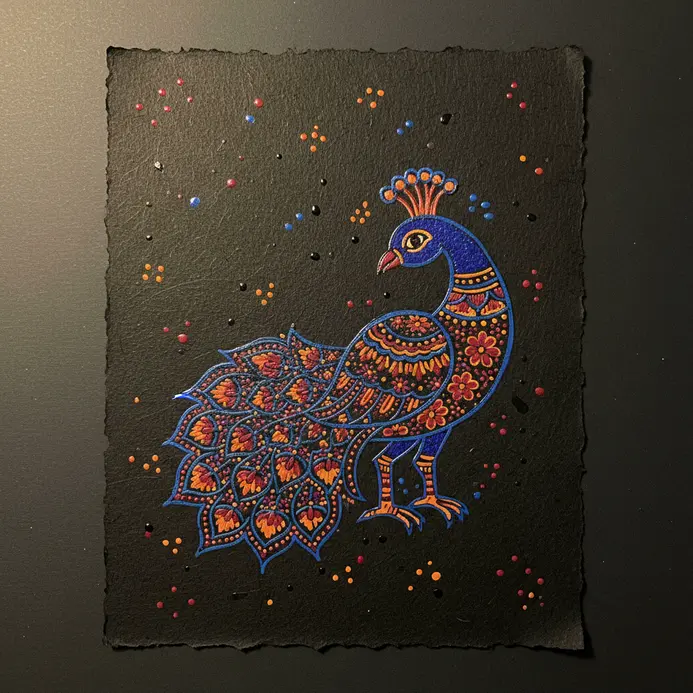
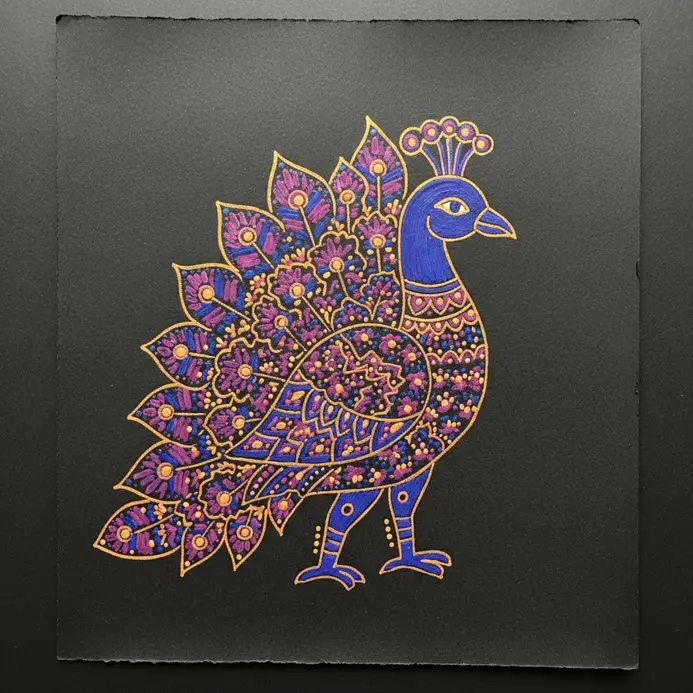
Transforming a bird’s plumage into a repetitive pattern field creates captivating visual depth. This design relies on a bold black outline to contain a stylized body, while every feather segment receives dense dots, zigzags, and floral accents. You will start with a single teardrop form for the torso and a widened fan tail, then populate each segment through deliberate, meditative strokes. High-opacity acrylics or traditional earthy tones activate the piece against the heavy ink framework. The signature zero-empty-space method naturally absorbs minor line wobbles into the decorative texture. Implementing this technique places it firmly within accessible Easy Indian Drawing Ideas tailored for initial practitioners. Keep the tail perfectly mirrored by sketching faint center guides beforehand, and always test floral patterns on scrap material before committing.
3. Gond Art Elephant Dotted Pattern: Master Rhythm and Line Control
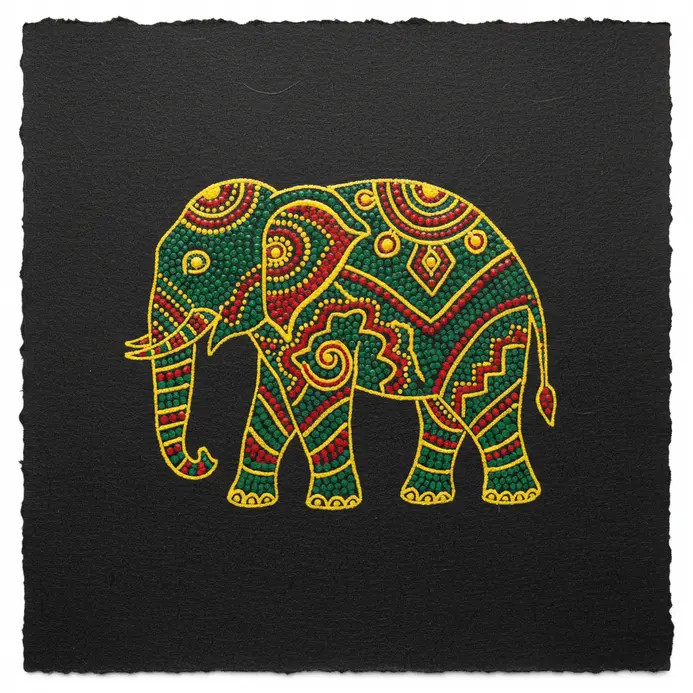
An elephant silhouette vibrating with carefully placed marks instantly draws the viewer into the composition. This signature Gond art dot patterns approach transforms simple strokes into flowing visual pathways around the animal’s contours. You begin by blocking a strong outer boundary, dividing the form into distinct anatomical zones, then populate each section with rhythmic dot arrays. Varying dot density across the trunk, ears, and legs establishes directional movement across a flat plane. Maintaining consistent spacing becomes easier when you draft light alignment guides in pencil before inking. Mastering rhythm through systematic mark-making makes this one of the most rewarding Easy Indian Drawing Ideas to attempt during quiet studio sessions.
4. Outline a Simple Lotus Kalamkari Ink Motif with Steady Lines
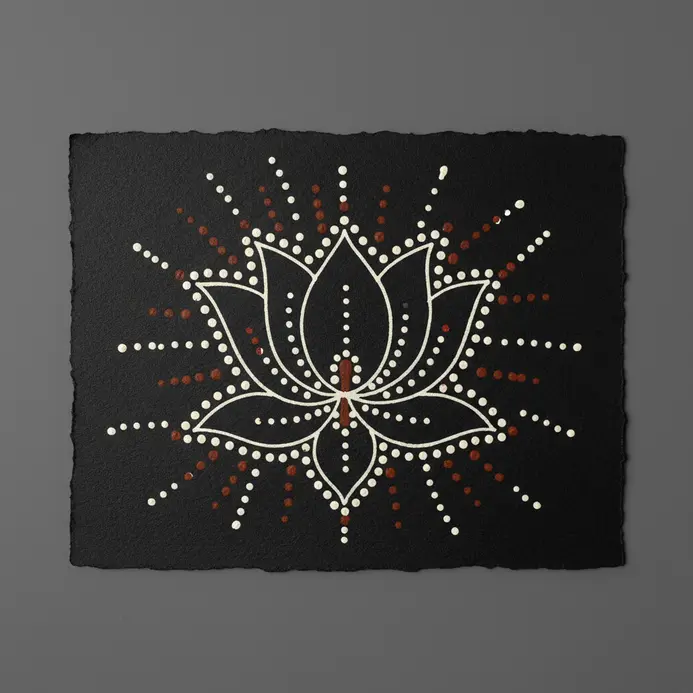
Capturing the quiet balance of a lotus bloom immediately steadies your drafting rhythm. You will establish a small central circle, then surround it with overlapping teardrop petals arranged in steady rotation. Tracing those curves with a fine-tipped kalam or brush in single fluid strokes trains your hand for traditional Indian drafting methods. Resting your wrist on a clean protective sheet prevents accidental smudges and stabilizes your line quality. Maintaining deliberate, uninterrupted pen contact builds muscle memory for future projects. Practicing steady line work here directly supports mastering broader Easy Indian Drawing Ideas before advancing to complex compositions. You can broaden your range by studying anime characters white hair illustrations next.
5. Stylized Folk Parrot Border Design: Bold Repetition for Decorative Edges
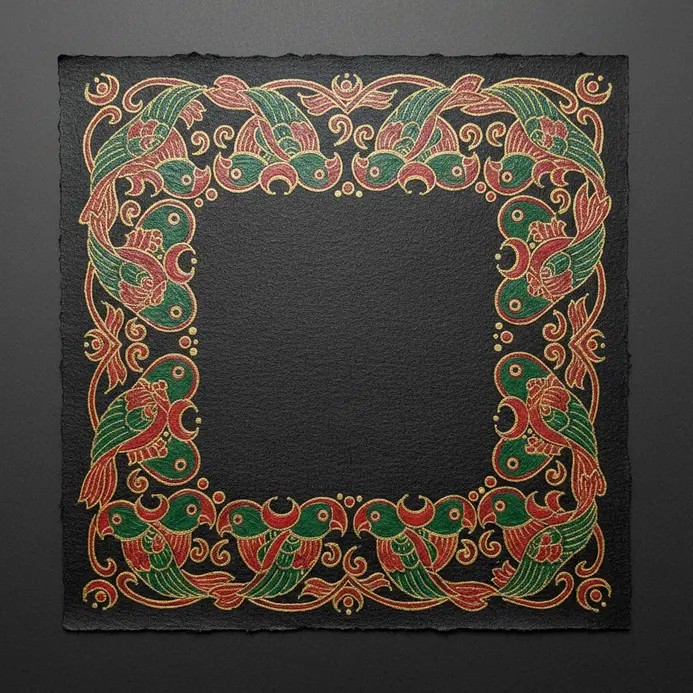
Constructing a repeating avian border delivers instant festive energy across page margins. This layout reduces the subject into fundamental geometric components: a teardrop body, circular head, and angular tail. Placing those components at uniform intervals along a baseline creates a rhythmic sequence that naturally guides the eye outward. You will fill the intersections with winding vines, diamond shapes, or dot clusters, applying high-saturation pigments within thick perimeter strokes. A custom cardboard template guarantees identical sizing across every repetition, eliminating constant measuring and correction. Executing this structured repetition places the technique among the fastest Easy Indian Drawing Ideas for framing larger artworks. Apply delicate feather details with precise nib tools, then reinforce outer boundaries with broader markers.
6. Traditional Diya Rangoli Symmetrical Sketch: Balance and Festive Charm
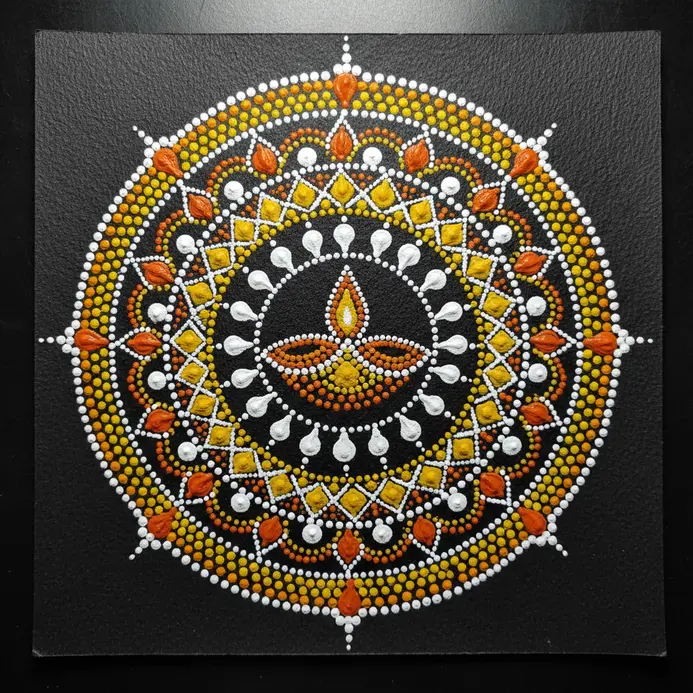
Drafting a perfectly mirrored lamp motif produces deep structural satisfaction across the entire surface. This balanced layout anchors around a central flame container, radiating outward through paired petals and geometric vine arms. Visualizing a large central vessel surrounded by mirrored foliage and dotted margins establishes a calming, ordered framework. Relying on drafting instruments guarantees the exact radial alignment that defines authentic festival layouts. You establish visual cadence through repeating paisley forms and evenly spaced point arrays. Applying quadrant guides during the early stages of Easy Indian Drawing Ideas preparation maintains layout equilibrium before adding decorative accents. Refining this control transfers directly to other symmetrical studies, including anime characters pink hair illustrations.
7. Draw Warli Dancing Figures in a Circle Motif with Fluid Strokes
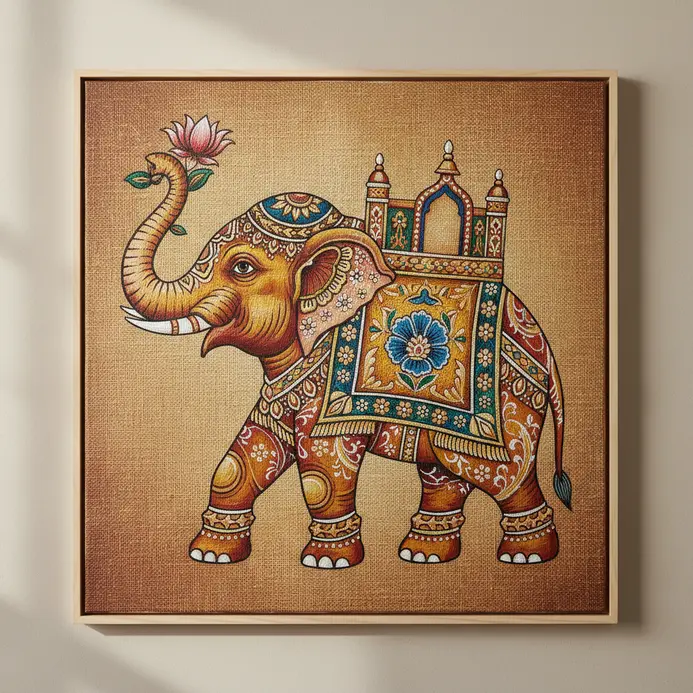
A ring of connected dancers immediately injects communal rhythm into any composition. Instead of rigid linear limbs, you will draft arched arms and flowing hand positions that link seamlessly around a central axis. Applying pressure with a brush pen produces thick torso lines while lighter contact renders delicate extremities, simulating natural sway. This adaptation of the traditional Tarpa cycle celebrates continuous movement without relying on complex shading techniques. Maintaining uninterrupted wrist motion across arm connections prevents disjointed, mechanical appearances. Integrating circular composition logic into Easy Indian Drawing Ideas encourages fluid drafting rather than static drafting habits.
8. Madhubani Tree of Life Composition: Build a Symbolic Narrative with Minimal Elements
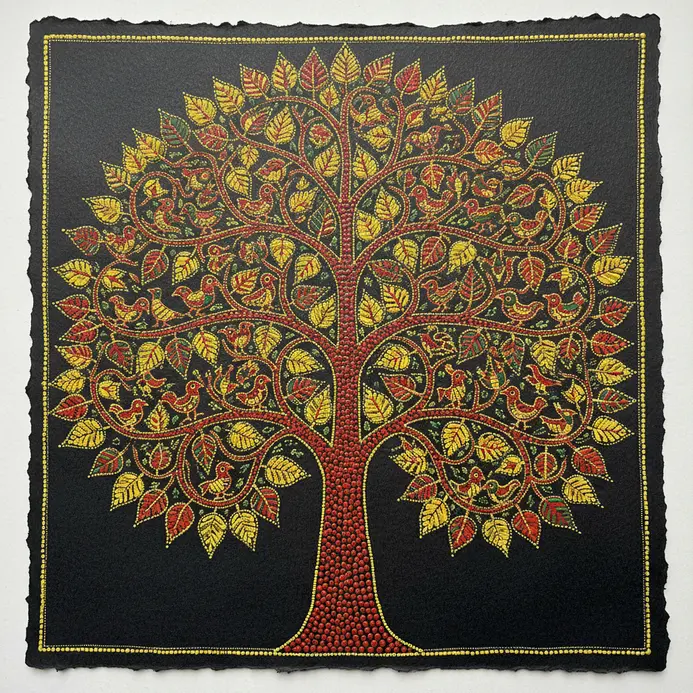
Removing excessive background noise allows the central narrative to command immediate attention. A stripped-down Tree of Life relies on thick outer boundaries and a focused pair of symbolic elements rather than dense surface filling. Position two facing birds above a sturdy central trunk, letting roots spiral into simplified lotus bases while leaving open margins around each shape. Applying heavy outlines to primary silhouettes delivers stronger visual hierarchy than complex internal fills. A thicker permanent pen establishes the outer frame, leaving finer tips reserved for internal dot arrays. Limiting your palette to three recurring pattern types generates measurable depth without overwhelming the composition. This minimalist strategy proves that restrained Easy Indian Drawing Ideas frequently produce the strongest initial results.
9. Minimalist Pattachitra Style Deity Eye: Concentrated Detail with Bold Outlines
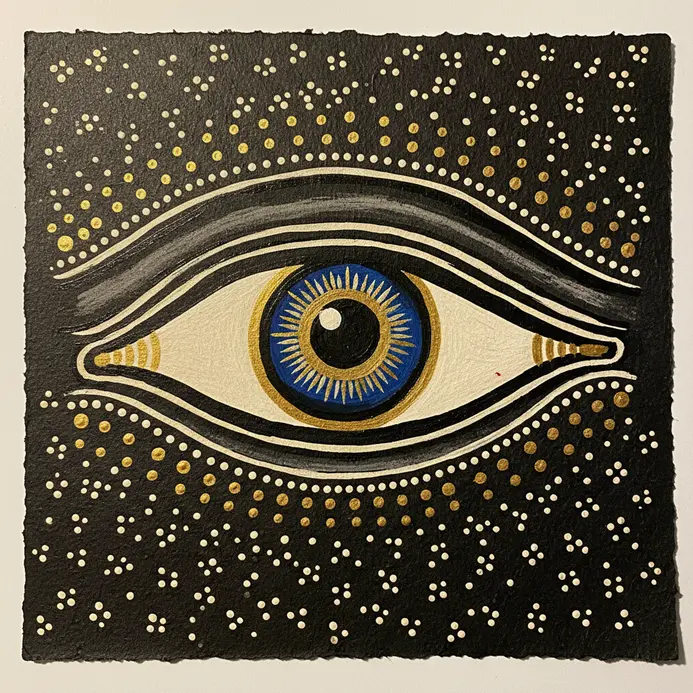
Distilling spiritual presence into a single balanced gaze creates an immediate focal point. This approach isolates the almond contour, emphasizing a sweeping tapered lid that conveys instant calm. Skipping gradient shading in favor of fine-liner pens and earthy pigment washes generates a sharp, graphic contrast suitable for smaller formats. Concentrating texture around a high-contrast center delivers sacred regional aesthetics without demanding massive workspaces. Keep the iris open using concentric rings, positioning a small light reflection adjacent to the pupil. Focusing tightly on expressive features demonstrates how concentrated Easy Indian Drawing Ideas simplify larger artistic goals. You may explore related portrait techniques through black anime characters drawings.
10. Draw an Intricate Paisley Motif Fabric Design with Precision
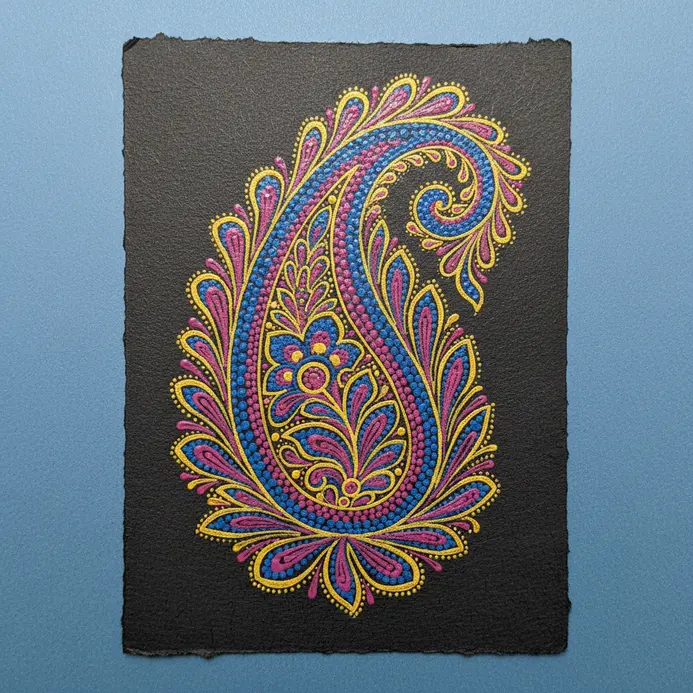
A structured paisley shape instantly evokes historical textile printing methods. Establish a sharp center axis, then curve the exterior using a compass or French curve to guarantee mirrored balance across both halves. Populate the interior space with winding botanical stems and miniature floral nodes. Switching to a 0.1mm pigment liner produces crisp stippling and hairline branches that radiate naturally from the central axis. Varying stroke weight between boundaries and internal details establishes visual hierarchy essential for print reproduction. Tracing the exterior with a 0.5mm pen reinforces the outer boundary, ensuring consistent silhouette recognition across repeated blocks. Maintaining precision during drafting stages ensures your Easy Indian Drawing Ideas translate smoothly into practical textile layouts.
11. Ceremonial Mango Leaf Hanging Illustration: Festive Simplicity for All Skill Levels
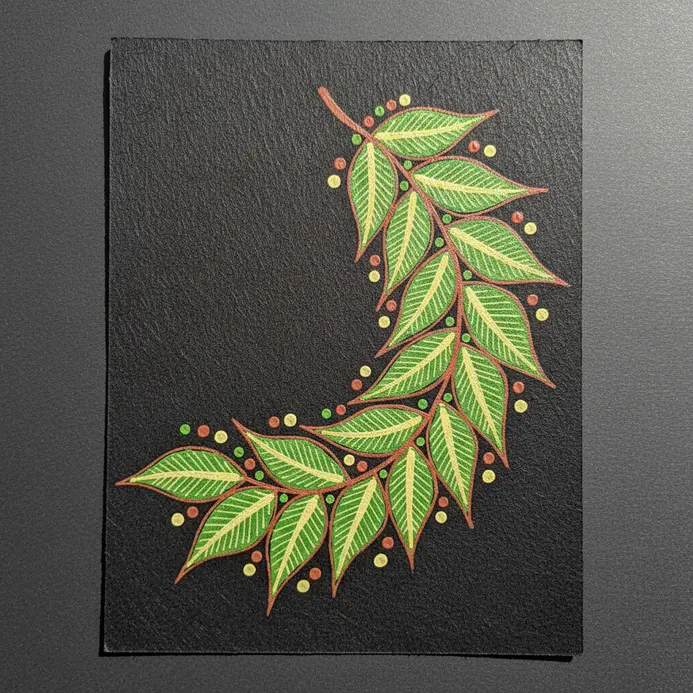
A ceremonial leaf garland immediately signals celebration across traditional decorative layouts. This hanging arrangement pairs accessible geometry with repetitive sequencing, making it ideal for initial drafting practice. Draft a straight horizontal baseline, mark uniform intervals for leaf clusters, then sketch descending pointed ovals with central midribs and lateral vein accents. Placing marigold blooms or bead shapes between clusters introduces cheerful contrast against the green framework. A fine-liner pen locks crisp boundaries, while pigment markers deliver saturated fills across broad leaf surfaces. Angling individual leaves slightly breaks rigidity while keeping the primary alignment line strictly straight. Implementing structured repetition within seasonal Easy Indian Drawing Ideas guarantees impressive visual output with minimal drafting friction. Transition smoothly to character studies like fat cartoon characters drawings to test improved line control.
12. Folk Style Village Hut Landscape: Capture Rural Charm in Flat Planes
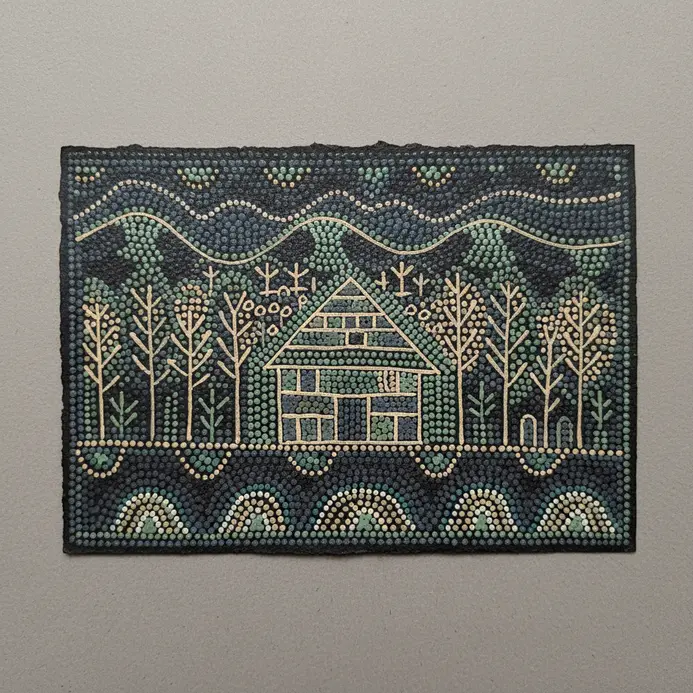
Constructing a rural scene without perspective rules immediately removes drafting anxiety for beginners. This style depends entirely on flat color planes rather than realistic light modeling. Assemble the framework using fundamental geometry: triangles anchor rooftops while rectangular blocks form wall surfaces. Fill expansive areas with gouache paints to achieve dense, opaque saturation that covers underlying sketch lines completely. Scatter stylized poultry clusters and exaggerated blossoms across foreground margins to establish narrative warmth. Simplifying complex environments into geometric components validates this approach as foundational Easy Indian Drawing Ideas for environmental composition. Always verify complete pigment drying before applying final boundary lines, preventing accidental color bleeding.
13. Sketch a Simplified Jagannath Face with Folk Drawing Techniques
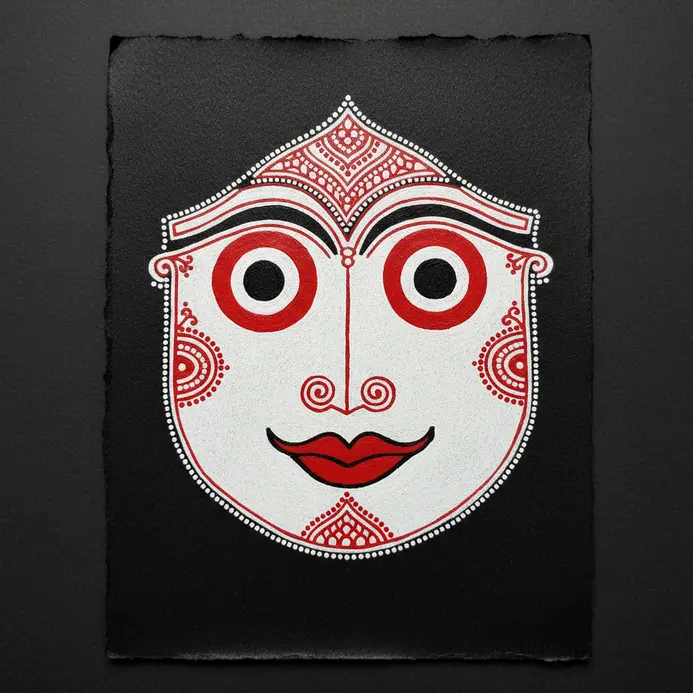
Capturing a serene gaze through broad boundaries establishes immediate cultural recognition without complex anatomical study. Draft a compressed oval form, positioning two large matching almond shapes within the upper half. Add a curved nasal line and an extended crescent mouth to complete the expression, then cap the head with a three-tiered trapezoidal mukuta and a vertical forehead marking. Relying strictly on geometric construction bypasses anatomical uncertainty while preserving regional stylization. Maintaining flat color application reinforces the symbolic graphic nature of traditional scroll art. Trace final boundaries using waterproof ink, reserving deliberate line inconsistencies to simulate authentic handcrafted production. Recognizing how geometry drives facial composition reinforces core Easy Indian Drawing Ideas for portrait-based practice.
14. Gond Style Turtle Texture Study: Dot Work That Teaches Patience and Consistency
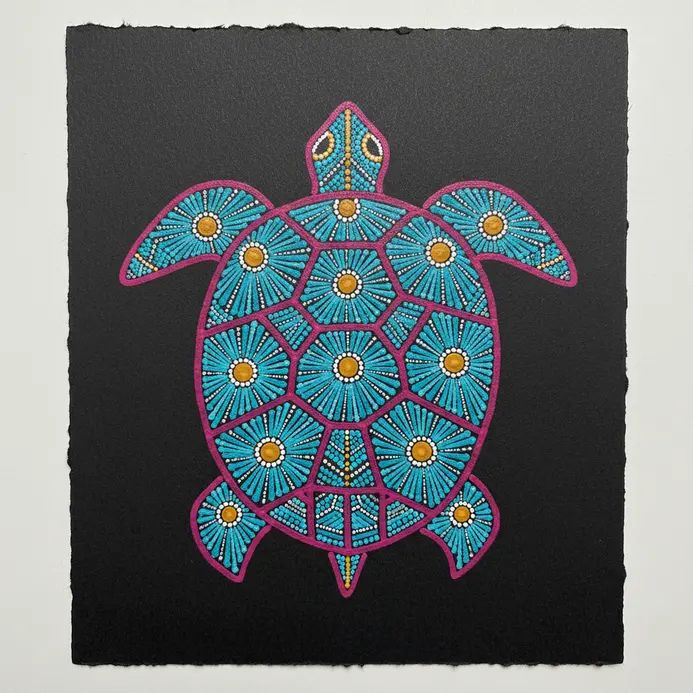
Filling segmented armor with thousands of rhythmic marks produces an instant meditative state across your workspace. The turtle silhouette provides a structured boundary for disciplined dot work application, where variable pressure creates natural light-to-dark transitions. Outline individual shell plates, populating each with dense mark arrays while moving progressively from outer edges inward. Maintaining uniform spacing across the surface builds high-contrast depth through repetition alone. Waterproof ink instruments guarantee permanent results, while rotating the paper frequently prevents joint strain during extended sessions. Developing slow, controlled focus through this method ranks it among the most effective Easy Indian Drawing Ideas for building drafting endurance. Transfer this hand stability directly into large-scale character projects featuring expressive features, much like cartoon characters with big eyes.
15. Stylized Lotus Bud Floral Pattern: Gentle Curves for Elegant Fillers
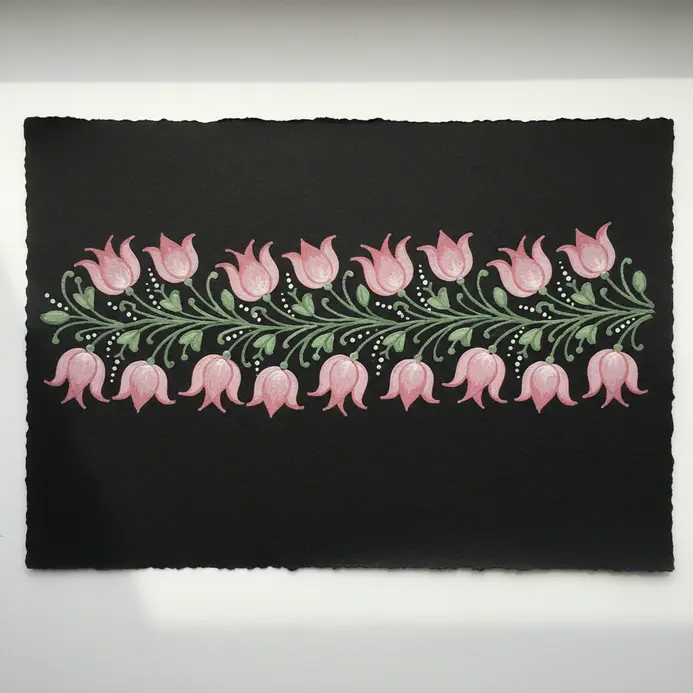
Occupying empty margins with slender botanical forms introduces refined movement without overwhelming central elements. This layout depends on teardrop-shaped forms curving upward while narrowing toward concentrated tips, arranged alongside gentle S-curve connectors. Overlapping tapered petals at varying heights creates a woven textile effect across designated filler zones. Distributing these shapes sparsely maximizes negative space, allowing quiet visual breathing while maintaining structural continuity. Preserving consistent line weight through calibrated nib pressure guarantees polished repetition across extended margins. Applying controlled spacing within floral Easy Indian Drawing Ideas elevates overall composition balance through deliberate restraint.
16. Draw a Warli Stick Figure Archer with Action and Energy
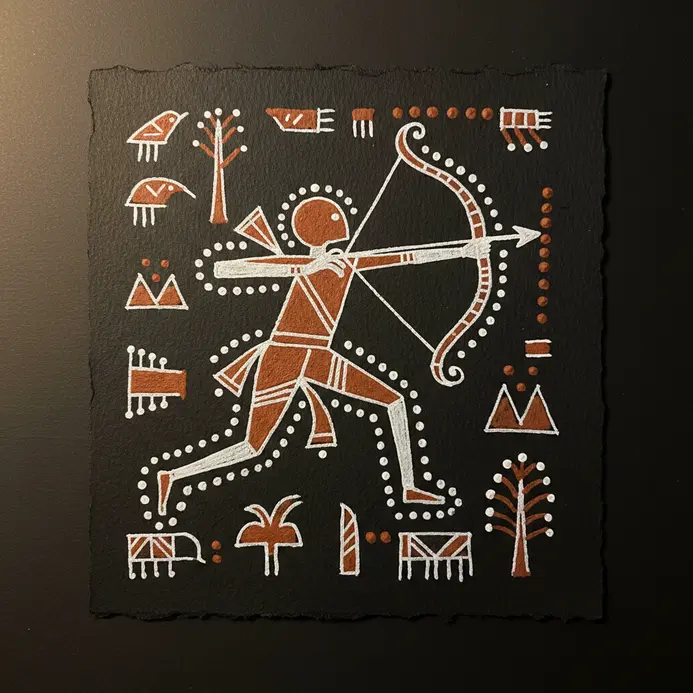
Capturing a drawn bow posture delivers immediate kinetic tension within a minimalist framework. Applying opaque pigment on warm paper establishes strong visual contrast from the initial stroke. Construct the torso from opposing triangles, extending extended limbs into a wide, grounded stance that emphasizes momentum. Emphasizing exaggerating the lean transforms static linear figures into active poses that simulate forward motion. Surround the weapon with short directional dashes to imply released tension without adding excessive detail. Maintaining uniform stroke thickness preserves the rustic tribal silhouette while limb angles dictate overall dynamics. Implementing strategic lean adjustments into action-based Easy Indian Drawing Ideas guarantees convincing motion through simplified structure. You may compare line weight techniques across old school love drawings to refine boundary control.
17. Indian Folk Art Border Vines: Flowing Lines to Frame Any Composition
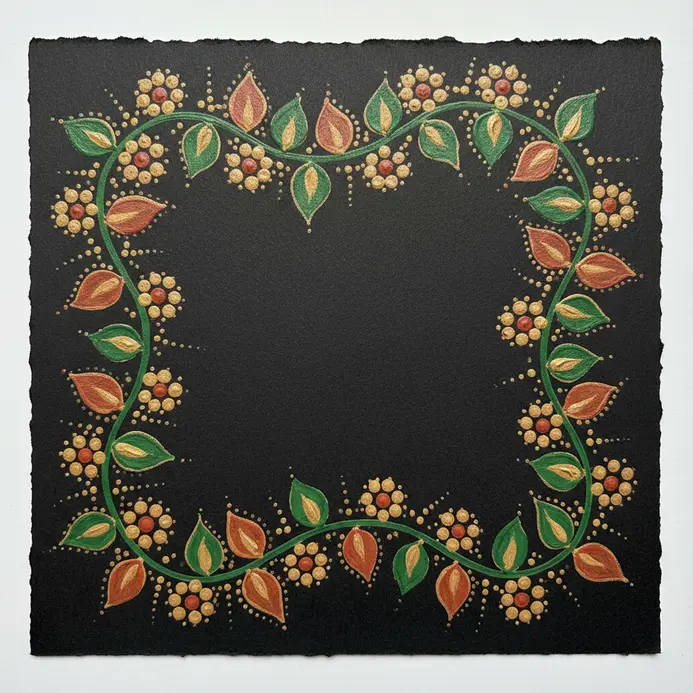
Winding botanical boundaries naturally contain narrative elements while adding historical character to modern layouts. Regional stem treatments alternate smooth undulating curves with delicate foliage clusters and micro floral bursts that echo classical regional printing methods. Whether executing sparse geometric trails or dense swirling foliage, organic borders successfully guide visual focus inward toward the primary subject. Maintaining soft, lightweight outer strokes preserves visual equilibrium when central zones demand high contrast. Sketching a faint graphite pencil baseline guarantees consistent wave frequency before inking permanent curves. Integrating flexible framing logic within decorative Easy Indian Drawing Ideas ensures central motifs retain breathing room without competing with margins.
18. Symmetrical Star Rangoli Geometric Sketch: Precision with Compass and Ruler
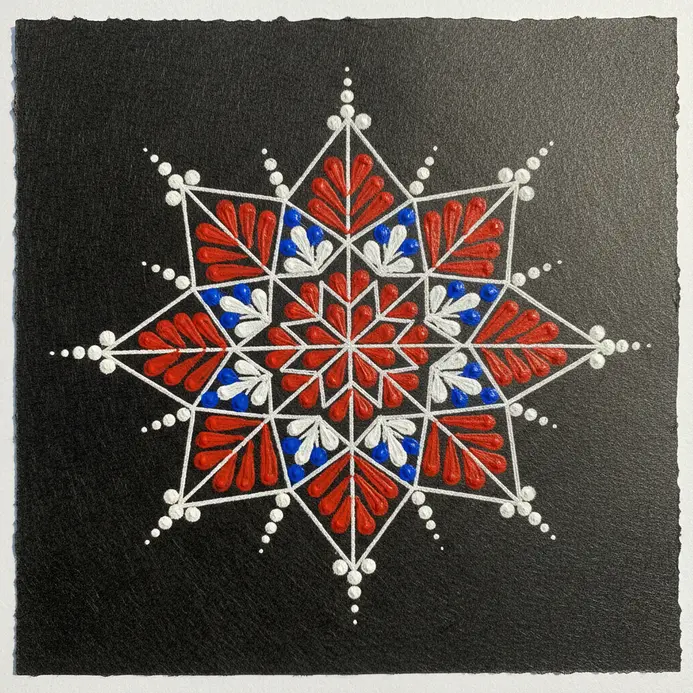
Constructing radially locked geometry delivers immediate structural confidence across festival layouts. The eight-point design depends entirely on a compass and ruler to divide an initial circle into equal sectors, connecting alternating intersection points to generate interlocking angular bands. Executing precise angular division removes guessing, replacing hand uncertainty with measurable mathematical alignment. Beginners favor this approach because objective measurements replace subjective freehand corrections, transforming drafting into repeatable routines. Keeping the compass needle stationary at the origin guarantees unbroken symmetry throughout the drafting sequence. Mastering measurement-based drafting validates this method among highly reliable Easy Indian Drawing Ideas for geometric pattern generation.
19. Add Madhubani Fish Symbol Ornamentation with Repetitive Fillers
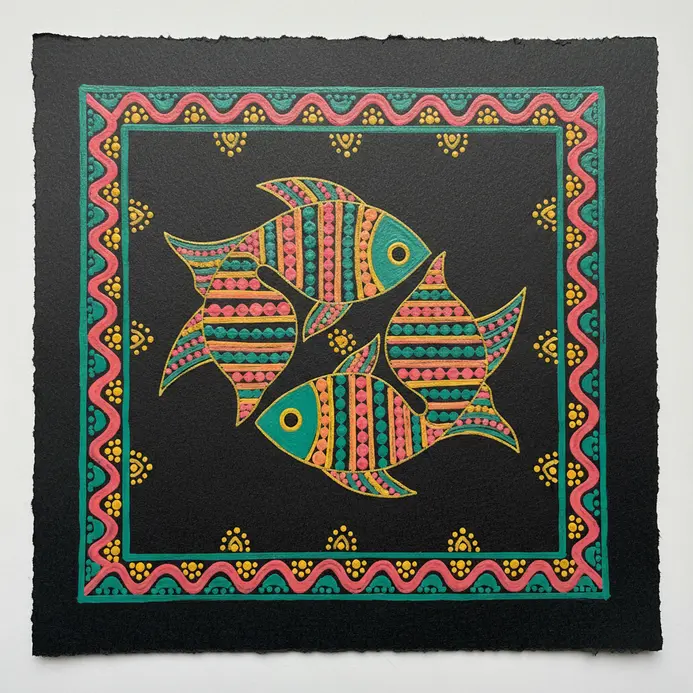
A heavily ornamented aquatic form instantly channels regional decorative traditions into compact framing. Begin by drafting a curved silhouette featuring an oversized ocular element and sweeping fin structures. Subdivide the interior into isolated compartments, dedicating each to distinct repeating arrays like dot clusters, miniature foliage shapes, or crosshatch grids. This dense saturation technique eliminates empty surface area while generating continuous visual tempo across the entire form. A fine-liner pen guarantees permanent edge definition before wet pigment application prevents accidental bleeding. Watching fragmented line work merge into a unified decorative panel demonstrates why compact Easy Indian Drawing Ideas excel at teaching pattern discipline. These shading principles translate directly into graphite animal studies, such as pencil drawings animals.
20. Gond Inspired Bird Wing Pattern: Striking Texture for Simple Shapes
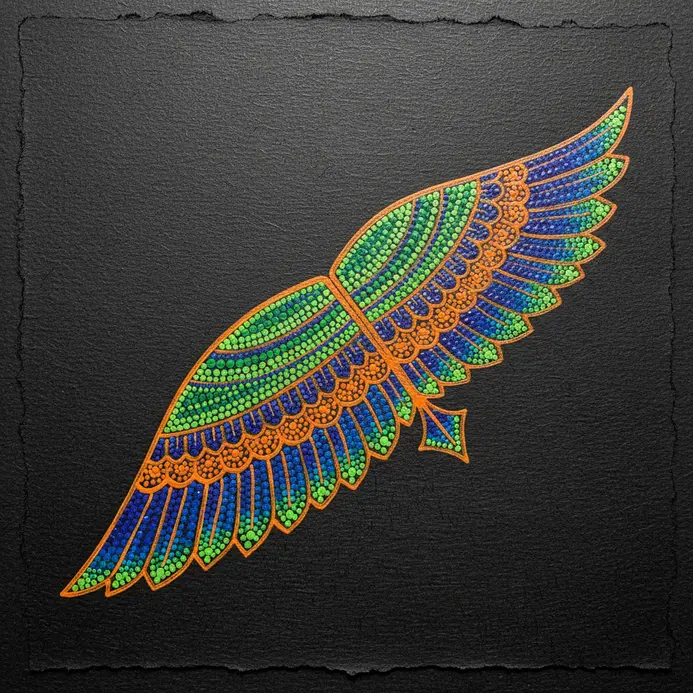
Converting a simplified anatomical outline into dense tribal texture creates immediate visual contrast. You will outline an uncluttered wing shape, then occupy distinct zones with alternating arrays of concentric rings, zigzag lines, and tight dot clusters. Filling negative space with high-density hand marks produces motion simulation without requiring gradient blending techniques. A fine-liner pen delivers exact pressure control for uniform dot placement across curved surfaces. Aligning marks with natural contour lines and intentionally leaving small empty patches prevents visual exhaustion. Packing compact silhouettes with rhythmic surface treatments ranks among the most effective Easy Indian Drawing Ideas for texture development.
21. Traditional Clay Pot Folk Illustration: Everyday Objects Transformed into Art
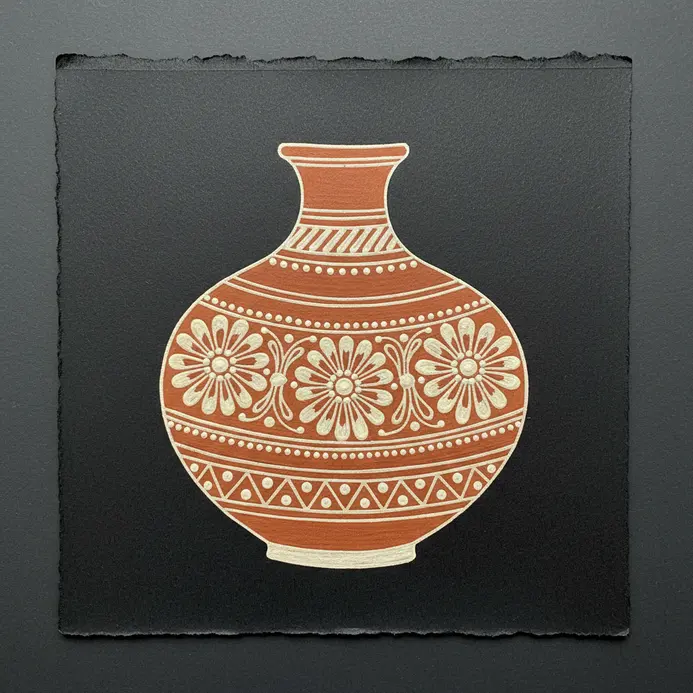
Decorating a simple earthen form transforms household objects into cultural storytelling devices. Traditional vessel illustration applies rhythmic dot bands, spiral arrays, and floral sequences along natural curvature lines, adapting to three-dimensional surfaces rather than flat planes. Practitioners frequently engage in the sgraffito technique, carving through pigment layers to expose underlying clay tones. Following the vessel contour guarantees organic integration rather than rigid mechanical application. Pre-moistening the surface prevents brush drag while maintaining even pigment absorption. Exploring tactile application across everyday objects validates functional Easy Indian Drawing ideas for mixed-medium experimentation. You may contrast these textural methods through bold portrait work like ozzy osbourne drawings.
22. Sketch a Folk Style Musician Figure with Minimal Lines
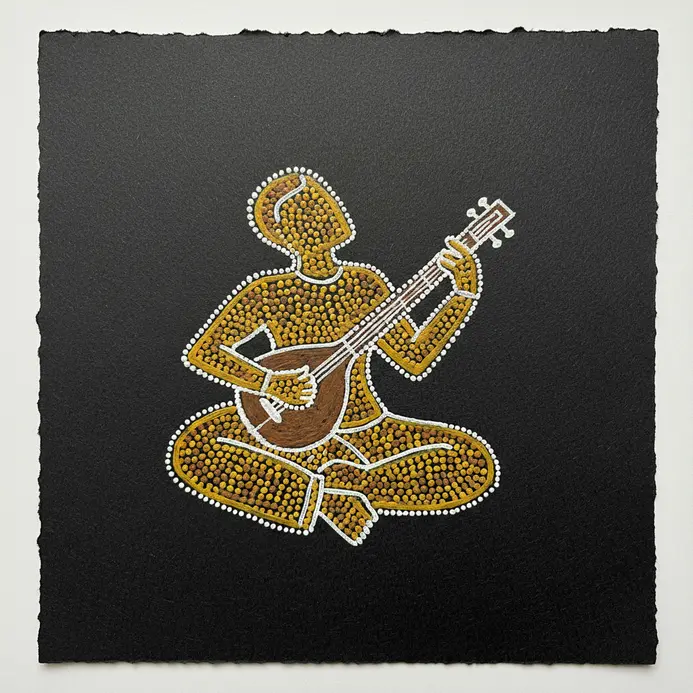
Conveying musical presence through sparse strokes prioritizes posture over anatomical precision. Draft the instrument shape first, using an oval base to anchor the surrounding composition before placing the performer. Establish the spine through a single curved line, extend rapid limb strokes, and add a tilted hat element to inject character. Relying on structural slouch and hand positioning tells the narrative more effectively than detailed facial rendering. Embracing uncorrected boundary marks reinforces authentic regional drafting character. Minimizing stroke count while maximizing expressive posture proves these streamlined Easy Indian Drawing ideas develop compositional intuition rapidly.
23. Geometric Mandala Flower Core Design: Foundational Radial Balance for Beginners
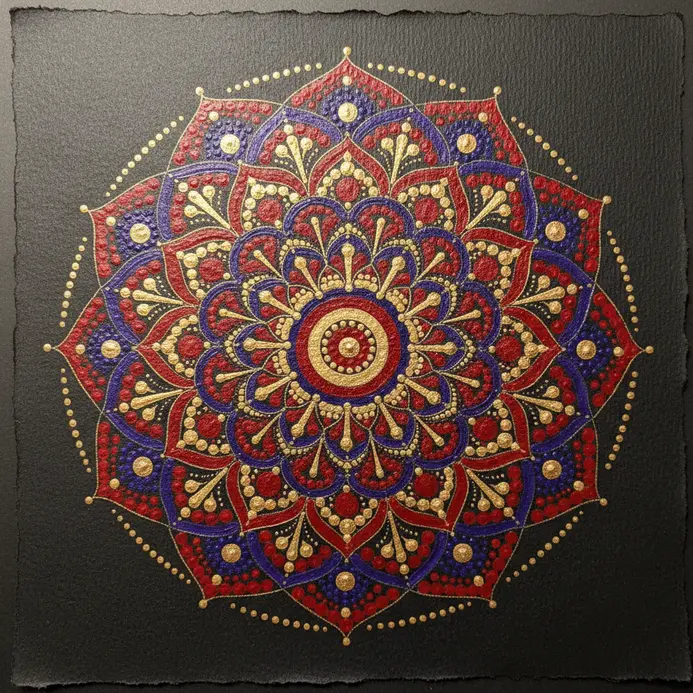
Building outward from a locked center point creates immediate structural satisfaction across circular layouts. This method depends on radial balance, duplicating repeating petal shapes and triangular arrays along mathematically divided guidelines. Dividing a base circle into equal sectors eliminates guesswork while guaranteeing uniform spacing between internal elements. Beginners favor objective measurement because it replaces freehand uncertainty with predictable drafting sequences, allowing continuous stroke execution without layout correction. Rotating the surface regularly maintains relaxed wrist posture while preserving angle consistency. Implementing measurement-driven layering confirms measurement-focused Easy Indian Drawing ideas deliver flawless symmetry with minimal drafting hesitation.
24. Stylized Cow Warli Village Scene: Adding Life to Cultural Landscapes
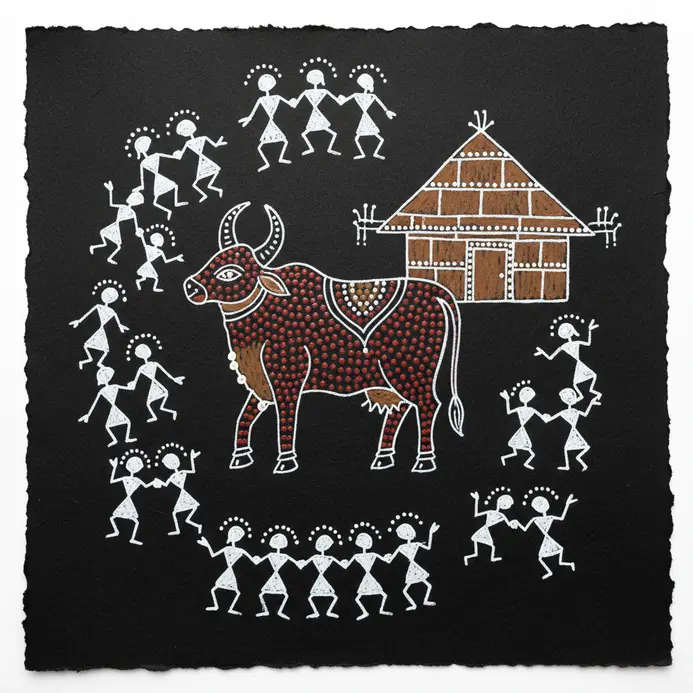
Anchoring a rural composition with a simplified bovine form immediately channels agrarian heritage into contemporary layouts. Constructing the body from connected triangles alongside sweeping curved horn segments maintains pure geometric styling, while background settlers and triangular shelters create narrative depth. Applying bright markings against warm stock generates historical contrast through minimal surface treatment. Directing the viewer’s eye through intentional margin gaps and repeating structural elements replaces complex realism with accessible storytelling techniques. Achieving uniform line thickness requires a fine-tipped white paint pen stabilized by anchored pinky placement. Strengthening geometric confidence through simplified forms proves structured Easy Indian Drawing ideas transfer directly into architectural practice, similar to eiffel tower drawings.
25. Outline a Minimalist Kalamkari Leaf Branch Motif for Borders
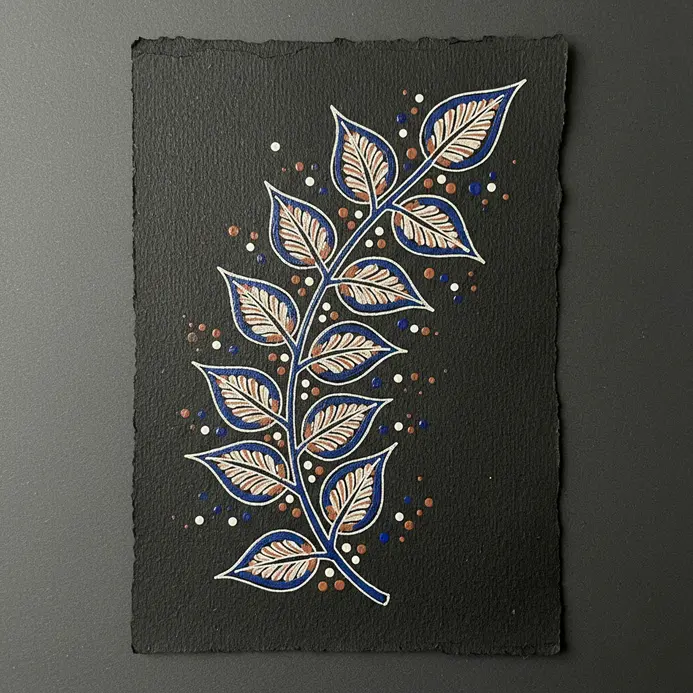
Executing a scrolling vine along page edges introduces instant elegance through stripped-down botanical geometry. This layout removes internal detailing entirely, relying on a singular sweeping stem paired with alternating tapered foliage and concentrated negative space around the perimeter. Pressing heavily along central stems while lifting pressure for foliage branches generates natural line variation without complex tool requirements. Maintaining open margins around simplified shapes guarantees refined, uncluttered results across decorative margins. Applying variable hand pressure through natural material implements confirms minimalist Easy Indian Drawing ideas produce professional results with minimal tool investment.
Sealing and Displaying Your Finished Indian Folk Illustration
Opaque pigment applications on standard paper require protective sealing to prevent environmental moisture damage and accidental handling abrasions. A matte acrylic spray varnish provides breathable archival protection that preserves flat pigment intensity without introducing unwanted gloss. Agitate the container thoroughly for two minutes before operating in a cross-ventilated environment. Position the nozzle at thirty centimeters distance, applying overlapping mist sweeps to guarantee uniform coverage. Two light applications deliver superior archival stability compared to heavy saturation, which frequently warps fibrous surfaces during drying cycles. Allow complete evaporation between applications to prevent surface pooling. Alternative brush-on sealing uses a wide synthetic brush spreading matte sealant from center outward. Mounting cured works onto rigid backing panels prevents edge curling, while glass fronting shields displayed pieces from direct illumination exposure.
Conclusion
Early attempts at regional motifs often feel hesitant, yet completing distinct pieces quickly establishes measurable technical progress across your drafting portfolio. The true reward within this discipline stems from rhythmic repetition, structural symmetry, and deliberate boundary control rather than mechanical precision. Executing these Easy Indian Drawing Ideas demonstrates that symbolic narrative through simplified geometry remains entirely achievable through consistent studio practice. Viewing completed panels confirms readiness for advanced compositional merging, potentially pairing settlement dancers with botanical borders or expanding central trees through dense ornamental layers. Select your preferred subject, enlarge its scale, and introduce custom pattern variations that reflect personal stylistic preferences. The structural confidence built through focused repetition sustains advanced experimentation while deepening appreciation for enduring regional visual heritage.
FAQs
Q: What are some easy Indian drawing ideas for beginners?
A: Start with simple motifs like a diya (lamp), rangoli patterns, an elephant outline, or a peacock feather; these indian drawing easy subjects let beginners practice shapes and symmetry. You can find and save ideas on pinterest or try youtube kids videos for guided visuals, then follow my step by step notes to make your own indian drawing with confidence.
Q: How can I draw an Indian step by step design for a festival?
A: Choose a single motif such as a rangoli or diya and use an indian step by step approach: sketch basic shapes, refine outlines, add decorative details, then color. Look for a step by step drawing tutorial on pinterest or youtube kids that show you how to draw each layer, and use the tutorial to follow my step by step directions to finish.
Q: Where can I discover pinterest’s best ideas and inspiration for Indian art?
A: Visit pinterest’s best ideas and inspiration boards dedicated to Indian art, search terms like “indian drawing on pinterest” or “ideas about indian drawing” to discover step drawing tutorial and make curated collections. You can find and save ideas to your own boards and later use them to make your own indian drawing by following pinned step by step guides.
Q: Can you show you how to draw a simple Indian person or character?
A: Yes—start with a head and basic body shapes, add traditional clothing outlines like a kurta or sari, then include facial features and patterns. Look for a draw an indian step tutorial or indian step by step guide on youtube kids or pinterest for illustrated steps that show you how to draw each part clearly.
Q: What is the best way to organize a step by step drawing tutorial for kids?
A: Break the project into small, visual steps: 1) basic shapes, 2) connect lines, 3) add details, 4) outline, 5) color. Use simple language and demonstrate each step slowly. Try youtube kids for child-friendly video tutorials and combine them with pinterest pins for printable reference so children can follow my step by step instructions easily.