
Essential Supplies for Starting Bhil Inspired Art
Gather a set of opaque acrylic paints in core colors like bright red, yellow, and deep green. A smooth, non-porous surface supports clean dots, so select a canvas board or thick, smooth-finish paper suitable for gond painting. For the signature dotting, a small round brush with a fine point functions well, but beginners find greater control with a blunt tool like the rounded end of a paintbrush handle. Keep a separate, smaller brush ready for filling larger color areas. Use a palette or a simple ceramic plate for mixing. Avoid watercolor paper because its texture disrupts the clean, round dot shapes central to the style’s visual identity. Mastering easy bhil drawing ideas requires reliable tools that handle heavy pigment saturation without bleeding. Store your markers horizontally to maintain consistent ink viscosity throughout long sessions.
Choosing Your First Bhil Subject and Color Palette
Select a subject with a bold, simple silhouette that provides ample interior space for patterns. The horse, peacock, and elephant serve as ideal starting points because their large bodies and distinct shapes offer generous canvases for decoration. Limit your color palette to three or four high-saturation options, typically starting with a warm red as your dominant hue. Apply the techniques of Indian folk art to enhance your project.se colors in flat, solid blocks first to define the main shapes of your animal or figure. The dark background common in tribal art makes bright colors pop, so plan to fill the negative space around your subject with a solid black or deep brown after the main shapes dry completely. Understanding color contrast elevates your easy bhil drawing ideas into polished gallery pieces.
1. Sketch a Radiant Bhil Sun Motif Drawing
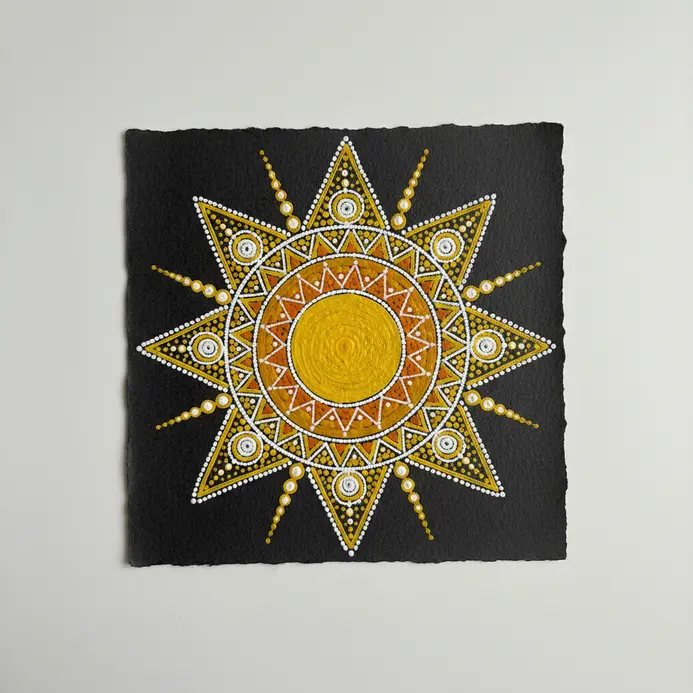
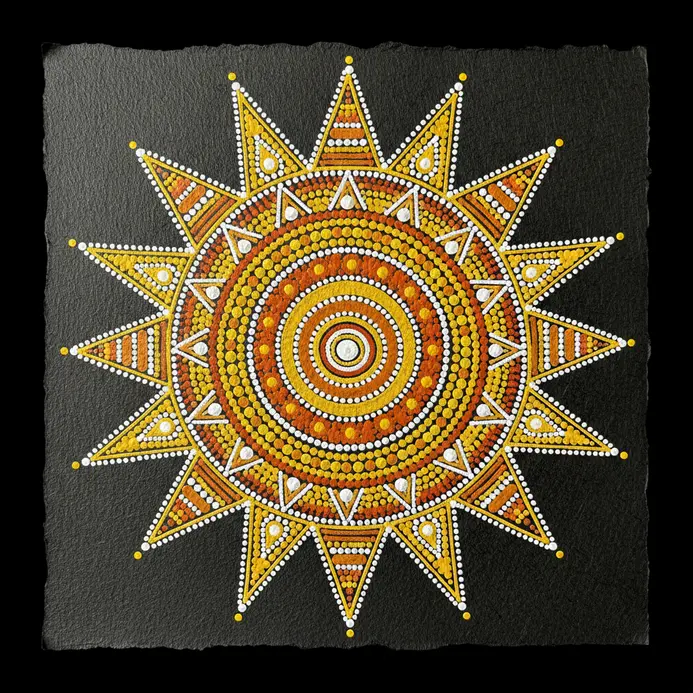
Start with a design that radiates energy and warmth. This sun extends beyond a basic circle and line pattern. You will render a vibrant deity featuring a central face surrounded by alternating rays. Capture visual power through dense, rhythmic patterns of contrasting color in beautiful art forms. Once your outline dries, apply the tapki dotting technique to fill every segment. Filling each section with tiny, meticulous marks creates stunning texture. Build your precision by attempting simple drawings to practice before committing to complex layouts. This design connects artists to a deep tradition of honoring life and nature. Embrace slight asymmetry in wavy rays to achieve an organic, authentic appearance.
2. Stylized Bhil Bird Sitting Pattern: Practice Basic Dot Repetition
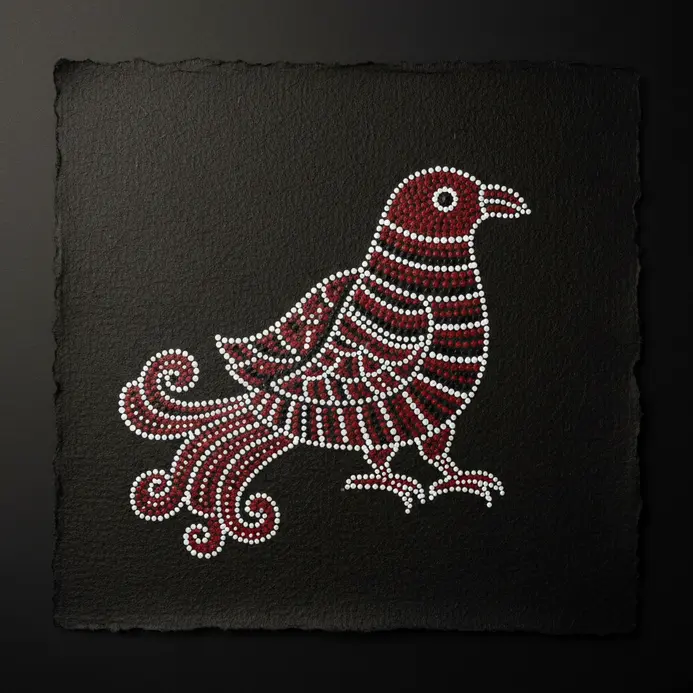
Transform a basic geometric shape into a textured masterpiece using a steady hand and consistent rhythm. This bird relies on foundational forms like ovals and teardrops, with the entire structure receiving dense, repeating marks. The exercise teaches pattern repetition while yielding results that feel woven and tactile. Begin by lightly mapping the silhouette with an HB pencil. Divide the body into distinct sections for the wing, chest, and tail. Trace the internal boundary lines with a single row of dots before filling any area. This preparatory step keeps patterns organized and visually distinct, a principle found in traditional art forms. Fill each section using a fine-liner pen while maintaining a steady tapping movement. Work one small area at a time to maintain control. Vary the pattern across different zones by applying concentric rows in the wing and parallel lines in the tail, reflecting techniques from the gond tribe. Working left to right prevents fresh ink from smudging. Exploring structured compositions reinforces your easy bhil drawing ideas.
3. Outline a Flowing Bhil Fish Pair
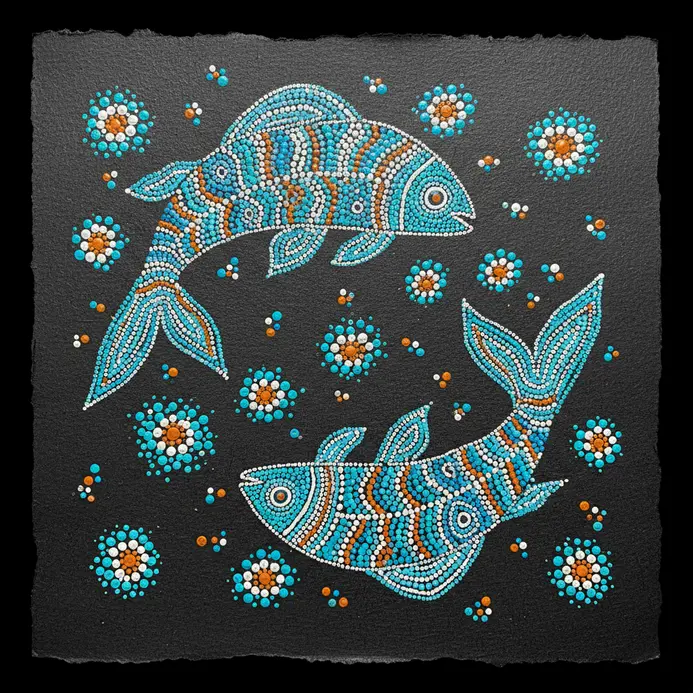
Capture water movement by sketching two synchronized fish. The design employs flowing, curved lines to construct a scene emphasizing harmony. This visual approach transforms standard aquatic symbols into energetic narratives. Draw a soft S-curve to establish the compositional flow. Sketch two elongated oval bodies along this central path. Add large circular eyes and decorative tail fins to complete the base shapes reminiscent of the gond tribe’s art style. The method ensures visual balance across the entire piece. Section each body with curved boundaries. Pack every enclosed space with cross-hatching, small triangles, and patterned marks. The dense internal coverage generates a lively texture that respects traditional folk aesthetics. You will notice improved spacing control when applying easy bhil drawing ideas.
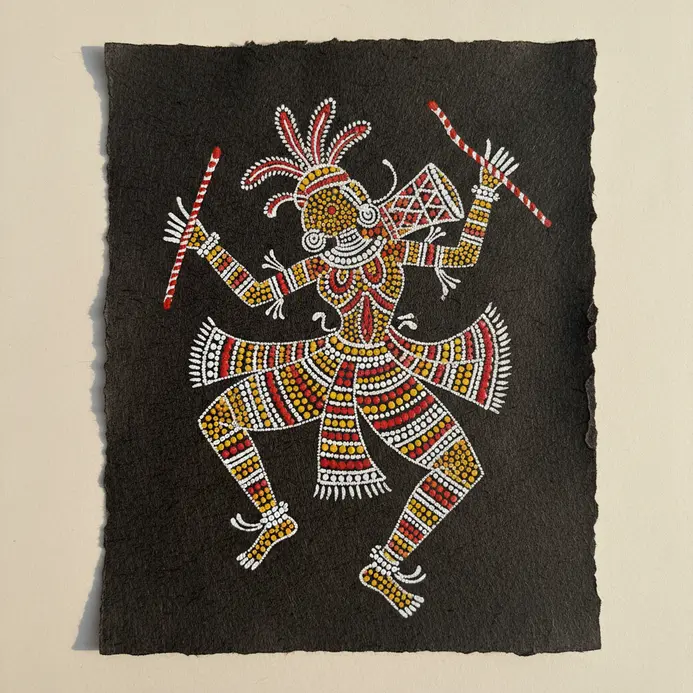
4. Dancing Tribal Bhil Figure Concept: Capture Human Movement Simply
 dot patterns.” width=”800″ height=”600″>
Render a figure that displays pure kinetic energy through a simplified pose. A single sweeping curve establishes the line of action and becomes the structural backbone. Build upon this curve using basic circles for the head and triangles for the torso. Add fluid lines to represent limbs before applying the signature dotting technique. Removing excessive detail forces the viewer to focus entirely on gesture and motion. Bend the arms and legs slightly to eliminate robotic stiffness. Practice applying consistent pressure across all dots to maintain uniform rhythm. Reviewing anime characters white hair provides valuable insights into alternative limb positioning. Integrating dynamic posture elevates your easy bhil drawing ideas beyond static outlines. The rhythmic internal patterns complete the celebratory aesthetic.
5. Draw a Detailed Bhil Tree of Life
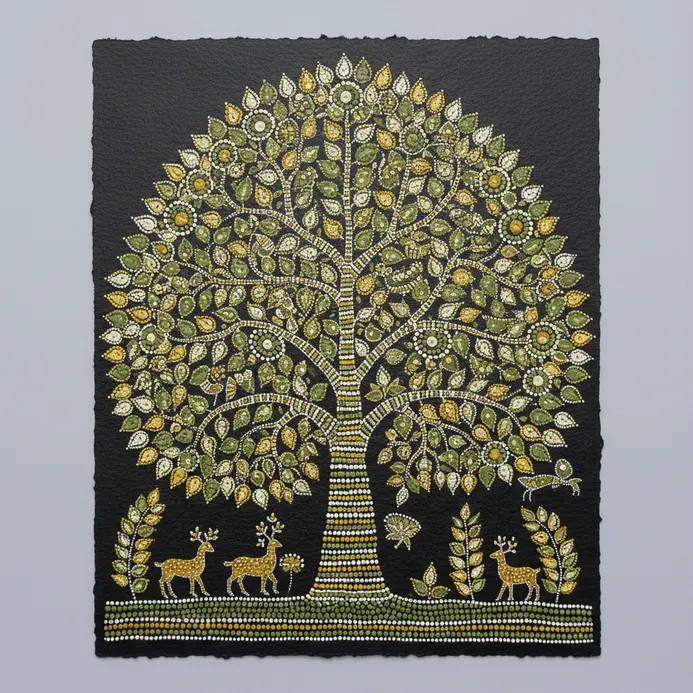
Engage in a meditative exercise that constructs an entire ecosystem around a central trunk. Fill the branches with miniature animals, people, and birds arranged beneath a sun and moon. The dense composition narrates a complete story of ecological harmony. The defining feature remains the repetitive dotting technique. Block solid base colors first, then systematically cover each shape with patterned marks. The method produces a shimmering effect visible from a distance, characteristic of gond painting. Artists appreciate the calming nature of this repetitive work. Hold your dotting tool completely vertical to produce perfect circular marks every single time. Structuring complex scenes around this core principle ensures successful easy bhil drawing ideas execution.
6. Geometric Bhil Village Hut Illustration: Construct Simple Architectural Shapes
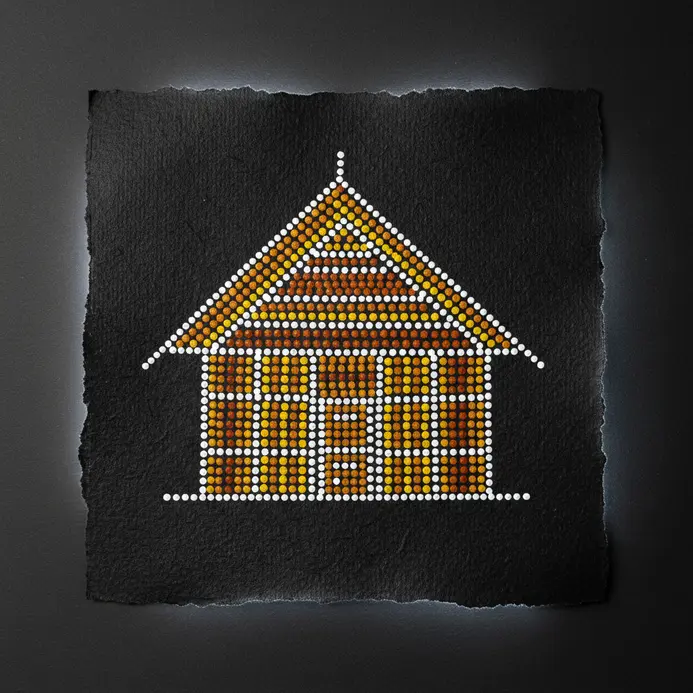
Construct a bold, graphic village scene using rectangles and triangles. This approach simplifies traditional architecture into clean geometric forms ideal for pattern application. Fill the flat wall sections with symbolic horses and suns using linear and dot arrangements. This framework eliminates perspective stress and directs focus toward core folk symbolism. Draw your architectural outline using a black fine-liner and a straight edge. Keep all color applications flat and graphic for maximum impact. Apply the dot work technique to define structural edges clearly. Reviewing structured tutorials like how to draw a lighthouse reinforces clean geometric composition skills.
7. Paint a Tribal Bhil Elephant Silhouette Design
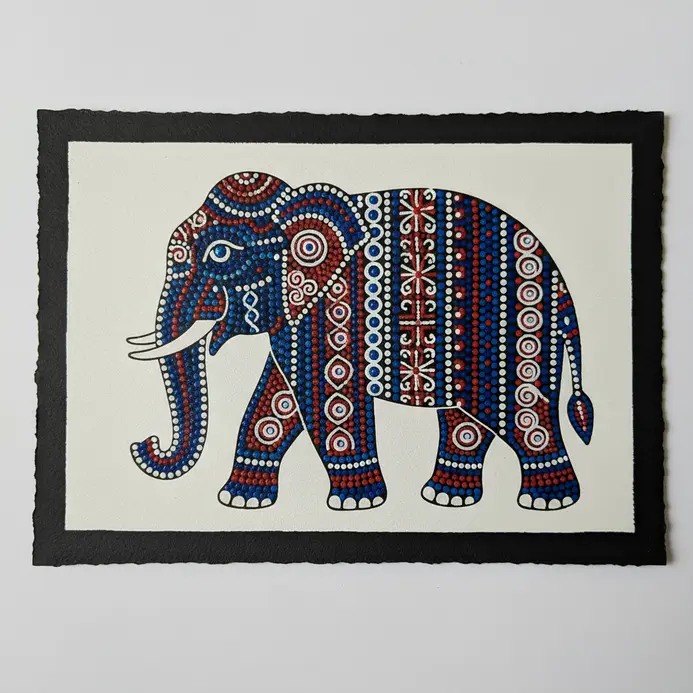
Generate serious visual impact using a massive, solid animal shape. The dark silhouette serves as an internal canvas for vibrant geometric dot clusters. This method merges modern graphic contrast with traditional rhythmic application. The technique offers extensive practice space without requiring complex outline adjustments. Apply patterns using dedicated dotting tools. Fill the elephant body with small motifs and linear arrangements. This process reduces mental fatigue while sharpening manual precision. Allow the dark painted silhouette to dry completely before adding bright interior marks. Wet paint will cause unwanted bleeding and ruin crisp boundaries. Mastering solid silhouettes expands your easy bhil drawing ideas toolkit, showcasing the beauty of traditional art forms.
8. Sitting Bhil Deer Figurine Drawing: Form Strong Animal Contours
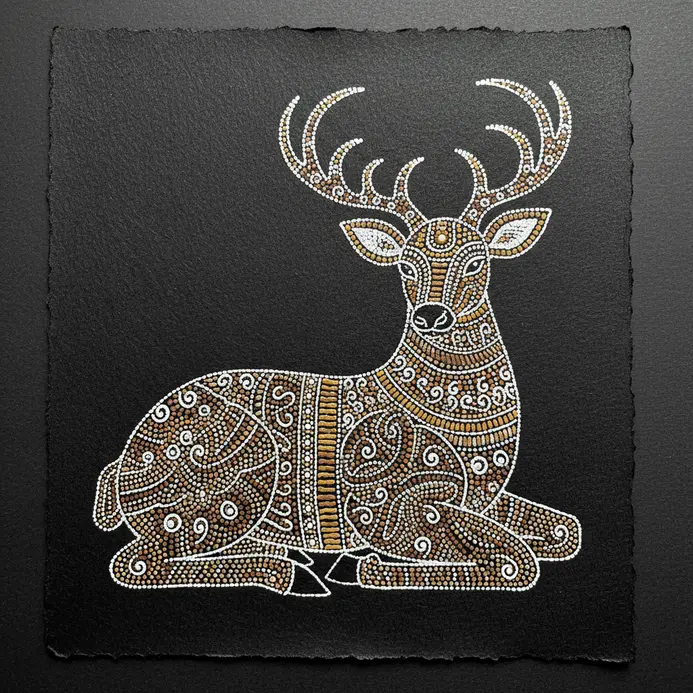
Create a drawing that stands out through confident, continuous linework. Focus on constructing a single fluid outline that captures a calm, seated posture. Keep your pen contact deliberate and steady across the entire shape. The goal involves rendering a cohesive figurine rather than fragmented anatomical parts. Sketch the foundational bean body and curved neck using a light pencil. Commit to the final boundary line with a black fineliner pen. This instrument delivers the uniform dark thickness required for strong tribal silhouettes in traditional art forms. The approach simplifies anatomy into recognizable folk icons. Treat overlapping limbs as continuous extensions of the central body. Draw single flowing lines across joints instead of separate intersecting segments. This unification produces sculptural cohesion typical of authentic folk aesthetics.
9. Block In a Bhil Style Flower Bed Sketch
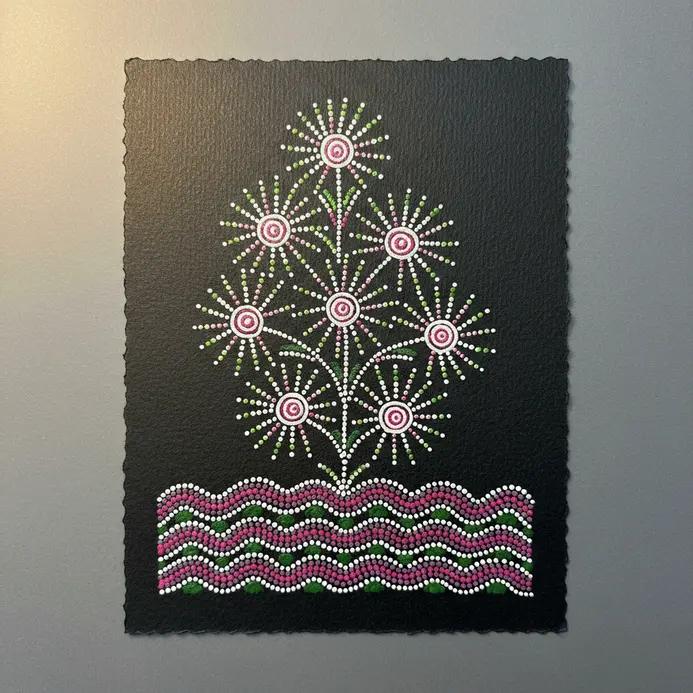
Construct a structural blueprint before applying vibrant colors to the page. Translate natural botanical forms into flat geometric circles and teardrops. This foundational mapping establishes clear pathways for subsequent pattern application in art painting. Draw a firm horizontal ground line using a 2H pencil. Position the flower heads as simple circles connected by rhythmic, sweeping stem lines, reminiscent of traditional Indian folk art. Transform those initial circles into stylized petals by adding clustered almond-shaped leaves. This method organizes random elements into balanced decorative arrangements. Add a small sun or bird icon if the overall layout appears uneven, enhancing the traditional art aesthetic. Exploring easy things to draw for beginners strengthens your foundational drafting skills.
10. Curled Bhil Snake Pattern Motif: Practice the Coiled Dot Technique
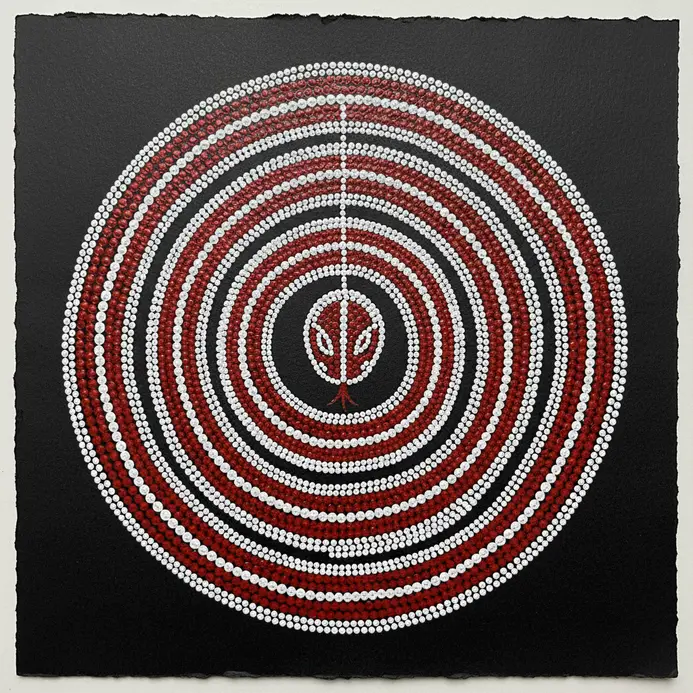
Render a mesmerizing spiral that demonstrates contour mastery. The coiled snake represents protection within tribal traditions and serves as an ideal subject for the coiled dot technique. Apply rows of dots that follow the spiral curve inward. Construct the body from the outer edge toward the center to maintain consistent spacing. This exercise teaches form development through strict rhythmic application. Keep your paint consistency similar to thick yogurt. Proper viscosity ensures every applied mark retains a perfect circular shape without flattening or running. Observing contour repetition improves your easy bhil drawing ideas output.
11. Sample Chapter
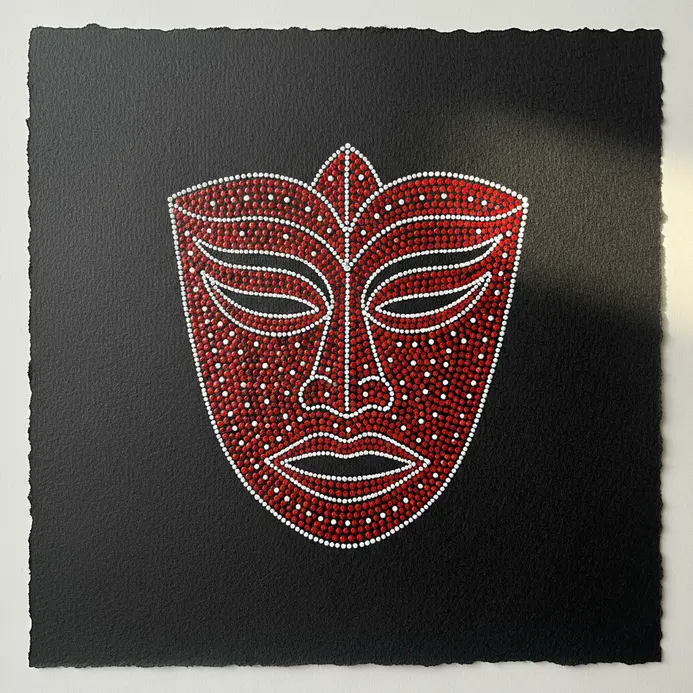
This chapter provides essential structural foundations for mask rendering. Focus on symmetrical eye placement and sharp forehead angles. Apply heavy black boundaries around the facial perimeter before filling interior regions, a common technique in Indian folk art. Use alternating red and white pigments to generate maximum contrast across facial curves. Practice steady pressure to maintain circular dot shapes throughout the surface. Structured repetition guarantees professional results when executing new easy bhil art drawing ideas.
12. Simple Bhil Butterfly Wing Design: Symmetrical Balance for Beginners
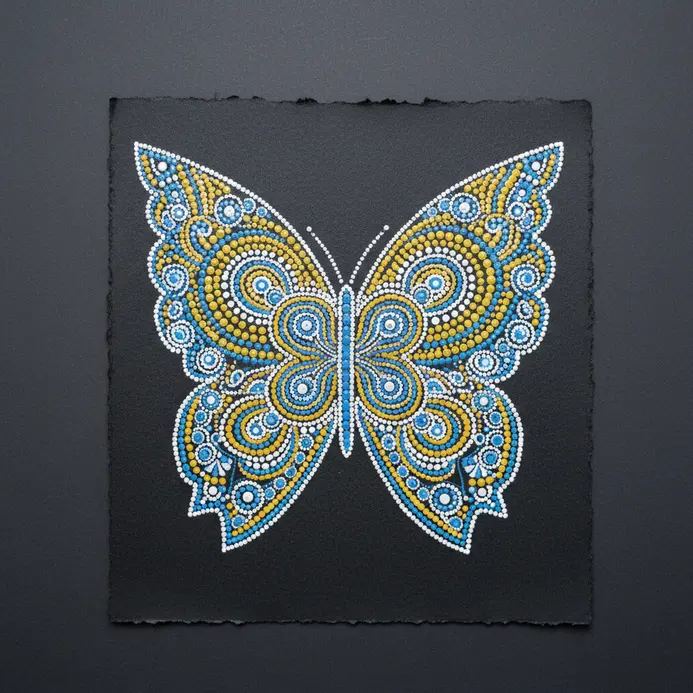
Develop a visually complex layout using the simplest design principle: symmetry. Separate the butterfly into mirrored sections filled with chevrons and wave patterns inspired by gond art. This symmetrical constraint forces intentional, measured application in art painting techniques. The resulting artwork captures rustic charm while maintaining graphic precision. Draw a vertical center line and wing outlines using a 2H pencil. Fill each mirrored zone with dot work and linear marks. Replicate every left side mark on the right side to maintain perfect alignment. Fold the paper along the central axis and check against a light source if shapes drift out of position. This structured exercise serves as a reliable drawing practice session for improving manual control.
13. Create a Running Bhil Hunter Figure Sketch
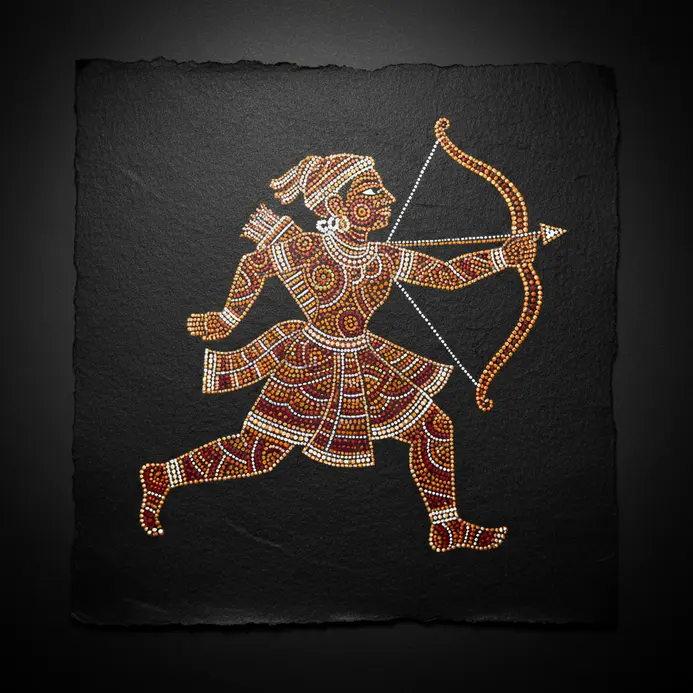
Let’s capture the energy of a Bhil hunter in motion with a sketch that prioritizes gesture over realism. Start by drawing a simplified running figure using a fine-liner pen pen to establish bold, continuous outlines. Fill the resulting silhouette with rhythmic internal patterns that suggest forward motion. Include a stylized bow and arrow aligned with the central thrust. The repetitive dot arrangement generates mesmerizing visual flow that narrates traditional hunting scenes. Start your pattern application near the outer edges and work inward to preserve crisp boundary lines. Drafting dynamic figures expands your easy bhil drawing ideas collection.
14. Bhil Style Moon Deity Drawing: Capture Nighttime Spiritual Energy
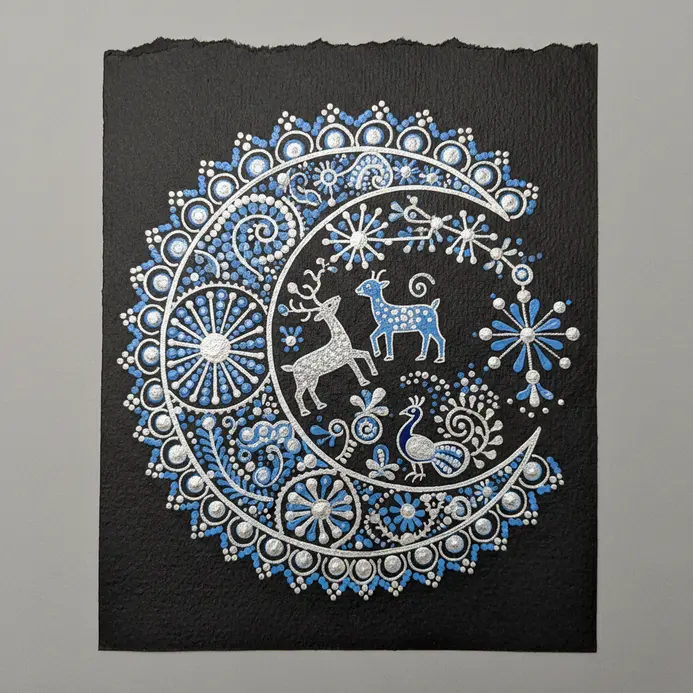
Construct a night sky centerpiece that conveys spiritual vibration. Transform a basic crescent into a luminous focal point surrounded by dense tapestry patterns. Build the surrounding space using deep indigo washes. Fill every available zone with rhythmic silver and white marks. The application relies on the tapki dotting technique To generate optical shimmer, incorporate techniques found in sohrai art. Layering thousands of tiny marks mimics reflected moonlight against dark atmospheric fields. Minor spacing variations disappear within the overall rhythmic density, making this approach highly forgiving for beginners. Avoid leaving empty space around the central crescent. Ground the figure by extending a starry dot field across the entire background. Exploring easy Bhil painting ideas provides additional night motif references.
15. Sketch a Potted Bhil Tribal Plant
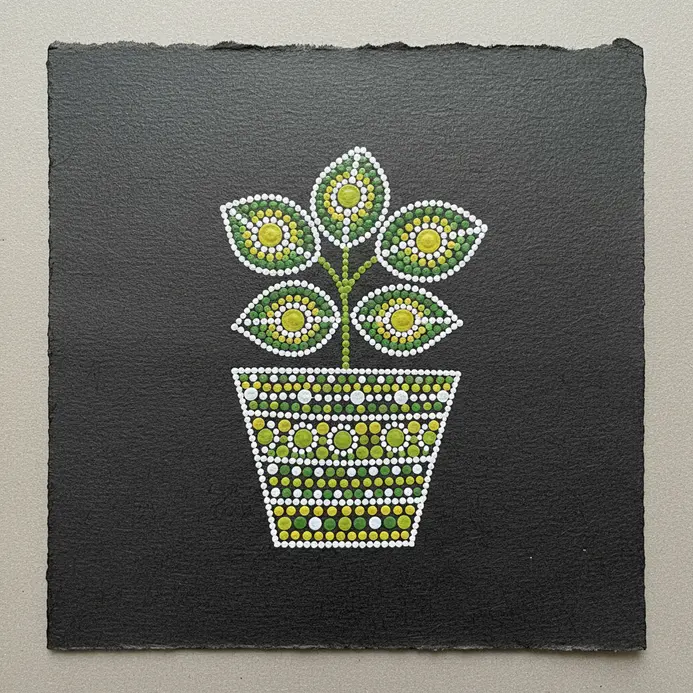
Assemble a contained folk art piece that bridges traditional styling with modern placement. Begin with a simple terracotta pot outline and a gently sweeping central stem. Attach stylized floral shapes and foliage defined by bold black boundaries. Transform those basic geometric shapes using dense, colorful dot patterns. The repetitive mark application generates meditative focus while producing immediate visual contrast. Keep all leaf shapes restricted to basic teardrop and oval forms. Simplified external boundaries allow the internal dot work to dominate the composition.
16. Bhil Drum Player Silhouette Design: Combine Instruments with Tribal Figures
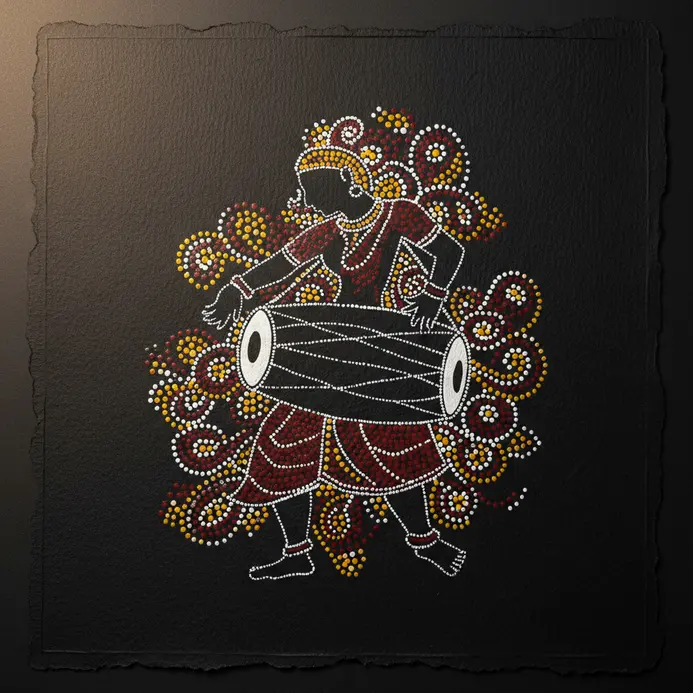
Represent tribal music using a single, striking silhouette layout. Draft a solid black figure positioned mid-motion holding a barrel-shaped double-sided drum. Include dynamic drumsticks and flowing garment edges to convey rhythm. The specific turban and clothing folds communicate cultural context without relying on facial detail. This minimalist graphic approach transforms complex cultural narratives into instantly readable visual symbols. Sketch an active leaning pose first to eliminate stiff posture. Negative space around the instrument amplifies the sense of forward motion and beat. Combining instrument geometry with figure outlines strengthens your easy bhil drawing ideas execution.
17. Form a Grouped Bhil Bird Flock Drawing
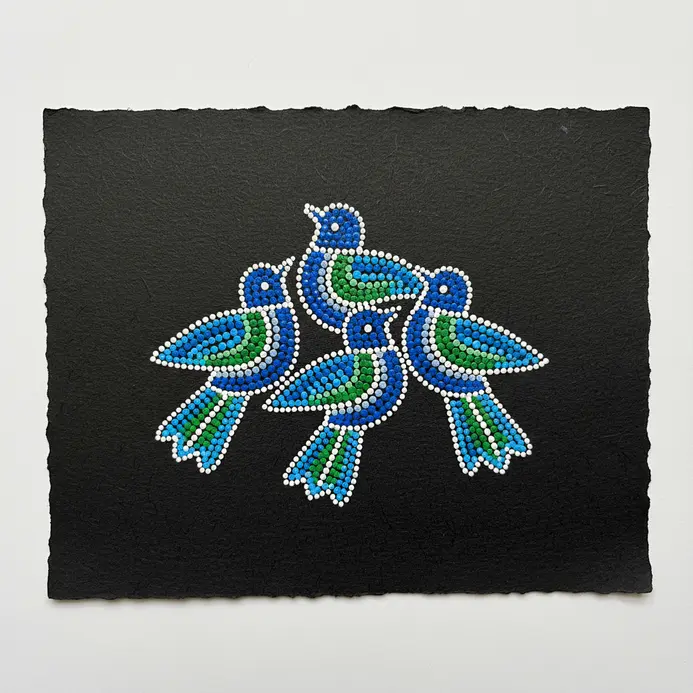
Generate a composition emphasizing collective motion through overlapping forms. Render simplified bird shapes as teardrops and ovals arranged along a unified flight path, inspired by traditional art forms. Fill these overlapping bodies with flat color bases before applying dense dotted coverage. The repeated shapes generate joyful kinetic energy, a hallmark of bhil art. Rhythm remains the primary focus when arranging multiple identical forms. Overlapping boundaries create depth without requiring shading or gradient work. Sketch a gentle S-curve guideline to position the flock before committing to final ink. Allow figures to intersect freely to establish organic grouping. Practicing pencil drawings animals improves your ability to balance overlapping silhouettes.
18. Spotted Bhil Leopard Body Outline: Prepare an Ideal Canvas for Alternating Dots
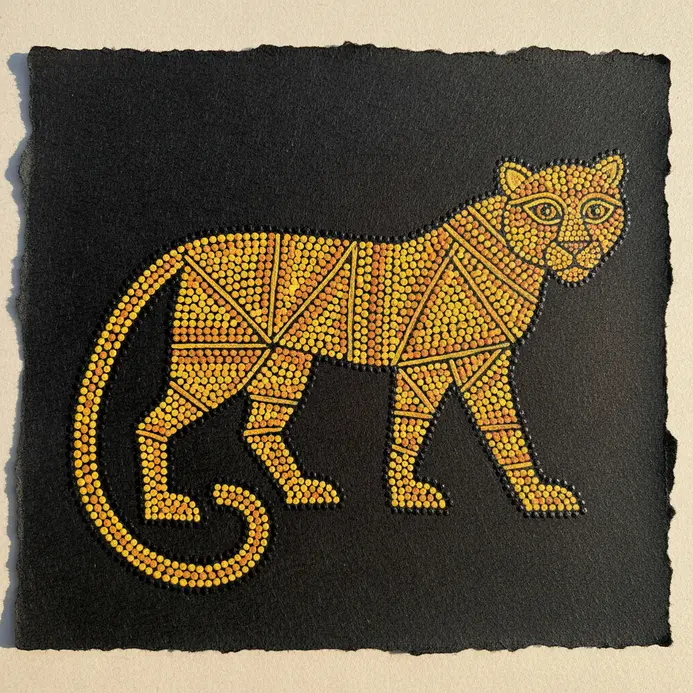
Design a structured silhouette that transforms large surface areas into manageable pattern zones. Draw a bold outer contour that contains thinner internal flow lines. Separate the body into distinct organic sections to guide subsequent color placement. This segmentation prevents visual muddiness and maintains clear spacing boundaries. Dividing intimidating shapes into smaller segments reduces mental fatigue during long sessions. Draft the full design lightly with pencil before applying permanent ink. Trace the outer border with a thick marker. Switch to a fine-liner pen for all internal guides and empty spot circles. Structuring internal boundaries optimizes your easy bhil drawing ideas workflow.
19. Draw an Interlocking Bhil Human Chain Pattern
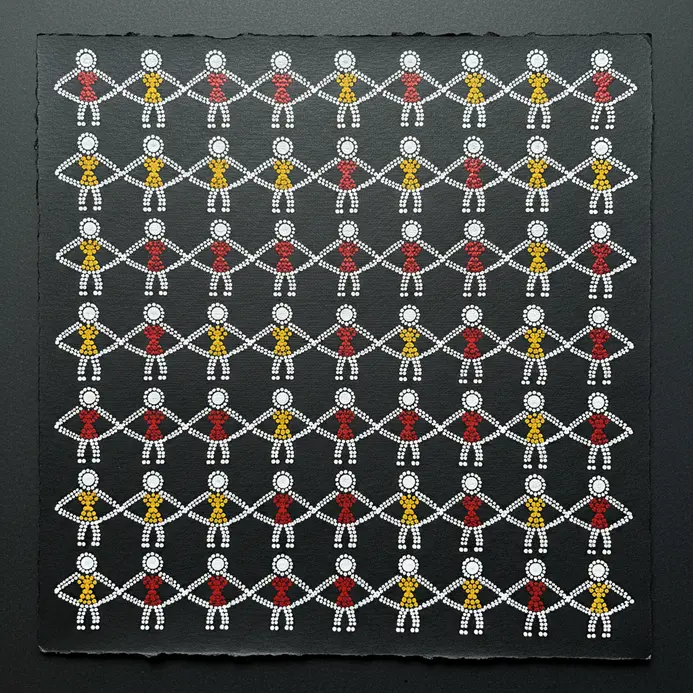
Construct a continuous celebratory sequence using repeated geometric modules. Join circular heads and trapezoidal torsos with extended arms and legs to form an unbroken chain. The interconnected limbs generate rhythmic visual flow across the entire page. Apply dense colored dot fields inside each figure to construct form through texture rather than solid pigment. The repetitive marking process builds a steady hand while reinforcing the authenticity of folk art traditions. Reviewing simple drawings to practice strengthens your capacity for uninterrupted repetition. Tilt each head slightly or bend knees at varying angles to eliminate mechanical stiffness.
20. Floating Bhil Cloud Motif Sketch: Fluid Lines for Sky Elements
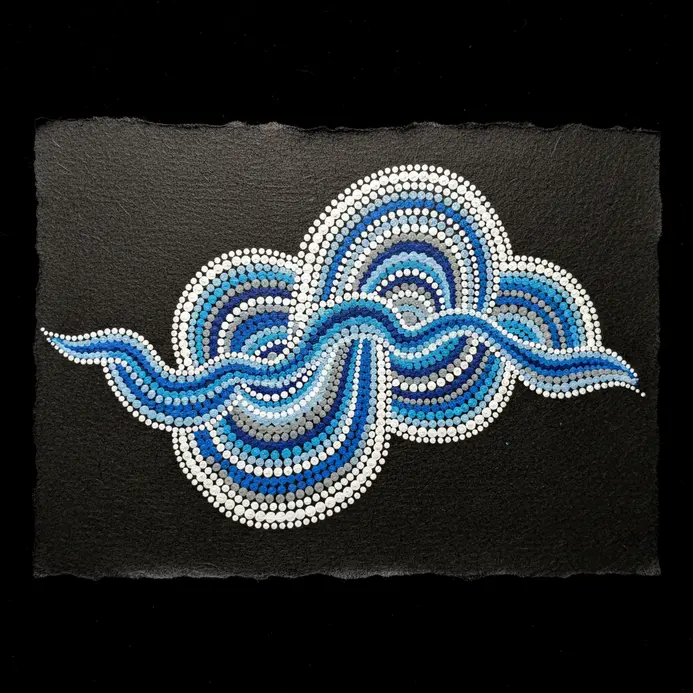
Bridge realistic weather shapes with stylized tribal boundaries. Render soft smoke and ribbon outlines that suggest atmospheric movement. Fill the interior zones with rhythmic wavy lines and dot clusters that represent precipitation and fertility. The contrast between organic external curves and disciplined internal marks defines the aesthetic of Indian folk art. Sketch the fluid silhouette lightly using a soft lead pencil before committing to permanent ink boundaries. Maintain relaxed hand pressure while ensuring pattern consistency across the entire cloud mass. Integrating atmospheric elements diversifies your easy bhil drawing ideas portfolio.
21. Outline a Bhil Archer Aiming Figure Illustration
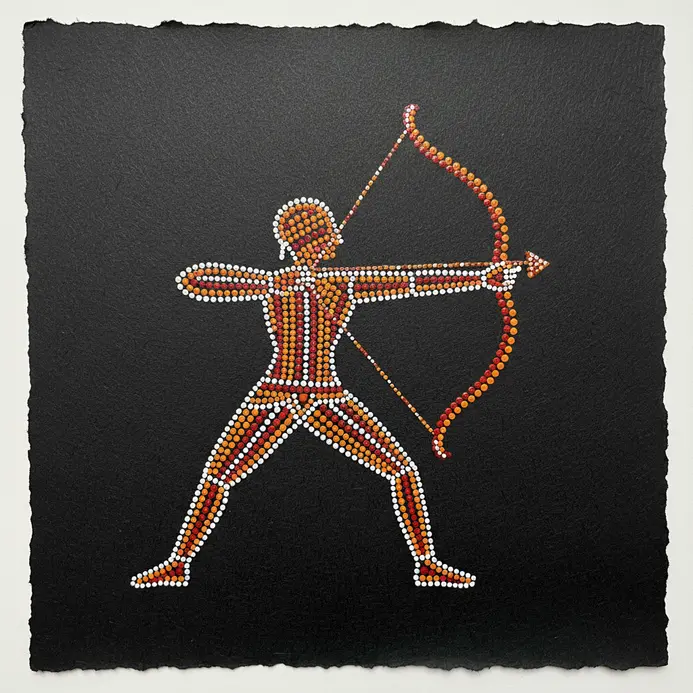
Render a profile subject displaying intense kinetic tension, reflecting the energy found in bhil art. Draft the leaning torso and extended drawing arm using clean, continuous boundaries. Represent traditional garments using simplified linear folds. Shape a thin bamboo bow with a tight curved arc to demonstrate full draw mechanics. The composition communicates heritage through posture alone. Position the drawing-hand elbow high and pointed backward to indicate proper shoulder engagement. Trace all final contours using a fine-liner pen to maintain crisp boundary definition across the entire composition.
How to Seal and Protect Your Finished Painting
Apply a protective sealant only after all pigment dries completely to prevent surface cracking. Brush two thin, even coats of matte acrylic varnish across paper or canvas board surfaces typical of Indian folk art techniques. Use a soft, wide applicator and allow complete curing time between each application layer. Maintain a dust-free, well-ventilated workspace during this final step. Opt for a spray varnish formulated for acrylics if you require a uniform finish without visible brush strokes. Position the can twelve inches above the artwork. Execute light, sweeping passes to prevent heavy drips or gloss pooling. This protective layer preserves color saturation and shields the artwork from environmental moisture, ensuring the longevity of traditional art pieces.
Conclusion
Completing traditional folk projects demands structural patience and careful boundary mapping. Always define clear silhouettes before applying internal pattern coverage. Working through these easy bhil drawing ideas demonstrates how basic outlines transform into striking visual statements through methodical dot placement. Store your markers horizontally to guarantee smooth ink flow for consistent mark application. Building complex scenes becomes straightforward once you master drafting individual motifs like solar discs, avian profiles, and botanical arrangements. Selecting an unfamiliar animal or object pushes your boundaries while maintaining familiar stylistic frameworks. Pick the motif that interests your creative goals and assemble your materials today.
FAQs
Q: What is Bhil art and how does it fit into the broader Indian art form?
A: Bhil art is a centuries-old folk art form practiced by the Bhil tribe, a tribal community in India primarily found in central India and Madhya Pradesh. This traditional tribal art features indigenous motifs, scenes from tribal life and mythology, and a deep connection to nature. As an Indian art and folk painting style, Bhil painting shares roots with other folk art forms like Warli art, Pithora painting, Gond tribal art and Santhal painting, yet it preserves its unique visual language, often using uniform dots and rhythmic patterns to create vibrant compositions.
Q: What materials and natural dyes are used in Bhil painting?
A: Bhil artists traditionally use natural materials and pigments, including red ochre and other natural dyes made from earth pigments, plant extracts and charcoal. Natural pigments on cloth, handmade paper or walls are common. Many tribal artisans still prefer these natural dyes for their longevity and cultural authenticity, though contemporary art adaptations may use acrylics and commercially available colors for convenience.
Q: How is Bhil art different from Warli, Gond, or Pithora painting?
A: While all are folk art from Madhya Pradesh and central India, each tribal style has distinct features. Warli painting, primarily practiced by the Warli community, uses geometric forms and white pigment on red ochre backgrounds. Gond art often includes intricate patterns, vibrant colors and mythic animal forms. Pithora painting is ritualistic art associated with the Rathwa and Bhilala communities and is characterized by narrative scenes covering entire walls. Bhil art is noted for its uniform dots in rhythmic patterns, stylized figures and motifs reflecting Bhil community life and the forest environment.
Q: Can beginners create easy Bhil drawing ideas at home, and what simple motifs should they try?
A: Yes—beginners can start with easy Bhil drawing ideas by practicing simple motifs such as trees, deer, birds, bows and arrows, and silhouetted human figures filled with uniform dots or short strokes. Start on paper or fabric with basic shapes, then fill shapes with rhythmic dots or lines to emulate the traditional style. Using natural colors like red ochre tones, black and white can give your art a folk painting feel even with simple tools.
Q: Are there specific themes or stories commonly depicted in Bhil and other tribal paintings?
A: Bhil and related tribal paintings frequently portray scenes from mythology, hunting scenes, celebrations, ritual events, and everyday tribal life, showcasing the rich heritage of traditional art forms. The art often carries ritualistic significance and documents oral histories of the community. Like Madhubani painting from Mithila or Phad painting which tells epic tales, Bhil art may also communicate myths, seasonal cycles and the community’s relationship with nature.