
Essential Pigments and Fine Brushes for Traditional Motifs
Authentic color saturation demands opaque pigments for longevity. You should choose a limited palette of opaque gouache or acrylic paints in traditional crimson, deep yellow, and green, commonly found in indian art paintings. These colors provide the necessary matte finish and high coverage for layering. A sharp brush point remains essential for creating the consistent, fluid outlines that define each stylized motif. This specific tool allows precise control over line weight, which remains critical when drawing repetitive lotus petals or floral markings on livestock. Beginners should select a few high-quality primary colors and two fine brushes to practice with, as mastering these tools directly translates to cleaner results within any easy pichwai drawing ideas session.
Selecting Motifs for Balanced Pichwai Compositions
Effective design hinges on achieving visual balance through careful placement. Beginners should aim for a single-element composition that feels complete without appearing cluttered. A large, stylized lotus blossom placed centrally on the paper serves as an ideal starting point. This approach allows you to focus on perfecting symmetry and dot details without managing a complex scene. Alternatively, a single cow face with detailed floral markings offers practice in creating a focal point with surrounding decorative patterns. The method grants the primary motif ample space while framing it with a simple border of vines. Following this structured workflow ensures every easy pichwai drawing ideas project maintains a traditional sense of harmony.
1. Draw a Stylized Peacock Silhouette: Simple Line Art for Beginners

What captures the traditional aesthetic more effectively than a graceful bird silhouette? You will focus on clean, flowing lines to capture the elegant posture and magnificent fan tail. This approach strips away complexity, leaving a strong graphic image that remains surprisingly straightforward. The natural decorative shape of the bird makes even a beginner line art look intentional. Begin with a light HB pencil sketch to map out the form completely. Draw the signature curve for the neck first, then place the teardrop body at the base. For the tail, sketch a vertical line as your central axis and build the fan shape outward. This guideline prevents the common error of an uneven tail while exploring easy pichwai drawing ideas. Trace over the balanced sketch using a confident stroke and a fine-liner pen. Use your entire arm for sweeping curves to maintain smooth edges. If you need additional practice with line work first, check out these pichwai painting ideas in 2026. examples of line drawing art that can be found on pinterest for inspiration. for inspiration. Keep your hand pressure light and let the angle create the line weight.
2. Contour Line Lotus Flower Sketch: Build Symmetry with Simple Curves
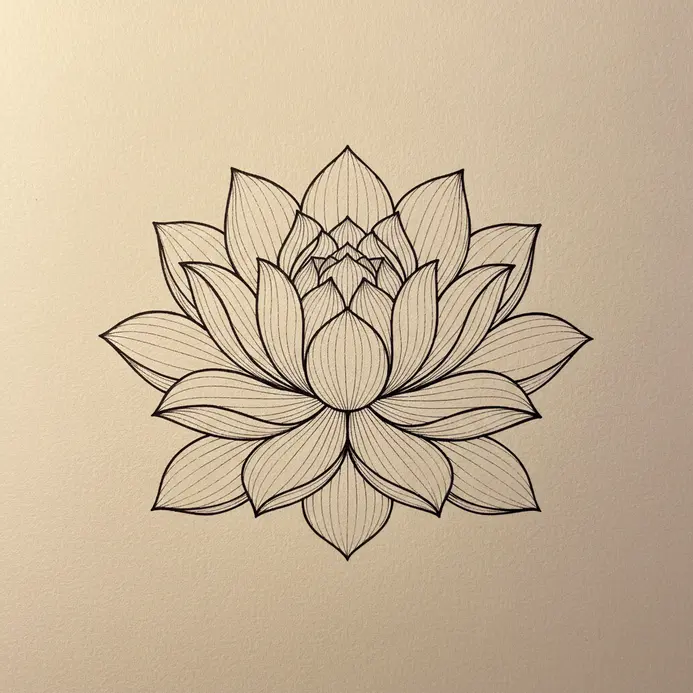
This technique builds confidence in your line work while creating a perfect, balanced icon. You will focus strictly on contour drawing, using only outlines to define the lotus shape. Every petal flows from a central anchor point using continuous curves. This method forces you to see the subject as a series of simple shapes rather than a complex subject. Begin with a light HB or 2H pencil is essential for capturing detailed elements in your artlovers projects. to sketch your guidelines accurately. Draw a small circle for the seed pod, then use it as your anchor for each sweeping petal. Use your forearm for larger curves instead of relying solely on your wrist. A helpful method involves practicing the curve in the air before your pencil touches the paper for better control. Maintaining symmetry requires paying attention to the negative space between the petals. The dotted layout method allows you to map petal tips before committing to final lines. This approach gives complete control over scale during your easy pichwai drawing ideas sessions. Reviewing cartoon characters curly hair tutorials demonstrates additional practice methods for continuous lines.
3. Simplistic Standing Cow Outline: A Classic Pichwai Motif in Bold Lines

You want to capture the serene, sacred nature of this folk art without getting lost in details. A minimalist cow outline provides an ideal starting point. You will create a clean graphic silhouette defined by graceful lines that highlight the animal arching back and peaceful gaze. Removing ornate patterns allows the form and spiritual essence to remain completely visible. To achieve that classic look, try using a fine-tipped brush for detailed indian art designs or a permanent marker for your final strokes. Sketch the basic shapes lightly in pencil first. This preparatory step helps you nail the proportions before committing to beautiful contours. Every beginner should attempt this straightforward project early in their easy pichwai drawing ideas practice routine. Reviewing cartoon characters curly hair tutorials reinforces steady hand movement for similar outlines.
4. Create a Decorated Pichwai Border Pattern Set for Practice
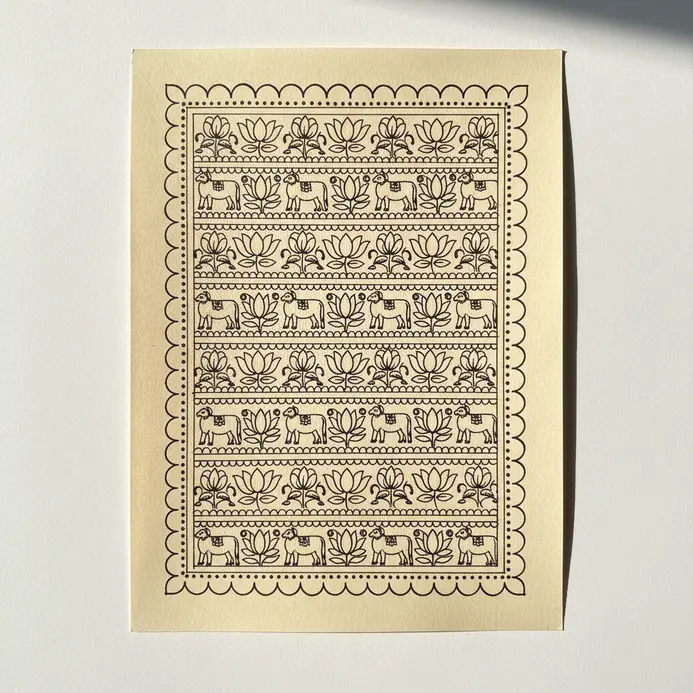
You will construct a beautiful ornate frame for your practice sheets, inspired by ideas and inspiration for easy pichwai. A traditional border consists of a dense repeating pattern that wraps around a central scene. You will fill the space with floral motifs like lotuses, peacocks with their distinctive feathers, and flowing vines. This rhythmic repetition creates visual harmony that aligns with the core art form. Start every project with a light pencil and a ruler to create a grid. This system keeps your spacing consistent so decorative elements do not drift out of alignment. Sketch each unit lightly before applying paint, building from base colors to fine details. Practicing these frames trains your hand for the precise control required in every easy pichwai drawing ideas session. Explore our guide on simple drawings to practice your skills in indian art. for additional foundational exercises.
5. Minimalist Flute and Feather Icon: Perfect for Small Sketchbook Studies

Sometimes you want to capture that traditional feeling without committing to a massive detailed piece. This elegant icon provides an ideal solution. You will construct a clean graphic from just a horizontal flute and a single flowing feather. The design focuses on crisp lines and high contrast to create an airy silhouette perfect for ink work. Securing a few specific tools guarantees success for this project. Grab a fine-liner pen with a tiny nib for your final tracing. Use smooth drawing paper to prevent the ink from bleeding and ruining delicate lines. Start with a light sketch to map the flute axis and feather curve before committing to final strokes. This compact project demonstrates how easy pichwai drawing ideas fit neatly inside sketchbook margins. Reviewing cartoon characters curly hair tutorials builds additional line confidence for small formats.
6. Symmetrical Tree of Life Sketch: A Meditative Pattern for Beginners

Sketching a deeply calming piece requires focusing on mirrored geometry. The Tree of Life design features a central trunk with matching branches and roots. You will tie the entire structure together with a circular canopy that resembles a mandala pattern. This composition prioritizes visual balance over strict botanical accuracy. The core mechanism relies on a strict axis of symmetry running down the center. Drawing a single vertical guide line removes most guesswork from the process. This repetition allows you to sink into a relaxing rhythmic flow as you add decorative elements. Practicing basic dot patterns under time pressure improves steady hand control for future easy pichwai drawing ideas projects. Hold your paper up to a mirror halfway through the process to spot hidden imbalances quickly.
7. Draw a Small Lotus Bud Cluster Illustration with Repeated Petals

Creating delicate clustered shapes provides excellent practice for disciplined pattern work. This illustration focuses on a central bud accompanied by two smaller surrounding forms. You will build each shape from overlapping teardrop petals to achieve volume. The final result delivers a clean traditional motif without requiring advanced technique. Begin by lightly sketching a vertical line for the main stem alongside two angled lines for the secondary buds. Draw a small oval at each tip to guide your placement. Focus on how to overlap the petals correctly to generate three dimensional volume rather than a flat silhouette. Outer petals must appear broader while inner ones shrink toward the top. This repetitive exercise teaches scale control for all easy pichwai drawing ideas attempts. Keep initial structural lines extremely faint to allow easy erasure after final outlining.
8. Stylized Mango Shape Motif: Practice Curved Line Control with This Design

Mastering continuous curves demands a dedicated practice motif. You will focus entirely on the stylized mango shape, also known as a paisley. This design relies on a graceful curving spine as its foundation. Drawing varied arcs and tight spirals creates a balanced pattern that trains your hand muscles effectively. Start every attempt by sketching a soft S curve as your primary guide line. All decorative details inside the shape should radiate from or mirror that central path. Practicing the Internal decorative segments can be enhanced by exploring related interests in artlovers’ collections. one zone at a time prevents lopsided results. Rotating your paper ensures you always pull lines toward your body for maximum smoothness, which is a technique found in inspiration for easy pichwai. This single exercise dramatically improves your line quality for all future easy pichwai drawing ideas attempts. Reviewing cartoon characters curly hair tutorials reinforces smooth curved motion for beginners.
9. Geometric Swirl Pattern Fill Element: A Versatile Decorative Tool

Filling awkward background spaces requires a reliable decorative solution. A geometric swirl pattern provides excellent coverage through structured grids and flowing organic lines. You will alternate rigid shapes with sweeping curves to generate visual rhythm. This combination makes borders and backgrounds feel dynamic instead of stagnant, which is a hallmark of Indian art and can be found on Pinterest’s best ideas and inspiration. The successful execution of pichwai painting ideas depends on strict rhythmic repetition across the entire field. You will solve the common design flaw where patterns feel overly rigid or completely chaotic. Begin with a simple shape like a hexagon and let a single swirl flow outward from each corner. This versatile element serves as an excellent stepping stone toward advanced easy pichwai drawing ideas execution. Explore beautiful mandala drawing ideas to expand your geometric background skills in pichwai painting.
10. Sketch a Basic Krishna Face Profile Outline for Portraits

Capturing a recognizable divine portrait begins with a single continuous stroke. You will construct a clean side profile using fluid lines that echo the folk art tradition. Aim for an elegant silhouette with soft oval proportions instead of realistic anatomy. This simplified foundation allows easy addition of the iconic crown and feather later. Use a light-grade pencil and move your shoulder to guide the long forehead curve. Maintain feather light pressure to adjust proportions while you draw. Avoid rigid V shapes for the jawline since they destroy the required softness. If proportions prove difficult, apply geometric construction by sketching a circle for the skull and attaching a smaller jaw arc. This method locks the ratio before you refine details for any easy pichwai drawing ideas project. Keep the ear positioned carefully between eye and chin guides for perfect alignment.
11. Small Teardrop Feather Pattern: Fill Spaces with Repetitive Elegance

Transforming empty background space requires a gentle repeating motif. You will use a series of soft flowing shapes to mimic a delicate plume texture. This approach turns negative areas into elegant visual fields that enhance the main subject. The rhythmic flow prevents stiff empty corners without competing for attention. Begin by sketching a gentle curved path across the surface using a technique found in inspiration for easy pichwai. light graphite pencil. Attach consistent teardrop shapes along the entire guide line. Maintaining identical sizing guarantees a seamless professional look across the page. Focusing heavily on the central curve line prevents individual shape errors from disrupting the overall pattern. This straightforward background technique supports every easy pichwai drawing ideas composition beautifully. Reviewing cartoon characters curly hair tutorials reinforces consistent shape repetition for decorative fields.
12. Traditional Scalloped Edge Border: Frame Your Drawings with Classic Detail
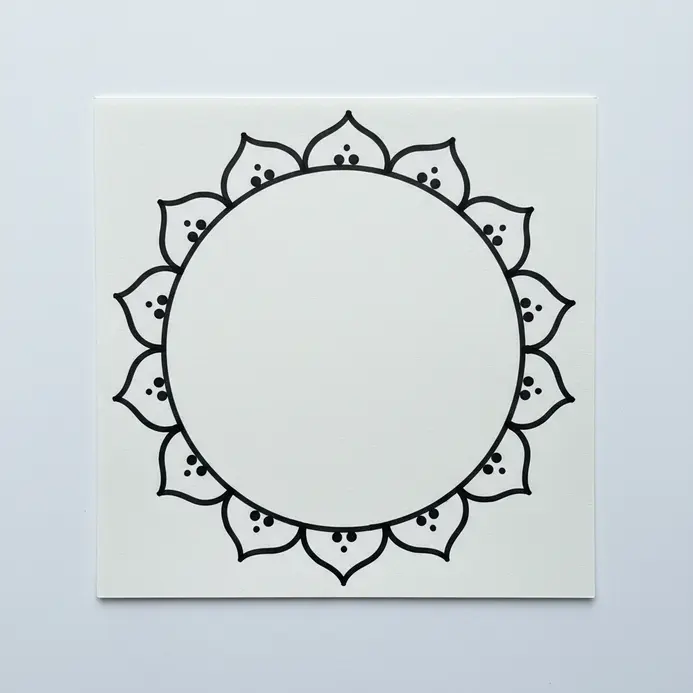
Giving your artwork a professionally finished appearance requires a structured framing technique, often seen in diy projects. You will execute a traditional scalloped edge consisting of uniform semi-circular arcs. The undulating frame creates a rhythmic boundary that elevates the overall composition. This classic border immediately directs viewer attention toward your central subject. Perfection demands using a compass for matching curve generation. Mark evenly spaced points along your paper edge first, then swing the compass from each midpoint. This mechanical approach guarantees identical arcs across the entire border. Practicing precise arc measurement reinforces symmetry for all easy pichwai drawing ideas attempts. You will find excellent foundational exercises in our guide on Pinterest’s best ideas and inspiration. simple drawings to practice to master this framing method.
13. Create a Round Mandala Style Lotus Drawing with Concentric Layers

Constructing a heavily layered design requires built in measurement supports. You will start from a central bud and expand outward through distinct rings of petals. Adding vein lines and dot patterns at each stage builds complexity gradually. The underlying concentric circle structure acts as a perfect measurement guide throughout the process. This framework prevents overwhelm by isolating each layer for individual attention. Rotating your working surface instead of your body guarantees smooth consistent lines around each ring. Following this circular method delivers a traditional lotus that ranks highly among popular easy pichwai drawing ideas collections. The layered approach teaches patience and precision simultaneously for steady skill progression.
14. Minimalist Hanging Lamp Motif: A Simple Way to Practice Symmetry

Executing a symmetry exercise in three dimensions requires structural thinking. You will build a hanging lamp frame from clean geometric components. The negative space between the wooden dowels carries equal importance to the physical rods themselves. When suspended and illuminated, the structure casts perfectly balanced shadows that verify your measurements instantly. This method forces you to verify balance from every viewing angle. You must confirm symmetry on all sides rather than relying on a single front view measurement. Cutting every rod to identical length before assembly prevents tiny errors from ruining the entire frame. This structural approach complements visual projects like easy pichwai drawing ideas by reinforcing spatial awareness. If you seek expanded geometric training, explore more geometric drawing techniques here to strengthen your dimensional drafting skills.
15. Simple Vine and Leaf Border: An Essential Border Element

Adding graceful rhythmic energy to your edges requires a classic botanical motif. You will draw a continuous flowing vine paired with alternating stylized leaves, inspired by traditional pichhwai. These shapes often derive from sacred peepal or mango leaf silhouettes. The resulting nature inspired boundary frames your central subject perfectly. This design directs viewer attention toward main figures while connecting the artwork to pastoral themes. Maintaining minimal interior leaf details keeps the composition clean and readable. A thin gold outline around each segment generates visual magic without adding heavy shading. Mastering this organic border prepares you for advanced easy pichwai drawing ideas executions. Reviewing cartoon characters curly hair tutorials builds continuous curved stroke confidence for this vine framework.
16. Draw a Stylized Cloud Wave Pattern for Fluid Decorative Lines

Generating a boundary that mimics flowing cloth requires careful curve management. You will connect smooth S curves into a continuous decorative border. These ornamental lines represent the heavens through a stylized geometric framework rather than realistic cloud depictions. The resulting structure adds traditional depth to any composition. Begin by drafting a single sinuous backbone across your workspace. Maintain soft organic transitions between peaks while avoiding sharp geometric angles. Adding smaller secondary curves along the primary path creates a convincing billowing effect. Applying the double-stroke line technique along the contours instantly thickens the visual impact. This atmospheric border enhances the overall narrative quality inside your easy pichwai drawing ideas projects. Tucking tiny buds into the wave hollows before applying metallic accents completes the design, a technique used in indian art.
17. Single Standing Peacock Feather: Focus on Venation and Curve

Highlighting divine grace through organic shapes requires steady line execution. You will draw a long sweeping curve to establish the central spine. The detailed texture depends on a fine-tipped kalams brush for creating dozens of parallel radiating strokes. This rhythmic repetition of simple strokes generates beautiful surface flow across the canvas. The success stems from balancing a strong central curve with delicate peripheral detailing. Practicing control across this single shape builds stamina for larger traditional compositions. Focusing on the feather flick motion starts each barb firmly against the spine, which is essential in pichwai painting. Lifting the brush gradually tapers the line into a hair thin endpoint. For additional line control examples, review examples of line drawing art to observe professional brush handling techniques.
18. Small Symmetrical Flower Bud Motifs: Quick Warm-Up for Line Control

Generating consistent line quality before major projects requires targeted repetition. This bud exercise trains you to combine straight stems with curved foliage accurately. You will place the central bud at the top while adding matching leaf pairs down the sides. This structured practice forces your hand into balanced mirror movements that support all traditional patterns. Wobbly lines usually result from relying on wrist movement rather than elbow joints. Implementing the ghosting technique allows you to practice the trajectory before committing to paper. Hovering your pen above the surface builds muscle memory for smooth symmetric strokes. Upgrading to a brush pen after mastering the basic shape introduces variable line weight exercises. This focused warm up delivers immediate improvement for your next easy pichwai drawing ideas session, ensuring you explore related boards. Reviewing cartoon characters curly hair tutorials reinforces steady curved motion for daily practice.
19. Sketch a Basic Pot and Ladle Motif for Everyday Still Life

Representing abundance and service requires combining simple household geometry. You will construct a graceful bulbous pot paired alongside a long curved ladle. The clean elegant lines make this combination ideal for beginners learning the traditional style. Focusing on basic shapes and symbolic surface patterns delivers a recognizable devotional scene. Begin by drafting the pot form as an inverted teardrop with a flat base. Use a vertical center line to maintain strict bilateral symmetry across the vessel. Sketch the ladle handle as a single sweeping curve before attaching a deep bowl at the terminal end. Adding horizontal bands and dot clusters completes the surface decoration. Switching to fine-line pigment pens guarantees a smooth final outline that ranks among popular easy pichwai drawing ideas selections. You will find useful foundational exercises in our collection of simple drawings to practice to refine your geometric sketching.
20. Floral Petal Border Repeating Pattern: Achieve Rhythm with Repetition

Constructing a decorative strip that flows naturally around your artwork requires spacing precision. You will alternate teardrop and fan shaped petals along a measured baseline. This repeating pattern establishes a steady visual rhythm that guides the eye smoothly across the frame. Maintaining consistent spacing guarantees a seamless tiling effect without awkward gaps. Alternating clusters with single petals prevents monotonous repetition across the entire strip. Rotating each shape slightly during placement generates a gentle organic sway that feels alive. Using light pencil tick marks along a ruler guide ensures perfect distance between every element. This structured approach reinforces proportional accuracy for every easy pichwai drawing ideas execution. Reviewing cartoon characters curly hair tutorials builds continuous stroke confidence for these repeating borders.
21. Simple Cow Face Silhouette Outline: A Quiet Start to Animal Drawing

Attempting animal sketching requires focusing on clean recognizable shapes first, as demonstrated in creative pichhwai examples. You will construct a peaceful cow head using minimalist ovals for the skull and a U shaped muzzle region. Capturing the overall form matters more than rendering individual hairs. This approach produces a striking graphic piece instantly. Prioritizing the silhouette’s integrity teaches proportional relationships and mirror alignment. Filling the complete shape with solid black ink eliminates hesitation marks. Beginning with nearly invisible pencil guidelines guarantees a crisp final marker outline without ghost impressions. This peaceful exercise builds confidence for larger devotional compositions. Reviewing cartoon characters curly hair tutorials reinforces smooth continuous curves for organic animal shapes.
Applying Protective Varnish to Finished Traditional Paintings
Securing longevity for your finished artwork requires a proper sealing process. Works on paper or canvas board using opaque pigments benefit from a matte acrylic varnish application. This product seals surface pigments and delivers a uniform non-reflective finish that preserves traditional aesthetics. Apply the coating in a dust free environment using a broad soft brush. Work using smooth directional strokes to achieve complete coverage without disturbing underlying layers. Allow the initial coat to dry completely before applying a second light layer for total protection. This final sealing step safeguards your work from humidity and dust exposure. Following this procedure ensures vibrant color retention across every completed project.
Conclusion
Completing any sequence of these projects establishes a firm grasp on traditional styling principles. Each practiced motif reinforces muscle memory for precise line control and exact pattern spacing. Mapping your initial silhouette before adding decorative elements guarantees clean final contours throughout the entire piece. These compact exercises serve as reliable stepping stones toward expansive traditional compositions. As your technical skills mature, combining individual elements into a balanced frame becomes significantly easier. Selecting the most appealing concept from our easy pichwai drawing ideas collection and starting with a single confident line initiates your artistic momentum. Keep pen tools stored horizontally to maintain consistent ink delivery, and always agitate pigment bottles thoroughly before application. Your next practice session will undoubtedly evolve into a fully realized traditional framed composition.
FAQs
Q: What is easy pichwai drawing ideas and how does it relate to traditional pichwai art?
A: Easy pichwai drawing ideas focus on simplified motifs and step-by-step methods inspired by traditional pichwai art, making the folkart accessible to beginners while preserving the original beauty and devotional themes of pichwai painting.
Q: What basic materials do I need to start hand painting art for pichwai-style pieces?
A: To start hand painting art in pichwai style you need quality paper or cloth, a set of brushes (fine to medium), basic gouache or acrylic paints, pencils for sketching, and simple embellishments like gold ink; these basics let you explore ideas and inspiration for pichwai without complex supplies.
Q: Can you suggest simple step-by-step ideas about pichwai paintings for beginners?
A: Begin with one motif—such as a peacock, lotus or deity silhouette—sketch lightly, block in flat colors, add decorative borders and simple patterns; these ideas about pichwai paintings break the process into manageable stages so you can find and save ideas as you progress.
Q: How do I save ideas about pichwai or save ideas about easy pichwai while researching?
A: Create a digital board or folder to pin and organize references, use tags like “folkart” or “artforhome,” and regularly curate the collection so you can easily find and save ideas; this practice helps you gather inspiration and track techniques and color schemes you want to try.
Q: What are some ideas and inspiration for pichwai borders and patterns that are easy to replicate?
A: Start with repeating floral motifs, simple geometric bands, stylized clouds and leaf vines; these elements are common in pichwai art and provide high visual impact with low complexity, offering immediate ideas and inspiration for pichwai projects.