What Is Land Art? The Foundation of Earthworks and Environmental Art
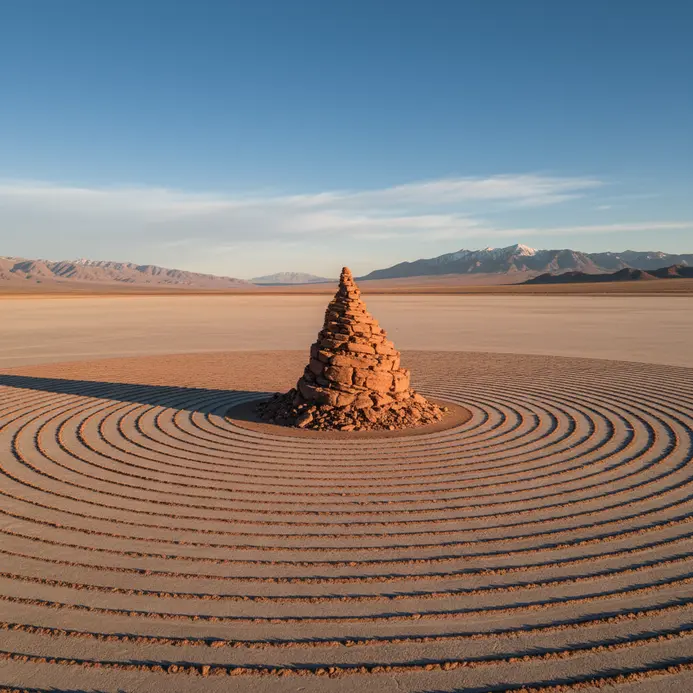
Let’s start at the very beginning. What exactly do we mean when we talk about Stunning Land Art Installations? Picture this. You are not in a gallery. You are standing in a vast desert or on a remote shoreline. The art is not hung on a wall. It is the earth itself, reshaped by an artist’s vision, becoming a unique land work. This is the core of the land art movement that exploded in the late 1960s. Artists like Robert Smithson and Michael Heizer got fed up with the commercial art world and sought to create impactful land works instead. They packed their bags and headed for the American West to create art directly in the landscape.
So what makes a land art installation different from a sculpture in a park? It is all about being site-specific. These works are conceived for one exact location. They use the natural materials found right there, like rocks, soil, and salt crystals. The goal was to create a dialogue with the environment, not just plop an object into it. These artists were thinking about huge ideas, time, change, and our human footprint on the planet. Their works were often massive in scale, stretching over a thousand feet, and sometimes designed to change or even disappear over time.
Why should you care about these sometimes remote artworks? Because they changed how we see art and our world. They asked us to consider our relationship with nature in new ways. They turned a walk in the desert into an artistic experience. And get this, interest in visiting these sites has soared recently. People are making pilgrimages to see Spiral Jetty in Utah’s Great Salt Lake or Walter De Maria’s Lightning Field, both iconic examples of land art. Ready to explore the stunning results of this radical artistic shift? Let’s go.
1. Spiral Jetty: Smithson’s Iconic Salt Lake Masterpiece & Earthwork

Let’s kick off our tour of Stunning Land Art Installations with the absolute legend, the one that started so many conversations. Picture this: a colossal, black-rock spiral unfurling into the rusty pink waters of Utah’s Great Salt Lake. That’s Robert Smithson’s Spiral Jetty, a 1,500-foot-long coil built in 1970 that completely redefined what a sculpture could be. It’s not just a thing you look at. It’s a living part of the landscape, constantly changing with the water level and weather.
Smithson was fascinated by entropy, the idea that everything slowly breaks down. He built the jetty knowing nature would take it over, and boy, did it ever. The piece spent years hidden under water, only to re-emerge later, crusted in dazzling white salt crystals. This cycle of disappearance and rebirth is the whole point. It makes you think about deep time and our tiny place in it, doesn’t it? If you ever make the pilgrimage to see it, remember it’s a rugged, remote adventure. The journey is part of the art.
2. The Lightning Field: De Maria’s Electrifying Grid Installation
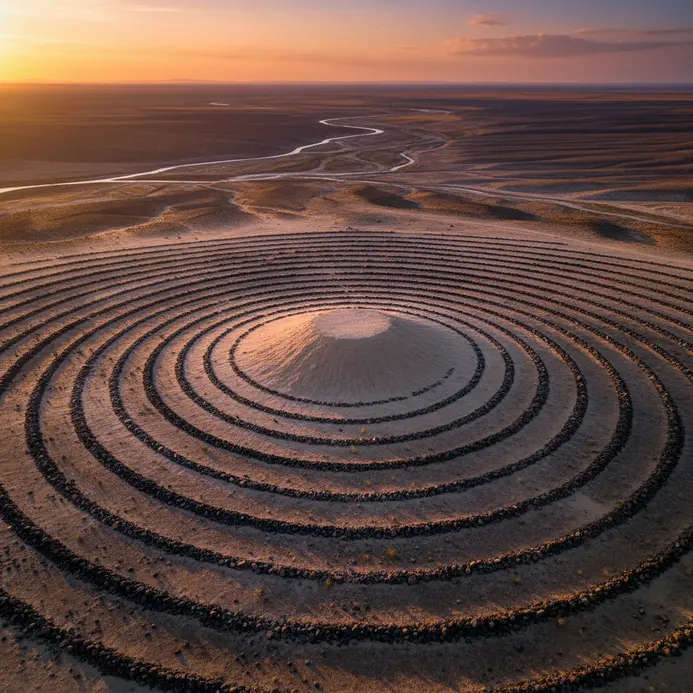
Picture this: you’re in the high desert, surrounded by 400 gleaming stainless steel poles that catch every shift in light. Walter De Maria’s The Lightning Field is a prime example of site-specific works that redefine outdoor art. It’s a precise grid, one mile by one kilometer, with poles varying in height to create a level plane atop the uneven ground. From a distance, it looks uniform, but up close, you see the subtle differences in this land work and how each pole interacts with the sky. The polished steel reflects the desert hues, making the installation change with the time of day.
We love this installation because it’s not about spectacle; it’s about the quiet, meditative experience of being there. The overnight stay required by the Dia Art Foundation lets you witness the golden hour, dusk, and dawn, making the art come alive with changing colors. Why does it resonate? It taps into our desire to connect with nature on a monumental scale, reminding us of our place in the vast world. It’s a work that challenges perception and invites contemplation.
Here’s a handy tip: if you go, pack for all weather and be ready to disconnect, as there’s no cell service, letting you fully immerse in the experience. Booking through Dia Art Foundation is essential, and planning ahead ensures you don’t miss out on this unique adventure. Have you ever thought about how art can make you feel so small yet so connected?
3. Sun Tunnels: Holt’s Celestial Concrete Observatories Sculpture
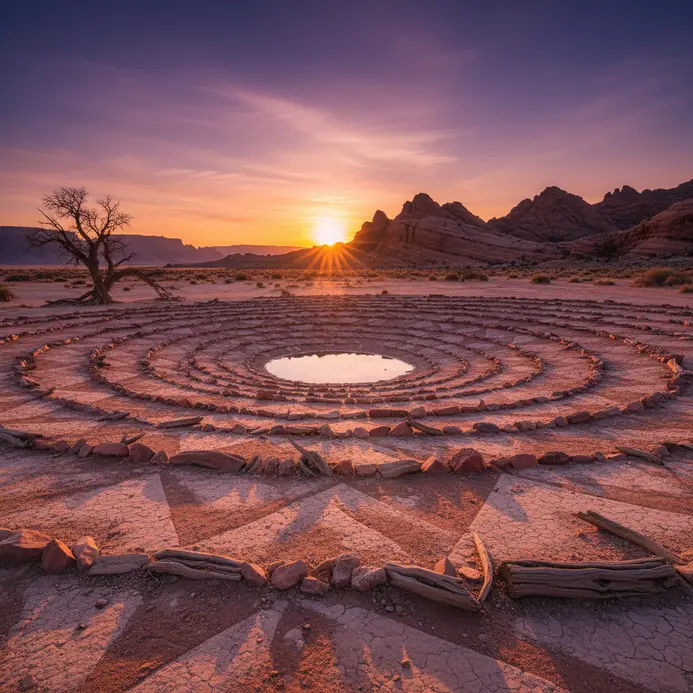
Have you ever wanted to step inside a massive celestial observatory built just for you? Nancy Holt’s Sun Tunnels in the Utah desert gives you that exact feeling. It’s one of those Stunning Land Art Installations that completely redefines what sculpture can be. We’re talking about four huge concrete tubes arranged in an X, perfectly aligned with the sunrise and sunset on the solstices. It’s a solar calendar you can walk through, and it makes you feel tiny in the best way, connecting you directly to the cosmos. People adore it because it’s a perfect, quiet fusion of art, science, and the raw beauty of the natural world.
Inside each tunnel, you’ll find holes drilled to match constellations like Draco and Capricorn. Sunlight streams through these, painting the concrete with moving dots of light that shift with the time of day and year. It’s a brilliant reminder that art isn’t always a static object. Here, it’s an experience of light and time, reminiscent of works displayed in a museum of art. If you ever get the chance to visit, plan your trip around a solstice. Seeing the sun framed perfectly through those tunnels is a moment you won’t forget. Just be ready for the desert’s intense quiet, it makes the whole thing even more powerful.
4. City: Heizer’s Nevada Megalithic Complex Land Art

Picture a sculpture so vast you walk inside it for hours, where the art isn’t on a wall but is the ground beneath your feet and the sky above you. That’s the mind-bending experience of Michael Heizer’s “City”, a project he started in 1970 in the remote Nevada desert. This isn’t a city with buildings, but a monumental complex of geometric mounds, deep depressions, and colossal concrete forms stretching over a mile and a half. It’s like stumbling upon the ruins of a lost civilization built for an abstract, modern god.
Heizer used the earth itself as his primary material, shaping the landscape into something that feels both ancient and futuristic. Why does this work so well? It completely redefines our relationship with art, making us active participants in a slow, ceremonial journey through a manipulated world. The sheer scale forces you to think about geological time and the enduring power of place. If you’re fascinated by other Stunning Land Art Installations that use the environment, you might also enjoy reading about different approaches to creating art with natural forms. Visiting requires a real pilgrimage, so my tip is to start by exploring Heizer’s more accessible piece, “Double Negative,” to get a feel for his monumental style.
5. Wrapped Coast: Christo’s Fabricated Shoreline Art Pieces

Okay, picture this with me: a wild, rugged coastline you’ve known your whole life suddenly looks like a giant, elegant gift from the sea. That’s the breathtaking shift Christo and Jeanne-Claude pulled off with their Wrapped Coast. They transformed a 2.5-kilometer stretch of cliffs and beach at Little Bay, Australia, using over a million square feet of sandy-colored fabric and miles of rope. For ten incredible weeks in 1969, the ocean met a surreal, textured shoreline instead of the usual rocks. We love this piece because it makes us stop and see the natural world in a completely new, totally temporary way.
Have you ever tried wrapping something oddly shaped? It’s a fun challenge that makes you appreciate its form, and that’s exactly what their team of 130 helpers did with the landscape. This is one of those art pieces that proves art doesn’t need to be permanent to be powerful, it just needs to change our perspective, even if only for a moment.
6. Walking Art: Long’s Transient Grass Patterns in the Landscape
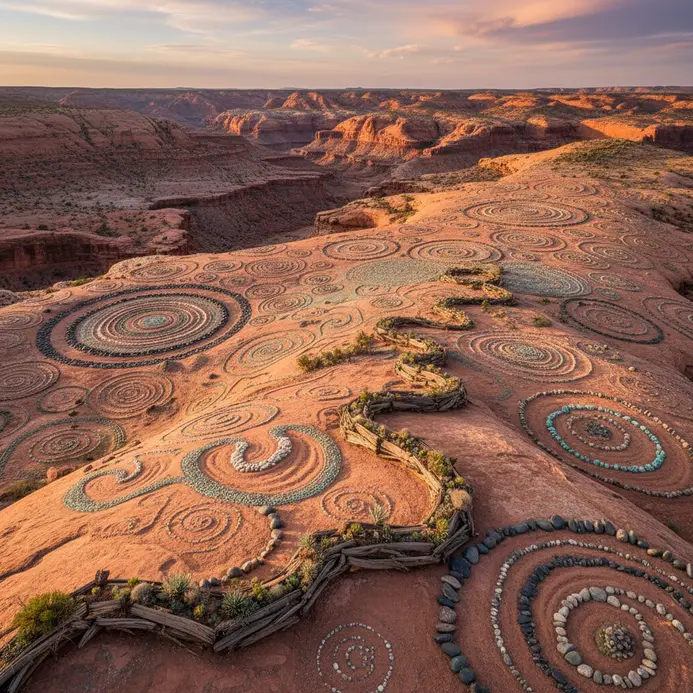
Imagine discovering a perfect spiral traced in the dew on a morning hike. That’s the essence of Richard Long’s walking art. He crafts transient grass patterns and simple shapes by walking lines or placing stones, all meant to fade with the wind and rain. These pieces aren’t built to last. They’re fleeting experiences, documented in photos or maps that become the art we cherish. We love this because it turns a walk into a creative act and connects us deeply with the natural world.
Want to join in? On your next outdoor adventure, use found leaves or rocks to form a circle, take a quick photo, and you’ve made your own ephemeral masterpiece. Long’s work reminds us that land art works can be humble, temporary, and incredibly powerful.
7. The Umbrellas: Christo’s Binational Canopy Project Installation

Let’s take a trip back to 1991 and picture this: over 3,000 giant, colorful umbrellas popping up across two continents for a fleeting, spectacular moment. This is one of those Stunning Land Art Installations that makes you think about how we connect with a place. Christo and Jeanne-Claude’s *The Umbrellas* was a massive binational project, with 1,760 sunny yellow canopies in California’s mountains and 1,340 cool blue ones in the Japanese countryside. It was a powerful visual conversation between two different cultures and landscapes.
Why does this work so well, even decades later? It’s the sheer audacity and temporary beauty of it all. We love art that makes us look at the world in new ways, and having these identical objects placed so differently in Japan and the U.S. did exactly that. The logistical scale was insane, from coordinating with hundreds of landowners to engineering those steel-reinforced aluminum bases to withstand high winds. Can you imagine being one of the nearly 2,000 workers who installed it all in under a month? It’s a reminder that some of the best art is a massive, collaborative event.
8. Goldsworthy’s Ephemeral Natural Assemblies Land Art
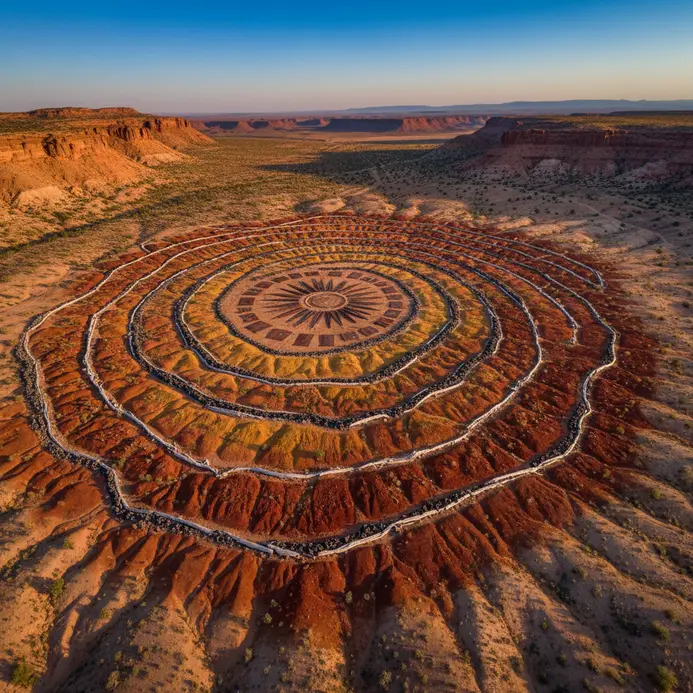
Let’s talk about an artist who makes you see the magic in a pile of leaves or a line of stones. Andy Goldsworthy creates Stunning Land Art Installations These massive land art pieces are breathtakingly beautiful and gone in a flash, leaving a lasting impression. He doesn’t bring in any materials. Instead, he assembles whatever he finds on-site, weaving leaves with thorns or balancing icicles into a star. His work is a delicate, hands-on conversation with the forces of nature.
Why does this resonate so deeply with us, especially in the context of American art? I think it’s because his art celebrates the present moment. We get to witness a perfect, temporary arrangement before the sun melts it or the wind takes it away. It reminds us that change is beautiful. Have you ever tried making a mandala with autumn leaves? It’s a fantastic way to connect with this idea of ephemeral art on a smaller scale, much like some of the beautiful mandala drawing ideas for beginners we’ve shared.
9. Roden Crater: Turrell’s Volcanic Sky Portal Sculptural Work
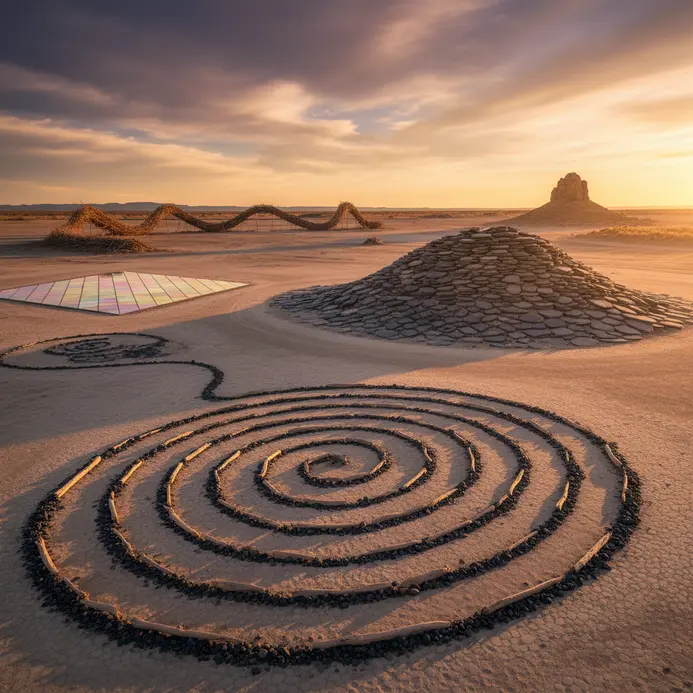
What if you could step inside a volcano and watch the sky perform just for you? That’s the mind-bending promise of James Turrell’s Roden Crater, a true masterpiece among Stunning Land Art Installations. He took a 400,000-year-old cinder cone in Arizona’s Painted Desert and sculpted it into a massive celestial observatory. Inside, tunnels and chambers align perfectly with solstices and lunar cycles, turning sunlight and moonlight into moving sculptures you can stand inside.
This isn’t just a sculpture you look at, it’s an experience that rewires your perception. Turrell uses the Ganzfeld effect in some large-scale installations, creating a uniform field of light that makes you feel like you’re floating. Why does this work so well? It strips away all the visual noise of the modern world and connects you directly to the ancient rhythms of the cosmos. The silence and scale of the place are utterly meditative.
Getting to visit is a rare privilege, as it’s still a work-in-progress managed by the Skystone Foundation. If you’re fascinated by how artists like Robert Smithson or Andy Goldsworthy work with the natural world, this is the epic, lifelong project that takes that concept to a cosmic scale. It makes you see light and time as the raw materials for art.
10. Wheatfield Confrontation: Denes’ Urban Agriculture Statement Art

Let’s talk about a piece of land art that didn’t just sit in a remote desert, it confronted the heart of New York City. Picture this: a vibrant, two-acre field of golden wheat, waving in the breeze right at the foot of the World Trade Center. Agnes Denes created this work in 1982 on a literal garbage dump in Battery Park. She and a team of volunteers hauled in dirt, planted seeds by hand, and tended this surreal crop for four months. Can you even imagine the visual shock of seeing a farm in the middle of the financial district?
This wasn’t just a pretty picture. Denes called it Wheatfield—A Confrontation for a reason. She was challenging our ideas about land value, asking if a multi-billion dollar plot was better used for skyscrapers or for growing food. The harvest yielded over a thousand pounds of wheat, which she sent around the world to highlight global hunger. It was a radical, ephemeral statement about ecology and social justice, way before urban farming was cool. We love it because it proves art can be a direct, powerful action, not just an object to look at.
If you’re inspired by this blend of art and activism, you might enjoy exploring more hands-on, temporary creations. Why not start with some simple, accessible projects that use everyday materials? Getting your hands dirty with your own creative process, whether it’s painting or crafting, is a fantastic way to connect with these ideas on a personal level.
11. Mendieta’s Silhouetted Earth Body Works Site-Specific Art

Picture this: a woman’s silhouette, carved into the earth and filled with bright red flowers, resting inside an ancient stone tomb. That’s the powerful, haunting image Ana Mendieta left us with, and it’s one of the most personal site-specific works you’ll ever learn about. Her Silueta series wasn’t about building something on the land; it was about her body becoming one with it. She used mud, blood, flowers, and gunpowder to create these temporary forms, which were then photographed as the wind or waves slowly erased them.
We love this work because it feels like a sacred ritual, a way to heal from displacement and connect with something ancient and powerful. If you’re fascinated by how art can be both a performance and a photograph, you should definitely look into her Body Tracks pieces next.
12. Amazonian Fiber Art: Becerra’s Woven River Installations
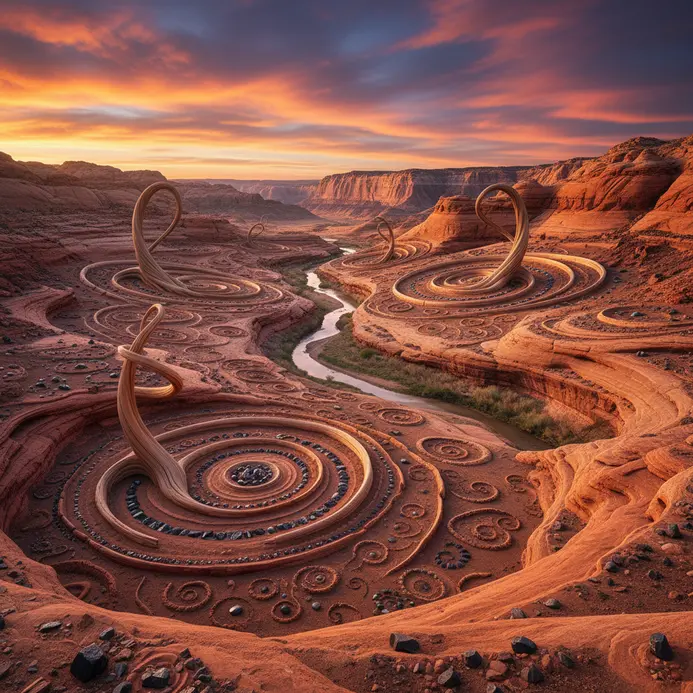
Have you ever walked into an artwork and felt like you were inside a living, breathing river? That’s the magic of these woven installations. They use organic fibers like vines and found cloth to create massive, flowing forms you can walk under and through. The work connects ancient weaving traditions with contemporary, site-specific art in a way that feels both timeless and urgent.
We love this because it’s art you experience with your whole body, not just your eyes. The earthy smell of the materials and the tactile texture make you feel connected to the land in a profound way. It’s a powerful reminder of how traditional craft techniques can tell the most modern stories about our environment. If you get a chance to see one, take a moment to notice how the natural colors and foraged materials tell a story without words.
13. Nils-Udo’s Giant Nest Sculptures in the Natural World
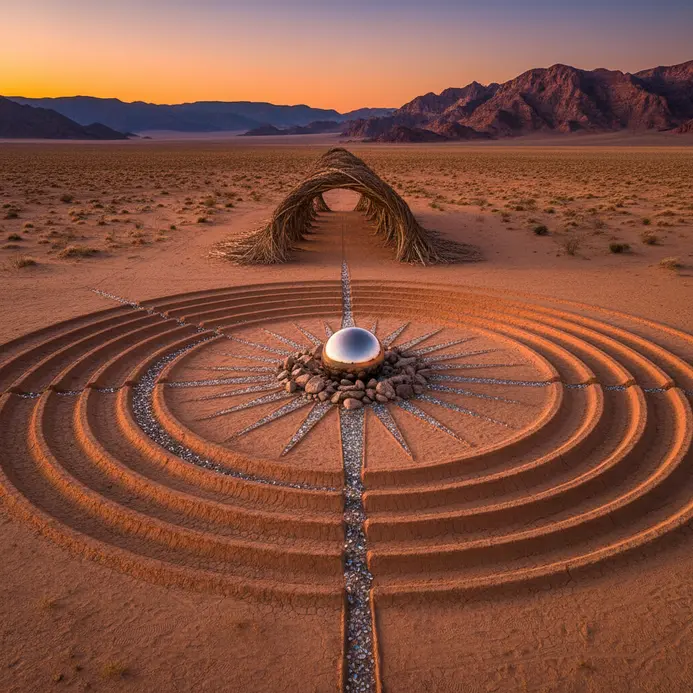
Have you ever dreamed of finding a secret hideaway built entirely by nature? Nils-Udo’s giant nest sculptures are stunning examples of land art that blend with their natural surroundings. Stunning Land Art Installations that make that fantasy real. Using nothing but locally sourced branches, leaves, and soil, he crafts massive, human-scale nests that look like they grew there. These aren’t permanent monuments. They’re temporary interventions that celebrate ecological cycles and our deep bond with the wild. Why do they resonate so deeply? Because they offer a hands-on, immersive experience that gallery art can’t match.
You’re invited to sit inside these large-scale installations and contemplate the relationship between art and nature. Unlike Robert Smithson’s permanent Spiral Jetty, Nils-Udo’s works decompose naturally, teaching us about impermanence. His process is a true collaboration with the environment, often incorporating living plants that bloom and change over time. Documented through photography, these fleeting moments become lasting memories, reminding us to appreciate beauty in transience. For a fun way to bring art outdoors, check out our ideas for flower pot painting.
14. Dougherty’s Whimsical Stick Architecture Land Art

Have you ever dreamed of walking into a storybook? Patrick Dougherty’s whimsical stick installations make that fantasy feel real, turning parks and gardens into enchanted forests with his woven sapling sculptures. Using nothing but flexible young trees and a masterful weaving technique, he creates ephemeral structures that seem to grow organically from the landscape. These site-specific works, like swirling huts and nest-like towers, are designed to last only a couple of years before returning to the earth, emphasizing the beauty of natural cycles.
Each piece is a collaborative effort, often involving local volunteers, which adds a layer of community spirit to the art. We love these installations because they’re incredibly accessible and playful, inviting us to touch, explore, and let our imaginations run wild in a way that most contemporary art doesn’t. If you get the chance to visit one of these works of art, don’t just look—step inside and feel the magic of being surrounded by living art. It’s a perfect example of how art within nature can transform our perception of public spaces.
15. Jencks’ Cosmic Geometry Gardens as Land Art Pieces

Let’s talk about an outdoor gallery where the art is the landscape itself, and the concepts are literally out of this world. The Garden of Cosmic Speculation by Charles Jencks isn’t just a pretty place; it’s a 30-acre, mind-bending sculpture park where you walk through black holes, DNA, and fractals. Imagine terraced waves of earth and twisting ponds that aren’t just for show but are visual metaphors for the universe’s biggest ideas.
Why do we love it? It takes the monumental scale and natural materials of classic land art and gives it a PhD in astrophysics, making you feel tiny and brilliantly connected all at once. Want to see how other artists use simple materials to create big ideas? Check out how beginners can start with basic painting to explore their own creative landscapes.
Conclusion
We have walked through a gallery without walls, from Utah’s pink lakes to Manhattan’s golden fields. This movement proves that creativity has no limits when it meets the open air. These Stunning Land Art Installations ask us to look at the ground beneath our feet and the sky above our heads with fresh eyes. This movement is more than just making marks on the landscape. It’s a conversation with nature, sometimes permanent, often fleeting, much like the experiences found in a museum of contemporary art. What ties them all together is their sheer ambition to make us feel small and connected all at once. We hope this list inspires your own adventures. Start planning your road trip to see one of these Stunning Land Art Installations for yourself.
FAQs
Q: What are some examples of stunning land art installations and who created them?
A: Stunning land art installations include Walter De Maria’s The Lightning Field, Nancy Holt’s Sun Tunnels, James Turrell’s Roden Crater project, and Seven Magic Mountains by Ugo Rondinone. These works, created by pioneering artists and sculptors, range from interventions in the desert landscape to monumental sculptural forms that engage nature and the environment.
Q: Who was Walter De Maria and why is he significant to land art?
A: Walter De Maria was a key figure in the land art movement, best known for The Lightning Field and The New York Earth Room. As a sculptor and conceptual artist working partly in the late ’60s and early ’70s, he helped define installation consisting of minimal, site-specific interventions that reframe our perception of nature, sprawl, and the surrounding landscape.
Q: How does Nancy Holt’s work, such as Sun Tunnels, change the viewer’s perception of light and space?
A: Nancy Holt’s Sun Tunnels at the Great Salt Lake in Utah use concrete tubes aligned with the sun’s position at solstices, creating a focused perception of light and space. Holt, often referred to simply as Holt, explored new ways of seeing by integrating astronomical alignment, the slope of the land, and the surrounding environment to alter how viewers experience time, scale, and light.
Q: What is Seven Magic Mountains and who is the Swiss artist Ugo involved?
A: Seven Magic Mountains is a colorful public installation consisting of seven stacked totems of painted boulders near Las Vegas, created by Swiss artist Ugo Rondinone. The work juxtaposes bright sculptural forms against the desert landscape of the Mojave Desert, provoking dialogues about human sprawl, color, and the relationship between art and nature.
Q: Are there land art installations that qualify as the largest land art?
A: Yes, some projects are considered among the largest land art installations due to their scale and geographic footprint. Examples include earthworks that span miles or reshape entire landscapes, such as large-scale sculptural arrangements of steel plates or earth mounds. The designation of “largest” often depends on criteria like area covered, volume moved, or visual impact across a desert landscape or peninsula like Rozel Point.