Printing Margins For Clean Cat Outlines
Keep a 0.5-inch margin around every cat outline when printing on US Letter or A4 paper. This spacing keeps ears, tails, and whiskers away from the printer’s cutoff zone, which matters when printing cat coloring pages for home use. Choose portrait pages for standing cats or character scenes, while landscape pages suit sleeping cats, groups, and wide room settings. US Letter paper works well for home printers and classroom copiers. Test one page before making several copies, since printer scaling often shrinks or enlarges the line art. Select “actual size” rather than “fit to page” when the file already includes margins. Dark outer contours should print as clean black lines, while tiny facial marks need distance from the edge to stay visible. Blank space beside whiskers and toes gives children room to color without clipping.
Matching Detail Levels To Coloring Skills
Choose pages with thick outer contours and large coloring areas for preschoolers, since broad shapes reduce frustration and suit crayons or washable markers. Children with stronger pencil control often prefer patterned coats, costumes, and rooms with moderate line density. Older children and adult cat lovers typically enjoy realistic breeds, mandala bodies, and fantasy scenes, though tiny sections demand more time and sharper pencils. Keep one recognizable cat as the focal point, even on detailed pages, so background lines do not compete with its face or paws. Avoid muddy gray fills because they remove coloring space and print unevenly. White interiors, separated costume lines, and consistent black outlines give each age group clear boundaries without making the page feel crowded.
1. Playful Kitten with Yarn Ball Printable Page
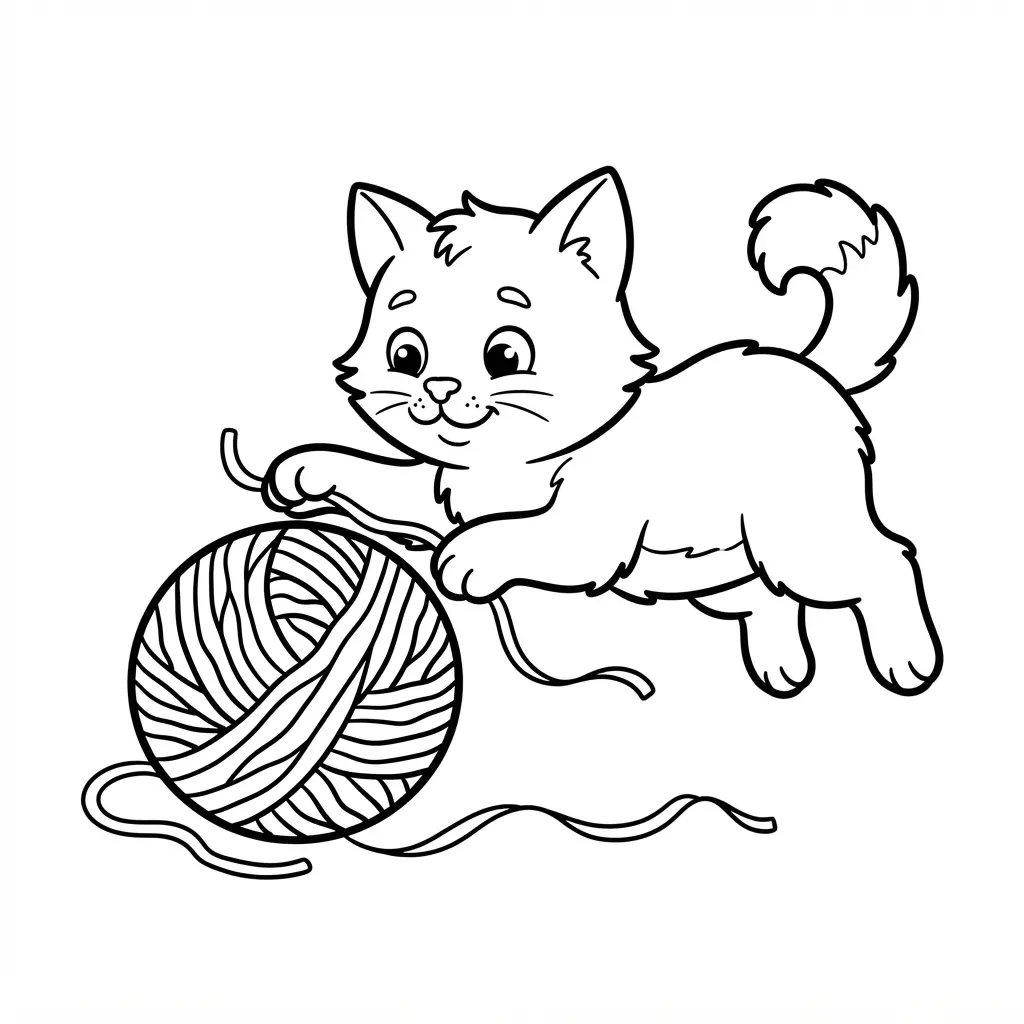
Isn’t this cheerful kitten ready for a playful coloring session? The sitting pose, fluffy tail, bright face, and oversized yarn ball create an inviting scene, while loose loops curl around its paws. Bold black outlines keep each shape clear and leave roomy sections for young artists.
I love how the hearts and stars add charm without crowding the white background. Print the portrait page on US Letter paper, then reach for crayons, colored pencils, or washable markers. I always stack extra cat coloring pages on the table for these exact afternoons. The yarn loops stay easy to follow, since they give the picture its lively movement and help each color choice stand out.
2. Realistic Longhair Persian Portrait: Detailed Feline Lines
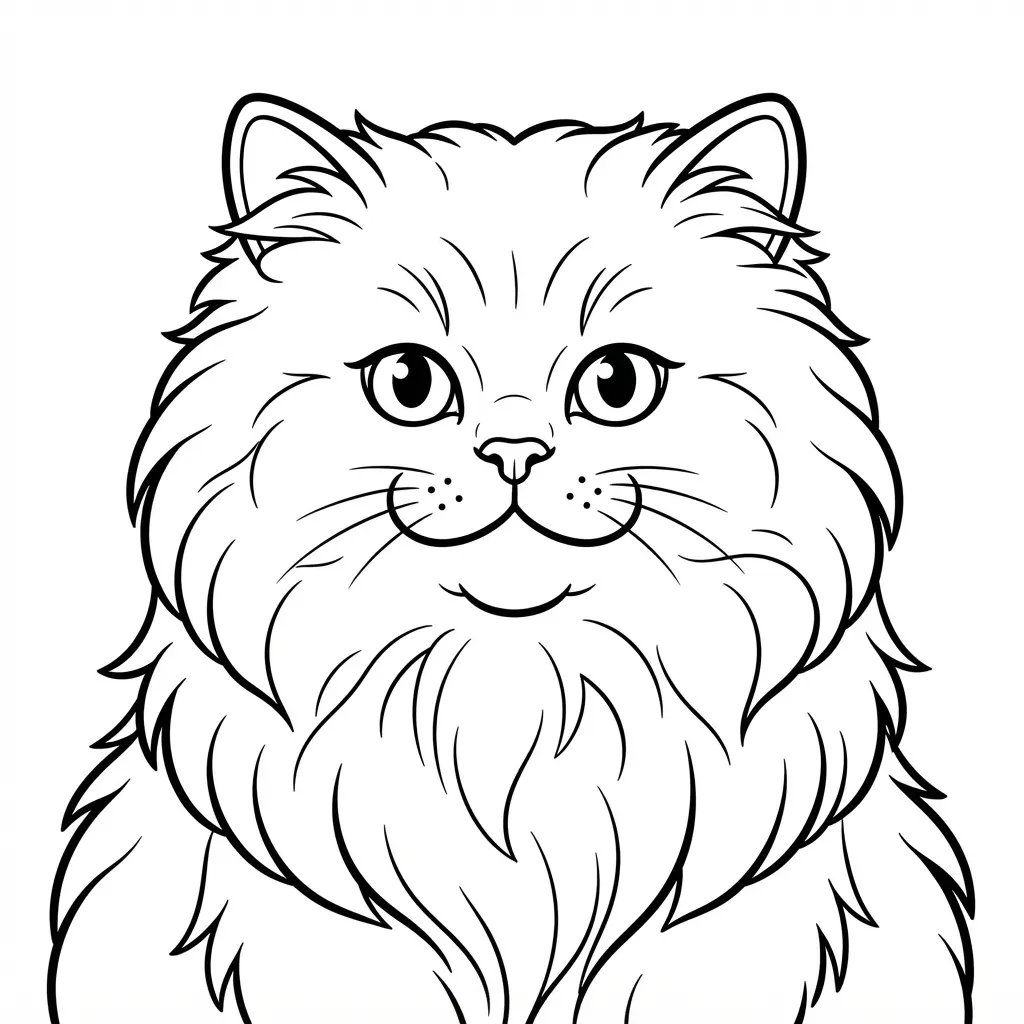
This portrait gives your coloring page a graceful Persian face with plenty of detail to enjoy. Start with a round facial outline, then place the wide eyes, short muzzle, and tiny nose before adding fur. Keep the eyes balanced, since uneven shapes quickly change the expression.
Build the cheek ruffs in soft layers, following the natural fur direction instead of drawing random spikes. Add small ear tufts and neat whisker follicles near the muzzle, leaving open spaces between each line. I love using a lighter touch around the forehead so the face stays soft. Sound complicated? It is not.
Finish with fine contour lines for longer strands, then reserve a few clean areas for highlights and color changes. A dark neutral background makes the pale face stand out, while careful spacing keeps the portrait from looking crowded. Trust me, watching those layered lines bring the Persian expression forward feels satisfying.
3. Kawaii Cat in Coffee Mug — Cute Printable Scene

I love this one because the kitten looks snug, cheerful, and ready for a cozy break. Ever tried coloring a cat curled inside a mug? Start with the centered mug shape, then add the kitten’s round body, tiny paws over the rim, and a sweet smiling face.
Heart-shaped steam rises above the cup, while a spoon, coffee beans, and small stars fill the space without crowding the page. Bold black outlines, rounded forms, and large open areas make this scene friendly for children and casual colorists. Keep the page portrait-sized at 8.5 × 11 inches, with a white background and no shading, gray tones, or text. I love using warm browns for the mug and soft colors for the kitten.
Leave the interior spaces open so every section feels easy to personalize. The result feels cozy and satisfying.
4. Sleepy Tabby on Window Sill Line Art
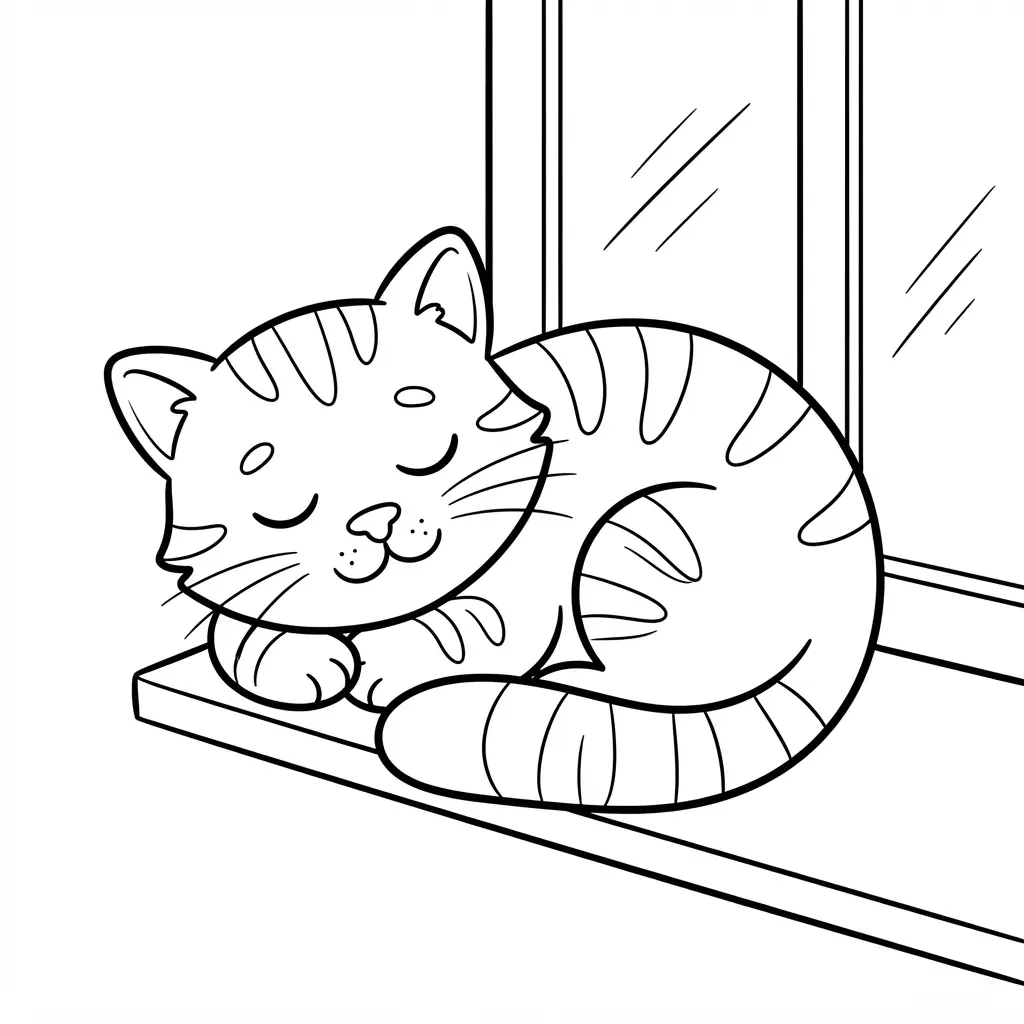
A sleepy tabby rests in a wide window, its striped tail tucked around its paws while soft curtains hang at either side. I love how this peaceful scene gives you broad, open spaces and small details to enjoy without feeling crowded.
Start with gentle curved outlines for the sill, curled body, paws, closed eyes, and tail, then add a few tabby stripes and a simple window frame. Is it not satisfying to color the flowers or rooftops outside while keeping the white background clean? Keep the outdoor view light, use minimal shading, and leave the cat as the clear focus.
Trust me, gentle strokes preserve the cozy mood and make this one of the calmest cat coloring pages to finish.
5. Halloween Black Cat and Pumpkin Printable Design
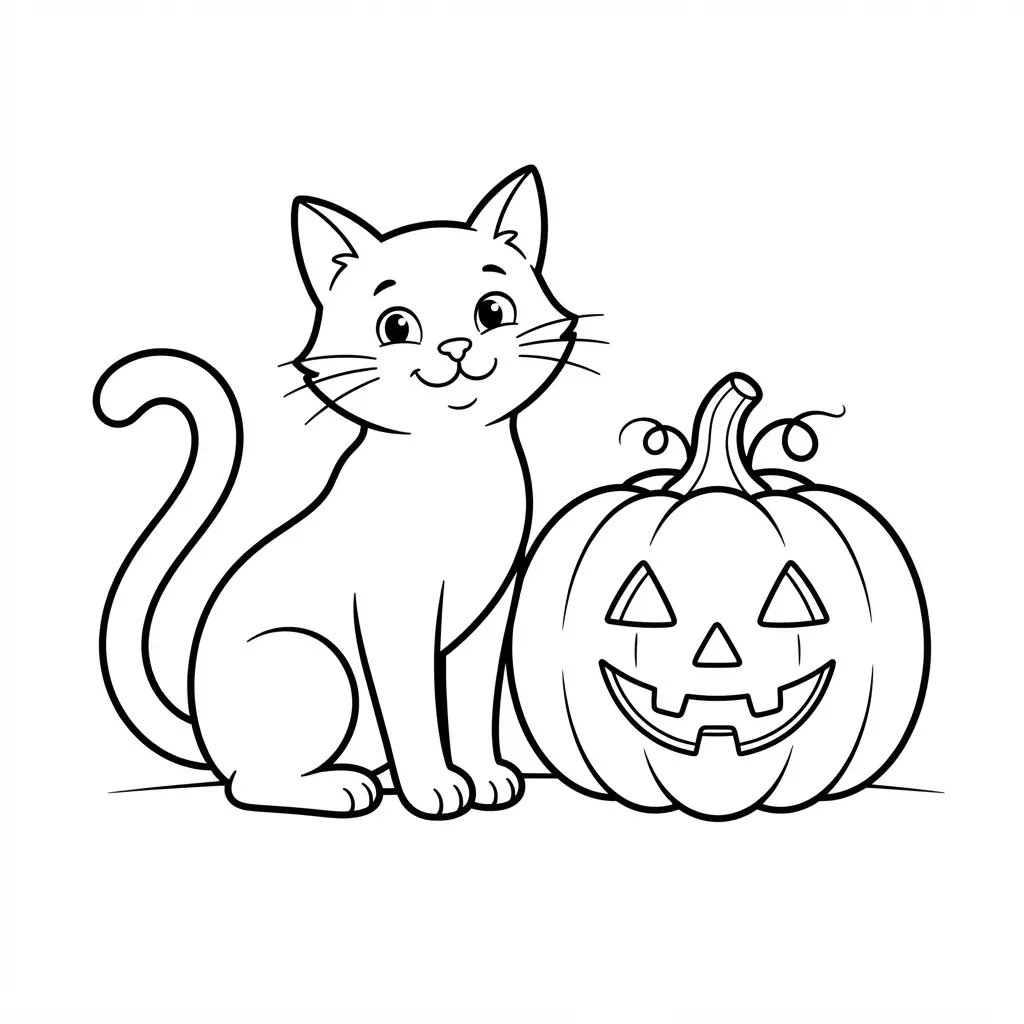
Thin outlines might seem better for delicate Halloween details, but they often fade in print. Start with a centered playful cat beside a large carved pumpkin, then add bats, stars, a crescent moon, and a few autumn leaves around them. I love how the open white spaces invite crayons, markers, or colored pencils without making the page feel crowded. Use a bold outline around every main shape, leaving the interior free of shading and color.
Set the artwork in US Letter portrait format, 8.5 × 11 inches, at 300 DPI, then save it as a PNG or PDF. Optional lettering such as “Happy Halloween” fits nicely near the top or bottom. Does it sound tricky? It is an easy printable for classroom activities, Halloween décor, or a cheerful afternoon at home.
Trust me, the cat’s curious expression makes every finished page feel special. I always keep a few seasonal cat coloring pages ready for October gatherings.
6. Whimsical Unicorn Cat Illustration: Fantasy Line Art
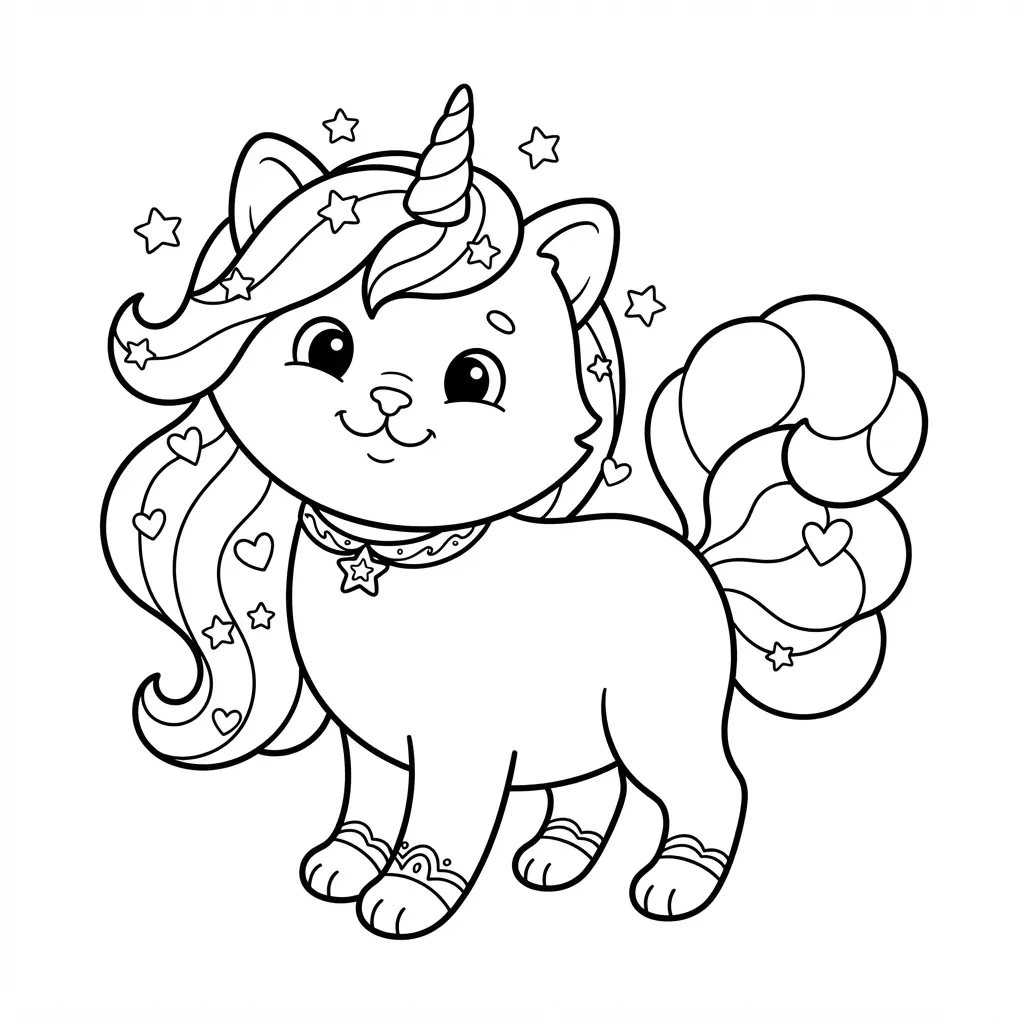
Draw a graceful cat outline first, giving the body a gentle pose and expressive eyes. Add one spiraling horn between the ears, then shape a flowing tail with mane-like curves. Sound complicated? It is not.
Place the cat on a crescent moon, leaving generous white space around the figure. Fill the surrounding area with stars, tiny clouds, sparkles, and curling vines, keeping each detail separate for easy coloring. I love how the moon gives the whole picture a clear center.
Finish with clean black outlines and no shading or color, so the printable line art stays crisp. A fine-tip black pen helps keep small accents neat, while open areas prevent the composition from feeling crowded.
7. Corgi Style Chubby Cat Outline — Bold Simple Shapes
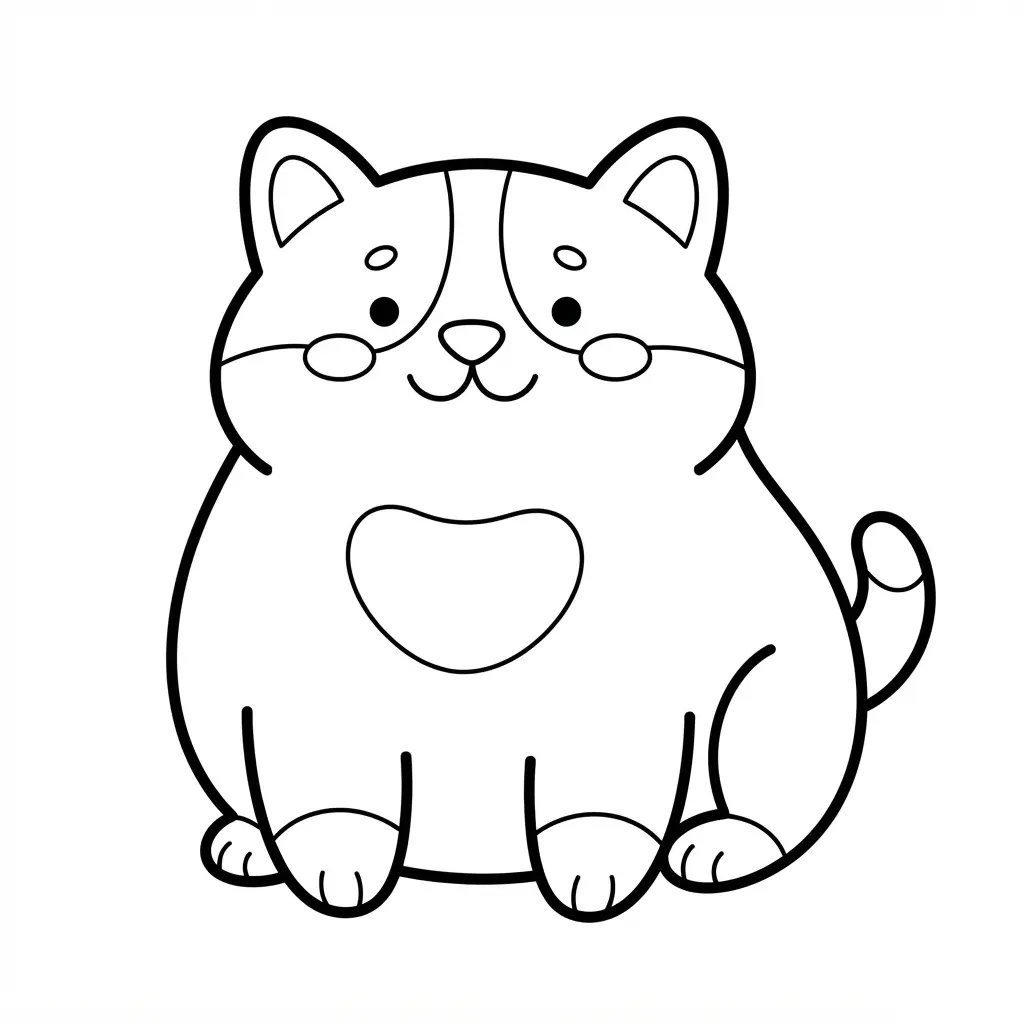
Ever wondered why a chubby cat feels extra cute with corgi proportions? Start with a large rounded head, triangular ears, soft cheeks, and a low oval body. Keep the legs short, place tiny paws beneath the belly, and curl a small tail beside the body.
A cheerful smile and wide eyes give your cat coloring pages a friendly focal point. I love how thick smooth outlines make each shape easy to follow. Use a clean white background and leave the body mostly open, with only a few lines for the face and paws.
Avoid tall legs, narrow bodies, busy fur marks, or a complicated tail, since those details weaken the bold silhouette. The broad spaces feel satisfying to fill, and the low stance adds personality. Pro tip: use a light pencil sketch first, then trace slowly so every curve stays smooth. Feel proud when your cheerful little cat takes shape.
8. Space Traveling Astronaut Kitten Printable Scene
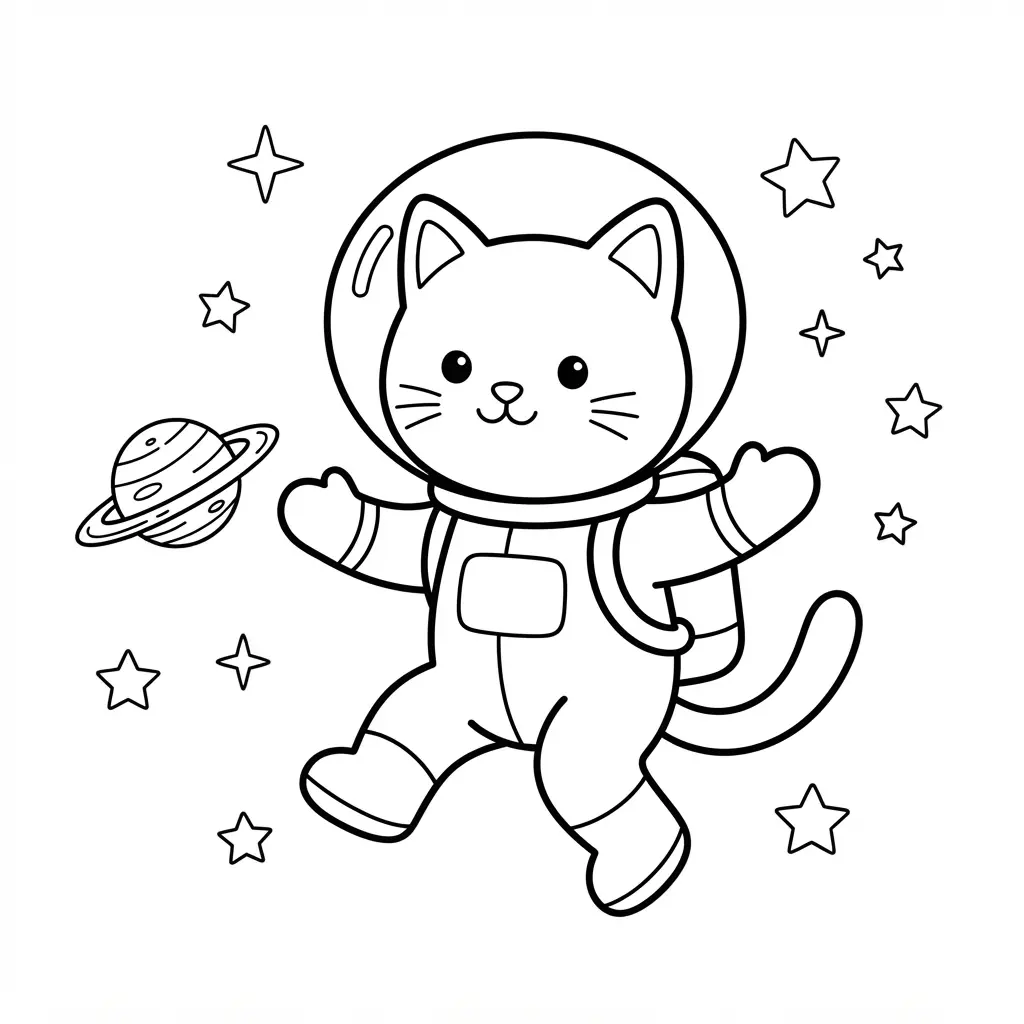
This space scene feels like a tiny adventure waiting for your favorite colors. Print the galaxy background with bold outlines, then color the helmeted kitten, rocket, moon craters, stars, and friendly alien.
Sound complicated? It isn’t. Color and cut the separate pieces, including the rocket marked “Meow Mission,” then place them over the background to build a playful space station scene. I love how the large shapes keep coloring and cutting comfortable for young artists.
Pro tip: use thicker paper for cutouts so they hold up during play. Add silver details to the satellite, bright shades to planets, and a small flag on the moon for a personal finish. I usually organize my space-themed cat coloring pages by rocket color before starting.
9. Mandala Pattern Siamese Cat Face: Detailed Feline Art
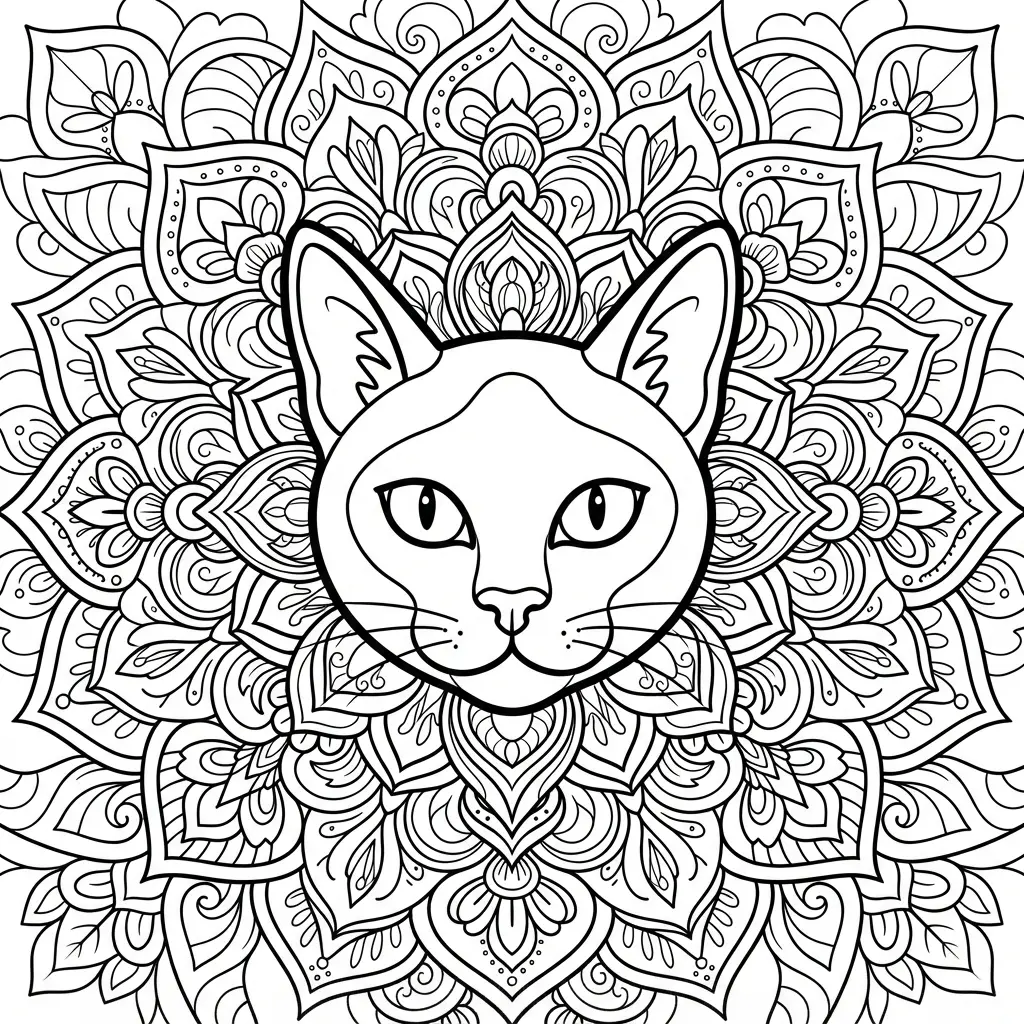
This is one of my favorite cat coloring pages because the calm Siamese face looks graceful before any color touches it. Start with a light centerline, then place the eyes, ears, muzzle, and chocolate facial points in balanced positions.
Sound complicated? It is not, especially when you sketch softly and check both sides as you go. Build the mandala outward with repeating petals, paisley curves, small geometric shapes, and fine filigree. Keep the eyes and muzzle open, since crowded decoration weakens the feline expression.
Use a fine-point black pen for crisp contours after your pencil layout feels right. I love how each mirrored detail makes the portrait feel calmer and more polished. Color the coat warm cream, shade the ears and muzzle deep chocolate brown, and give the eyes a sapphire-blue focal point. Smooth paper helps tiny sections stay clean, while colored pencils offer gentle control.
10. Group of Kittens in Basket — Family-Friendly Line Art
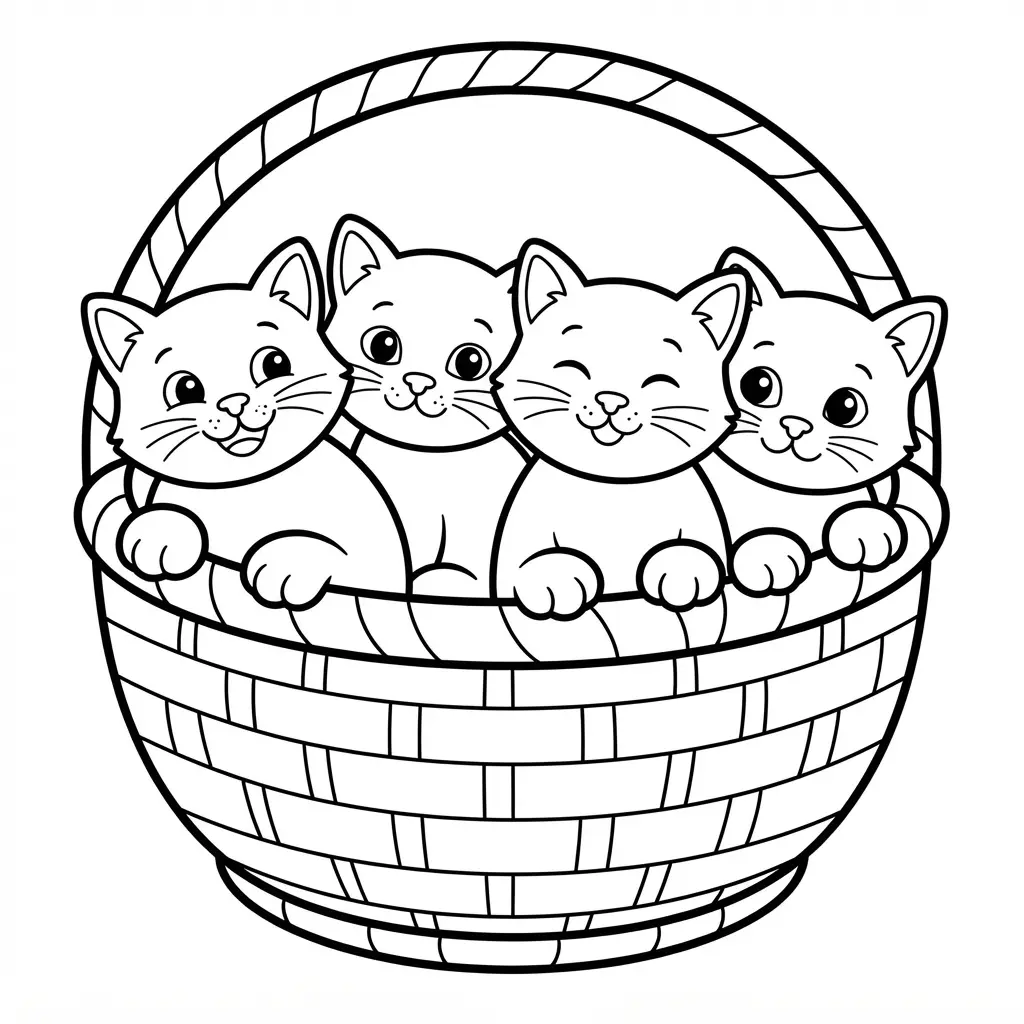
Five kittens peek, sit, and curl inside a woven basket, with soft blankets tucked around their paws. A tiny bow and a few hearts add a sweet touch, while each friendly face invites a favorite color.
Start with a centered basket outline, then separate the five kittens clearly: one peers over the rim, two sit upright, and two rest in curled poses. Keep the black contours bold and smooth, with broad open areas and no shading or gray tones.
Sound complicated? It is not. I love this cozy scene because children get to color each kitten as its own little character. Leave the white background uncluttered, and check the basket rim, blankets, and bodies stay distinct. Trust me, simple shapes make this printable page feel welcoming from the first crayon stroke.
11. Mermaid Cat Undersea Scene Printable Illustration
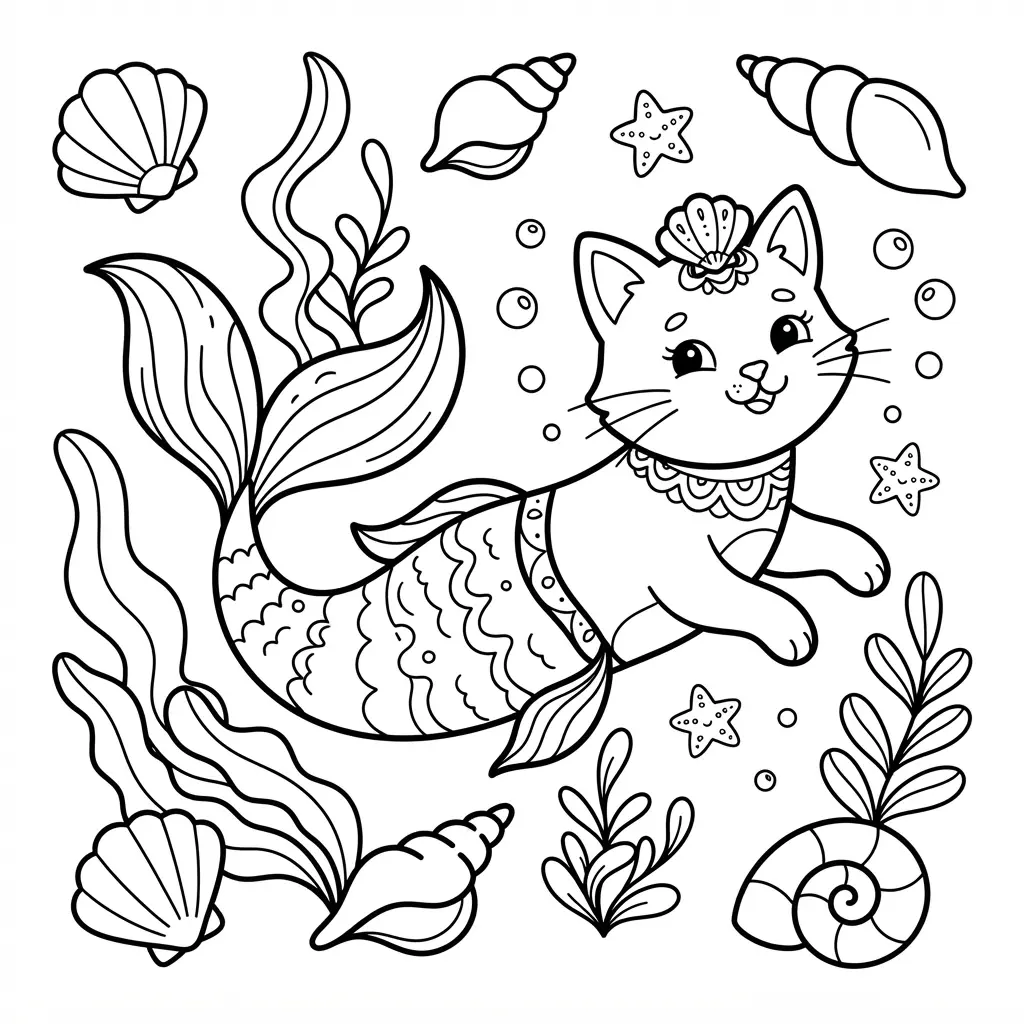
A crowded background often makes a mermaid cat page harder to enjoy, so leave generous white spaces around the main figure. Start with the fluffy face, pointed ears, whiskers, flowing shell-and-starfish hair, and curled fish tail, then frame it with coral, seaweed, bubbles, friendly fish, a seahorse, shells, and a treasure chest.
Does an undersea scene need gray shading to feel finished? Not here. I love using bold black outlines around each open section, since children get clear spaces for crayons or markers and more freedom with color choices.
Keep the full portrait composition visible on the white page, space the background details evenly, and leave calm areas near the tail for easy filling. I print these aquatic cat coloring pages on glossy stock to make the ocean colors pop.
12. Cat Wearing Floral Crown — Gentle Nature Scene
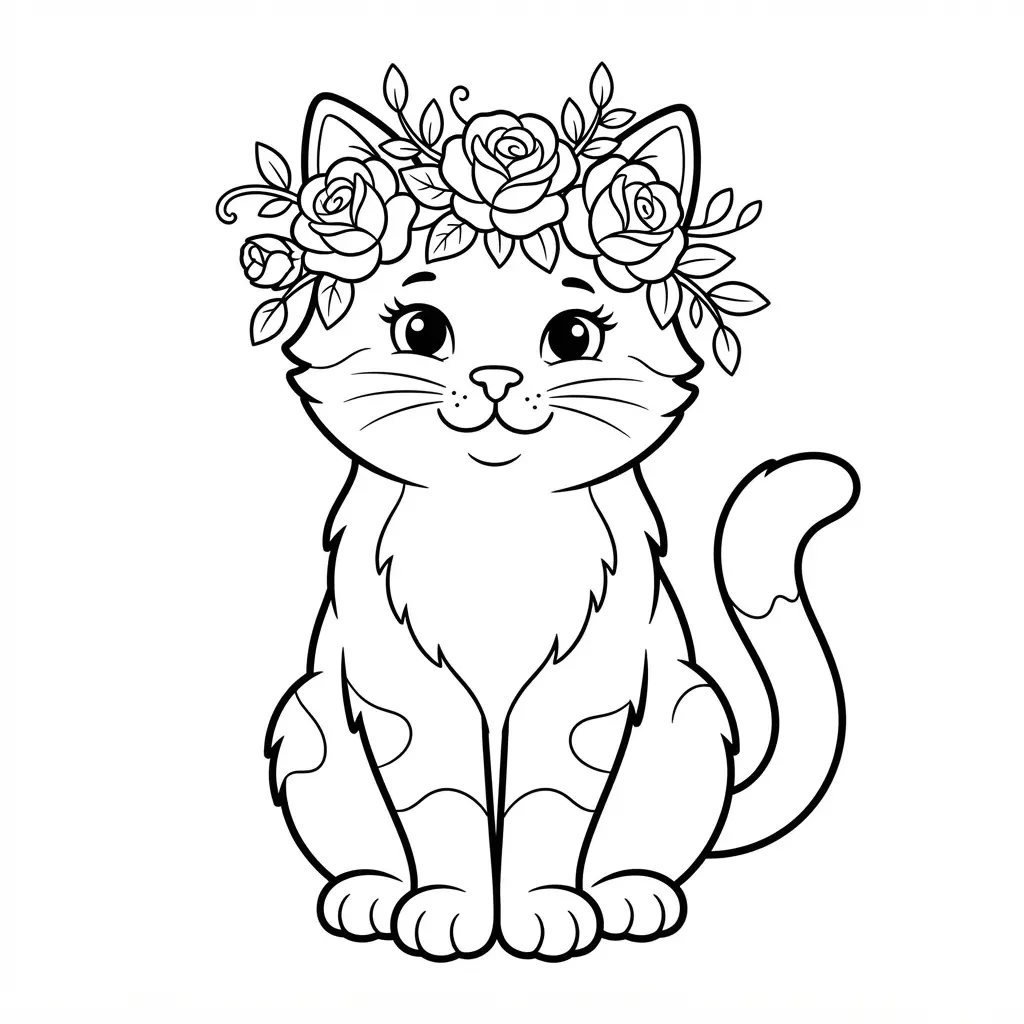
Grab a portrait page and place the relaxed cat near the center, leaving room for meadow grasses around its paws. Add a floral crown with daisies, lavender sprigs, wildflowers, and tiny blossoms, keeping the cat’s eyes clear and expressive.
Is there anything sweeter than a peaceful cat in soft sunlight? Surround the figure with butterflies, light grass strokes, and distant trees with rounded foliage. Keep background lines open so crayons, colored pencils, or washable markers move easily, then choose warm yellows, gentle greens, and soft pastel flowers for a calm storybook feel.
13. Adventurous Jungle Tiger Cub Printable Animal Scene
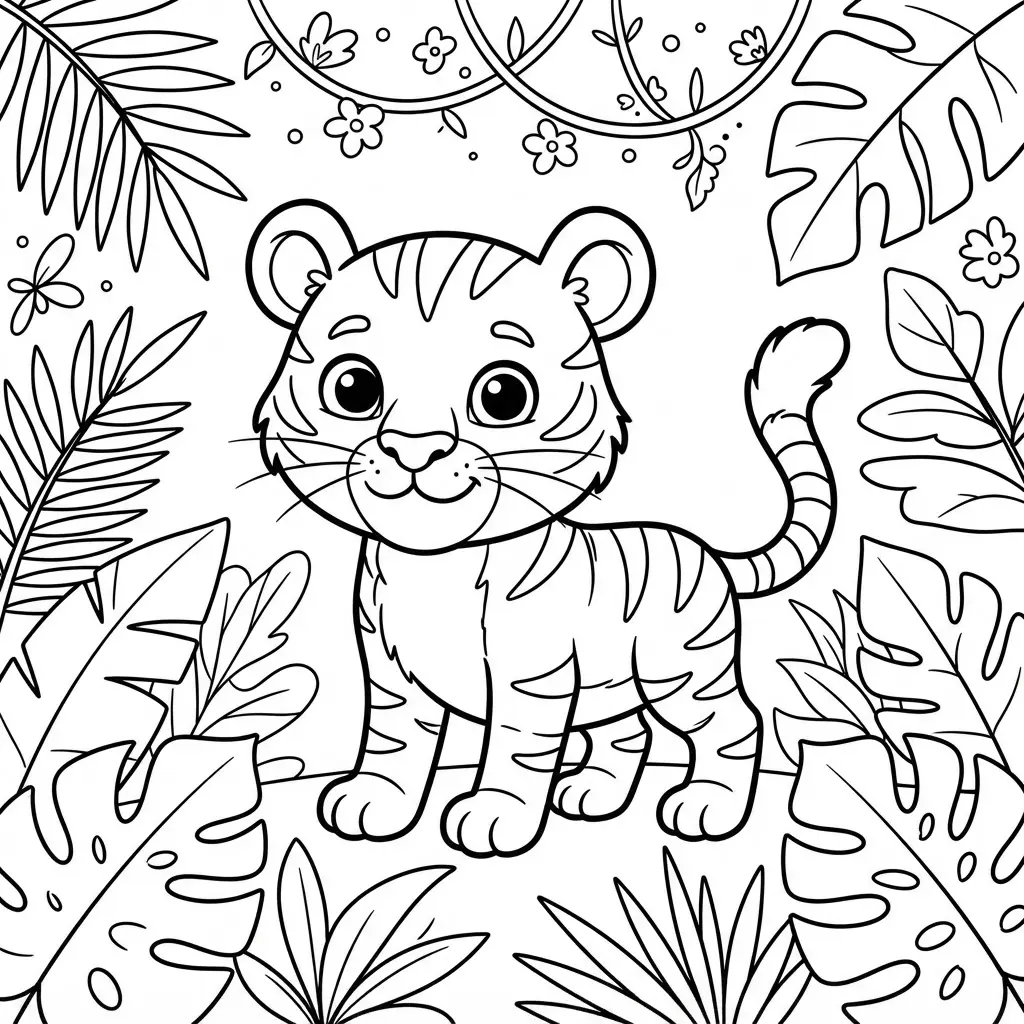
Ever pictured a playful tiger cub meeting a butterfly on a jungle path? This printable animal scene gives you a friendly focal point, with a raised paw, bright eyes, and a curious smile.
Use bold outlines as guides while filling tangled roots, tall grass, bamboo, curling vines, and broad tropical leaves. A monkey peeks from a branch, while two birds cross the open sky, adding movement without crowding the page.
Keep the distant trees light in your color choices, and leave the clean white spaces open for easy filling. I love how the rounded shapes help young artists spot each object quickly. Print it in portrait format on US Letter paper, then choose warm stripes for the cub and cheerful shades for the butterfly. Trust me, this scene feels full of playful adventure.
14. Cozy Cat by Fireplace Line Drawing
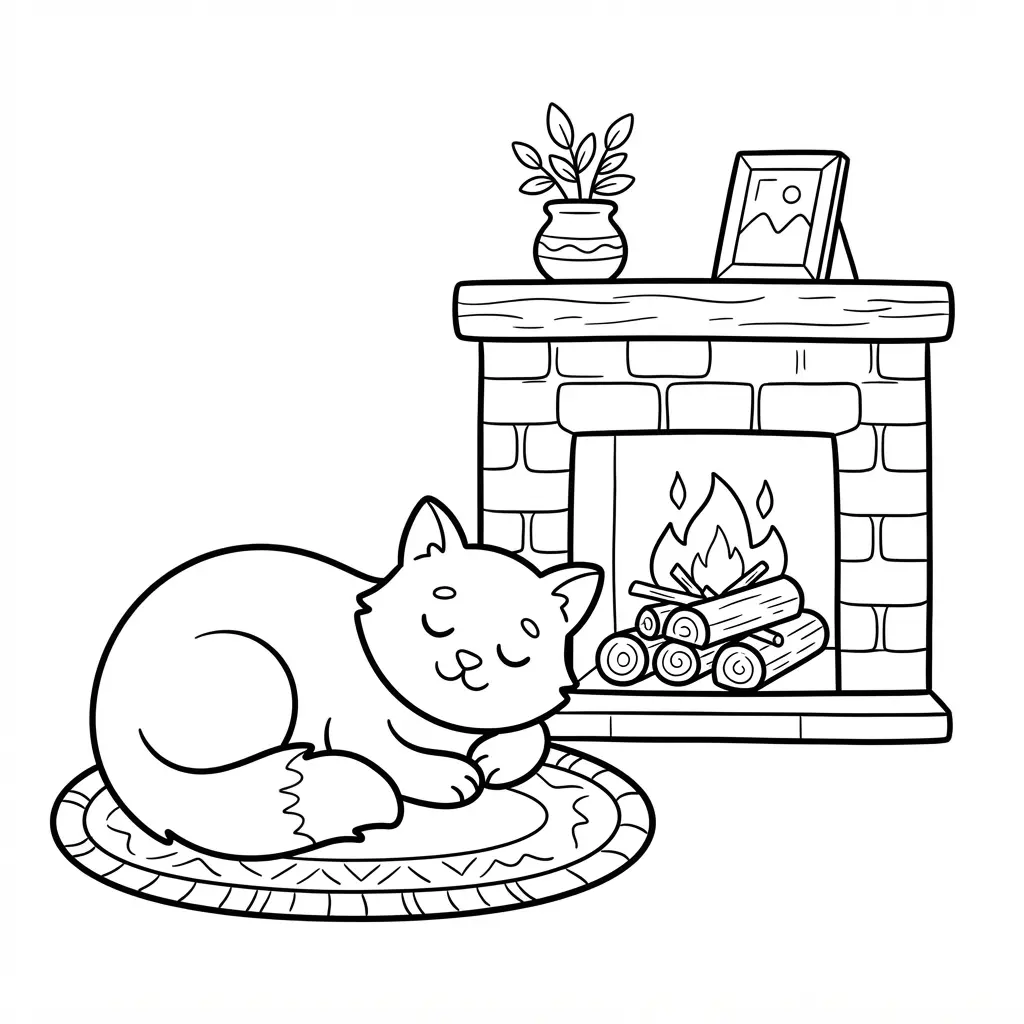
This cozy scene feels welcoming from the first outline. Start with bold, clean outlines for the fireplace, rug, and curled-up cat, leaving plenty of white space around each shape. I love how peaceful the page feels before any color touches it.
Draw simple bricks, glowing logs, and gentle smoke curling above the flames. Add a small vase and framed picture on the mantel, then give the cat soft fur lines, tucked paws, and a tail wrapped around its body. Sound complicated? It is not.
Keep interior details light so young artists have roomy sections to fill. The connected cat and fireplace scene works because every detail supports its calm mood. Use warm reds, oranges, and browns for a cheerful finish, then add soft rug colors for comfort. Trust me, this one feels wonderfully relaxing.
15. Funny Cat Chasing Butterfly Printable Outline
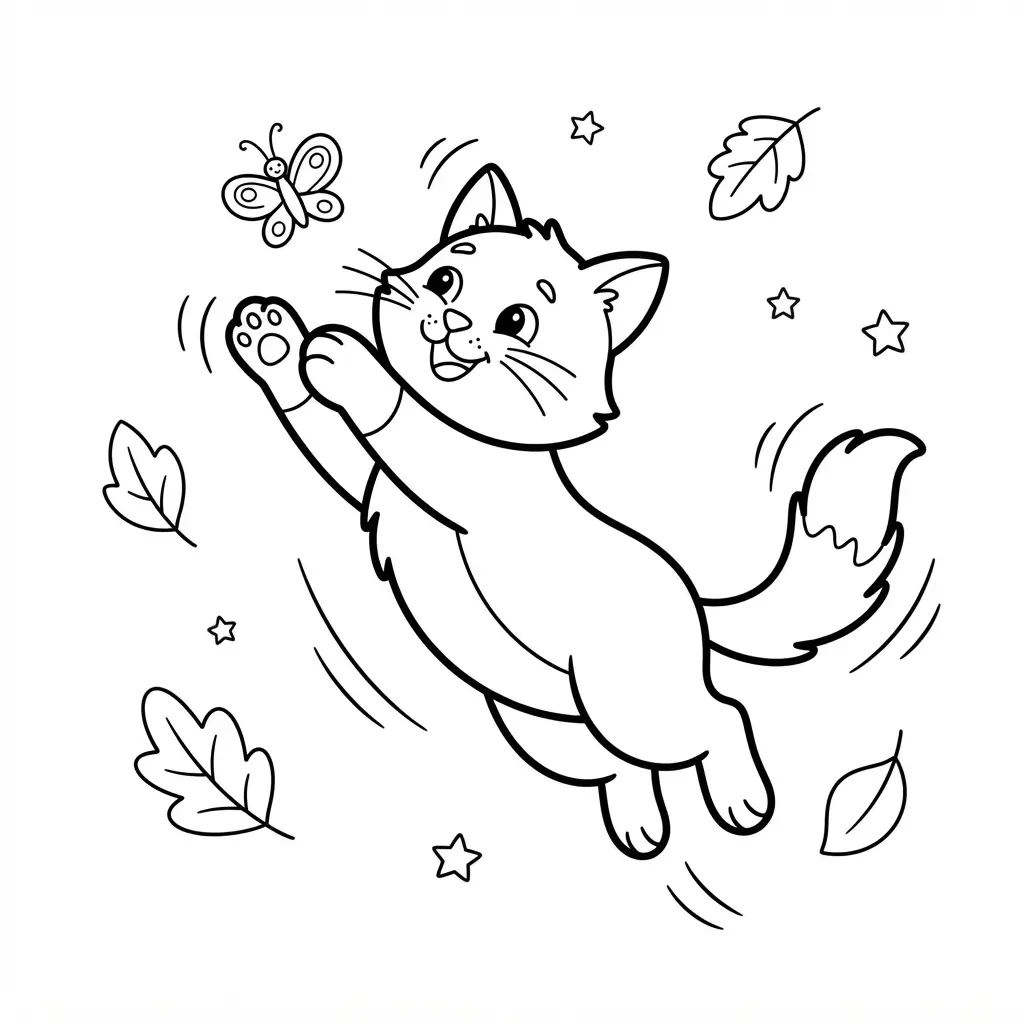
This one makes me smile every time because the cat looks caught mid-prank. The scene shows a cartoon cat springing after a butterfly, with wide eyes, perked ears, a curved tail, and a silly surprised face. Use a thick black outline around each shape, then leave the background white with only a few flowers and grass blades.
Sound complicated? It’s not. Print the page on US Letter paper and keep the lines bold enough for clear results. The open spaces give you room to color the cat, butterfly, flowers, and grass without feeling crowded.
Skip shading and gray areas so the clean black-and-white look stays crisp. Place the butterfly ahead of the cat, since its position makes the leap feel playful. I love how the simple shapes keep younger artists engaged while the surprised expression adds plenty of humor. Add bright colors to the butterfly and gentle tones to the outdoor details. Your finished page will feel cheerful, funny, and full of motion. Grab your crayons and enjoy the giggles.
16. Royal Cat with Crown Cape — Playful Character Art
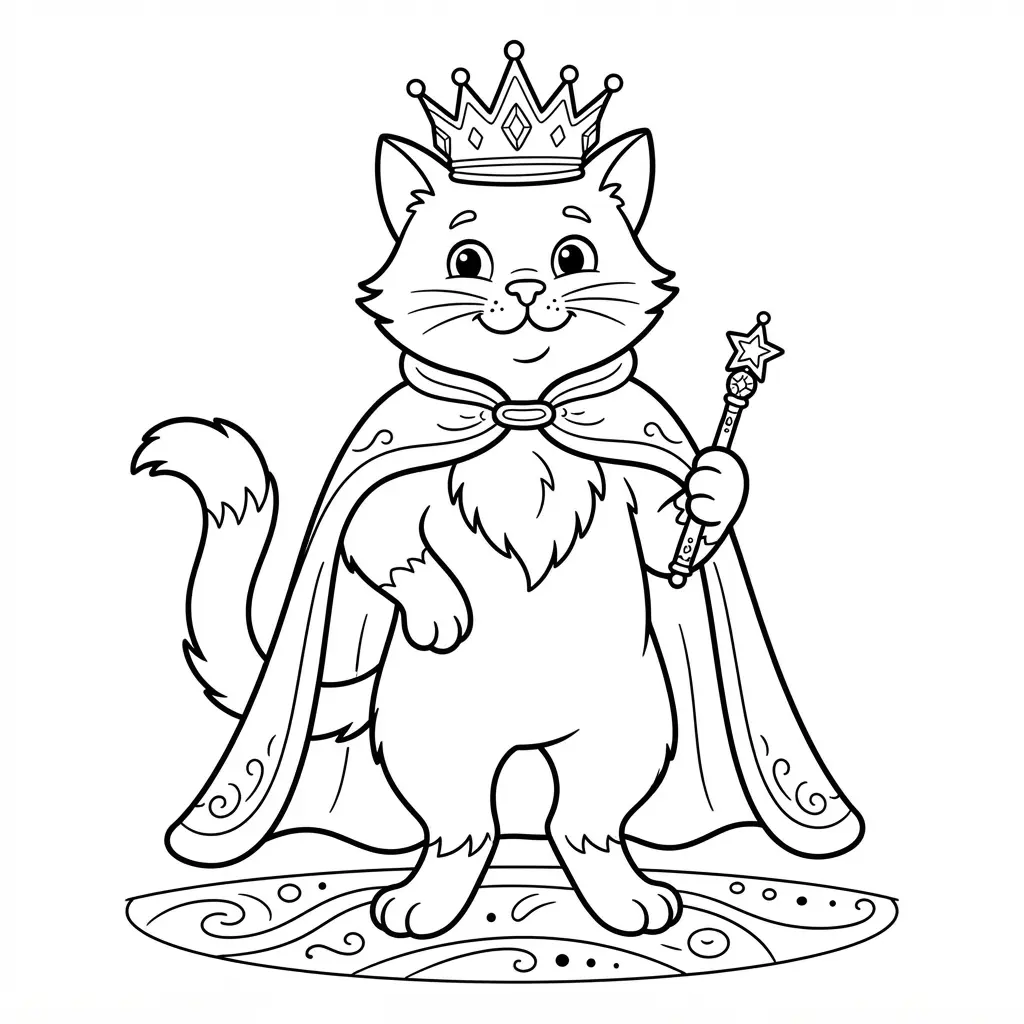
A golden crown catches the light above a chubby cat, while a crimson cape folds around its rounded body. The raised paw and mischievous smile give this tiny monarch a cheerful pose. Start with a clean cat outline, then add large eyes, fluffy cheeks, a jeweled collar, tiny boots, and a miniature scepter.
Keep each costume piece separated with clear lines so every section stays easy to color. Sound complicated? It is not, and I love how quickly the royal personality appears. Use warm yellow for the crown, rich red for the cape, and small jewel tones for the collar and scepter. A plain pastel background keeps the centered character easy to see and leaves room for creative storytelling.
The rounded shape works well because it feels friendly and approachable, even with all the royal details. My go-to tip is to add short curved marks along the cape for a soft velvet texture. Give the raised paw extra attention, then feel proud of your playful little ruler. I usually save these regal cat coloring pages for weekend art sessions.
17. Cat Sitting on Bookshelf Printable Reading Scene
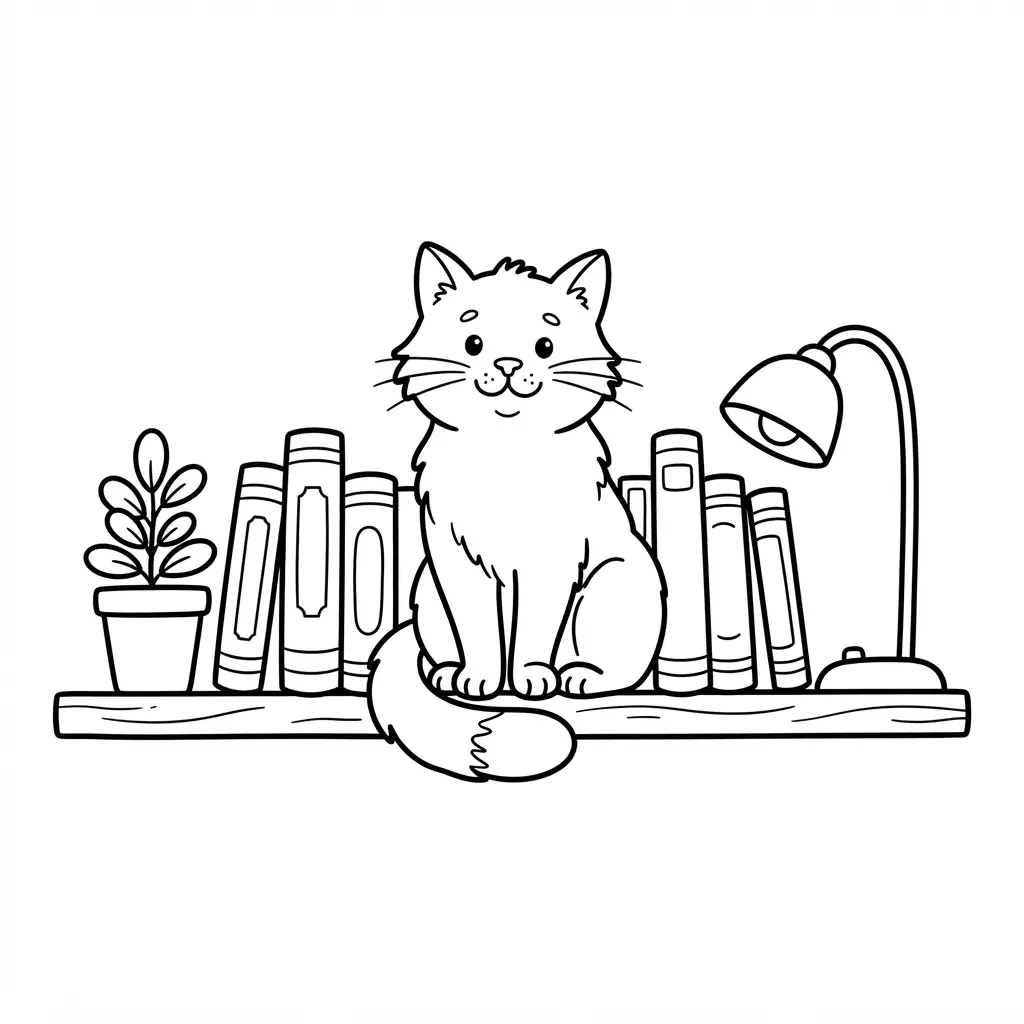
Many people crowd every shelf with tiny objects, but clean spacing makes this scene far easier to enjoy. Start with the bookshelf as the main structure, then place a fluffy cat beside stacked books, with an open book nearby.
Add a potted plant, reading lamp, soft blanket, framed artwork, and a few simple decorations around the focal point. Use bold black outlines and open white areas, keeping the portrait layout free from heavy shading. Doesn’t the reading theme make these cat coloring pages feel extra cozy? I love how each object gives you a fresh area for color while the seated cat stays easy to recognize.
Keep the cat’s face and paws separate from nearby books, and leave comfortable gaps between shelf details. My go-to tip is to use warm browns for wood, gentle greens for the plant, and cheerful colors for book covers. You’ll feel proud when this welcoming reading nook comes together.
18. Simple Cartoon Cat Shape — Preschool-Friendly Outline
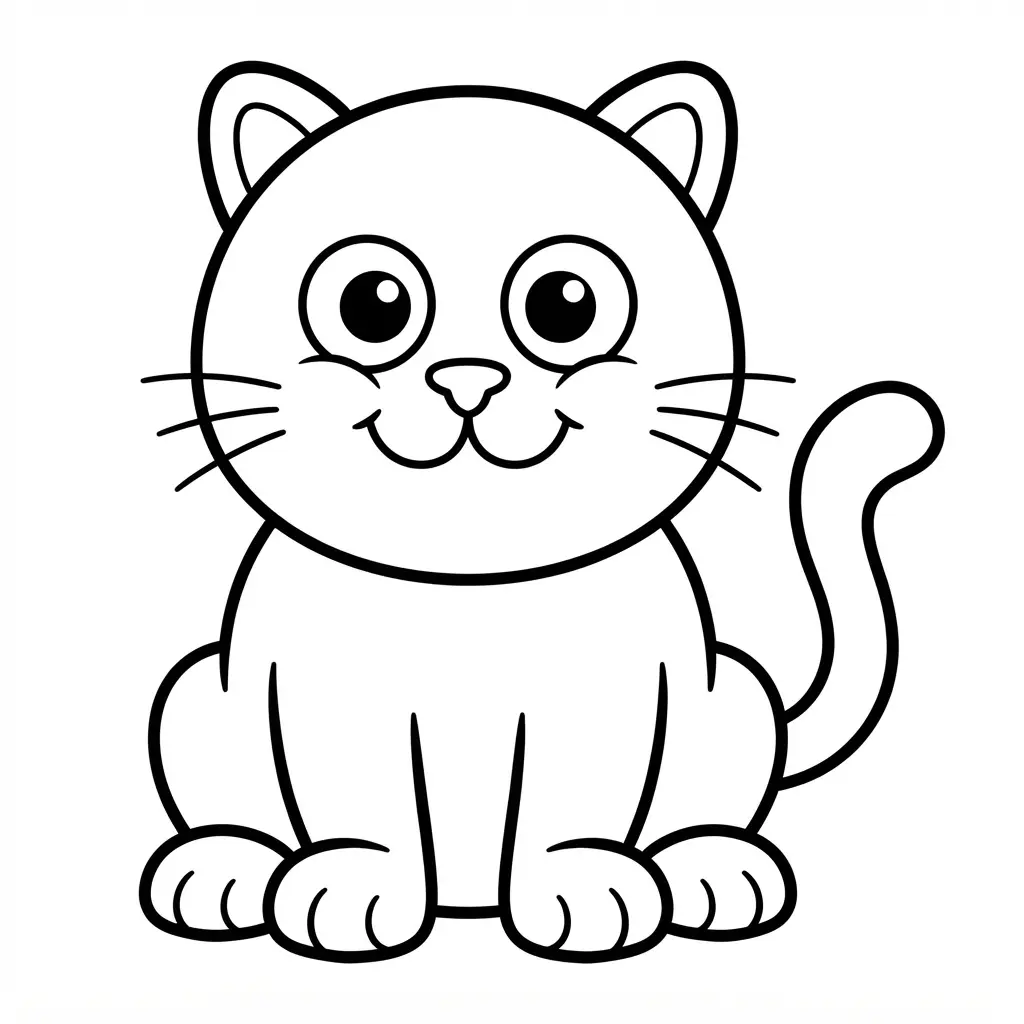
Start with a thick black outline, then draw a round head with two pointy ears. Add large friendly eyes, a tiny triangular nose, and a small smiling mouth. Sound complicated? Keep each feature open and easy to recognize.
Place a plump oval body beneath the head, then add short legs and a curved tail. Use large open spaces so preschoolers have room for broad crayon strokes. A clean white background with smooth, bold lines keeps the page clear and printable.
I love this shape because familiar parts help children feel confident while practicing coloring control. Skip fur patterns, shading, and tiny sections. Trust me, a simple face and roomy body make every color choice satisfying. I always place beginner-friendly cat coloring pages at the front of the folder.
19. Abstract Geometric Cat Head: Bold Patterned Design
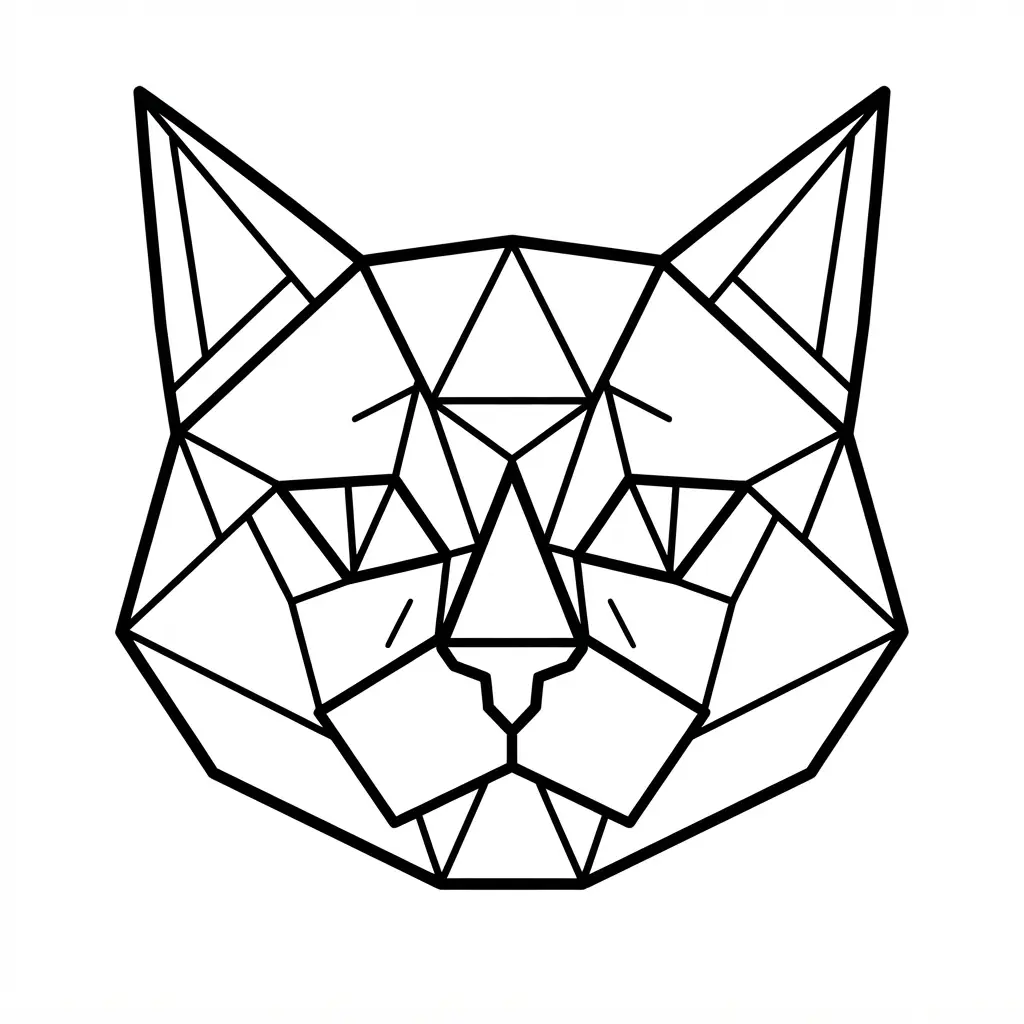
Ever wondered how a cat portrait looks when every curve becomes a crisp geometric shape? Start with a centered head, two angular ears, and a middle axis, then use straight polygon lines to divide the face into balanced sections. Place matching eyes, nose, and whisker marks on both sides.
Fill each enclosed area with a bold color or repeating motif, such as stripes, triangles, or blocks. Black, white, crimson, cobalt blue, and gold create clear separation, while colored pencils give you easy control. Keep the background plain and the outlines firm, so the cat head stays the focus.
I love how symmetry makes this page feel organized without taking away your creative choices. Check each feature against the center line, and avoid tiny polygons since larger sections are easier to follow. Trust me, high-contrast color pairs give the finished design a cheerful graphic look.
20. Curious Cat Looking Up — Expressive Line Art
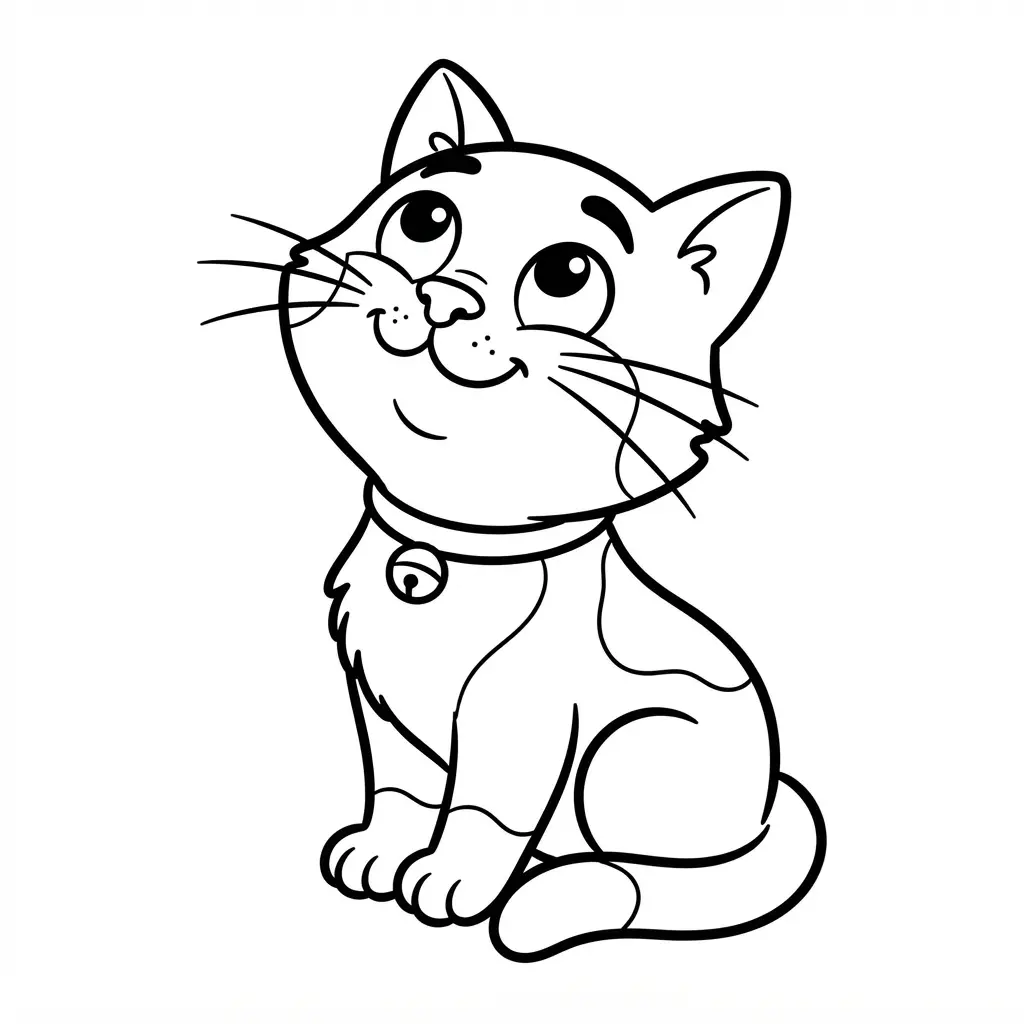
This one gives a seated cat an instant spark of personality. Start with a centered sitting pose, then tilt the head slightly upward so the large eyes seem fixed on something above. Perked-forward ears, a tiny nose, delicate whiskers, and a soft expression make the feeling clear. I love how much emotion these small facial details bring to simple black outlines. Sound complicated? It is not.
Keep the background plain white, leaving every area open for coloring. Add a few stars, leaves, or a dangling butterfly above the head, then vary the line weight around the face, fur tufts, paws, and tail. This contrast guides attention without adding shading or gray tones.
Pro tip: keep the skyward details small so the cat stays the star of the page. Feel proud when those curious eyes come to life. I print these expressive cat coloring pages on cardstock to handle heavy marker work.
Displaying Finished Cat Artwork At Home
Place finished pages in an acid-free frame with a clear front before hanging them in a child’s room or classroom. Acid-free backing helps prevent paper yellowing, while the clear front keeps crayon dust and fingerprints away from the surface. Choose a frame slightly larger than the page so the margins stay visible and the cat’s outline does not hide beneath the inner edge. Portrait frames suit standing cats and character scenes, while landscape frames fit sleeping cats, groups, or room settings.
Keep framed artwork away from direct sunlight, radiators, and damp windows, since heat and moisture fade paper colors. A simple rotating display lets children replace older pages without bending corners or pinning through the finished artwork. I rotate framed cat coloring pages monthly to keep the gallery fresh.
Conclusion
So how was your creative session? Your choices, color combinations, and small details show real skill. Cat coloring pages give children and adults a simple way to spend time with a favorite animal while practicing focus and personal style. Pick one page based on your mood, then keep a few finished sheets nearby for family members or classmates to enjoy. For your next session, choose a different level from the last one.
A simple outline helps with a quick break, while a detailed face or fantasy scene gives you more time with pencils and markers. I love seeing how the same kitten looks different in every person’s hands. Set aside a few pages, choose your colors before you begin, and let your own preferences guide the work. Pick your favorite and get started right away. We will gladly share new cat coloring pages next week for you to try.
FAQs
Q: What paper works best for printable cat pages?
A: Use standard letter-size paper measuring 8.5 by 11 inches. Choose a heavier sheet for markers and a regular sheet for crayons or colored pencils.
Q: Which coloring tools work well for bold outlines?
A: Crayons, colored pencils, and washable markers all work well. Test markers on a spare sheet first to check for bleed-through.
Q: How do I choose pages for preschool children?
A: Choose large shapes, wide outlines, and open spaces. Simple cartoon cats and single-subject scenes suit short coloring sessions.
Q: How do older children and adults find more detail?
A: Look for breed portraits, mandala faces, geometric designs, and busy fantasy scenes. Colored pencils support small areas and gradual shading.
Q: How should I print clear cat line drawings?
A: Select a high-quality print setting and check the preview before printing. Keep the page at its original letter-size scale for clean proportions.