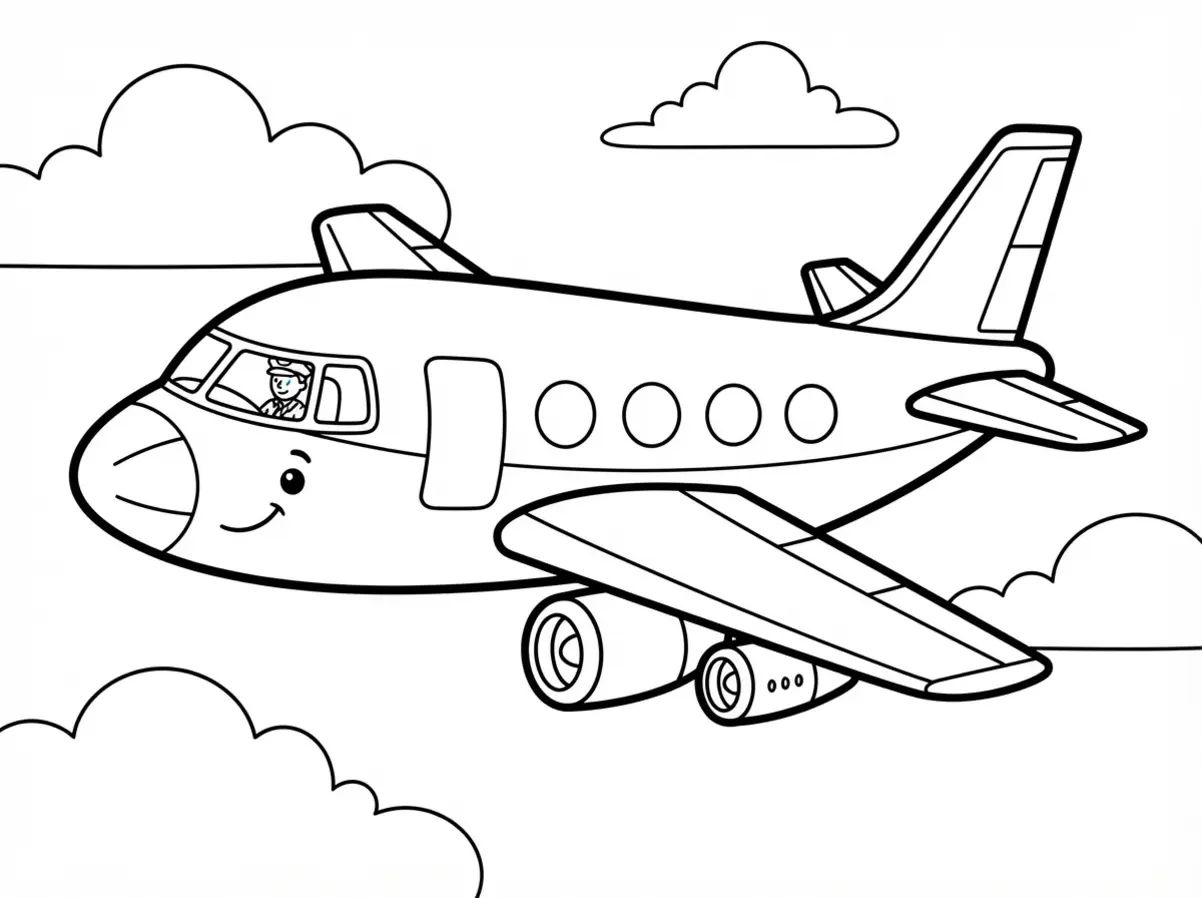

Paper Weight For Markers And Crayons
Use 120 gsm paper for crayon prints, while markers need 160 gsm or heavier stock to limit bleed-through when working on airplane coloring pages. Standard printer paper handles crayons and colored pencils well, especially for broad wings, clouds, and runway sections in airplane coloring pages. Heavier drawing paper gives washable markers a firmer surface and keeps dark color blocks from soaking through to the next page. Smooth stock suits clean black outlines, while lightly textured paper gives crayons more grip but might soften tiny cockpit details. Place a spare sheet beneath marker work to protect the table and the following page. Avoid glossy paper because wax and marker ink tend to sit unevenly on its slick surface. Paper with strong contrast matters too, since gray shading and faint lines leave less room for bold color choices across all airplane coloring pages.
Matching Line Detail To Coloring Skill
Choose one large aircraft with thick outlines for preschoolers, giving small hands broad enclosed areas without crowded background details on airplane coloring pages. Early elementary children handle pages with pilots, airport vehicles, clouds, and simple runway markings, since these features add interest without shrinking every coloring space. Older children handle detailed cockpits, aircraft interiors, city skylines, night skies, and multiple-plane scenes. Keep overlapping wings, engines, and landing gear separated by confident lines so each part stays recognizable across all airplane coloring pages. A helicopter, cargo plane, or propeller aircraft needs clear proportions rather than extra decoration. Match page density to attention span too, since a busy airport scene takes longer than a single plane. Leave enough open sky around the subject for broad crayon strokes and clear color choices.
1. Cartoon Passenger Jet with Smile: Friendly Printable Scene
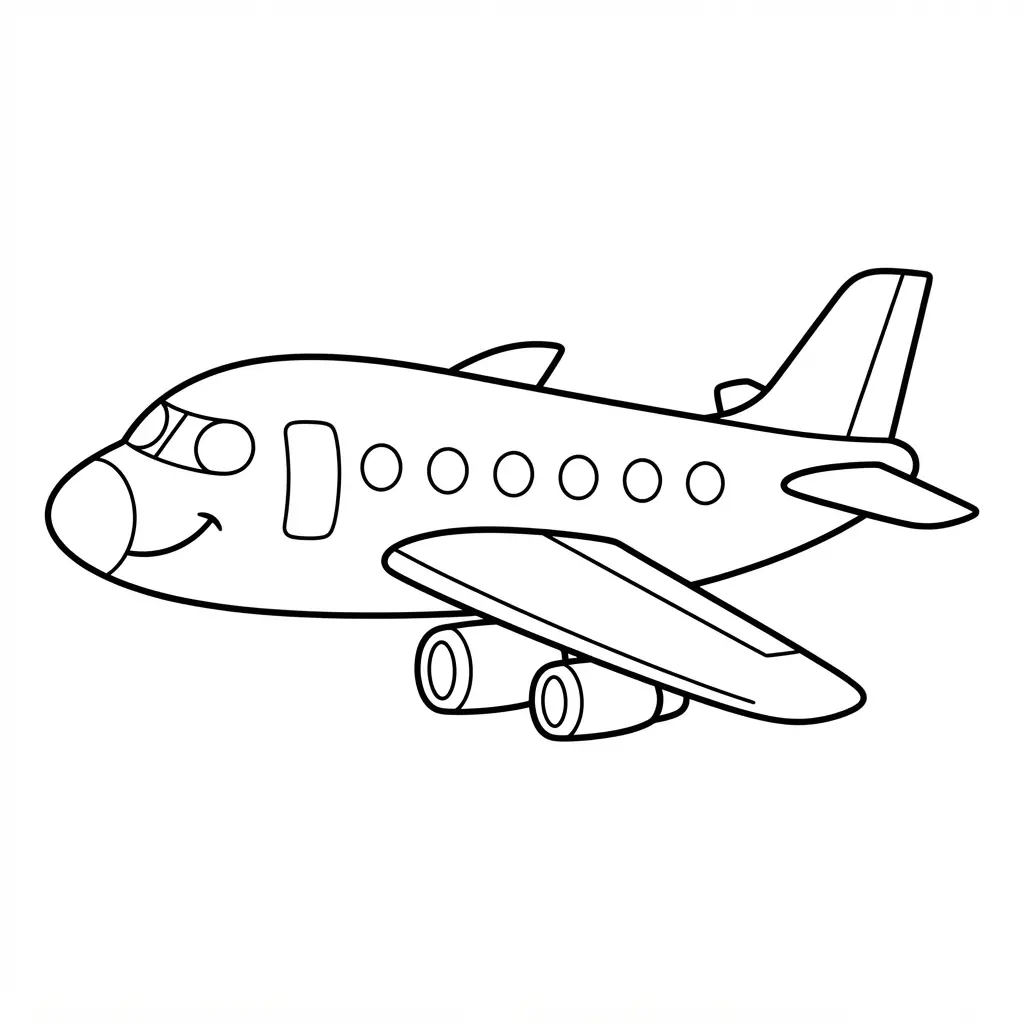
Who wouldn’t smile at a friendly jet with a cheerful face? This printable scene shows a rounded passenger body, wide wings, a neat tail, rows of windows, and soft clouds around it, proving airplane coloring pages can be wonderfully cheerful. Start with the large sections, then add bright colors to the windows, wings, and smiling face with crayons, colored pencils, or washable markers. Use bold black outlines to keep each space easy to follow, especially for younger artists. I love how the sunglasses option adds extra personality without crowding the page. Keep the background open so the jet stays the clear star, and enjoy a happy finished picture.
2. Historical World War I Biplane — Classic Aviation Lines
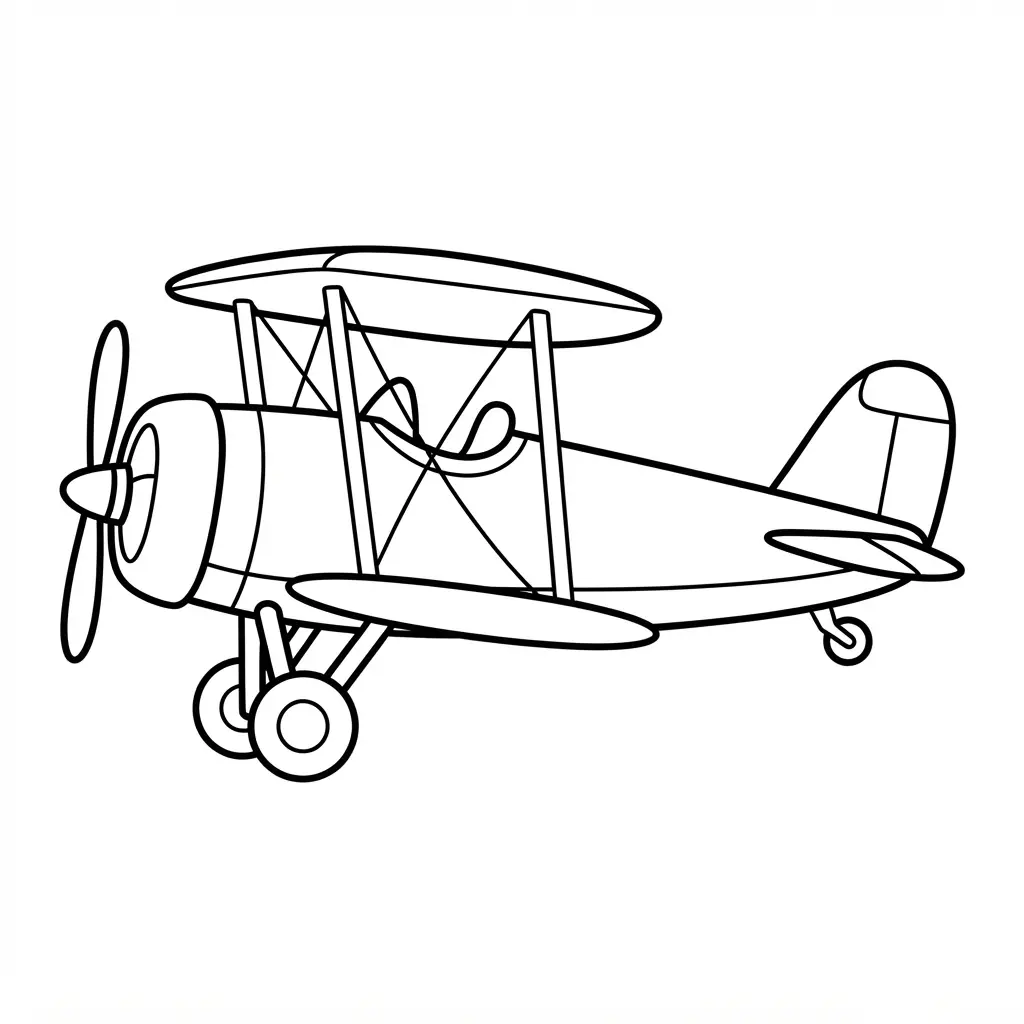
This historical biplane looks complex, yet its bold shapes make a satisfying coloring project, especially when exploring vintage airplane coloring pages. Start with two separated wing levels, then connect them with slim cabane struts and outer bracing. Add the compact fuselage, two-seat cockpit, front propeller, and simple landing gear. Does the silhouette come together quickly? I love how quickly the aircraft’s identity appears.
Use the Sopwith 1½ Strutter as a historical reference, with its synchronized machine gun and April 1916 service date. Keep each support line open and bold enough for easy coloring, rather than crowding the wings with tiny marks. A side view keeps every feature clear, while a three-quarter view adds depth. Pro tip: reserve small sections for gentle shading, and feel proud when your classic aviation lines are complete on airplane coloring pages.
3. Modern Fighter Jet in Flight: Sleek Sky Scene
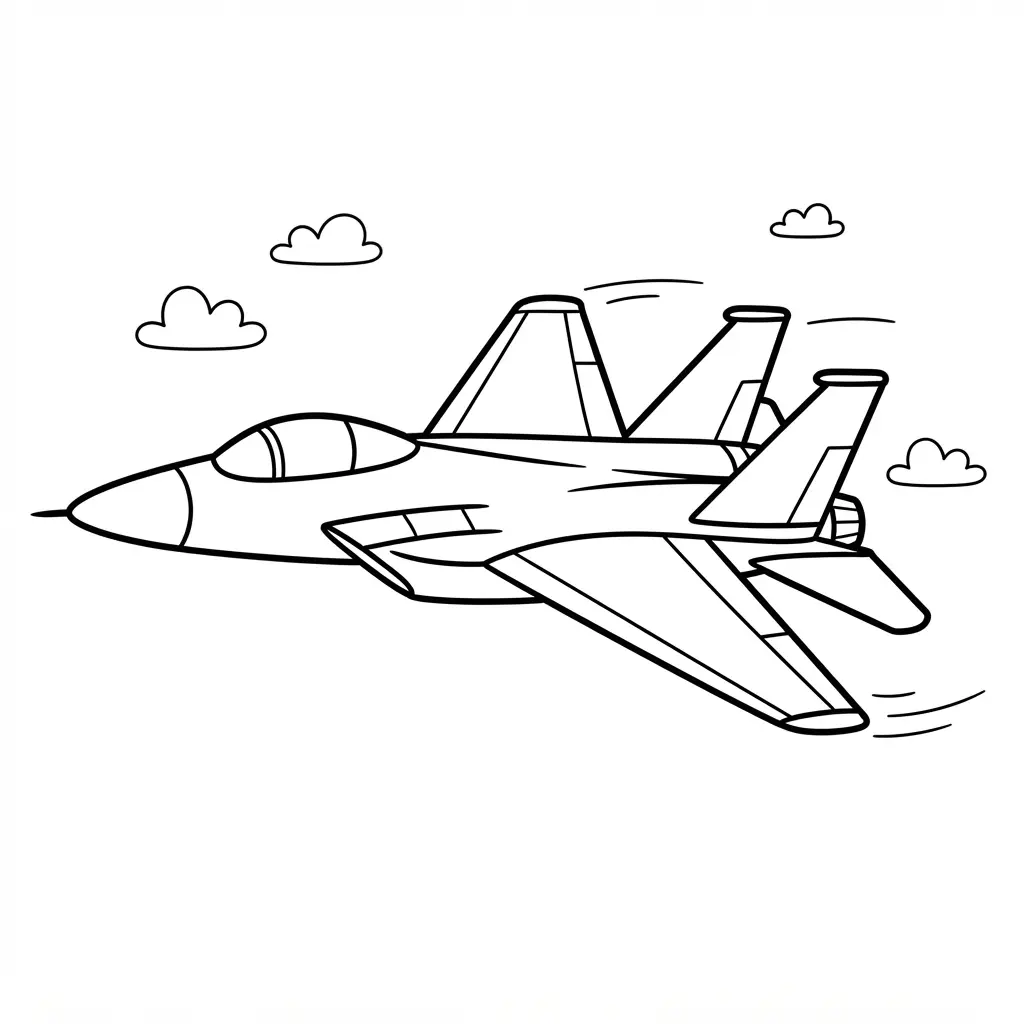
I love this scene because the jet looks fast, sharp, and easy to recognize, which shows why modern airplane coloring pages always stand out. Start with an angular fuselage, then extend broad wings from the blended roots so the aircraft feels ready for a high turn. Add one vertical stabilizer, a dark amber-tinted canopy, and a gray body with clean sections for coloring. A clear blue sky keeps the focus on the aircraft, while white vapor trails suggest motion behind the engine. Wouldn’t a slight banking pose make the picture feel more active? This works because each strong shape gives you a clear coloring choice without crowding the page. Pro tip: leave small gaps between the vapor trails and jet for a crisp finish.
4. Cessna Propeller Plane Landing Gear Study
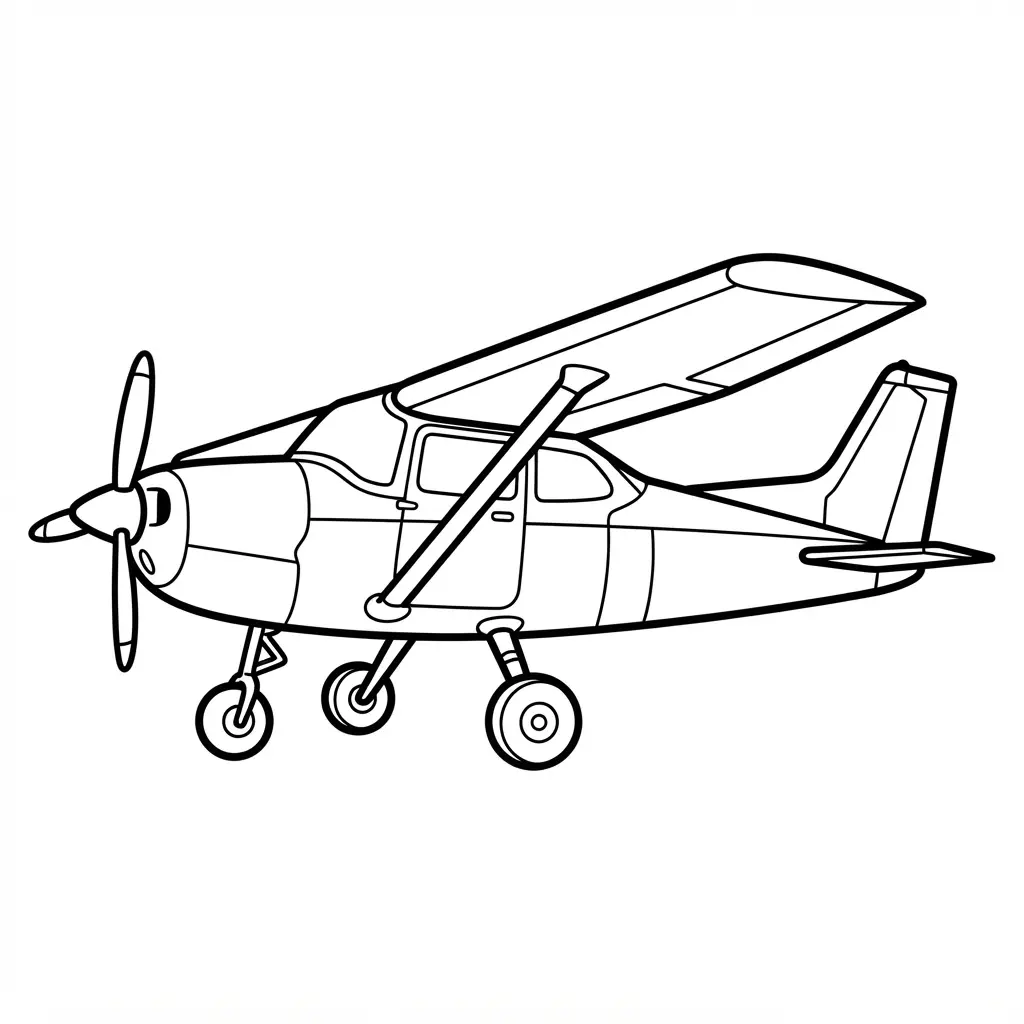
The finished plane sits above three clear wheels, with broad main tires and a smaller nose wheel ready for the runway, just like detailed airplane coloring pages. Sound complicated? It is not. Start with a three-wheel landing gear layout, drawing two main legs beneath the central fuselage and a shorter leg under the nose.
Add spring-steel main struts, an oleo-pneumatic nose strut, wheel hubs, tires, and attachment points. Keep one rear main leg partly visible behind the fuselage so the structure feels balanced, then use light gray for metal and darker shades beneath the aircraft. Engineers study stress, deflection, and gear loads during touchdown, taxiing, and hard impacts, adding a technical twist to these airplane coloring pages. I love this page because each part has a clear job. Pro tip: make the nose wheel visibly smaller for an instantly recognizable light propeller plane.
5. Busy International Airport Tarmac Scene: Ground Activity
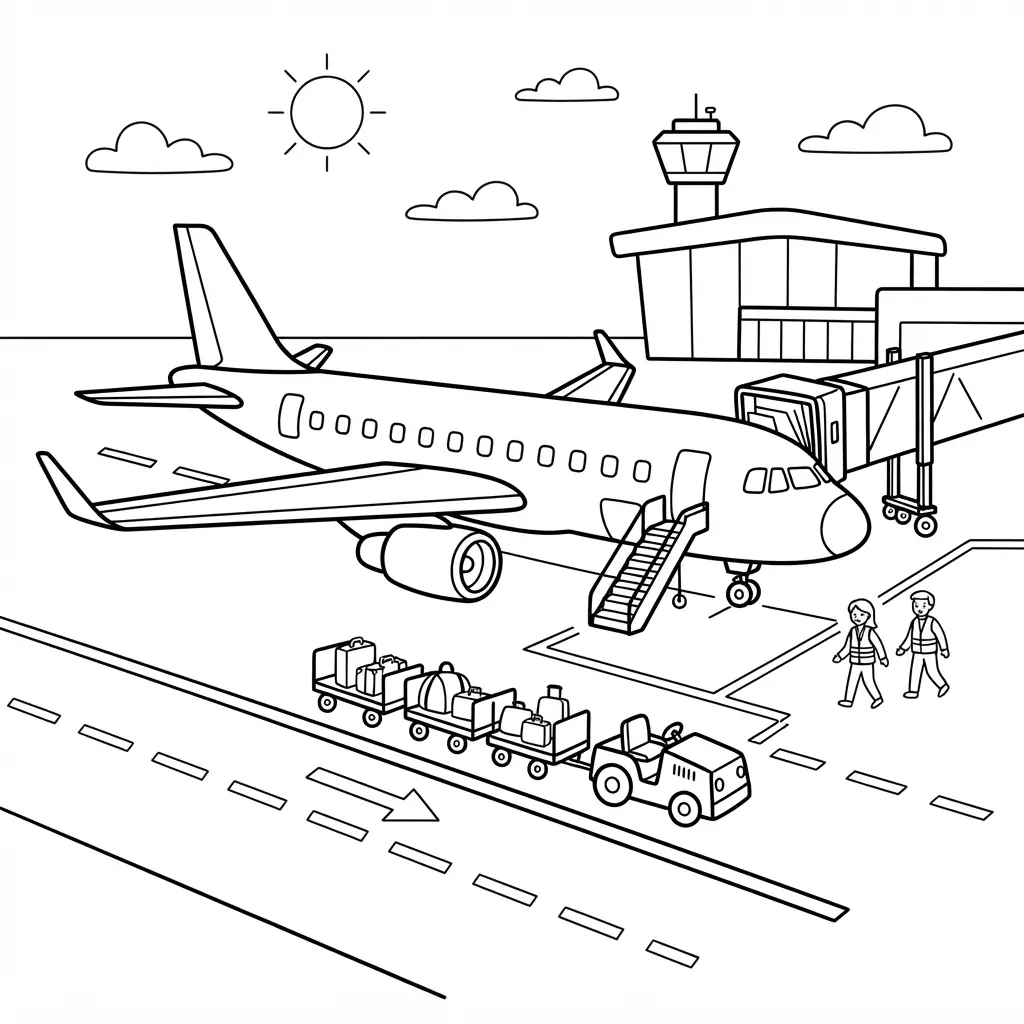
A common mistake is drawing only the airplane and calling it a tarmac scene, so remember that busy airplane coloring pages need more elements. Add baggage carts, a fuel truck, and ground crew around the main aircraft to show the airport at work. Sound complicated? It is not.
Sketch the large plane near the center, then leave clear spaces between each vehicle and worker. Show one crew member loading luggage, another checking the fuel truck, and a catering vehicle beside the service door. Add a terminal, distant planes, and small speech marks near the cockpit to suggest pilot and control-tower communication. I love how each detail gives the page a fresh little story, which is exactly what makes interactive airplane coloring pages so engaging.
Keep outlines bold and shapes open so every truck, cart, and person stays easy to color, ensuring your airplane coloring pages remain clear and fun. This variety makes the scene satisfying because children notice how many jobs help a flight leave safely. Pro tip: use different colors for each vehicle and feel proud when the whole airport comes alive.
6. Adventurous Hot Air Balloon Flight — Open Sky View
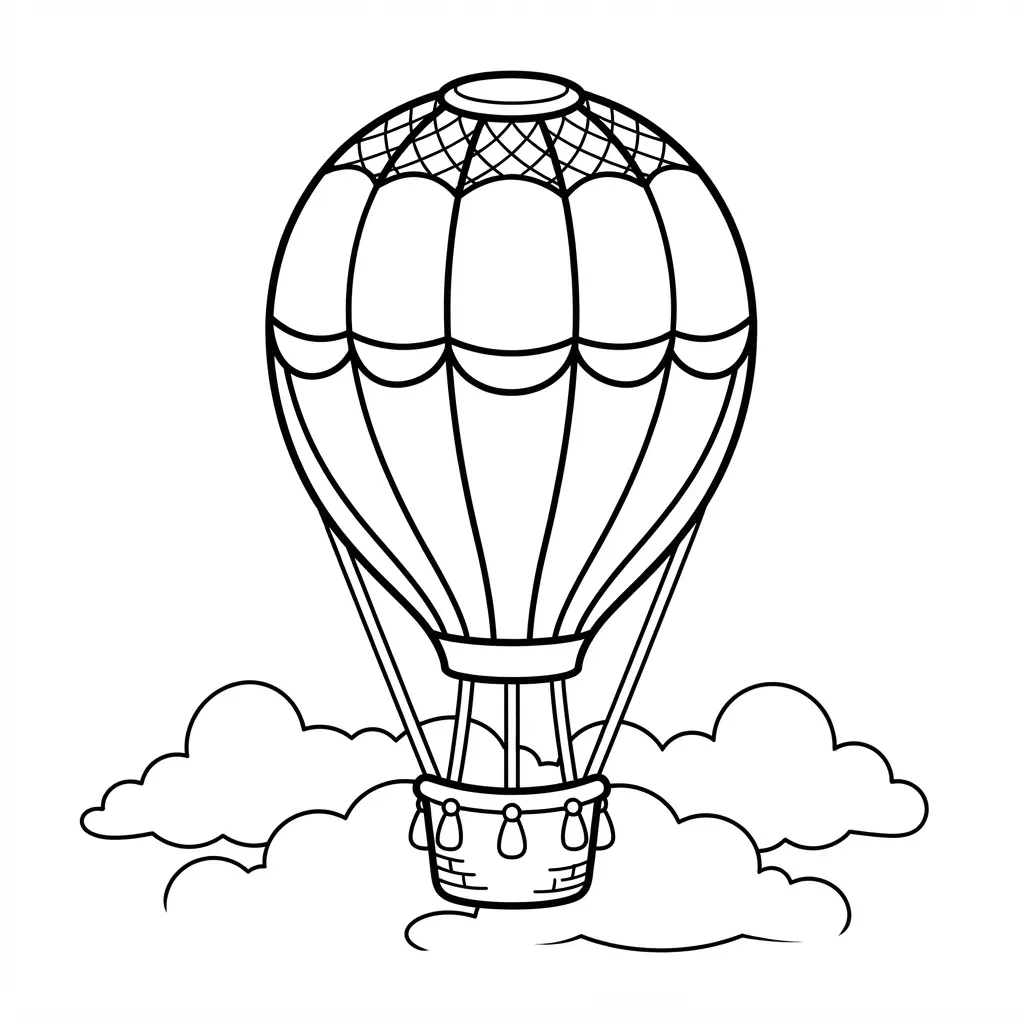
Fill the rounded balloon canopy with sunrise colors, then add a burner flame, soft clouds, and a bright sun near the horizon, blending perfectly into these airplane coloring pages. Sound complicated? It is not. I love placing tiny rhinos, zebras, or trees far below, since their small size makes the balloon feel high above the countryside. Let it drift over hills, a lake, or distant mountains, keeping the sky wide and uncluttered while using calm curved lines for the envelope and light strokes for morning shadows. Pro tip: shade the lower sky peach and gold, then add blue higher up for a clear sunrise view.
7. Majestic Glider Soaring Over Mountains: Peaceful View
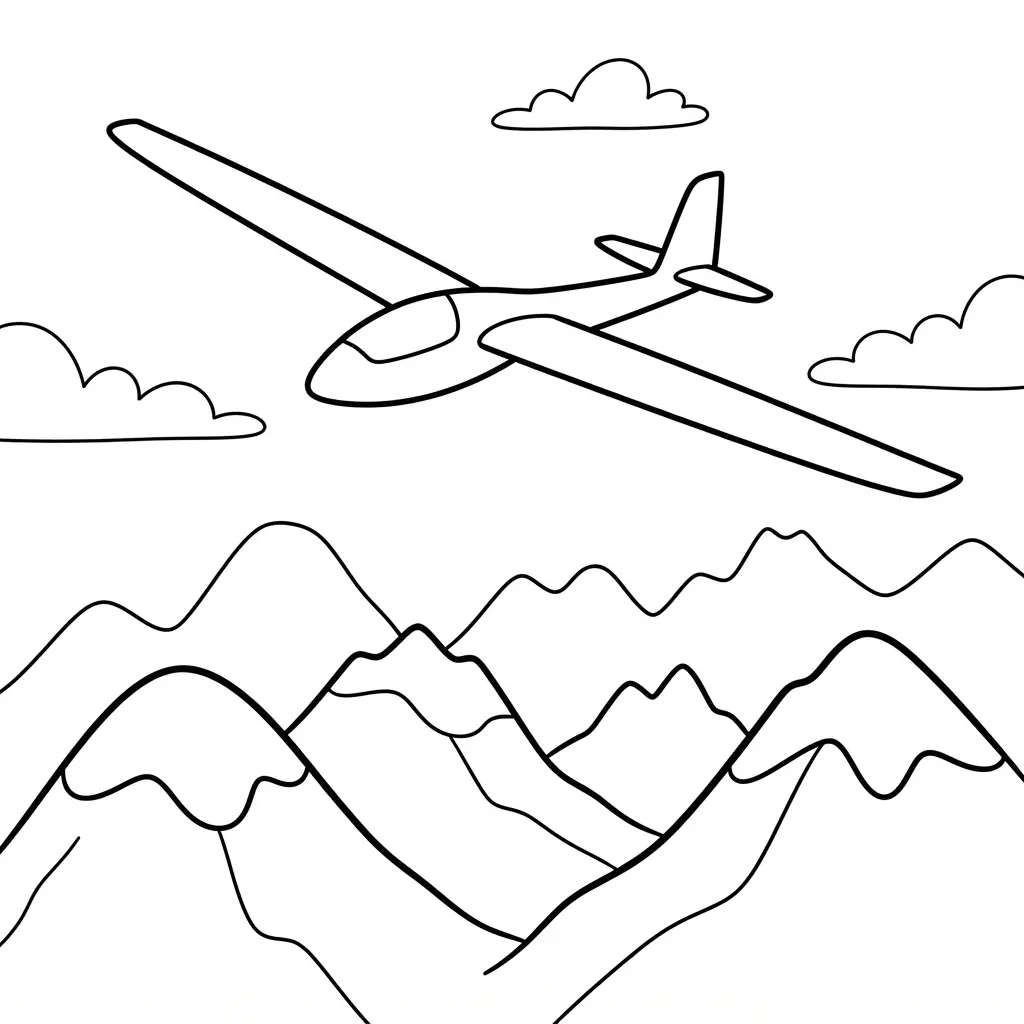
Ever pictured a slender glider floating above snowy peaks? Start with overlapping mountain slopes, placing smaller peaks behind taller ones to create depth in your airplane coloring pages. Add soft mist around a few ridges, leaving open areas so each peak stays clear. Use varied heights instead of repeating the same outline, and your mountain scene will feel broad and natural.
Draw the aircraft high in the open sky with a long fuselage and wide, smooth wings, which gives your airplane coloring pages a peaceful vibe. Keep plenty of white space around it, then add a few rounded clouds and clean lines for easy coloring. I love using pale blue for the sky, soft gray for distant peaks, and gentle white touches for snow.
This arrangement works because the small glider stands out against the immense alpine view, proving that scenic airplane coloring pages always capture attention. Pro tip: use distinct aircraft outlines so the peaceful flight stays easy to recognize. Enjoy the calm feeling as your page comes together.
8. Helicopter Rescuing Distressed Hiker Scene
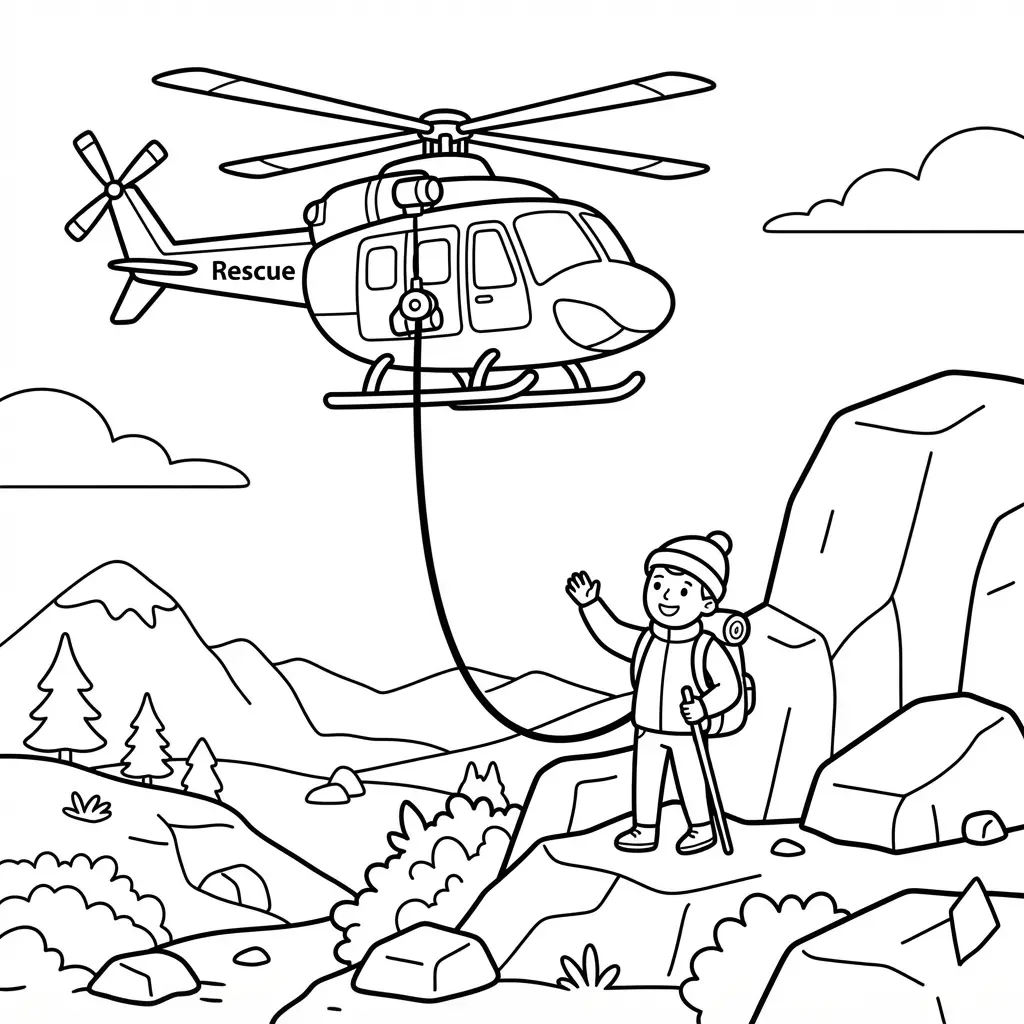
This rescue scene feels full of motion, even in a simple outline, showing how dynamic airplane coloring pages can be. Start with the helicopter hovering above a seated hiker, then draw a straight rescue cable from its underside to a suspended rescuer. Add bold rotor blades and a small open door for clear storytelling. Steep cliffs, jagged mountain peaks, and a narrow canyon show why ground access is difficult, while separate outlines leave roomy sections for crayons or colored pencils. Sound complicated? It is not. I love adding pale sky tones first, then giving the helicopter bright rescue colors so it stands out against the rocky setting. Finish with small clothing details and a safe landing spot, and feel proud of your action-packed page.
9. Space Shuttle Launching Into Orbit: Bold Action Scene
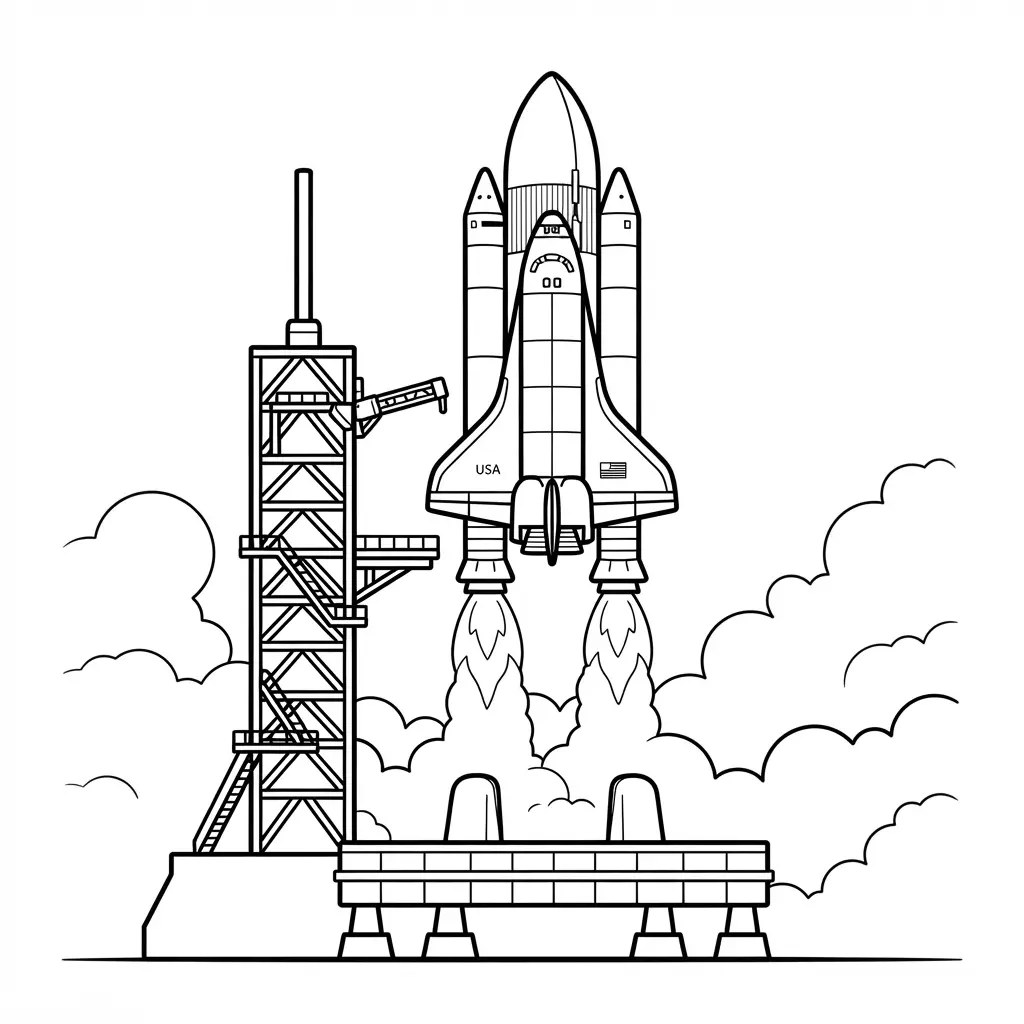
This is one of my favorite pages because every line feels full of motion, capturing the thrill of launch-day airplane coloring pages. Sketch the shuttle on a steep diagonal, with the twin booster flames stretching below it, a launch tower behind, and a wide smoke plume under the pad. Curve motion lines around the vehicle as it pitches toward orbit, then add small separation bursts for a later moment. Ever tried making a rocket look fast without filling the page with tiny details?
The scene works because large shapes give you room for bold reds, oranges, grays, and soft blue sky, making these airplane coloring pages incredibly vibrant. I love leaving open space ahead of the nose so the flight path feels clear, and my pro tip is to keep the flames uneven for a lively drawing. Feel proud when your page looks ready to lift off!
10. Vintage Seaplane Landing on Water — Coastal Scene
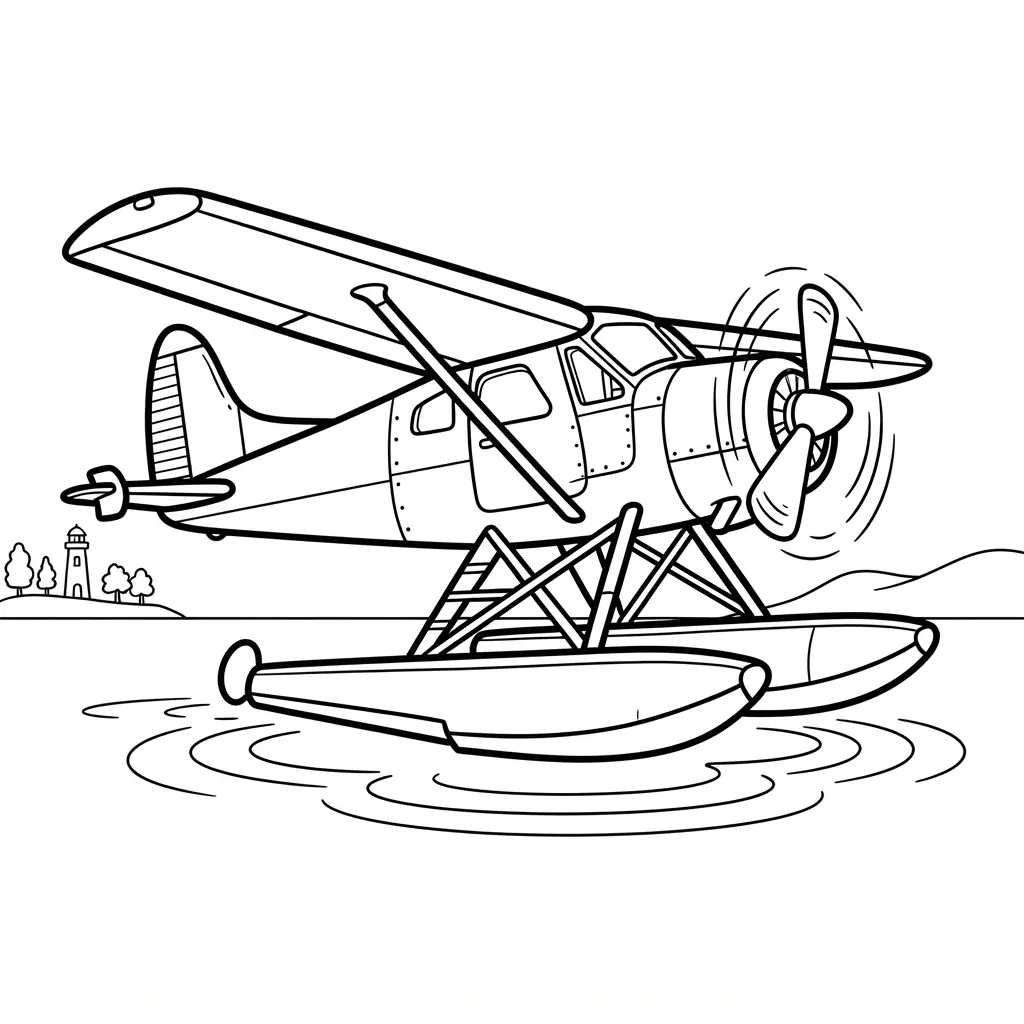
Soft gray clouds hang above a vintage seaplane as its floats touch rippling blue water, sending tiny splashes outward across serene airplane coloring pages. I love how the distant boat and tree-lined coast make the picture feel like a quiet travel scene. Does it not invite you to slow down and fill every section with care?
Keep the aircraft as the clearest focal point, then add a simple horizon, a small dock, and broad wave lines behind it, which frames your airplane coloring pages perfectly. Use water-contact lines beneath the floats to show motion, while light pencil marks along the border suggest an aged film effect. Try colored pencils in muted blue, gray, green, and brown for a soft coastal palette. Keep background shapes smaller, so the landing remains the star of your page.
11. Aerial Stunt Plane Cloud Loop: Sky Performance
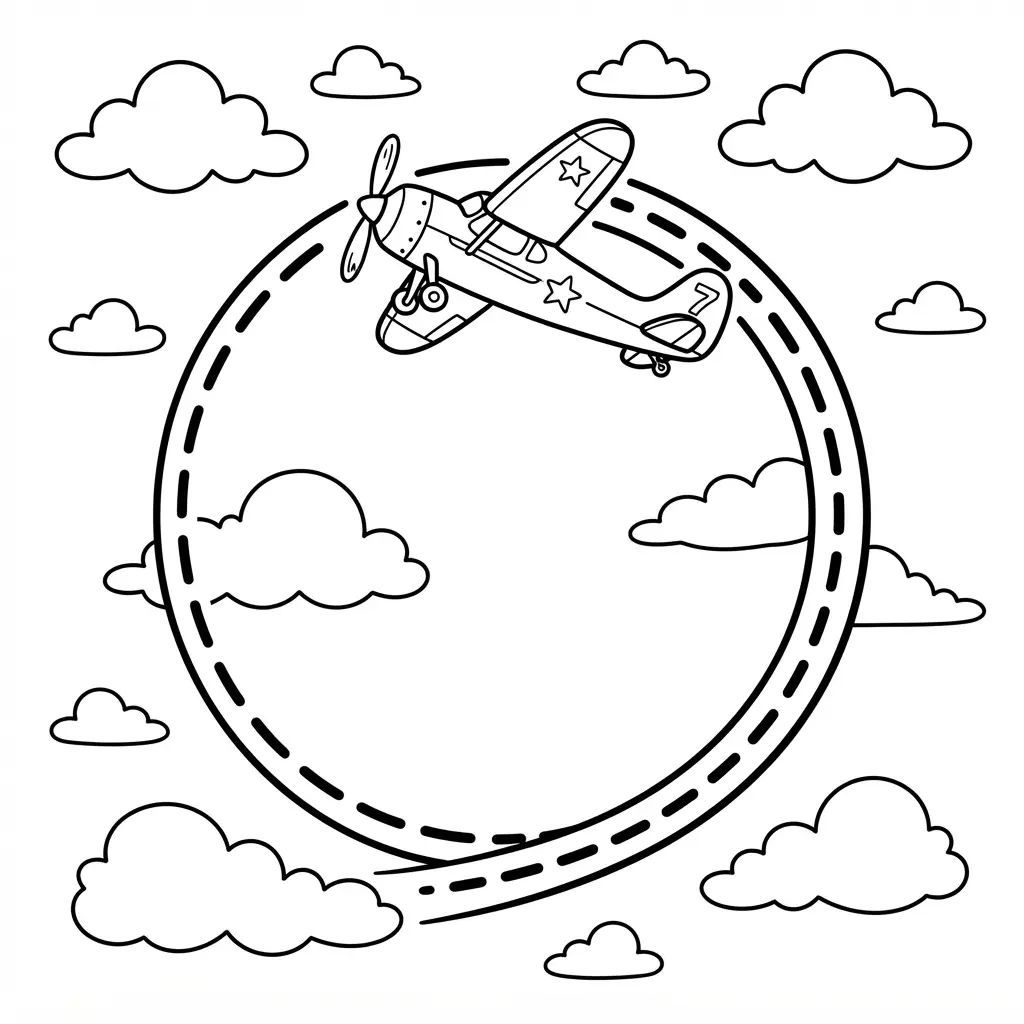
A straight smoke line makes a stunt plane look like it is flying past, not looping, so curved designs work best for action-packed airplane coloring pages. Sound complicated? It is not. Start with the aircraft climbing along one side of a large circle, then place it near the top as the nose turns downward. Add a thick curved smoke trail around the path, leaving enough open space for each section to read clearly.
I love coloring the plane yellow, then choosing blue, gray, or warm sunset shades for the sky, adding life to every set of airplane coloring pages. Puffy clouds around the loop add depth, while distant mountains give the lower edge a calm anchor. For two aircraft, use mirrored arcs so the performance feels neat and balanced. The circular path makes this page satisfying because your eyes follow the motion from ascent to descent. Trust me, bold smoke lines make the whole stunt feel alive.
12. Cargo Plane Loading Shipping Crates: Airport Work Scene
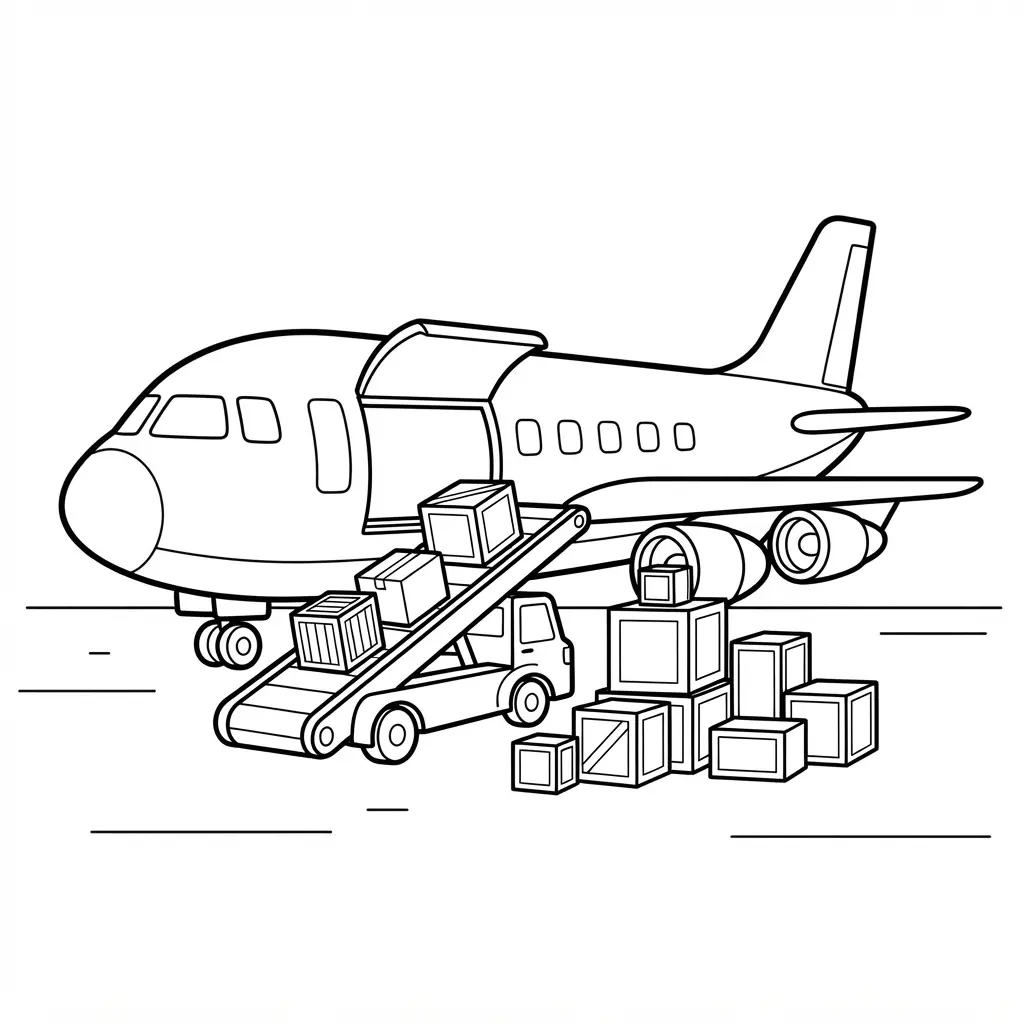
Start with a parked cargo aircraft, then draw its open side bay and broad wings across the tarmac, creating realistic airplane coloring pages. Add ground crew beside stacked crates, with one worker guiding a forklift toward the raised loading platform. Boxes, pallets, wheels, and simple runway lines give every part a clear place to color.
Isn’t it satisfying to show how an airport team moves freight from the ground into the aircraft, especially when completing detailed airplane coloring pages? I love adding small vest stripes and panel lines because they make the work scene feel busy without crowding the page. Keep the engine and loading gear separate, leaving open space around each worker. Trust me, bold crate shapes and a bright sky will make your scene feel cheerful and easy to follow.
13. Friendly Pilot Wave from Cockpit: Cheerful Flight Scene
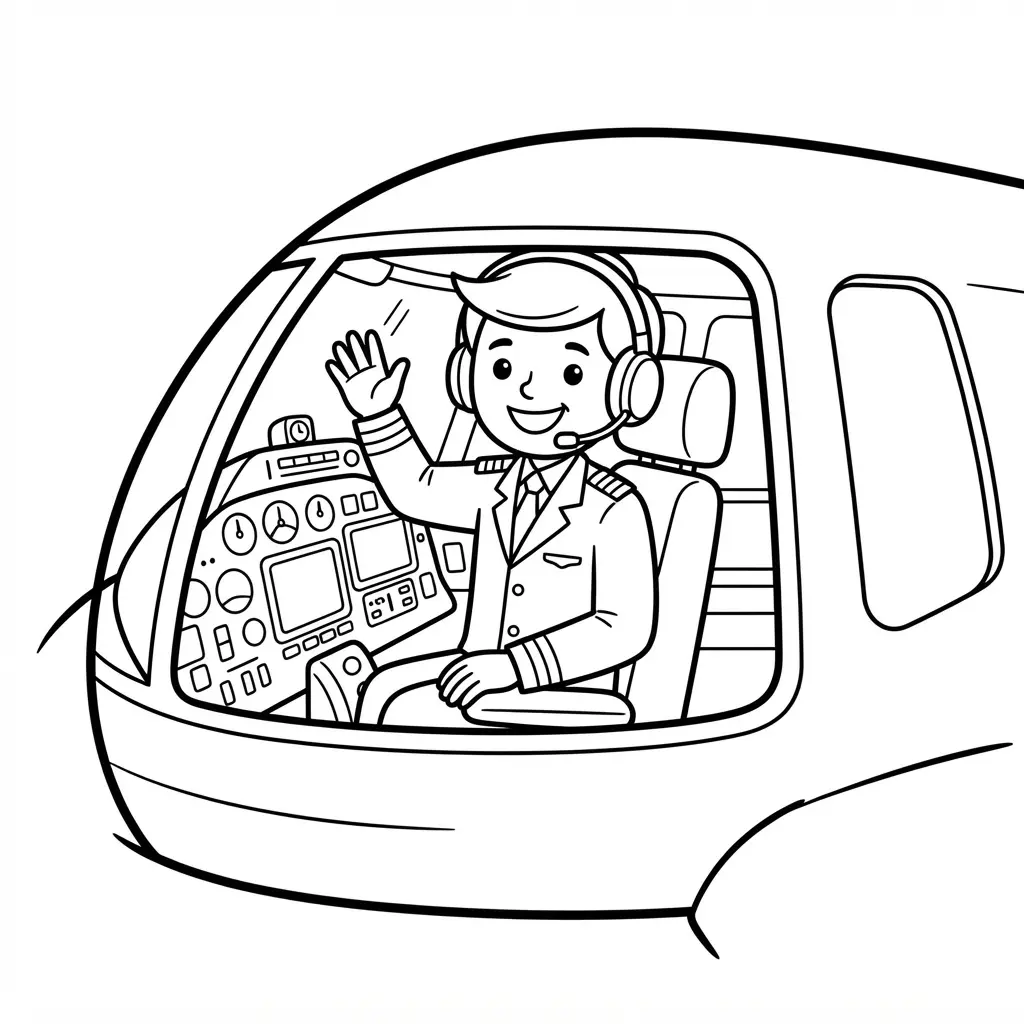
Ever tried drawing a pilot waving through a cockpit window? Start with a rounded airplane nose, then frame the pilot inside the cockpit window, which makes character-driven prints so fun. Keep the face large enough for a happy smile and raised hand to read at a glance.
Add a simple cap, shirt collar, and a few dashboard lines without crowding the view. A soft blue sky, puffy clouds, or warm sunset colors give the picture a cheerful flight mood. I love this scene because the greeting makes the aircraft feel welcoming and full of personality.
Use bold outlines around the pilot and hand, then leave small details open for easy coloring. Keep the waving hand unobstructed so the friendly gesture stands out. Your finished page will feel warm, playful, and ready for a colorful flight.
14. Paper Airplane Gliding Through Sky: Simple Design
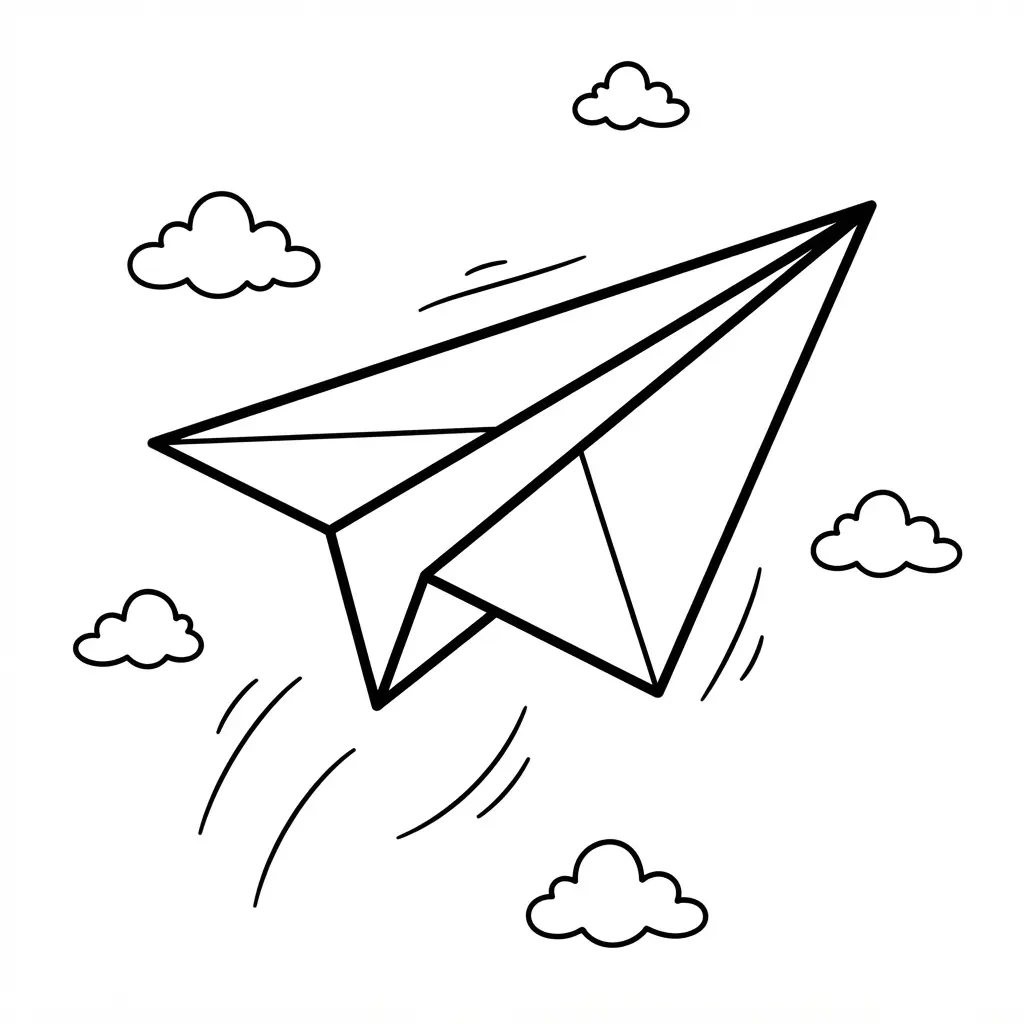
This one feels cheerful from the first line, with a wide-wing paper glider floating across open sky, showing how simple airplane coloring pages can be. Draw a pointed nose, broad even wings, a small raised tail, and two curved motion lines beneath it. Add a few soft clouds, leaving open spaces for easy coloring.
Keep the flight path level or gently rising rather than pointing down, a simple trick that works for most airplane coloring pages. Sound tricky? It is not. Sharp, clean outlines make the shape easy to follow, while a slightly heavier-looking nose and balanced wing outlines suggest steady movement. I love how this scene turns a few simple shapes into a clear lesson about wing area and center of gravity.
Use blue around the plane, then pick a bright shade for each wing. Curved flight lines add movement without filling the page with tiny details. This is a lovely choice for young artists because the picture feels active while staying calm and roomy. Trust me on this one: broad shapes give every crayon stroke room to shine.
15. Futuristic Flying Car Concept Design: Playful Vehicle
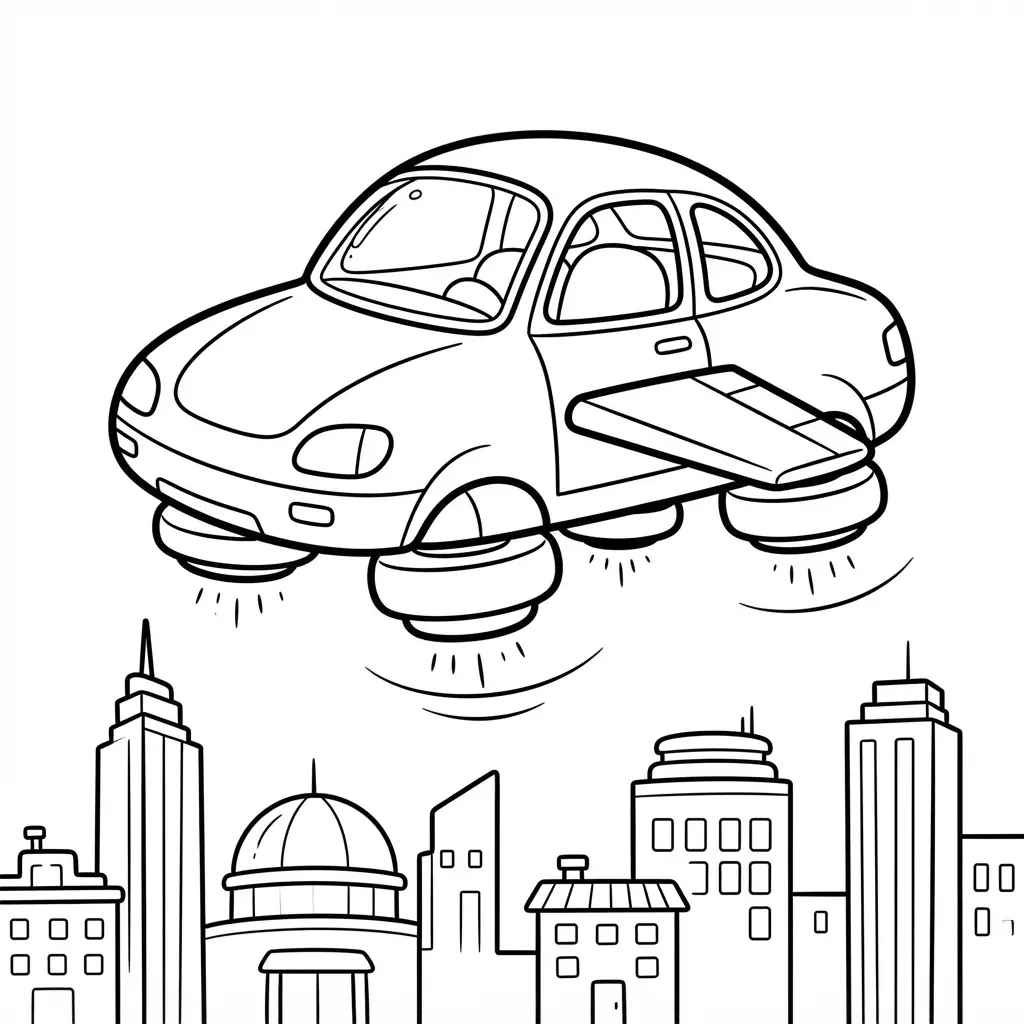
This is one of my favorite airplane-inspired drawings because it feels like a car and a small aircraft at once. Start with a rounded body, broad windows, and four wheels, then add retractable wings tucked beside the doors. Give the front a friendly cockpit, place dual-blade propellers near the sides, and show a few battery symbols for its electric power. Sound complicated? It is not. The clear road-and-flight features make the picture easy to recognize, while rotating seats or a cozy nest-like cabin add playful details. I love leaving the body white at first so you get to choose bold colors, racing stripes, or glowing accents. Finish with clouds beneath the wheels and feel proud of your flying invention.
16. Firefighting Plane Dropping Water Load: Rescue Action
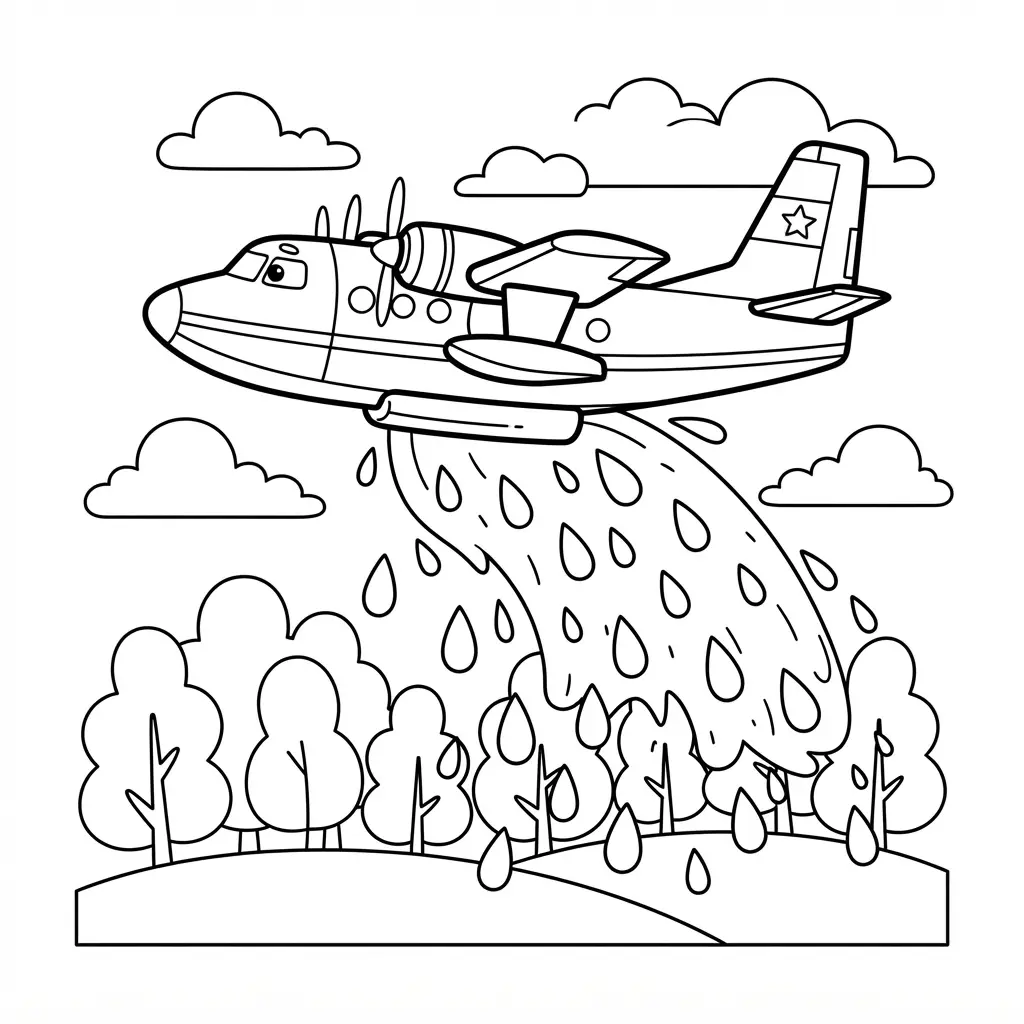
Bright water pours from a broad aircraft belly, while orange flames glow beyond a smoky lake scene. Doesn’t this rescue moment look thrilling on your page? I love the instant the plane shifts from calm water to urgent wildfire response.
Draw the amphibious plane skimming low over a lake, with pontoons touching the surface. Show its tanks filling, then add a wide sheet of water falling over the flames. A CL-415 holds up to 1,600 gallons and gathers its load in about 12 seconds at roughly 70 to 80 knots. Use layered smoke lines to give the action depth.
Keep ground firefighters below the drop zone, since aerial crews support their work rather than replace it. The repeated scoop-and-drop pattern makes this scene satisfying to color. Trust me, adding red, gold, and gray brings the rescue action to life.
17. Experimental Aircraft Wing Design Study
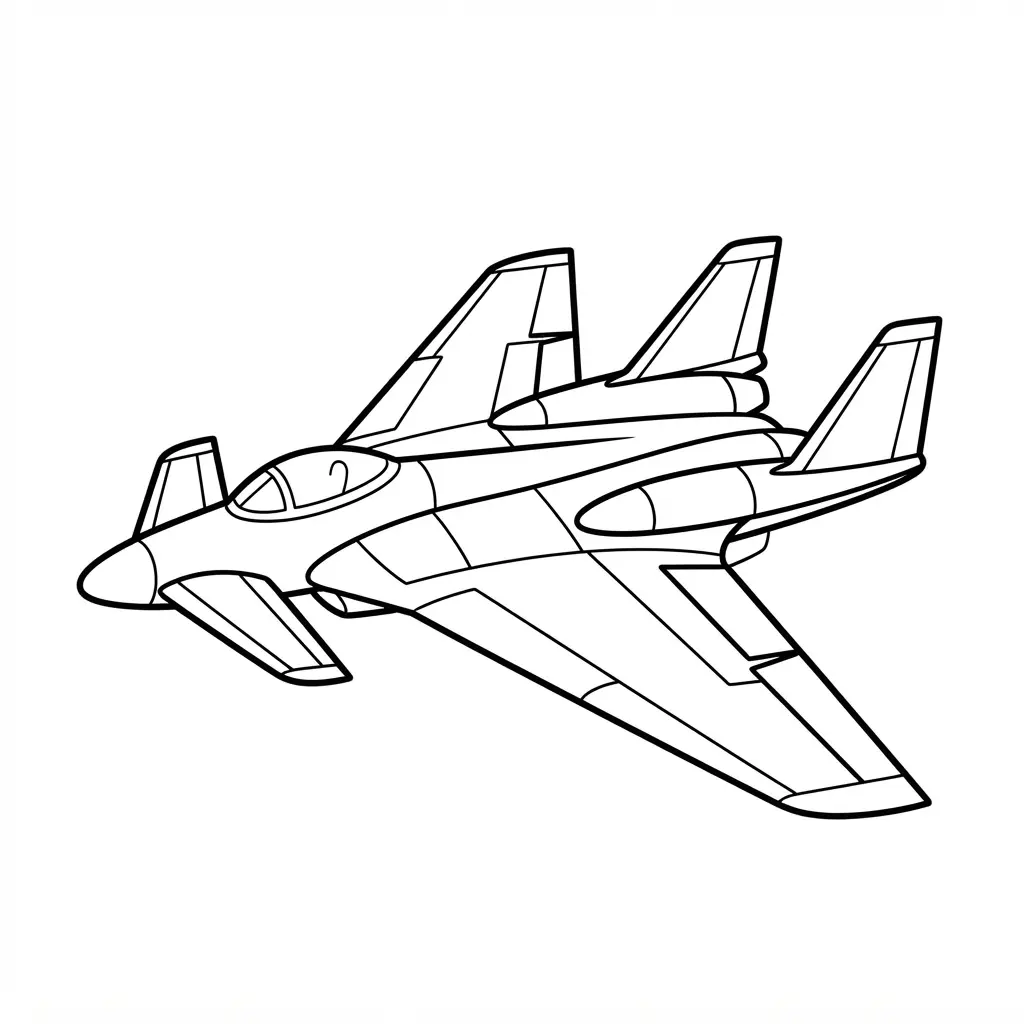
An experimental wing isn’t always a sharp, fixed fighter-jet shape. Sound complicated? It isn’t: your page shows a smooth wing with curved sections, movable trailing-edge flaps, sensor dots, and airflow lines sweeping through a wind tunnel. Use curved wing sections to suggest morphing movement, then add tiny electric motors near the flaps and arrows for lift and drag. I love how these details turn a simple aircraft outline into a friendly engineering study, while still leaving plenty of room for color. Keep one wing edge smooth for laminar airflow, and draw small pressure marks or bending lines near the root for extra motion. Feel proud when your sheet looks both playful and smart.
18. Jet Engine Turbine Detail View: Mechanical Study
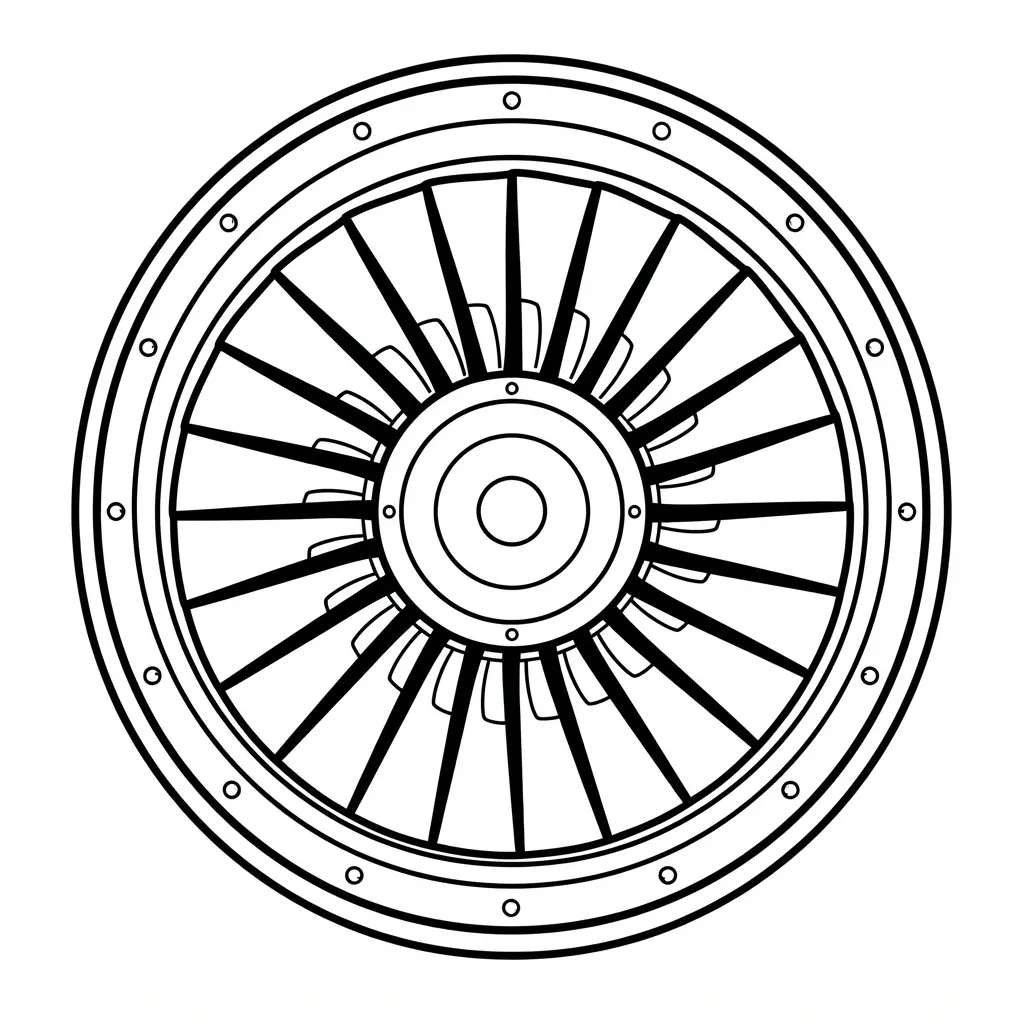
Start with a wide circle for the casing, then add a smaller circle for the rotor disc. Sketch curved rotor blades in repeated rows, leaving a narrow tip clearance between each blade tip and the casing. Add stationary guide vanes between blade rows, then mark small cooling holes as neat dots along the vane edges. Draw the repeated blade rows with steady spacing so the turbine looks layered.
Sound complicated? It is easier once you split each layer. I love using a cross-sectional view to show the disc, shaft, casing, and alternating rows clearly. Keep the rotor blades uncolored at first, then shade every other vane to separate moving and stationary parts. This layout feels satisfying because the circles and repeated shapes give your page a clean mechanical rhythm. Pro tip: use a ruler for the casing rings and tiny dots, so your study stays crisp for older readers and machine fans.
19. Small Plane Above City Skyline — Urban Flight Scene
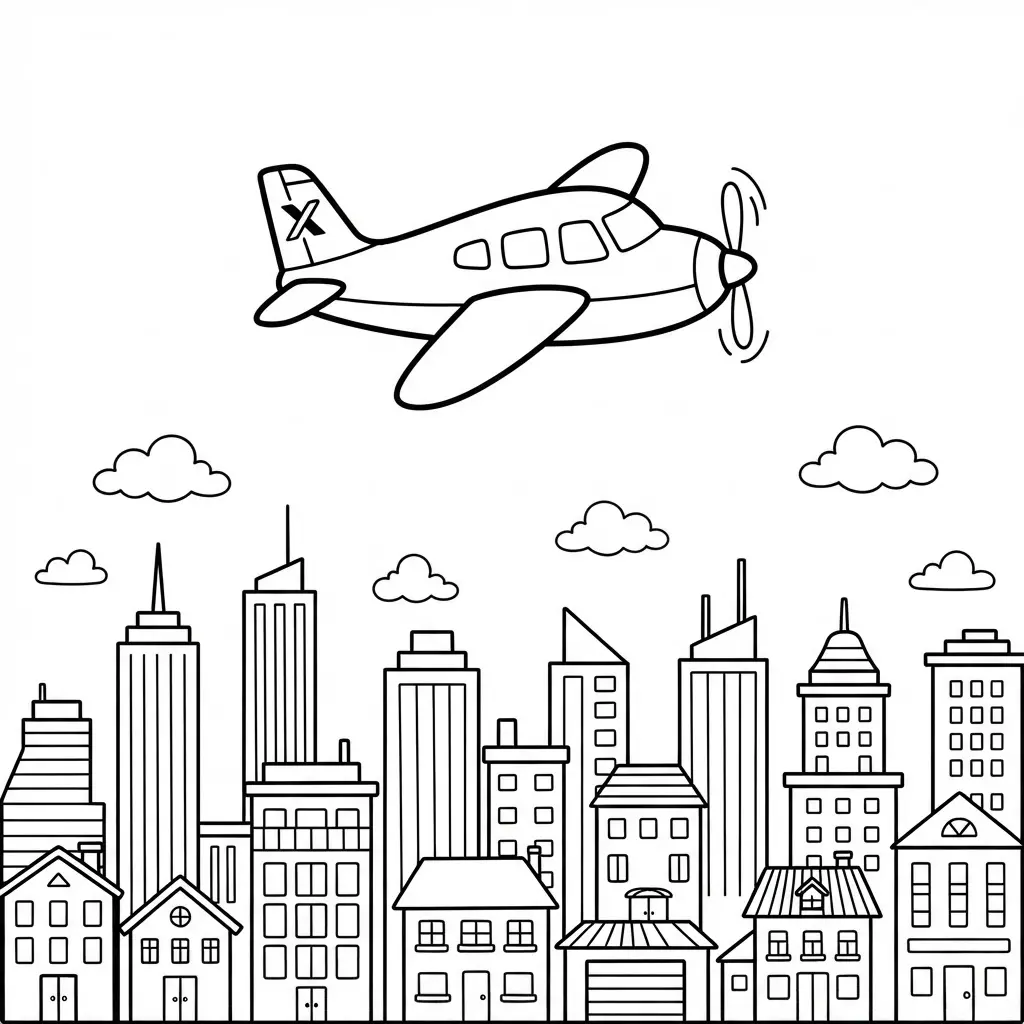
Ever wondered how a small plane looks from the ground? Start with a clear aircraft outline in the upper half of your page, then add broad wings, a tail, cockpit windows, and a propeller if you choose a light propeller plane. Leave plenty of open sky around it so the aircraft stands apart from the background.
Below, draw a varied city skyline with tall towers, shorter buildings, rooftop shapes, and a few simple windows. I love adding soft clouds or a bright sun because these details help show height while keeping the page easy to color. Use bold lines around each building and plane part, then pick different colors for the city, sky, and aircraft. The finished scene feels lively and full of urban flight energy.
20. Royal Air Force Parade Formation: Historic Sky Display
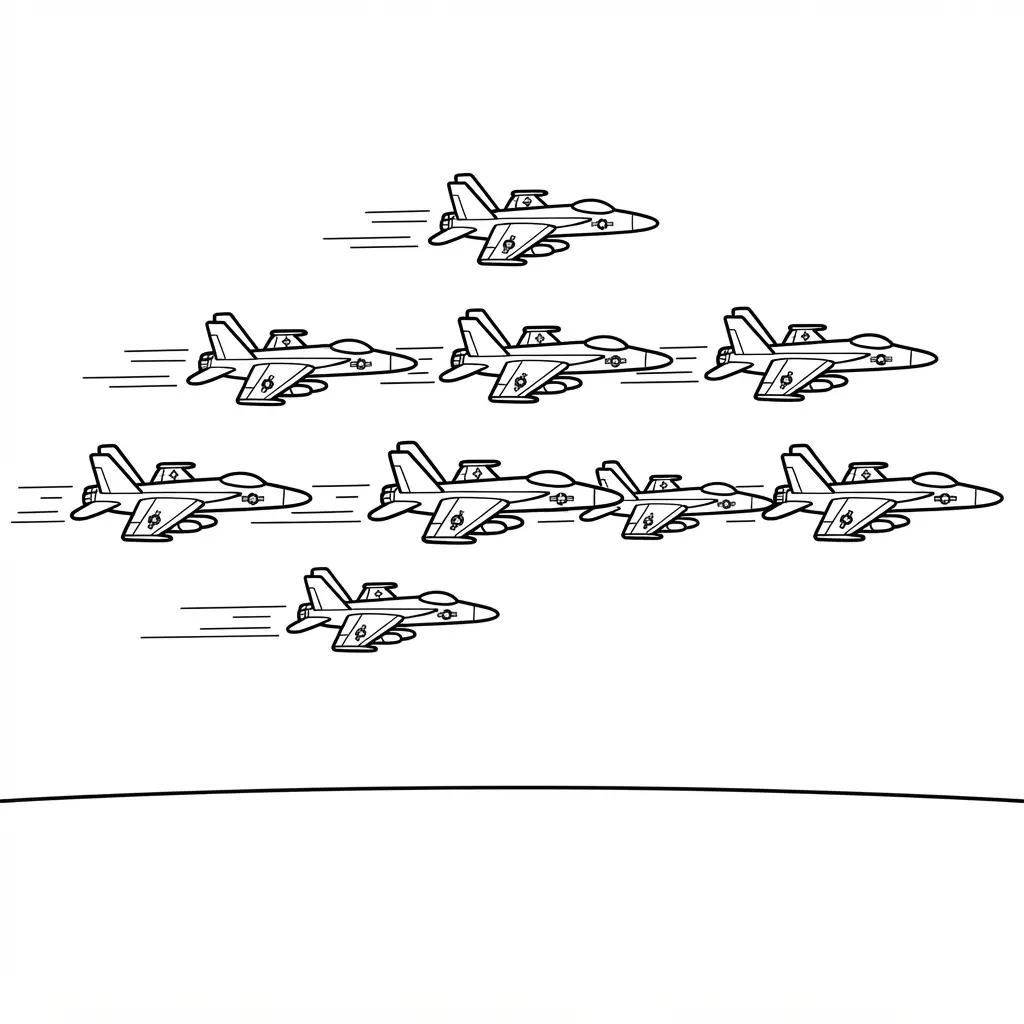
This scene turns a busy sky into organized rows of aircraft. Draw Spitfires, a Lancaster bomber, Typhoons, and F-35 jets moving in groups above Buckingham Palace. Sound complicated? It is not.
Use curved flight paths and equal spacing so each plane looks connected to the parade. For a historic touch, arrange smaller aircraft into the number “100” formation, inspired by the RAF centenary display in 2018. I love how repeated shapes make the page feel orderly without adding hard details.
Add helicopters, training aircraft, and a final Red Arrows group for extra variety. Reach for colored pencils to give older planes soft gray tones and modern jets deeper shades. The careful pattern makes this scene satisfying to color, so feel proud when your sky display comes together.
Displaying Finished Aviation Artwork
Frame finished pages with acrylic glazing instead of ordinary glass when children’s artwork will hang in a playroom or hallway. The lighter panel reduces breakage risk and keeps the display easier to move. Acid-free backing paper prevents discoloration around crayon wax, marker ink, and colored-pencil layers. Leave a narrow margin around the page so the frame does not cover wing tips, runway markings, or cloud details. A simple white, blue, or silver frame keeps attention on the aircraft without competing with bright coloring. Use removable photo corners for pages you plan to take out later, rather than gluing the sheet directly to the backing. Keep the display away from direct sunlight, which fades strong reds and yellows over time. A small label with the child’s name and date adds a personal finish without covering the artwork.
Conclusion
Exploring these aviation themes gives young artists a wonderful way to express creativity, especially when you focus on airplane coloring pages that match their interests. Each scene offers clear outlines, engaging details, and plenty of space for colorful experimentation. Keep gathering supplies, trying new palettes, and sharing your finished pieces with friends. Happy crafting!
FAQs
Q: What paper weight works best for crayon projects?
A: Standard 120 gsm paper handles wax crayons perfectly, while thicker stock prevents marker bleed-through during detailed sessions.
Q: How do I keep outlines sharp for young children?
A: Use a bold black outline around main shapes to guide small hands and prevent accidental coloring over background areas.
Q: Can I use watercolors on these printables?
A: Yes, provided you use heavyweight paper or apply a backing sheet to absorb excess moisture and prevent warping.
Q: What tools help blend colors smoothly?
A: A soft blending stump or circular crayon strokes work well to merge adjacent shades without smudging the line art.
Q: How should I store finished pages?
A: Place them flat in an acid-free portfolio or slide them into clear plastic sleeves to prevent fading and creasing.