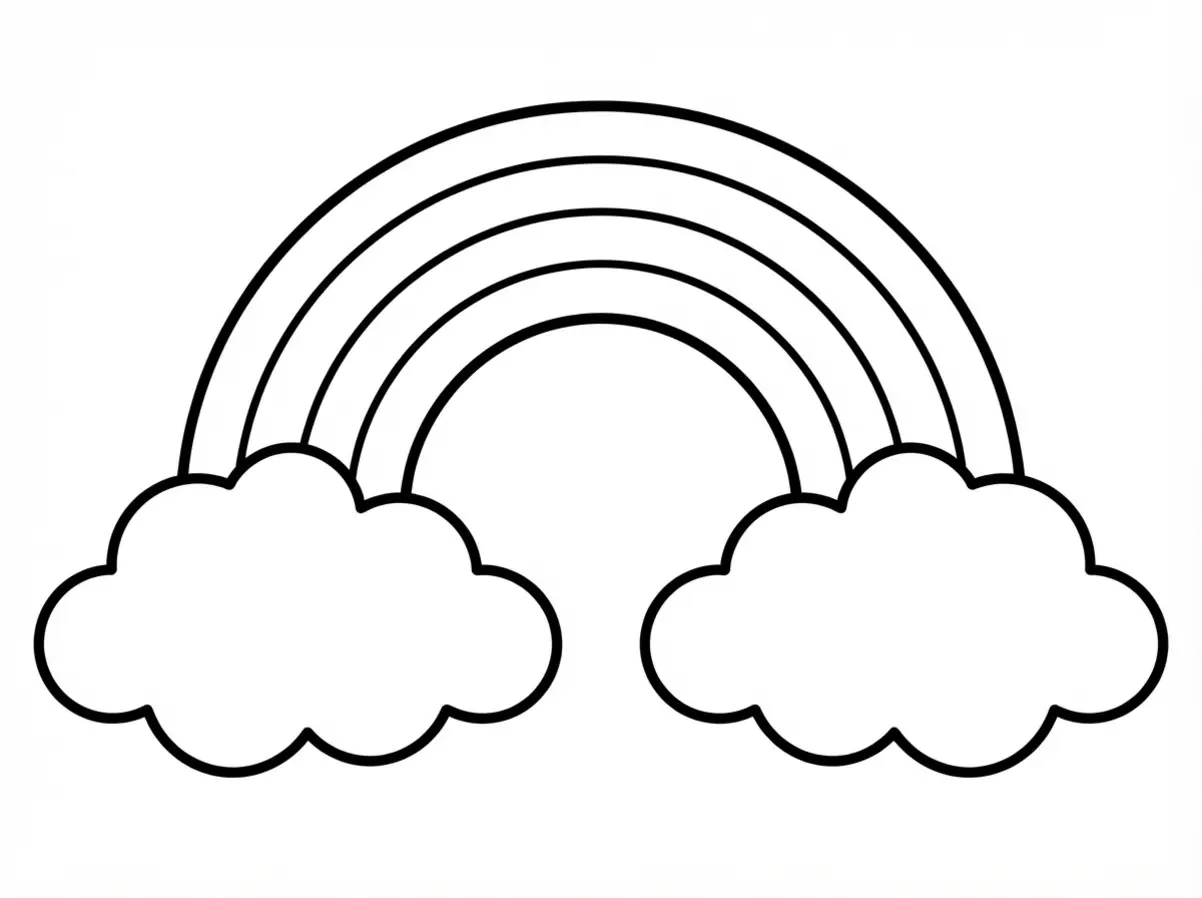
Younger children might enjoy bold outlines and broad bands, while older artists might prefer mandalas, fantasy scenes, and nature details. Print these designs on sturdy paper, gather crayons or colored pencils, and let each child choose a favorite scene. We have plenty of cheerful options ahead, so let’s get started and pick a page for your next art session.
Paper Choices For Crayons And Markers
A smooth 32-pound printer paper lets crayons glide without catching on the surface, so your child’s rainbow bands stay crisp. You want to avoid thin paper for washable markers because the ink bleeds right through and muddies those vibrant colors on the other side, which makes choosing sturdy stock essential for rainbow coloring pages. The good news is a simple piece of cardstock solves this problem, giving markers a sturdy surface that holds the color. Trust me on this, a slightly heavier paper makes all the difference for detailed designs.
We all know kids press hard, so that extra thickness prevents frustrating tears. For colored pencils, that same cardstock supports gradual layering and fine details without the paper buckling under pressure.
Color Planning For Vibrant Rainbow Bands
Start by picking your brightest red, orange, and yellow before you even touch the page to guarantee those warm rainbow bands pop. The trick is leaving a tiny sliver of white paper between each color band, which keeps your green from blending into your blue and turning muddy on your favorite rainbow coloring pages. You will notice that pressing too hard with a pencil fills in the paper’s texture, making it harder to layer a second color smoothly on top. For a sunset scene, try using all the warm colors together in the sky and saving the cool blues and violets for shadows or distant hills.
This kind of color planning creates a balanced page where every section has its own space to shine. It turns a simple rainbow into a complete, colorful picture.
1. Fluffy Cloud Rainbow Line Art for Easy Coloring
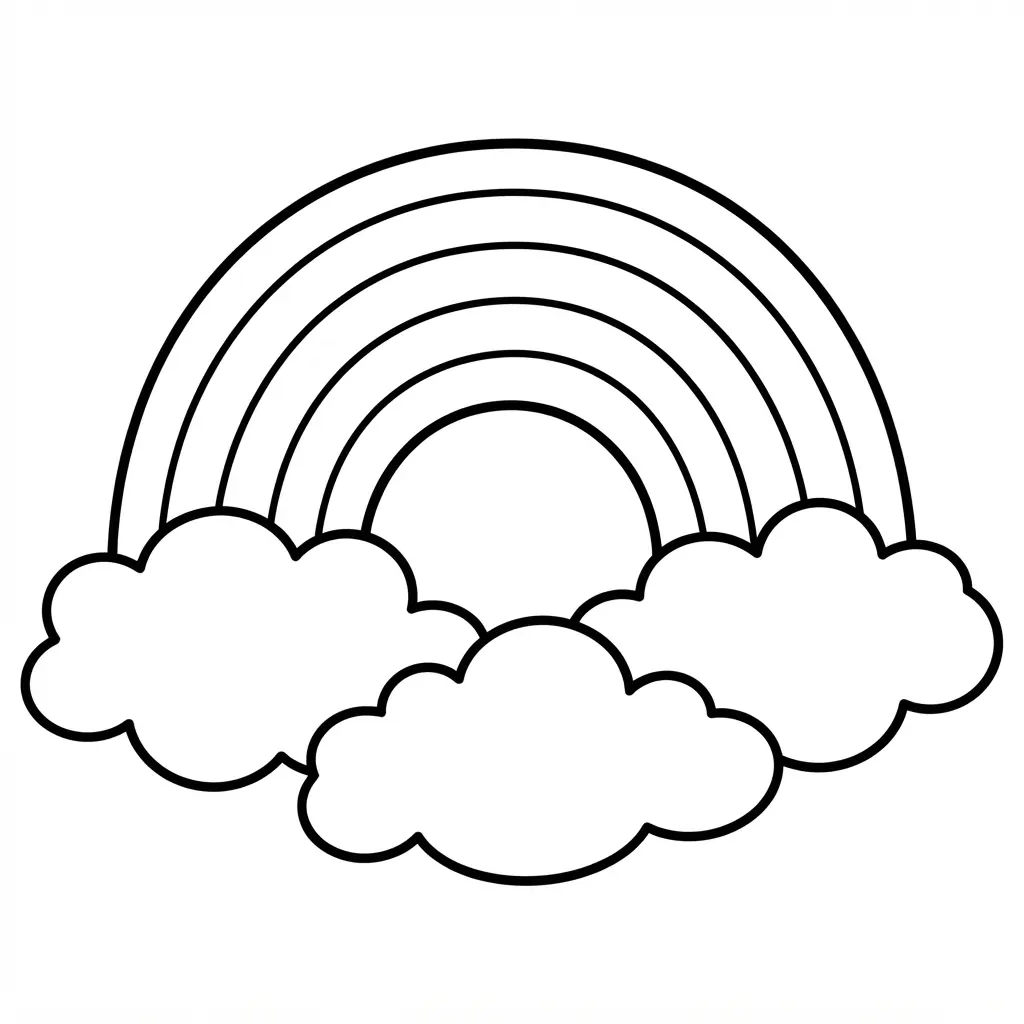
Ever notice how some coloring pages just feel instantly friendly? Fluffy cloud rainbow line art works by creating two soft, pillow-like clouds with bold, scalloped outlines, then connecting them with simple, parallel arched bands, a layout defining many popular rainbow coloring pages. I love how you color each distinct rainbow section without any fussy details.
Its charm lies in that total beginner friendliness. It turns out that keeping those lines thick and the spaces ample is the secret to a relaxing, frustration-free coloring session. Your finished page looks fantastic every time.
To really nail the fluffy look, sketching round, connected ‘U’ shapes for your clouds is my go-to tip. You can find more help with perfecting those basic shapes in these easy cloud drawing ideas. It’s a simple start that makes all the difference.
2. Smiling Sun Rainbow Weather Scene with Open Spaces
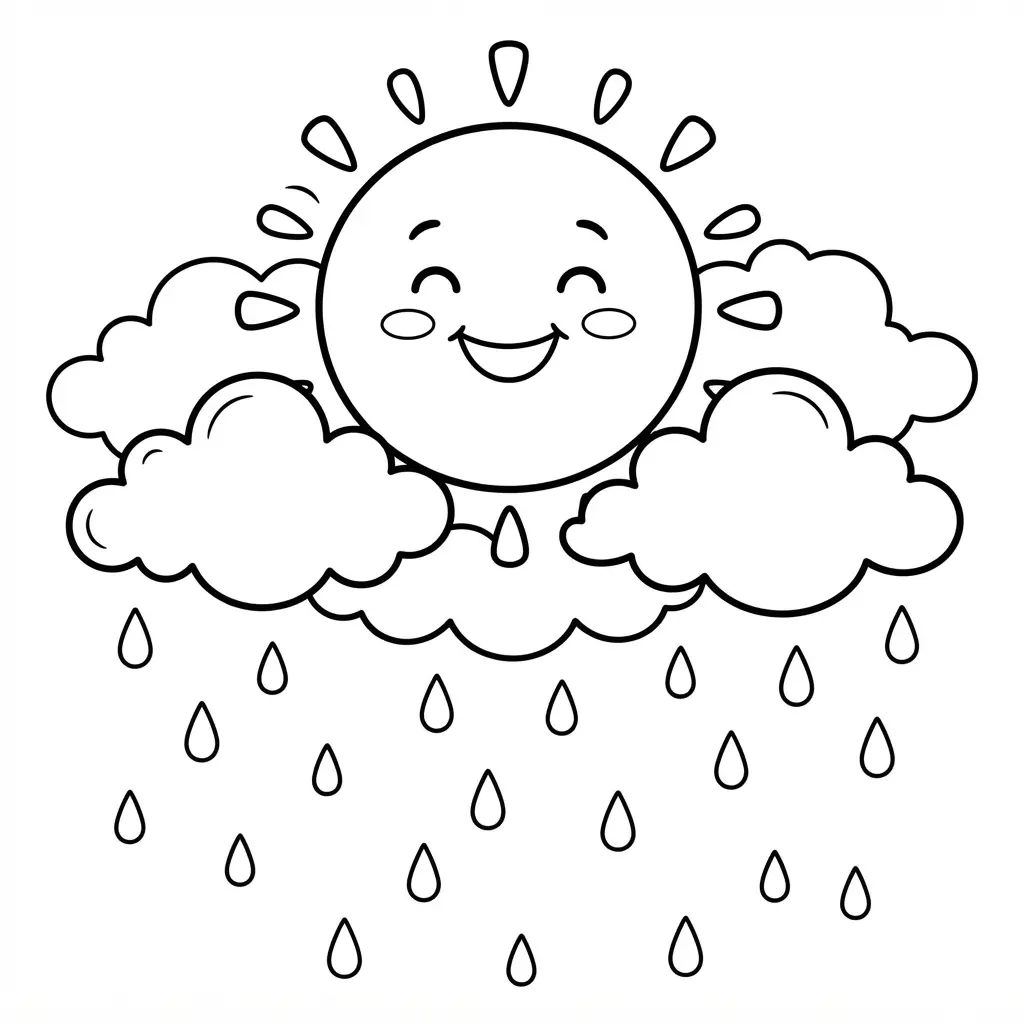
This sunny rainbow design looks simple, but its power is in all that lovely blank space. You place the grinning sun in a top corner, let the rainbow curve across the top, and keep the bottom open. That intentional negative space gives room for a child’s name, a date, or their own little drawing directly onto rainbow coloring pages. Isn’t it wonderful when a fun picture also serves a real purpose?
To make this work, think about your foreground elements like clouds or hills keeping the center clear. I love letting kids personalize their projects. You get a cheerful weather scene that feels fresh and airy, not cluttered.
Try pairing this printable with other beach coloring scenes for a themed collection of outdoor fun. It’s a perfect starter sheet that leaves room for creativity, especially when you download fresh rainbow coloring pages weekly.
3. Magical Unicorn Grazing Under Rainbow Fantasy Artwork
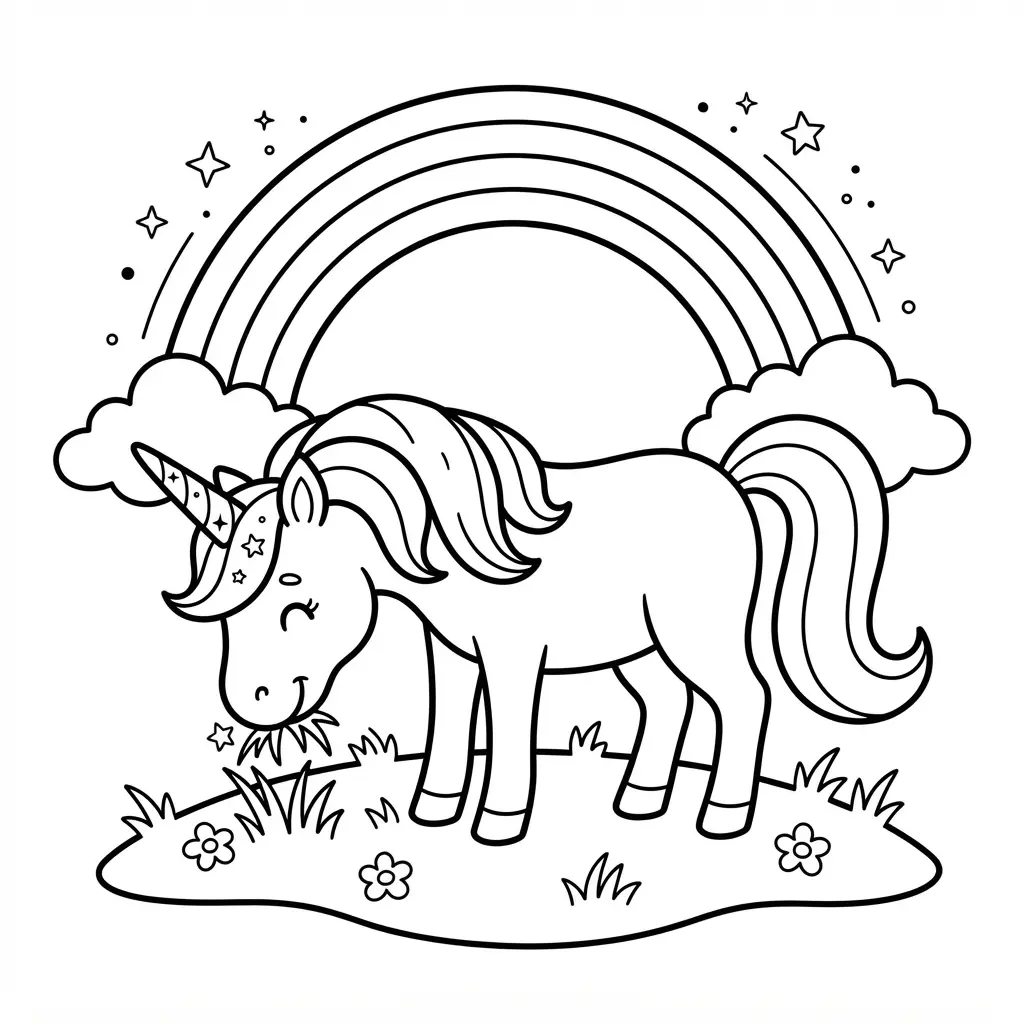
This one is my favorite because it taps right into that pure childhood joy. You are blending soft grays and whites for the unicorn’s coat with bright bursts of rainbow color overhead, making this design a standout among rainbow coloring pages. I like to start with the luminescent mane using a gradient, letting the colors flow from one to the next without harsh lines.
Trust me, the real magic happens when you build the enchanted setting around it. Focus on gentle shading under the hooves and add tiny, sparkling dots in the grass. A big payoff moment is when you finally connect the rainbow’s arch across the sky, linking the whole peaceful scene together. It feels so satisfying to step back and see the full, vibrant world you created.
If your unicorn looks a bit flat, build up more practice with detailed unicorn coloring pages to nail that majestic form first. The key is keeping your pastel palette harmonious so the final piece feels dreamy, not chaotic.
4. Pot of Gold Rainbow Meadow with Simple Details
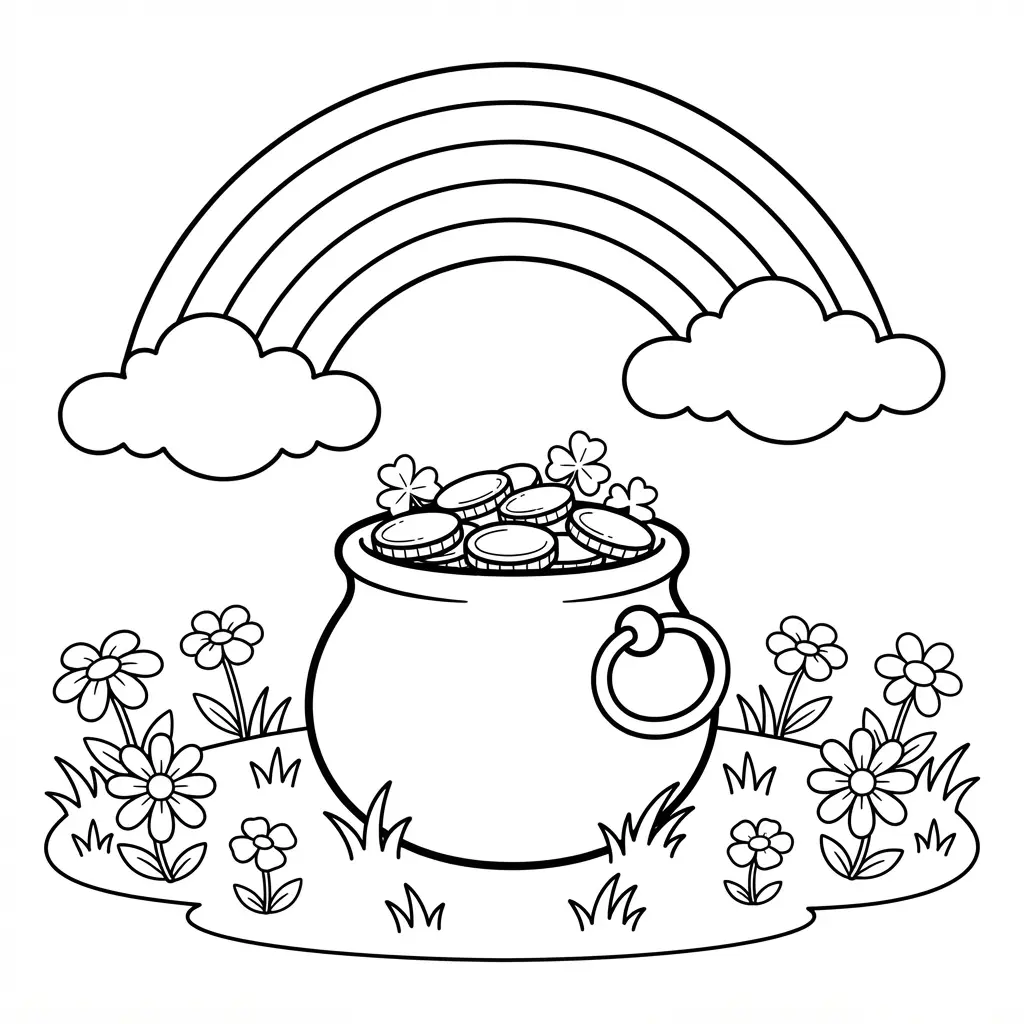
Picture a crisp black pot overflowing with yellow circles, all sitting beneath a bright, clean rainbow arch. This simple meadow scene feels like a page from your favorite storybook, just waiting for you to fill it with color. The key is keeping those stylized flower shapes sparse and the rainbow bands bold and flat, an intentional simplicity that makes it perfect for little hands learning to color within the lines. That intentional approach works beautifully when printing free rainbow coloring pages.
You start with a gentle hill line, then build the rainbow up from one side to the other, planting the pot right where it touches the ground. I love how the limited palette keeps everything cheerful and uncluttered. Isn’t it fun to watch that magical little world come to life on your page?
Feel that little thrill when the last coin gets its sunny yellow fill. It is such a satisfying, happy piece to finish.
5. Hot Air Balloon Floating Rainbow Sky Scene
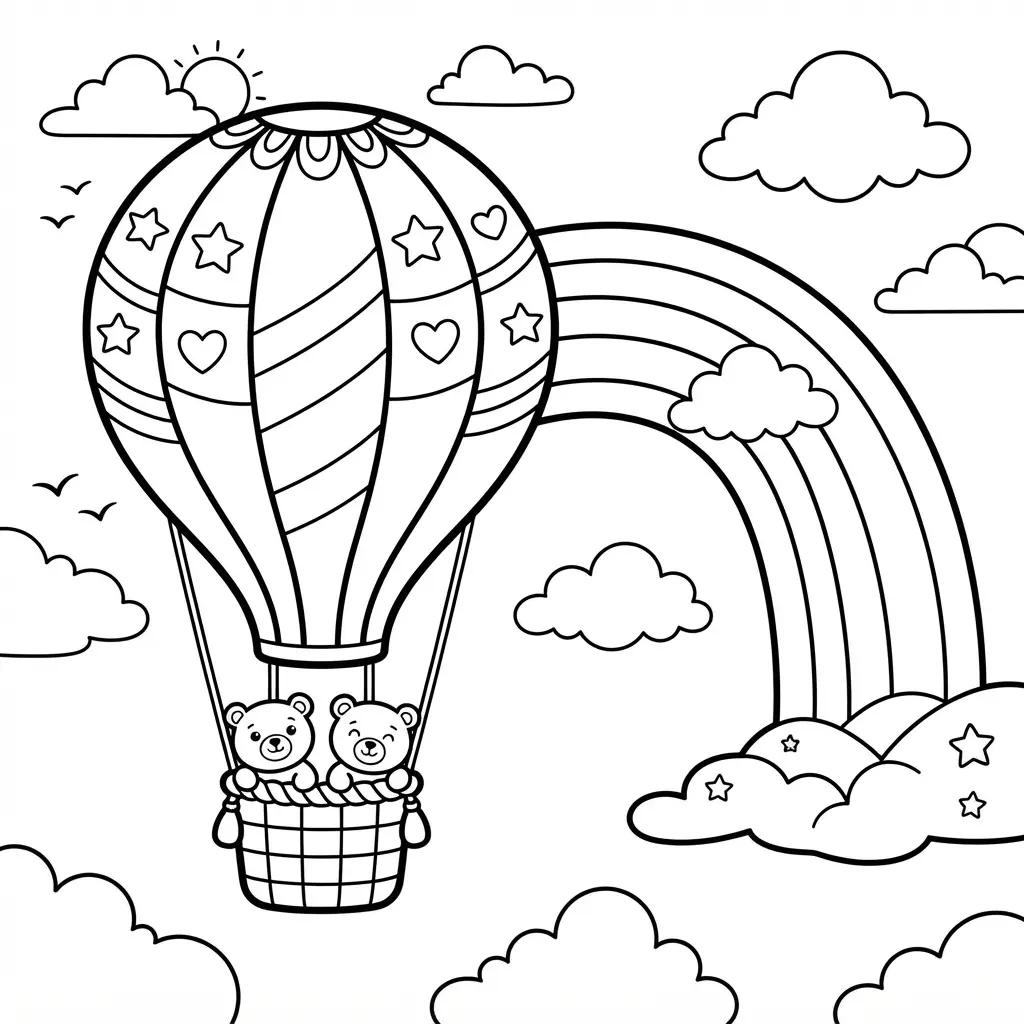
I often see this scene colored with the rainbow stripes out of order, but trust me, sticking to the classic ROYGBIV sequence makes everything pop. Start with the big, bulb-shaped balloon envelope, adding those clean vertical bands of red, orange, and yellow. Then fill your sky with a soft blue background and scatter a few fluffy cumulus clouds around for depth, a layout common in many sky-themed rainbow coloring pages.
The magic happens when you place that vibrant balloon against the calm sky—the contrast creates such a cheerful sense of adventure. You get to play with atmospheric perspective, letting some clouds drift in front of the basket or rainbow arc. Isn’t it satisfying to see that bright vessel look like it’s truly floating? Feel the wonder of taking off on a colorful journey.
6. Boho Arched Rainbow Pattern Sheet with Soft Shapes
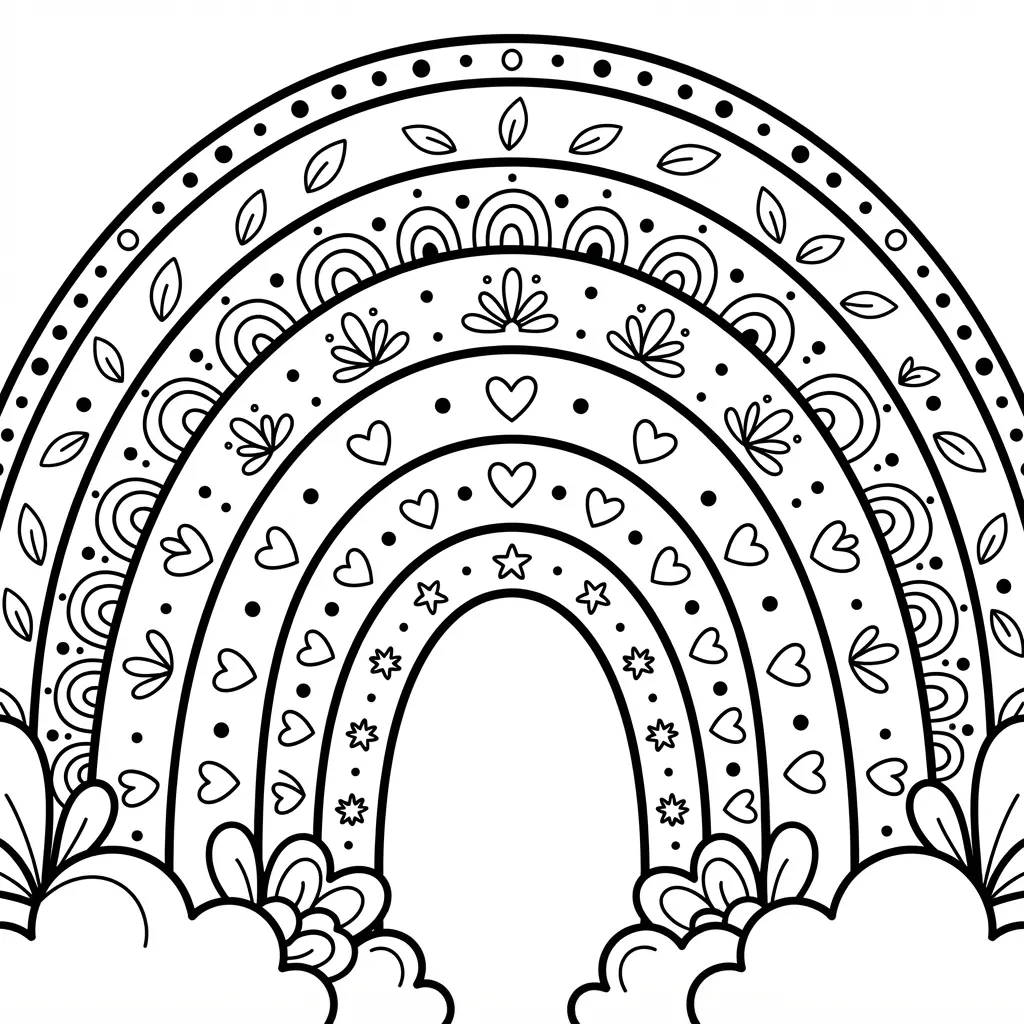
Grab your pencils and use a muted color palette like sage or blush. You will sketch a series of overlapping semicircles across the page. Then, fill the spaces between the arches with little soft shapes such as scattered stars or tiny dots.
This works so well because the simple, rhythmic layout is calming. Your child gets the satisfaction of filling those beautiful, organic patterns. That rhythmic repetition is perfect for sparking creativity without any pressure, making it ideal for stress-free rainbow coloring pages.
7. Tropical Rainforest Waterfall Rainbow Panorama for Young Artists
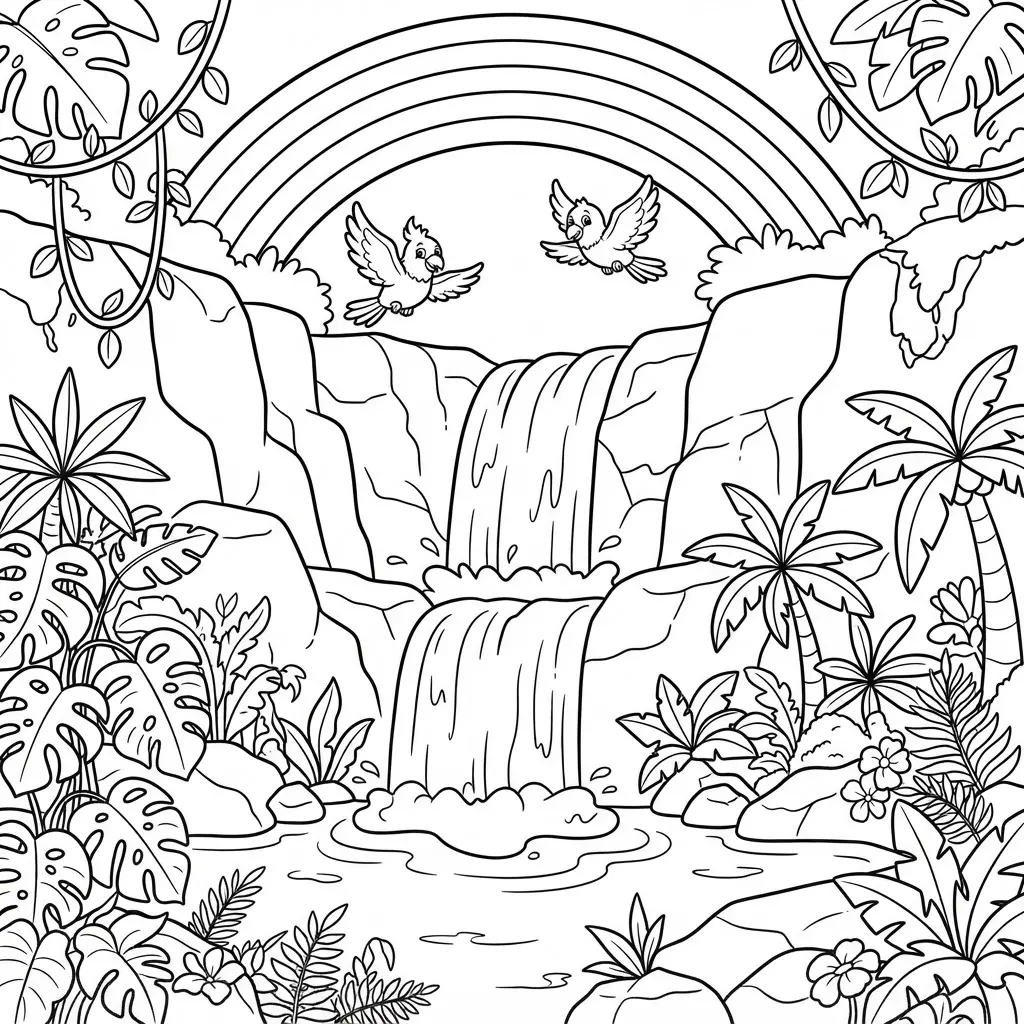
Who says you have to choose between a waterfall and a rainbow? This panoramic scene lets you have both, creating a lush, immersive world. Start by sketching your central waterfall and organic, jagged lines for the rocks, then layer in the forest. Paint from the light blue sky down, using a variety of greens to build depth in the canopy.
I love how the splattering technique with a toothbrush creates a perfect misty effect at the waterfall’s base. When it comes time for the rainbow, use vibrant, saturated colors and let them blend slightly where they touch for a soft, magical look, a technique sure to transform basic rainbow coloring pages into gallery-worthy art. The real payoff is when you add your final black outlines after everything dries, watching all the details pop into place.
This project is fantastic practice for anyone wanting to tackle more complex scenes like an ocean coloring panorama later, as it builds the same foundational layering skills. Try it and feel the satisfaction of building a complete, vibrant world on your page.
8. Spring Garden Flowers Beneath Rainbow Coloring Scene
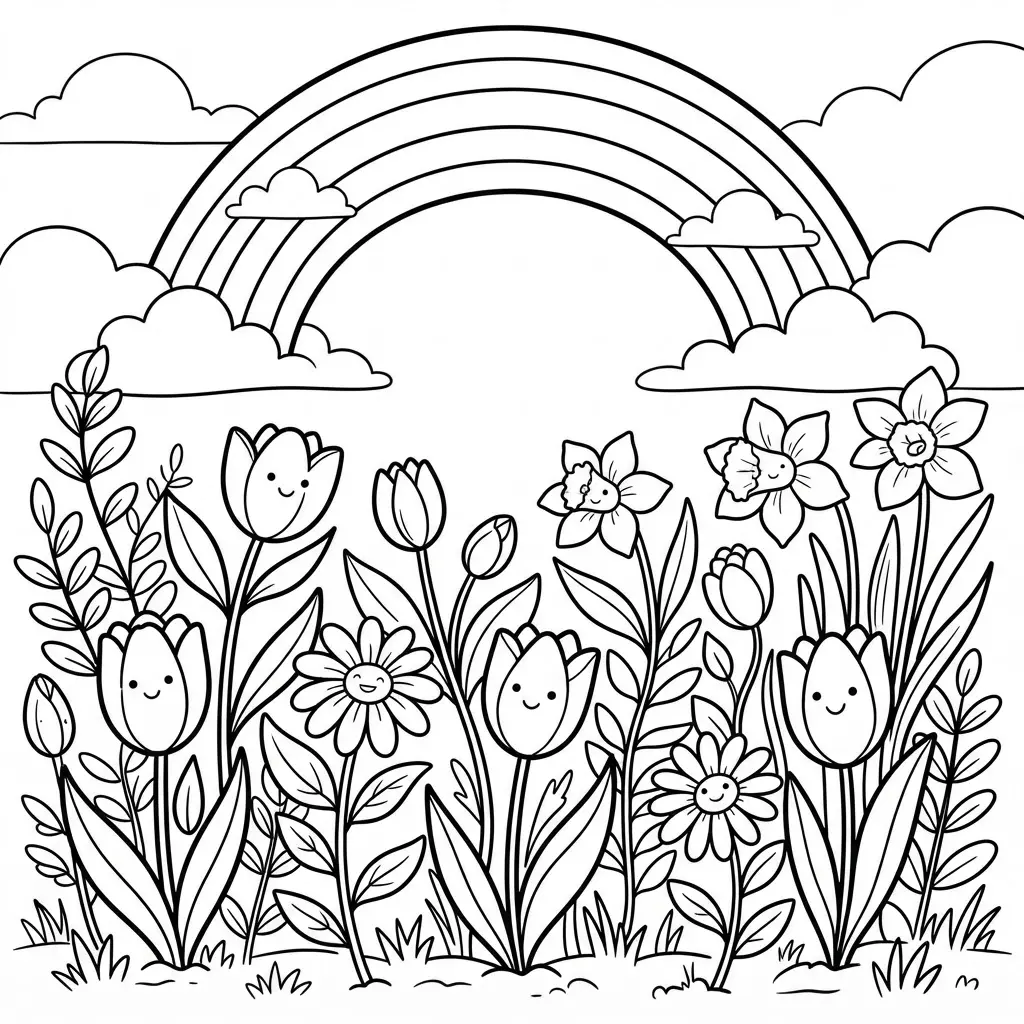
This is one of those scenes that looks intricate at a glance but is wonderfully simple to bring to life. You’ve got your bold rainbow shape at the top, and underneath it, a whole garden of tulips, daisies, and maybe a happy little ladybug or two. I always have kids start with the rainbow stripes first to get those bright colors flowing before they fill in each cheerful bloom.
It works so well because choosing which petal gets which shade feels like planting your own personal spring garden. For an even prettier display, pair your finished scene with our collection of free flower coloring pages on the fridge, an easy trick to frame your best rainbow coloring pages.
9. Rainbow Mandala Geometric Coloring Page with Bold Sections
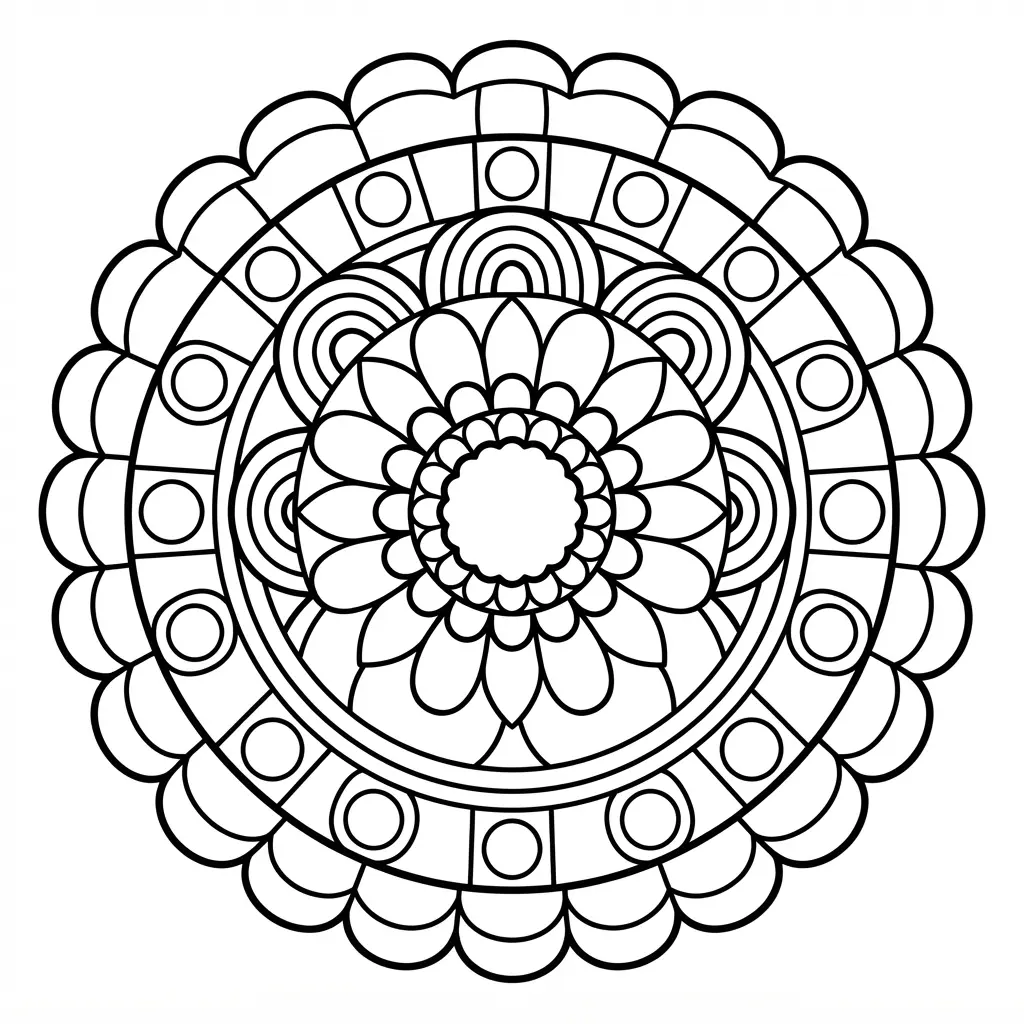
This style looks intricate but is actually one of the easiest mandalas to start with. Those heavy lines create clear coloring zones so your colors stay exactly where you want them. You work from the center out, filling each geometric slice with a different shade from the rainbow palette. Isn’t it satisfying when the symmetrical pattern starts to glow with color, a rewarding experience many artists enjoy with geometric rainbow coloring pages?
I always start with a fresh set of markers for this one because the bold sections really make the hues pop. It is a fantastic way to practice pattern recognition while enjoying some calm, focused creativity. You will love the vibrant result you get with minimal stress. Try it and feel the artistic payoff when your mandala is complete.
10. Cute Woodland Animals Rainbow Clearing Line Art
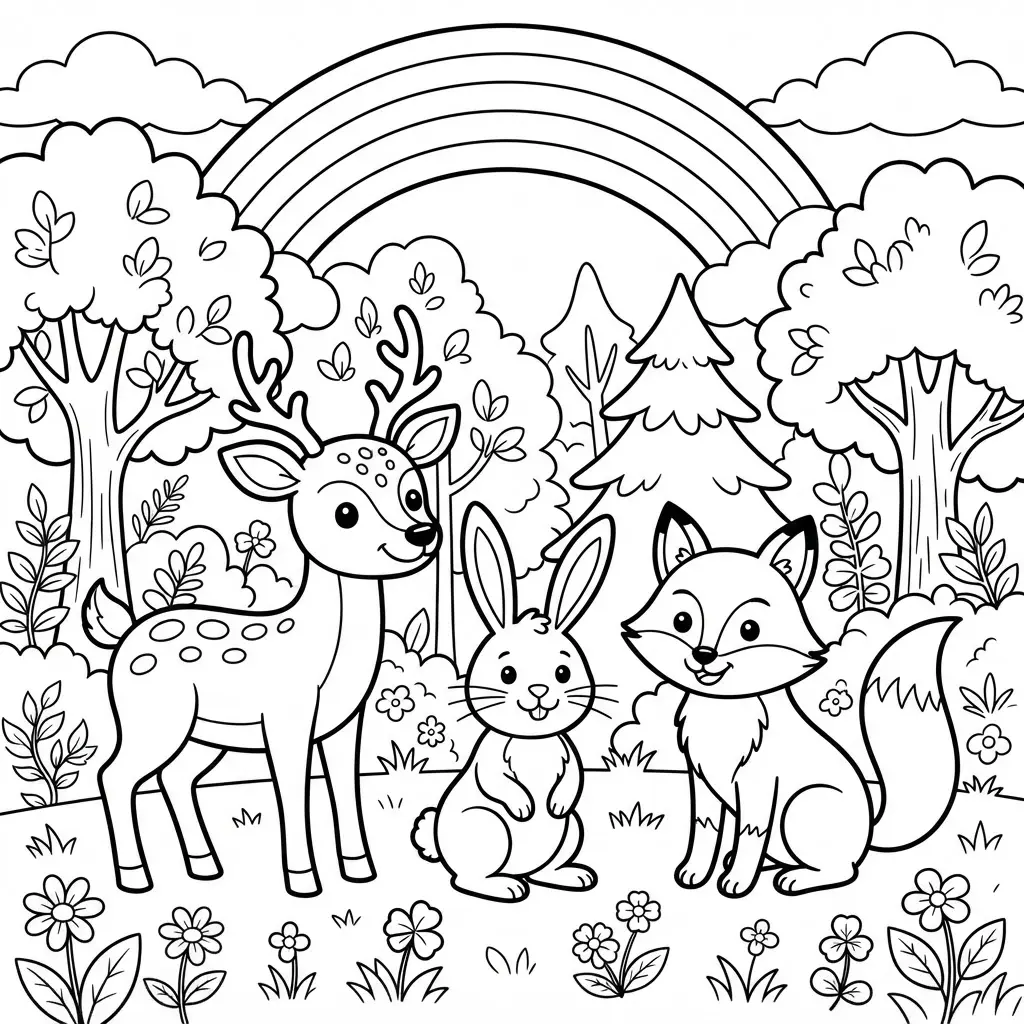
Picture a page bursting with cheerful critters and a perfect rainbow arch overhead – a tiny storybook scene waiting for your colors. You begin by drawing the big arc of the rainbow first, which frames the whole composition beautifully, and then tuck your cute animals into the open clearing below. The simple clean line art makes it so forgiving and fun for all ages to bring to life, proving why animal-themed rainbow coloring pages remain so popular.
I love how this design combines different coloring challenges in one place. Your little one can practice bold, solid fills on the rainbow while giving each fox or rabbit its own unique fur pattern. A perfect choice is using a set of fine-tip colored pencils for those detailed animal faces.
Before your kids dive into all the forest fun, it helps to explore some great woodland animal coloring examples to spark their ideas. Seeing different styles shows them there is no wrong way to make their scene come alive.
Displaying Finished Pages In Learning Spaces
A low-tack artist’s tape secures a finished rainbow page to a classroom wall without leaving a sticky residue or tearing the corners. This lets you rotate new artwork in every week so every child feels celebrated. You can group pages by theme, like placing all the weather scenes with raindrops and clouds on one bulletin board.
For a more permanent display, a simple clip frame with a cardboard backer protects the page from fingerprints and lets you swap art easily. In a playroom, string a line of twine and use wooden clothespins to create a colorful gallery that grows. Seeing their work displayed builds so much pride and encourages them to try more complex scenes next time.
Conclusion
So, how was your creative session? Look at the colors, shapes, and small details each child chose. That personal choice makes rainbow coloring pages special for family afternoons, classroom activities, and quiet time at home, creating memories whenever you use rainbow coloring pages. Kids get a chance to practice color recognition and hand control while parents and teachers enjoy an easy activity with little preparation. For your next session, print a few pages on cardstock and place crayons, markers, or colored pencils within reach. Let each artist choose the scene first, then invite them to add their own sky, flowers, animals, or weather details. I love seeing how one outline becomes many different artworks. Pick a favorite page, set out the supplies, and give your young artist time to color it in their own way today.
FAQs
Q: What paper works best for printable coloring pages?
A: Cardstock or heavy copy paper works well for crayons, markers, and colored pencils. Choose thicker paper for paint or wet markers to limit bleed-through.
Q: Which designs suit toddlers and preschoolers?
A: Pages with thick outlines, large shapes, and broad color bands suit young children. Cloud scenes, smiling suns, and simple garden designs keep the activity easy to follow.
Q: What coloring tools work well for these pages?
A: Crayons and washable markers suit younger children. Colored pencils add small details, while watercolor pencils work well on sturdy paper.
Q: How do teachers use rainbow coloring pages in class?
A: Teachers pair pages with lessons about colors, weather, seasons, or animals. Children also practice pencil grip, careful filling, and speaking about their color choices.
Q: How do I print coloring pages with clear outlines?
A: Use a letter-size setting and select the highest black-and-white quality available. Check the preview before printing, then use sturdy paper for cleaner lines.