
Choosing Between Markers and Colored Pencils
Markers deliver instant bold color on cactus coloring pages but demand thick paper to prevent bleedthrough. You will notice smoother coverage with chisel-tip markers when filling large sections like sky backgrounds or solid pots. Colored pencils give you precise control for detailing spines, ribs, and floral centers, especially on intricate zentangle-style designs. Kids often do better with washable markers because mistakes wipe clean easily, while adults tend to prefer pencils for layering desert sunset gradients.
For realistic depth, blend light pressure strokes in the grooves of a Saguaro’s ridges before darkening shadowed sides. The real difference shows up in texture — pencils mimic natural plant surfaces, while markers create graphic pop. Exploring different cactus coloring pages helps you pick the right medium for each design. Use 60 lb printer paper if you choose markers, even if you’re tempted to use regular sheets.
How to Print on Thick Paper for Marker Use
Your home printer can handle thick paper, but only if you adjust the feed tray to avoid jams. Load one sheet at a time and set the paper type selector to “cardstock” or “heavy” in your print dialog box. This prevents misalignment that cuts off parts of detailed desert scenes or potted arrangements. Thicker stock, like 80 lb paper, keeps ink from bleeding through, which is critical when using alcohol-based markers on dense spine clusters.
You want to avoid curling edges by letting each printed sheet lie flat for ten minutes before coloring. Laser printers handle weight better than inkjets, but both work if you disable duplex printing. Testing your setup with cactus coloring pages first saves materials and frustration later. Test one page first — it saves wasted materials and frustration later. For kids’ pages with simple shapes, standard heavy paper is enough. For adult botanical sheets with fine cross-hatching, go for premium bleed-resistant stock. Choose manual paper feed every time you print on anything thicker than standard copy paper.
1. Cute Cartoon Cactus with Big Eyes
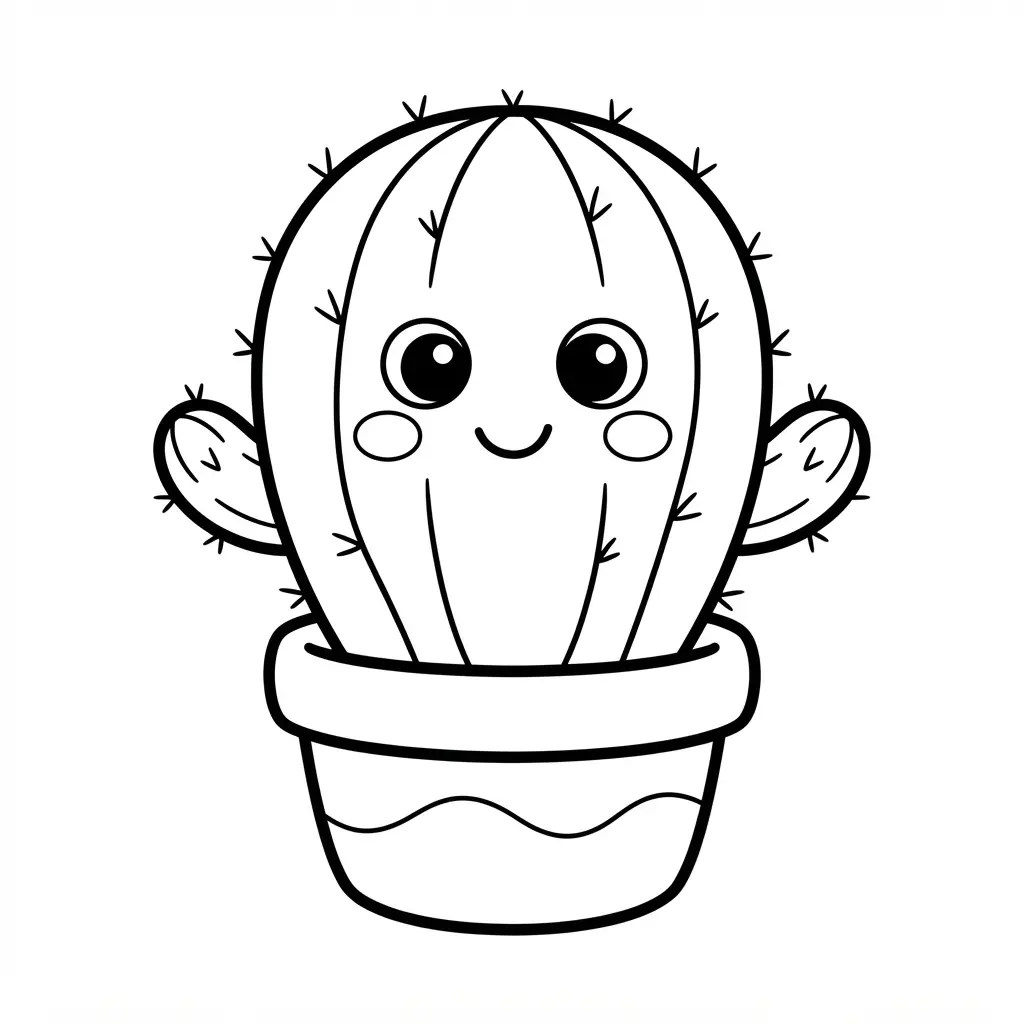
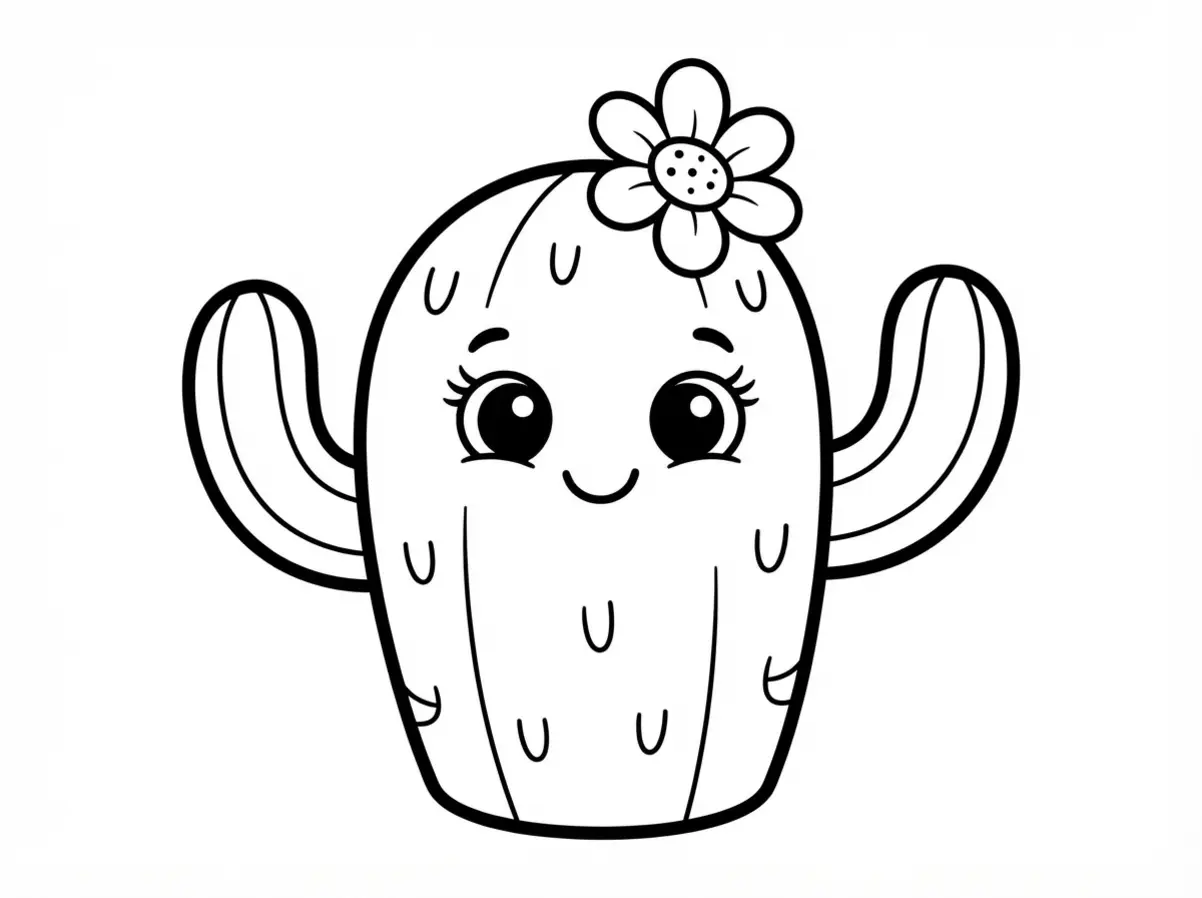
Ever wondered why a cactus with huge eyes feels so sweet? Start with a rounded pill-shaped body, then place two glossy eyes close together and low on the face for a friendly kawaii look. Add a tiny curved mouth, pink oval cheeks, and a cheerful flower on top. Soft v-shaped marks or tiny dots suggest spines without making the plant seem prickly.
Build the pot beneath it with a curved rim, a simple base, and a drainage tray, then fill the picture with mint, sage, pastel terracotta, coral, and sunny yellow. Trying out cactus coloring pages like this one always brings smiles to young artists. I love how this simple facial placement gives the whole drawing its personality while keeping it easy for young artists to color. Use a fine-liner pen after the pencil sketch dries, erase leftover guidelines, and leave small white spots inside the eyes for a shiny finish. Your little cactus will look cheerful, gentle, and ready for a happy windowsill.
2. Saguaro Cactus at Sunset
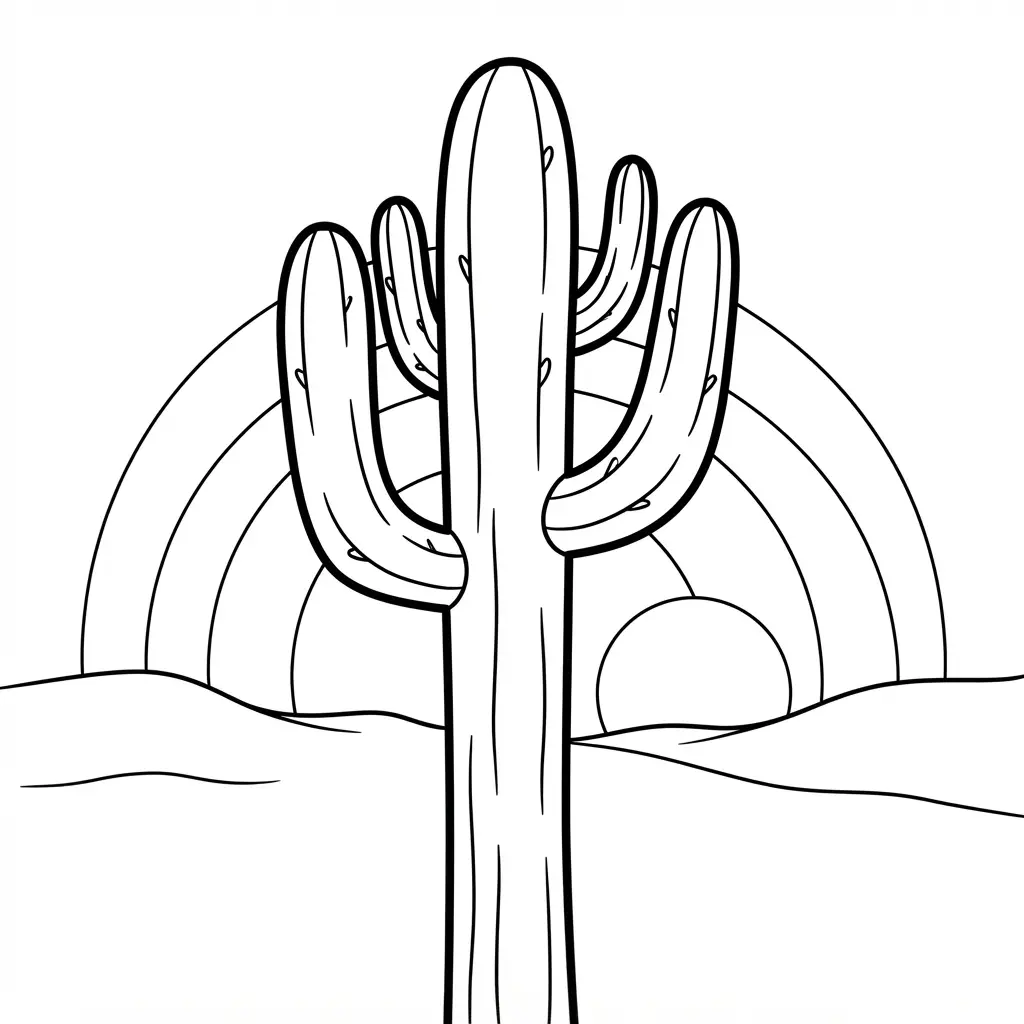
This scene gives you a bold desert picture with plenty of room for rich color. Start with a dark cactus silhouette, keeping the saguaro tall, ribbed, and lightly branched with smooth upward-curving arms. Add distant hills near the bottom, then divide the sky into broad horizontal bands. Ever tried blending a sunset from yellow near the horizon into orange, red, pink, purple, and deep blue?
Use crayons or colored pencils for gentle transitions, or choose heavier cardstock for marker work so the colors do not bleed through. Keep the cactus black, charcoal, or deep green rather than filling it with bright shades. A crescent moon, stars, an owl, or a bat adds interest as daylight fades. I love how the dark saguaro makes every sky color look stronger while introducing kids to the Sonoran Desert, native plants, and nocturnal pollination. Bringing cactus coloring pages into your evening routine makes the whole scene feel calm, colorful, and full of desert character. The finished scene feels calm, colorful, and full of desert character.
3. Prickly Pear Cactus with Blooming Flowers
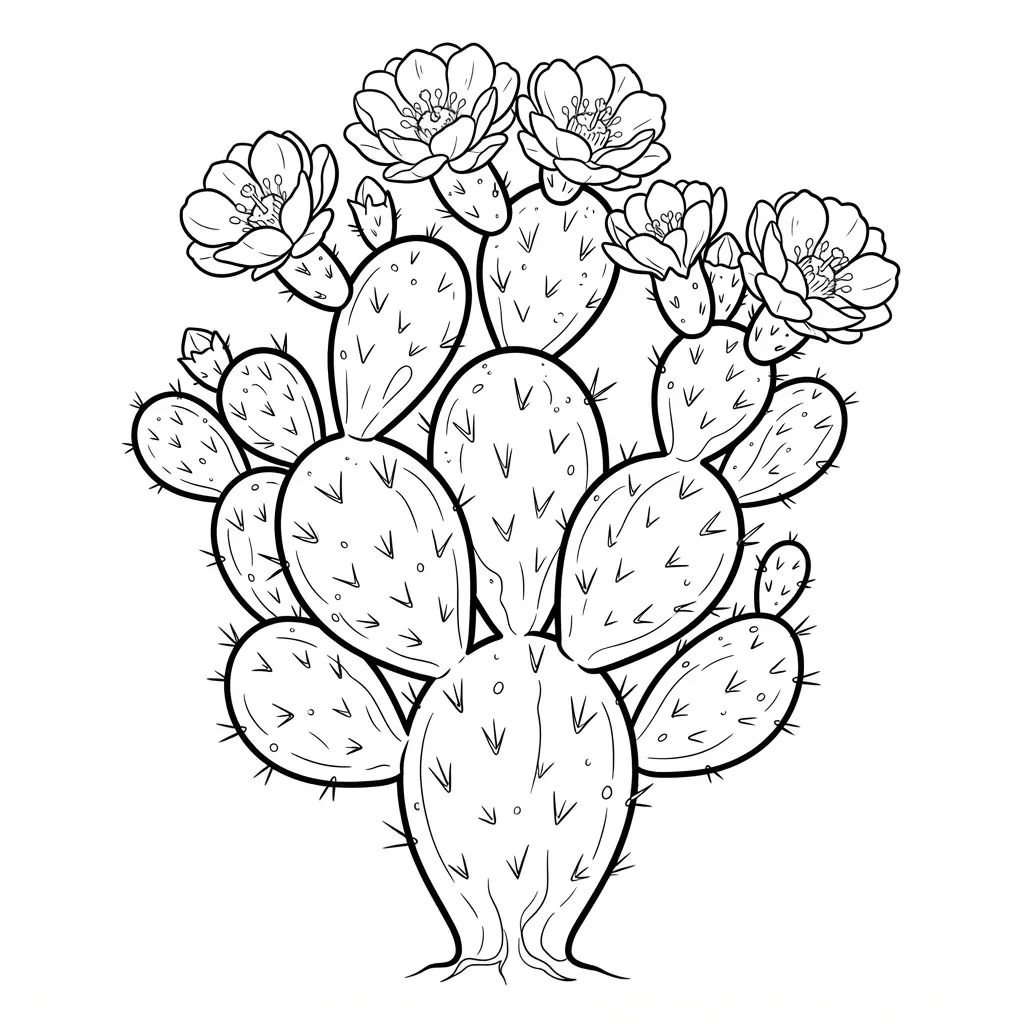
This is one of my favorite scenes because the soft flowers sit right beside tough, spiny pads. Ever tried blending petals from yellow into orange? Start with rounded paddles, add a few buds along their upper edges, then give each open flower wide petals around a simple center.
Use colored pencils for smooth petal shading, or choose crayons and washable markers for a cheerful kid-friendly finish. Keep the cactus pads green, then add small areoles, short spines, and tiny tufts without filling every space. A simple desert sky or sandy ground gives the picture a warm Southwestern setting. Working through cactus coloring pages with floral accents always feels refreshing.
The contrast makes this page satisfying because every section offers a different texture and color choice. Trust me on this one: leave the flower centers open enough for easy coloring, and keep spine clusters spaced apart for young artists. Try a deeper orange or pink along one petal edge, then soften it toward the center for a gentle gradient. Feel proud when those blooms stand out.
4. Desert Landscape with Multiple Cacti
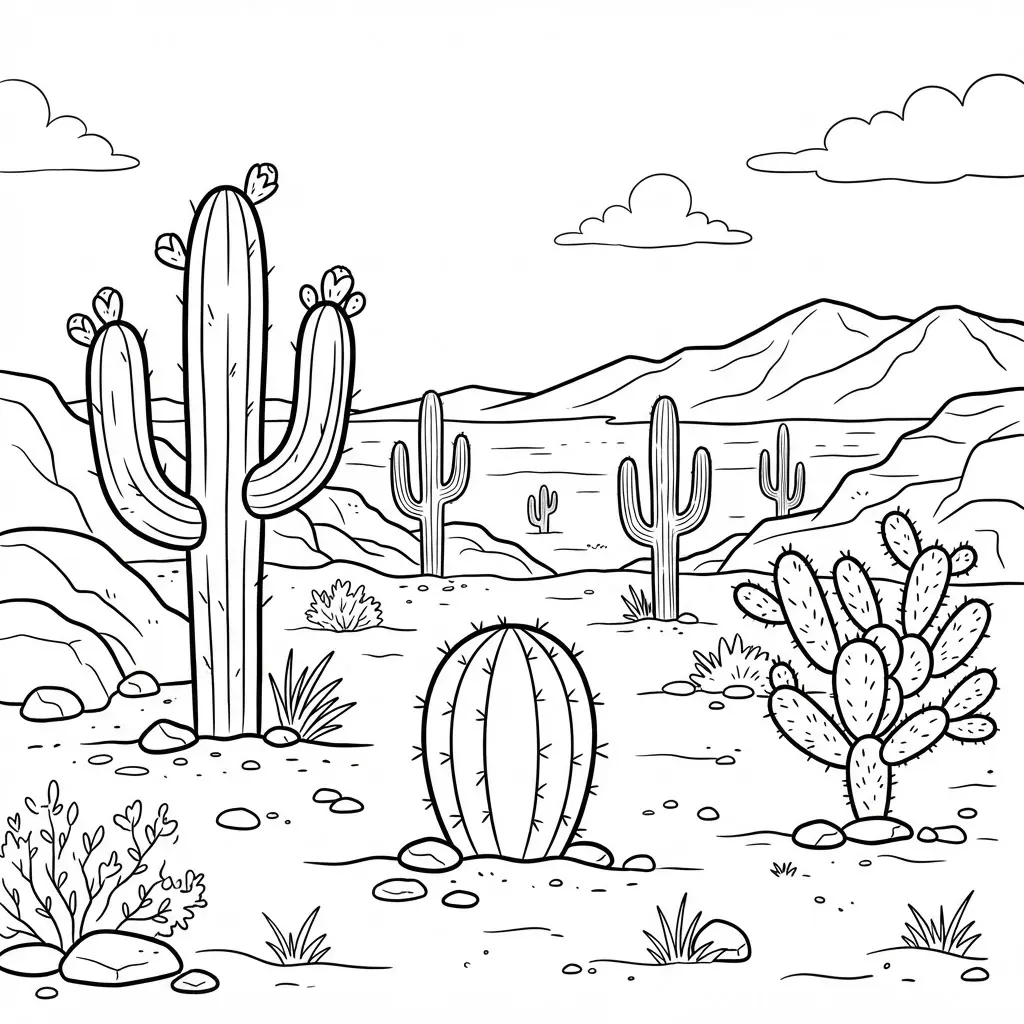
Golden sunlight stretches across cracked earth, while tall saguaros, rounded barrels, prickly pears, chollas, and organ pipes fill the desert scene. Distant mesas and a wide sky give the page clear layers, with long shadows adding depth. Start with light base colors across the sky, ground, and cactus bodies, then build darker tones near the lower edges. Ever tried giving every cactus its own personality? I love using soft greens for the plants, warm ochre for the soil, and pale blue or peach near the horizon.
Print the page on cardstock for sturdier handling, especially with markers. Use a fine-tip colored pencil for spines, flowers, and fruit, keeping pressure light so lines stay clean. Add small shadows beneath each plant and rock, then use circular strokes in the sky for a gentle sunburst. Marker users should place scrap paper underneath to prevent bleed-through. This scene works so well because younger colorists get broad open areas, while older artists get texture and detail. Exploring cactus coloring pages with wide landscapes teaches patience and layering skills. Trust me on this one, color the largest shapes first and save the tiny accents for last. Feel proud when the whole desert feels full of life.
5. Geometric Cactus Pattern Coloring Page

A common mistake is treating every section as a separate picture, which makes the page feel scattered. Start with light pencil shading to plan a limited palette across the triangles, diamonds, and hexagons. Sound complicated? It is not. Pick two greens for the cactus, one warm shade for the pot, and a contrasting color for flowers or border shapes.
Work through one shape at a time across the page instead of finishing one cactus before moving to the next. Matching mirror-image sections keeps the pattern neat, while light-to-dark changes inside each segment add gentle depth. Try a pale green center with deeper green edges, then repeat the same plan on nearby arms and ridged sections. Fine-tip markers suit crisp outlines, while colored pencils give you more control over soft blending. Keeping cactus coloring pages organized by color blocks prevents messy edges and rushed shading.
I love how this style mixes desert forms with clean pattern work, so it feels calm without becoming dull. Use 65–110 lb cardstock for markers, and test a small corner before coloring the whole sheet. Metallic gel pen touches on spines or flower centers add a cheerful finish. Once complete, frame the page, save it for a scrapbook, or turn selected shapes into handmade cards. Feel proud when every repeated form lines up beautifully.
6. Cholla Cactus Under Starry Night Sky
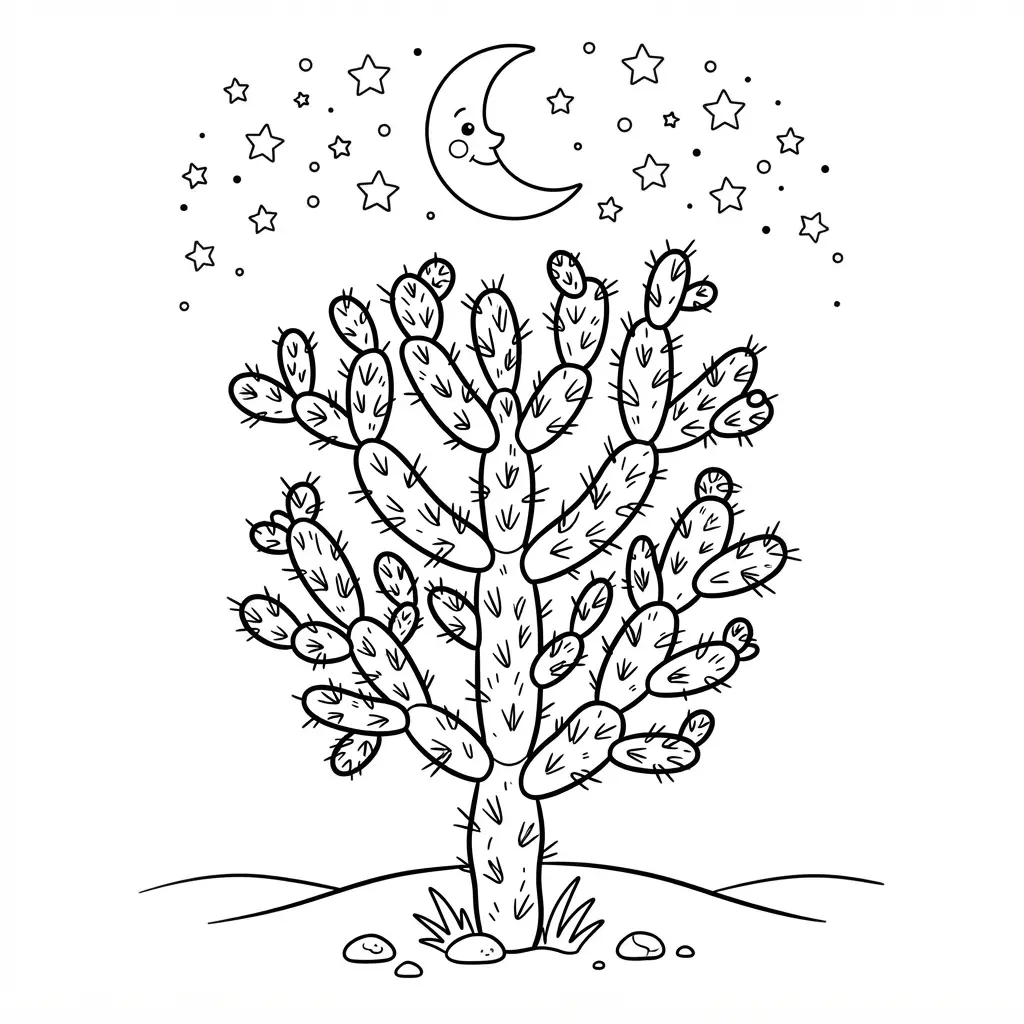
Start by filling the upper half with dark blue pencils, pressing lightly near the horizon and layering more color overhead. Blend purple into the lower sky, then deepen the top edge with navy or black for a rich nighttime finish. Isn’t it satisfying when the lighter horizon makes the whole scene feel wider? Add tiny white dots for scattered stars, then mark a few larger points with a white gel pen. I love leaving a narrow strip of paper untouched around some stars, since it gives each one a crisp, clean edge.
Next, fill the cholla branches with muted green, warm brown, or soft gray, keeping each rounded segment easy to see. Silver pencil highlights along the spine edges suggest moonlight without hiding the cactus texture. Add darker shading beneath the branches and around the base so the plant stands out from the sky. A crescent moon, shooting star, distant owl, or small bat adds a personal story without crowding the page. Trust me, saving the brightest white touches for the final step makes the finished scene feel polished and full of calm nighttime charm. Printing fresh cactus coloring pages for evening sessions gives the stars extra glow.
7. Funny Cactus Wearing Sunglasses
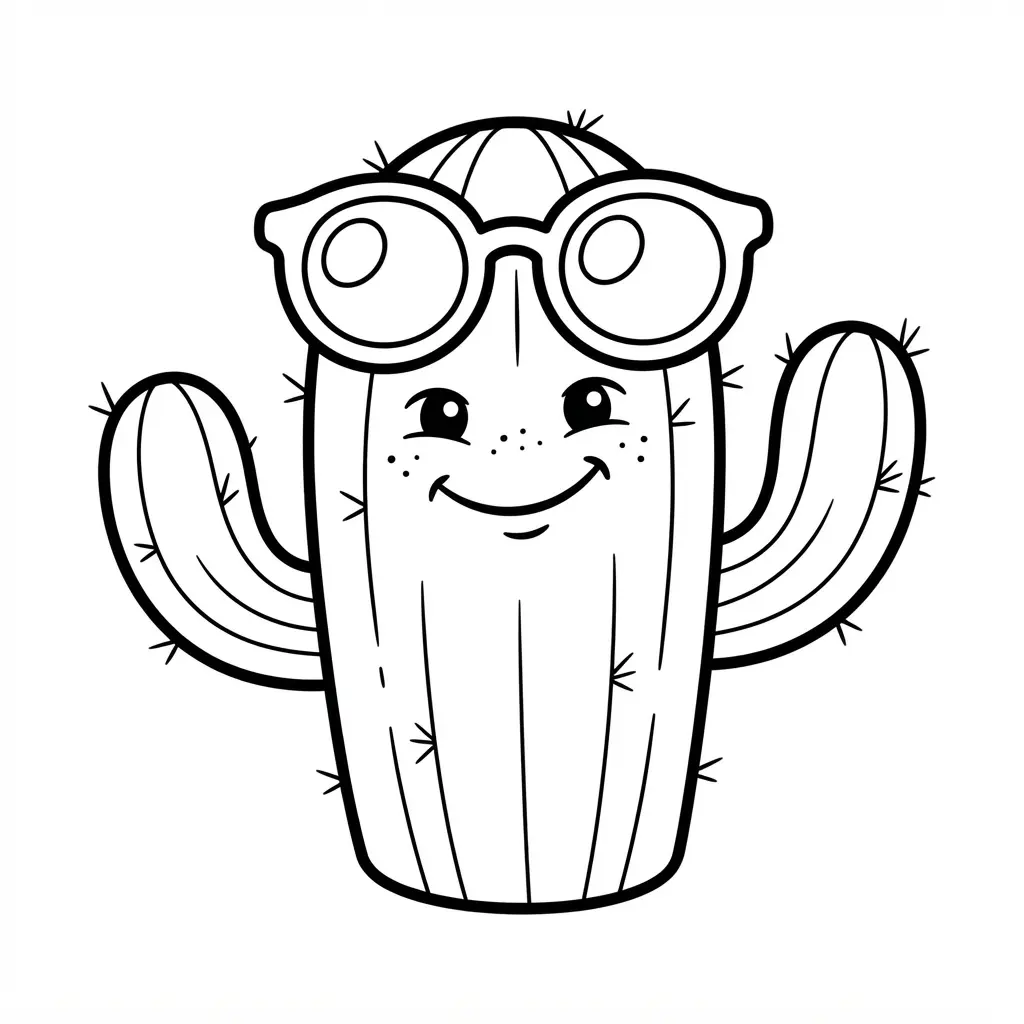
Ever seen a cactus look ready for a sunny day out? This cheerful page features a round or tall cactus with a wide grin, oversized sunglasses, tiny arms, and playful extras like a flower, sunhat, or iced drink. I love how the bold outline makes each shape easy to follow. Start by coloring the cactus body in soft or deep green.
Give the glasses a bold personality with pink, blue, gold, or purple lenses, then add small details such as stripes on a hat or dots on a drink. A few sandy curves and a bright sun turn the background into a friendly desert scene. The large shapes suit young artists, while the accessories give older children room for personal choices. Use washable markers with light pressure to keep the paper neat. Picking cactus coloring pages with accessories keeps the creativity flowing all afternoon.
Work from the middle of each large area toward the outline, especially around the arms and sunglass frames. Colored pencils add gentle texture, while crayons create cheerful blocks of color. Let the page dry before adding glitter glue, stickers, or metallic pen accents. This funny character brings humor to cactus coloring pages and makes every color choice feel welcome. Try a pair of heart-shaped glasses for extra charm, and feel proud of your cool desert friend.
8. Barrel Cactus in Spring Bloom
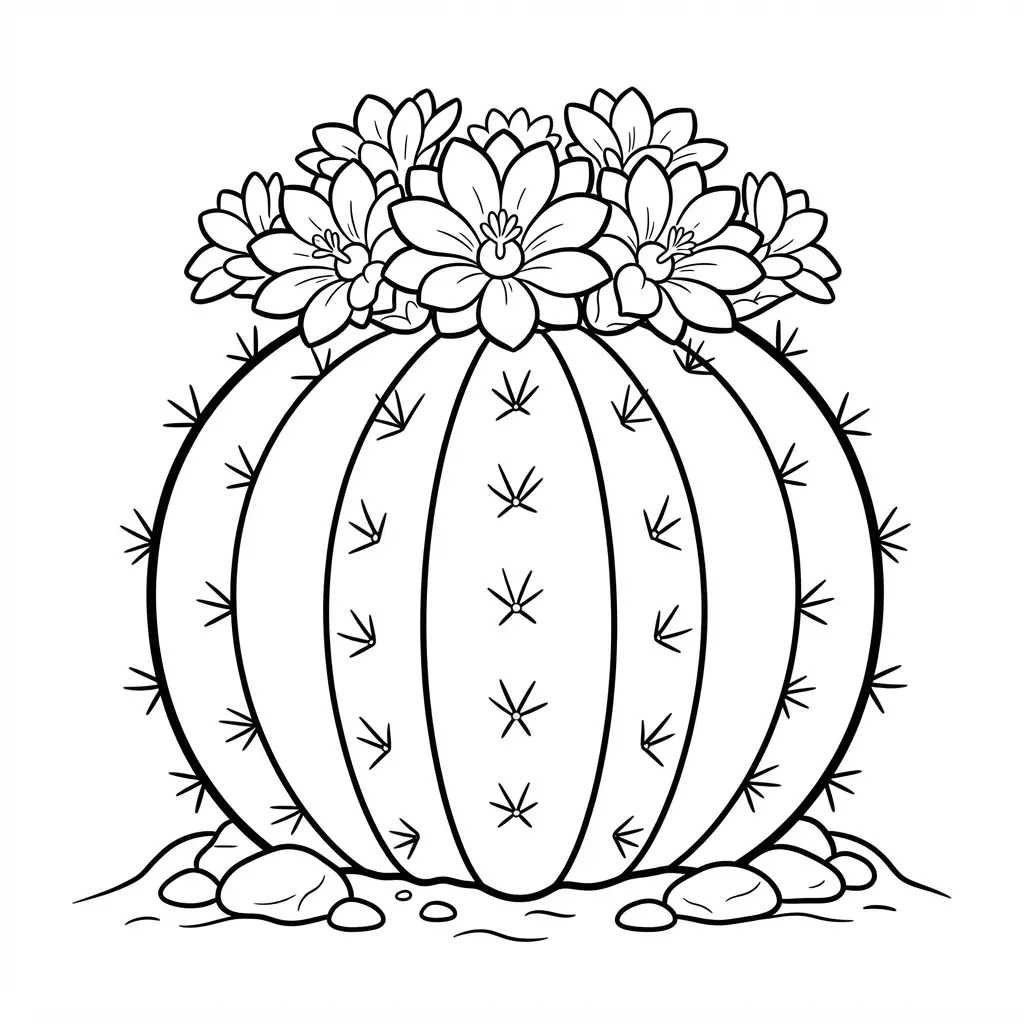
This page surprises me every time because a plain, ribbed cylinder turns into a sunny spring display. Start with a rounded barrel, add deep vertical ribs, then place a tight ring of buds around the woolly top using a crown of flowers. Is there a better way to show seasonal change in one small scene? I love leaving the spines crisp and pointed while giving each cup-shaped bloom soft, overlapping petals.
Choose yellow, orange, pink, or magenta for the 2 to 3 inch flowers, then add a warm blue sky or sandy desert behind the plant. Keep every bloom open toward the sun, since barrel cactus flowers open during the warmest daylight and close at night or under clouds. A few bees or beetles near the crown help explain its role in a desert ecosystem without crowding the page. Trust me on this one: the tough body beside delicate petals makes the coloring feel balanced and satisfying. Use a bright spring palette for a cheerful finish. Exploring cactus coloring pages with seasonal blooms always lifts the mood.
9. Cactus Garden with Pathway
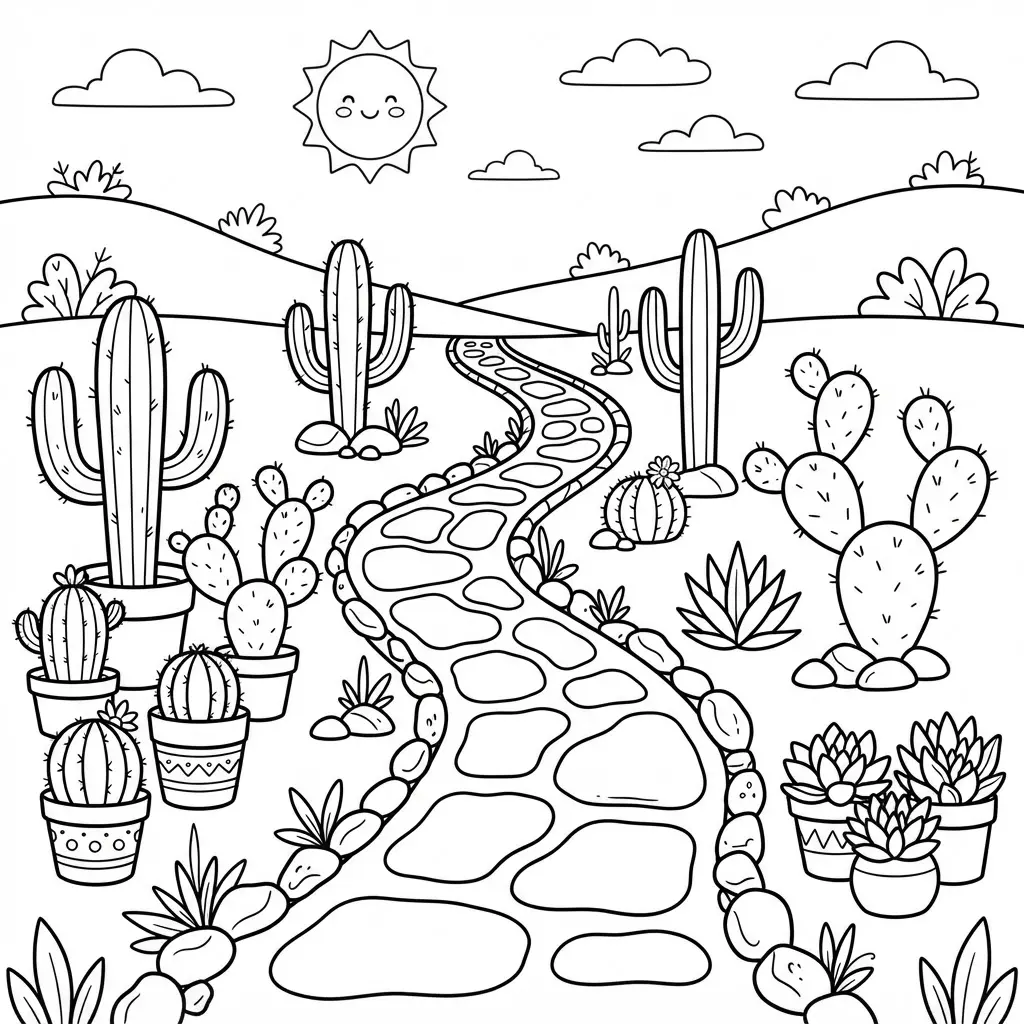
This garden scene is one of my favorite cactus coloring pages ideas because every turn offers a fresh detail. Start with the distant sky and hills, then work toward the plants so the tall forms stand out. Sound complicated? It isn’t. A soft background wash gives the page a calm desert setting without overpowering the garden.
Move next to the saguaros, barrel cacti, and prickly pears, giving each shape its own green or blue-green tone. Add warm browns to rocks and small shrubs, then vary the pathway stones with tan, gray, and muted gold. I love using colored pencils here because short strokes show spines, gravel, and rock grain with ease. Layering cactus coloring pages with garden elements teaches spatial planning.
Finish with gentle shadows beneath each plant and along the pathway edges. A few pink, yellow, or orange blooms add a cheerful focal point, while a small lizard or bird gives the scene extra character. Keep your limited color palette close at hand so the page feels balanced rather than crowded. You’ll feel proud when the winding path leads your eye through the finished garden.
10. Mexican Folk Art Style Cactus
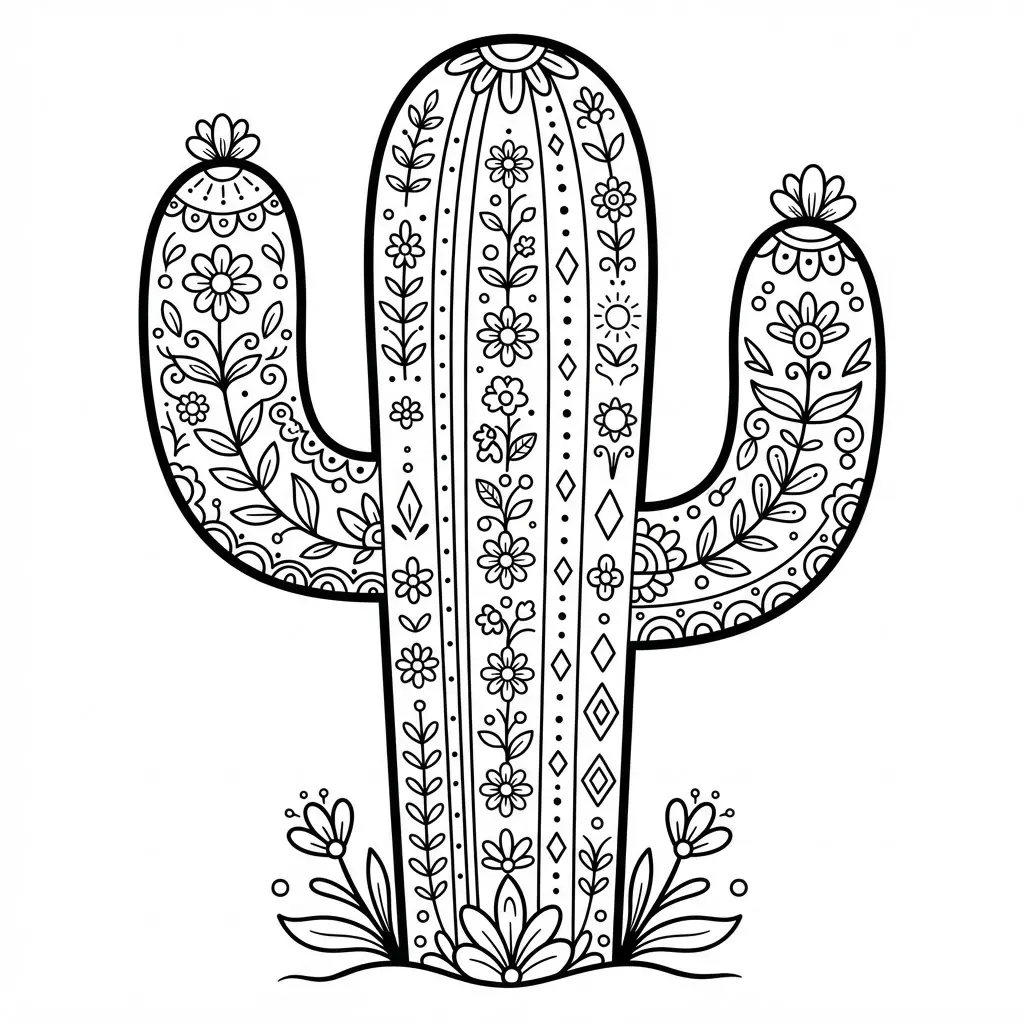
Turquoise paddles, marigold flowers, and fuchsia pots give this cactus a festive look, with every section filled by dots, curls, and tiny petals. Ever tried this style before? It feels cheerful from the first bright mark, even with simple coloring tools.
Start with a bold cactus silhouette, then divide each paddle into curved panels. Fill nearby sections with contrasting colors, such as cobalt blue beside warm yellow. Add one or two patterns per panel, using Otomí-inspired flowers, zigzags, feathered borders, or small circles. Give the blooms layered petals, and turn the spines into golden dots or starbursts. A scalloped pot with Talavera-style bands completes the design. Adding cactus coloring pages like this introduces cultural art patterns to your practice.
I love how the clear sections make this page friendly for beginners while leaving room for personal choices. The repeated shapes bring rhythm without making the picture feel crowded. Use colored pencils for small details, or washable markers for solid fills, with spare paper beneath your hand to guard against bleed. Pro tip: work from the top downward, then add metallic dots to the flower centers for a proud, polished finish.
11. Miniature Succulents and Tiny Cacti Cluster
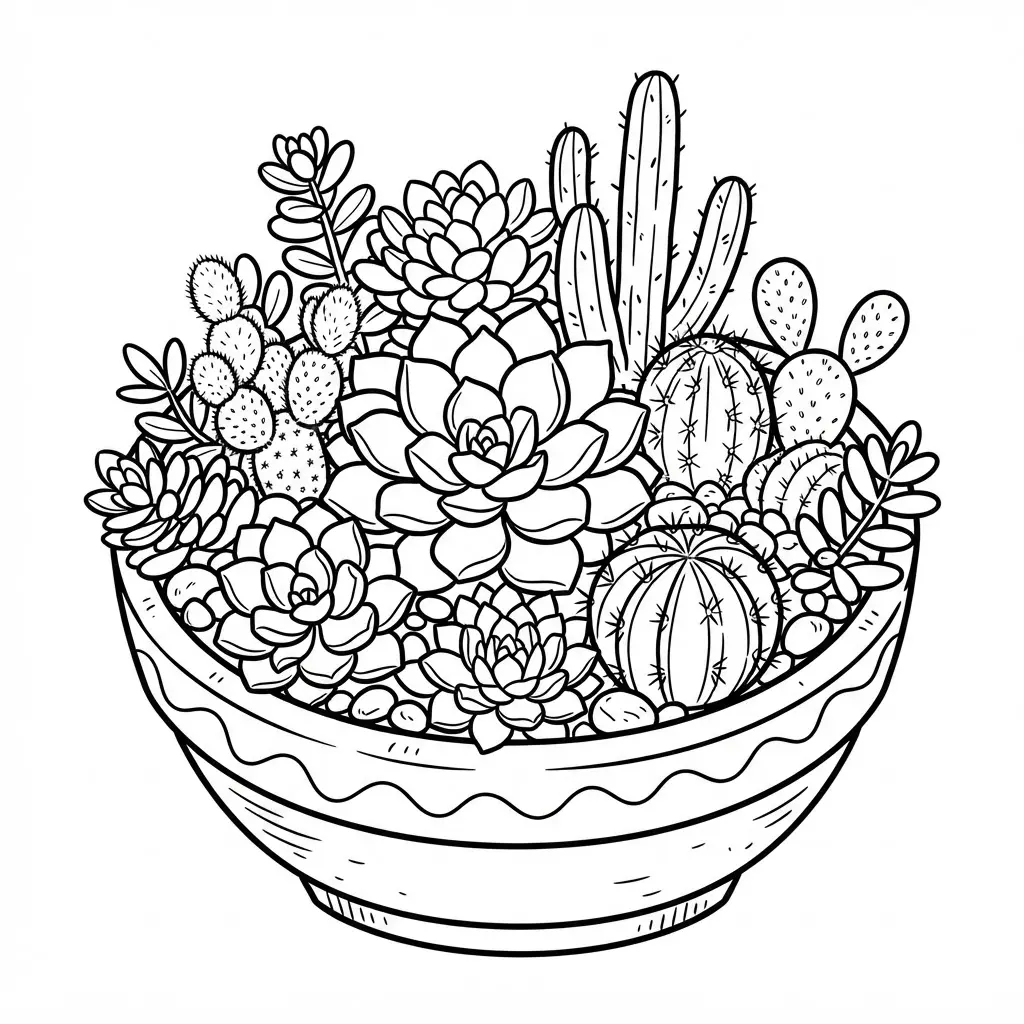
A tiny cactus cluster is not a row of matching plants. It feels more playful when each shape has its own place. Is it tempting to color every cactus the same green? Give the group more life with soft greens, blue-gray pads, dusty reds, and pale stone tones. Begin with one focal cactus off-center, then add round, tall, and star-shaped forms around it.
Keep the outlines close enough to feel connected, while leaving small gaps for gravel and shadow. Add prickles with short lines, then use gentle circles for ribbed bodies and layered marks for leafy rosettes. A shallow bowl shape beneath the plants helps the cluster feel grounded. I love adding a few pebble shapes because they bring a clean desert garden feel without crowding the page. Trying new cactus coloring pages with clustered arrangements builds composition skills.
This arrangement works because varied silhouettes keep your eyes moving across the picture, while repeated colors tie every plant together. Try light pencil pressure first, building darker tones beneath the plants and along the container rim. Save the palest areas for highlights on rounded leaves and smooth cactus tops. Your finished page will feel small, calm, and full of character.
12. Towering Cacti Along Desert Road
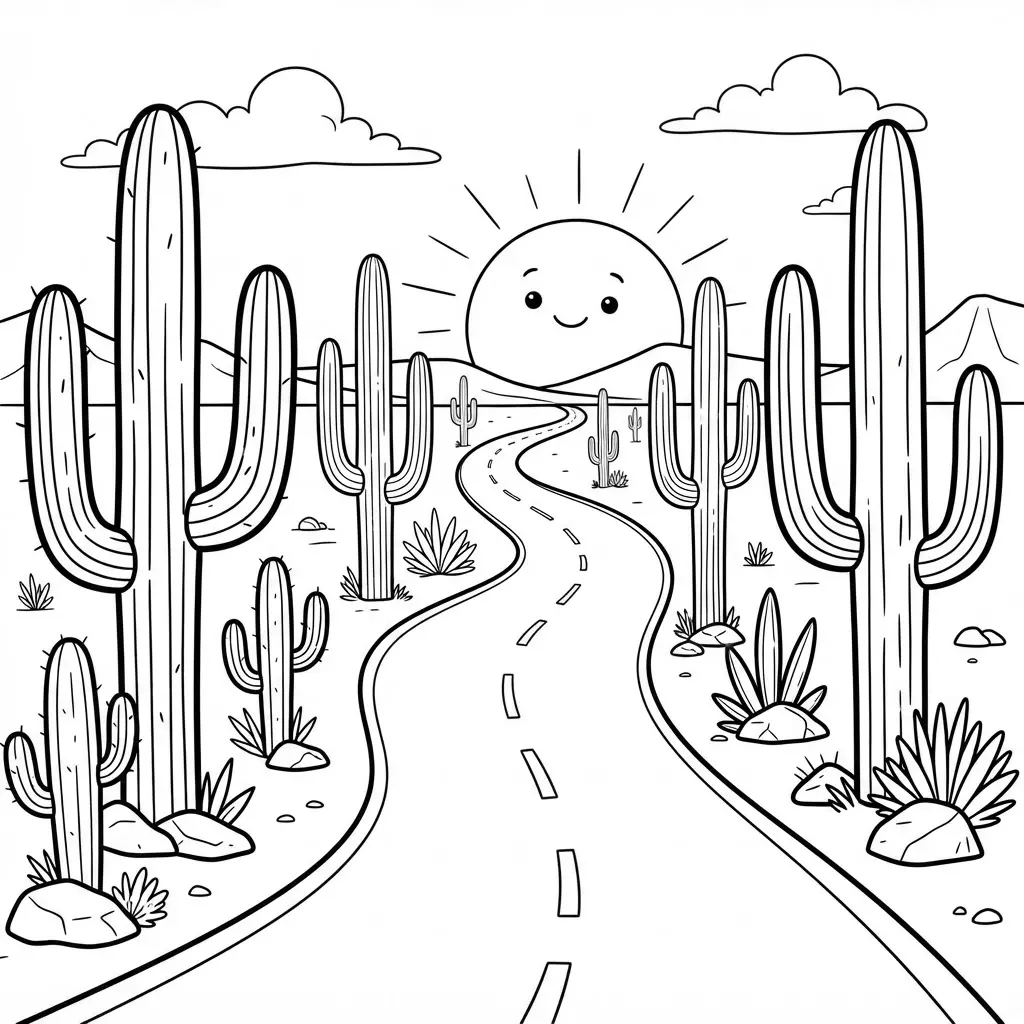
Start by tracing the road’s sweeping curve, then follow it toward a low horizon and distant mountain peaks. Add tall saguaro shapes along both sides, giving each trunk a different height and a few upward-reaching arms.
Fill the sky first with pale blue, warm yellow, or soft orange near the sun, then shade the desert floor with sandy tan and muted brown. Use three green tones on each cactus, keeping the lightest shade along the sun-facing ribs and the darkest shade beneath the arms. Sound complicated? It is not, especially with colored pencils for gentle layering and fine spine marks.
I love how the repeating cactus forms guide your eyes down the road while each plant still feels individual. Add small creosote bushes, gravel dots, and a thin shadow beneath the cacti for depth, then soften the far mountains so the foreground stands forward. Vary the cactus silhouettes instead of coloring every plant alike, and feel proud when your quiet desert scene comes together. Working on cactus coloring pages with perspective teaches eye-hand coordination.
13. Cactus in Pot with Polka Dot Design
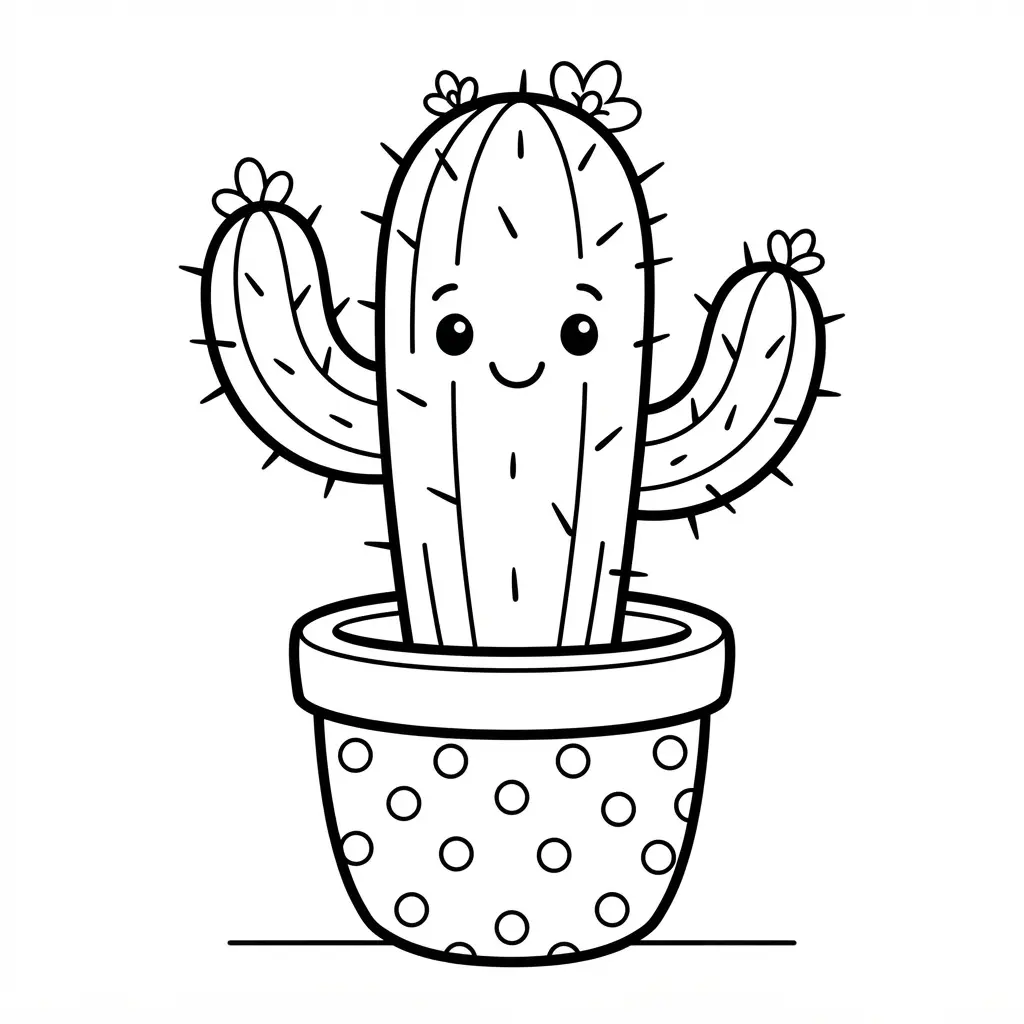
Ever tried turning a simple cactus into a cheerful little artwork? Start with a tapered pot outline, giving it a wide oval rim, gently sloping sides, and a rounded base. Add a pad-style cactus or tall saguaro in the center, with soft ribs, tiny spine clusters, and a flower on top if you want extra color.
Next, fill the container with a staggered dot pattern. Place the circles in offset rows instead of straight columns, allowing partial dots to appear near the curved edges. This small detail helps the design feel rounded, while a clear soil line keeps the cactus anchored inside the pot. Finding the right cactus coloring pages with patterned pots makes practice sessions fun.
I love how the organic plant shape feels balanced beside the neat circles. Use colored pencils for gentle green shading, then choose terracotta, coral, lavender, or sky blue for the pot. A contrasting dot color makes each circle stand out without taking attention away from the cactus.
Pro tip: sketch light curved guides across the pot before adding dots, then begin at the center and work outward. Color the circles first so their spacing stays consistent, followed by the larger areas. Your finished page will feel tidy, playful, and full of sunny desert charm.
14. Halloween-Themed Spooky Cactus

This one has a playful spooky mood, and it is easy to make your own. Start with a rounded cactus outline, then add uneven arms, tiny spikes, and a crooked smile. Give the pot a skull, cauldron, or carved pumpkin shape, then place a small witch hat on top. Is there anything more cheerful than a cactus ready for Halloween?
Keep the picture bold with pumpkin orange and bone white, using black for the pot, eyes, and shadow areas. A little toxic green around the spikes gives the page a fun haunted look, while a few red accents add a sharp seasonal detail. Add a tiny tombstone, ghost, spider, or faux cobwebs around the base without covering the cactus shape. I love how these small details turn a simple plant into a full Halloween scene. Seasonal cactus coloring pages bring holiday spirit to craft tables.
Pro tip: choose removable lightweight decorations for live plant displays, and keep real pumpkins away from damp soil since they soften quickly. For a coloring page, leave open spaces between the props so each shape stays easy to fill. Your finished picture will feel spooky, friendly, and ready for a cozy autumn coloring session.
15. Christmas Cactus with Holiday Ornaments
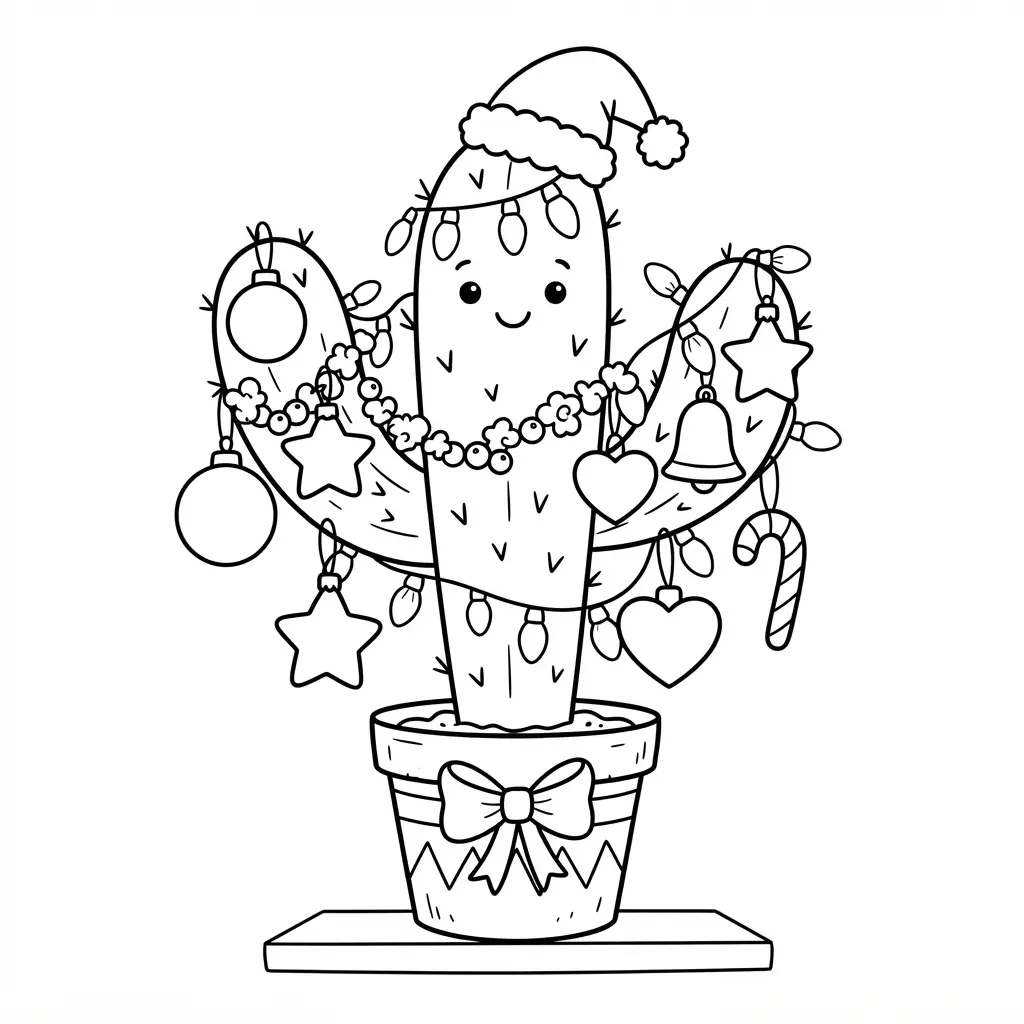
I love this plant scene because it feels festive without needing a full tree. Sound fussy? It is quite easy to draw or color once you spot the main shapes. Start with long, gently curving segments, then add open flowers in red, coral, white, or magenta. Tiny miniature ornaments give the display its cheerful holiday detail.
Show the pot resting inside a patterned cachepot, with a ribbon tied around the rim. Place baubles near the stems, yet keep each one small and light. A few ornament-topped skewers rising from the soil add height without weighing down the hanging sections. Soft curves, pointed flower petals, and rounded decorations create a pleasing mix of shapes. I love adding small dots on the pot for extra texture. Holiday-themed cactus coloring pages make December crafting sessions extra cozy.
For a finished scene, weave a thin strand of cool-touch LED lights around the outer stems, leaving flower buds clear. Keep the plant away from heaters, and avoid tight lines around fragile segments. This design works so well because natural greenery and holiday details share the page without crowding one another. Use deep green, warm reds, and a little gold, then enjoy the cozy result.
16. Abstract Watercolor Style Cactus Outline
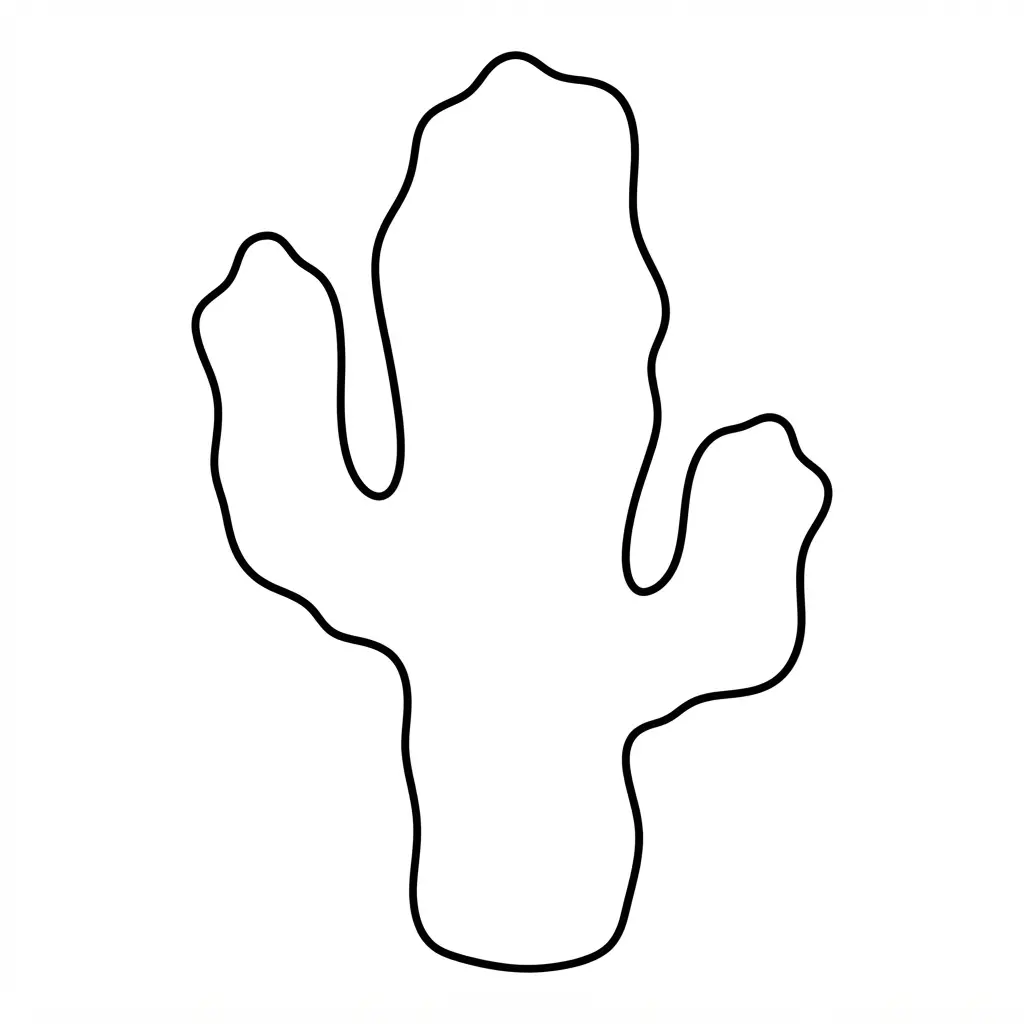
Soft sage, terracotta, and sandy washes spread across the page, with a slim cactus outline drifting slightly away from the color. Some pigment pools at the edges, while small white spaces and salt blooms keep the image airy. Start with 140 lb watercolor paper, misting a few uneven areas before dropping in two or three transparent colors. Tilt the sheet gently so the pigments mingle without turning muddy, then leave it flat until fully dry. Does that loose color feel more inviting than a perfectly filled shape?
Once the wash feels dry, sketch a simple Saguaro, prickly pear, or tall column cactus in pencil. Trace only the main contour with waterproof ink, allowing parts of the line to cross blank paper and parts to float over the painted area. Add a few dots, short hatches, or tiny crosses for spines, leaving plenty of negative space around them. I love this approach because the steady outline gives your hand direction while the watercolor keeps every page personal. Pro tip: try a fine-line waterproof pen and offset the contour slightly from the color for a gentle abstract effect. Mixing watercolor with cactus coloring pages opens new creative possibilities.
17. Cactus and Lizard Duo in Natural Habitat
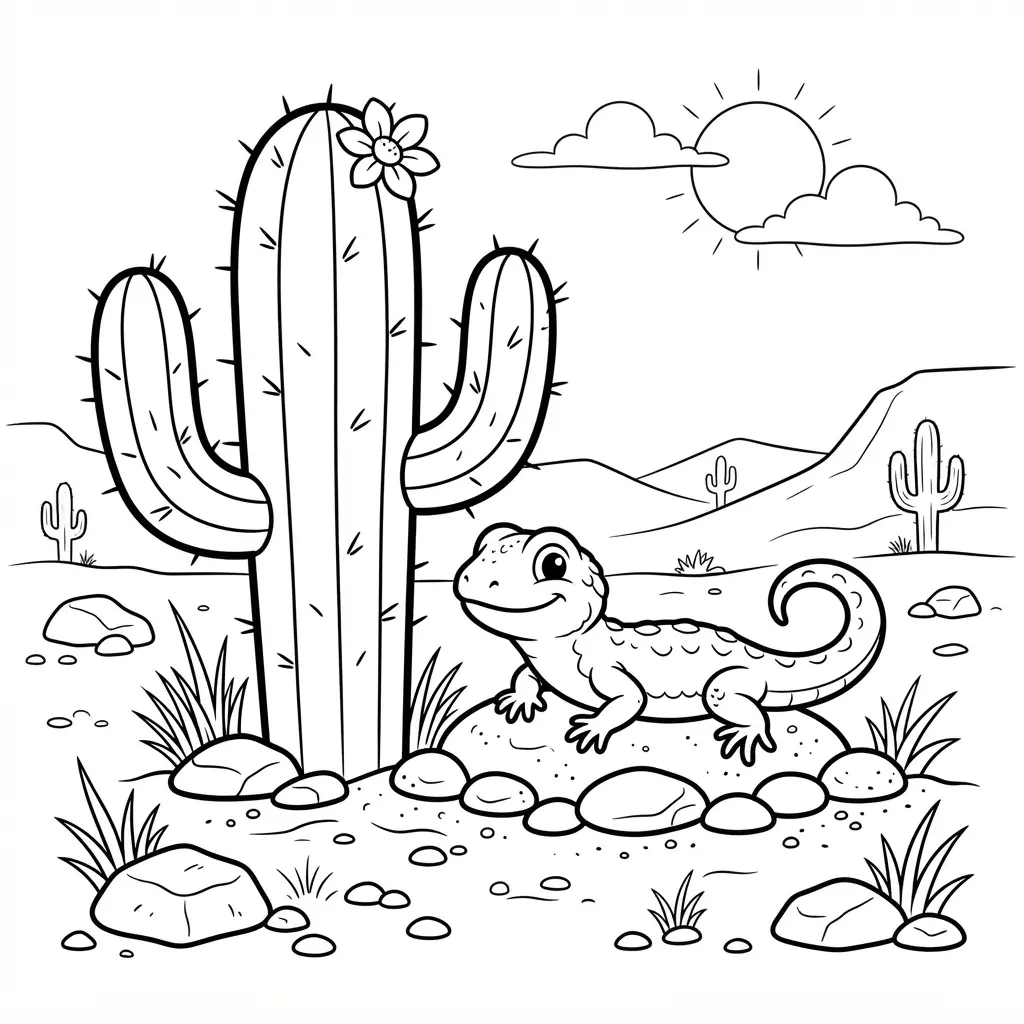
Many beginners color every cactus spine as a dark spike, but fine lines look more natural in pale gray, amber, or cream. Start with a fine-tipped pencil and leave tiny gaps along each spine so light seems to catch the surface. Sound complicated? It is not. A few soft strokes give the cactus a dry, sunlit texture.
Build the scene with dusty blue-green pads, then add deeper green near the edges and joints. Give the lizard a tan, olive, or gray base, followed by darker marks along its back and lighter color beneath its jaw. Use light base layers before adding small scale marks, a collar, or a warm stripe. Add yellow or magenta to the cactus flower for a lively focal point, while faint brown dots settle the desert floor.
I love this one because the alert lizard and still cactus create such a pleasing contrast. Distant mesas, cracked earth, and a pale sky make the native habitat feel complete without stealing attention from the animals. Finish with a white gel pen on select spines and glossy cactus edges. Your page will feel sunny, detailed, and full of desert character. Pairing wildlife with cactus coloring pages brings natural ecosystems to life.
18. Steampunk-Inspired Mechanical Cactus

Start with a tall saguaro outline, then break its trunk into segmented metal plates. Add rounded edges, rivet rows, and a few open panels so gears and a central driveshaft peek through. Keep the main silhouette clear, so your cactus still reads instantly beneath all the machinery.
Build each arm with piston joints, narrow pipes, and small pulley wheels. Replace ordinary spines with evenly spaced steel needles or brass pins, leaving enough white space for easy coloring. Sound complicated? It isn’t. A few repeated shapes give the page a steady mechanical rhythm. Experimenting with cactus coloring pages like this one pushes artistic boundaries.
Top one arm with a kinetic blossom made from layered brass petals, mica, or stained-glass shapes. Draw a small filament bulb in the center, then finish the base with copper root pipes, valves, and a hidden water chamber. I love adding verdigris patches beside polished brass, since the contrast makes each surface feel distinct.
Use dark gray for iron, warm gold for brass, reddish brown for copper, and pale yellow around the glowing flower. Fine-line pens suit the tiny gears, while colored pencils add smooth shading across the curved plates. Pro tip: leave crowded sections lighter and place your darkest tones beneath panels and joints. Your cactus coloring pages will feel detailed, balanced, and full of personality.
Displaying Finished Cactus Art in Frames
A simple frame instantly elevates a completed cactus coloring page from craft to wall-worthy art. Standard 8×10 or 11×14 frames work perfectly for most printable sheets, especially those with full-bleed desert landscapes or centered saguaros. Avoid direct sunlight to prevent marker colors from fading over time, particularly bright pinks and yellows in blooming barrel cacti. Matting adds breathing room around potted plant illustrations and reduces glass contact with pencil wax.
For multiple pieces, arrange them in a grid layout using matching black or wood-tone frames for cohesion. Small clip frames let you swap out seasonal favorites without remounting. If your artwork has raised gel pen details, use foam tape spacers behind the backing board to prevent smudging. Never stack finished pages face-to-face during storage. Secure each piece under acrylic display glass for lightweight protection and glare-free viewing.
Conclusion
Did nostalgia hit hard? I still remember coloring desert scenes with my favorite green crayon, dreaming up little worlds where cacti wore hats and lizards told jokes. These cactus coloring pages bring that same joy — simple enough for little hands, detailed enough to spark imagination. Look at what you’ve made — that is real skill right there, turning lines into life.
If you’re sharing this with a child, try talking about how real cacti survive in tough places — it adds a quiet layer of wonder. Keep your favorite cactus coloring pages on hand for rainy afternoons and weekend quiet time. Pick your favorite and get started right away.
FAQs
Q: Are these cactus coloring pages suitable for toddlers?
A: Yes, many designs use bold lines and simple shapes perfect for little ones. Just pick the less detailed ones for younger kids.
Q: Can I use these for classroom nature lessons?
A: Absolutely. These pages pair well with talks about desert plants, ecosystems, and plant adaptations in dry climates.
Q: Do any pages include real cactus facts?
A: While the pages focus on art, you can add fun facts as you color. For example, some cacti bloom only once a year.
Q: What kind of crayons work best for these prints?
A: Wax crayons are great for bold coverage. Colored pencils work well for adding fine details on complex designs.
Q: Are the coloring sheets easy to print at home?
A: Yes, all pages are designed for standard printers using regular paper. Just download and print as needed.