Matching Line Complexity To Children’s Ages
Sea life pages for preschoolers should use thick continuous outlines and broad open spaces, while older children handle layered habitats and pattern-rich shells. Keep one recognizable animal as the focal subject, since crowded linework makes crayons harder to control, especially when designing ocean coloring pages. Younger learners benefit from friendly faces, rounded forms, and wide gaps between fins, tentacles, or coral branches, which aligns perfectly with ocean coloring pages for early learners. Avoid frightening expressions, aggressive scenes, and tiny enclosed spaces when preparing classroom pages. Older students often enjoy schools of fish, textured shells, kelp, and detailed coral structures, especially when each shape stays clear after printing and matches ocean coloring pages. Thick continuous outlines also help children separate neighboring forms without tracing gray shading. Teachers seeking vocabulary practice often add simple labels for fins, shells, kelp, or tentacles beneath spacious illustrations.
Printing Portrait Animals And Landscape Habitats
Use portrait layouts for single animals and wide horizontal layouts for reefs, kelp forests, tide pools, or broad underwater scenes, which pairs well with ocean coloring pages layouts. Standard copy paper suits crayon and colored pencil work for take-home sheets, while cardstock supports classroom displays and heavier coloring materials. Keep files at 300 DPI so black outlines stay crisp around dolphins, whales, sharks, or seahorses, ensuring your ocean coloring pages print sharply.
A white background and minimal gray shading help printers preserve readable shapes, making the ocean coloring pages stand out on paper. Leave at least a 0.25-inch safe margin to prevent clipped fins, bubbles, or coral along page edges, a crucial step for ocean coloring pages. Wide scenes need balanced spacing, since dense details near the margins often disappear on home printers. Check one test sheet before making a classroom set, especially when the printer scales the file automatically.
1. Smiling Cartoon Dolphin Jumping Scene
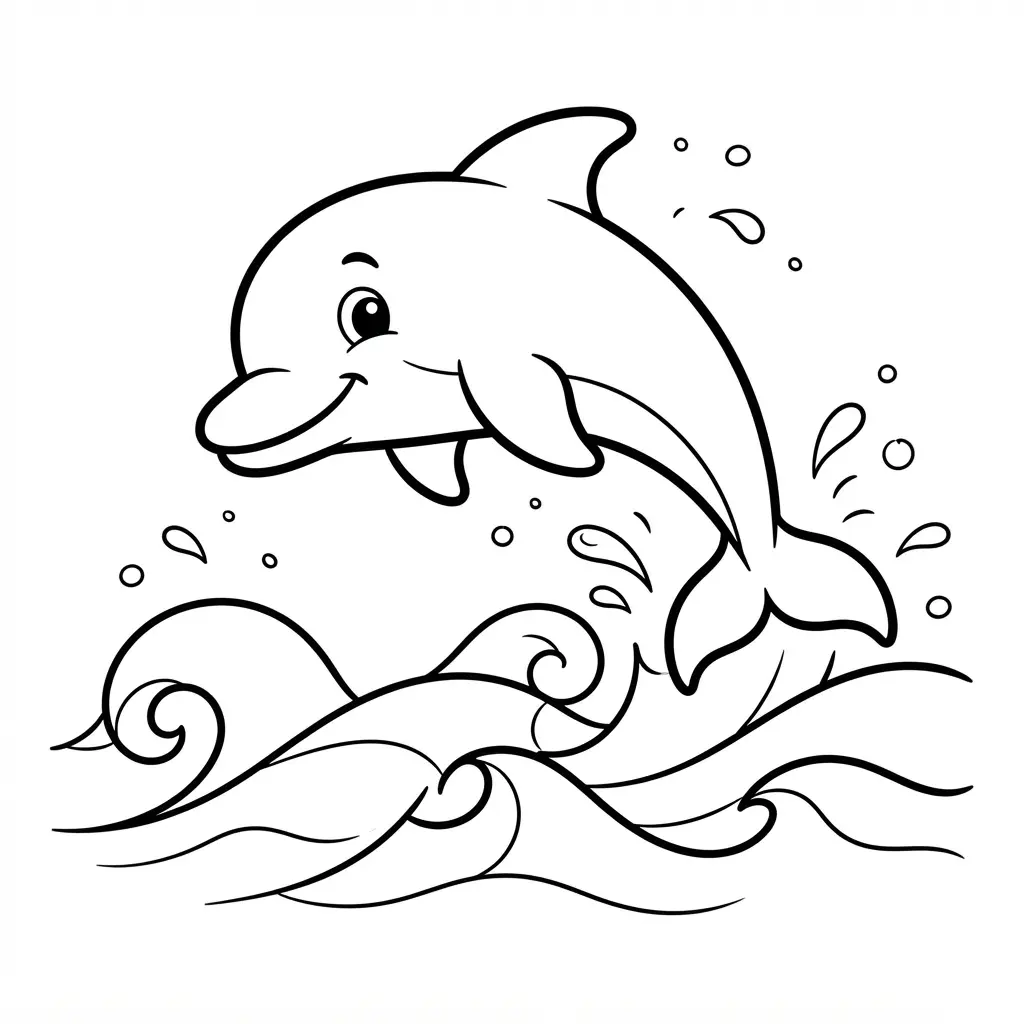
Ever seen a dolphin leap above the waves with a wide smile? This cheerful scene gives young artists a friendly subject to color, much like our popular ocean coloring pages designs. Start with the dolphin, using clean outlines to trace its rounded nose, curved fins, and smooth body, just as you would on standard ocean coloring pages. Add bright splashes below, small bubbles around the jump, and fluffy clouds overhead. The simple shapes keep the picture clear and easy to enjoy.
Choose a cheerful palette for the sky, water, and dolphin, then leave small white spaces in the splashes for extra sparkle. I love how the happy face makes each color choice feel playful, while the waves connect the jumping figure to the ocean, a trait shared with many ocean coloring pages. Give the blue waves soft bands of color, and add darker lines beneath them for gentle depth. Keep bubbles round and uncluttered, and remember this tip works for ocean coloring pages. You have got this, and the finished page will feel full of sunny motion.
2. Detailed Great White Shark Profile

This shark profile gets its character from a conical snout, tall pointed dorsal fin, crescent tail, and torpedo-shaped body. Sketch the back in dark gray or blue-gray, then leave the belly white for countershading, a technique often used for ocean coloring pages. Sound complicated? It isn’t.
I love adding several tooth rows because they give the open mouth a lively, accurate look. Around 300 teeth sit in rows, and replacements move forward after losses, which adds educational value to ocean coloring pages. Show the sturdy tail base and small dark mark beneath a pectoral fin, keeping the lines clean like professional ocean coloring pages templates.
Adults often measure 15 to 20 feet, while pups begin near four feet. Keep the skeleton concept clear: this is a cartilaginous fish, not a bony fish. Great whites live in temperate and subtropical waters worldwide, so distant waves or open-water lines fit the scene well. Trust me on this one, these details make your ocean coloring pages feel fun and informative.
3. Playful Octopus Tangled in Kelp

This one is my favorite because the octopus looks silly and full of motion. Ever tried coloring a creature with eight curling arms? This scene places its curious octopus eyes between long kelp ribbons, so each peek feels playful, just like our best ocean coloring pages.
Begin by drawing tall, ribbon-like strands around the octopus, then overlap several tentacles across them for a true tangled effect. Add circular bubbles, tiny fish silhouettes, and soft sunbeams filtering from above to fill the open water, which matches the layout of ocean coloring pages. Keep the kelp green, then choose contrasting shades for the body and arms. Those repeating curves give your ocean coloring pages a lively scene with plenty of small spaces to fill. Pro tip: vary your greens slightly so the seaweed feels rich and sways across the page.
4. Gentle Sea Turtle Swimming Slowly
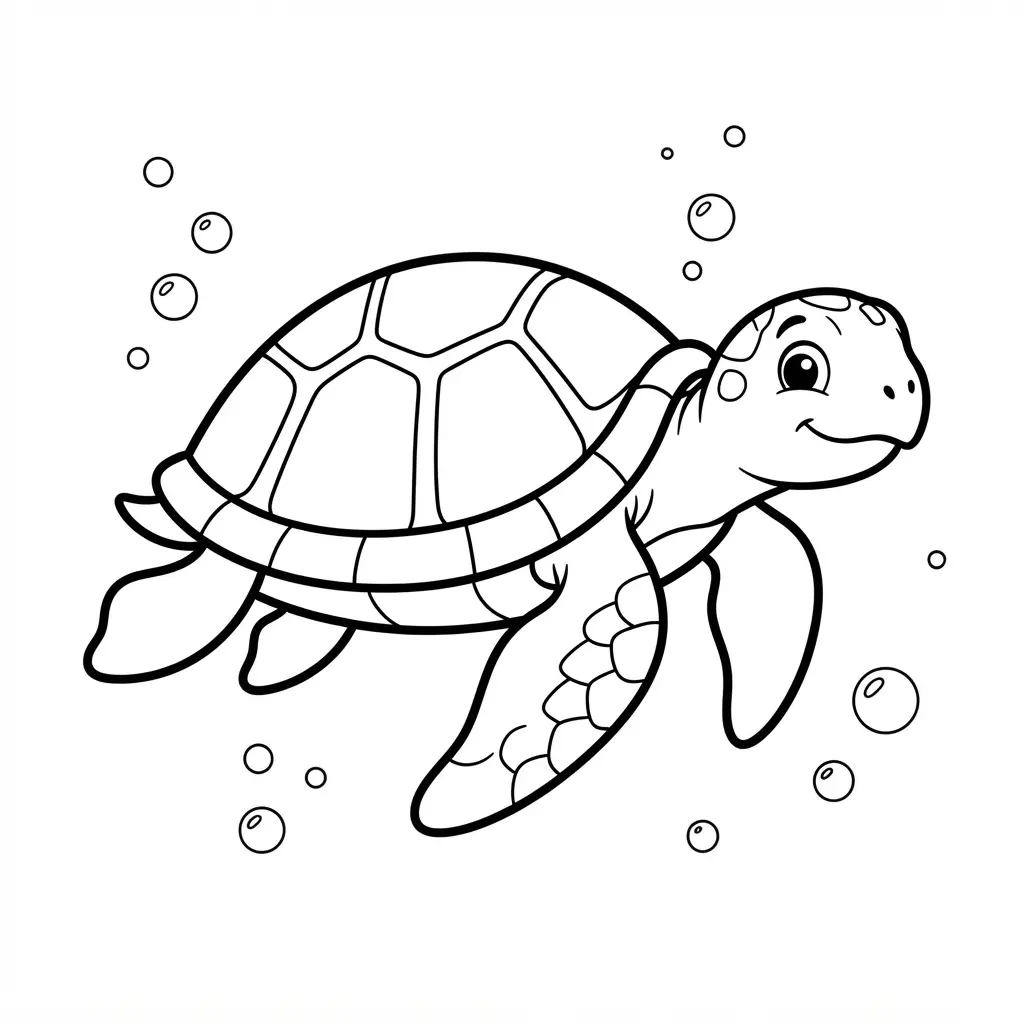
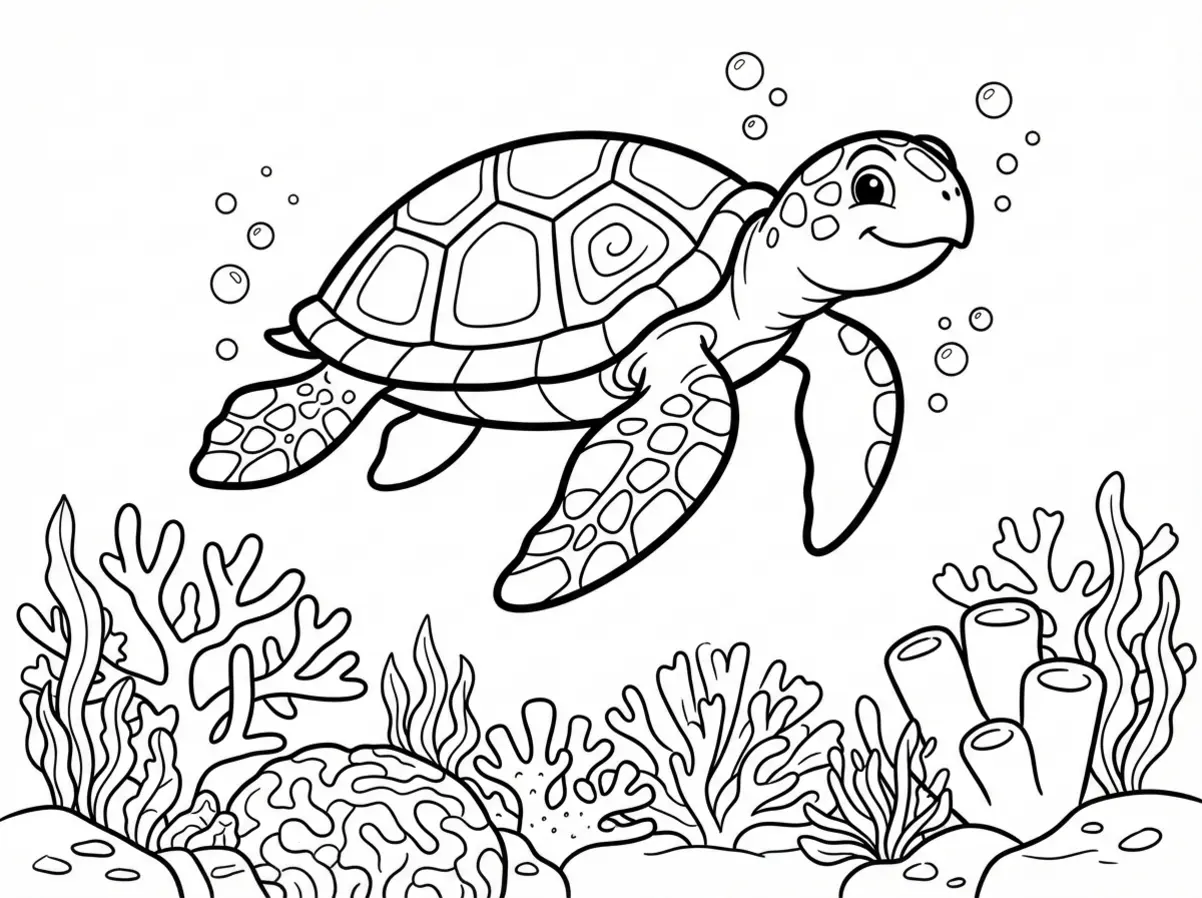
Soft blue water surrounds a sea turtle, with sunlight shimmering across its broad patterned shell. Ever wondered how a still picture shows slow movement? Place the turtle horizontally or at a gentle diagonal, then use relaxed flipper curves instead of stiff, straight edges, a common feature in ocean coloring pages. Leave open water around the body so its shape stays clear.
Add small bubbles near the head and flippers, plus curved sea grass, soft coral, and a few smaller fish behind the turtle. I love giving the shell the largest coloring space, then choosing blue and turquoise for the water with contrasting shades for the shell and coral, which works perfectly with ocean coloring pages. Use crayons, colored pencils, or washable markers, and keep background details light. Feel the calm settle in as the turtle glides across your page.
5. Detailed Tropical Coral Reef Habitat

Many reef drawings place coral in one flat strip, but a tropical habitat has clear zones. Sound complicated? It is not. Start with a reef crest outline near the center, then add sunlight, waves, and open water above it, a technique often applied to ocean coloring pages.
Build a shallow lagoon on one side with sand, seagrass, mangrove roots, and a small turtle. Lead the reef downward into a sloping fore reef, using layered depth lines to separate bright shallows from darker areas filled with sea fans, sponges, lobsters, and moray eels, similar to advanced ocean coloring pages. Add fish, crabs, sea urchins, rays, and bubbles throughout.
I love how each section gives your color choices a clear purpose, especially when tackling ocean coloring pages. Use broad spaces for younger artists, then add tiny polyps, shells, and textured sand for older children. Keep coral near sunlit water, and your habitat will feel lively and well planned, proving that ocean coloring pages can teach spatial awareness.
6. Graceful Manta Ray Gliding Motion
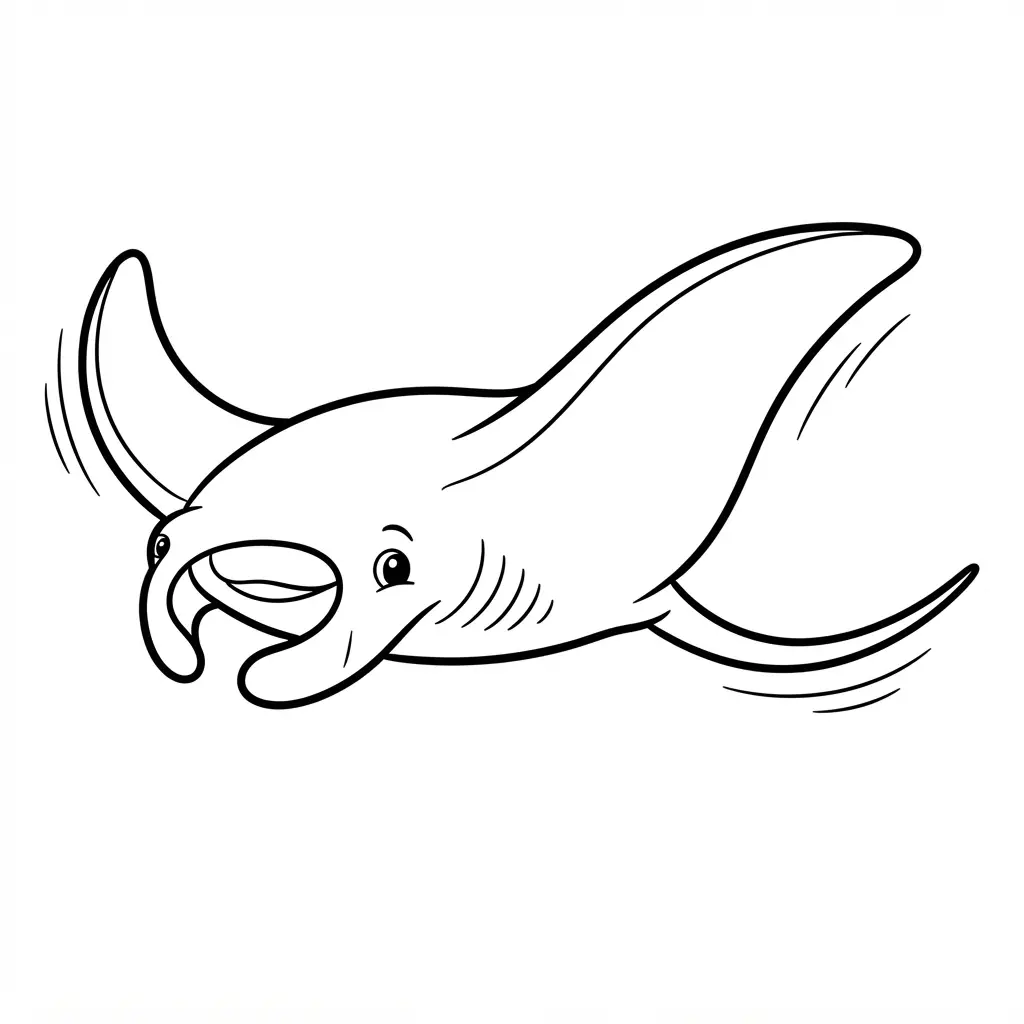
Curve the manta ray’s wings into a broad, flowing pose with one side slightly higher than the other. Add a gentle ripple from each leading edge toward the wingtip, using long curved lines instead of stiff, straight edges. Angle the body a little, then give the tail a soft curve so the pose suggests a calm banking turn, a layout choice found in many ocean coloring pages. Sound complicated? It isn’t.
Keep the water details light with a few bubbles or slim lines near the body. Open spaces across the wings and belly make this ocean coloring pages idea easy for young artists to fill. I love how gradual wing shapes create forward motion without clutter. Pro tip: vary the wing heights slightly, then use smooth color changes to make the glide feel calm and weightless.
7. Funny Pufferfish Expanding Its Spikes
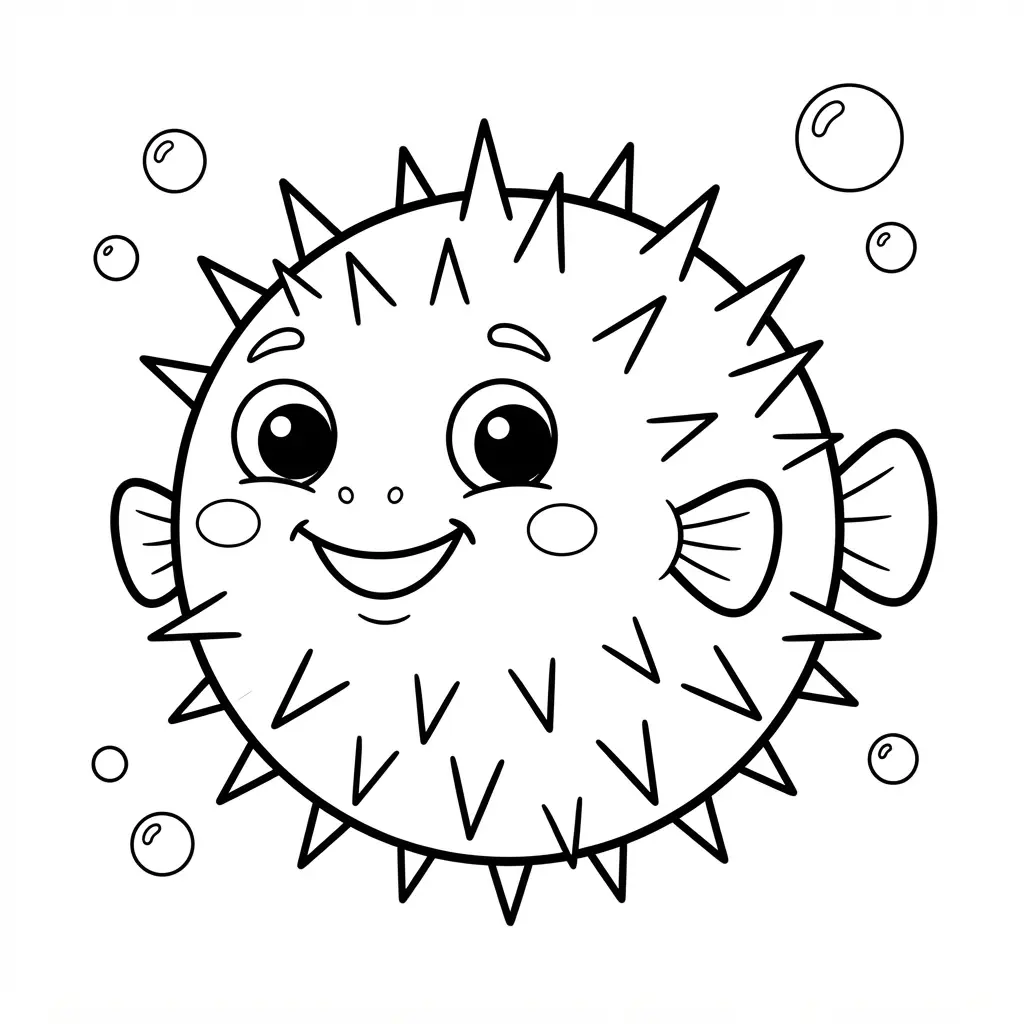
Ever seen a pufferfish look surprised from every angle? Start with a round, balloon-like body, then add short, clear spikes radiating around its edge. Give the face wide eyes and a tiny open mouth, so the startled pose feels playful. Keep the spike spacing open so each section has room for a separate color, which keeps your ocean coloring pages tidy.
Use soft blue, green, or yellow for the body, then pick a contrasting shade for the spikes. A few small bubbles near the fish help fill the scene without crowding its outline. I love this page because the funny expression makes children smile while they practice staying inside curved shapes, a goal for all ocean coloring pages creators.
Trust me, avoid a flat oval or spikes pointing in one direction. The puffed body should feel round, with spikes extending all around it. Leave clear coloring spaces between the lines, then add a bright patch to the cheeks for extra charm. Your ocean coloring pages collection gets a cheerful little character here.
8. Friendly Seahorse Among Sea Grass
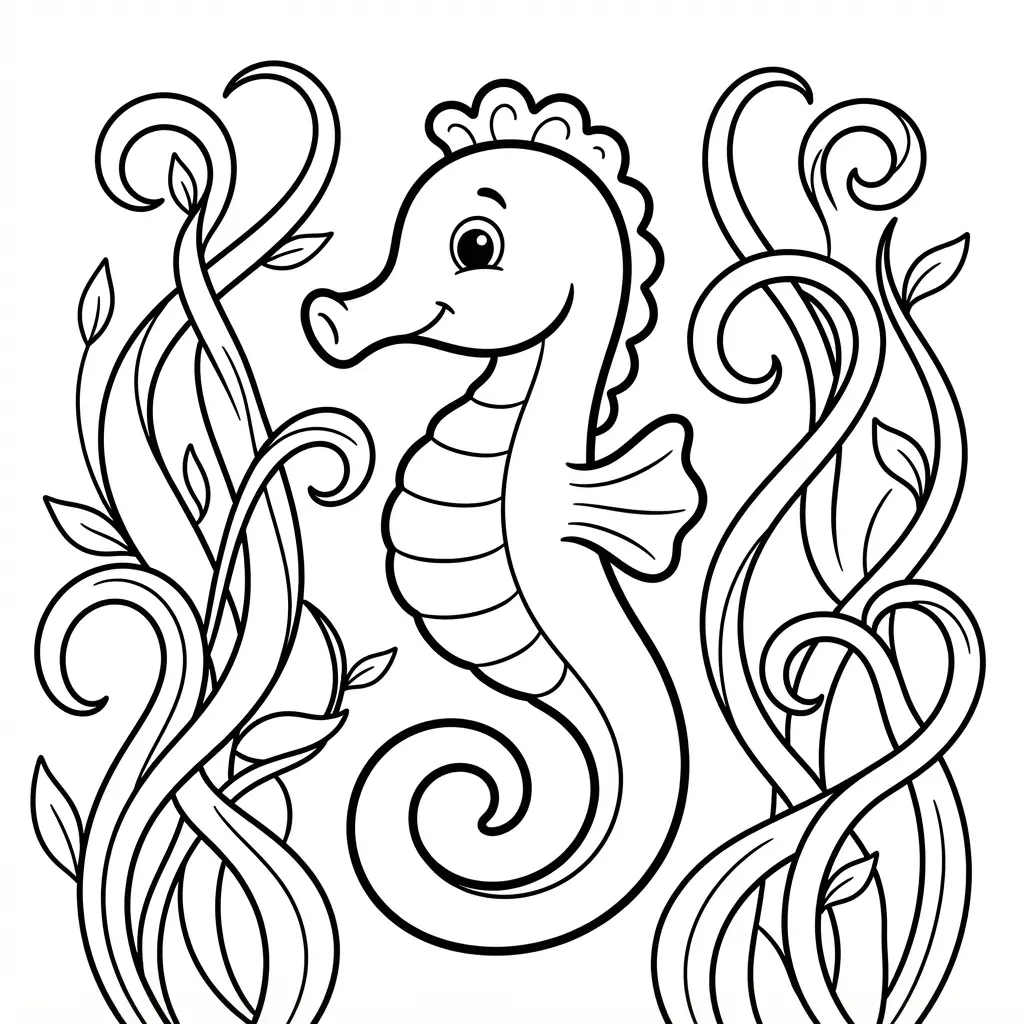
This seahorse scene feels cheerful from the first glance, with the little swimmer tucked among tall seagrass. Start by giving the smiling seahorse the clearest space, then add long flowing blades around its body without covering its face. I love how those curved lines make the whole picture feel calm and gently moving, much like our favorite ocean coloring pages.
Place a few bubbles above its head, then scatter tiny fish and seashells near the lower edges. Sound complicated? It is not. Use turquoise and sea green for the water and grass, then bring in coral details and golden yellow touches on the seahorse or shells. The mix gives young artists several friendly shapes to color while keeping the main animal easy to notice. Leave open spaces between details, and your ocean coloring pages scene will stay peaceful. Feel proud when your underwater friend is finished.
9. Mysterious Jellyfish with Long Tentacles
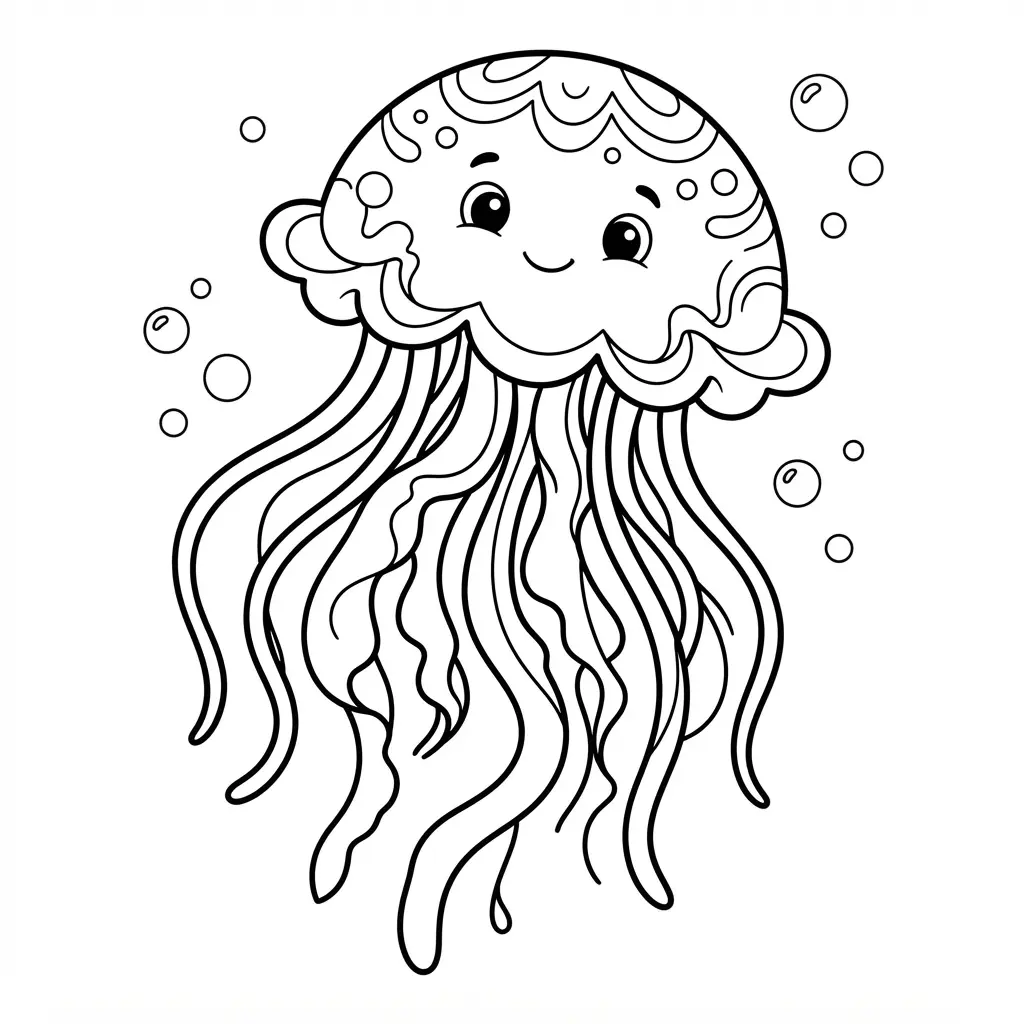
This one is my favorite because the giant phantom jellyfish looks unlike anything in a usual ocean scene. Start with a broad, dark red, umbrella-shaped bell, then add four narrow oral arms stretching far below and around the body. Are those long strands ordinary stinging tentacles? Not quite, since these ribbon-like arms gather small fish and plankton as the jellyfish moves through deep water, a detail that elevates ocean coloring pages.
Use a dark underwater background with soft blue or purple shading, leaving the bell and arms clear for coloring. I love how the wide bell and extreme arm length give your ocean coloring pages a quiet sense of mystery. Keep the arms flowing in separate curves so the picture stays easy to color and satisfying to finish.
10. Sunken Pirate Treasure Chest Discovery
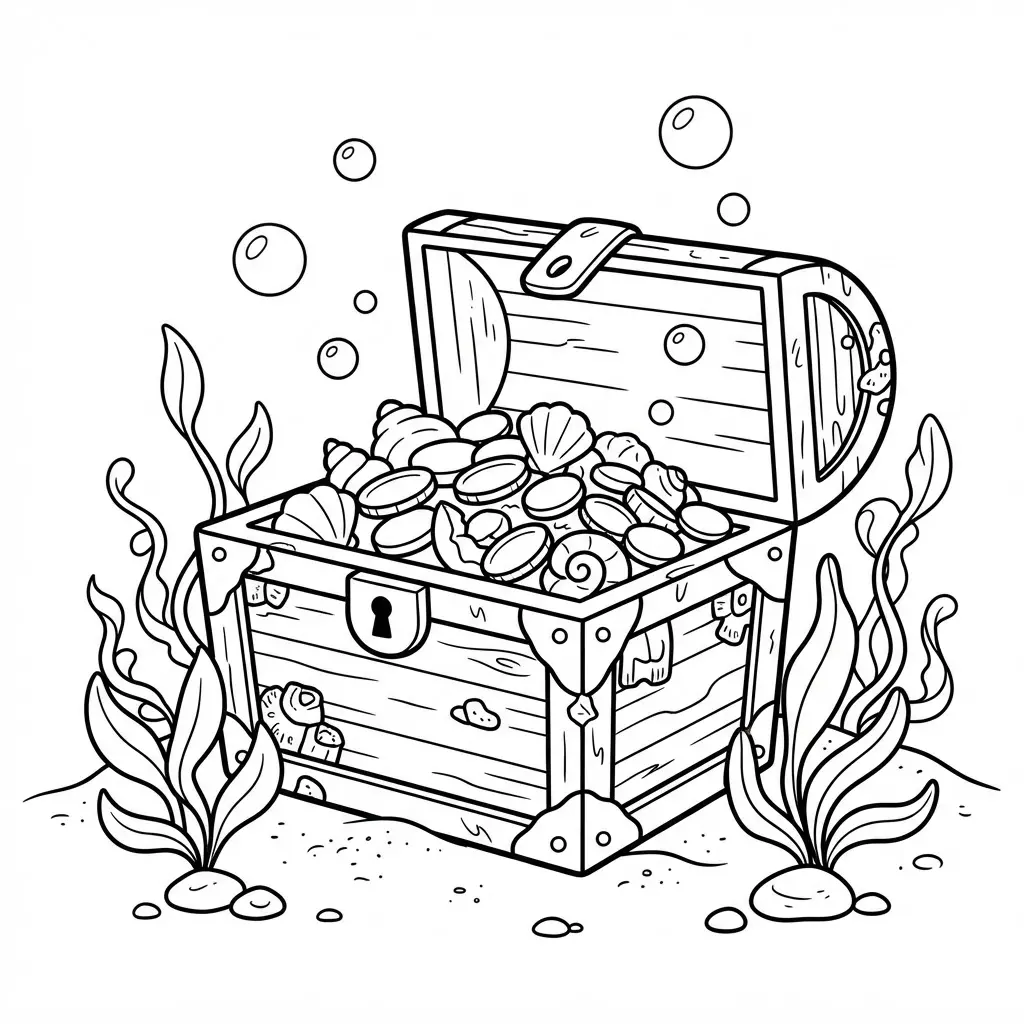
Gold coins peek from a weathered chest while sea grass curls around its lid, and tiny bubbles rise through the blue. Doesn’t this scene make your pencils feel ready? Start with a bold chest outline, which anchors the composition of these ocean coloring pages.
Draw the chest low on the page, tilted slightly so its open lid faces the viewer. Add curved plank lines, a round lock, loose coins, and a few shells nearby. I love adding soft shadow layers beneath the chest, since they give the object a settled look without hiding its details, a trick that works well with ocean coloring pages.
Use dark blue around the edges, then leave lighter space near the treasure for contrast. Seaweed, bubbles, and a friendly fish fill empty areas while keeping the chest as the main focus. Finish with metallic gold accents on coins and trim for a cheerful payoff. Your finished picture will feel playful, curious, and full of underwater adventure.
11. Bright Starfish on Sandy Bottom
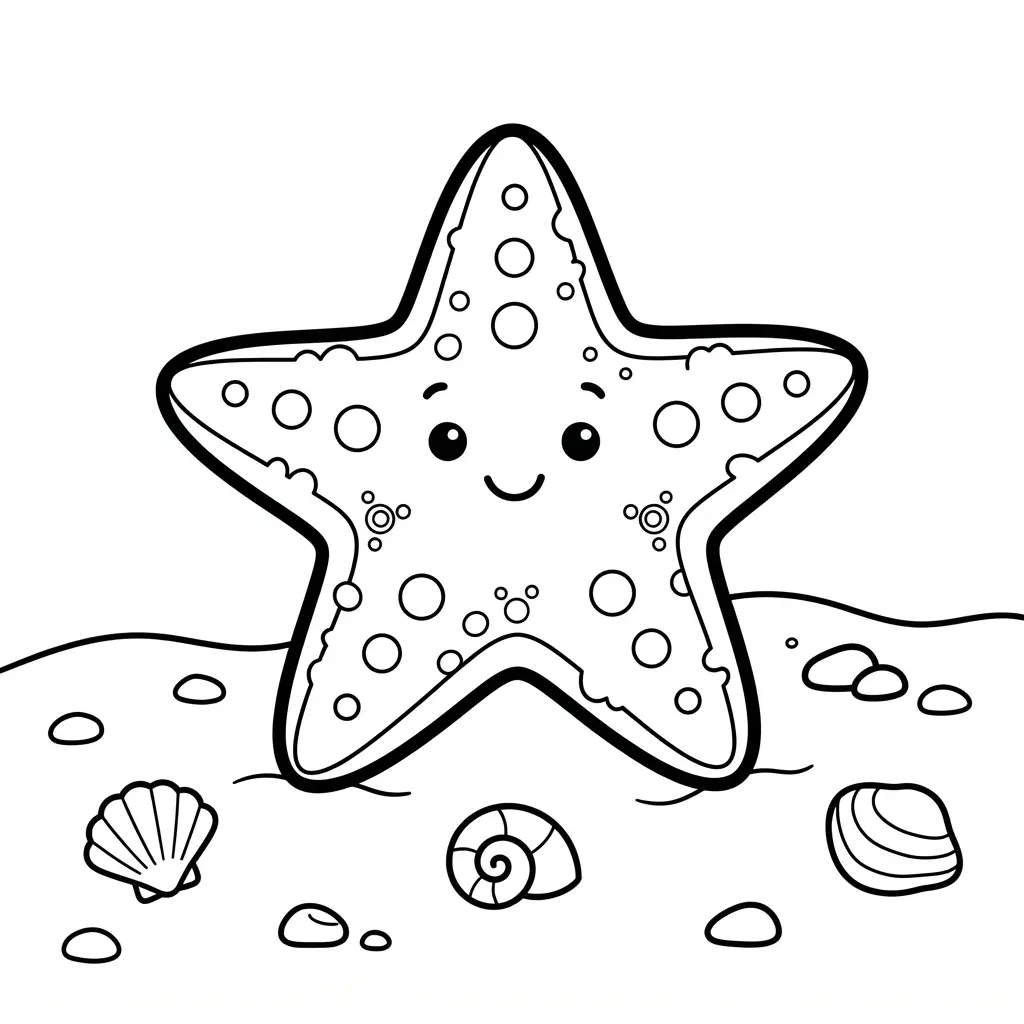
Some artists shade every underwater detail with equal strength, but this steals attention from the starfish. Start with a pale sandy seabed, then place the orange starfish in the center, mimicking the focal point style of many ocean coloring pages.
Add curved, lightly spaced lines for natural sand ripples, plus two or three small shells nearby. Soft blue-gray shading beneath the arms gives the seabed gentle depth, while clear turquoise water and faint sunlight rays brighten the upper area. Is it not satisfying to see the warm orange shape stand out, as seen on quality ocean coloring pages?
I love keeping these background marks quiet because the scene feels calm without looking empty. Trust me, gentle color changes and soft shadows make this ocean coloring page easy to enjoy, especially for young artists.
12. Playful Sea Otter Floating Backwards
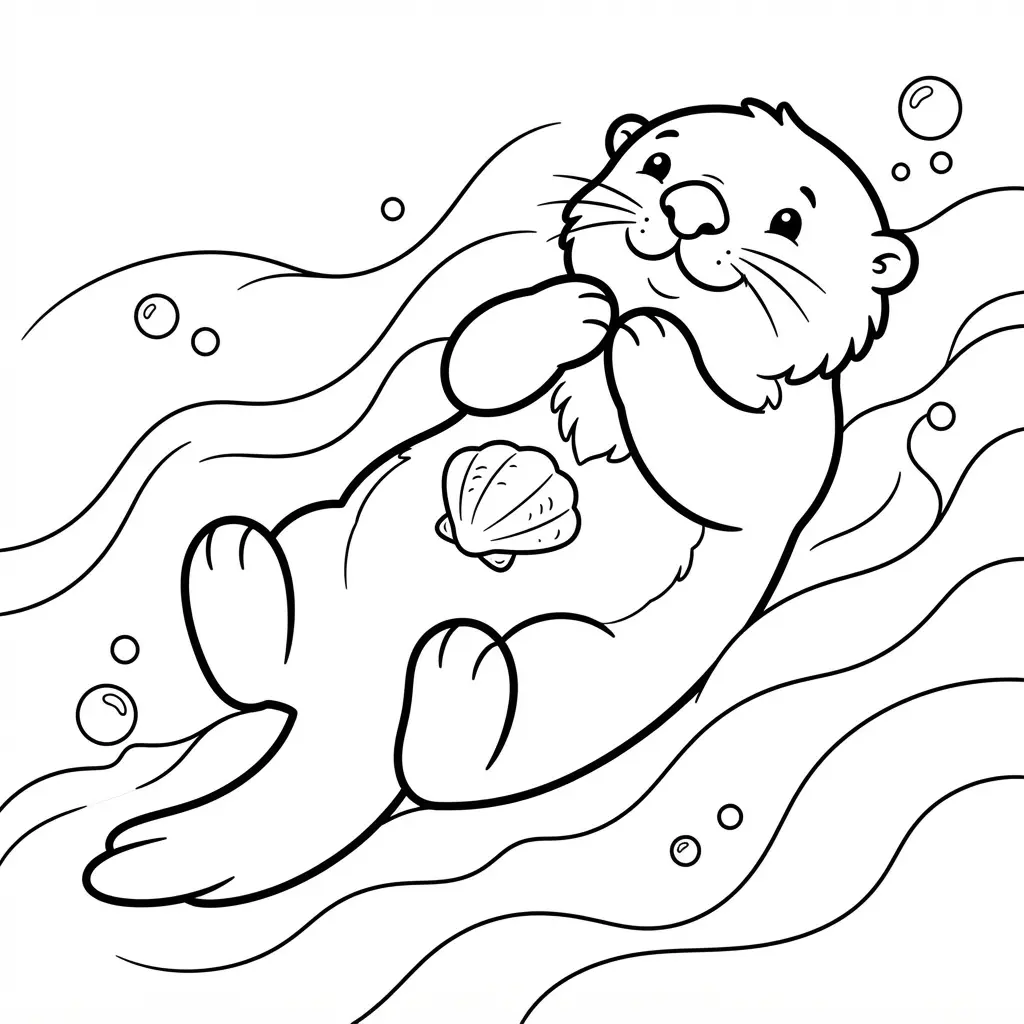
Start with a wide oval for the otter’s belly, then tilt it slightly so the body seems to drift backward. Add raised front paws near the chest, with small claws and a friendly face turned toward you. Trace short wet whiskers around the muzzle and outline smooth water rings around the body.
Frame the scene with swaying kelp, leaving broad spaces between leaves for easy coloring, then scatter tiny sparkles across the calm surface, just like professional ocean coloring pages layouts. Add soft golden beams from above, keeping the otter as the main focus.
Sound tricky? It’s not, and I love how the relaxed pose gives these ocean coloring pages a cheerful mood. Use pale blue, sandy gold, and deep green, then enjoy the peaceful finish.
13. Majestic Humpback Whale Breaching Surface
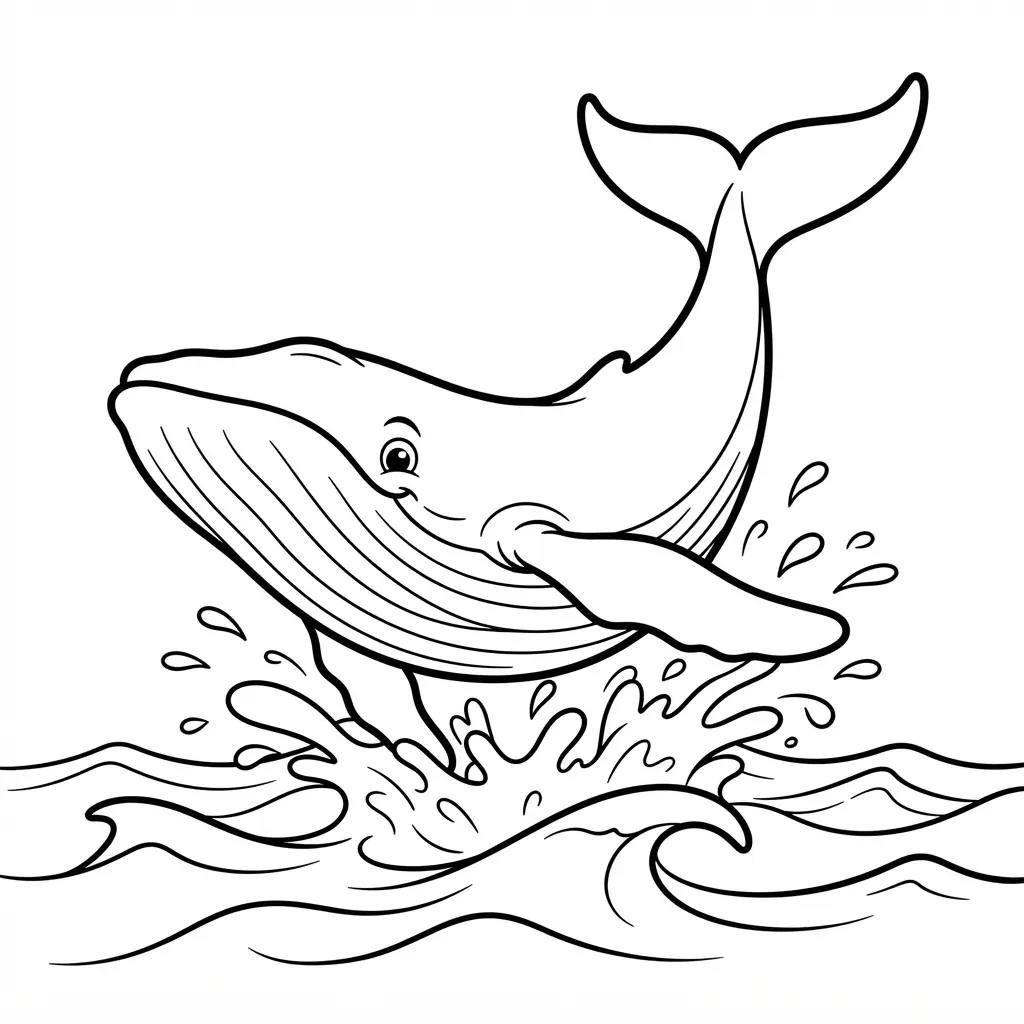
Ever wondered how to make a breaching whale feel connected to the sea? Start with a bold whale outline, angling its massive body upward as the chest and flippers rise above the waterline. Add broad splash shapes at the lower edge, layered wave curves, and small teardrop droplets around the skin so the action feels clear. I love giving the whale a few curved texture lines while keeping its main body open for easy coloring.
Finish with a crisp horizon, deep blue water below, and a sunny sky above, leaving open spaces for bright color choices. White gel pen highlights across the skin and spray suggest sunlight after the page is filled, while darker wave bands help the whale stay grounded. This scene works because every line points toward the leap, giving your ocean coloring pages a lively focal point. Trust me, those suspended droplets make the finished picture feel joyful.
14. Hungry Hammerhead Shark Patrol Scene
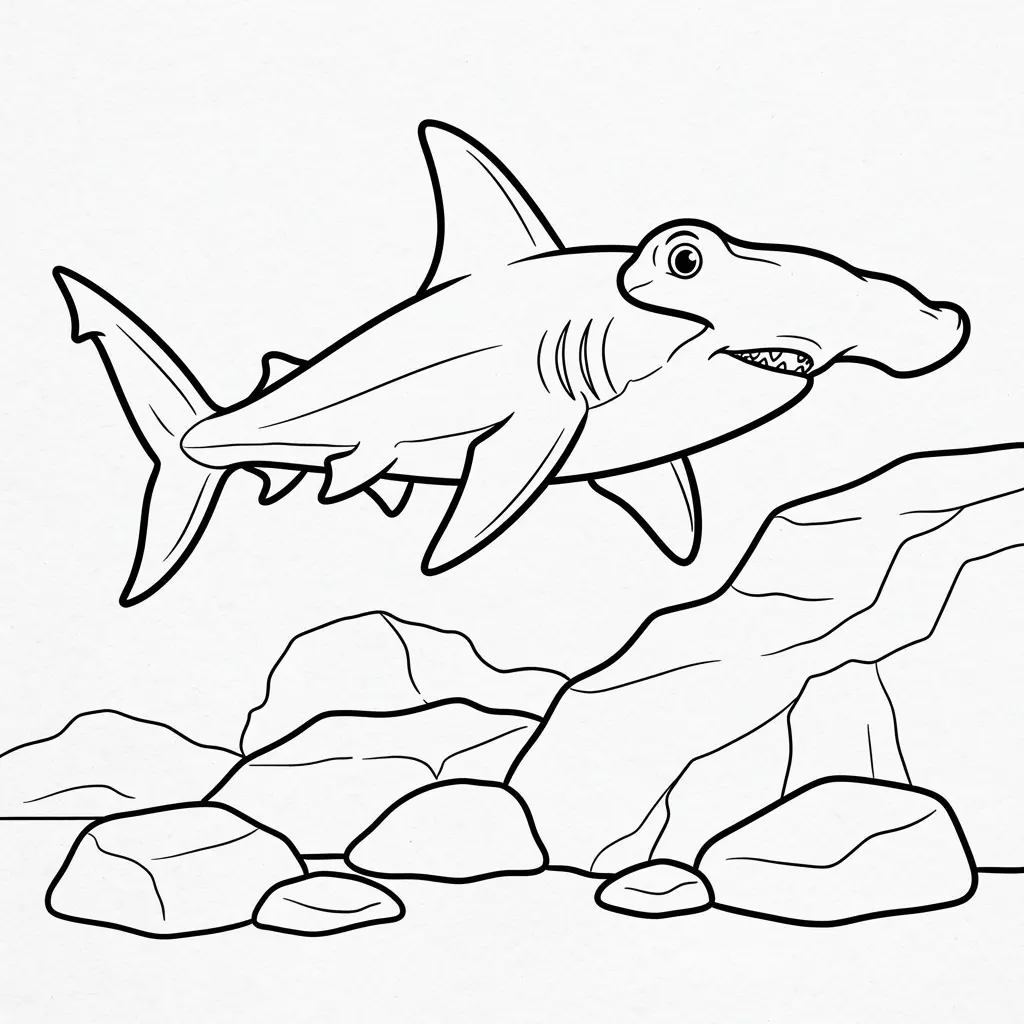
This patrol scene feels full of motion from the first line, yet it stays friendly for young artists. Start with a broad, hammer-shaped head and alert eyes, then angle the shark’s body forward so it looks ready to glide, matching the dynamic style of our ocean coloring pages.
Use thick outer lines around the shark, leaving its head clear and easy to recognize. Add coral branches below, scattered fish pointing in different directions, and tiny drifting particles across the open water. Long sunbeams from above and soft shadow shapes give the reef depth. Sound complicated? It is not.
I love using blue-gray for the shark and bright colors for the fish because the subject stays easy to spot. Keep background marks simple so they support the action instead of crowding the outline. Leave open water around the shark for smooth coloring, and enjoy the tense little story taking shape.
15. Elegant Mermaid Exploring Coral Castle
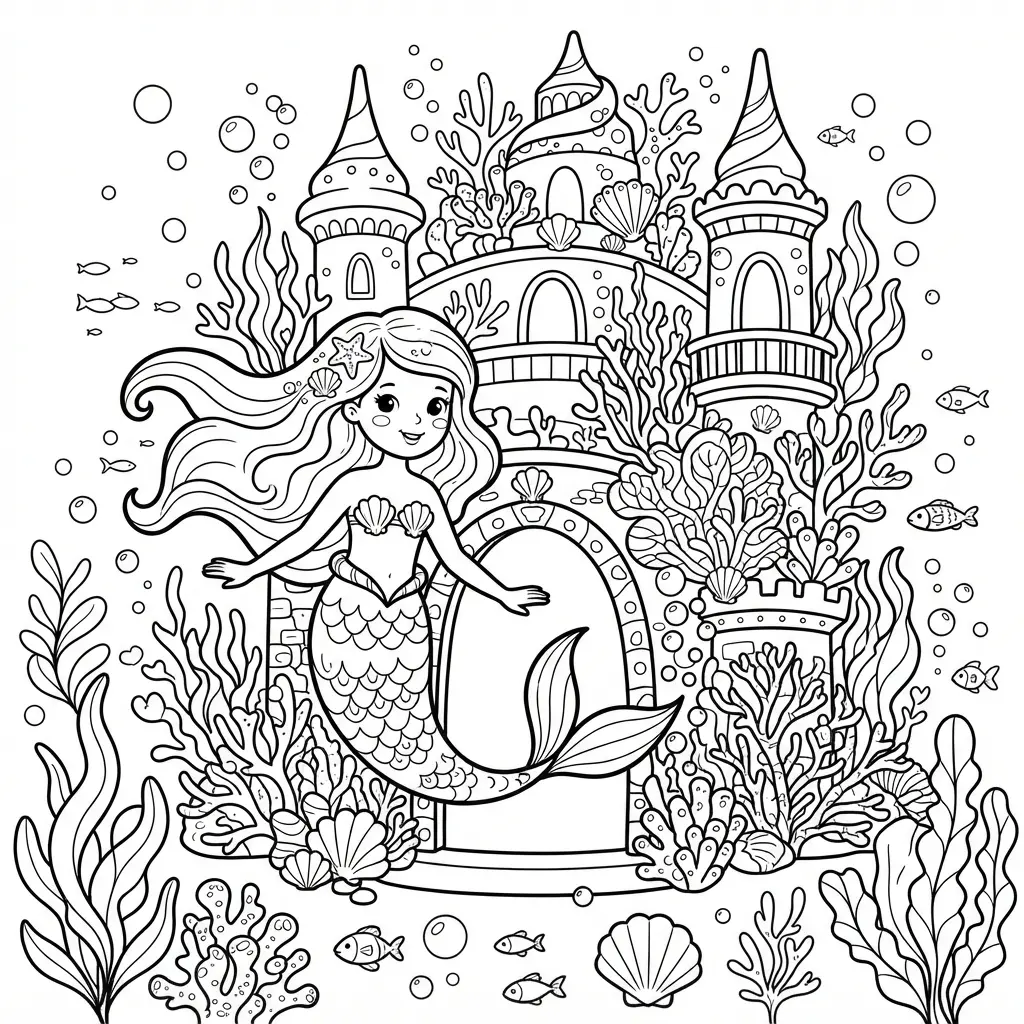
This one is my favorite because it feels like a royal underwater quest without losing its playful charm. Ever wondered how to make the scene feel graceful? Place the mermaid in a curved pose, with flowing emerald hair and a turquoise tail guiding your eye toward the castle, much like fantasy-themed ocean coloring pages. Add a delicate golden lantern to give her hand a clear purpose.
Build the setting with coral castle details, including tall towers, pearl-covered arches, shell mosaics, and hidden wall carvings. Surround the structure with glowing sea flowers and schools of colorful tropical fish. Soft sunbeams from above will give the page a gentle cinematic mood.
I love how each section offers a fresh color choice, from gold lantern light to coral accents and pearly highlights. Keep the darkest shades near the castle openings so the mermaid stays easy to notice. Your finished scene will feel graceful, rich, and full of underwater charm, just like premium ocean coloring pages.
16. Clownfish Hiding in Sea Anemone
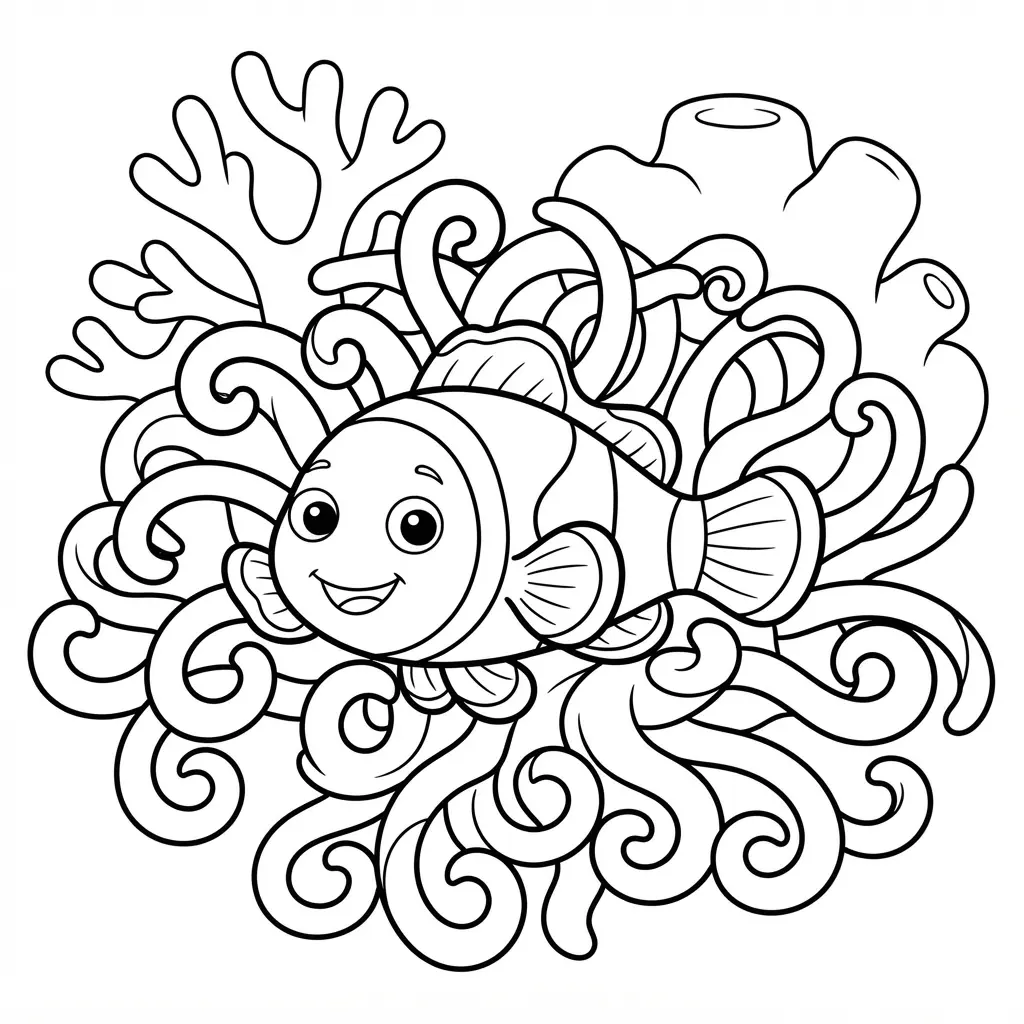
The finished scene shows an orange-and-white clownfish peeking through curling tentacles, with blue water, coral, bubbles, and pale sunlight behind it. Doesn’t this peaceful setting invite a happy coloring session? Begin with curved tentacle strokes to keep the anemone soft and flowing, a method that pairs perfectly with ocean coloring pages.
Color the fish orange while leaving its white bands clean. Add purple and pink across the sea anemone, using lighter touches near the tips for contrast. I love how the fish’s small face becomes the clear focal point among the flowing shapes.
Finish the reef with bright coral colors, pale yellow or white rays, and light blue bubbles. Fine-tip crayons, pencils, or markers suit the tiny textures. Keep the water blue, but vary pressure near the sunlight so it doesn’t look flat. Trust me, preserving the orange-and-white sections keeps the clownfish recognizable.
17. Spiny Lobster Near Rocky Cave

Many people think a spiny lobster needs a busy, detailed background, but a few strong shapes make this winter ocean scene coloring pages enjoy. Start with bold outer lines for the lobster, then trace its long antennae, legs, and textured shell. Place the body beside a rocky cave opening, leaving open space around the antennae so each line stays clear. Is not the quiet space what makes the lobster stand out?
Use darker marks inside the cave and lighter strokes across the rocks to show depth without filling every area. Add small dots and short curves to the shell, then choose warm reds, oranges, or sandy browns for a friendly ocean scene. I love how this page lets you switch between careful detail and broad, relaxed coloring. Trust your choices and enjoy the finished underwater picture.
18. Deep Sea Anglerfish Glowing Lure
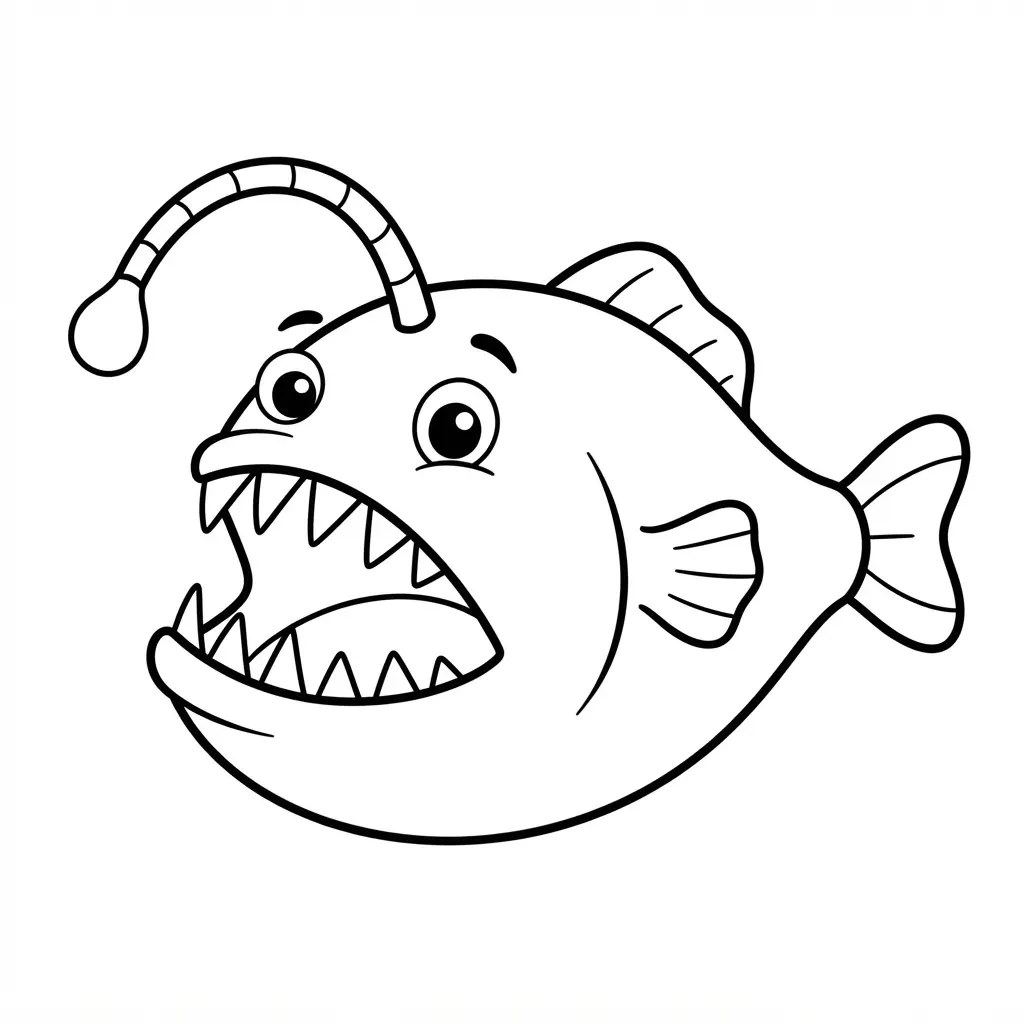
Start with a wide, open mouth, then add rows of sharp teeth beneath a thin, curved illicium. Keep the fishing rod rising from the head, with a small esca hanging directly above the mouth. Use dark ocean space around the fish, leaving room for blue-green color near the lure.
Color the esca as a tiny glowing point, not a large ball, and give the body muted browns or gray-browns. Bioluminescent bacteria inside the lure create the glow, while symbiosis gives the fish a useful hunting partner. I love how this page turns a strange body feature into a clear lesson. Does the lure seem close enough to bring prey within reach? Add a few curious fish nearby for extra action.
19. Group of Tiny Schooling Fish
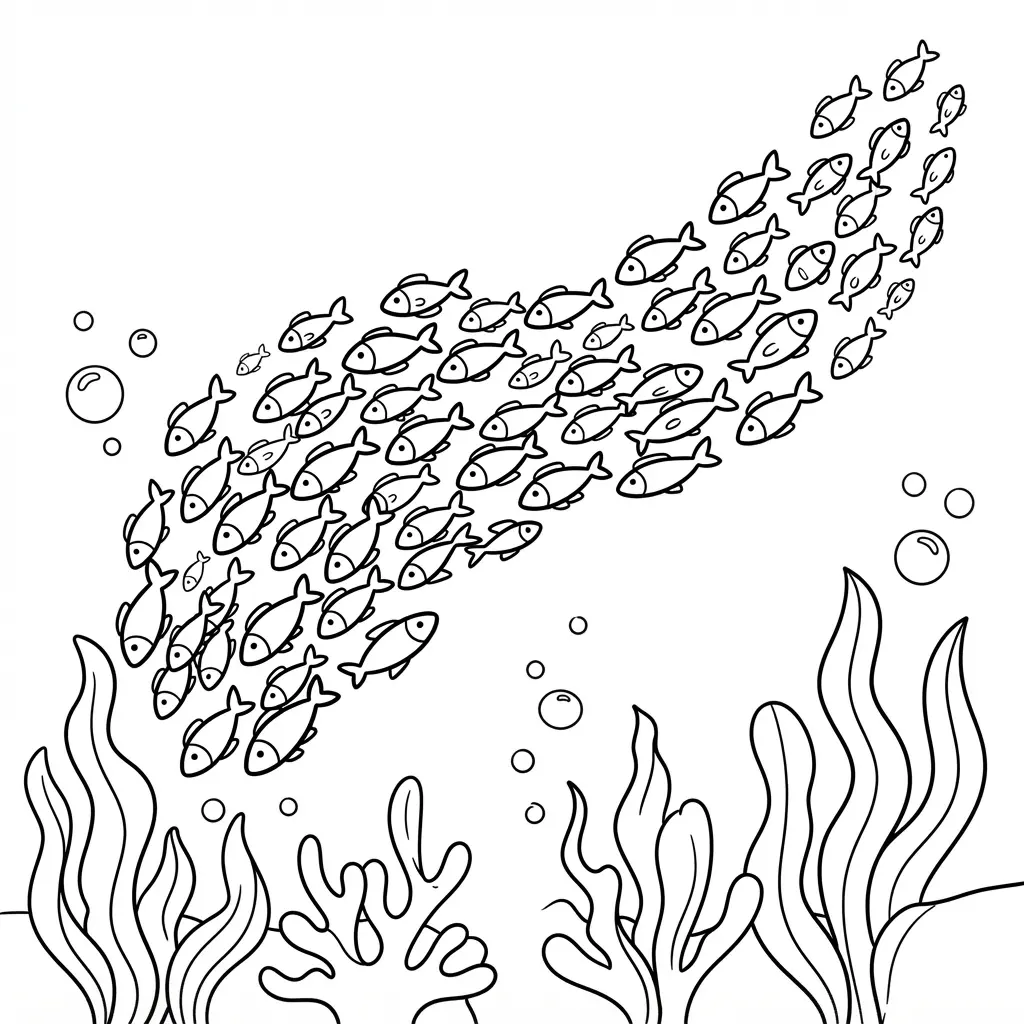
Ever wondered how a cluster of tiny fish gives an underwater scene so much motion? Start with simple fish outlines, using oval bodies, triangular tails, and little fins. Draw each fish close to its neighbors, then point most noses in one shared direction. I love varying a few body angles and tail positions, since small changes keep the shoal from looking stiff.
Leave clear gaps between the fish so every shape stays easy to color, especially for young artists. Repeated forms help children practice patterns while adding lively detail to printable coloring pages. Avoid piling too many bodies on top of one another, or the outlines will become hard to follow. Add a few fish slightly higher or lower, and feel proud when the group looks full of coordinated movement.
20. Sleek Orca Pod Swimming Fast

This scene feels fast before you add a single color. Start with the lead orca angled forward, then place smaller pod members at varied heights and distances rather than in a neat row. Use streamlined body shapes, tall dorsal fins, curved waves, bubbles, and spray lines behind each various sea animal coloring pages forward motion. Filtered sunbeams and deep water give the page a dramatic underwater setting.
Sound complicated? It isn’t. I love filling the orcas with black while leaving their bellies and eye patches white, then adding blue layers around them for clear contrast. Keep the lines behind the pod loose and angled in one direction, so every mark supports speed. This ocean scene feels satisfying because the whole group seems to move together. Trust me, your finished page will feel full of energy.
21. Giant Squid Near Shipwreck Ruins
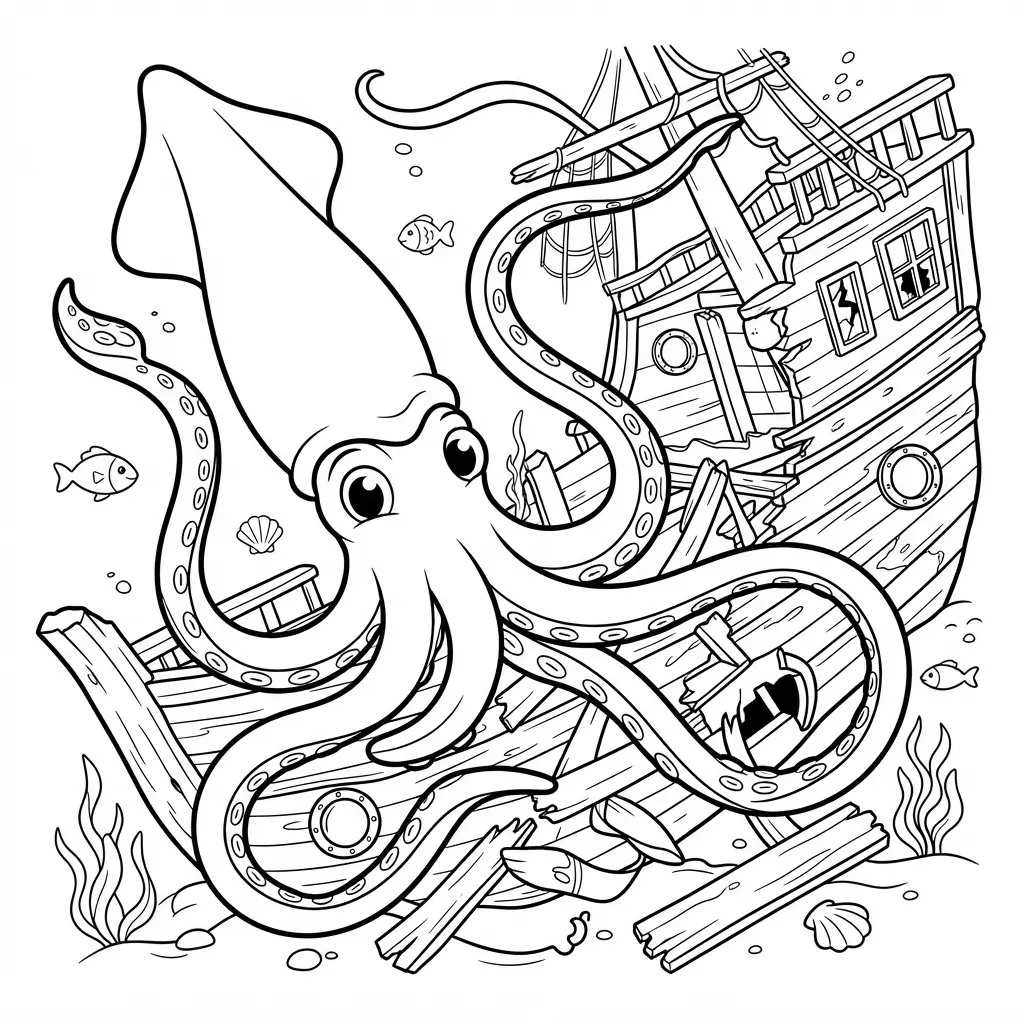
I love this scene because the giant squid gives ocean coloring pages a bold focal point. Place shipwreck ruins low on the page, with broken masts and angular beams behind the squid. Doesn’t the contrast between its enormous tentacles and tiny fish make the whole picture feel full of motion?
Use thick outlines to separate each curling tentacle from the wreckage, then leave open circles across the body for glowing spots. Add soft sunlight beams from above, a deep blue background, and a few drifting particles, keeping smaller details sparse. My go-to tip is to color the squid in a bright shade against blue-gray water, so its glowing points stand out at once.
22. Curious Crab Walking on Beach

The crab’s little legs press into warm golden sand as one raised claw reaches toward the foamy edge. Gentle waves curl behind it, while shells, tiny footprints, and bright water flecks fill the shoreline. Sound complicated? It isn’t. Start with a clear crab outline, then add curved shell lines, small grains of sand, and short marks for the footprints. Use pale yellows and peach tones for the late-day glow, with soft blue water and a deeper shade beneath each wave.
I love how this scene gives your eyes plenty to explore without crowding the page. Keep the crab’s body darker than the sand so its curious pose stands out, and enjoy the cheerful seaside feeling.
23. Peaceful Manatee Grazing on Grass
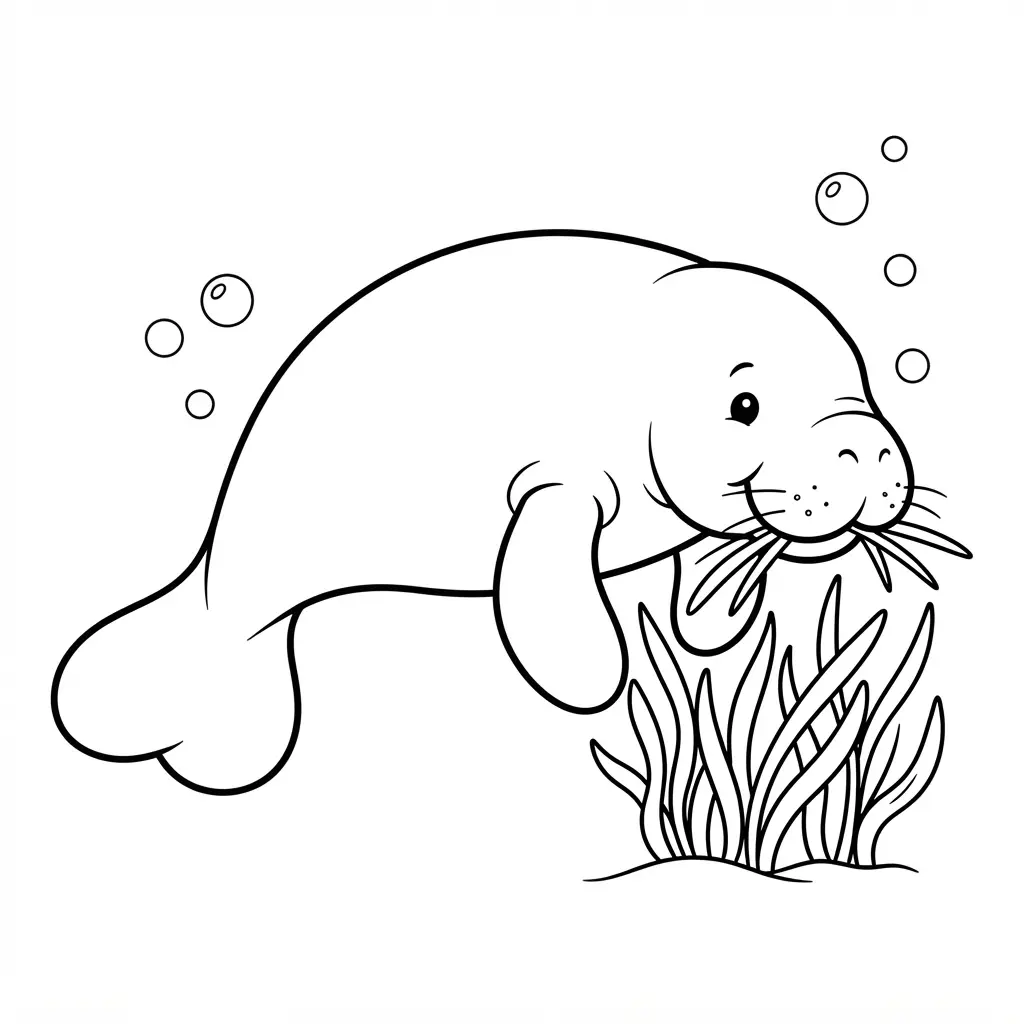
Many artists crowd underwater scenes with extra details, yet serenity comes from open space. Place the manatee in the center and leave calm water around its rounded body. Central manatee placement keeps the grazing action easy to read.
Draw lush grass beneath the animal, with a few blades curving around its nose to show gentle feeding. Add clear river water, soft rays filtering from above, and tiny bubbles near its flippers. Use underwater grass details for green coloring areas, while soft blue tones fill the water and pale cream marks suggest sunlight.
I love how this balanced scene gives children an easy, relaxing wildlife picture to color. Keep the outlines open and uncluttered, so each area feels comfortable to fill. Isn’t the quiet mood satisfying? Use gentle gray or brown tones for the manatee and enjoy the peaceful finish.
24. Colorful Narwhal with Long Tusk

Grab your brightest crayons and fill the narwhal’s large body with bands of pink, yellow, green, and blue. Keep the friendly eyes and round smile clear so its cheerful face stays easy to see.
Trace the long tusk with spiral tusk lines. Follow each curve from base to tip, then add soft gray or pale blue shading along one edge. Sound complicated? It isn’t.
Surround the narwhal with sparkling bubbles, coral reefs, seaweed, and playful fish. I love adding different shades to each background feature, since every small area gives the underwater scene more life.
Finish with colored pencil highlights along the narwhal’s back and tusk. The large animal stays the focal point, while the rainbow palette makes every detail cheerful. Feel proud when your ocean scene comes together.
25. Submarine Exploring Deep Ocean Floor
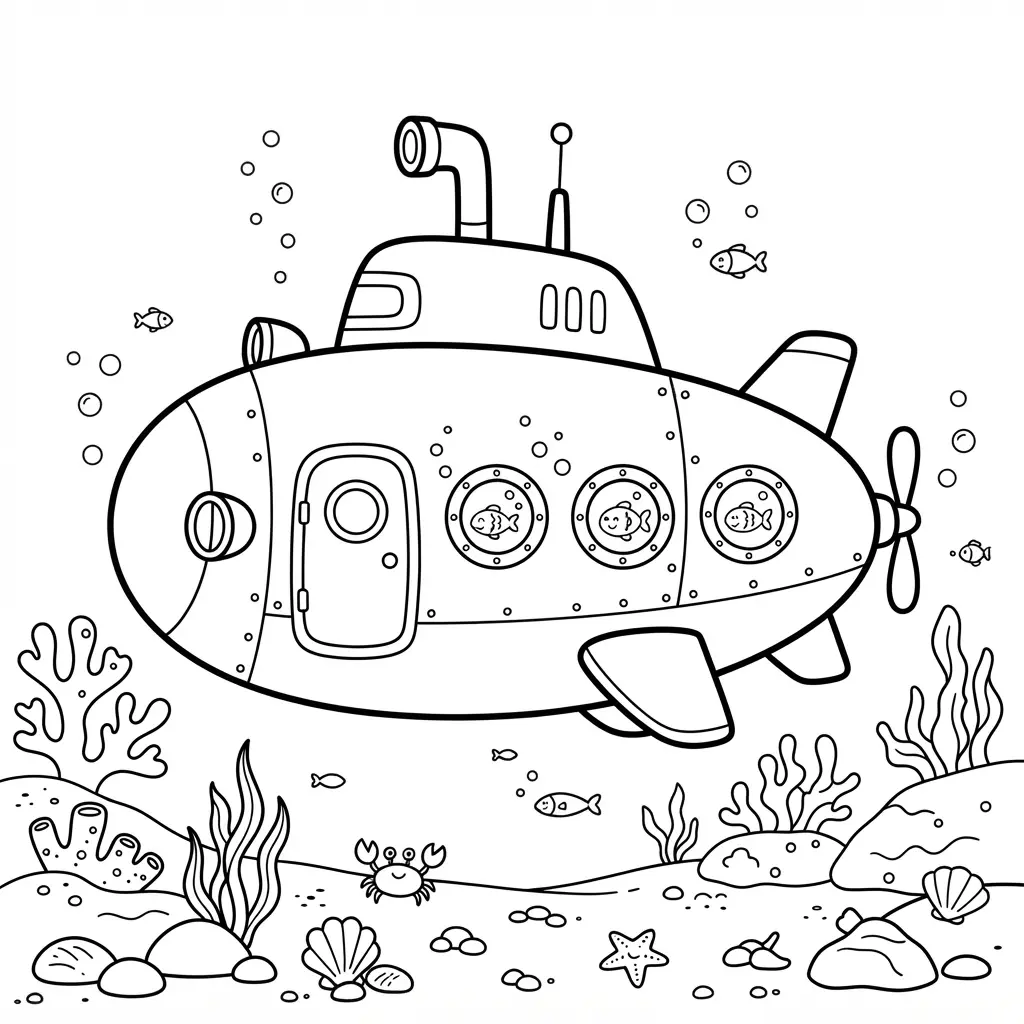
How does a small submarine reach the darkest parts of the sea? Start with the research submarine in the foreground, giving its hull a clear outline and rounded windows. Add two blue-white light beams angled toward the seafloor, then fill the lower area with cliffs, coral, hydrothermal vents, and old shipwreck pieces.
Scatter a few glowing creatures and bubbles around the vessel, leaving open water between each group. I love adding smaller shapes near the top because they make the distance feel wide without crowding the scene. Use deep navy, blue, and soft turquoise for the water, with pale accents around the lights.
Keep the submarine brighter than its surroundings so every section stays easy to color. This contrast makes the page feel adventurous and gives you plenty of small details to enjoy. Trust me on this one: leave some dark space, and the finished ocean scene will feel wonderfully deep.
Turning Finished Pages Into Marine Vocabulary Displays
Mount each finished page on a sheet of colored card and place a clear label beneath the main animal to create a readable marine vocabulary display. Large lettering helps younger children connect words with pictures, while older classes might add terms for fins, tentacles, shells, coral, kelp, or sandy ocean floors. Keep labels short and leave white space around them so the line art stays visible from across the room. Self-adhesive laminating film protects crayon and colored-pencil pages from fingerprints during repeated handling. For a reusable classroom board, attach pages with removable adhesive rather than permanent glue, which supports seasonal swaps without tearing the paper. Grouping pages by animal, habitat, or body part gives children a clear way to compare sea life vocabulary during discussion. A small title card helps visitors understand the display’s learning focus.
Conclusion
So how was your creative session? A page filled with sea animals gives children room to show their favorite colors, notice animal shapes, and talk about life beneath the waves. Ocean coloring pages also bring a personal touch to classroom learning, since each child chooses a different palette and adds small details to the scene. I suggest placing finished pages beside a simple ocean book or lesson sheet, then inviting children to share one fact about the animal they colored. Keep a small folder for favorite pieces, especially if a student wants to revisit a turtle, shark, or coral reef later. Look at what you have made, since steady coloring and careful choices show real skill. Pick one more page for your next session, gather the supplies, and keep making time for sea life art together.
FAQs
Q: What age group suits these printable pages?
A: Simple animal outlines suit preschool children and early readers. Detailed habitats and realistic creatures suit older elementary students.
Q: Which supplies work best for printed sea life pages?
A: Crayons and washable markers suit younger children. Colored pencils work well for small reef details and creature markings.
Q: How do teachers use ocean pages in class?
A: Pair each page with a short animal fact or habitat lesson. Students also benefit from labeling fins, shells, tentacles, and reef plants.
Q: How do I keep printed coloring sheets from looking muddy?
A: Choose pages with clear outlines and open spaces. Print on clean, bright paper and let marker ink dry before stacking sheets.
Q: Which sea animals are easiest for beginners?
A: Dolphins, turtles, starfish, crabs, and pufferfish have easy-to-recognize shapes. Begin with larger pictures before moving to reef scenes.