
Paper Weight For Clean Marker Coloring
Choose 120 gsm printer paper for crayons and light washable markers, while 200 gsm cardstock handles saturated marker layers with less warping. Standard copy paper suits a quick coloring session, though broad marker strokes often show through onto the next page. Heavier paper keeps bold outlines crisp when children fill large fish bodies, fins, bubbles, and seaweed. This thickness protects your fish coloring pages during long sessions. Smooth cardstock helps marker tips glide across open sections without catching on rough fibers. Place a spare sheet beneath the page to protect the table and the following sheet from ink transfer. Avoid glossy photo paper, since marker ink dries slowly and smears under small hands. For watercolor pencils, 250 gsm watercolor paper gives wet color room to spread without buckling. Store unused pages flat, keeping fish coloring pages ready for use, so curled corners do not disrupt printing.
Color Coding Patterns For Young Colorists
Assign one color family to each repeated pattern, such as warm reds for stripes and cool blues for scales, so young colorists spot relationships quickly. Keep three or four related shades beside the page instead of presenting a full pencil case. A pale base with one darker edge gives scales and fins clear separation without demanding tiny, exact coloring. Give bubbles lighter blue than the surrounding water, while coral and seaweed use contrasting greens, pinks, or oranges. Large outlined sections suit jumbo crayons and washable markers, while colored pencils handle narrow stripes and enclosed scale marks. Add a small color key near the margin for children still learning visual matching. Leave eye highlights white, since a dark fill removes the fish’s friendly expression. Repeated patterns feel orderly when neighboring areas never share identical intensity, a habit that improves fish coloring pages instantly.
1. Simple Cartoon Clownfish Bubble Scene
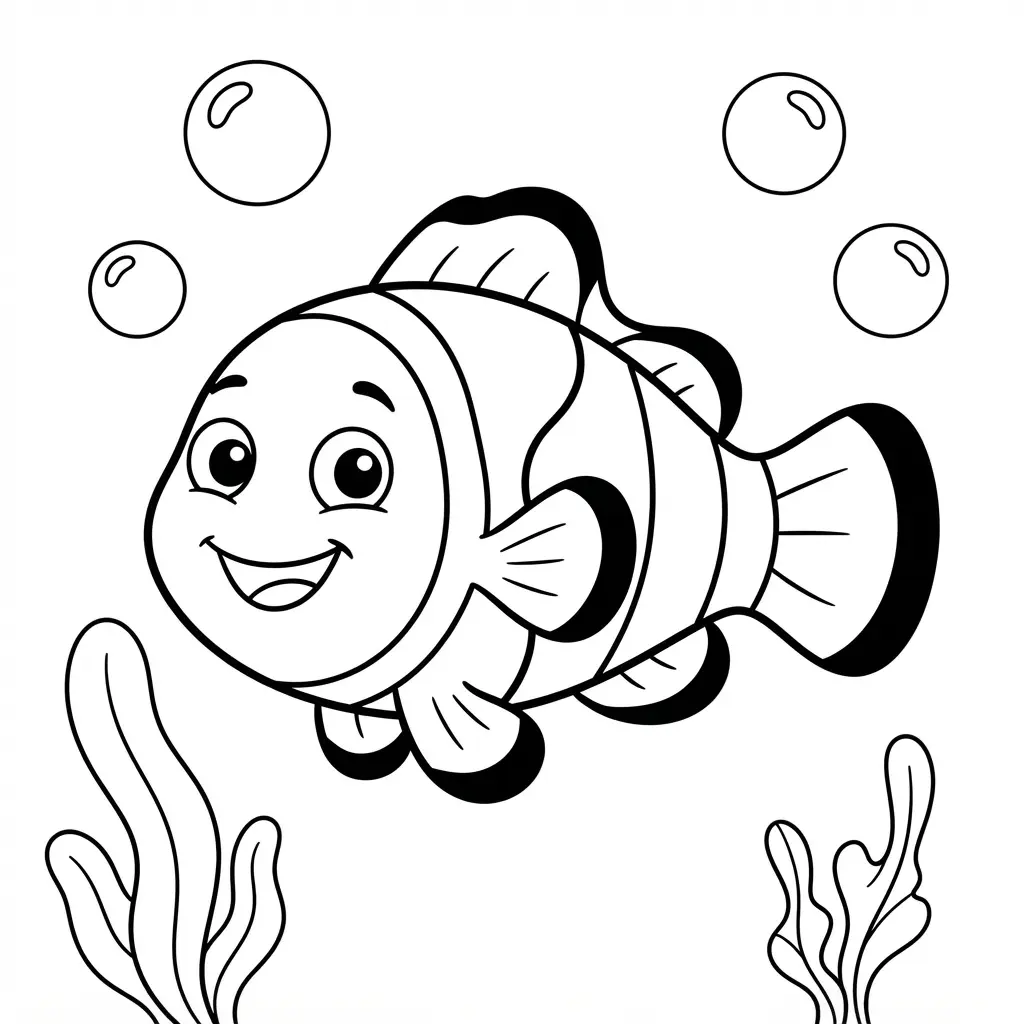
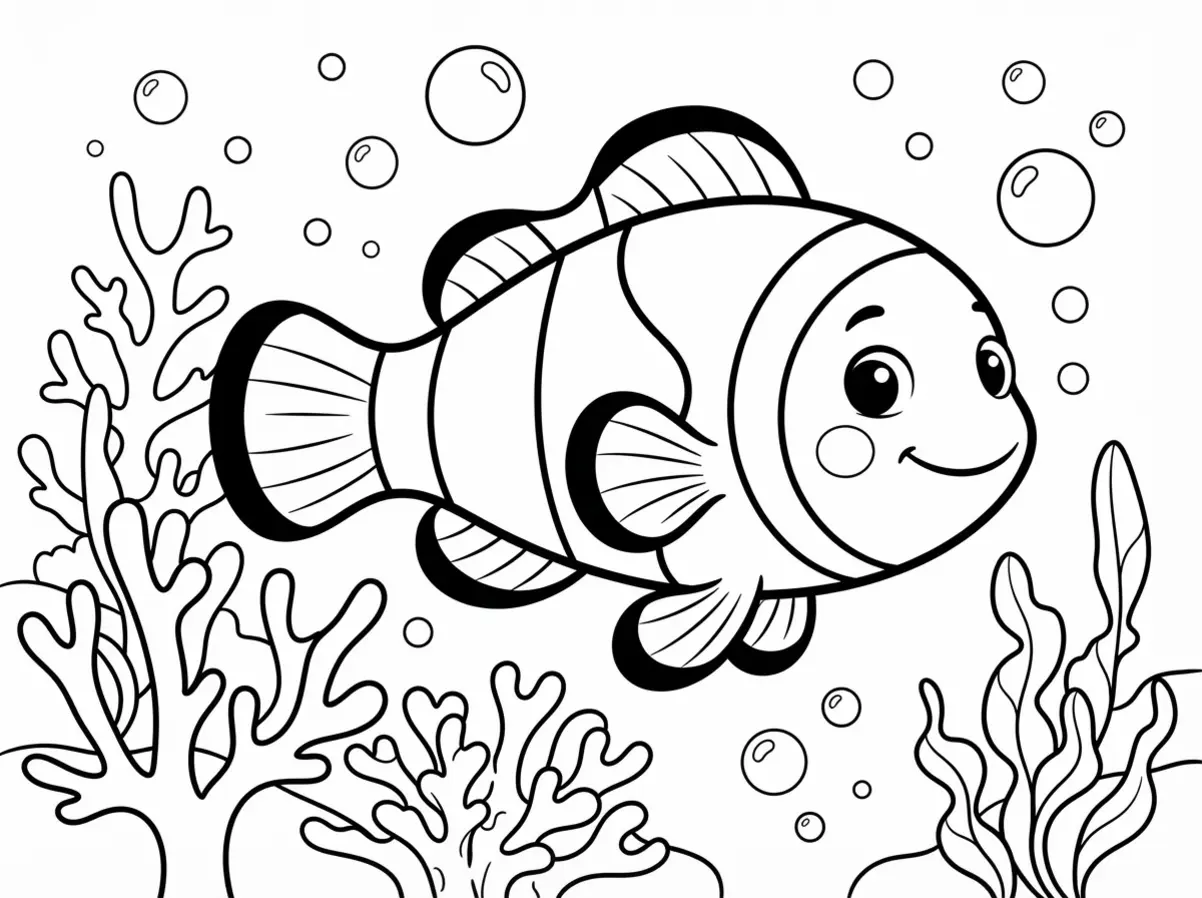
Ever tried coloring a cheerful clownfish scene with bubbles rising overhead? Start with the rounded fish as your main subject, then fill its body with orange-and-white stripes separated by bold, easy-to-follow outlines. This approach works perfectly for fish coloring pages. Give it large friendly eyes and a small smile so the page feels welcoming for young artists. I love how the bubbles guide your eyes upward while soft blue water keeps the picture calm. I always pick bright markers for fish coloring pages like this one. Add a few colorful coral shapes and green sea plants, leaving open space around every section for comfortable coloring. Keep the underwater background uncluttered, and your scene will stay clear, playful, and satisfying from the first colored stripe to the last bubble.
2. Detailed Tropical Angelfish Reef Backdrop
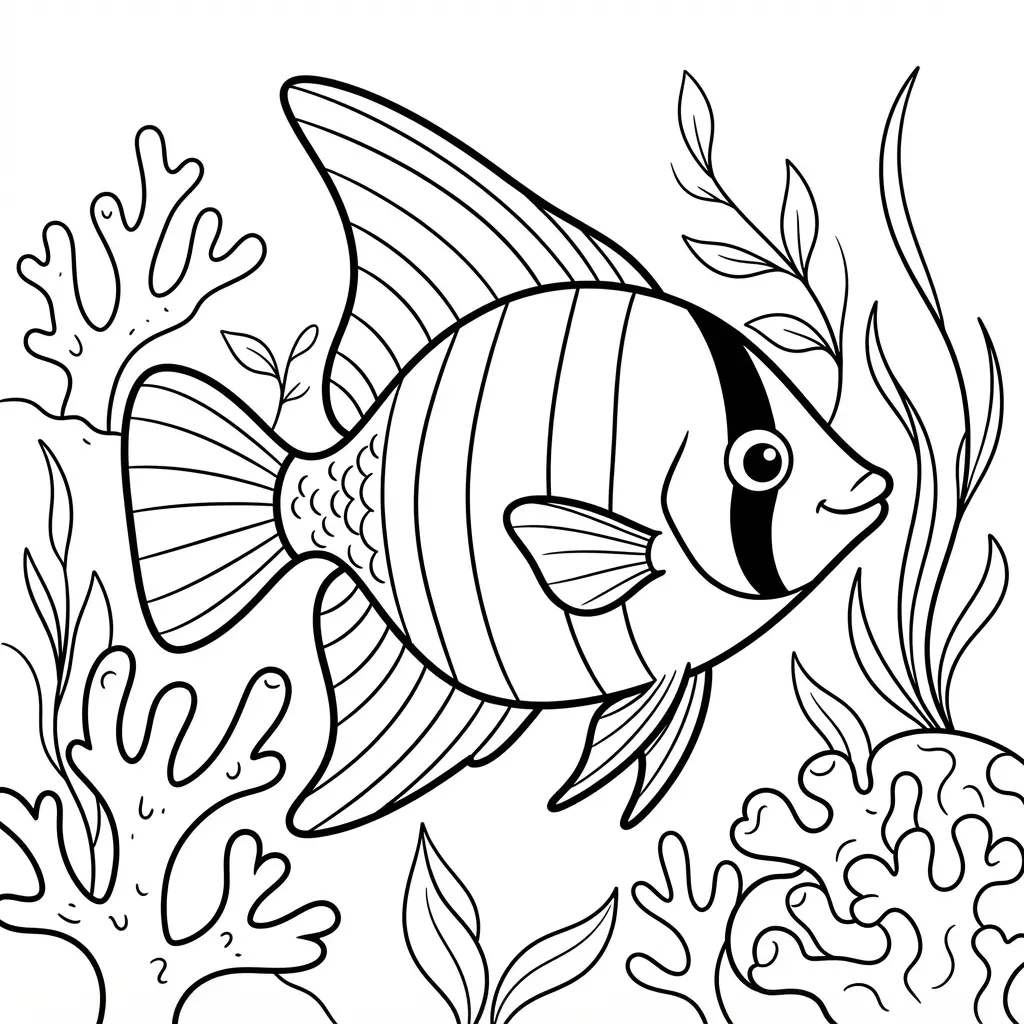
This one feels rich and lively, yet the main fish stays clear. Start with a foreground angelfish featuring long fins, clean stripes, and a proud profile. Sound complicated? It is not. Keep its outline sharp while surrounding it with branching coral and small reef details. Such layering elevates fish coloring pages significantly. Build outward with a layered reef arrangement. Place sea fans, anemones, sponges, rocks, and waving plants in the middle area, then add tiny schools of fish farther back. I love adding turquoise, emerald, purple, orange, and pink because each patch gives the scene a cheerful tropical feel. Finish with filtered sunlight rays, soft shadows, shimmering water marks, and floating particles. Let the distant reef fade into blue so your foreground subject stays strongest. This contrast makes the design feel immersive and gives you plenty of small shapes to enjoy, which defines quality fish coloring pages.
3. Geometric Patterned Koi Pond Design
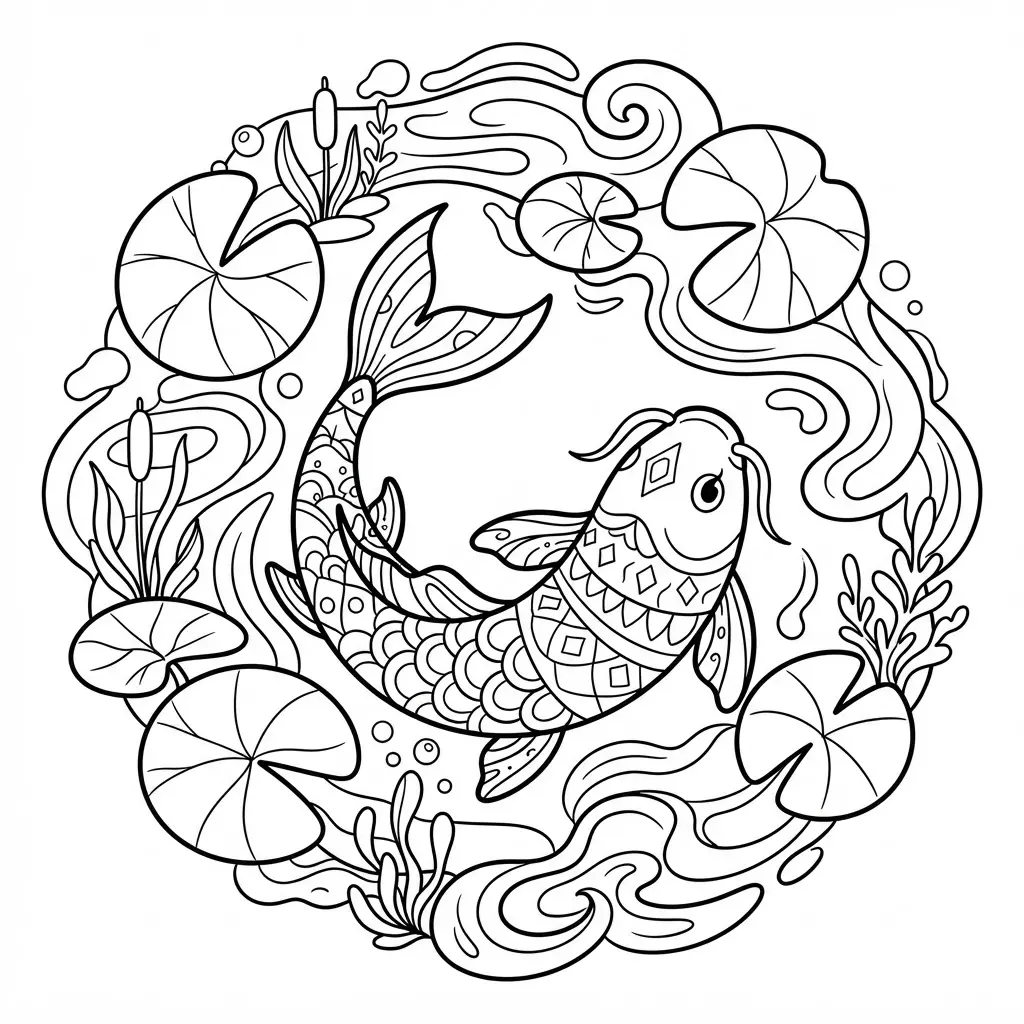
I love this layout because orderly lines make the koi feel lively without making the page messy. Ever tried building a pond from a rectangle, hexagon, or connected polygon? Start with a symmetrical pond outline, then add stepped edges, mosaic tiles, and a narrow waterfall. Fish coloring pages often need this breathing room. Leave a wide, open water area so each fish has room to curve through the scene. Fill the pond with deep blue or slate gray, then add white stone, copper details, and natural wood around the border. Place flat stepping stones, clipped shrubs, bamboo, or ornamental grasses in matching positions on both sides. Proper spacing keeps the layout tidy. I find the repeating angles satisfying because they give every section a clear coloring space. Keep plant shapes simple, and let the koi colors take center stage.
4. Minimalist Betta Fish Flowing Fins

Long, silky fins curl behind the betta in smooth waves, with pale pink, lavender, and blue resting against a quiet white background. Isn’t it satisfying to see movement created with so few lines? Start with clean curved outlines, then extend each fin in gentle, narrow waves rather than sharp points. This technique suits fish coloring pages beautifully. Color the body with light pressure, layering colored pencils or crayons until the pastel shades feel soft and even. Keep the interior markings sparse, and leave the background white or tint it with the faintest gray-blue so the fish stays in focus. I love this style because the open space makes every graceful fin easy to enjoy. Trust me, a fine-tip marker works best for touching up broken outline sections without filling the page with extra detail. Such precision defines the best fish coloring pages.
5. Friendly Pufferfish Spiky Outline Sketch

A common mistake is giving pufferfish long, sharp spikes, but short, rounded points keep the face sweet and child-friendly. Is it tricky to balance them? Not at all. Start with a round body outline, then place small spikes at even intervals around its edge. Balanced spacing improves fish coloring pages noticeably. Add two large cheerful eyes, a tiny smiling mouth, and short rounded fins inside the clean black line. Keep the background white and leave every section free of shading, so crayons, pencils, and markers have open space. I love how the simple face makes this underwater friend feel welcoming without extra detail. Simplicity is key for fish coloring pages. Trust me on this one: pause after each few spikes and check the spacing, then enjoy a happy, easy-to-color result.
6. Realistic Seahorse Aquatic Plant Frame
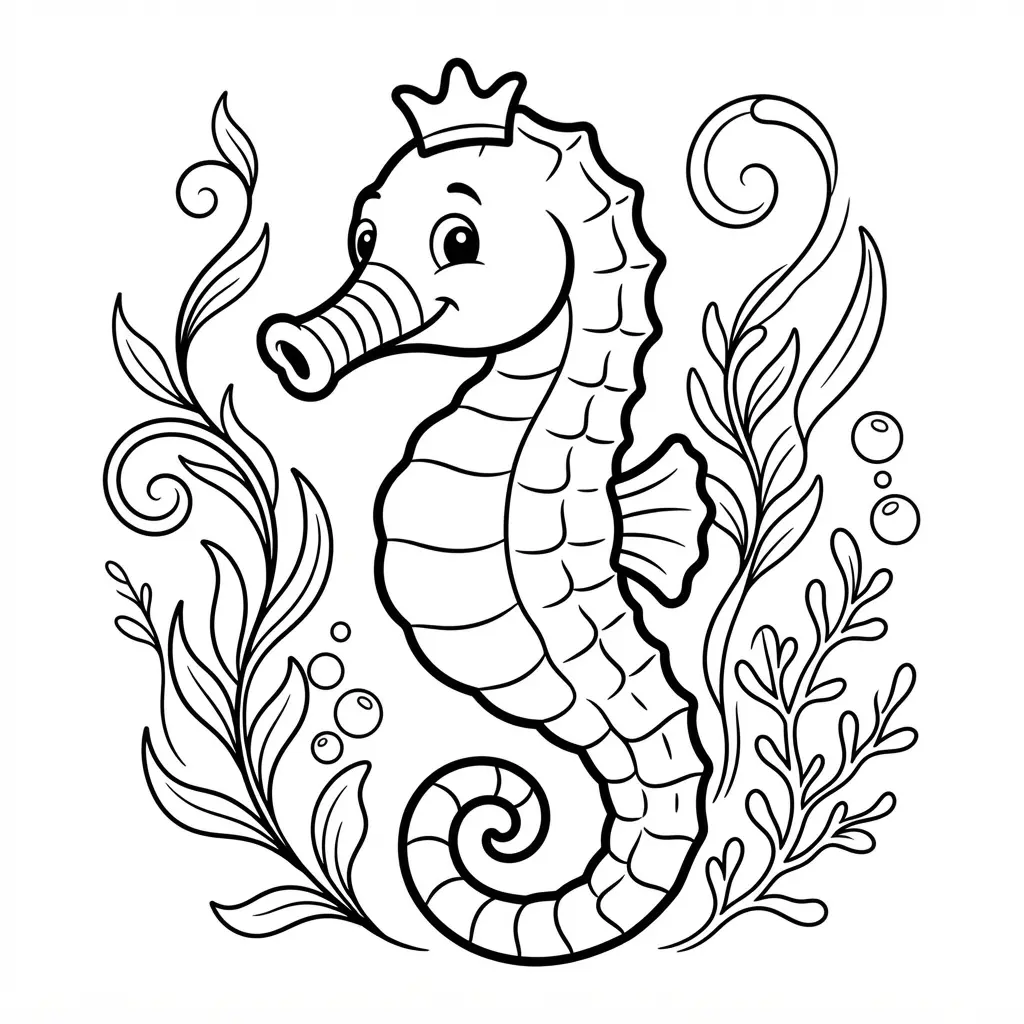
Start with the seahorse focal outline, giving its ridged spine, expressive eye, textured body, and curled tail clear attention. Wrap the tail around a slender plant, keeping its pose gentle and natural. This natural curve guides the artwork effectively. Ever tried giving a small sea creature this much detail? I love how its shape invites careful coloring without feeling stiff. Add sea grass, soft coral, and extra aquatic plants around the lower and side edges. Keep the middle open, then add clear turquoise water, drifting particles, soft sunbeams, and subtle reflections behind the subject. Natural greens and subdued coral tones help the seahorse stay in focus. Protect the clean layout with an open center space for artwork or lettering. This negative space helps fish coloring pages shine. Give the seahorse finer lines than the surrounding vegetation, so each detail has room to stand out. This balance feels calm and satisfying, especially during slow shading sessions. Finish with gentle color changes and enjoy the peaceful underwater effect.
7. Playful Goldfish Bowl Desktop Illustration

Have you tried turning a fishbowl into the star of a cozy desktop scene? Start with a round bowl outline on a soft brown desk, then add an orange goldfish, leafy green plants, bright pebbles, a tiny treasure chest, and rising bubbles. Clear boundaries are essential for fish coloring pages. Keep the fish easy to see, leaving open water around its fins. I love how the surrounding details tell a gentle story: books, a succulent, pencils, sticky notes, and a warm lamp frame the bowl without stealing attention. Add aqua glass accents, soft reflections, gentle shadows, and a touch of paper texture for a hand-drawn look. Keep light reflections subtle so the contents stay clear, then color with golden orange, aqua blue, coral, cream, and soft brown. Such subtle highlights complete fish coloring pages nicely. Feel proud when your scene comes together.
8. Majestic Shark Ocean Floor Scene

This scene puts a great white shark front and center, gliding above a richly filled ocean floor. Start with a large shark outline, then surround it with swaying kelp, coral clusters, and scattered seashells. Add small fish farther back so they support the sense of distance without stealing attention. Layered depth enhances fish coloring pages tremendously. I love how the shark’s smooth body contrasts with the busy seabed. Isn’t it satisfying to make the water feel deep with simple color choices? Use dark blue around the edges, brighter blue near the shark, and warm coral shades below. Leave clear spaces for sunbeam lines filtering through the water, with a few rays crossing the shark’s body. These separated outlines give every part room for careful coloring and make the finished scene feel full of ocean life. Such roomy design is why fish coloring pages remain so popular. Trust me, this one looks fantastic on the page.
9. Detailed Mandalas Fish Silhouette Art
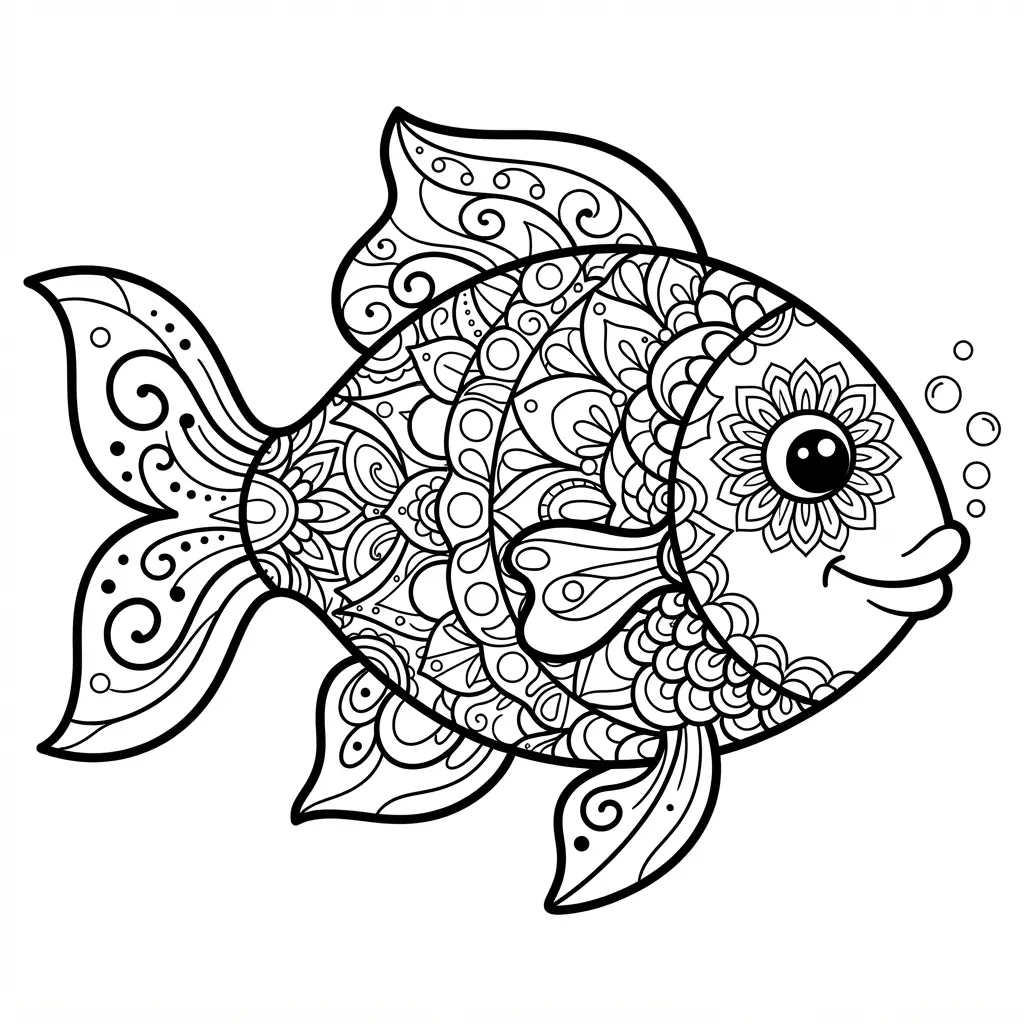
This is one of my favorite fish designs because the bold shape feels calm while the inner pattern keeps my hand busy. Begin with a bold outer contour, then give the fins smooth, flowing edges so the fish is easy to recognize. Fill the body with mirrored petals, geometric forms, curling lines, and small ornamental shapes. Intricate patterns elevate the artwork wonderfully. Sound complicated? Keep every mark inside the silhouette and leave the background plain, so the centered composition stays crisp. Clean framing defines fish coloring pages for me. I love how the clear boundary gives you freedom to use different colors in each section without losing the fish shape. Use a fine-tip marker for delicate details, then enjoy the satisfying finish.
10. Cute Narwhal Arctic Water Sketch
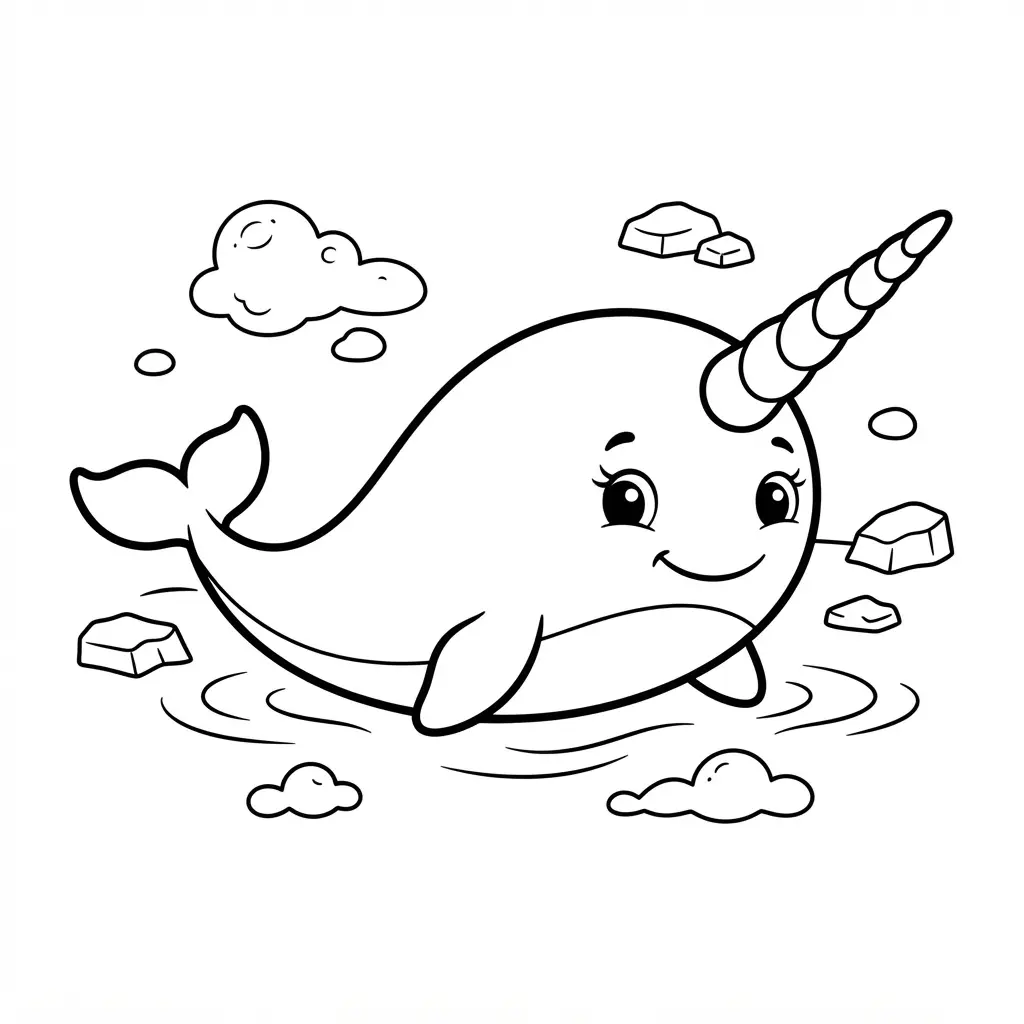
Soft polar-blue water surrounds a round baby narwhal, while tiny bubbles rise beside its short spiral tusk. Snowy mountains and floating ice chunks sit lightly behind the friendly face. Isn’t that satisfying? Start with delicate pencil outlines, keeping the body smooth, small, and rounded rather than angular. Soft strokes suit the project perfectly. Add gentle waves and bubbles around the narwhal, then brush in pale watercolor shading for clear Arctic water. Leave open space around the character so the eyes and tusk stay easy to see. I love how this simple children’s-book style feels calm and welcoming for fish coloring pages. Pro tip: keep the background lighter than the narwhal, and your finished page will feel fresh, cheerful, and easy to color.
11. Spotted Ray Gliding Sea Floor
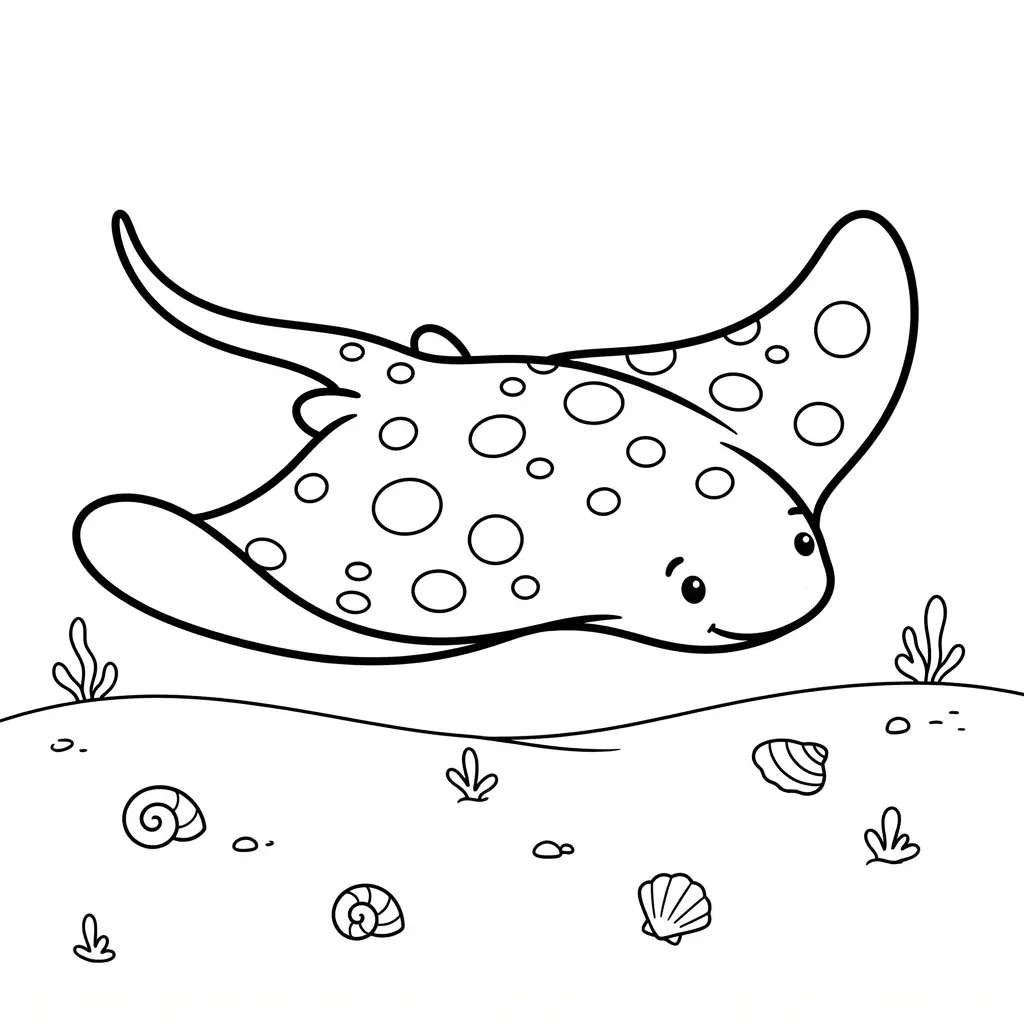
Many artists make a ray look still by drawing a flat body with no sense of motion. Does a smooth lower edge and a lifted wingtip suggest movement? Start with a broad, rounded outline and add a curved underside line close to the sea floor. Keep the tail trailing behind, with open space beneath the body for a clean feeling. Use soft bands of blue, gray, or sandy brown, then place small dark spots across the back without making every mark identical. Gentle contrast works well for fish coloring pages. A colored pencil blend helps the body look gentle while simple rocks and sea plants anchor the scene. I love this page because the calm pose leaves room for careful color choices. Relaxation is the goal of most fish coloring pages. Let the ray glide across your page, and feel proud of the peaceful result.
12. Tiny Guppy School Coral Cluster
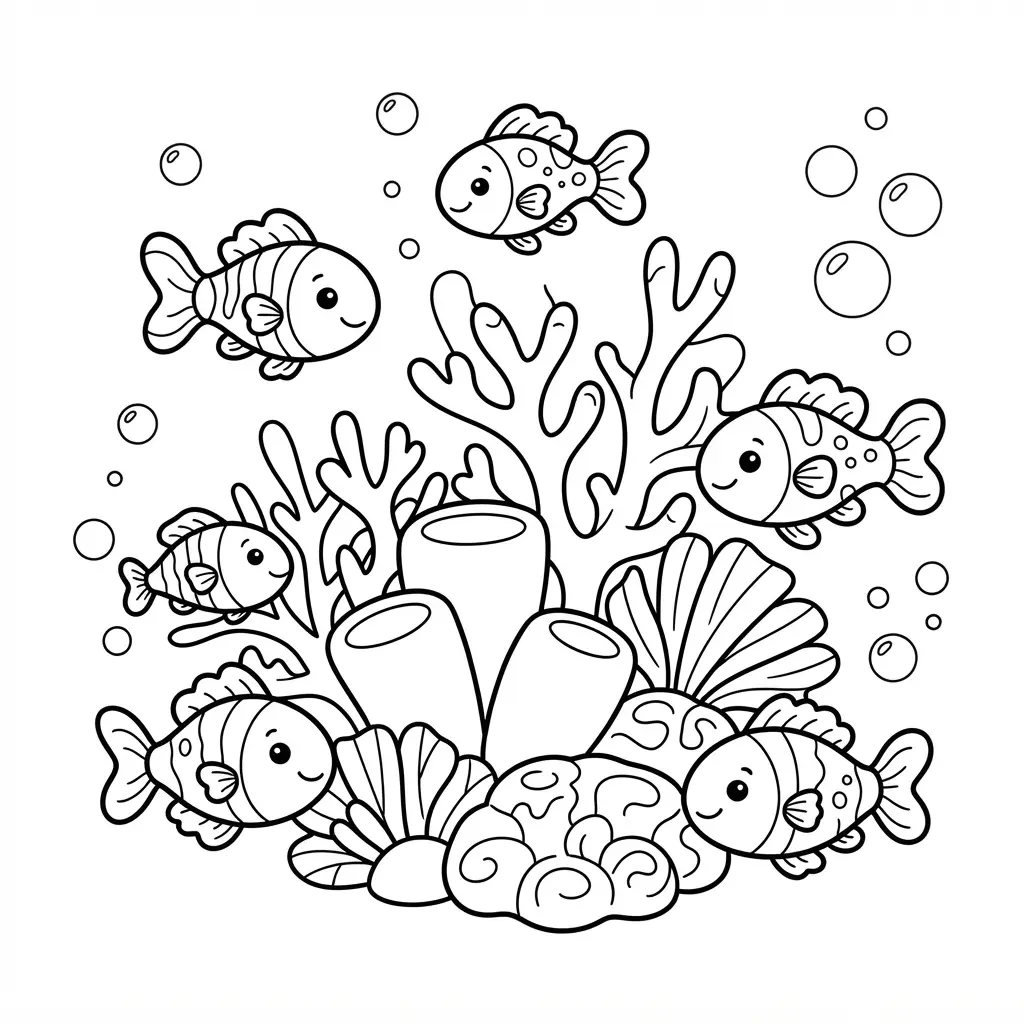
Start with three tiny guppy outlines near the upper half of your page, leaving a little space between each fish. Give every guppy a clear body, fin, and tail, then gather them around a central coral cluster. Sound crowded? Keep the fish close enough to suggest a school, but never let their outlines touch. Add simple coral branches beneath them, with open shapes suited to small crayons or colored pencils. Structured backgrounds help the artwork stay readable. I love this scene because the fish bring gentle movement while the coral gives your eyes a steady place to rest. Use clean spacing around each branch and tail before adding extra bubbles or seaweed. Open layouts keep the design feeling light. Trust me on this one, a few well-placed details make the whole picture feel lively. Enjoy the cheerful underwater scene as your colors bring each guppy to life.
13. Detailed Surgeonfish Ocean Depth View
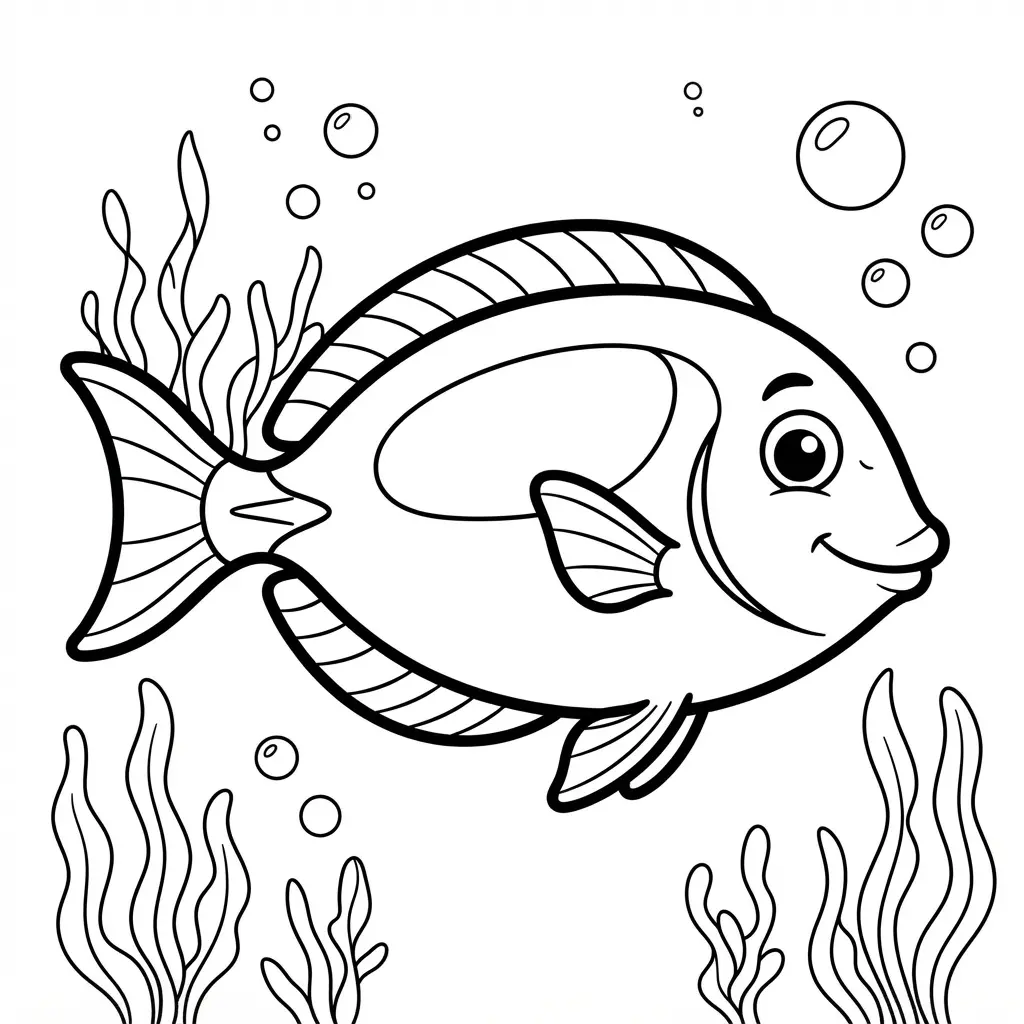
Ever wondered how a reef fish turns into a full ocean scene? Start with a side-profile surgeonfish, keeping its blue-and-yellow body, expressive eye, defined scales, translucent fins, and sharp caudal spine easy to see. Layer textured rocks and waving sea grass in front, then place coral formations, sea fans, and tiny reef fish behind the subject. Rich environments boost the visual impact instantly. Let distant shapes fade into cobalt water, while drifting particles and soft sunbeams add space. I love adding shimmering light patterns across the fish and nearby water, with fine fin lines and open areas left ready for color. This layout feels satisfying because the bright focal fish stays clear while every surrounding detail supports its habitat. Keep the caudal spine visible, and avoid outlining faraway objects too sharply. Feel proud of the underwater scene you create.
14. Whimsical Flying Fish Sky Scene

This scene feels like a happy little parade above the clouds, and it is a lovely project for any artist. Start with graceful fish poses, curving each body forward and spreading butterfly-like fins to show gentle flight. Add cotton-candy clouds around the fish, leaving open space so the main shapes stay easy to color. Sound complicated? It is not, especially with a few simple outlines. Build the distance with small floating islands, golden airships, curious birds, glowing bubbles, rainbow trails, and a smiling crescent moon. Use soft pastels for the clouds and sky, then give each scale a different light color for a shimmering effect. I love adding pale blue around the far objects, since soft atmospheric lighting gives the page a sense of depth. Keep background details smaller than the fish, and enjoy the dreamy result.
15. Bold Bordered Tropical Reef Collection
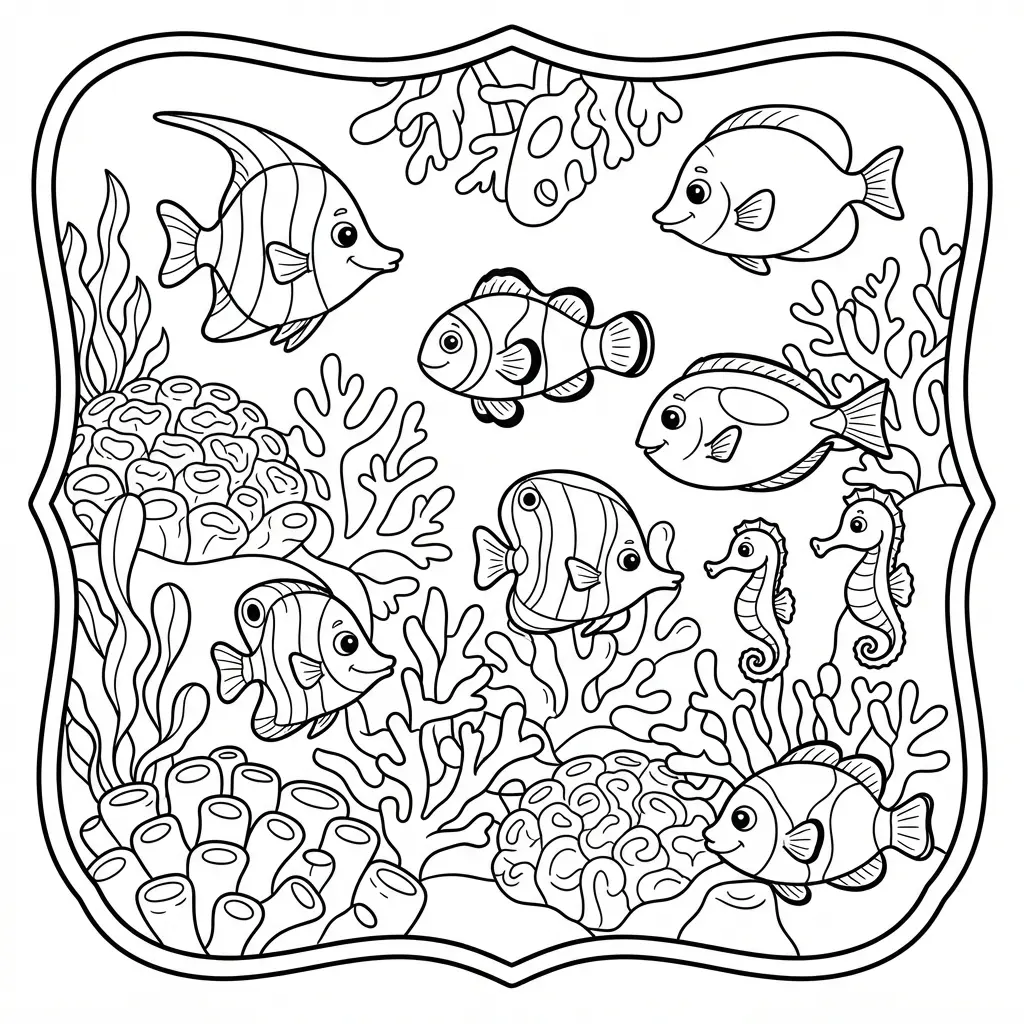
This one is my favorite as a concept because bold borders give a page a clear starting point. The title suggests a tropical reef scene framed by strong lines, though its exact artwork has not been verified. Sound complicated? It isn’t. Begin with open spaces, then give each fish, coral shape, or sea plant a separate color area. This method works perfectly for fish coloring pages. No source confirms the paper, file type, line weight, or intended age group, so choose supplies based on your own comfort. Colored pencils suit small details, while markers bring quick, solid color to broad sections. Keep the border simple, leave small gaps between shades, and test colors on spare paper first. I love how a neat frame helps each section feel organized. Finish with a cheerful reef palette and feel proud of your work.
16. Sleeping Turtle Fish Companion Design

A tiny turtle-fish companion sleeps with its head tucked under a seashell-shaped shell, crescent eyes closed, and pearl-like bubbles rising from its nose. Start with a rounded sleeping pose, keeping the folded fins, small legs, and wide fan tail close to the body. Add curved shell sections, a few stars, and one drifting jellyfish, leaving broad spaces for crayons or colored pencils. Soft turquoise, seafoam green, coral pink, lavender blue, and warm cream give the scene a calm underwater mood, while midnight blue suits a nighttime version. I love how a small shell glow makes the character feel cozy without crowding the page. Does your companion look peaceful? Keep markings sparse, then add tiny bubbles and crescent eye highlights for a sweet finish.
17. Exotic Lionfish Spiny Outline Art

Many lionfish outlines lose their drama by packing every fin with tiny marks. Sound complicated? It isn’t. Start with a clean side profile and a bold outer contour, keeping the fish centered on plain white paper. Build the fan-shaped fins next, then separate each long spine so none disappears into the fin edge. Add flowing tendrils and orderly scale rows inside the body, followed by open ornamental spaces across the fins. A fine-line marker keeps the black ink crisp while leaving roomy sections for coloring. I love how these designs balance wild movement with clear shapes. Skip gray shading and crowded details, since strong outlines keep every spine, scale, and fin easy to follow. The finished piece feels detailed without becoming hard to print or color. Leave the background blank, then choose bold colors for the fins and softer tones for the body. Feel proud when the profile stays clear from edge to edge.
18. Stylized Crab and Fish Friends

Place the crab in the center first, then sketch two fish circling it with open, friendly poses. Give the crab one raised claw, rounded legs, and large expressive eyes, while the fish get curved fins and cheerful faces. Add underwater details such as bubbles, seaweed, and shells around the group, leaving enough open space for easy coloring. Is your scene feeling crowded? Trim a few decorations so the friendship stays clear. I love using coral and orange for the crab, then turquoise and yellow for the fish. Soft watercolor textures and gentle lighting keep the bright ocean background calm. This layout works because every character connects through eye direction and movement. Finish with a fine outline, and feel proud of your happy ocean friends.
19. Deep Sea Lantern Fish Sketch
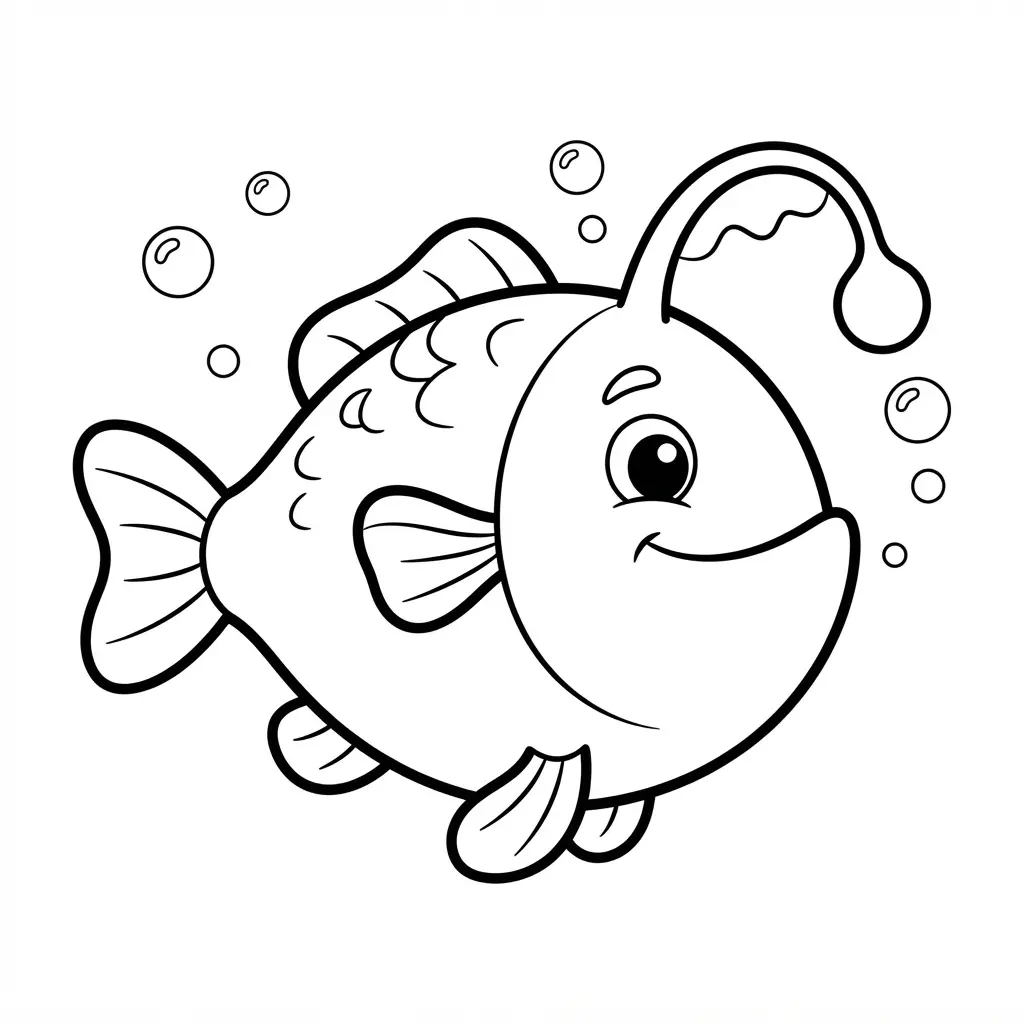
Ever wondered how a tiny lantern fish could become such a friendly coloring subject? Start with a rounded upper form, then add an inner oval with a simple face-like pattern. Extend a narrower lower body beneath it, keeping both sections visually connected, and finish with a small circular accent on the right. Use a light pencil outline first, then trace the smooth outer contours with a fine-tip marker once the proportions feel right. Add curved fins, a tail, or hanging appendages, while leaving broad spaces open for crayons and colored pencils. I love how the bold outline keeps each section easy to fill. Erase construction marks at the end and enjoy your underwater page.
20. Calm Sunlit Sea Surface Scene
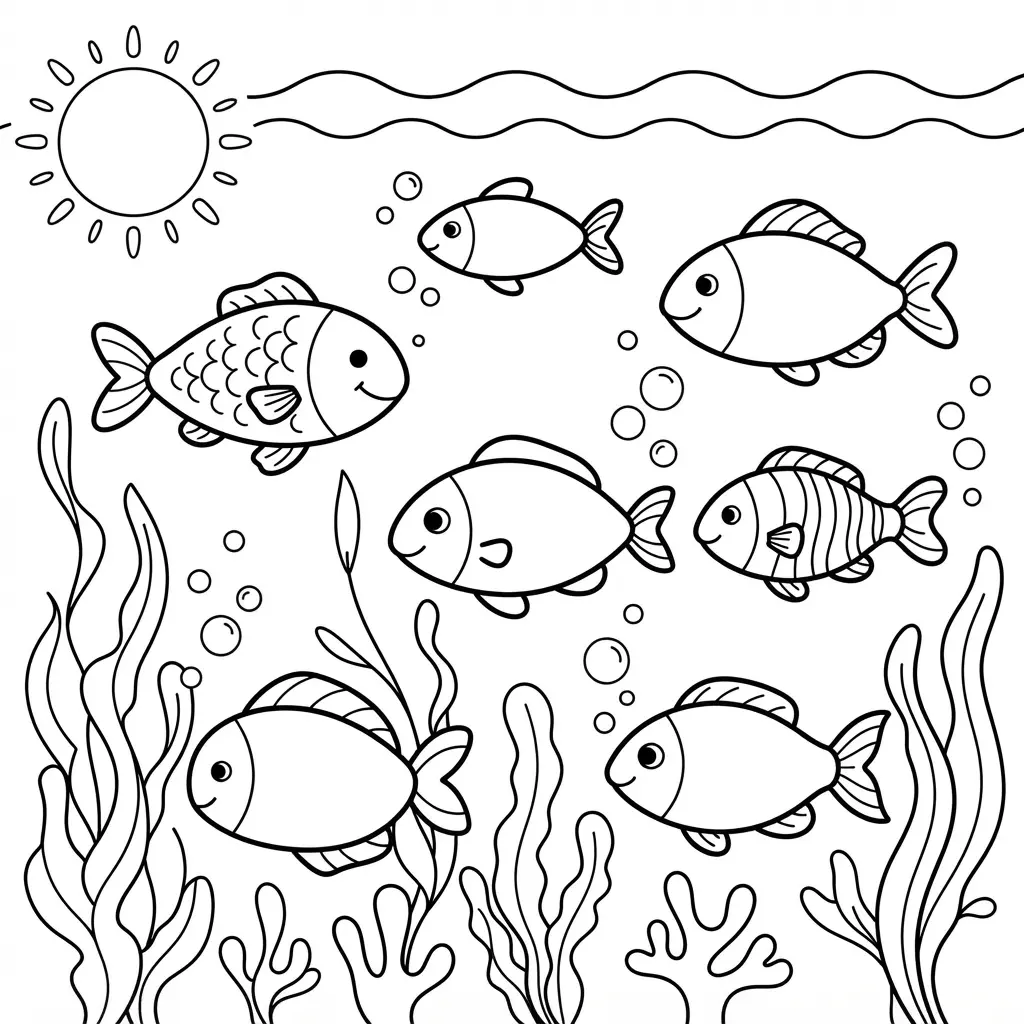
This scene feels peaceful from the first line, with an open horizon and gentle water stretching across the page. Start with a wide horizontal layout so the sea gets plenty of room. Fill the water with turquoise and soft blue, leaving broad spaces between short, curved ripples. Add warm yellow or pale gold only where sunlight touches the surface, then place a few subtle rays near the horizon. Sound complicated? It is not. Use soft ripple lines to keep the water smooth and calm. I love how this open composition gives younger artists room to enjoy blue, turquoise, yellow, and gold without crowding the picture. It works because cool water tones stay balanced by small golden highlights, keeping the mood calm instead of stormy. Keep boats, people, and land out of the picture, then enjoy the quiet finish.
Display Ideas For Finished Ocean Artwork
Display finished ocean artwork in a clip frame with a clear front, since it keeps paper flat while leaving the fish visible. A magnetic board suits frequent changes and avoids tape marks along delicate printer paper. For a refrigerator display, use wide magnets over the corners rather than sticky tabs across bubbles or fins. Group pages by palette, placing blue reef scenes beside warmer tropical fish drawings for visual variety. Keep framed work away from direct sunlight, which fades marker ink and weakens bright colored-pencil accents over time. A simple border in navy, turquoise, or coral gives the page a finished edge without covering the outline. Mount smaller pages on plain cardstock before framing for extra support. Rotate displayed sheets every few weeks so fresh artwork gets equal wall space and older pages stay protected.
Conclusion
So how was your creative session? A favorite fish, reef scene, or sea creature often says a lot about the colors and details each person enjoys. Fish coloring pages give kids a calm activity while helping them practice focus, hand control, and personal expression. Older children and ocean lovers also get room for shading, patterns, and careful color choices. Look at what you have made. That is real skill right there. For your next page, choose one new color combination and add small details to the water, plants, or bubbles. I love revisiting a familiar subject with a fresh palette, and you might find a new favorite this way. Keep a few finished pages nearby for family art time or a cheerful room display. Pick your favorite design, gather your supplies, and get started right away.
FAQs
Q: What paper works best for printable fish coloring pages?
A: Use smooth white printer paper for crayons and colored pencils. Choose heavier paper for markers to reduce ink transfer.
Q: Which fish coloring pages suit toddlers?
A: Choose pages with thick outlines, large shapes, and open spaces. Cartoon clownfish, pufferfish, and simple goldfish scenes work well.
Q: How do I print fish coloring pages at home?
A: Set the printer to black and white or grayscale, then select actual size. Check the preview so the full outline fits the paper.
Q: Which coloring tools work well for underwater scenes?
A: Crayons suit younger children, while colored pencils help with small details. Washable markers work well on thicker paper.
Q: How do older kids add detail to fish coloring pages?
A: Older kids can add scale patterns, reef textures, bubbles, and gentle shading. A limited color palette keeps the scene organized.