Paper Weight For Crayon And Marker Layers
Use 100–120 gsm paper for crayon pages, while marker layers need 160–200 gsm stock to resist bleed-through. Heavyweight drawing paper keeps broad prehistoric shapes firm beneath repeated crayon pressure and prevents curled corners during coloring. Smooth surfaces suit wax crayons because pigment moves across open regions without catching on rough fibers.
Markers need a bleed-resistant sheet, especially around fern forests, volcanic rocks, and large dinosaur silhouettes. Watercolor pencils require 200 gsm or heavier paper because light moisture buckles thin sheets. Test one corner before printing a full set, since home printers handle thick stock differently.
Choose bright white paper when you want pastel colors to stay clear and dark outlines to remain easy for young children. Proper paper selection directly impacts how well your dinosaur coloring pages turn out.
Anatomy References For Age Appropriate Detail
An illustrated dinosaur anatomy guide should show each species with its own feet, tail position, body covering, and signature feature before you choose detail level. Preschool pages need thick outlines, large enclosed shapes, and one clear dinosaur silhouette per scene.
Older children handle scales, layered foliage, multiple species, and geological formations more comfortably when body parts stay separated. Use reference drawings for horns, plates, armored backs, crests, feathers, and jaw shapes rather than adding random detail to every region.
Tail direction and foot placement help a creature read correctly even beside another species. Keep scientific features separate from color choices because evidence for dinosaur skin colors stays limited.
Purple stripes, blue plates, or green feathers still suit imaginative coloring. This flexible approach keeps every set of dinosaur coloring pages engaging for all ages.
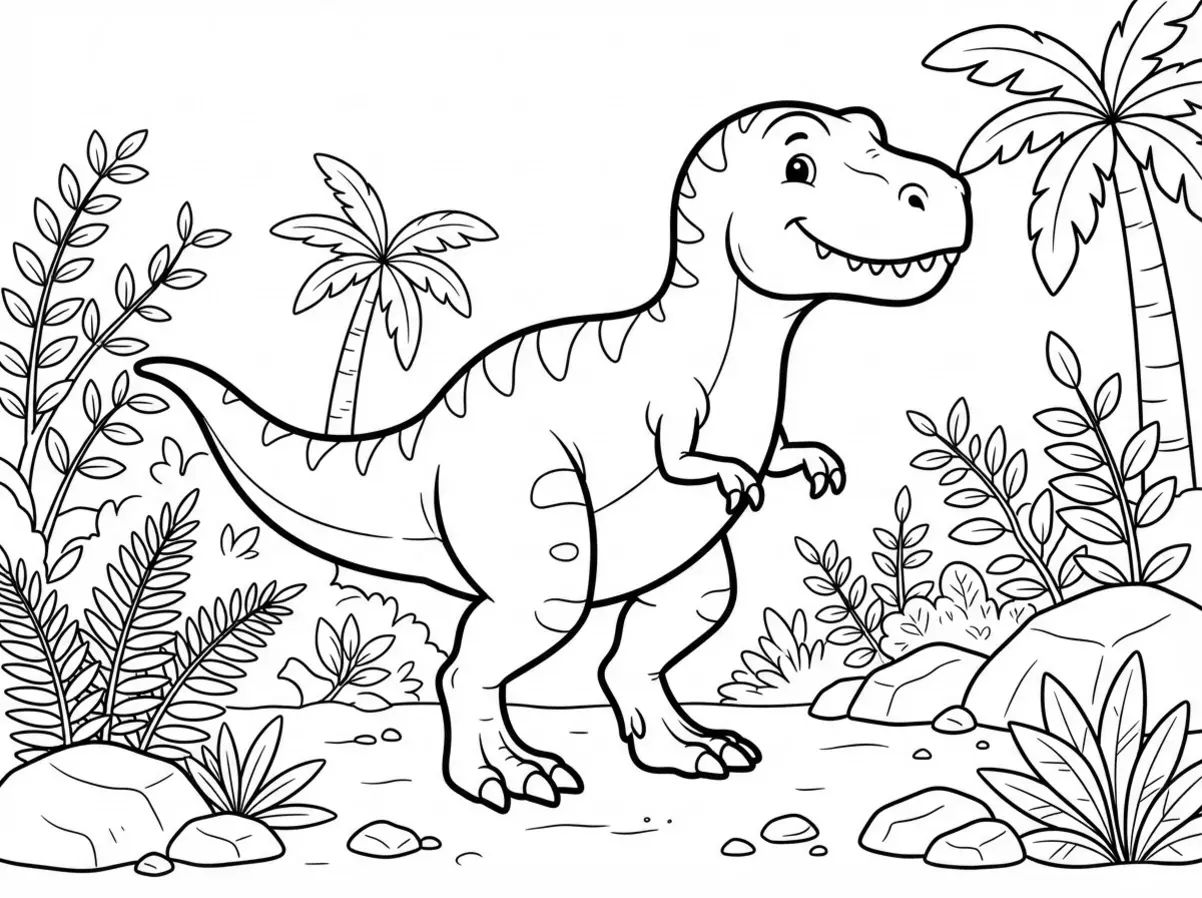
1. Cute Cartoon Tyrannosaurus Rex Outline for Young Artists
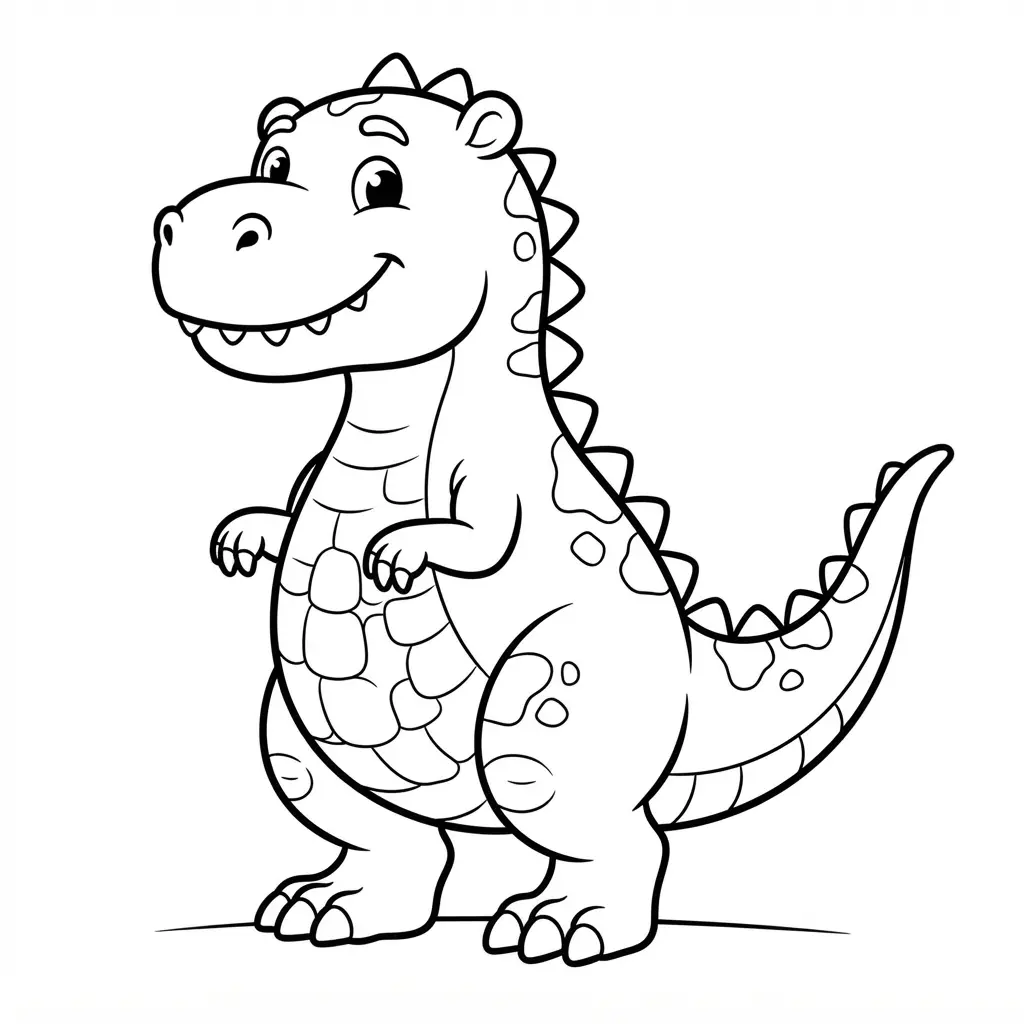
Want a friendly T. rex with a smile instead of a scary roar? Start with a large rounded head, wide grin, big round eyes, raised brows, and only a few tiny teeth. Add an oval body, short chunky legs, three rounded toes on each foot, and tiny arms with two little claws.
Finish with a long curved tail, then trace the clean outline using a black marker. I love how these simple shapes give young artists clear spaces to fill with green, blue, orange, or purple. Erase extra sketch marks gently after the ink dries so the dinosaur coloring pages look neat.
Give the back a personal touch with colorful spots, stripes, or small plates. The friendly face and rounded proportions make this T. rex approachable, easy to follow, and fun to color.
2. Detailed Triceratops in a Tropical Jungle Scene
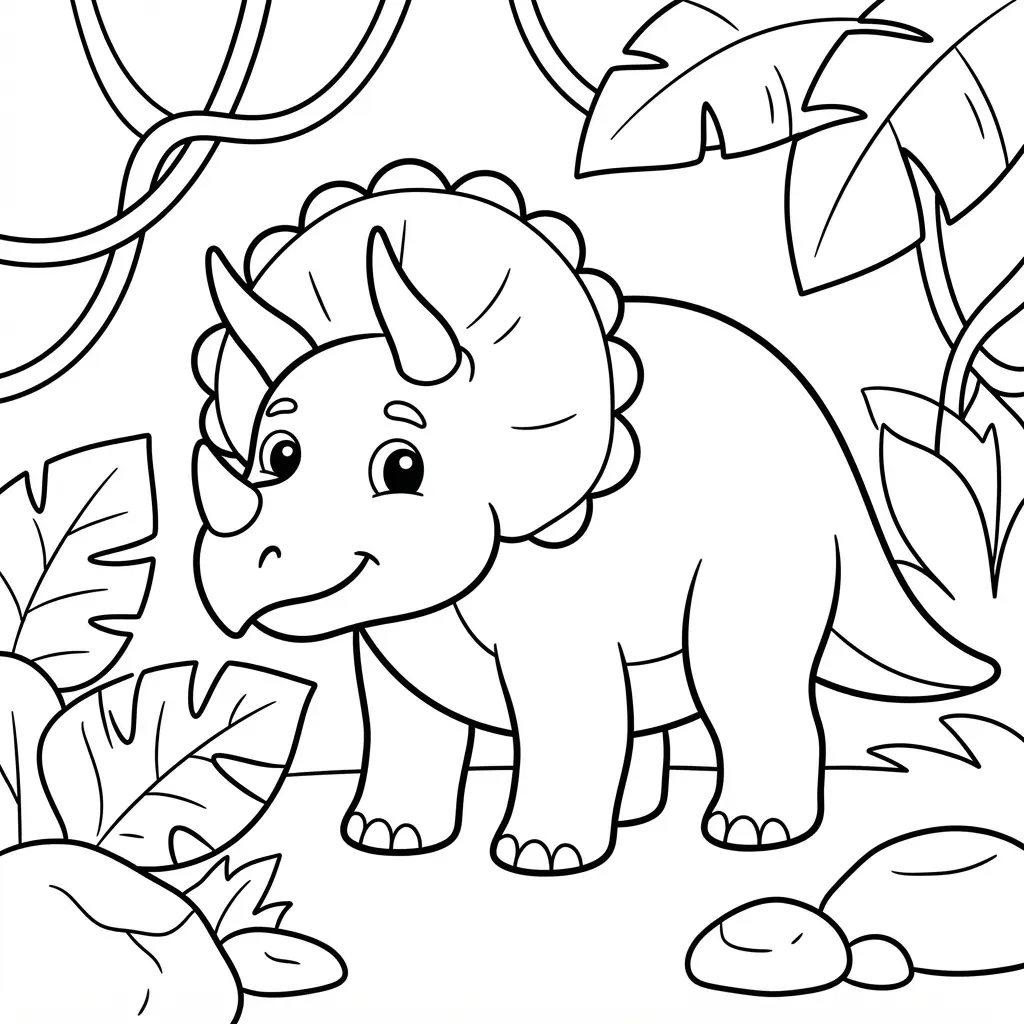
This scene feels rich from the first line, with the Triceratops standing large in the foreground. Start with its three horns, broad frill, sturdy legs, and slightly lowered head, then add clear dinosaur outlines around the body. Small folds, scars, muddy patches, and moss-like marks give the skin extra character.
Frame the animal with towering cycads, giant ferns, broad prehistoric leaves, and curling vines. Add dark soil, fallen branches, shallow pools, glowing mushrooms, and tiny feathered dinosaurs in open spaces. Keep distant trees lighter and softer beneath a layer of mist.
Sound complicated? It is not. I love how dappled sunlight guides your color choices, with emerald leaves, amber light, and gray-green skin creating a strong focal point.
Pro tip: leave the background less detailed than the Triceratops, so every horn and skin fold stays easy to see. Add hovering insects last, then enjoy the satisfying depth of your finished dinosaur coloring pages.
3. Soaring Pterodactyl Over a Mountain Range
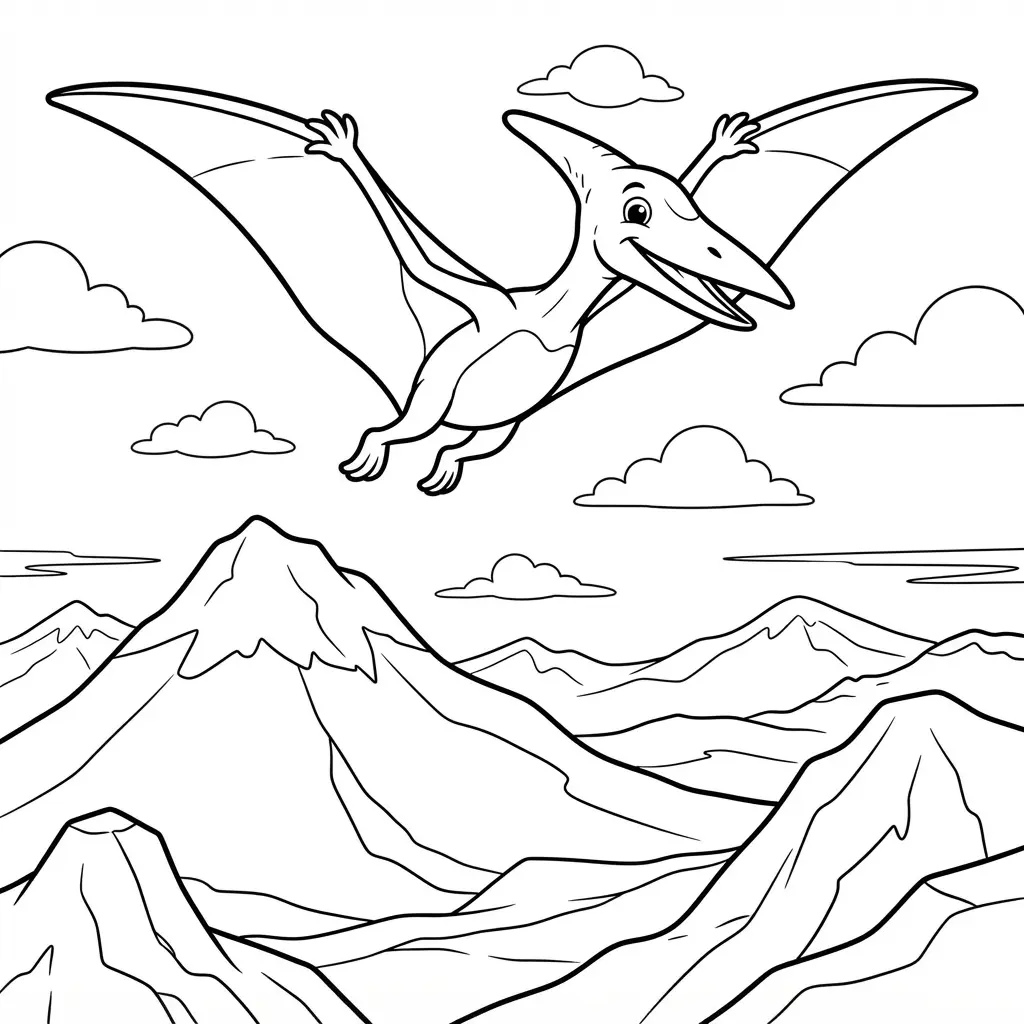
This one is my favorite because the pterodactyl feels ready to glide right off the page. Give it broad, fully extended wings and a clear body outline near the upper center. I love leaving plenty of open sky around the creature, so every wing section has room for color.
Build the view below with layered mountain silhouettes, using tall peaks in front and smaller peaks behind. Add simple mist bands through the valleys, tiny distant volcanoes, and large cloud shapes around the flyer. Sound complicated? It is not, especially when each area has a bold border.
The soaring pose gives children a clear focal point while the sunset sky, crimson clouds, warm orange light, and cool mountains invite playful choices. Use bold outlines instead of tiny textures, then feel proud when your prehistoric scene comes alive. This approach works wonderfully for dinosaur coloring pages.
4. Friendly Stegosaurus Eating Fern Leaves
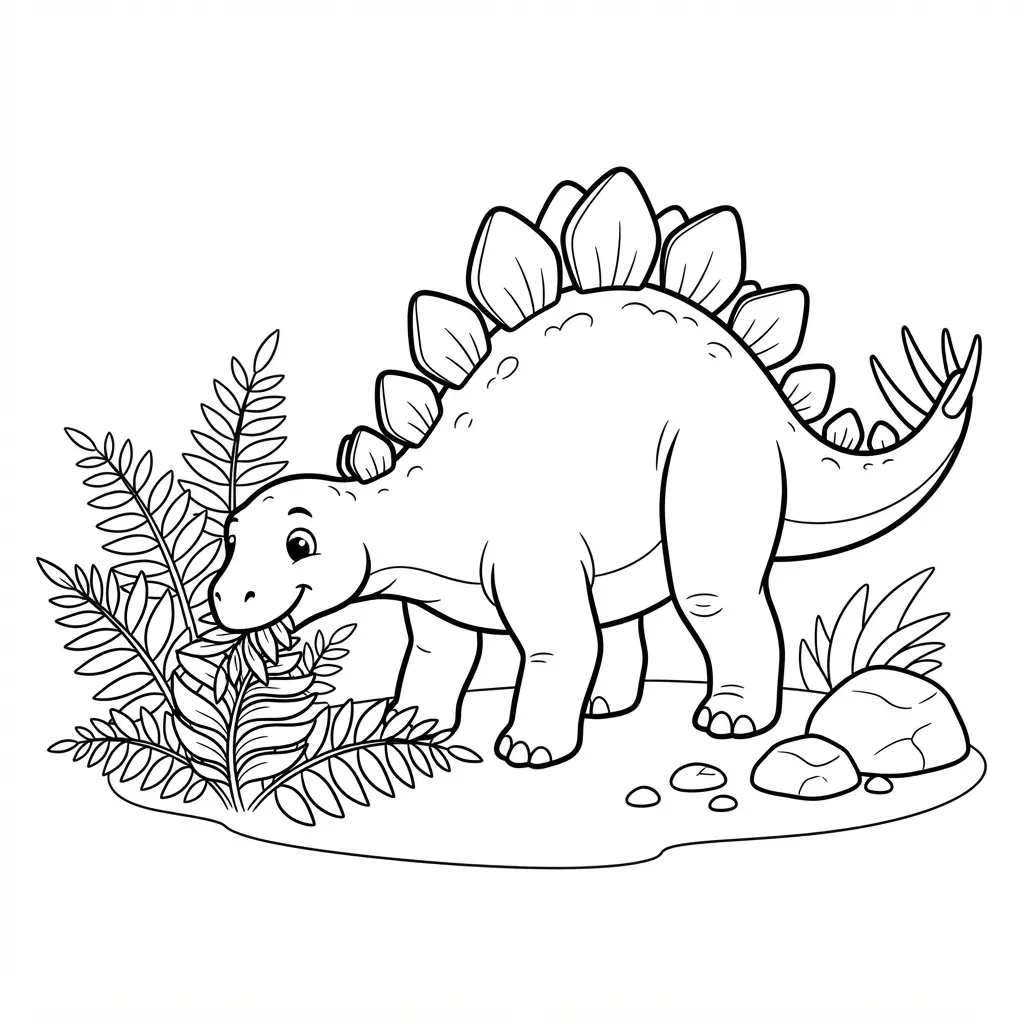
Warm sunlight slips through tall trees, touching a smiling stegosaurus as it nibbles crisp fern leaves, while rounded plates glow in cheerful colors and soft eyes give the scene a gentle storybook feel. Start with the dinosaur in the center, angle its head toward a leafy fern, and add a gentle smiling expression with smooth body curves and a small leafy tail, so the character feels friendly rather than fierce.
Fill the prehistoric forest with extra ferns, tiny flowers, and distant volcanoes, then use warm sunlight between tree trunks to create a playful setting with bright, soft color areas. I love how the eating pose gives the page a clear little story, guiding the viewer’s eye toward the happy dinosaur, so keep textures soft, leave out words, and finish with green fern leaves around its friendly mouth.
Try shading each plate a slightly different hue. This simple trick makes every set of dinosaur coloring pages look vibrant and cohesive.
5. Brachiosaurus Neck Reaching Tall Trees
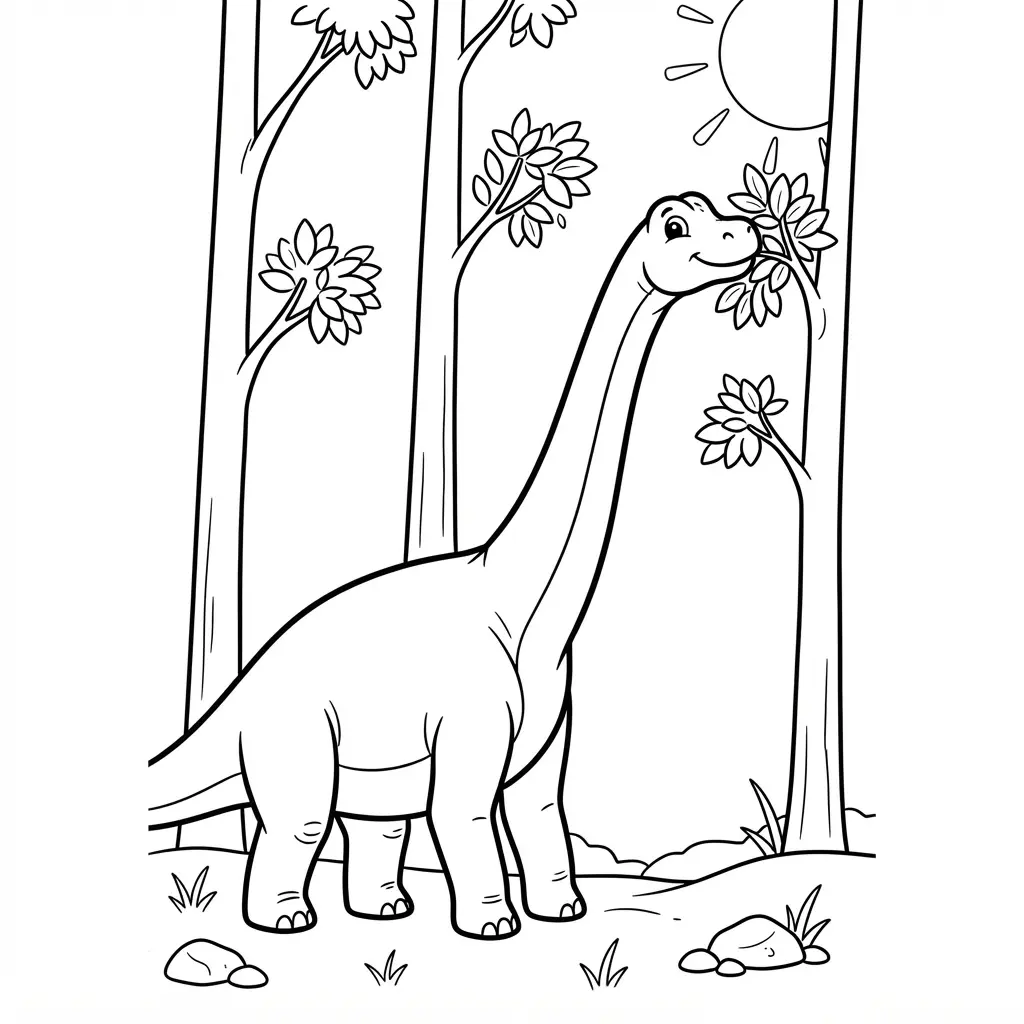
A common mistake is drawing only the long neck and forgetting the body below. A Brachiosaurus needs its massive body, four sturdy legs, and long tail for balance. Sound complicated? It isn’t. Start with a full-body outline.
Let the neck rise in a smooth curve toward high branches, with the head touching leaf clusters. Place tall trunks behind it, then add ferns and tiny dinosaurs low in the scene. Leave pale gaps between branches to suggest sunlight and mist without hiding the main action.
I love how the height difference makes this scene easy to read and fun to color. Pro tip: use open canopy spaces to keep the reaching pose clear, then enjoy the finished forest. This method guarantees clean results for dinosaur coloring pages.
6. Ferocious Velociraptor Running Through Tall Grass
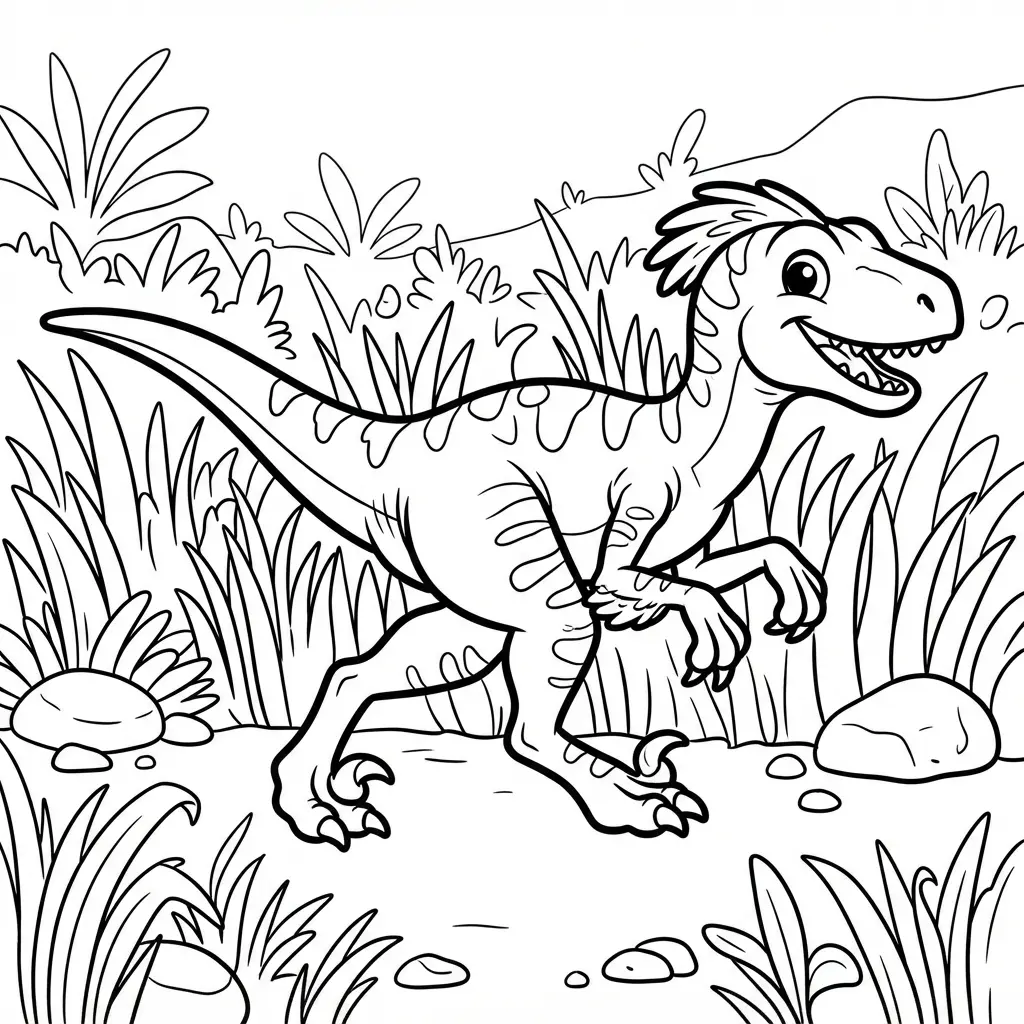
Start with the low-angle pose, placing the velociraptor at the center as its bent legs drive forward through waist-high grass. Give it an open jaw, visible teeth, extended claws, and one foot lifted mid-stride, then scatter dirt and loose blades around its feet. Doesn’t the scene feel faster once scales, feather textures, amber eyes, and dust particles fill the wide prehistoric setting?
I love adding warm sunset tones behind the body and darker shadows beneath it, since the contrast keeps each area easy to color without hiding the leg details. Pro tip: leave clear spaces between grass blades, claws, and dust so your dinosaur coloring pages stay bold and fun.
7. Spinosaurus Near a River Water Scene
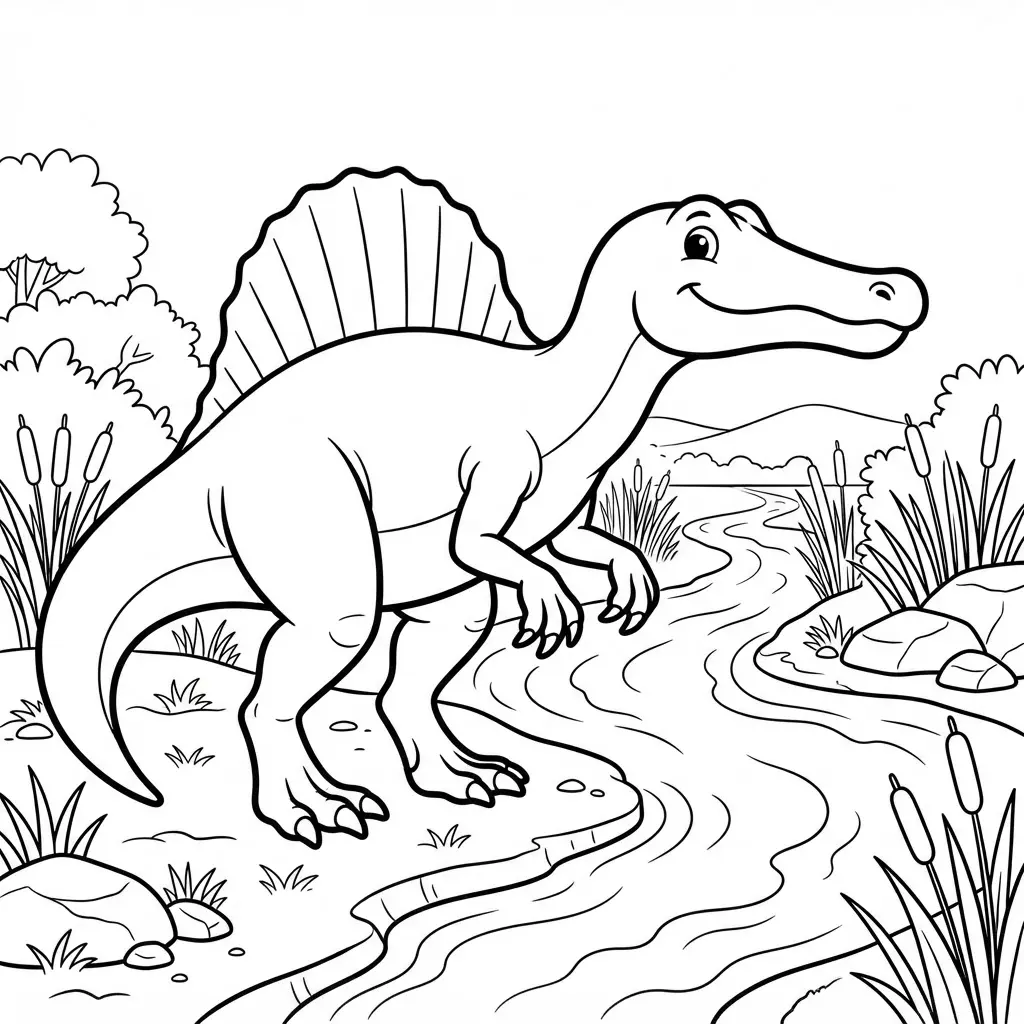
Ever wondered how to make a Spinosaurus feel part of its prehistoric home? Place it knee-deep near the center, with its long jaws slightly open and its tall sail clear above the riverbank plants. Use curved ripple lines around each leg, then add small fish breaking the surface nearby. Ferns, cycads, and conifers frame the scene without covering the dinosaur’s outline.
I love how reflection bands give the water movement while leaving open space around the body. Add soft mist strips across the distant river, followed by volcanic mountains and a sunrise with light reflected below. Keep foreground plants and ripples larger, while distant shapes stay smaller and simpler.
This layered setup gives your dinosaur coloring pages scene depth, detail, and a calm coloring rhythm. Trust me, the finished river scene feels wonderfully alive.
8. Ankylosaurus with Heavy Armor Plates
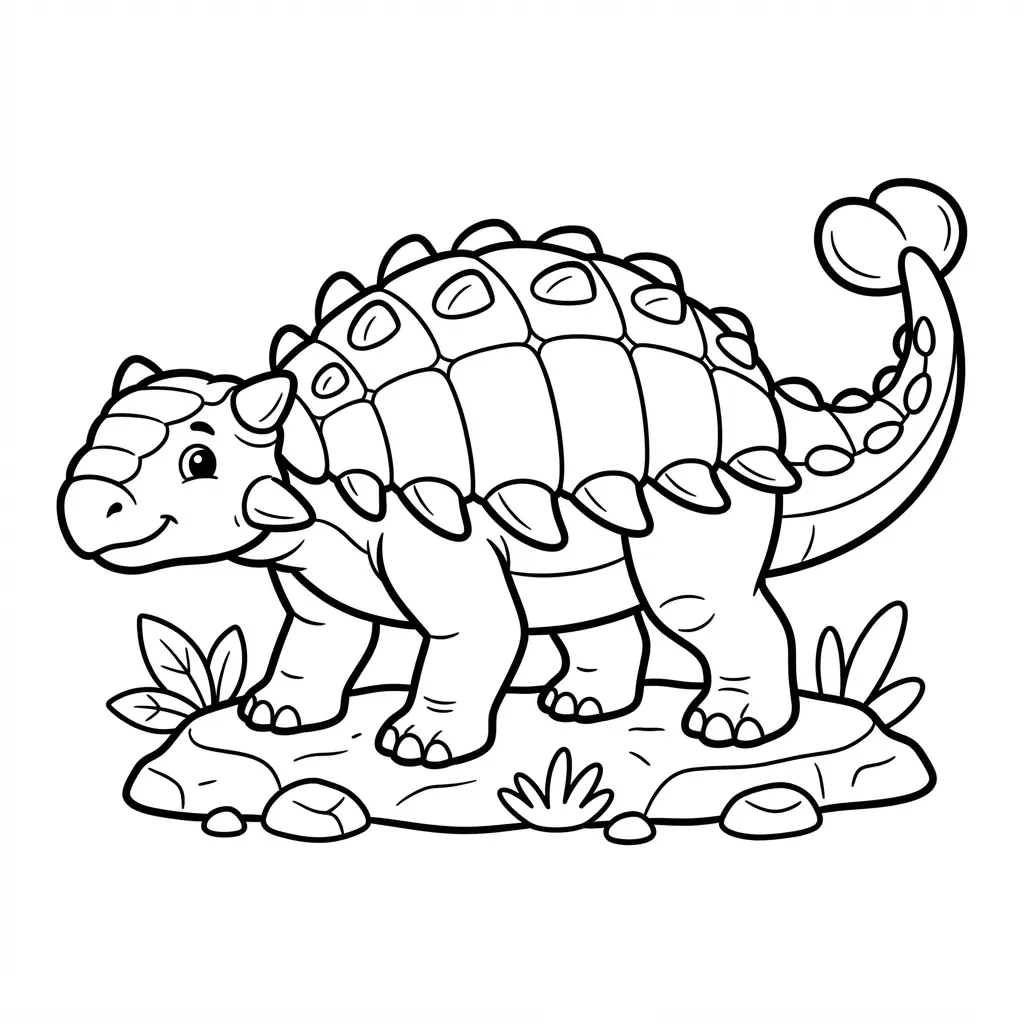
This one has a low, wide profile and plenty of bold shapes to enjoy. Start with a low body and sturdy legs, then layer overlapping armor plates across its back and sides. Leave clear spaces between plates, so each section welcomes a different color. Add rugged scales and small osteoderms around the belly and legs, followed by sharp shoulder spikes and a broad club at the tail’s end.
Isn’t the defensive pose satisfying? Turn the Ankylosaurus slightly or lower its body to show strength without making it tall or narrow. I love how the armor, spikes, and tail club make this dinosaur easy to recognize. Pro tip: keep skin textures larger near the legs and belly, giving young artists room to color with ease. These tips work perfectly for dinosaur coloring pages.
9. Baby Dinosaur Hatching from an Egg
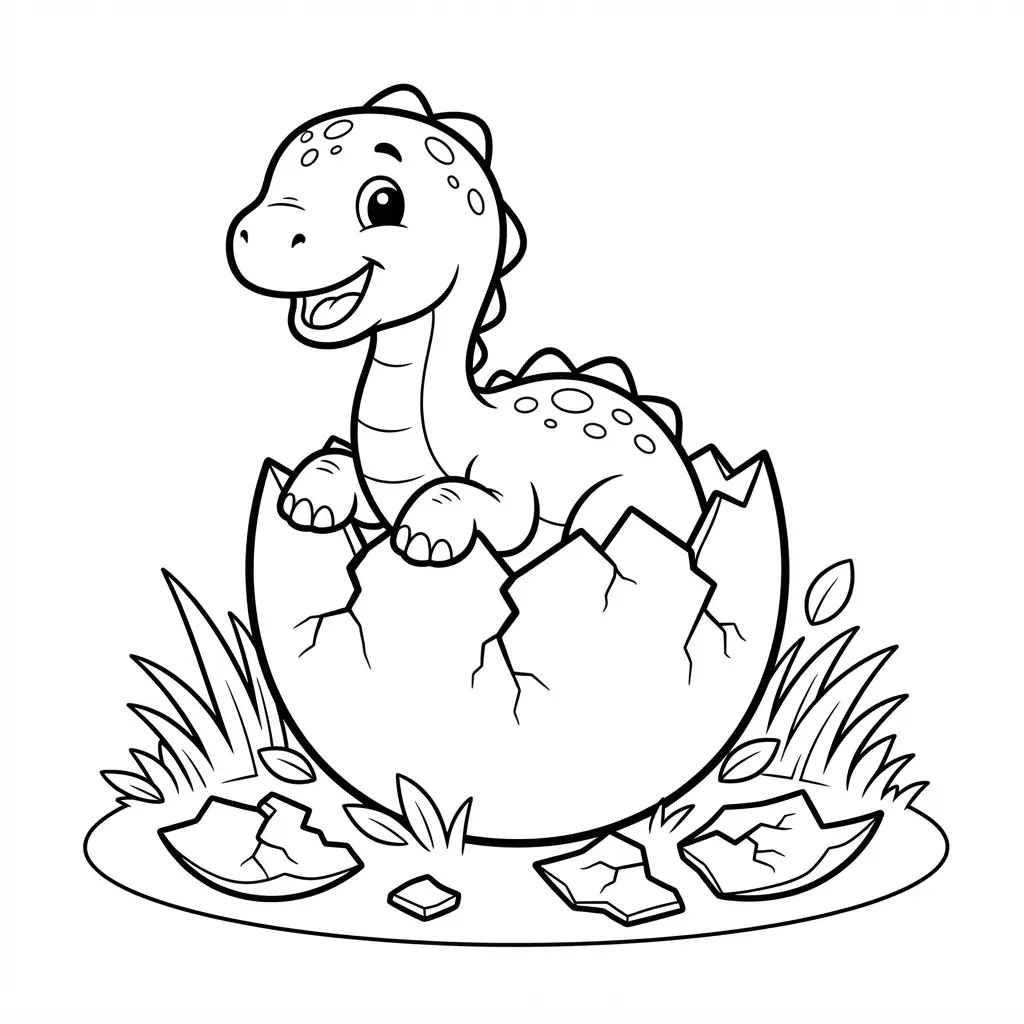
This one is my favorite because a tiny dinosaur peeking from an egg feels sweet and playful. Sound complicated? It is not. Start with a cracked central egg, then add a round head, large friendly eyes, and one little foot outside the shell.
Place a few shell pieces near the base, leaving broad spaces for easy coloring. Soft grass, small flowers, and a simple forest backdrop frame the scene without stealing focus from the hatching action. I love using bold, clear outlines here because rounded shapes keep the young dinosaur welcoming, not scary. Give the shell opening enough space to show the head and foot clearly, then enjoy those first cheerful colors.
10. Parasaurolophus Playing in an Ancient Swamp

Muddy water curls around the feet of a playful Parasaurolophus group, while droplets sparkle beneath soft morning mist. Start with clear crest outlines, then vary each dinosaur’s head angle, leg position, and body direction so the scene feels full of movement.
Add shallow pools with curved ripples, leafy ferns, giant horsetails, cycads, and a few water lilies around the edges. Dragonflies, distant pterosaurs, golden sunbeams, and turquoise water give you cheerful spaces to fill, while broad lines keep every part easy to follow. Isn’t it satisfying when a quiet swamp scene starts to feel lively?
I love using warm gold on the mist and rich green on the plants, then adding small splash marks last. Try shading the water edges slightly darker to boost contrast. This technique brings extra life to dinosaur coloring pages.
11. Diplodocus Grazing in an Open Field

Many people make the neck short and stiff, yet a grazing Diplodocus needs a long, gentle curve toward the ferns. Start with the sweeping neck line, then add the broad body, sturdy legs, and long tail across the open field. Is the pose hard to place?
Keep the head low and leave clear space around the outline. I love adding warm sunlight, a soft blue sky, distant conifers, and quiet volcanic hills behind the main figure. Use lighter background outlines for those shapes, then place smaller dinosaurs far away to show scale without pulling attention from the foreground.
Repeat a few short lines across the skin for texture, leaving wide sections open for coloring. Trust me, the calm arrangement makes every color choice feel easy and satisfying. Parents consistently praise this layout for dinosaur coloring pages.
12. Dinosaur Fossil Skeleton Dig Site
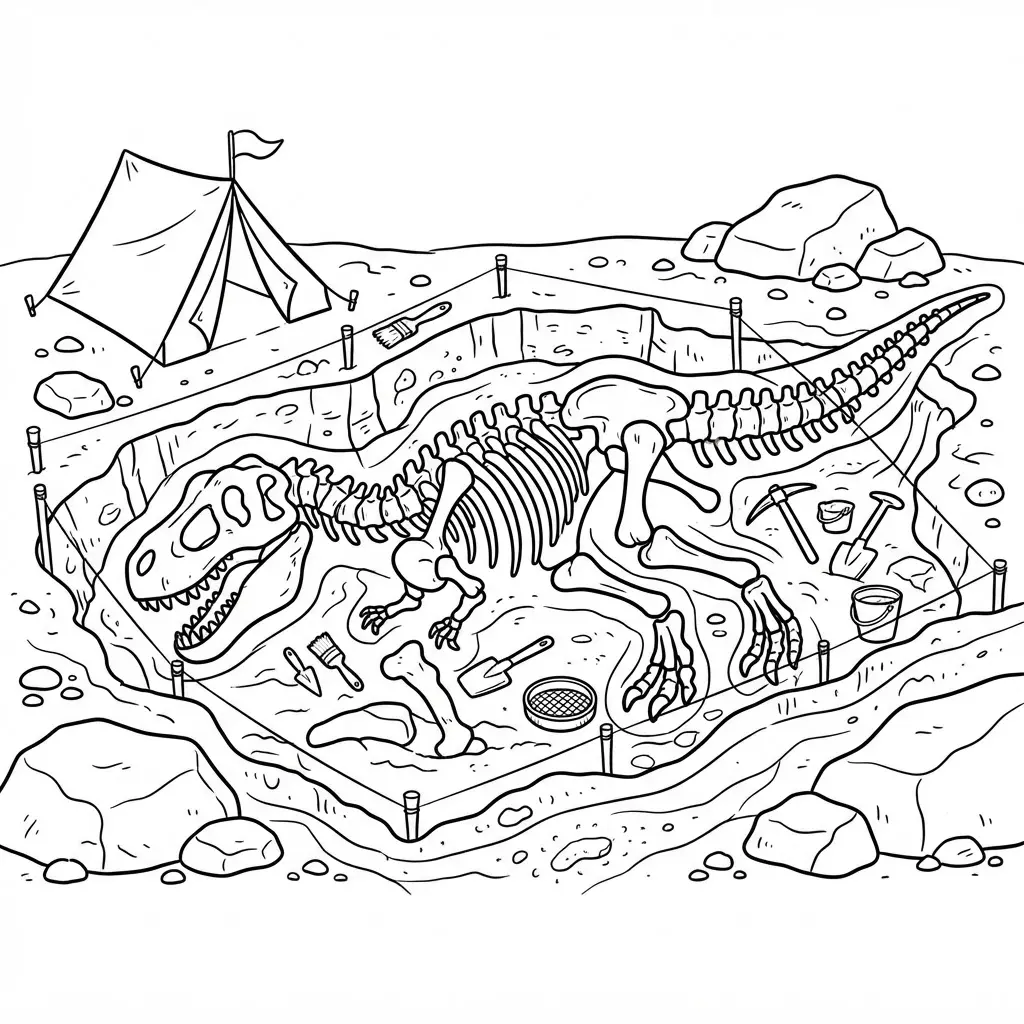
Place a broad outline of the skeleton across your page, leaving open spaces around the bones for a dusty dig site. Add a shallow trench, scattered stones, and a small brush beside the exposed ribs, then trace each bone with thin black lines. The scene feels like a quiet fossil search, even though the page gives you room to choose every detail.
Does a skeleton scene sound tricky? It is easier when you build it from simple shapes, using long curves for ribs and short blocks for vertebrae. I love adding two or three soft earth tones around the bones because the pale skeleton stands out.
Try dinosaur coloring pages with a magnifying glass, shovel, and field notes nearby for a playful science feel.
13. Compsognathus Group in a Forest Clearing

How lively would a clearing feel with several Compsognathus moving through it? Start with a wide group layout, placing slender dinosaurs among ferns, fallen branches, and pinecones. Give each one a separate action, such as foraging, standing alert, or turning toward a companion, then place the larger individual on a mossy stump as the scene’s anchor.
Frame the middle ground with cycads, moss-covered logs, and tall conifers, leaving open space around every body. I love adding russet, brown, cream, and gray shades while keeping each feather line light and visible. Finish with soft morning light, golden patches, drifting dust, and tiny insects to create depth and a warm forest feeling.
This multi-subject arrangement teaches spacing and composition. Teachers frequently recommend dinosaur coloring pages like this for classroom groups.
14. Allosaurus Hunting Under a Volcanic Sky

This scene feels lively from the first glance, yet it stays fun to color. Place the Allosaurus low in the foreground, with bent legs, a forward neck, and jaws slightly open as it watches small ornithopods hurry through the ferns. Use clear dinosaur outlines around the predator, herd, plants, and distant volcano so each section stays easy to follow.
Sound complicated? It’s not. Behind the herd, draw an erupting cone with rivers of fire, drifting ash, black clouds, and a blood-red sky. I love adding glowing ember accents across the scarred hide, since orange marks connect the dark floodplain to the hot background without covering every detail.
Keep the herd small and hazy, then leave open patches around the Allosaurus for clean coloring. Your finished page will feel dramatic, focused, and fun. This high-contrast style elevates dinosaur coloring pages significantly.
15. Pachycephalosaurus Bumping Heads Scene
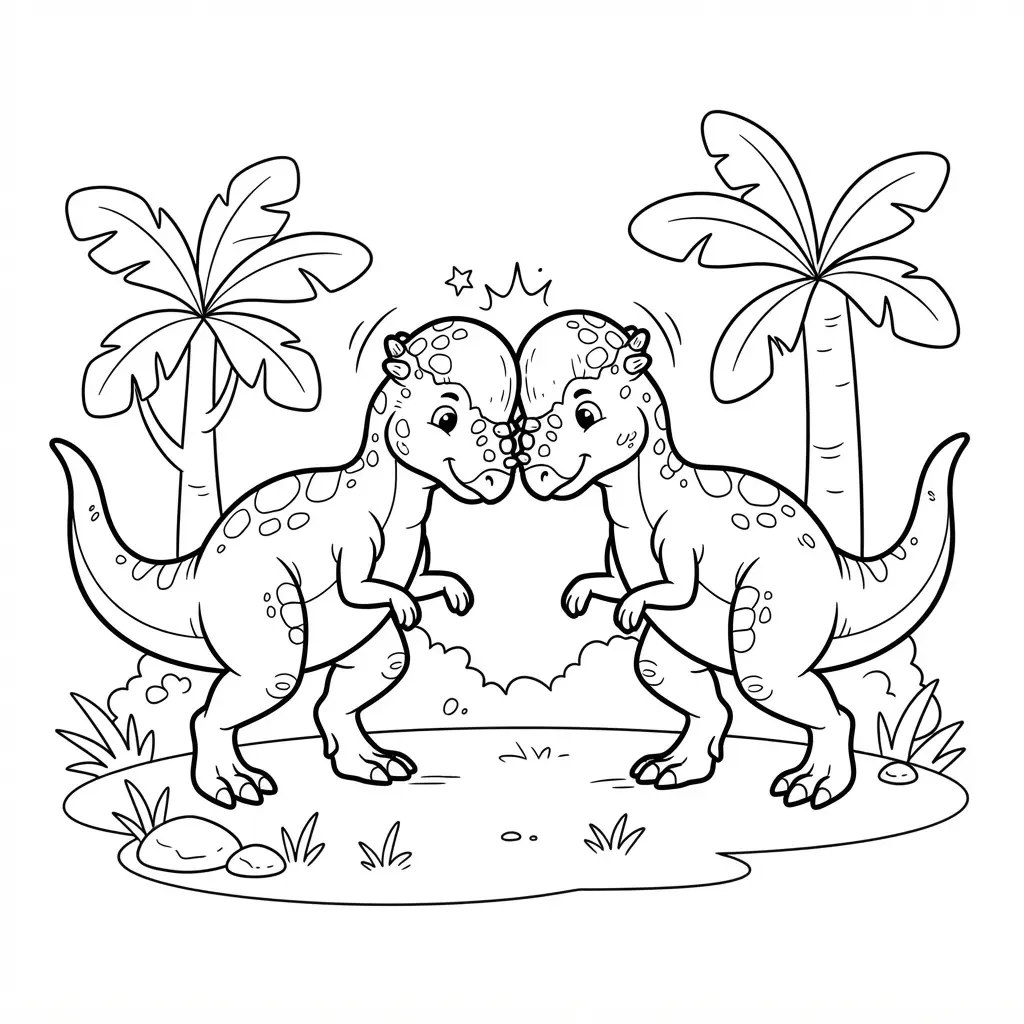
This one is my favorite because two Pachycephalosaurus turn a simple page into a lively prehistoric showdown. Sound complicated? It is not. Start with one dinosaur on each side, facing inward, with lowered domed skulls aimed at the center.
Draw a clear contact point, then add curved dust lines around the impact without hiding either head. Ferns along the ground, scraped marks, raised feet, and two small dinosaurs watching behind the action give the scene motion, while a low afternoon sun fills the background.
I love how the opposing poses guide your eyes straight toward the collision. Keep the main bodies large, leave room around the herd, and use bold outlines with open spaces for easy coloring. Pro tip: let one dinosaur stagger backward for extra action, and feel proud when the scene comes together.
16. Giant Plesiosaurus Swimming in an Ocean Scene
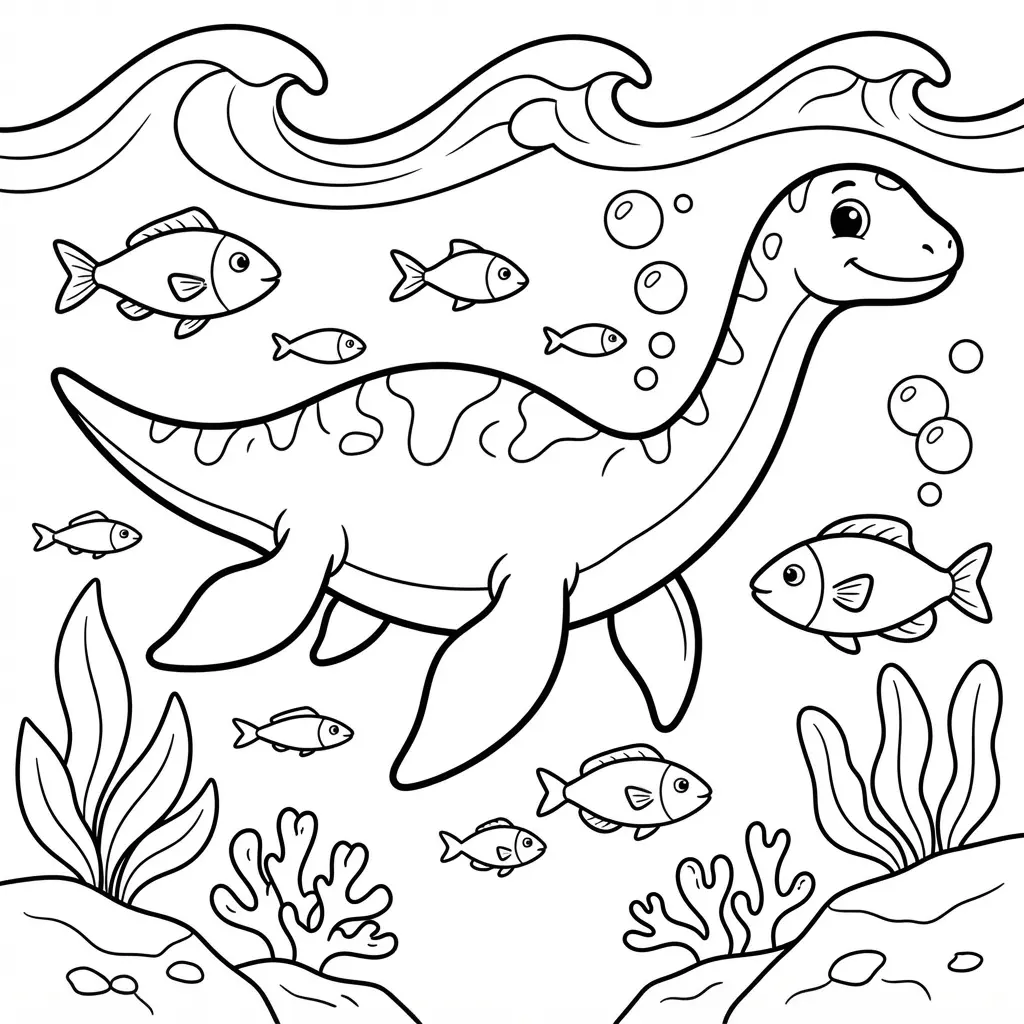
Sunbeams streak through blue water as a giant plesiosaurus glides above the seafloor, with fish flickering nearby and particles hanging in the current. Sound complicated? It is not. Start with clear creature outlines, giving the massive body, four flippers, long neck, and small head plenty of open space for coloring.
Add coral, kelp forests, ammonites, and distant marine reptiles in separate layers, keeping nearby forms larger and background details lighter. I love placing a school of fish beside the neck because it helps show scale without crowding the page.
Use curved lines for sunbeams and leave broad areas around the animal so your dinosaur coloring pages stay easy to enjoy. Trust me, this ocean scene feels satisfying when each depth layer comes together.
17. Therizinosaurus with Large Claw Detail
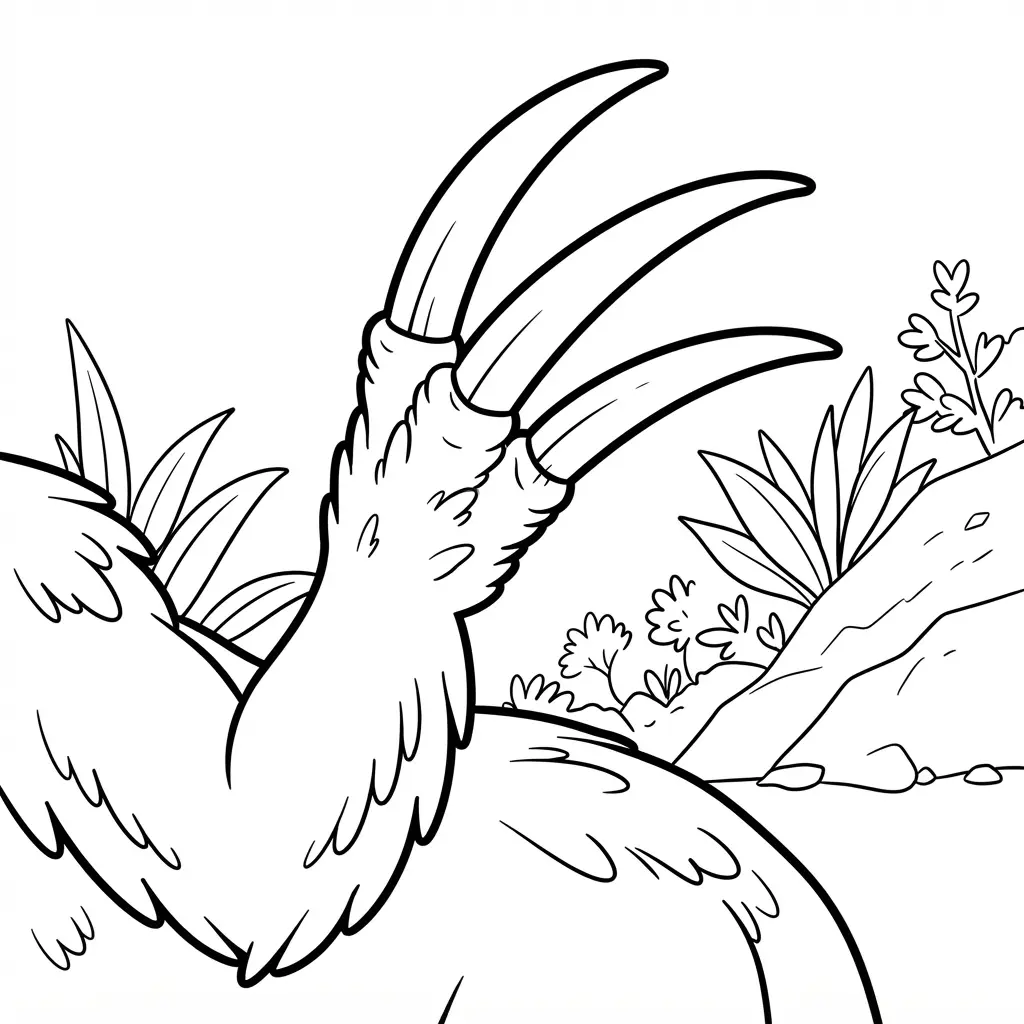
Many young artists make Therizinosaurus claws too short, but this page needs long, narrow curves with sharp tips. Start with bold claw outlines, then add fine scratch lines inside each shape to suggest a weathered keratin surface. Sound complicated? It is not.
Build the feathered arms, strong torso, long neck, and small beaked head around the claws, keeping the forelimbs clear against the misty forest. I love using brown and rust feathers, muted green plants, and darker claw shading, with a pale highlight along one edge for side lighting.
The open misty spaces keep the silhouette easy to color, while feather groupings give your dinosaur coloring pages extra texture. Trust me, this focal point feels satisfying when the claws stand out.
18. Giganotosaurus Roaring in Rocky Terrain

Start with a wide horizontal layout, then place the Giganotosaurus near the center from a low viewpoint. Give its body a broad shape, strong legs, a long tail, and a muscular neck so it towers over the plateau. I love how quickly this angle adds drama.
Sketch the head tilted upward and open the jaws wide enough to show rows of uneven teeth. Add piercing eyes, simple scale marks, and clear outer lines around the body. Sound complicated? It is easier once the head and neck establish the pose.
Build the setting with jagged cliffs, ledges, fractured stone, and scattered boulders. Vary each rock’s size and angle, then add loose stones and a few falling from the ledges. Keep the dinosaur clear against the background so the action stays easy to follow.
Finish with thick outer contours, storm-cloud shapes, dust, and light rays breaking through the sky. Leave broad spaces for crayons or markers, while using simple cracks and scale patterns inside the forms. The contrast between sunlight and shadow makes every section satisfying to color. Feel proud when the roar fills the page.
19. Iguanodon Thumbs in a Desert Setting

Ever tried drawing an Iguanodon from a three-quarter view? Place the dinosaur in the foreground with its head turned slightly toward you, using a three-quarter view to show its broad body and strong legs. Keep the anatomy grounded and add small skin folds around the neck and shoulders.
Raise one forelimb just enough to reveal the sharp, conical thumb spike. Behind it, layer red sandstone cliffs, wind-swept dunes, sparse cycads, and distant volcanic mesas. I love how this focal point helps the creature stand apart while giving your page a clear area of attention.
Use warm golden sunlight, earthy reds, sandy browns, and muted greens, then add drifting dust and deep shadows with dramatic lighting. The wide scene offers rich spaces for coloring, from textured skin to open sky. Trust me, the finished prehistoric setting feels bold and full of character.
20. Dilophosaurus with Distinct Head Crests
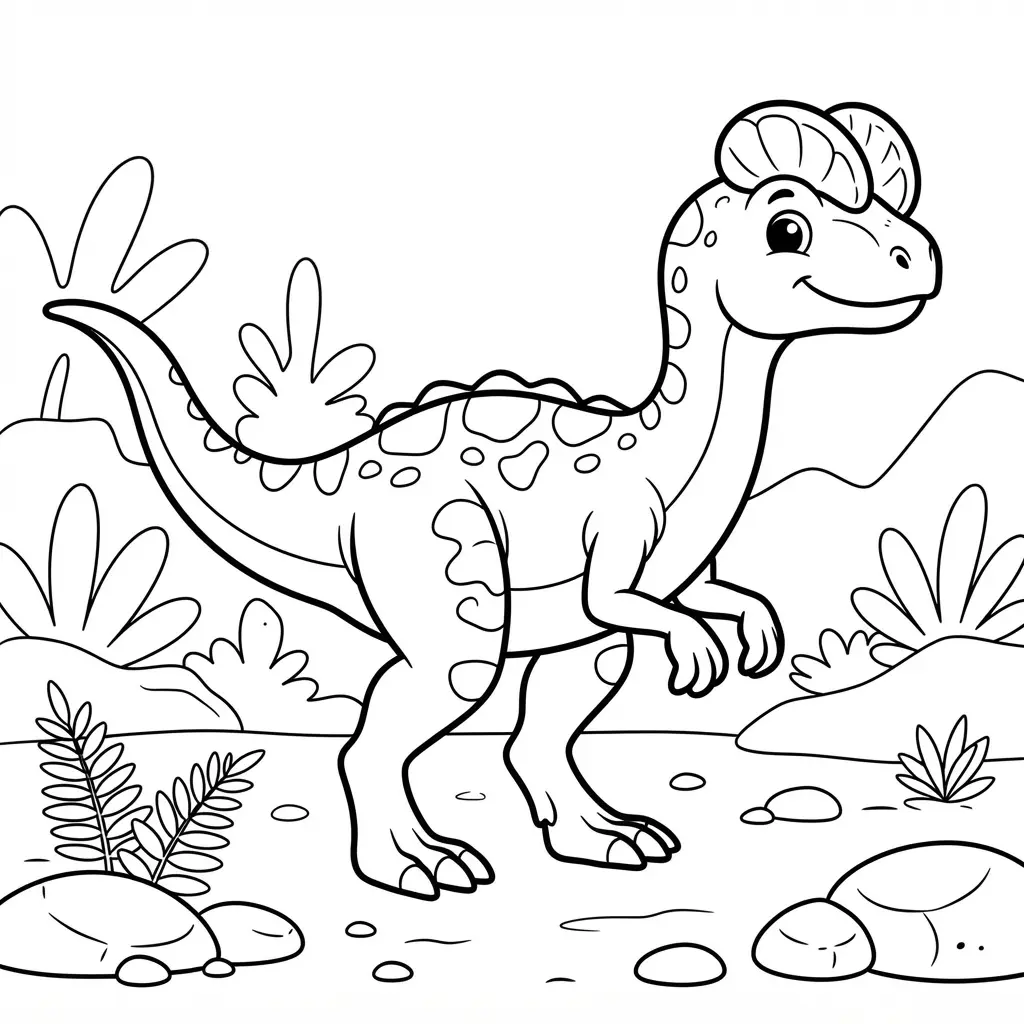
This one looks fierce, yet its head detail keeps the drawing clean and fun. Start with a lean theropod body, a long tail, and two narrow arches rising from the skull. Use a paired crest outline so both bony structures stay thin, separate, and easy to color. Keep them on the head, not around the neck, since a soft frill belongs to the movie version.
Why settle for one crest when the name means “two-crested lizard”? Those delicate shapes give your page an instant focal point, while playful colors keep the rest lively. I love adding warm reds, golds, or cool blues after tracing the skull. Trust me, skipping the fictional frill and venom detail leaves you with a clearer, more authentic prehistoric character.
Practice drawing the twin arches lightly before committing to ink. This habit improves accuracy across all dinosaur coloring pages.
21. Dinosaur Family Nesting Together Group

This one is my favorite because it feels gentle, cozy, and full of family care. Place a large parent dinosaur beside a central nest, with several smooth eggs clearly showing inside. Arrange the smaller siblings close by, sharing cuddles and friendly smiles. Doesnt this group make a sweet scene for dinosaur coloring pages?
Frame the family with fern fronds, broad leaves, and a few simple rays of golden sunlight. Keep visible space between each body, egg, and plant so every outline stays easy to follow. Rounded shapes and soft scale patterns suit the children’s storybook style, while cheerful faces keep the mood peaceful.
I love adding small color changes across the scales, such as light bellies and darker backs. Leave open areas for spots, stripes, or gentle shading. Pro tip: show every egg clearly, then let the plants frame the group instead of covering it. Your finished page will feel warm, safe, and wonderfully together.
22. Carnotaurus Profile with Horn Details
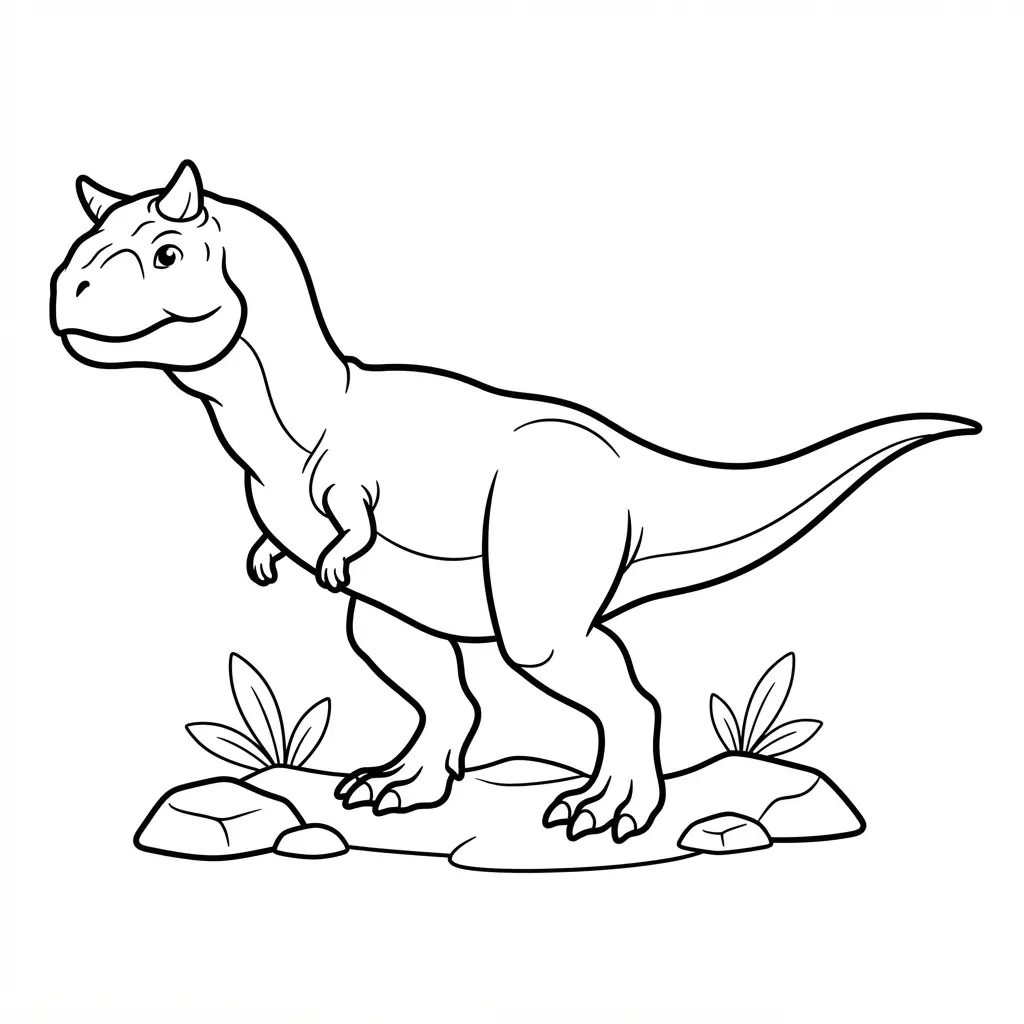
Those broad brow horns give a Carnotaurus profile an instantly recognizable look, with tiny eyes tucked beneath them. Ever wondered how to keep the head readable on a coloring sheet? I love using bold outlines around the skull and thick horn bases.
Begin with a short, deep, boxlike skull and a narrow snout. Place each horn above and slightly behind its eye, projecting outward and a little upward, never straight up. Add a muscular neck, deep chest, tiny forelimbs, long hind legs, and a thick tail. Use clean side-profile lines so every feature stays easy to see.
The balanced silhouette works because the horns, small arms, strong legs, and tail each have a clear place. Scientists still debate whether the horns served display, recognition, or contests between individuals. Pro tip: leave open spaces around the eyes and horn bases for smooth coloring. Feel proud when this bold dinosaur takes shape.
23. Archaeopteryx Flying Above Pine Trees
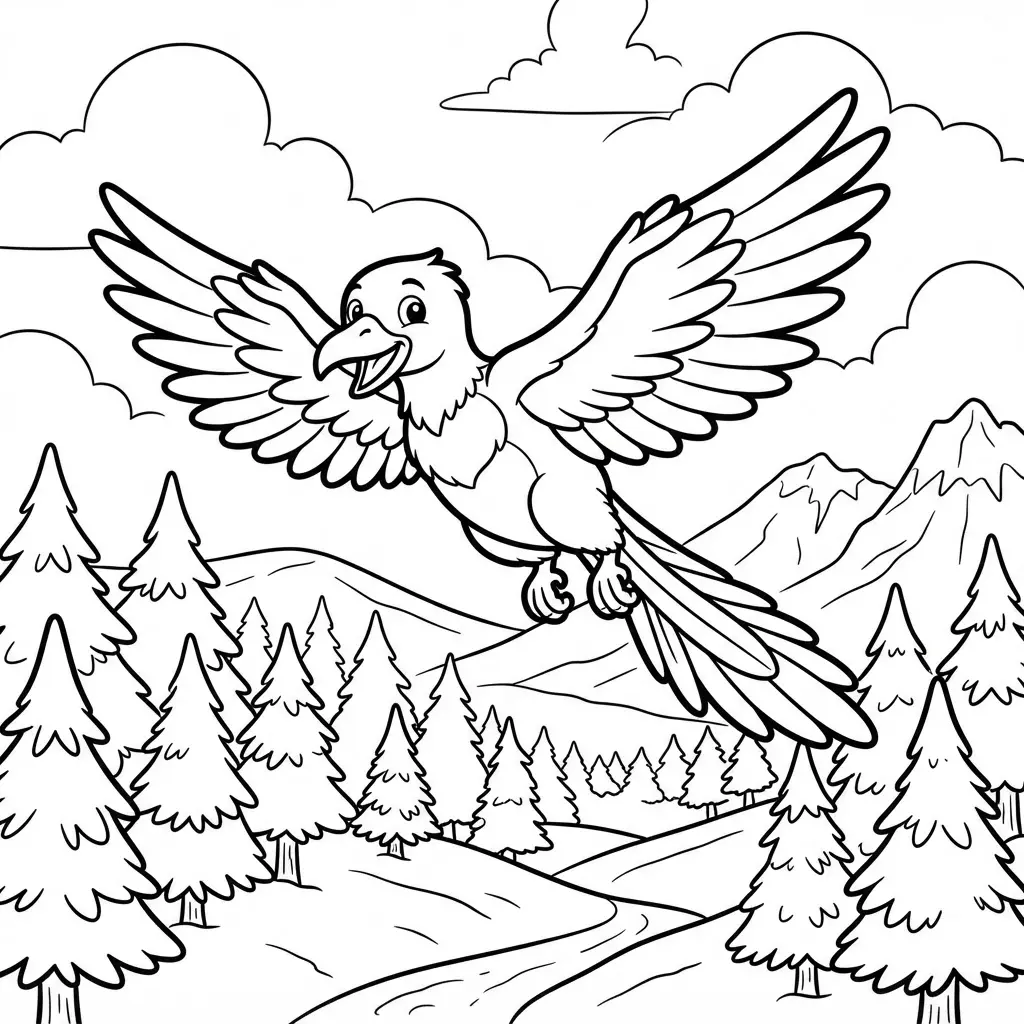
Many people draw Archaeopteryx as an ordinary bird, yet its feathered wings, reptilian head, sharp teeth, and clawed toes give it a distinct look. Start with both wings fully extended, then angle the body and long feathered tail in one direction so the pose reads as a smooth glide.
Below, layer overlapping Jurassic pine treetops to form a dense canopy, leaving pale space between the animal and forest. Add soft clouds and golden sunlight, using lighter background outlines for distant trees. Sound complicated? It isn’t, and I love how earthy browns, greens, and warm sky tones make each section easy to color. Pro tip: keep the animal outline darkest so every feather stays clear.
24. Gallimimus Running at High Speed
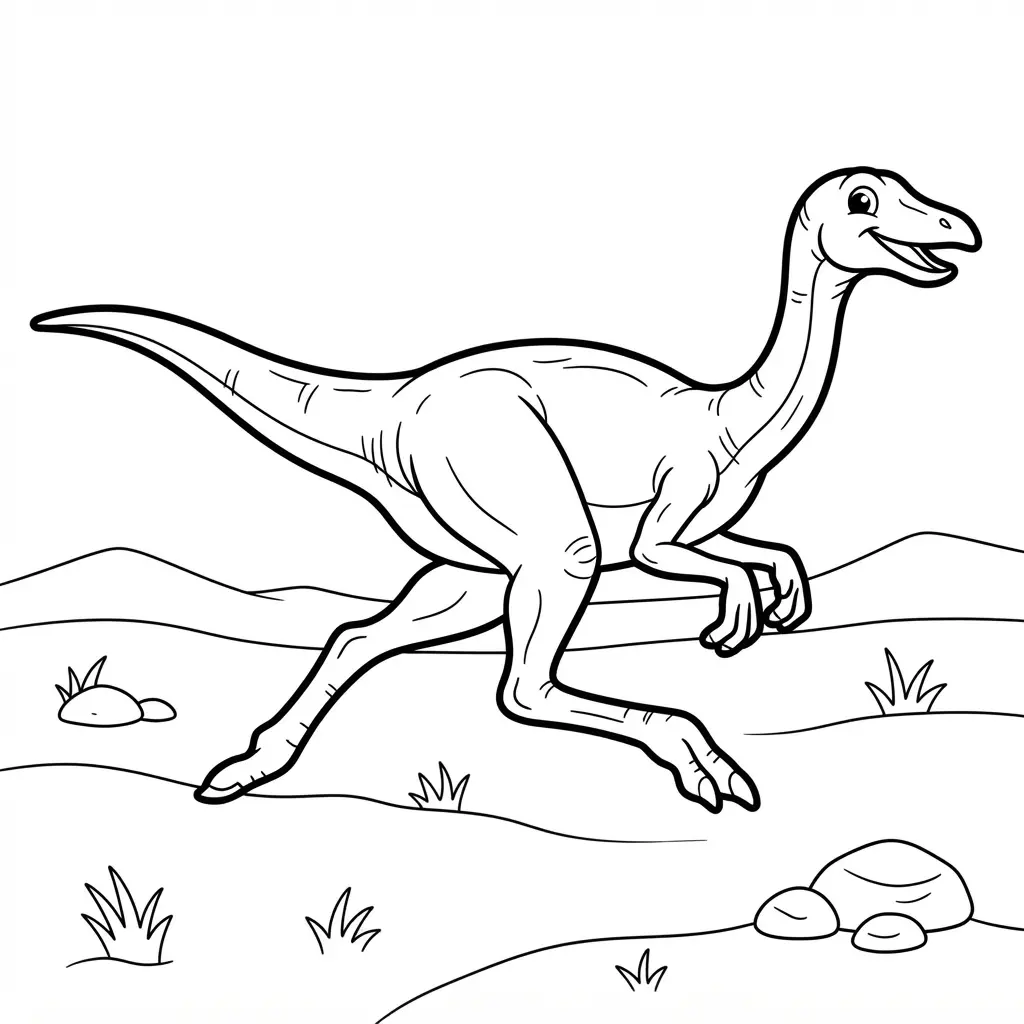
Start with a low-angle viewpoint, placing the viewer near the ground as the Gallimimus races across an open prehistoric plain. Stretch its long legs into a full stride, with one foot reaching forward and the other pushing off behind. Ever tried coloring a pose like this?
Keep the neck and tail aligned with the forward rush so the body feels balanced. Add a broad dust cloud behind the feet, leaving open sections for sandy browns and pale grays. Draw feathers and loose skin streaming backward, then use a few clean motion-blur lines and sharp light along the back.
I love this scene because every line helps show speed without making the page hard to color. Keep the Late Cretaceous setting simple, and enjoy the action-packed finish. This layout consistently ranks among the most popular dinosaur coloring pages.
25. Tyrannosaurus Versus Triceratops Battle Scene

Does this coloring page feel like a movie scene? I love this one because the Tyrannosaurus lunges from one side with jaws open and one foot lifted, while the Triceratops charges from the opposite side with its head low and horns aimed forward. Opposing dinosaur poses keep both figures clear and full of motion.
Frame the clash with cycads, conifers, ferns, rocks, broken branches, and rising dust, leaving sunlight rays open behind the pair. Give scales, frill sections, and debris broad outlines with roomy spaces for crayons or markers. Leave breathing room between the bodies so each silhouette stays easy to recognize. The scene feels satisfying because every detail supports the action, and I love seeing children choose bold colors for the dust and prehistoric valley.
Display Finished Pages In A Prehistoric Gallery
A 20 x 25 cm wooden picture frame gives a standard page a neat border and keeps finished coloring pages upright on a bedroom shelf or wall. Choose a frame with acrylic glazing when young children handle it often, since lighter panels resist shattering. Leave the page untrimmed if its printed border adds a clean edge, or use acid-free backing sized to the sheet.
Removable photo corners hold crayon and colored-pencil pages without glue marks or torn paper. Marker pages need a fully dry surface before framing, especially where dark ink fills large dinosaurs or volcanic backgrounds. Group pages by habitat, species, or color palette to create a coherent prehistoric gallery.
Keep framed pages away from direct sunlight, heaters, and damp rooms so pigments stay clearer and paper stays flat. Organizing your collection this way showcases every dinosaur coloring page beautifully.
Conclusion
So how was your creative session? Look at what you have made, from bright jungle leaves to carefully colored scales and rocky ground. Dinosaur coloring pages give each child a personal way to show which creatures they love most, while parents and teachers get a calm activity with room for learning. For the next page, choose one dinosaur your child does not know yet, look up a few simple facts in a book, and add colors based on their own ideas. Leave some background space open for extra plants, clouds, water, or footprints.
I love how every finished page reflects a different choice, even when two children color the same scene. Pick a favorite page from the collection, place it on the table with fresh supplies, and let the next prehistoric scene begin with your own color choices.
FAQs
Q: Are these dinosaur coloring pages good for preschoolers?
A: Yes, several scenes use bold outlines and open spaces for young children. Choose the baby dinosaur, friendly Stegosaurus, or cartoon T-Rex first.
Q: What paper works best for printable dinosaur pages?
A: Bright white printer paper works well for crayons and colored pencils. Use thicker paper for markers to limit ink transfer.
Q: Which dinosaur pages suit older children?
A: Older children often enjoy the fossil dig site, volcanic setting, ocean scene, and battle scene. These pictures include more background details and smaller sections.
Q: How do I print dinosaur coloring sheets at home?
A: Select standard letter size in your printer settings and choose a high-quality black-and-white print mode. Check the preview before printing.
Q: How do children learn from dinosaur coloring activities?
A: Children practice focus, hand control, color choices, and dinosaur recognition. Adults can add short facts about each species during the activity.