Achieving Opaque Black Layers With Heavy Body Acrylics
Your black silhouette will look streaky and weak if you use a thin acrylic paint straight from the tube. The good news is, heavy-body acrylics have a thick, paste-like consistency that covers any background color in a single, smooth coat. When practicing acrylic silhouette painting for beginners, this high-contrast relationship between your vibrant sky and the dark shape depends on that perfect opacity. Trust me, trying to build multiple layers with a watery paint leads to frustration and a muddy final look. Thin paint also tends to stick to your brush and create jagged, inconsistent edges as you apply it. You want a paint that feels substantial and glides on like soft butter, completely blocking the light from the layers below. That solid, flat finish is what makes the silhouette technique so striking and graphic.
Mastering Soft Horizon Blending Before Subject Application
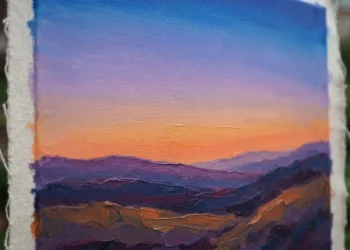
The entire mood of your painting lives in that blended background, so you must let it dry completely before you touch a brush to your black paint. Work with a palette of three or four related colors, like oranges blending into deep purples, to create a soft gradient sky. Use a clean, damp brush to gently work the wet edges of your colors together on the canvas until you see a seamless transition. This horizon line sets the stage and determines where your silhouette will sit, so take your time getting it right. Rushing this step is the biggest mistake we all make because we are excited to paint the main subject. A dry background prevents any accidental mixing that would ruin your sharp, clean silhouette edges later. Any reliable acrylic silhouette painting for beginners guide will tell you that your patience here pays off with a professional-looking, atmospheric foundation.
1. Paint a Striking Sunset Desert Cactus Silhouette
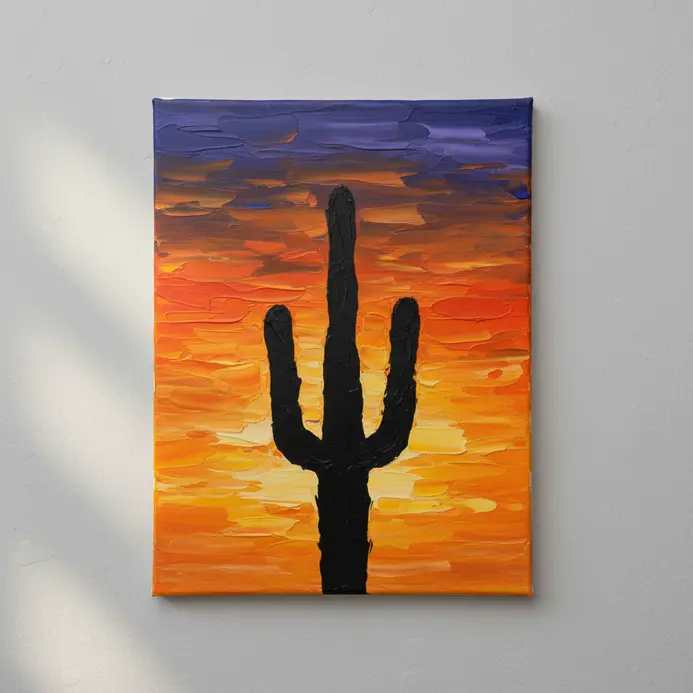
This one surprised me. It looks complex, but the technique is wonderfully straightforward. You will start by blending a vibrant sunset gradient on your canvas, working quickly while the paint is wet. Then, once that background is dry, you paint the iconic cactus shape as a solid, dark silhouette. The high contrast between the bright sky and the dark shape is what creates that dramatic, emotional punch. Trust me, using a dark mixed color instead of pure black makes the silhouette feel more natural. Exploring this approach is highly recommended when you start any new acrylic silhouette painting for beginners project. Check these easy acrylic painting ideas to build your skills.
2. Create a Starry Night Mountain Range Silhouette
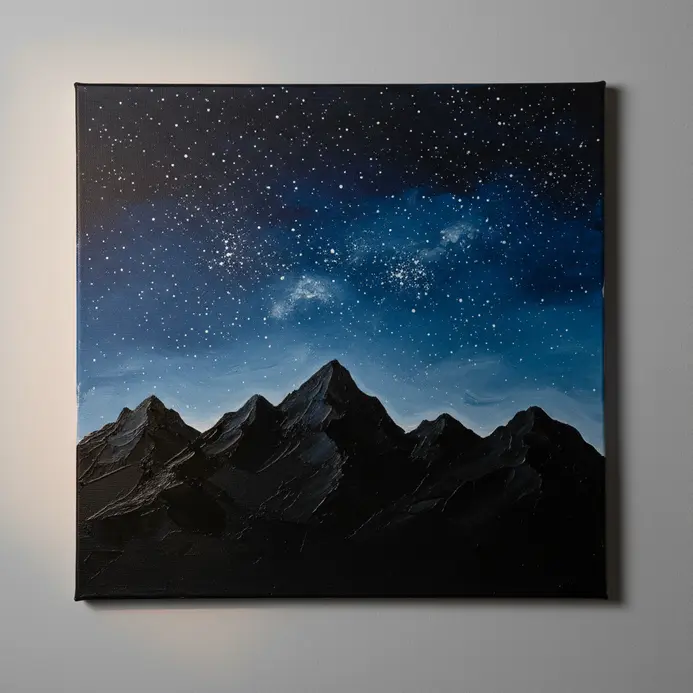
Ever wondered how those dramatic night sky paintings actually work? This one is a fantastic project because the vibrant, swirling sky does all the talking while the mountains are a simple, solid shape. You’ll start by blending layers of blues and purples for that iconic ‘Starry Night’ look, adding splattered stars and a crescent moon. Then, you paint a clean, dark mountain silhouette over the top. The magic is in that powerful contrast – it feels like looking at the vast cosmos from a quiet, grounded place. Mastering this technique takes practice, but it remains a favorite subject within acrylic silhouette painting for beginners. Trust me, seeing that bold silhouette pop against your colorful sky is incredibly satisfying.
3. Build a Midnight Forest Pine Tree Silhouette
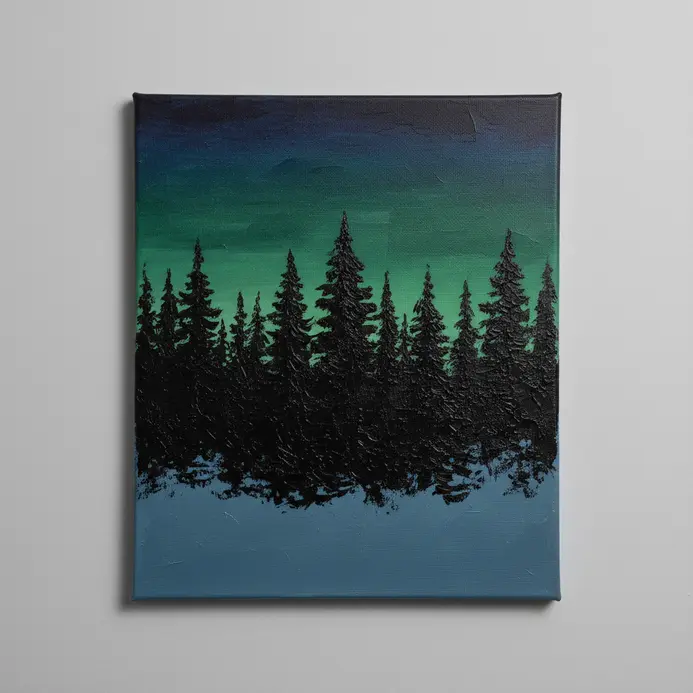
Ever wondered how to paint a forest that feels mysterious and deep? This one surprised me—it looks complex but is wonderfully forgiving. You will start by creating a dark, moody background with blended blues and purples. Once that dries, you sketch your pine trees and fill them in with solid black acrylic paint. The stark contrast makes the trees pop against the night sky. Why does this work so well? The silhouette technique lets you focus on simple, bold shapes instead of tricky details, which is perfect if you are new to painting. I love using an old toothbrush to flick on some tiny white stars for extra magic. This setup perfectly captures the relaxed pace of acrylic silhouette painting for beginners. See more canvas painting ideas for kids. Feel proud when your peaceful midnight scene comes together.
4. Capture a Golden Hour Oak Tree Silhouette
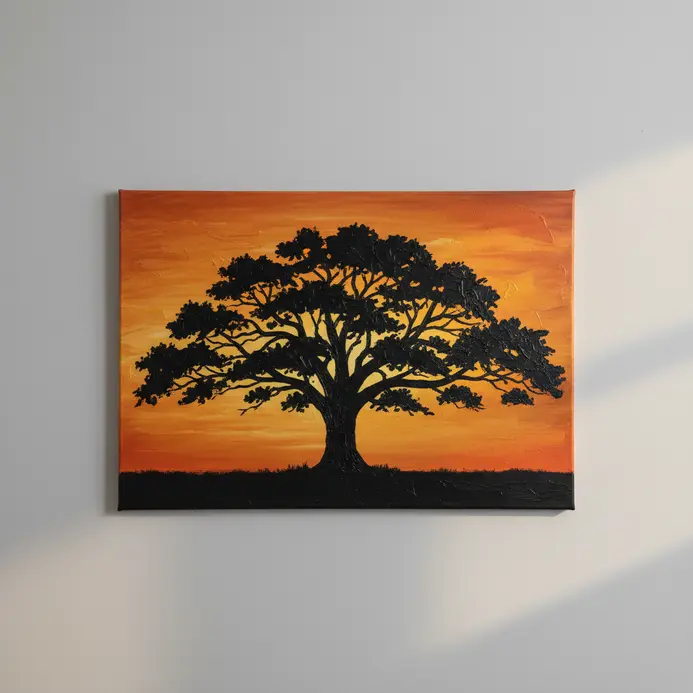
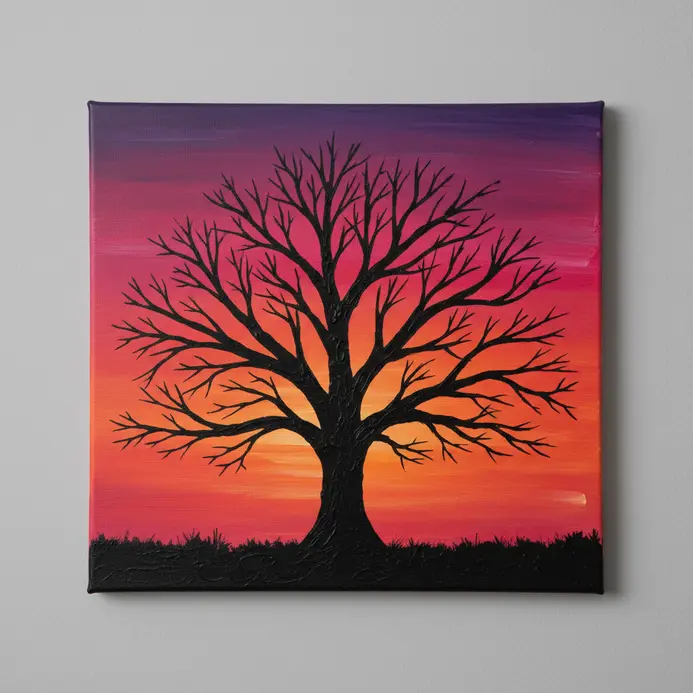
Ever wondered how photographers get those dramatic black trees against a fiery sky? The secret is placing the sun directly behind your subject. You will set your camera to expose for the bright, warm sky, which intentionally leaves the tree as a dark, beautiful shape. I love how this simple trick creates such a powerful image. Your key is arriving early to set up your tripod and find the perfect composition before the light changes. Use a low horizon for lots of sky, and let the distinctive branches of the oak create the star of the show. This scene is a fantastic way to practice dramatic landscape paintings for beginners and master core acrylic silhouette painting for beginners techniques. Feel that warm, golden payoff when it all comes together.
5. Paint a Tropical Beach Palm Tree Silhouette
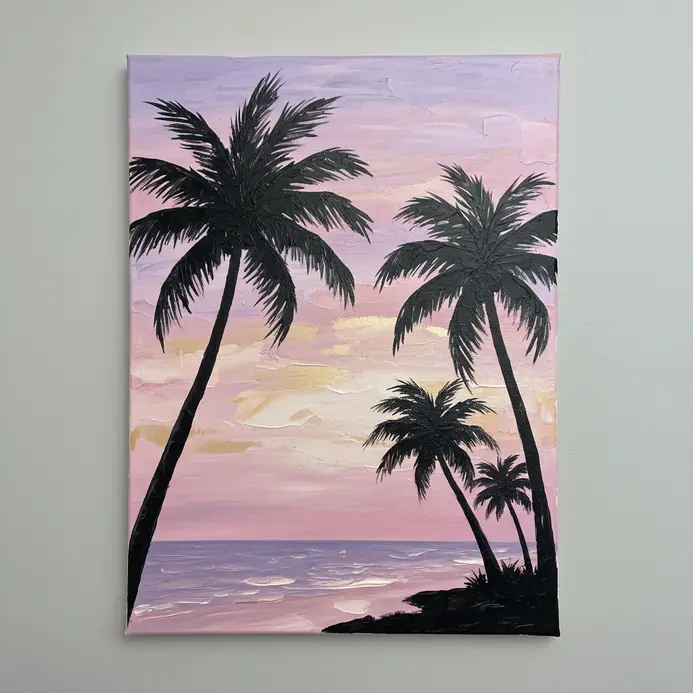
Ever wondered how those stunning sunset palm tree pictures get painted? This one surprised me – it looks complex but is wonderfully forgiving for beginners. You will start by blending a vibrant sky with a medium large flat wash brush, moving from yellow to orange, red, and purple. Then, you will let that dry completely before using a tiny liner brush to add the solid black palm tree trunk and its feathery fronds. I love this one because the dramatic contrast makes even a simple shape look incredibly striking. Trust me, let your sky dry fully and you will feel so proud of that crisp, dark silhouette against the glow. Many students find this tropical setup ideal for refining their acrylic silhouette painting for beginners skills.
6. Urban Skyline Sunset Silhouette: A Dramatic Cityscape
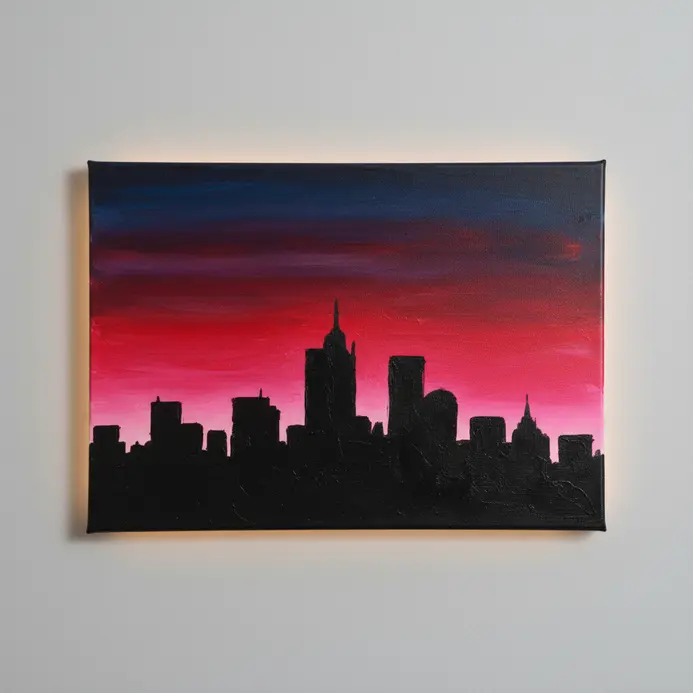
Ever wonder how to capture that breathtaking moment when a city turns into a dramatic outline against a fiery sky? This project looks stunning, but it’s all about two simple steps. First, you’ll blend your sunset colors from the horizon up, working quickly with a large flat brush. Once that’s dry, you paint your city’s dark shapes right on top, focusing on clean, sharp edges for maximum impact. That stark contrast is why it works so well. The emotional pull of a sunset meets the powerful forms of a city, creating instant drama. I love starting with a simple skyline shape and using an opaque black paint to make those buildings pop. It serves as an excellent exercise for any acrylic silhouette painting for beginners looking to sharpen their edge control. Explore more landscape paintings for beginners. Trust me, you’ll feel so proud when you see your finished cityscape.
7. Paint a Full Moon Lighthouse Cliff Silhouette
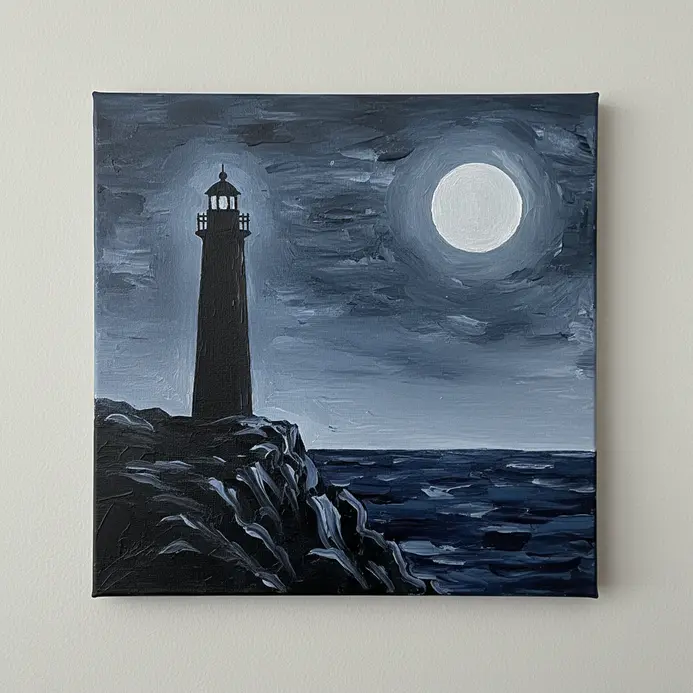
This one seems dramatic, but it is all about planning your light and dark shapes first. Start by painting your bright white moon and a dark blue sky that gets lighter around it. When that’s dry, block in the jagged cliff and lighthouse with deep black paint to create that powerful silhouette effect. I love adding a tiny bit of dark purple or brown into the black to keep the shapes from looking flat. The magic happens when you add broken, shimmering lines of white on the water for the moonlight’s reflection. It turns a simple scene into something truly atmospheric. This lighthouse composition teaches essential layering habits for acrylic silhouette painting for beginners. For more inspiration on easy things to paint, explore this collection of simple projects.
8. Create a Winter Snow Mountain Peak Silhouette
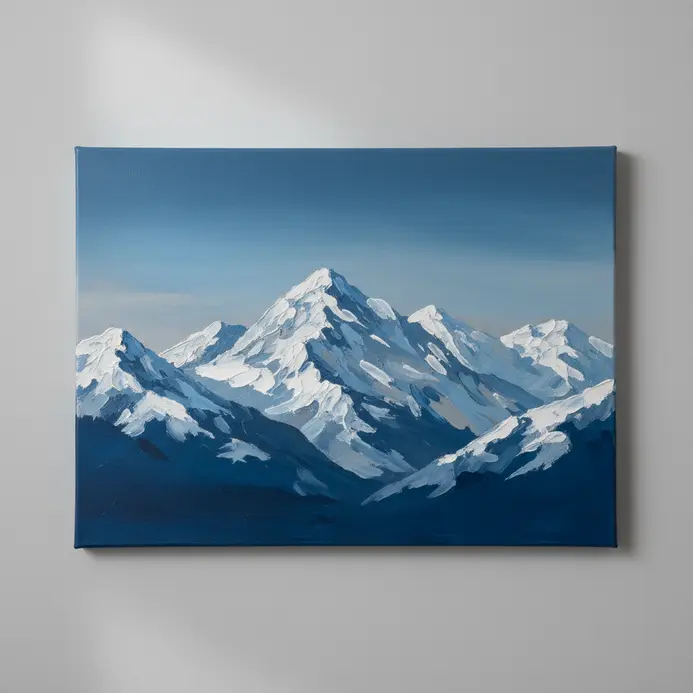
Ever wondered how to make a dramatic mountain scene with so little detail? It is all about that strong, dark outline against a beautiful sky. First, paint your background sky with those soft gradients or vibrant sunset colors and let it dry completely. Then, fill in your sketched mountain shape with black acrylic paint to create that striking silhouette. I love this one because it teaches you how powerful simple contrast can be. Feel the satisfaction when that majestic peak appears against the colorful sky. Practicing with sharp peaks helps refine brush control during any acrylic silhouette painting for beginners session.
9. Paint Fields of Tall Grass Silhouette in the Wind
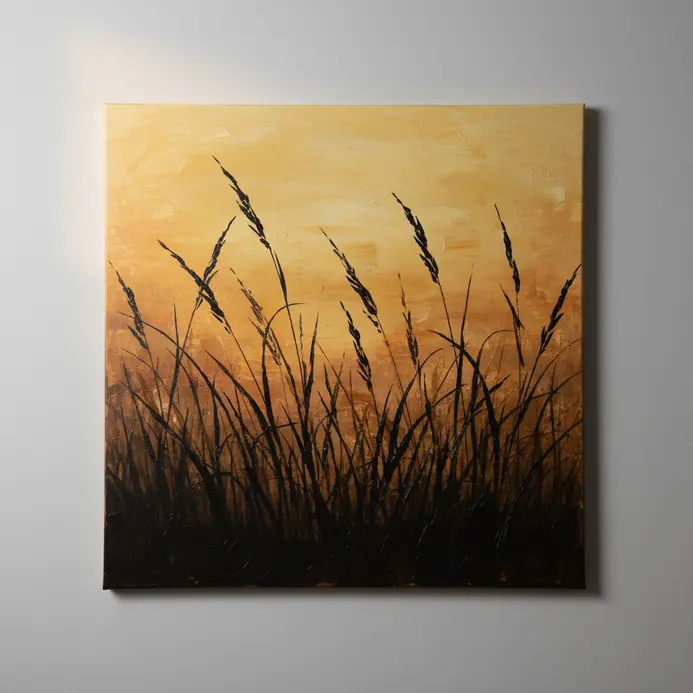
Who would have thought you could capture the feeling of a windy field so easily? This one is all about the dramatic contrast between a vibrant sky and the dark, moving shapes of grass. Start by creating your sunset or twilight sky and let it dry completely. Then, using a mix of black and burnt umber, block in the general shape of the field from the horizon up. Here is the fun part to create the wind effect. Use a fan brush or a fine liner brush to pull up individual blades and clumps of grass, angling them in different directions. Vary their height and thickness to avoid a stiff, uniform look. The strong silhouette against the light background makes this scene feel so atmospheric and alive. Try finding additional striking black and white paintings to see how experts handle grass blades. Trust me, the key is to work quickly and confidently with your dark paint to keep the grass looking dynamic. This flowing motion exercise perfectly illustrates advanced motion concepts within acrylic silhouette painting for beginners.
10. Capture a Solitary Rowing Boat Lake Silhouette
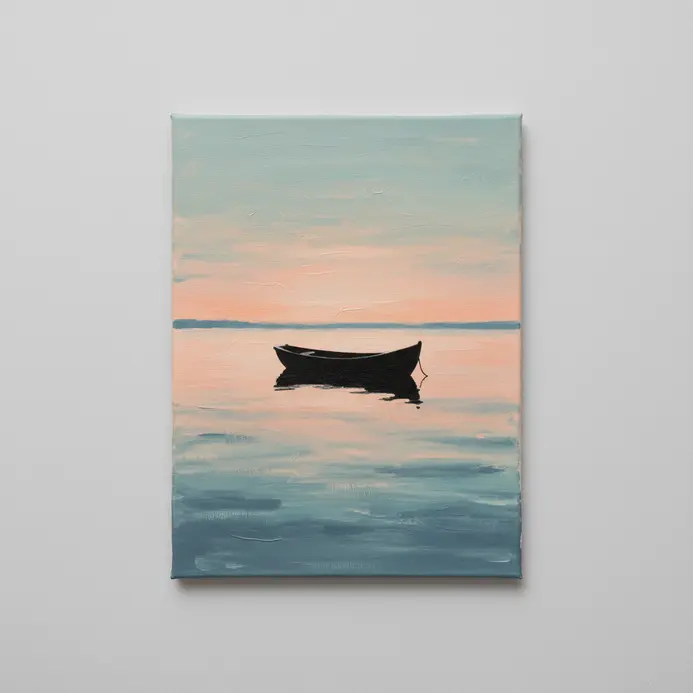
Ever wondered how to get that perfect, sharp shape of a boat against a glowing sky? This one is all about the backlight. You will set up your camera on a tripod during a colorful sunrise or sunset. Aim the camera so the bright sky is directly behind the boat, then adjust your settings to expose for that light. This deliberately makes the boat go dark, creating that classic silhouette look. The magic happens because you are focusing on the light, not the subject. This creates a dramatic contrast that feels peaceful and solitary. I love how simple this composition is, yet it tells such a strong story. It demonstrates perfect focal point placement for acrylic silhouette painting for beginners enthusiasts. For another project that focuses on clear, defined shapes, try a simple still life painting. Feel the calm when that perfect outline appears.
11. Dandelion Field Breeze Silhouette: Add Delicate Texture
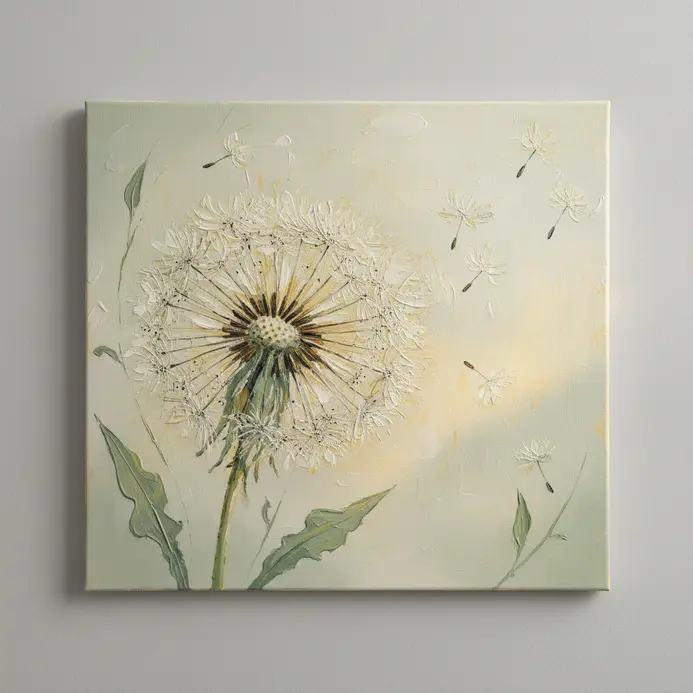
Ever wondered how to make a flat silhouette feel like a breezy field? This one is all about subtle magic. First, paint your solid dandelion field shape. Then, take a fine detail brush and use the tiniest amount of paint to add wispy, feathery edges to the seed heads. Add a few faint, circular patterns inside them and scatter tiny specks just outside the main shape. Isn’t that satisfying? It suggests movement and light without breaking the strong form. I love how this delicate touch makes the whole scene feel alive. Learning when to break your solid shapes adds dimension to any acrylic silhouette painting for beginners piece. Feel the freshness in your finished piece, perfect for sharing on Instagram.
12. Paint a Cat on a Garden Wall Silhouette
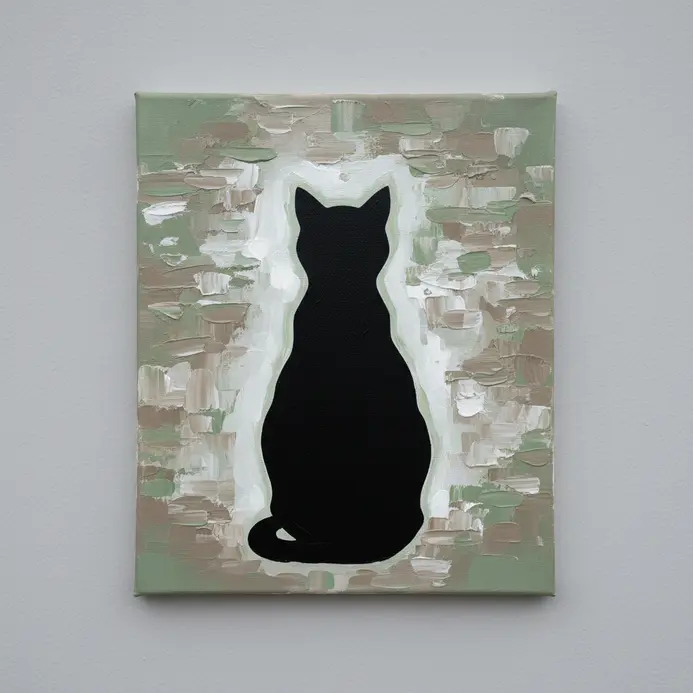
Ever wanted to add a touch of playful magic to your garden? This project looks like a professional mural, but it is surprisingly simple to pull off. You start by choosing a pose and tracing a cat silhouette template onto your wall or fence. Then, you carefully fill it in with a durable outdoor paint. The strong, dark outline creates a charming illusion of a cat perched right there. This works so well because silhouettes are wonderfully forgiving. Minor wobbles in your line work just disappear into the bold shape. I love how it personalizes an outdoor space instantly. Check out easy whimsical painting concepts for similar outdoor projects. The bold outline method forms a crucial foundation for acrylic silhouette painting for beginners. Try it and feel the satisfaction of seeing your garden come to life.
13. Create an Abstract Circular Floral Stem Silhouette
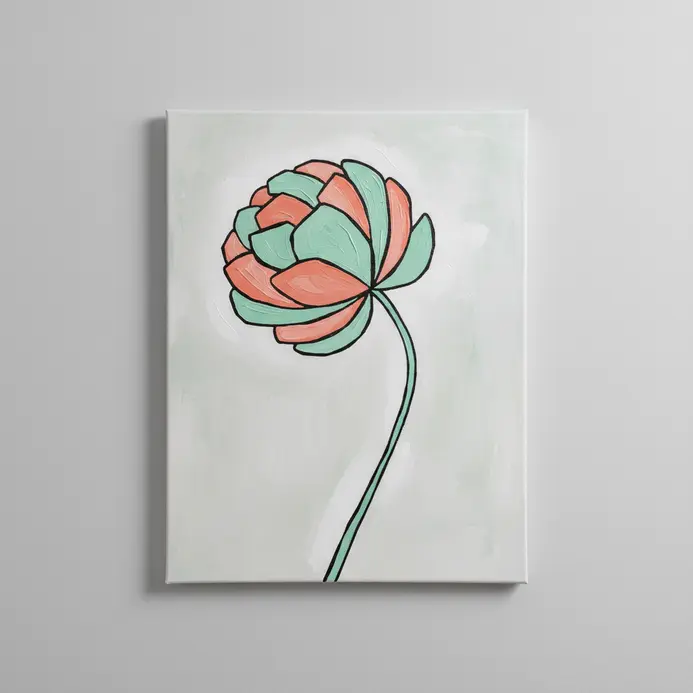
This one looks intricate, but it is incredibly beginner-friendly. You start by drawing a perfect circle with a compass or stencil. Inside that circle, sketch a single, flowing stem that branches into simple leaf and bud shapes. Your goal is to connect all the lines into one continuous, solid silhouette. I love how this forces you to think about negative space. Paint that entire silhouette shape with a smooth, dark color like black. Then fill the background with a bright, contrasting color. The circular boundary gives you a perfect composition every time. This structured layout removes guesswork for acrylic silhouette painting for beginners students. Try it and feel the satisfaction when that crisp, modern design emerges.
14. Capture a Horse Running Meadow Sunset Silhouette
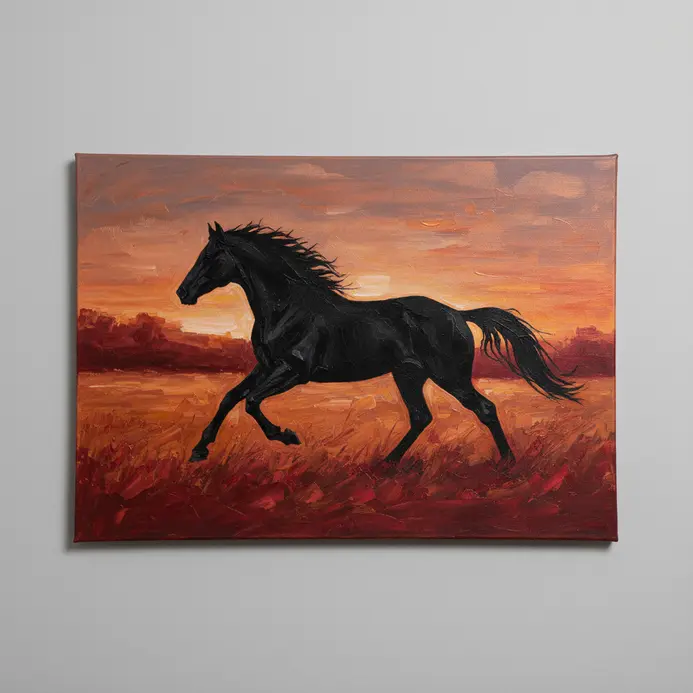
Ever wondered how photographers get those dramatic shots of a horse galloping against a sunset? The secret is exposing for the bright sky, not the dark horse, which turns it into a beautiful silhouette. You will need a fast shutter speed to freeze the motion, and timing it during the golden hour is key. I love how this simplifies the scene to pure form and emotion, making the horse look majestic. For a stunning result, try using a telephoto lens from a distance and keep your ISO low. The payoff is a powerful, dynamic image that feels full of life. Capturing animal motion requires steady hands, a vital trait for acrylic silhouette painting for beginners. This approach shares the clean, graphic feel of a cityscape painting on canvas, where shapes tell the whole story.
15. Abstract Geometric Mountain Horizon: Simplify Your Shapes
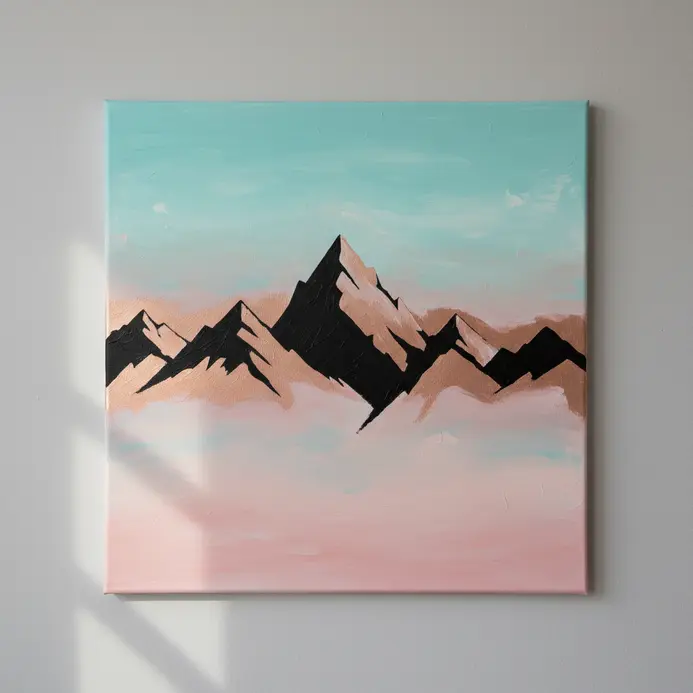
Ever looked at a mountain range and felt overwhelmed trying to paint it? This approach makes it wonderfully simple. You are not painting every rock and tree. Instead, you break the scene down into its basic geometric essence. Think of those peaks as a series of interlocking triangles created using acrylics and trapezoids. Your job is to arrange these simplified shapes to create a sense of depth and grandeur. Choose a limited color palette of three to five hues to maintain harmony. Use lighter, cooler tones for distant mountains and darker, warmer ones up close. This creates instant atmospheric perspective. Breaking landscapes into geometric blocks removes intimidation during acrylic silhouette painting for beginners. The result is a bold, graphic landscape that feels both modern and timeless. I love how this method takes the pressure off. It is all about feeling the form, not replicating every detail. For a deeper dive into this clean aesthetic, explore the minimalist painting style. When you step back, you will see a stunning, cohesive horizon. Does that not look stunning?
16. Paint a Bird Flock Morning Sky Silhouette
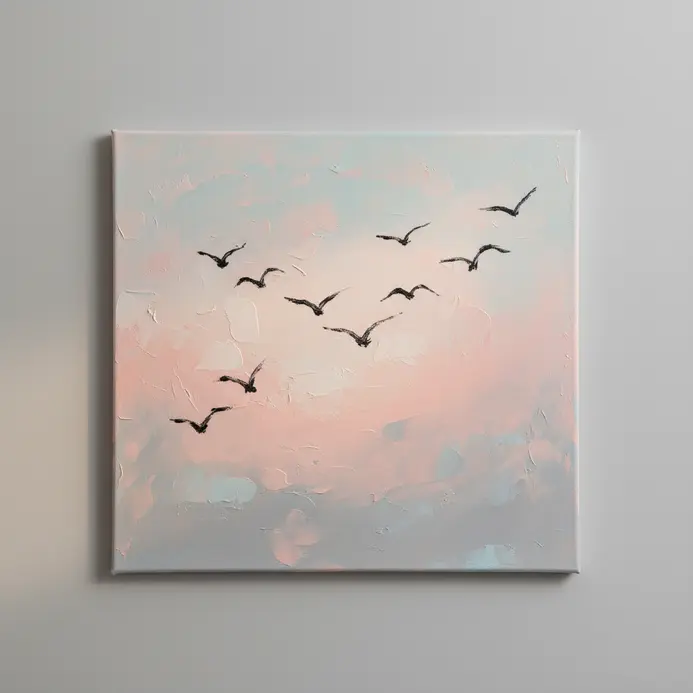
Ever wondered how to capture that perfect, peaceful morning feeling? This project is all about creating a stunning color gradient for the sky, from warm yellows and oranges up into cool blues and purples. Work quickly with a large, damp brush to blend the colors while the paint is still wet. Once your sky is dry, the real magic happens. Use a small round brush and black paint to add a loose flock of simple bird shapes. I love how the dramatic contrast makes the whole scene feel hopeful and alive. Painting repeated organic forms builds muscle memory for acrylic silhouette painting for beginners. Try it and feel the satisfaction when those dark silhouettes pop against your beautiful sky.
17. Add a Butterfly on a Flower Branch Silhouette
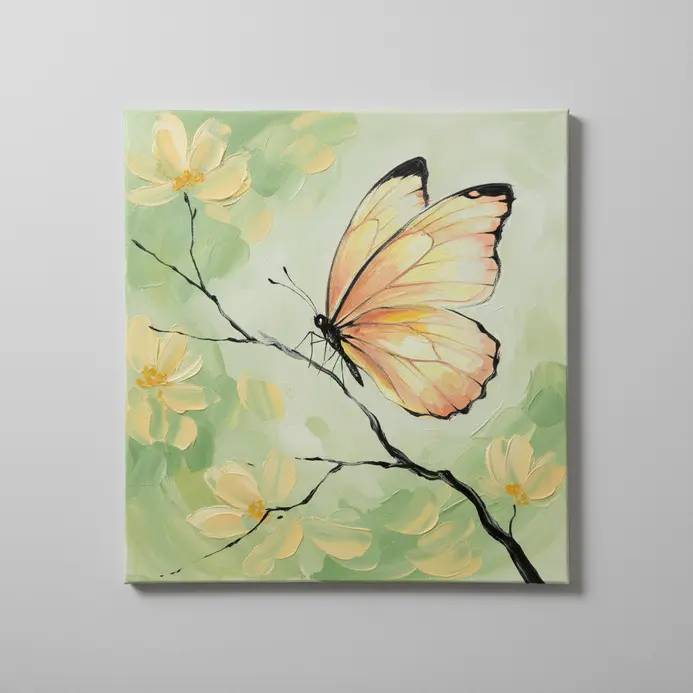
This one looks elegant, but trust me, it is one of the most beginner-friendly projects. You start by painting your background, let it dry, and then lightly sketch the branch and butterfly with a pencil. Isn’t it fun to see those simple shapes come to life? The magic happens when you carefully fill those outlines with black paint using a fine brush, creating crisp silhouettes against the color. This works so well because the strong contrast makes your painting pop without needing any tricky details. I love how this lets you play with beautiful backgrounds. You will quickly understand why precise linework matters in acrylic silhouette painting for beginners when filling delicate wing shapes. For more ideas on setting a mood, you can find some celestial painting inspiration.
18. Create a City Bridge Night Sky Silhouette
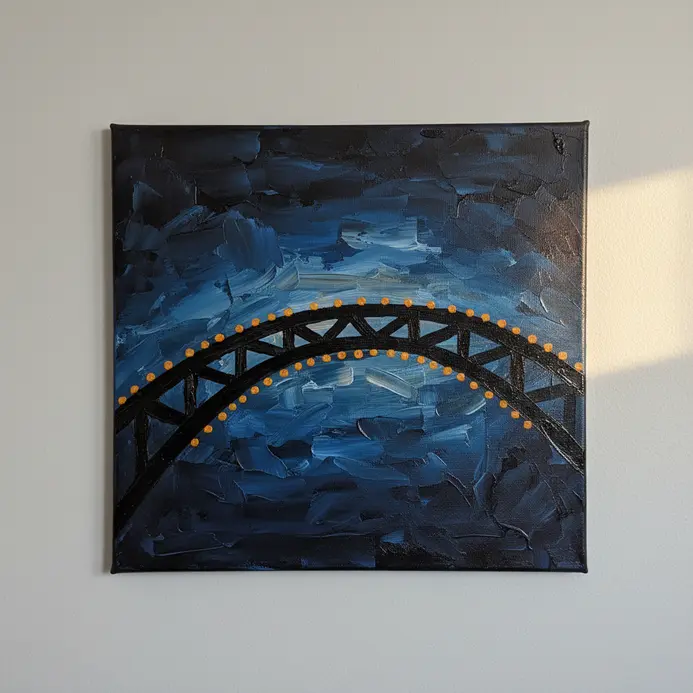
This one looks so dramatic but is wonderfully simple to pull off. You start by painting your vibrant night sky with a blend of deep blues and purples, then you add tiny stars for sparkle. The magic happens when you paint the solid black shape of a bridge and city skyline right over it. I love how the strong contrast makes the sky pop. It works because your eye gets drawn to the beautiful colors first, then notices the powerful dark shape. My go-to tip is to keep the silhouette detail-free for maximum impact. Feel that sense of calm grandeur when you step back. For a similar project with a different iconic structure, easy lighthouse painting guides offer comparable night scene advice. This bridge exercise perfectly illustrates structural balance for acrylic silhouette painting for beginners.
19. Paint a Sleeping Fox Forest Moon Silhouette
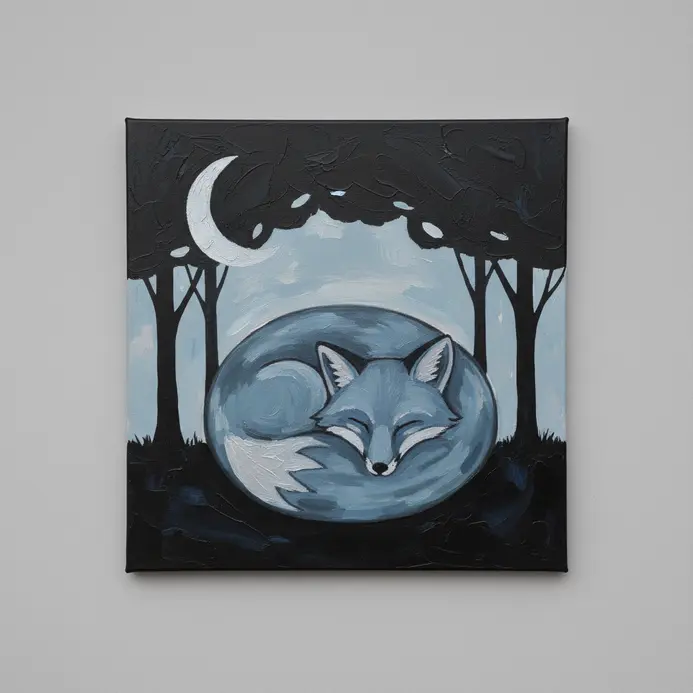
Ever wondered how to create a serene scene with just a few shapes? You start by painting a large, glowing moon slightly off-center on your canvas. Then, use a large flat wash brush to blend dark blues and purples around it for a deep night sky. The real magic happens when you paint the sleeping fox and forest trees in solid black against that glow. This works so well because the strong contrast feels both tranquil and striking. I love how this piece proves you do not need complex details to make something truly evocative. Trust me, the final payoff when you see that fox curled under the moon is incredibly satisfying. Mastering this gentle composition helps refine atmospheric depth in acrylic silhouette painting for beginners.
20. Hot Air Balloon Sunset Silhouette: A Joyful Scene
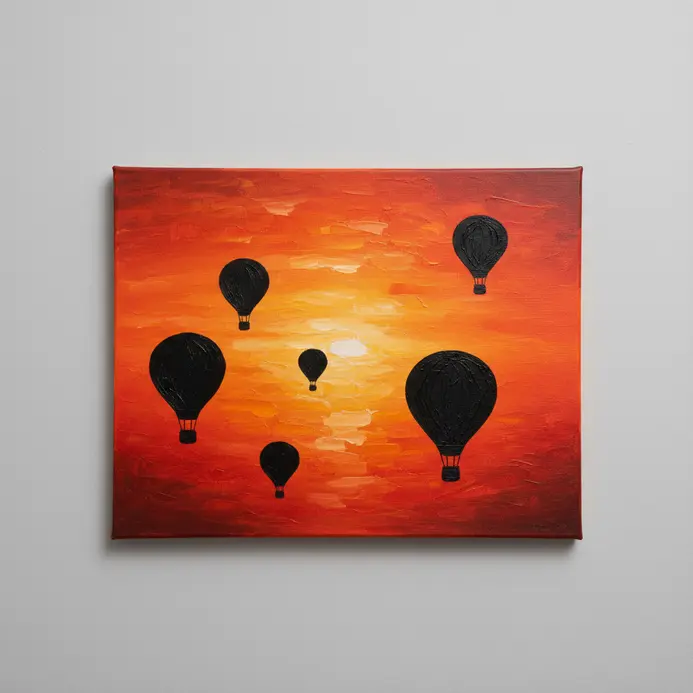
Who would have thought a simple dark shape could feel so joyful? I love this one because you get to play with a gorgeous wet-on-wet blending technique for the sunset sky. Paint those warm oranges and pinks from the bottom up, letting them swirl together while the canvas is still damp. The real magic happens when you let that background dry completely and then add the solid black balloon shape. Isn’t that contrast stunning? See more easy acrylic painting ideas to build your skills. You will find round object practice essential for mastering proportions during your next acrylic silhouette painting for beginners attempt.
21. Capture a Fisherman at Pier Sunset Silhouette
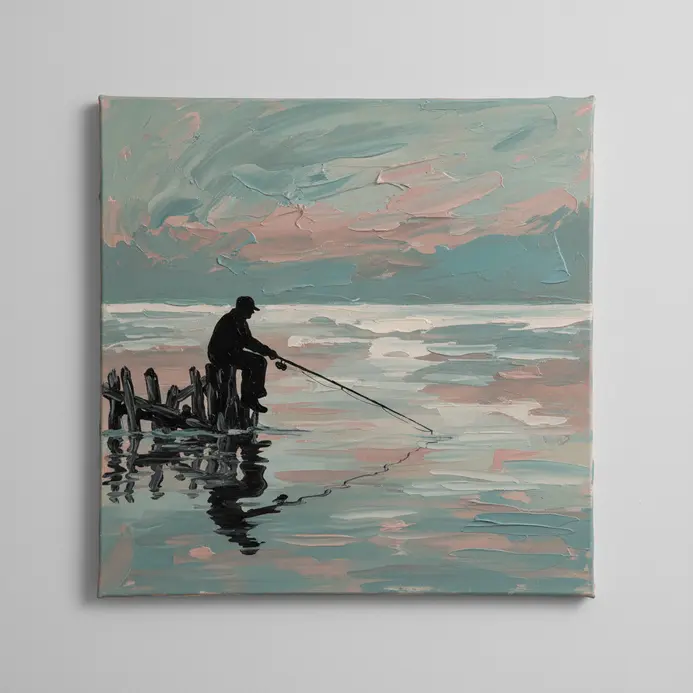
Have you ever seen one of those stunning sunset photos with a perfect dark figure? This painting captures that exact, peaceful feeling. You will start by blending a gorgeous sunset wash of oranges and reds into deep blues. Once that dries, the real fun begins with painting the solid black shapes using a fine paintbrush. I love how the crisp silhouette edges pop against the warm sky, creating such a powerful, simple scene that could be a great video tutorial. Adding human figures introduces storytelling to any acrylic silhouette painting for beginners. Check out easy things to paint beginners guides for similar figure placement tips.
22. Paint a Spooky Haunted House Moon Silhouette
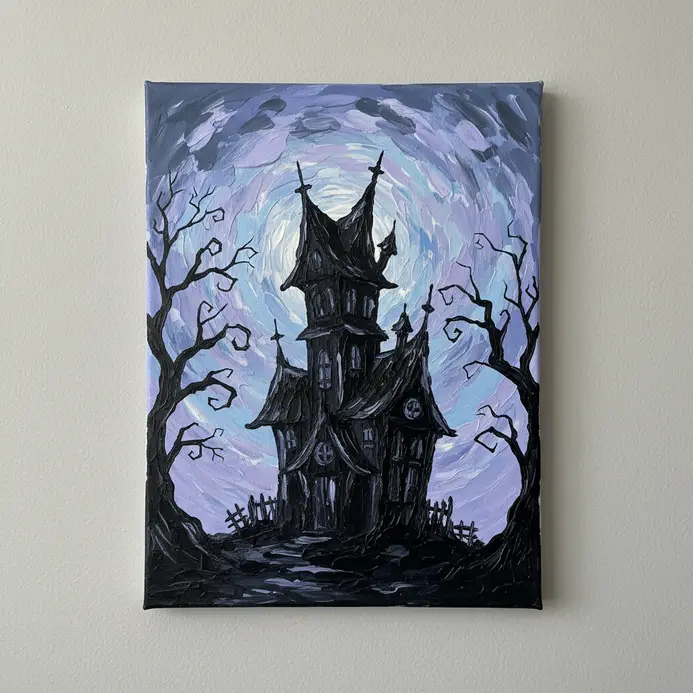
This one is so much fun and looks far more complex than it is. You will start by painting a luminous moon against a moody sky, letting that layer dry completely. Then, using black acrylic paint, you will carefully fill in the shape of your haunted house and any spooky trees. The magic is in that sharp contrast between the dark shape and the glowing background. I love how this project teaches you about negative space without any fuss, making it an ideal craft for beginners. The key is to keep your silhouette edges crisp and your house design simple for maximum impact, showcasing your creativity. Does that not look stunning when you step back?
23. Zen Bamboo Forest Water Silhouette: Practice Vertical Lines
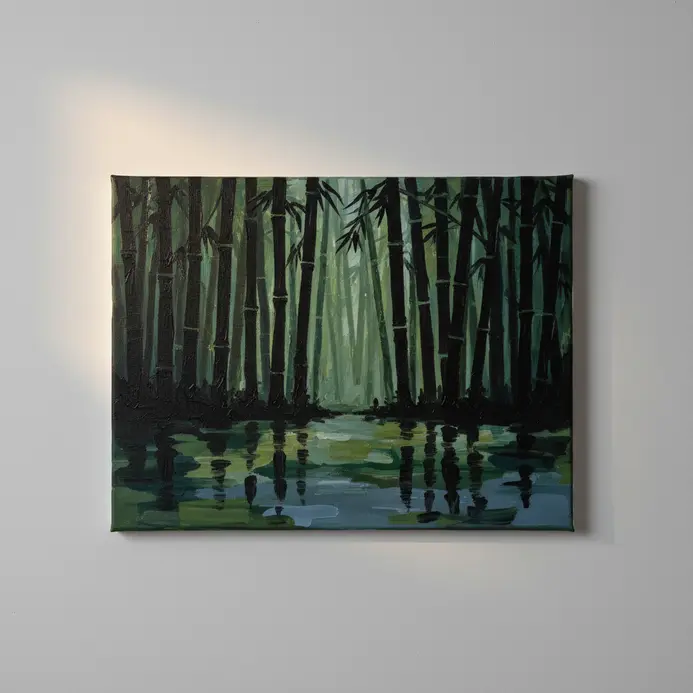
Does a Zen bamboo forest sound complicated? It is not. This is about practicing those long, confident vertical lines with your craft. You will create tall, dark stalks against a soft background, with a mirrored reflection below. I love using a brush pen for this because you can get thick and thin lines so easily with just your hand pressure. Focus on moving your whole arm, not just your wrist, to keep your lines straight. The reflection part is where the magic happens. Soften those lower lines slightly and let them blur a bit to suggest water. This exercise works because it turns a simple technical practice into a peaceful, finished piece of art. Find more abstract painting ideas for beginners to expand your style repertoire. Feel how calming those repetitive strokes can be.
24. Create a Deer in Misty Woods Silhouette
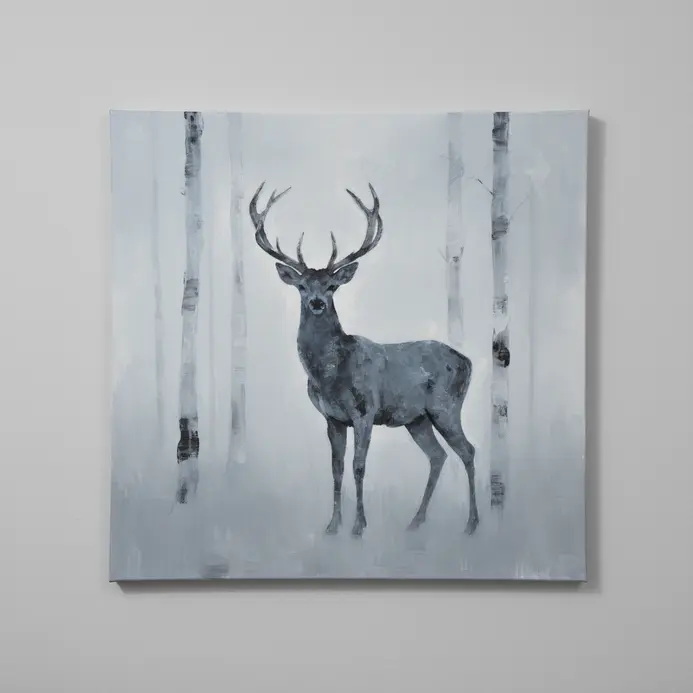
Ever wondered how to capture that magical, misty forest feeling? This project looks complex, but it is surprisingly simple and quick. You will paint a solid black deer silhouette against a soft, hazy background. Start by laying down a wash of cool gray acrylic paint for the misty sky. Then, while that is still a little damp, blend in some pale blue and white at the horizon for depth. Let that first layer dry completely. Next, mix a little black paint with a touch of water so it flows smoothly from your brush. Use a small round brush to paint the elegant shape of a deer standing still. I love how this stark, dark shape pops against the soft background you created. The contrast makes the whole scene feel peaceful and mysterious. See more landscape paintings for beginners tutorials for similar nature scenes. Does that not look stunning when you are done?
25. Paint a Minimalist Sailboat Ocean Wave Silhouette
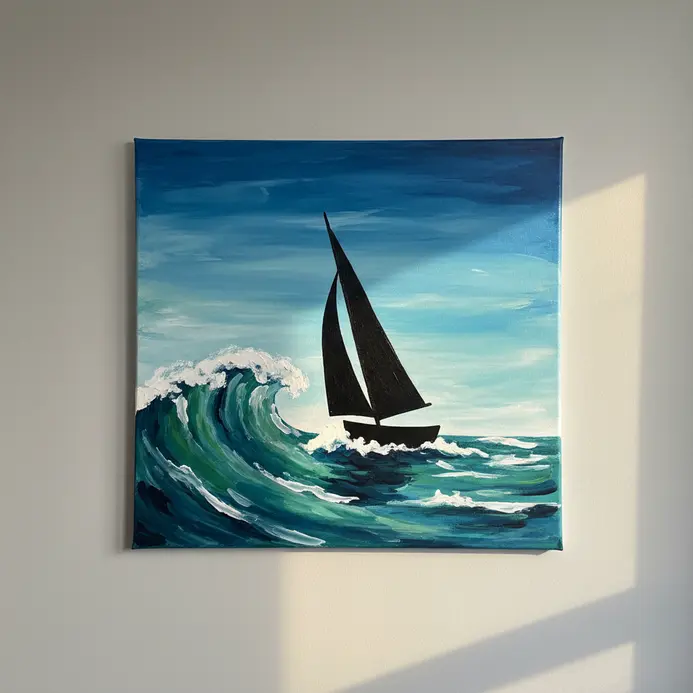
This one feels so complex, but it is highly approachable for anyone trying their first marine scene. You start with a smooth, even coat of a single color, like deep indigo blue. Once that dries, you paint a simple black sailboat and a single, stylized wave on top. The magic is in that stark contrast. It forces you to focus on clean shapes instead of getting lost in details, which I love. Isn’t it satisfying how such a limited palette creates such a vast, peaceful feeling?
Varnishing Techniques For Enhancing Silhouette Contrast Permanence
A single coat of matte acrylic varnish applied with a soft brush locks in your work and makes those black shapes look even deeper. Varnishing is not an optional last step, it is essential for protecting the surface from dust and UV light that can fade your vibrant background over time. The matte finish is perfect for this style because it eliminates any distracting shine and allows the pure contrast between dark and light to stand out. Apply the varnish in thin, even strokes once your painting is bone dry, usually after 24 to 48 hours. You will notice the colors appear richer and more unified under the protective layer. This final seal ensures your artwork retains its dramatic impact for years, turning a simple project into a lasting piece of art.
Conclusion
Working with silhouettes teaches you to see the world in terms of light, shadow, and decisive shapes. Each project on this list builds your skill in a different way, from blending gradients to painting clean edges. Your next step could be to take one of these ideas and paint it at a different time of day, changing the background colors completely. Mastering acrylic silhouette painting for beginners is a wonderful path to finding your own artistic voice. Keep your compositions simple, let your backgrounds dry fully, and enjoy watching your confidence grow with every canvas you complete.
FAQs
Q: What is acrylic silhouette painting and why is it popular?
A: Acrylic silhouette painting is a technique where a subject is rendered as a solid shape—often in black or a single color—against a contrasting background created with acrylics. Artists love it because it combines bold graphic impact with creative freedom: you can layer of paint to build depth in the background while keeping the silhouette simple and unique. It’s an accessible way to explore composition and highlight form without complex detail.
Q: What basic supplies do I need to start an acrylic silhouette painting?
A: You’ll need acrylic paints, brushes, a surface such as canvas or heavy paper, and masking tools like sharp scissors or a craft knife to cut stencils if desired. Additional items include a palette, water container, and sealant. Using paper stencils or a cutout made with sharp scissors can help transfer a clean silhouette before you add another layer or background textures.

Q: How do I create a step-by-step acrylic silhouette painting?
A: A simple step-by-step approach: 1) Choose and sketch your silhouette or make a paper stencil, 2) Paint the background first, applying layers to create gradients or patterns, 3) Let the background dry, then place your stencil and paint the silhouette in a solid color, 4) Remove the stencil and touch up edges with a fine brush or knife for crisp lines, 5) Add highlights or finishing varnish. This step-by-step routine helps keep edges clean and colors vibrant.
Q: Can beginners make professional-looking silhouettes, and what tips do experienced artists give?
A: Yes—beginners can achieve professional results with practice. Experienced artists recommend planning your composition, using a confident single layer of paint for the silhouette, and practicing cutting stencils with sharp scissors or a knife for crisp edges. Allow each layer of paint to dry fully before adding another layer to avoid smudging, and use imaginative color contrasts to make your piece feel unique.
Q: How can I make my silhouette painting more creative and unique?
A: Experiment with unusual color combinations, textured backgrounds, or mixed media elements like paper collage or metallic highlights. Use negative space creatively, paint multiple overlapping silhouettes, or incorporate patterned stencils. Let your imagination guide unexpected choices—adding a subtle highlight or a translucent wash can turn a simple silhouette into a distinctive piece.