Mastering Water Control for High Contrast Designs
When exploring minimalist watercolor painting ideas, the fastest way to destroy a clean design is by over-wetting your paper and creating a muddy wash. You want to work with a damp brush, not a dripping one, to keep your pigment marks sharp and intentional. Load your round brush with a high concentration of paint, then touch it to the dry surface for a crisp, dark line that defines your focal point. For soft transitions, pre-wet only the specific area you want to blur, and apply your pigment to that damp spot. This deliberate control over water-to-paint ratios is what creates the stark visual contrast that defines the minimalist aesthetic. Mastering this one skill makes all the difference between a weak, faded piece and a powerful statement. Trust me, that level of precision changes everything.
Selecting Cold Press Paper for Crisp Edges
Choosing the right substrate remains essential when executing minimalist watercolor painting ideas because your surface acts as the active partner that determines success. You need 300gsm cotton paper because its superior sizing controls water flow, preventing the buckling and warping that cheap wood-pulp material causes. This cold press texture provides enough tooth to hold your pigment precisely where you place it, allowing for those clean, wet-on-dry edges. The paper also handles multiple gentle glazes without pilling, so you can build subtle depth without losing clarity. Investing in this quality means your intentional marks stay crisp, and your generous negative space remains a brilliant, untouched white. You will notice the professional result immediately.
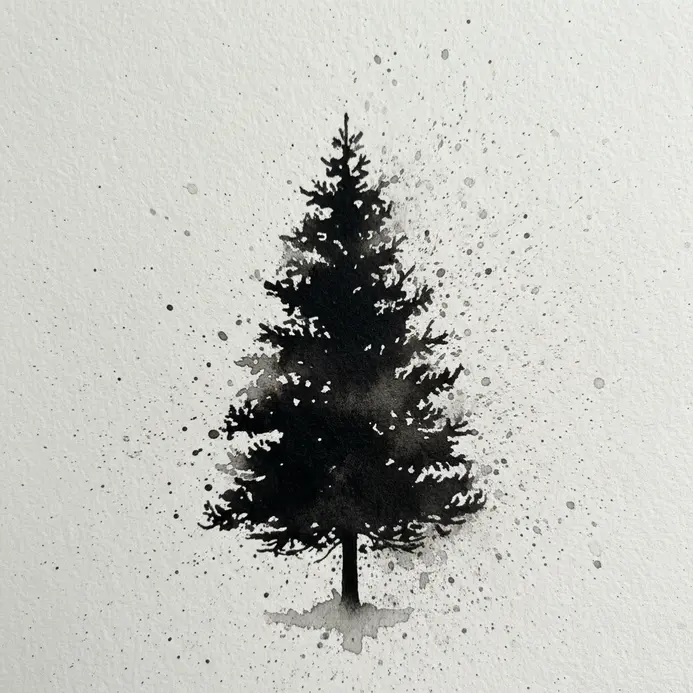
1. Paint a Single Black Ink Pine Tree Silhouette
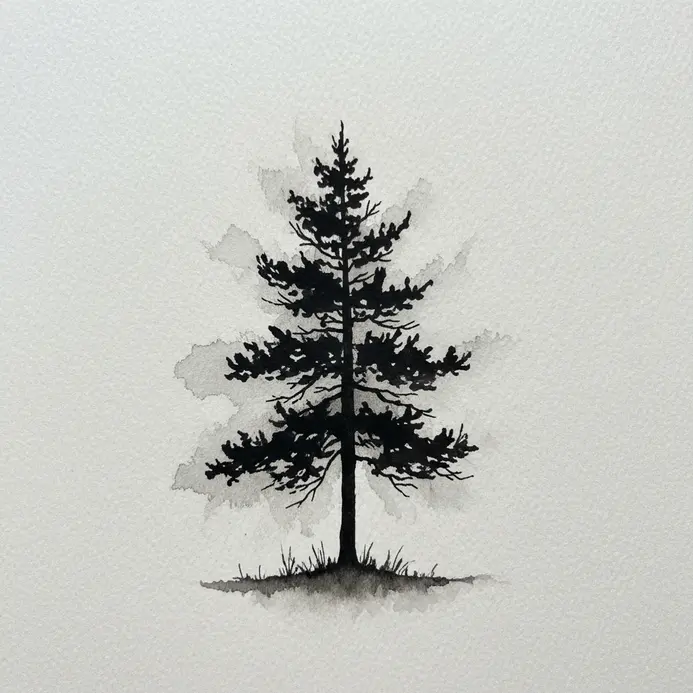
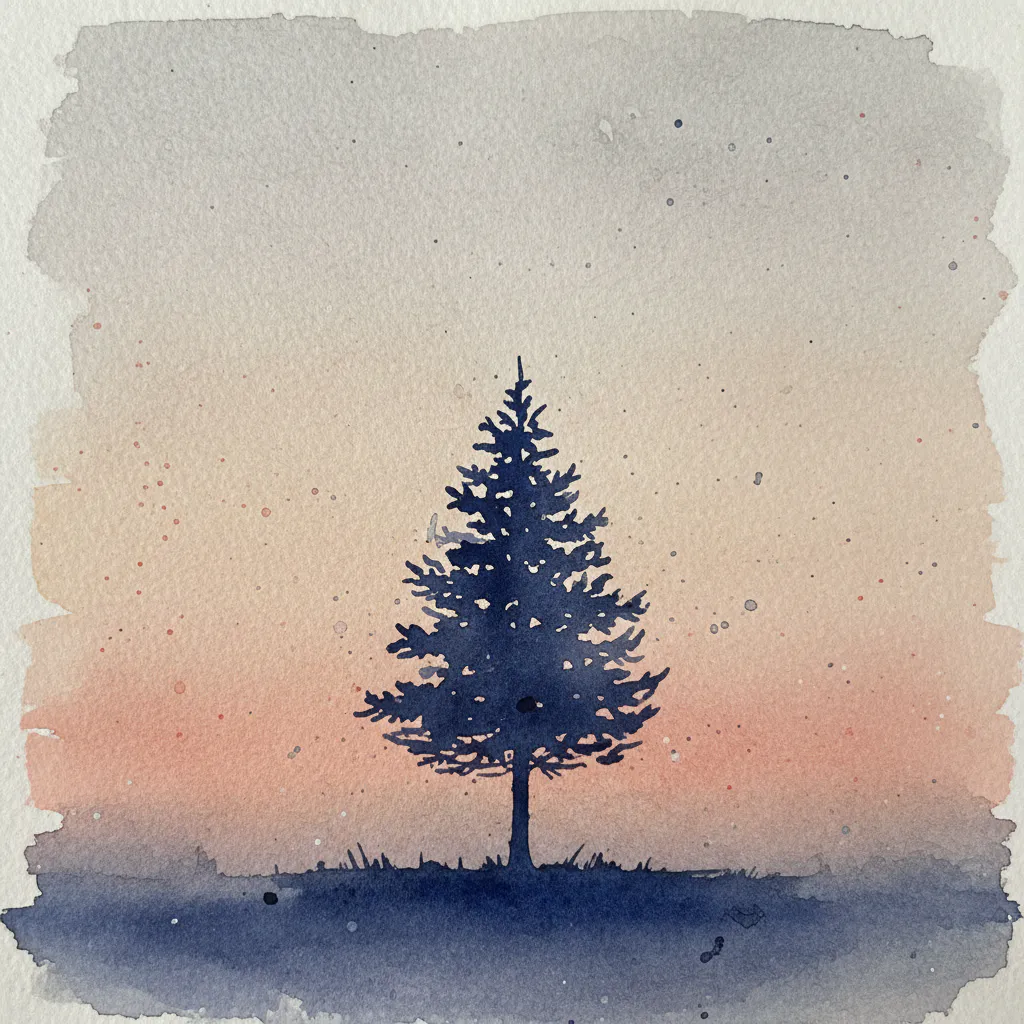
As kids, most of us drew this exact shape in school, but who knew it could become such a powerful piece of art? You will start with a light pencil sketch of a tall, jagged cone on your landscape. cold press watercolor paper. Then, using a round brush and permanent India ink, you will carefully fill in that entire shape with a solid, rich black, focusing on creating those sharp, spiky edges that mimic pine needles. This project perfectly captures the essence of minimalist watercolor painting ideas by using stark contrast and a simple form to create dramatic calm, letting the viewer appreciate the tree pure silhouette. I love how this task turns a basic outline into something elegant. For a whole world of other simple minimalist painting possibilities, this marks a perfect starting point. Trust me, the feeling when you step back and see that bold, clean shape is pure satisfaction.
2. Create a Gradient Blue Horizontal Ocean Horizon Line
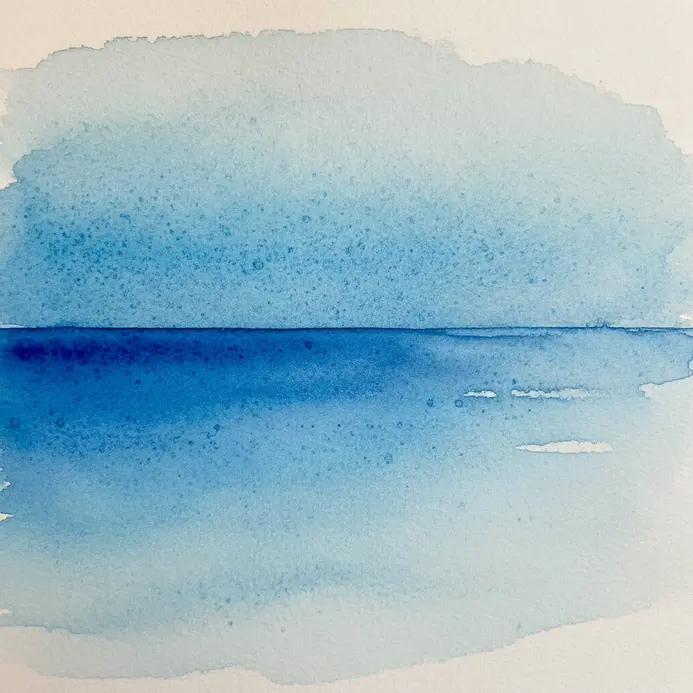
Ever wondered how to paint an ocean that feels deep and endless with only a few colors? This technique remains my absolute favorite for achieving that calm, spacious mood. You will apply multiple shades of blue, starting with a light wash at the top and blending into a deeper tone at the bottom. The magic happens with a wet-on-wet technique, letting the pigments flow and mingle on damp paper to create that seamless gradient. It works beautifully because the smooth transition from light to dark blue naturally mimics the way light plays on water, creating instant depth. Feel that sense of peace when your minimalist watercolor painting ideas yield a perfect, soft horizon line.
3. Achieve a Soft Grey Abstract Cloud Wash Study
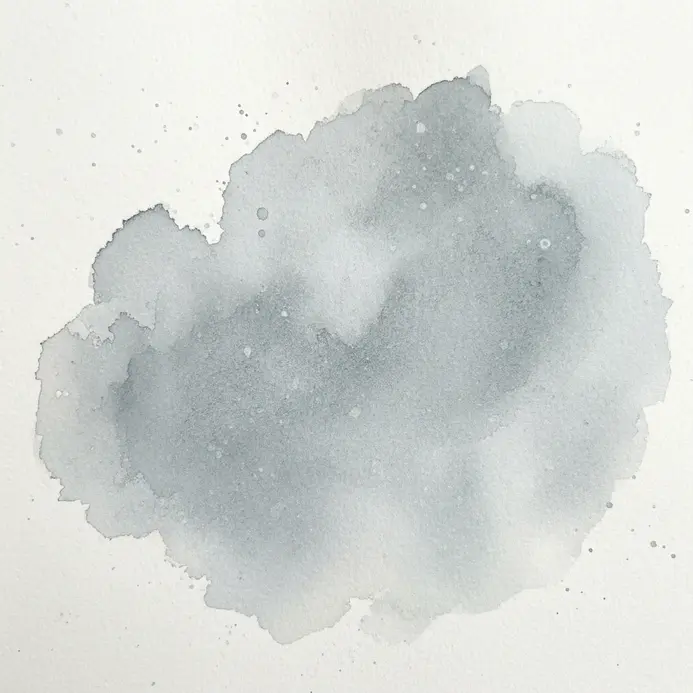
Ever wondered how to paint a sky that feels calm and expansive without any hard lines? This study demonstrates how minimalist watercolor painting ideas thrive on letting diluted paint do the work. Start by soaking a sheet of cold press watercolor paper with clean water using a large brush. Then, drop in a super-diluted mix of Payne Grey or a blue-brown combo, watching it bloom into soft, billowy shapes. The key is to work quickly and let each layer dry completely before adding the next to build subtle depth. I love this approach because it teaches you to trust the medium fluidity. The abstract nature means there is no wrong shape, only beautiful atmospheric effects. It is a fantastic way to practice watercolor wash techniques. If you are new to water media, reviewing these minimalist watercolor painting ideas makes a great warm-up before this project when exploring easy watercolor ideas for beginners. Feel the satisfaction of creating a serene, clean piece.
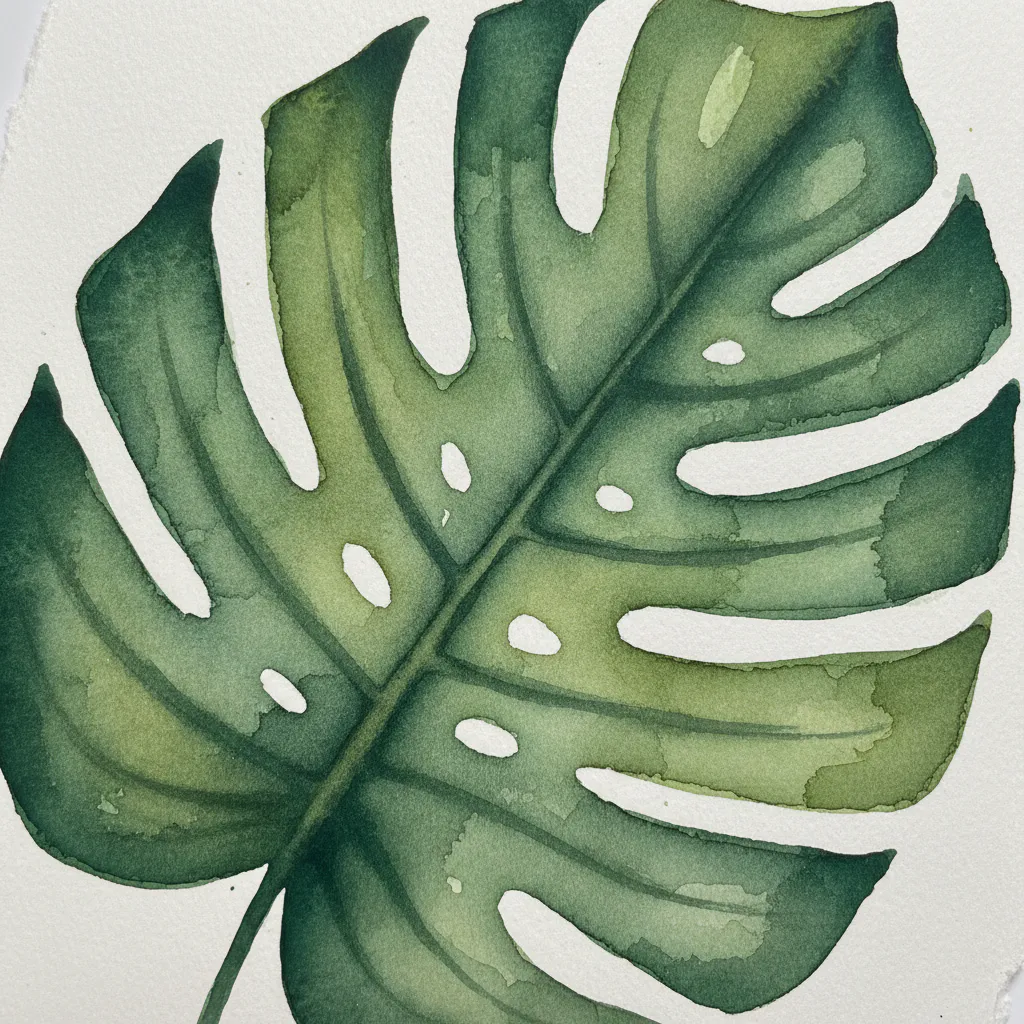
4. Outline a Simple Green Watercolor Leaf Using Negative Space
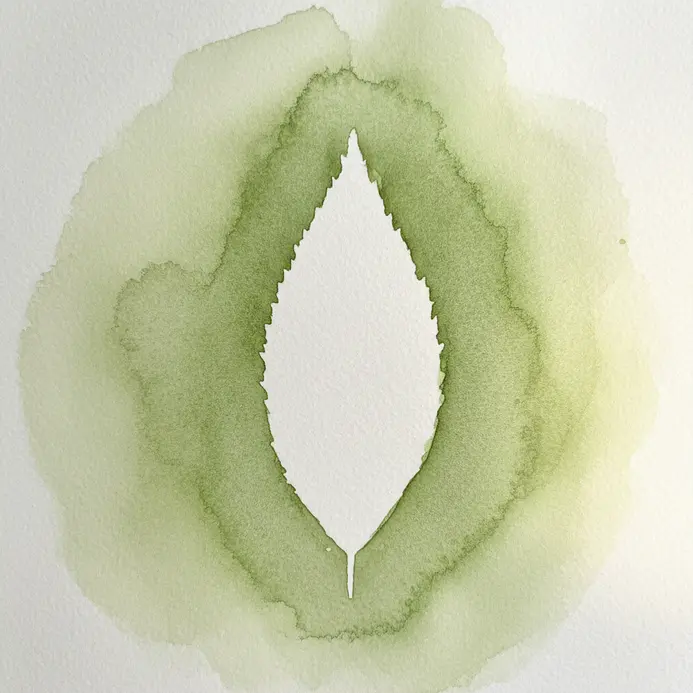
This technique looks delicate, but it surprises everyone with how simple it is to pull off. You start with a very faint pencil sketch of a leaf shape. Then, instead of painting the leaf itself, you use a transparent Sap Green wash to carefully paint the area around it, enhancing the landscape with simple watercolor techniques. The leaf magically appears as the untouched white of your paper. That clever use of negative space creates a wonderfully airy feel, perfect for minimalist art. It relies on controlling your brush to make a smooth edge. I love how this method turns the paper itself into the main subject of your minimalist watercolor painting ideas. For a different take on soft, simple aesthetics, check out these soft pastel watercolor paintings. Keep that green wash looking like weak tea, not opaque paint. Feel the satisfaction when that clean, white leaf shape pops out.
5. Sketch a Minimalist Sage Cactus Silhouette Shape
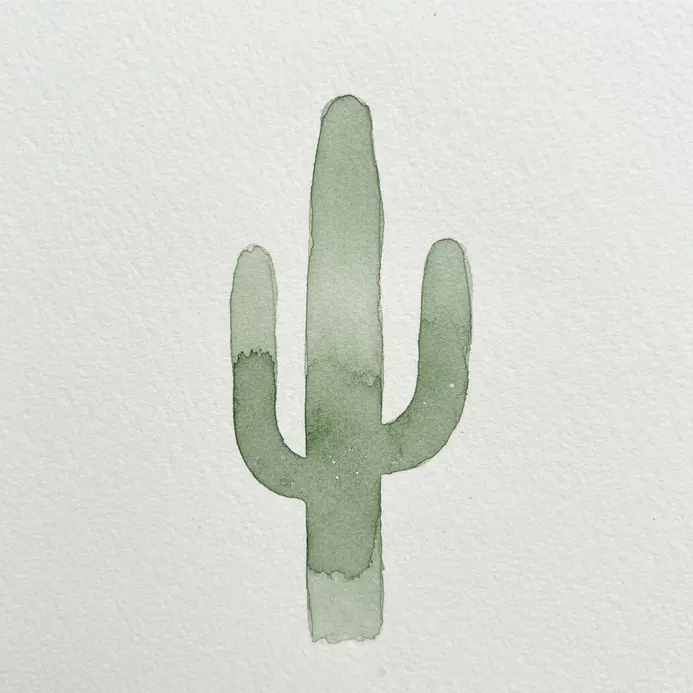
This one looks more complex than it is, but trust me, that smooth silhouette is easier than you think. Ever wondered how to capture a cactus calm, desert feel with only a few lines? Start by drawing a single, thick, vertical column for the main trunk, making it a bit wider at the bottom. Add one to three arms that curve gently upward from about halfway up the trunk. The key to successful minimalist watercolor painting ideas is using smooth, organic curves for the entire outline and avoiding internal details completely. This works because it forces you to see the beautiful, fundamental shape of the cactus in an abstract watercolor style, not the busy details. I love how serene and clean the final image feels. For a natural look, add subtle irregularities to the contour instead of making it perfectly symmetrical. Give it a try and feel that quiet, sage satisfaction when your simple shape comes together.
6. Build Distant Misty Forest with Vertical Grey Washes
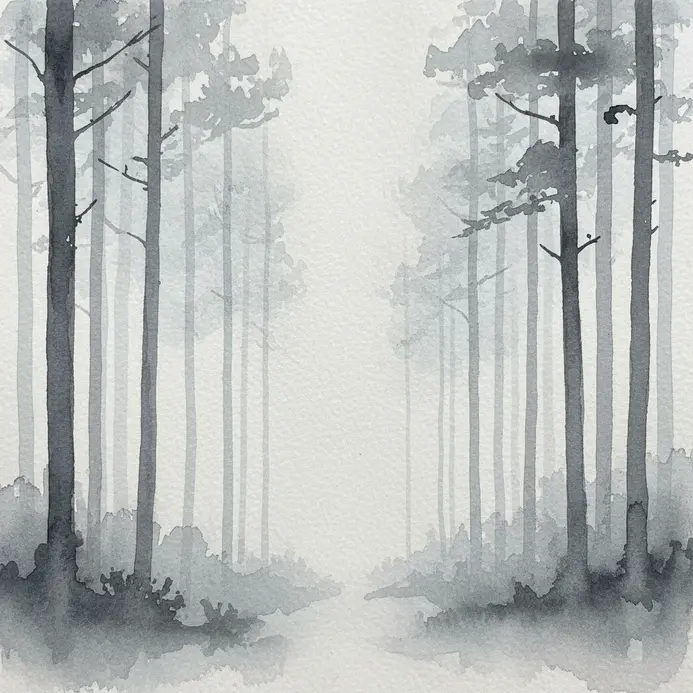
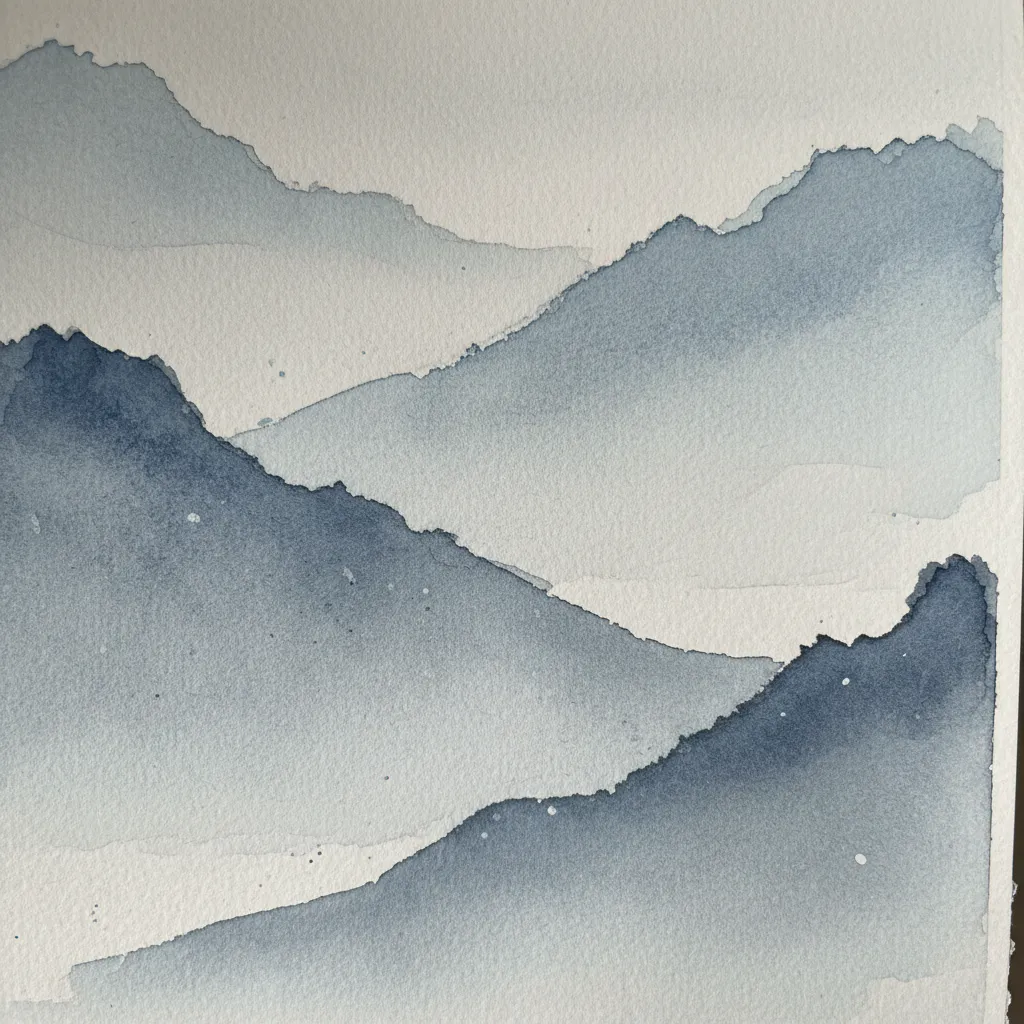
This concept remains a personal favorite because it looks complex, yet the technique stays wonderfully straightforward. You will start by loading a large brush with a very diluted Payne’s Grey wash and making soft, vertical strokes on damp paper. This initial layer sets your farthest, lightest trees and the base of the atmosphere in a beautiful landscape. Let that layer dry completely, then add a second, slightly darker wash in the same vertical motion. This creates the middle ground and begins to build that beautiful sense of depth. The magic happens because you are working with transparent layers, letting the light paper glow through to create the mist. Let the transparent layers breathe so your minimalist watercolor painting ideas capture that misty atmosphere fully. My go-to tip is to keep your strokes loose and let them bleed a little. Overworking it remains the only real mistake. For a different take on a limited palette, you might also enjoy exploring classic black and white designs. Feel the tranquility when your forest emerges from the mist.
7. Capture a Curved Watercolor Wave Crest with Spray
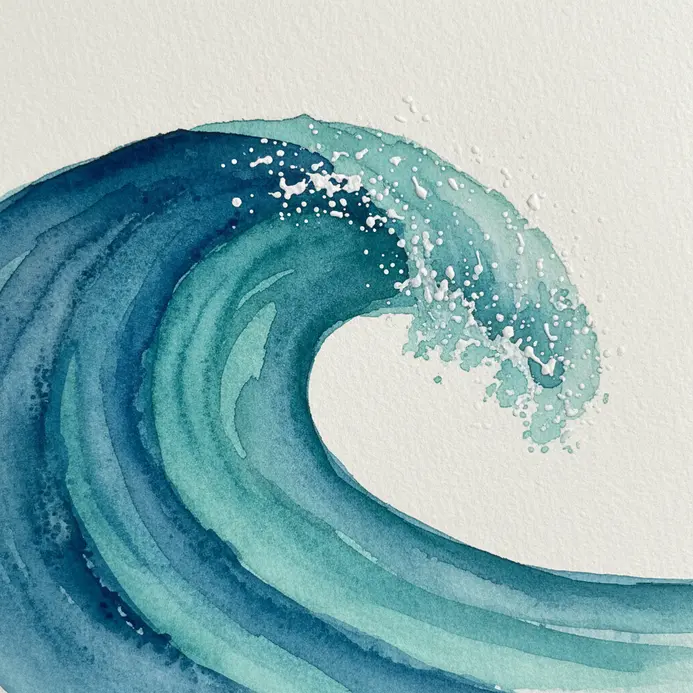
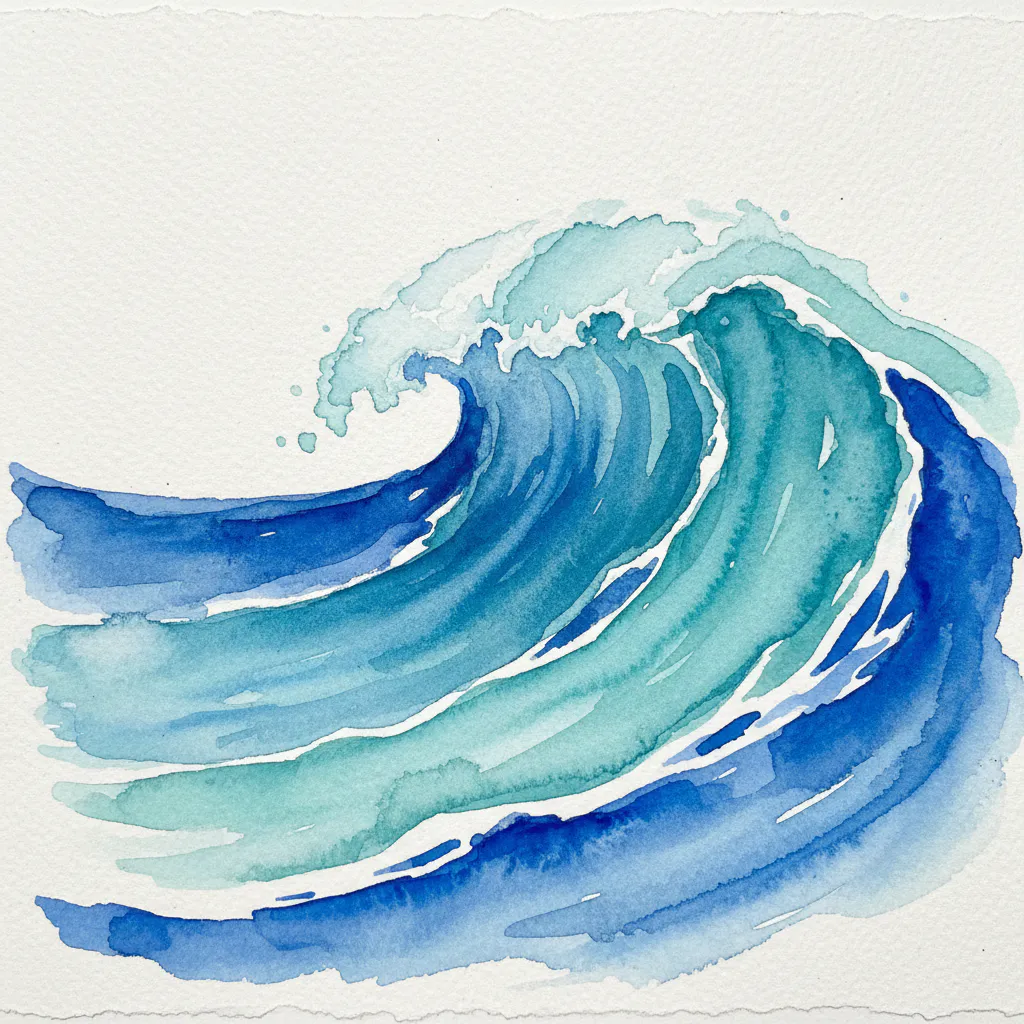
Ever wondered how to paint water that looks like it is actually moving? This technique captures that perfect moment when a wave curves and breaks. Start with a light pencil sketch to map the wave powerful arc. Then, establish your light source so you know where the brightest crest and deepest shadows go. Apply your initial watercolor washes using the easy watercolor painting ideas provided in this guide. wet-on-wet technique to create soft, flowing blends for the main body of water. This builds the composition in layers, which is vital for structured minimalist watercolor painting ideas that mimic how light moves through real water. For the final magic, use an old toothbrush to spatter on the spray and feel the energy come to life. If you love playing with color and form, you can explore abstract painting ideas to expand your creative toolkit.
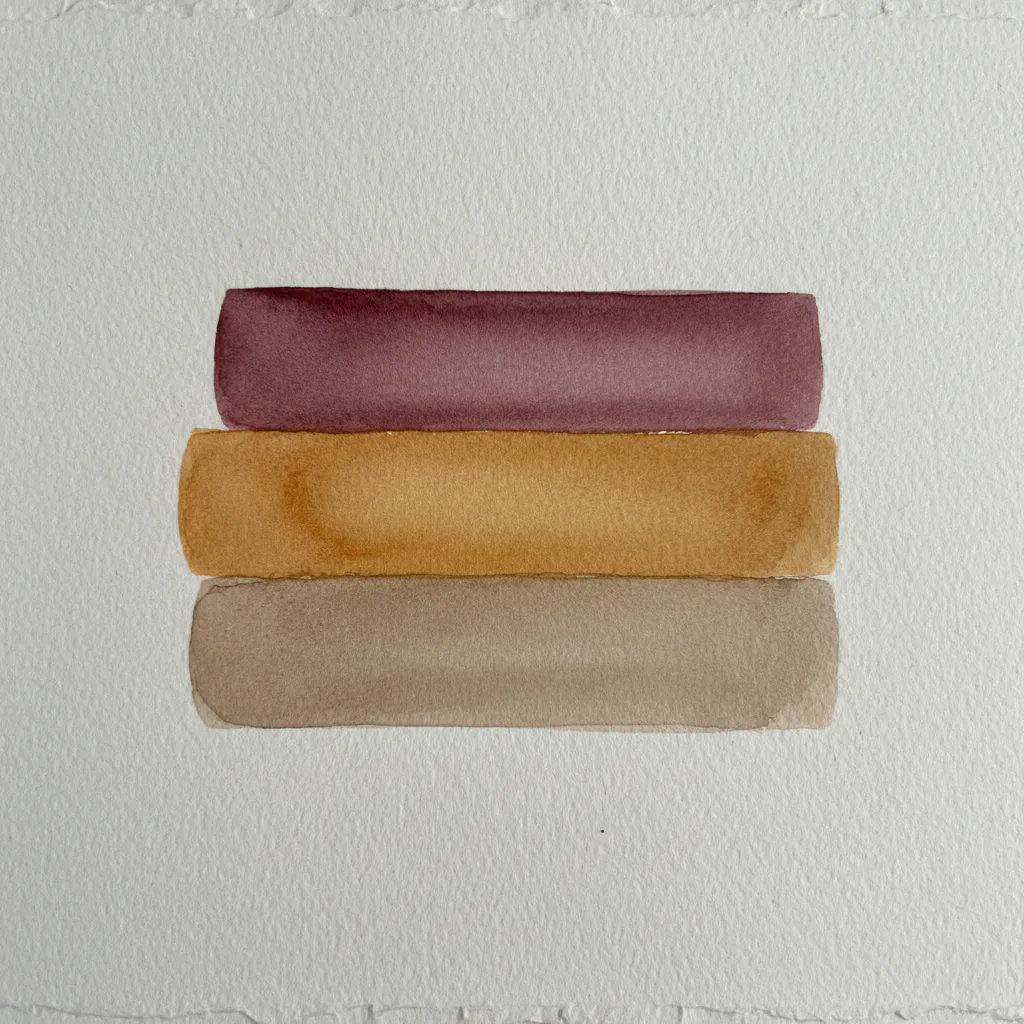
8. Form Geometric Stacked Brown Rectangular Book Shapes
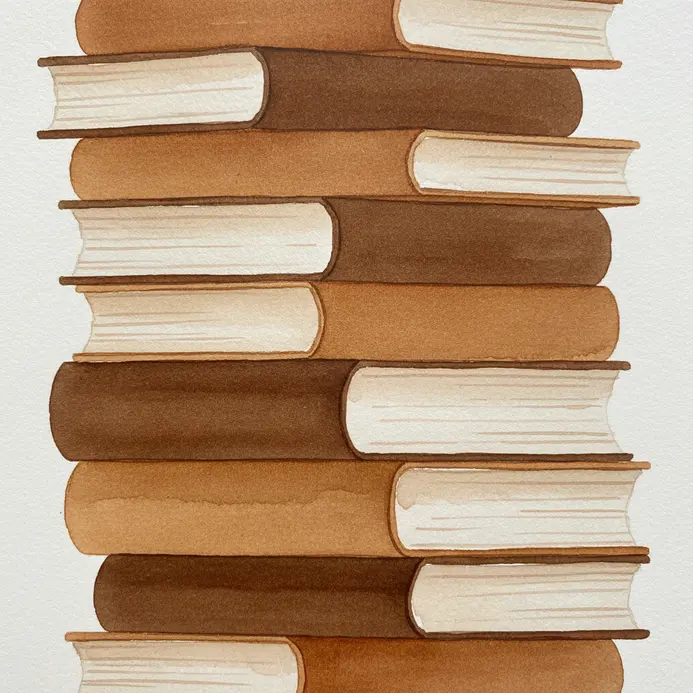
This project looks architectural, but it relies on a single simple shape. Start with a clean rectangle for the face of your first book. Then, use a simple extrusion technique for creating beginner-friendly shapes to add depth, turning that flat shape into a solid cuboid. Fill it with a warm, earthy brown hue to add depth to your landscape. I love playing with different shades, from a light tan for the top to a dark espresso for the spine. Stack a few of these shapes together, offsetting them slightly for a dynamic look. A consistent light source serves as your secret weapon here, casting soft shadows that make the stack feel real and grounded. It remains a wonderfully satisfying exercise that elevates any collection of minimalist watercolor painting ideas. Feel the quiet order when your geometric books come together.
9. Draw a Single Delicate Blue Feather with Ink Sketch
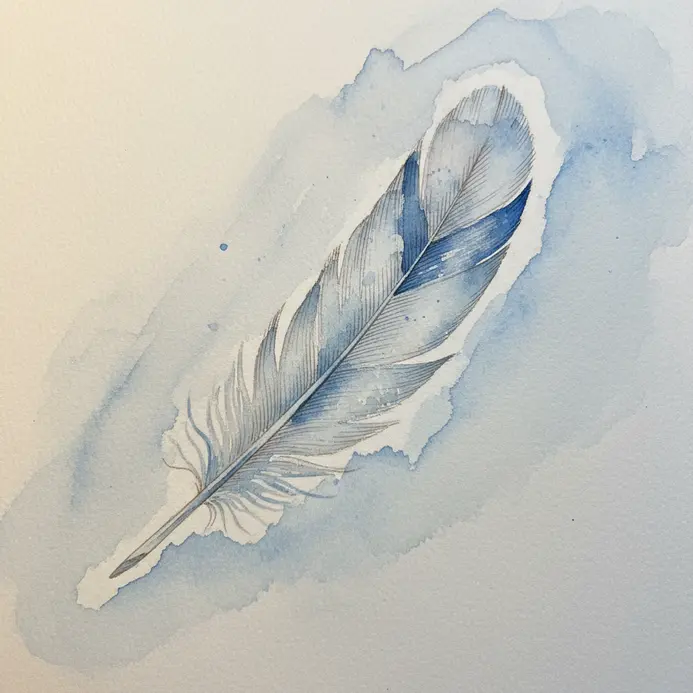
Ever wondered how artists capture something fragile like a feather? This project looks intricate, but the process stays wonderfully simple. You start with a light pencil sketch on smooth paper to map out the quill and barbs. Then, use a fine-tipped pen to trace the central line and add those delicate, wispy strands with short, gentle strokes. I love finishing with a soft, transparent wash of blue to give it that ethereal lift, creating an expressive atmosphere. It works beautifully because it focuses on precision and quiet beauty, which sits at the heart of all minimalist art. Your drawing succeeds when precision guides your minimalist watercolor painting ideas toward quiet beauty. Your drawing will look fantastic when you embrace the feather natural, slightly imperfect shape. For a great next step, try these ideas on small canvases for beginners to build your confidence.
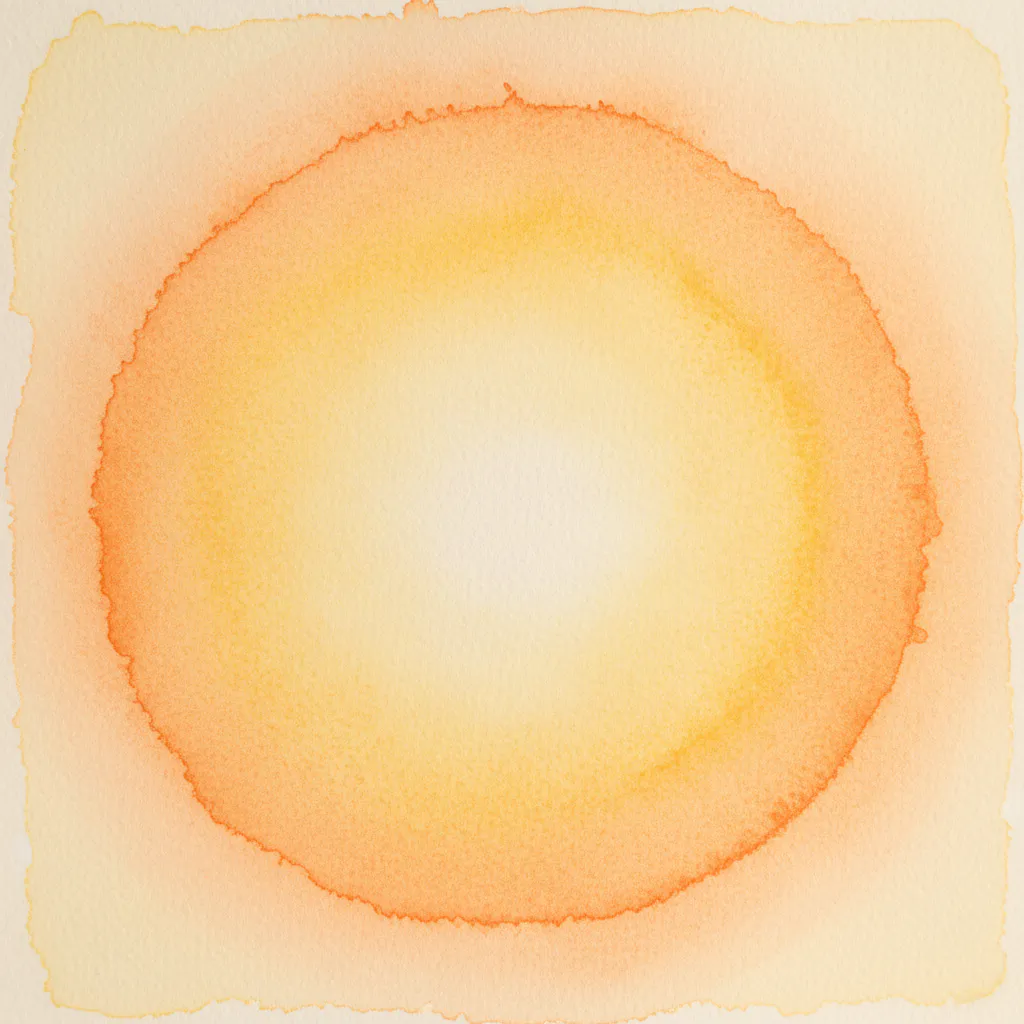
10. Apply a Soft Yellow Flickering Candle Flame Wash
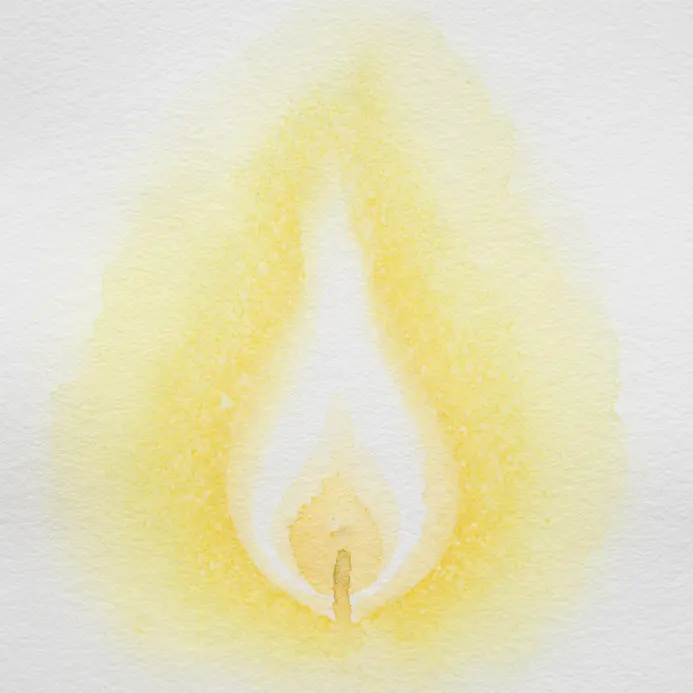
Ever wondered how artists make a candle glow look warm and alive? This one surprised me. It looks complex but relies entirely on a gentle, translucent layer. You start with a soft yellow wash, something muted like Naples Yellow. Load a large, soft brush and apply the color so it remains strongest right at your flame, then let it fade outward into a soft gradient. The magic for that flickering effect lives in the irregularity. As you lay down the wash, let the intensity vary slightly in little pockets. This creates subtle movement, like real light. I love this because it adds instant atmosphere without overpowering your minimalist watercolor painting ideas. Check out this whimsical watercolor art inspiration for similar glazing exercises. Keep the wash transparent to maintain depth. If the wash becomes too opaque, you lose the subtle details underneath. Feel that cozy, serene mood come to life on your paper.
11. Outline a Clean Elegant Empty Vase in Blue
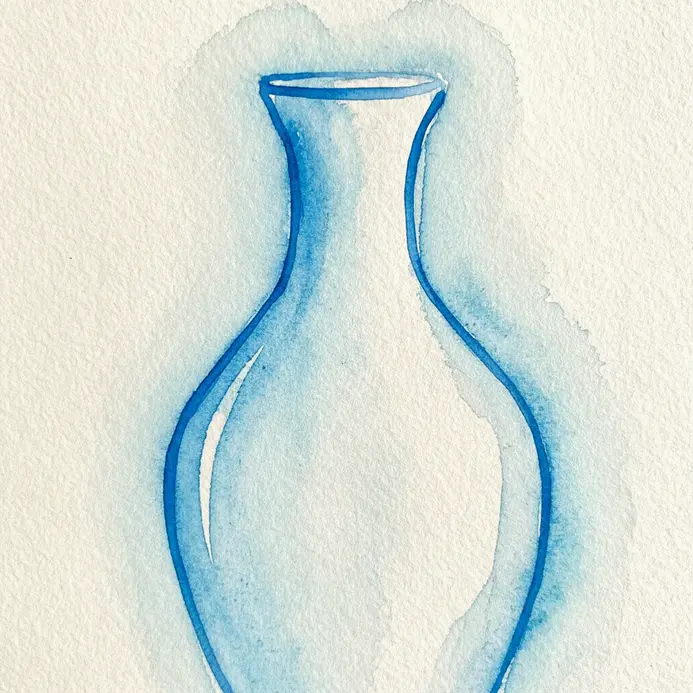
Have you ever noticed how the most sophisticated objects often remain the simplest? This concept gets perfectly captured by painting a single, elegant vase outline. You will focus on a classic symmetrical shape, like a gently tapered cylinder or a bottle form, and render it with a smooth, confident line in a rich blue. The emptiness serves as the point, turning the vase into a pure study of form and color. I love how the success of this piece hinges on flawless execution. Your line needs to stay continuous and even, defining the seamless triangle from base to rim. Choose a blue wash applied with even pressure, ensuring your minimalist watercolor painting ideas avoid streaks or blotches. That smooth, uninterrupted surface makes it feel clean and modern. Single consistent blue applications create that polished finish. Isn’t it satisfying when restraint brings such clarity? The result stands as a calm, sculptural element that brings a touch of serene sophistication to any space. Feel the quiet elegance you have created.
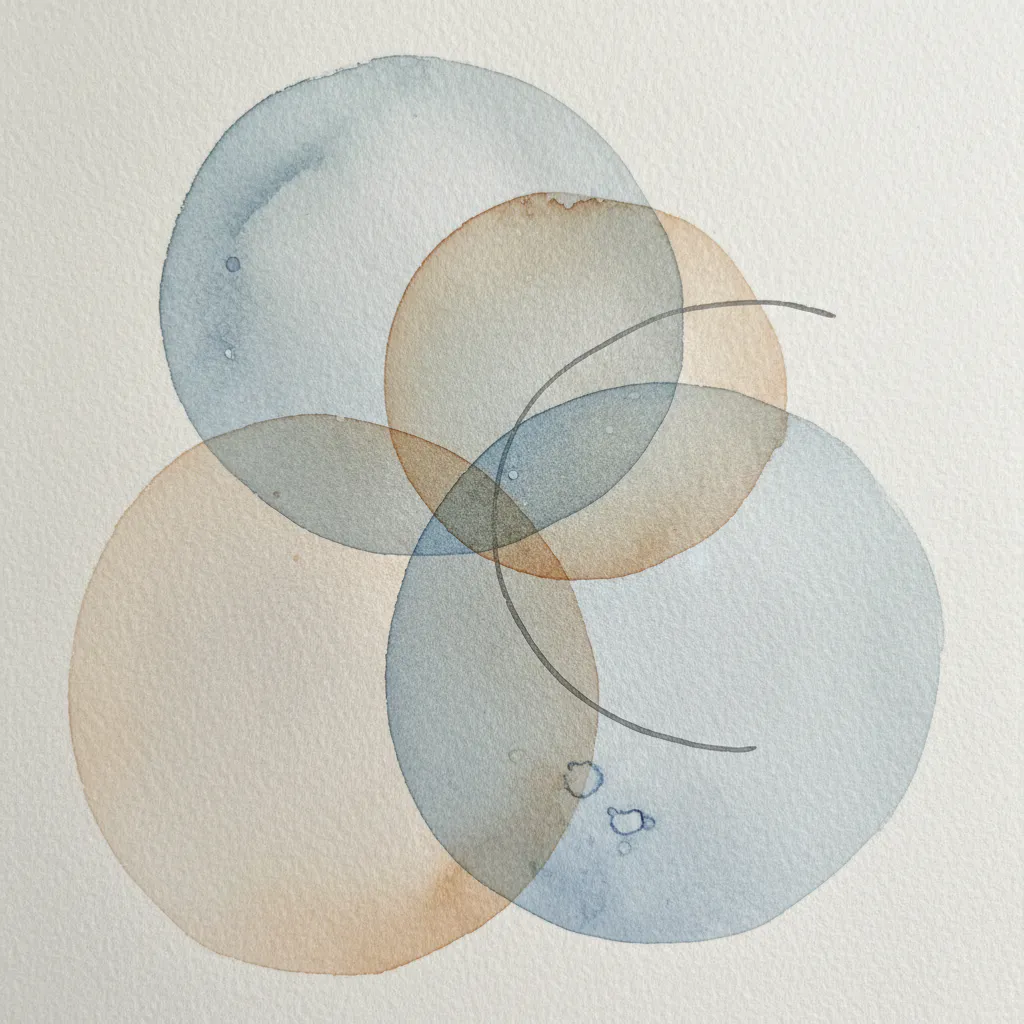
12. Layer Three Overlapping Muted Geometric Circular Washes
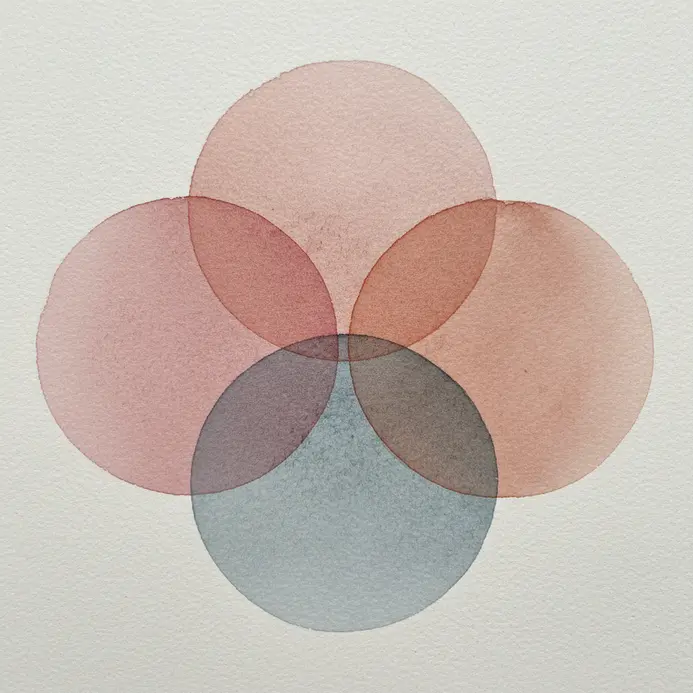
Ever wondered how to get that soft, sophisticated depth in your compositions? This technique relies entirely on simple, translucent layers. You start with a single muted circular wash as your base. Then, let it dry completely before adding a second circle that overlaps the first, and finally, a third that touches both. The magic happens where the washes meet, blending into new, subtle colors. I love how this method teaches you about color interaction through pure transparency. Exploring geometric overlap introduces fresh dimensions to your minimalist watercolor painting ideas through careful pigment dilution. For a great foundation in this approach, check out these essential watercolor painting techniques for creating stunning landscapes. The result remains a calm, ordered composition that feels modern and deeply satisfying to create.
13. Sketch a Single Crisp Linear Paper Airplane
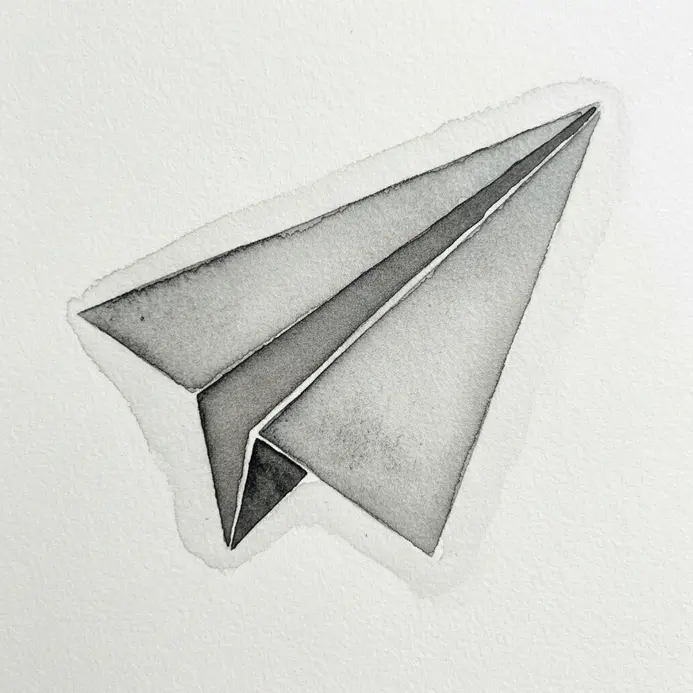
Ever folded a paper airplane as a kid and thought that marked the end of it? This sketch transforms that simple memory into a study of clean, precise lines. You will start with a light rectangle, then use a ruler to draw the sharp diagonal folds that create the classic Dart shape. The goal focuses on those geometric angles until your drawing looks ready to fly off the page. Its form stays purely structural, making it a perfect exercise in control and symmetry. Drafting precise angles sharpens the execution of your minimalist watercolor painting ideas through deliberate linework. I love how satisfying it feels when the final crisp outline comes together. For a wonderfully simple subject to practice your linear drawing, check out these simple still life setups. Feel the focus this kind of precision brings.
14. Paint a Dark Minimalist Moon Phase Circular Sequence
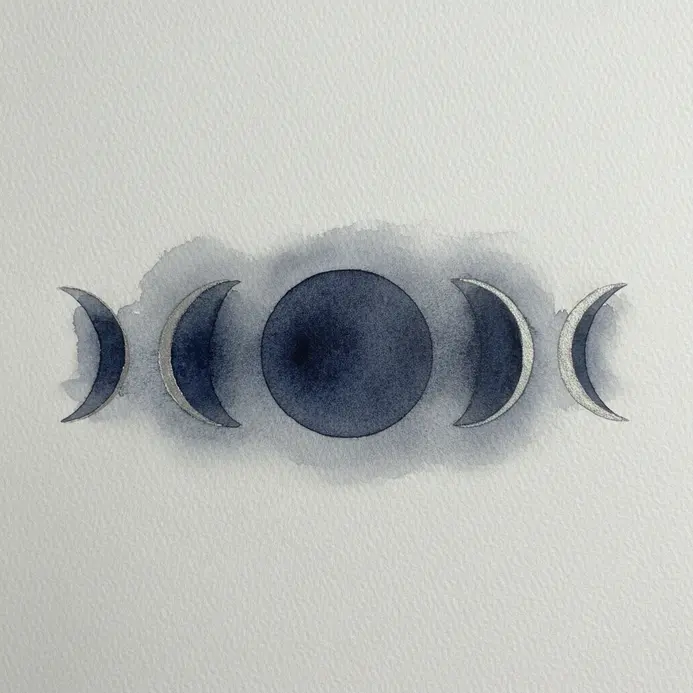
This concept looks intimidating initially, but it relies entirely on clean, simple shapes. You will arrange the eight moon phases in a large circle, painting each as a perfect arc or circle against a deep, dark background. I love how the nuanced black watercolor washes create an infinite, cosmic feel, making the subtle gray moons appear to softly glow from within. Mapping celestial phases provides a meditative approach to your minimalist watercolor painting ideas. The real magic lives in the negative space and the quiet journey your eye takes around the circle. It feels peaceful to paint, and the finished piece holds a serene, elegant power. Trust me, using a compass for your circles remains the secret to that polished, professional look. Does that not sound like a wonderfully calming project?
15. Blend a Soft Gradient Pink Horizon Sky Wash
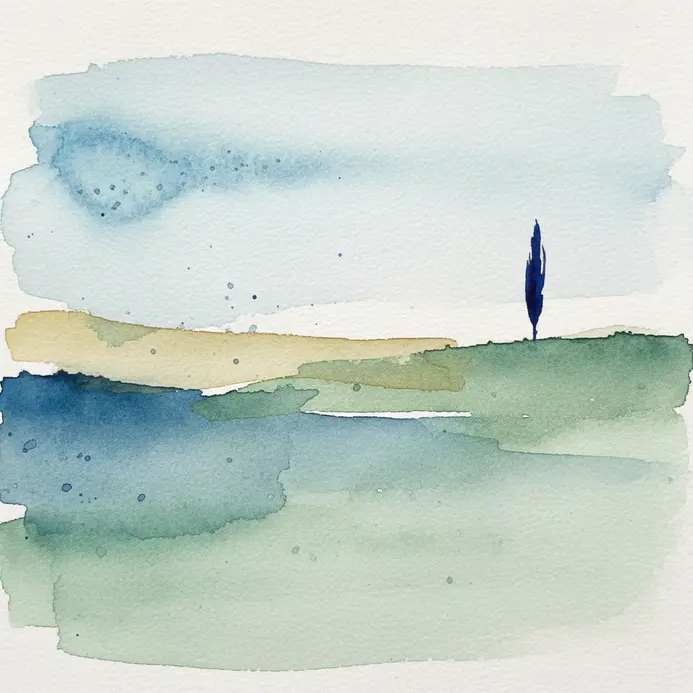
Ever wondered how those dreamy, seamless sunset skies are painted? This technique looks complex but turns incredibly satisfying once you find the rhythm. You will need to tape down your 140lb watercolor paper to prevent buckling. Mix three distinct strengths of pink paint on your palette, ranging from a deep horizon color to a pale tint. I love starting with a damp sky area. Load a large wash brush with your darkest pink and paint a horizontal stroke at the bottom. Work quickly upward, overlapping your strokes as the brush naturally lightens. Blending soft horizons rounds out this set of minimalist watercolor painting ideas perfectly, making them beginner-friendly. The trick requires keeping the paper wet enough so the colors blend softly without harsh lines. It creates a beautiful, atmospheric background that feels professional and serene. Try it and then explore more stunning watercolor galaxy concepts that inspire expressive landscapes for other celestial inspiration.
Mounting and Floating Your Minimalist Artworks
A simple floating frame elevates your work by honoring its negative space as a core part of the composition. Look for a deep-set frame with a neutral white or off-white mat that creates a clean border around your painting, avoiding visual clutter. Use acid-free hinging tape to mount the piece onto a backing board, allowing the paper to expand and contract naturally without buckling. For ultimate protection against UV light, which fades pigments over time, request conservation-grade glass from your framer. Proper mounting protects the final outcome of your minimalist watercolor painting ideas and transforms practice sheets into finished artworks you proudly display. This final presentation step ensures your piece looks intentional and gallery-ready.
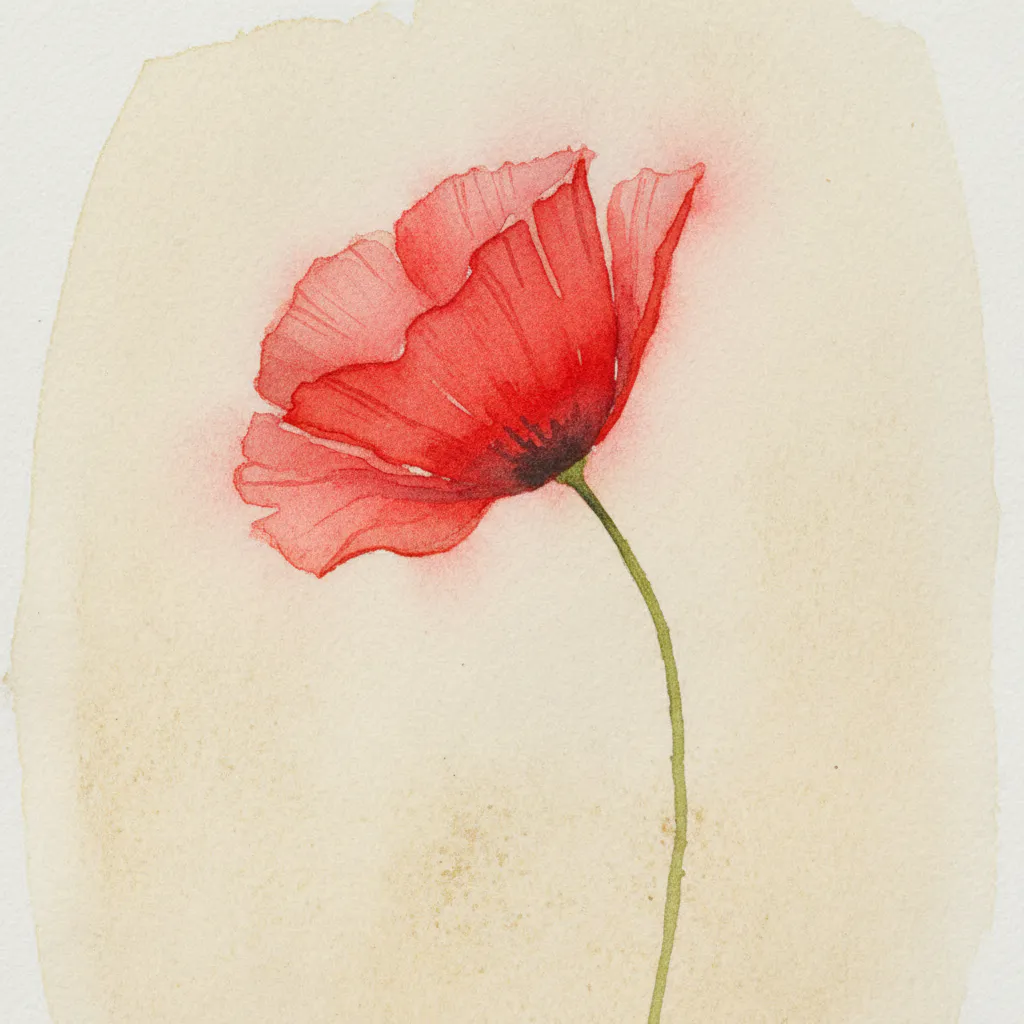
More Minimalist Watercolor Painting Ideas Gallery
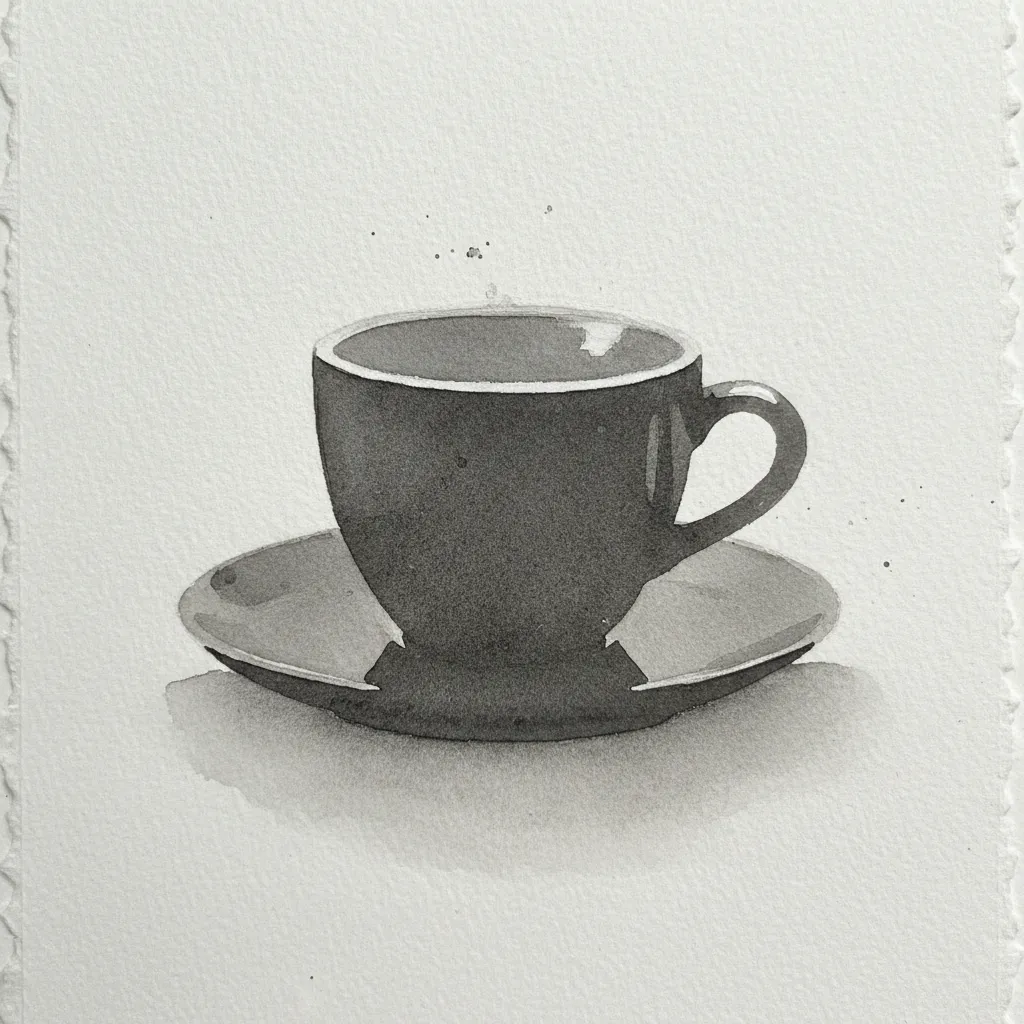
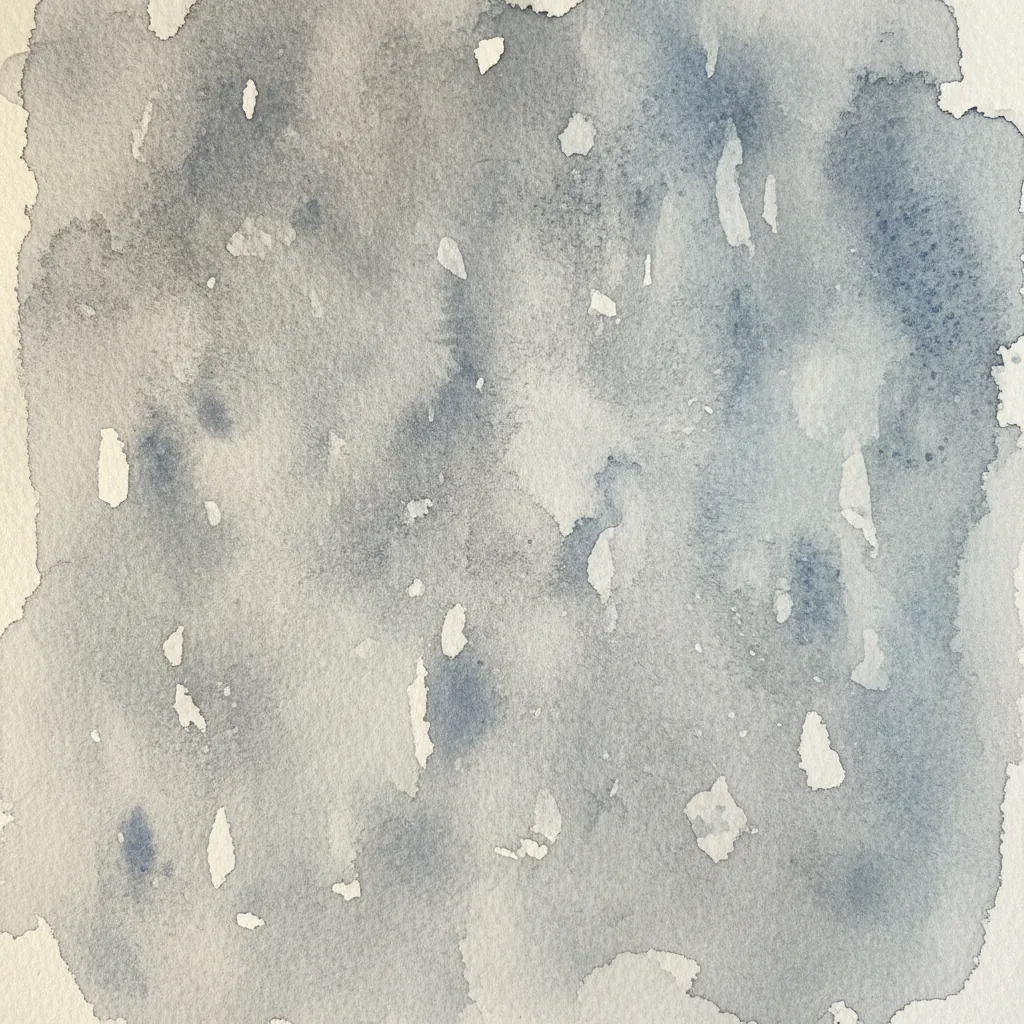
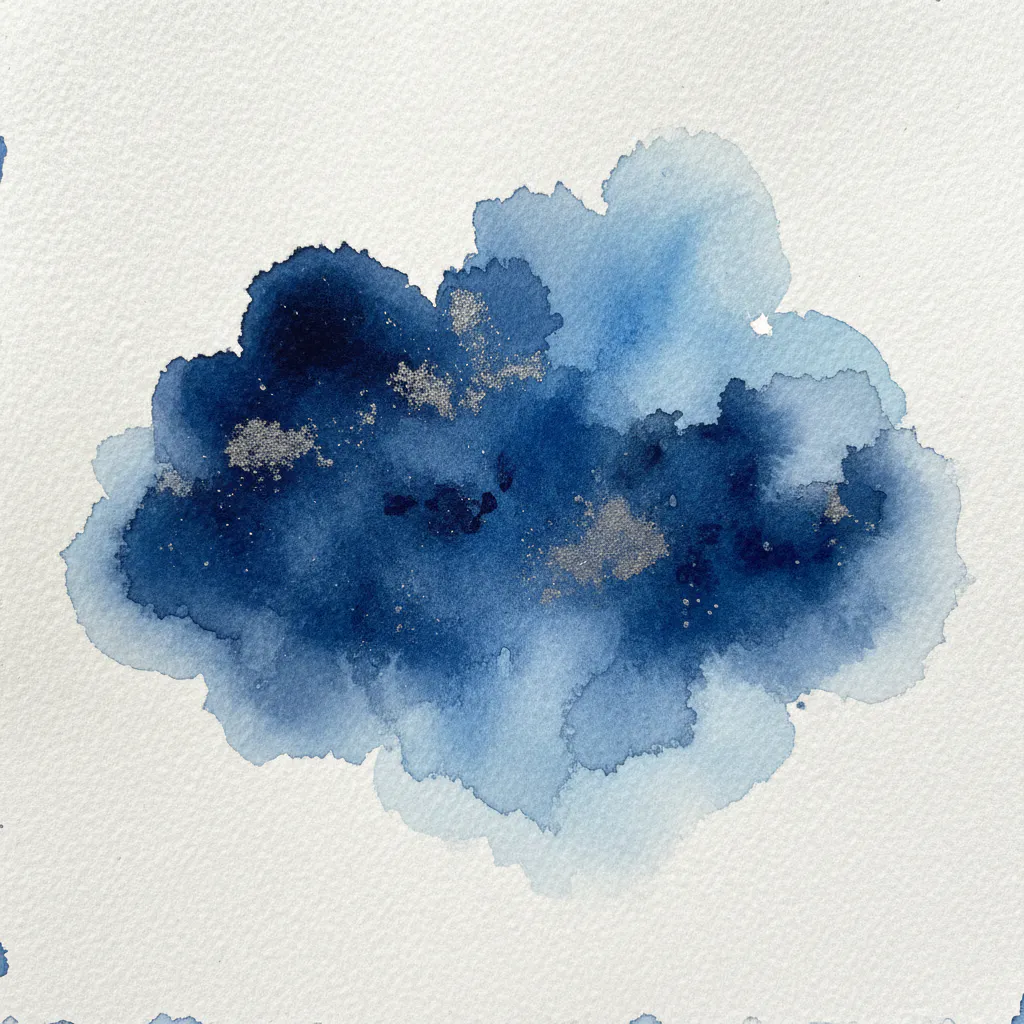
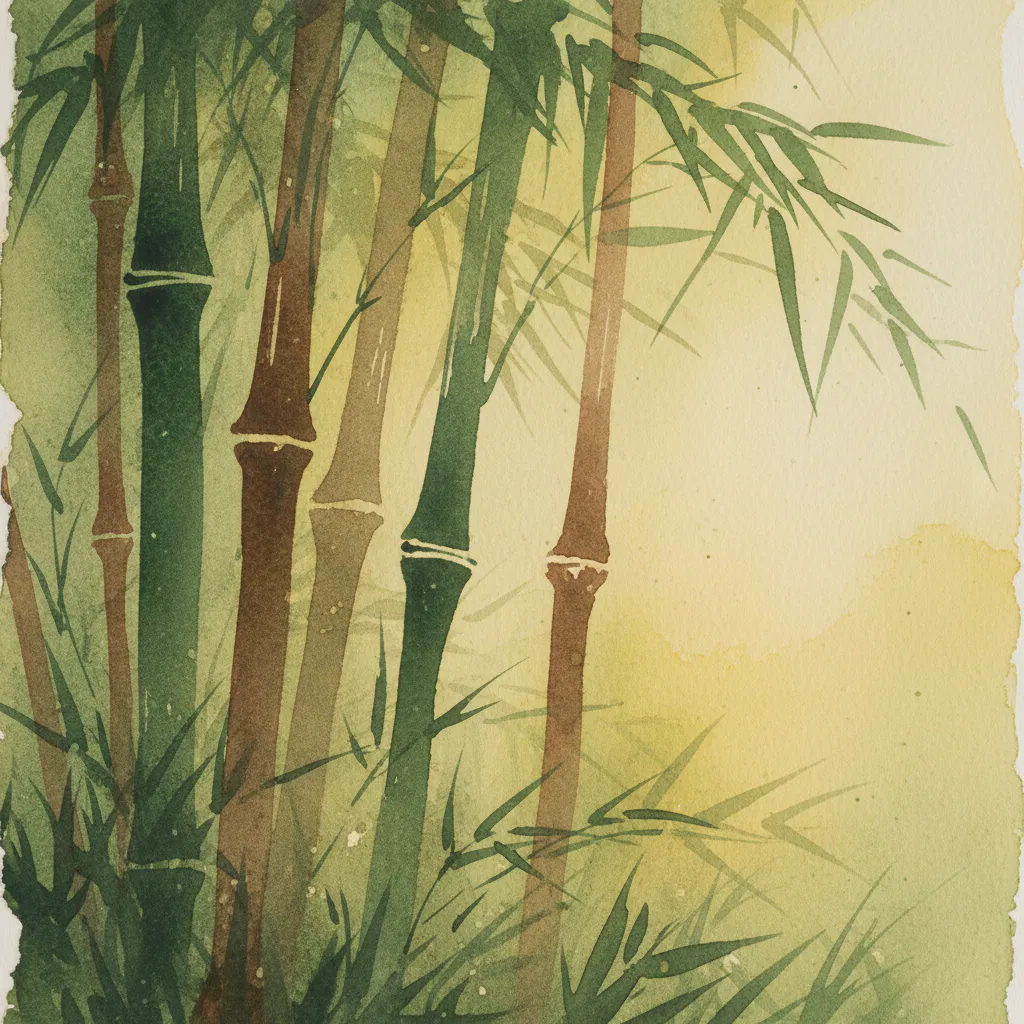
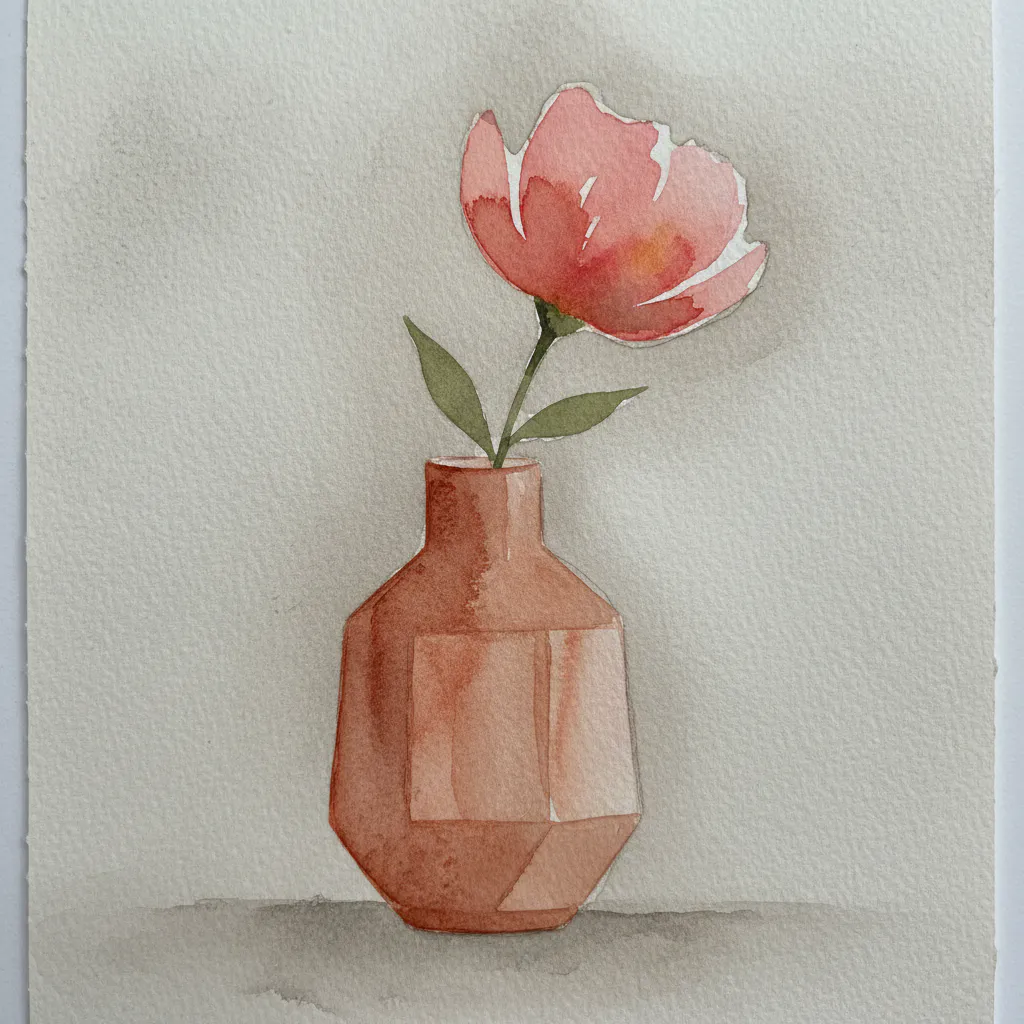
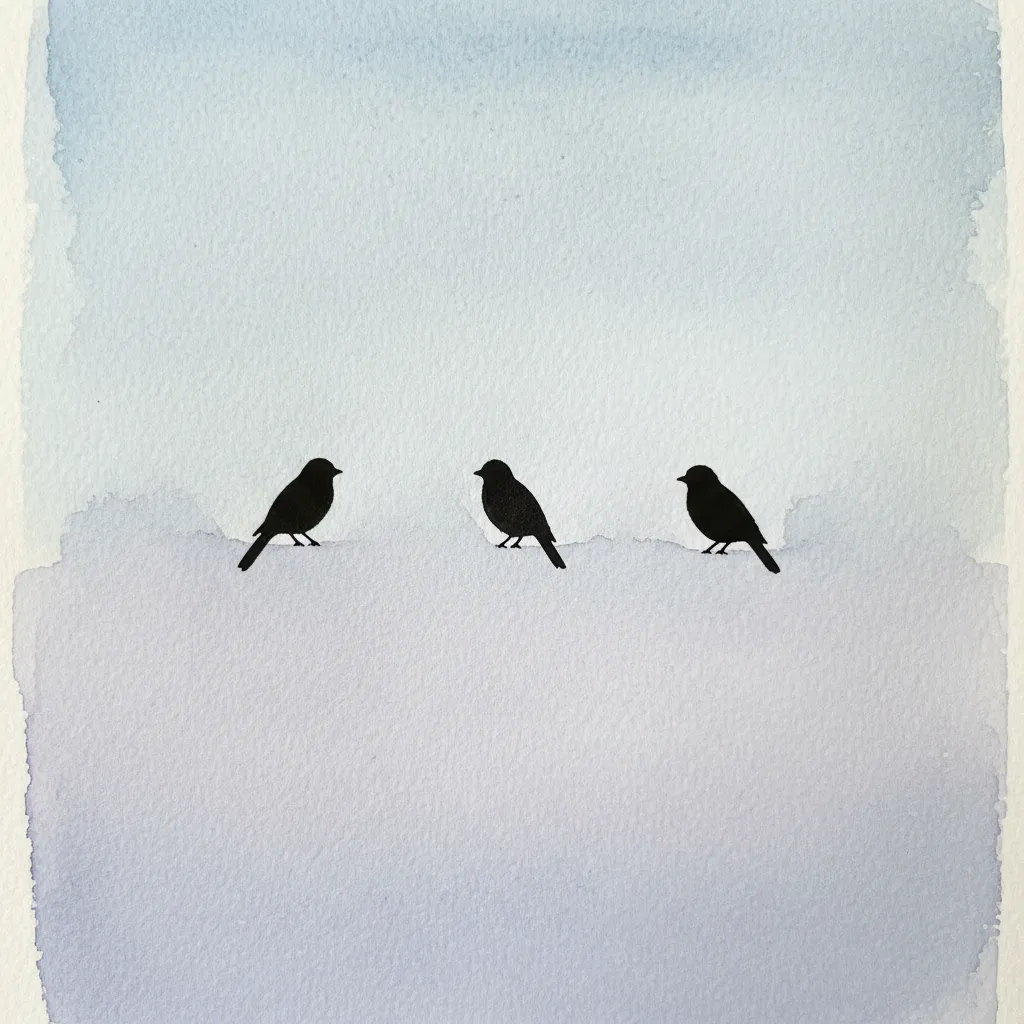
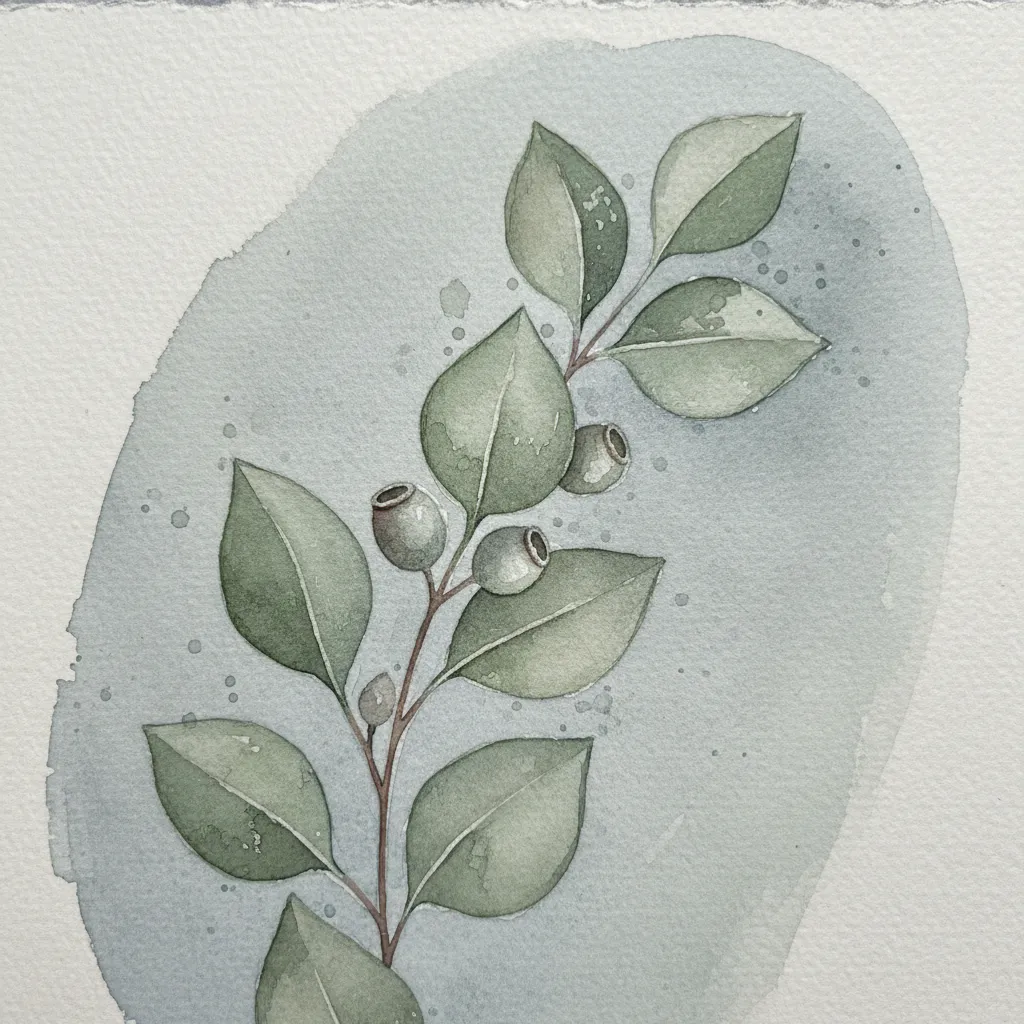
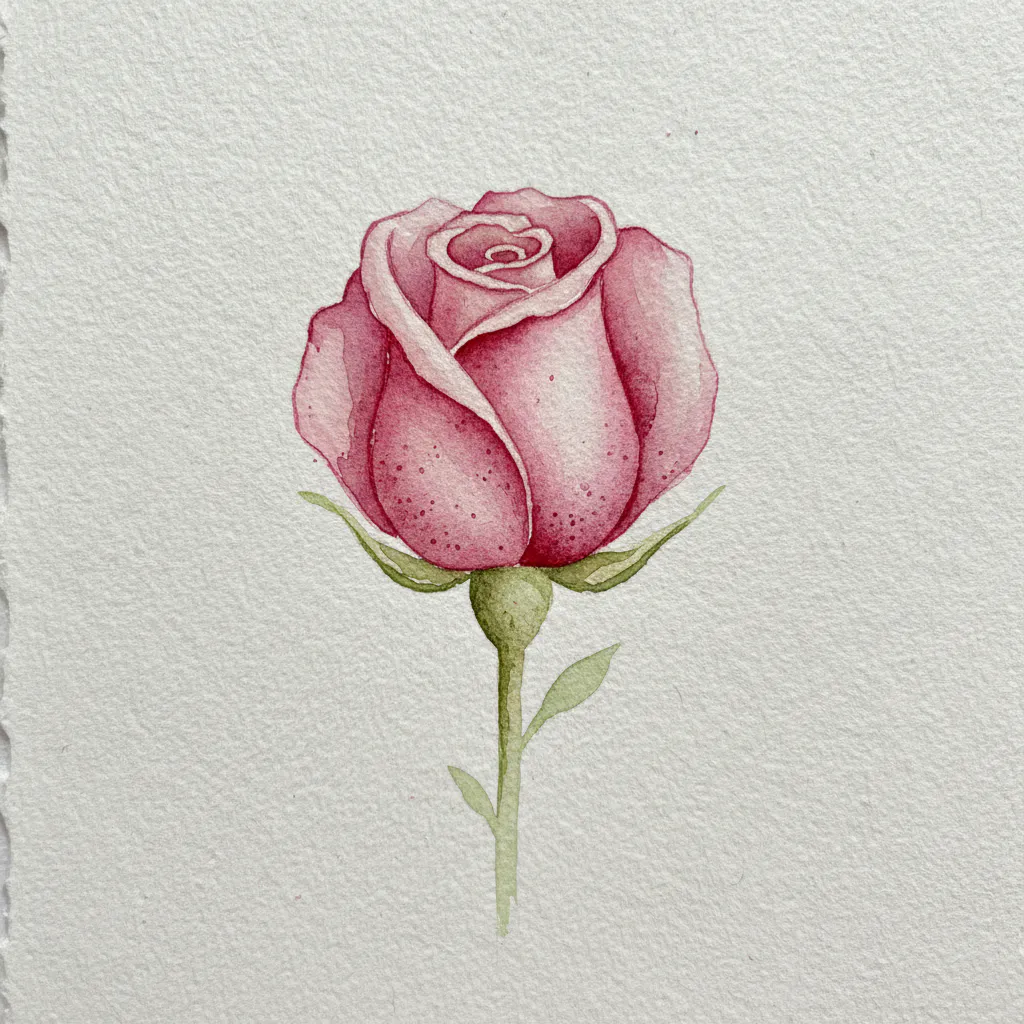
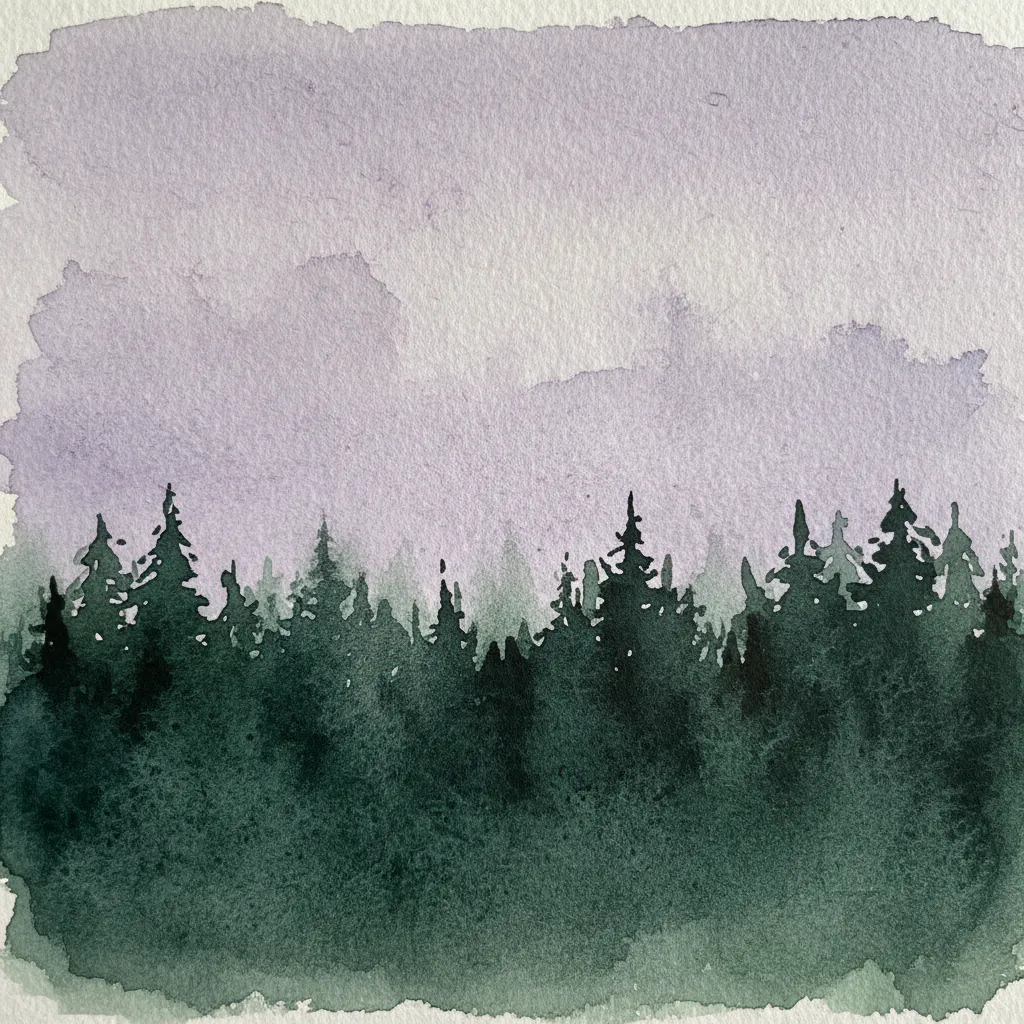
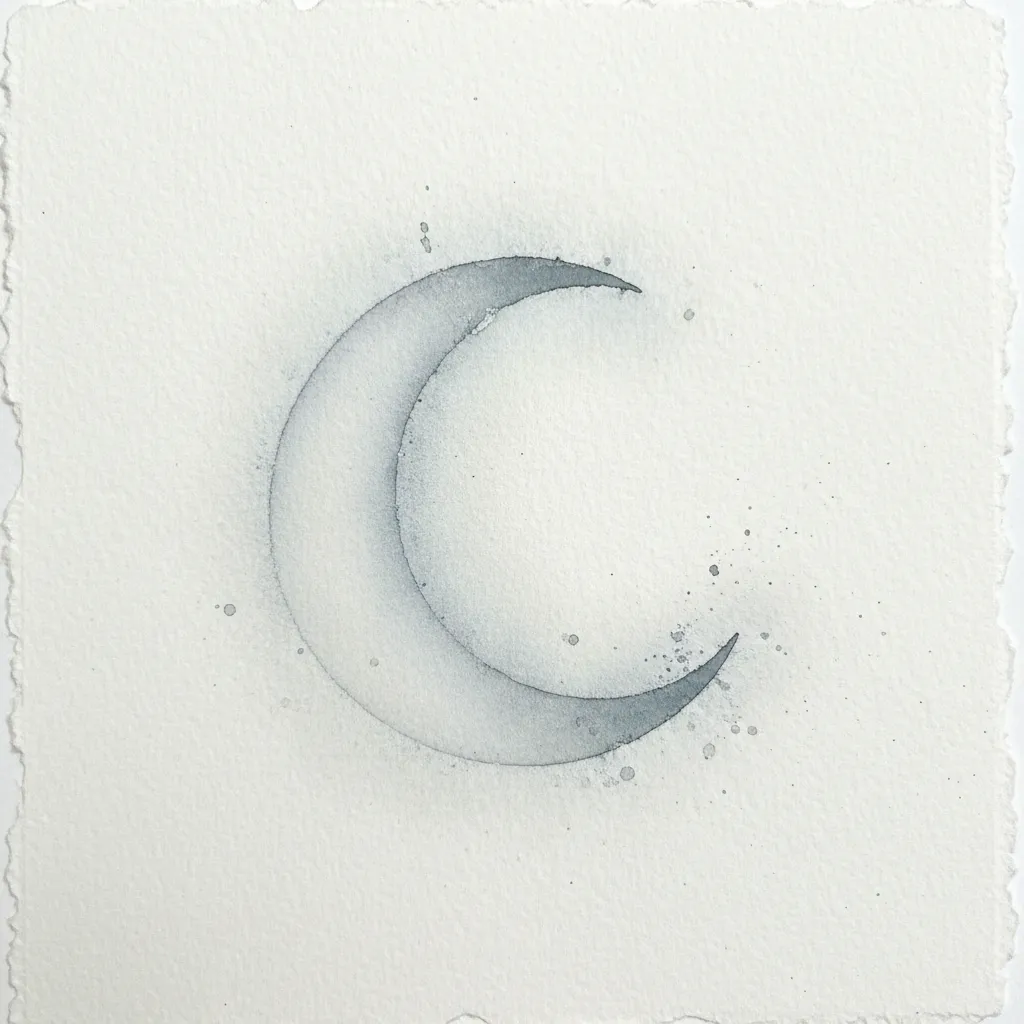
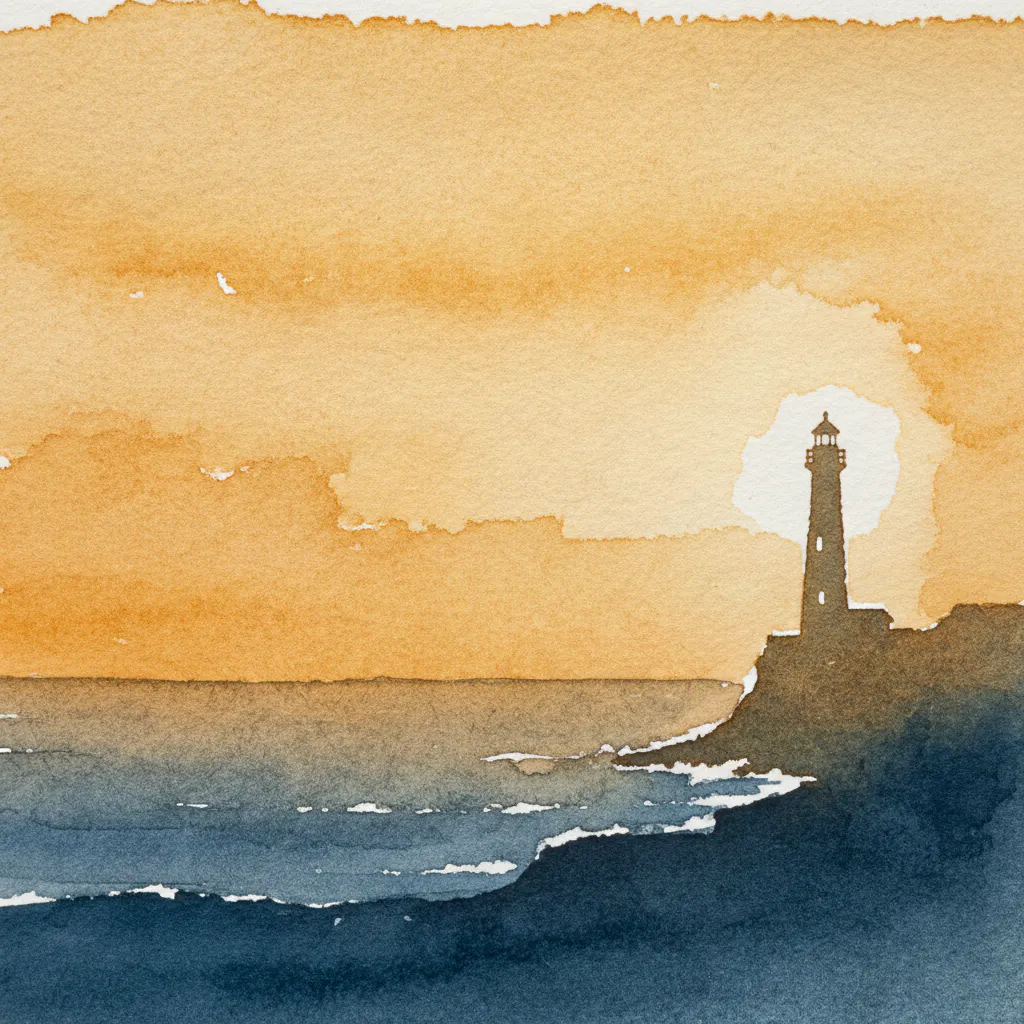
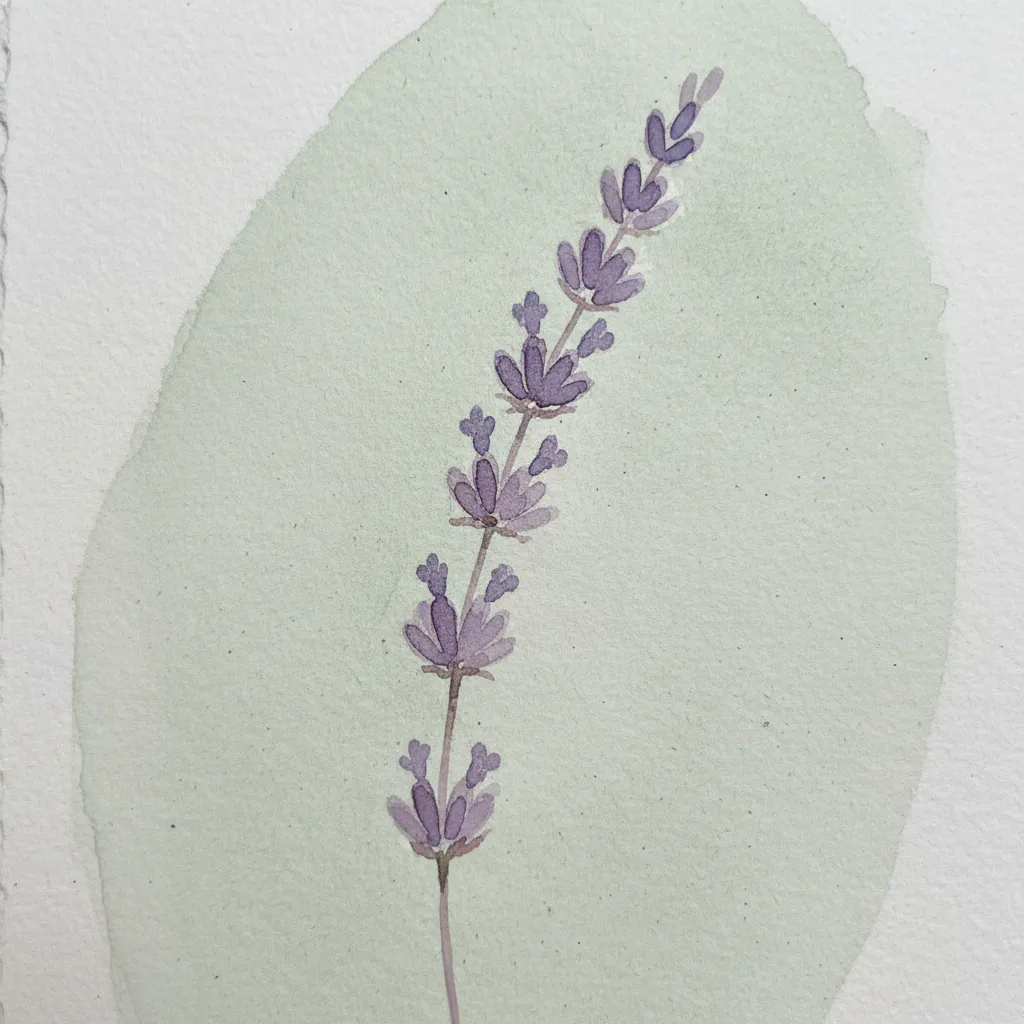
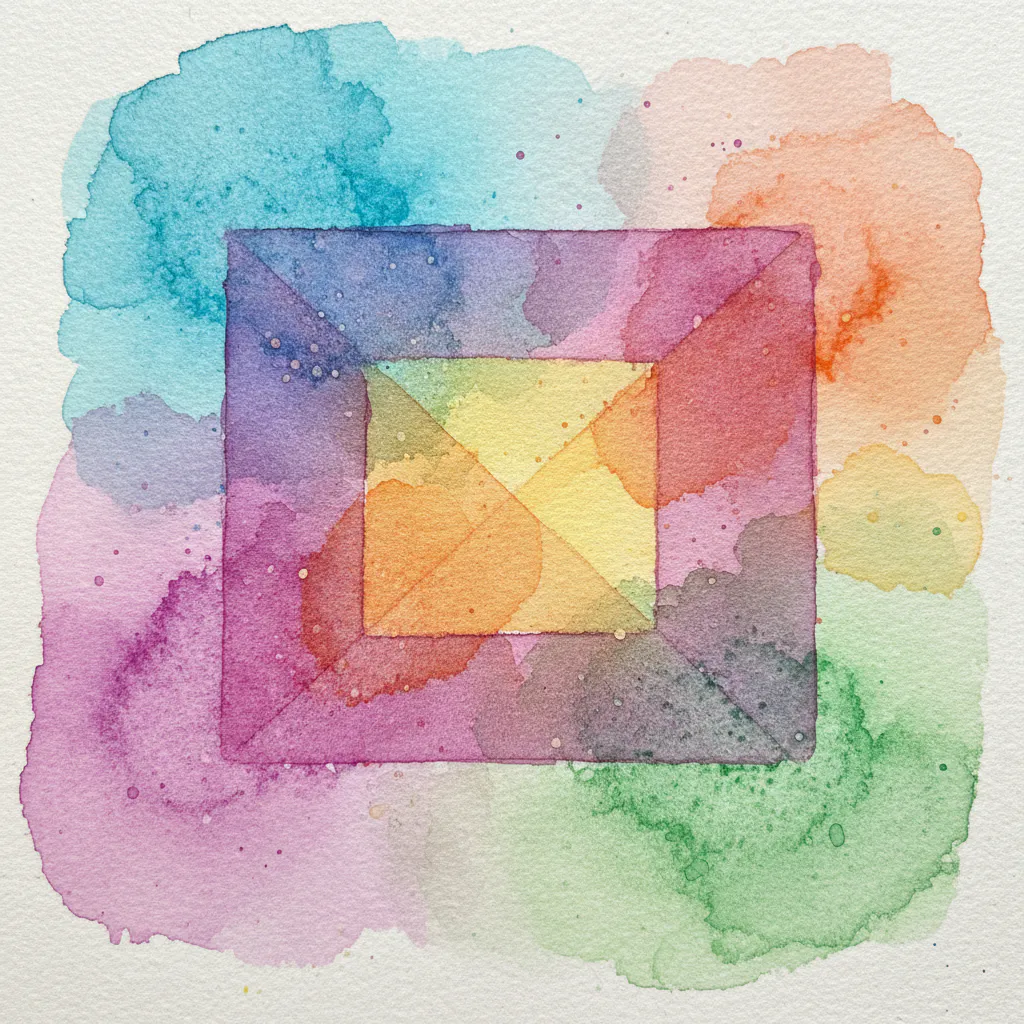
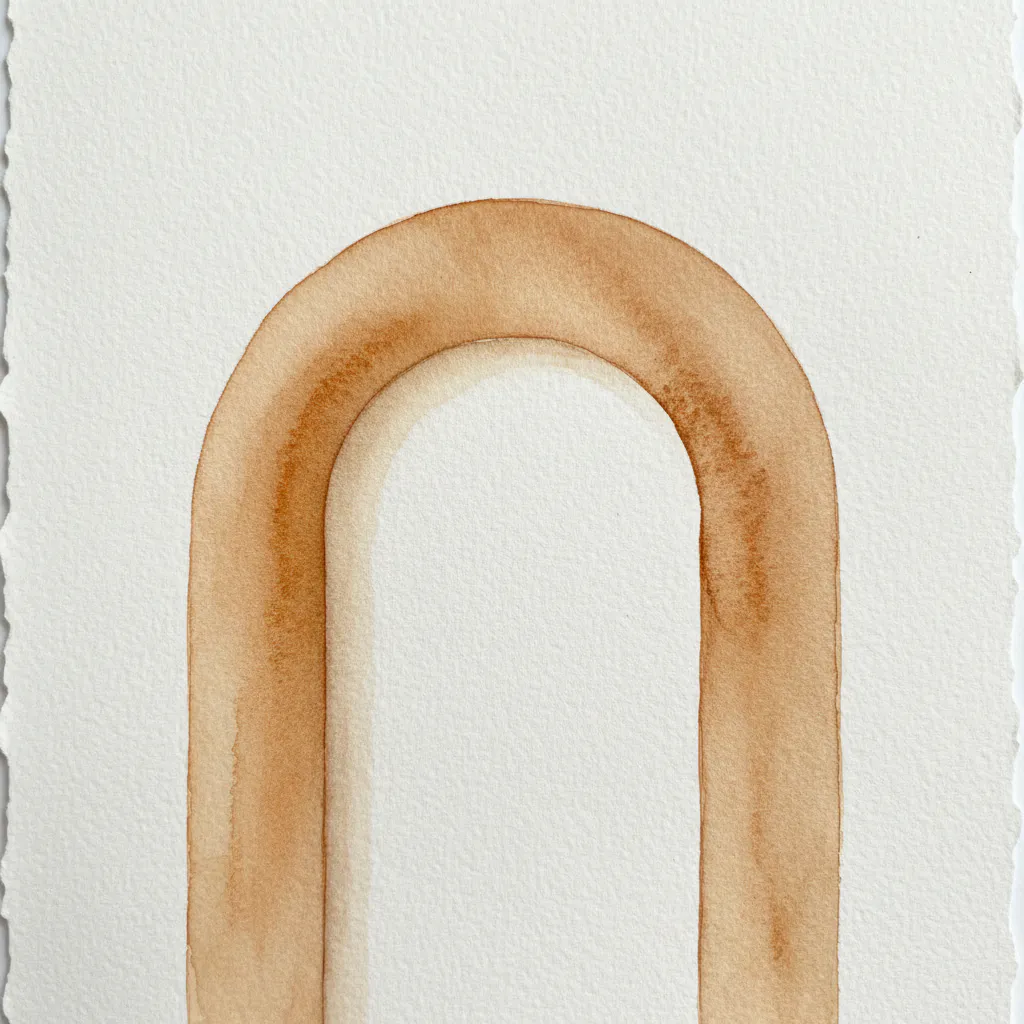
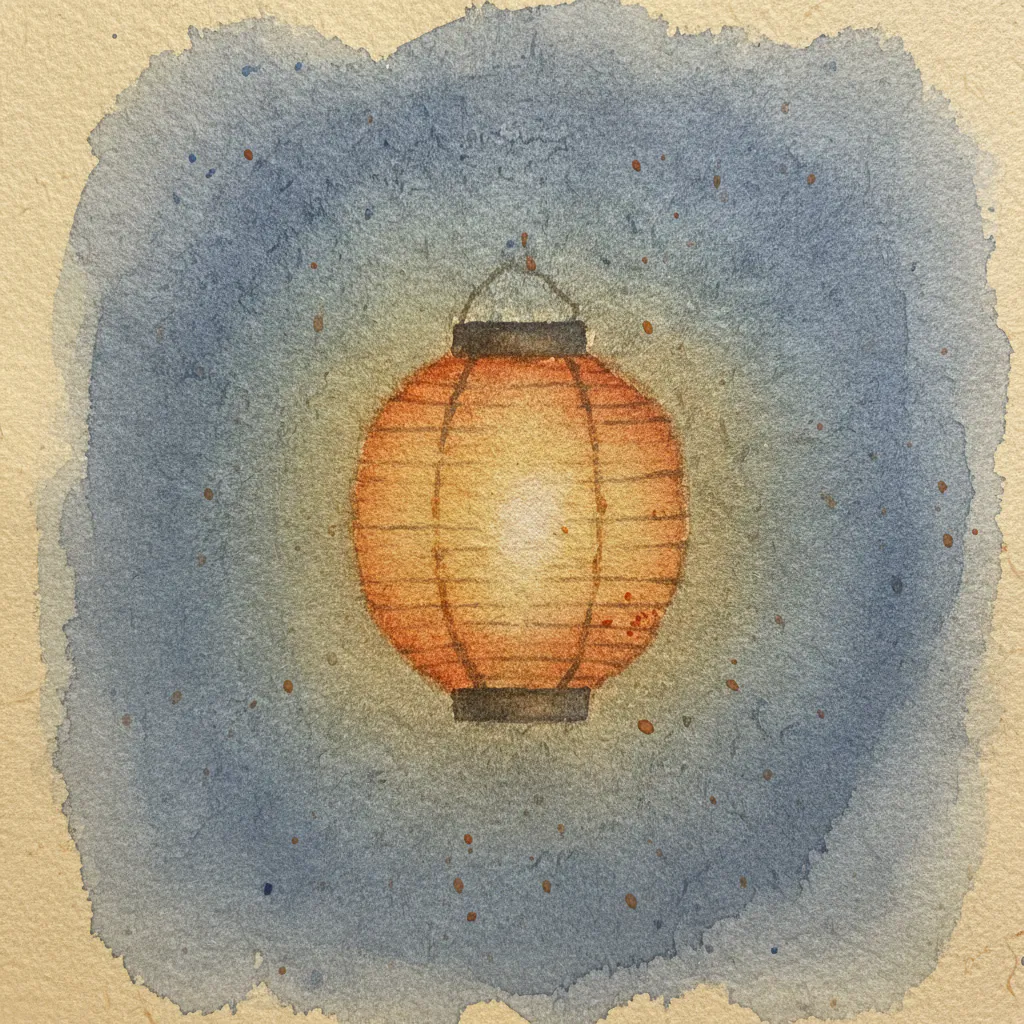
Conclusion
Refining minimalist watercolor painting ideas clearly demonstrates how much visual impact requires restraint. The real skill lies in knowing when to stop, letting the water and pigment do their work on the paper. Your next step should involve choosing a favorite from today and painting it again on a larger scale, or mixing two of the color palettes into a new composition. The beauty of this approach clears your mind, allowing you to appreciate each brushstroke and the quiet beauty of the white page. Keep that sense of calm focus with you as you plan your next creative session. Trust the process and let simplicity guide your hands.
FAQs
Q: What are some minimalist watercolor painting ideas that are perfect for beginners?
A: Minimalist watercolor painting ideas perfect for beginners include simple landscapes with a light blue sky and a single triangular shape for a mountain, a lone petal or leaf study, wavy horizon lines, and a small spiral or balloon motif—each is easy to create, requires few brush strokes, and is ideal for a new artist or starter experimenting without overthinking.
Q: How can a new to watercolor painter experiment with different colors while keeping designs simple?
A: A new watercolor painter can experiment by limiting the palette to two or three harmonious different colors, trying gradients from light blue to deeper tones, layering translucent washes, and using selective brush strokes to suggest forms—this keeps finishes minimal yet allows playful color exploration and new inspiration.
Q: Are there minimalist watercolor ideas that double as wall art or a handmade birthday card?
A: Yes—simple ideas like a single abstract petal, a joyful balloon sketch, a geometric triangle shape composition, or a tiny wavy seascape translate beautifully into wall art or a handmade birthday card; these motifs are easy to scale, simple to create, and make thoughtful, harmonious pieces for gifting.
Q: What basic supplies does a starter painter need for minimalist watercolors?
A: A starter painter needs a small set of paints (including light blue and a couple of different colors), a few synthetic brushes for varied brush strokes, quality watercolor paper, a palette, and masking tape; add a bookmark or small paper stock for practice projects and quick fun projects to build confidence.
Q: Can minimalist watercolor techniques be used for landscape painting?
A: Absolutely—simple landscapes are a strong minimalist option: use a wash for the sky, a single wavy line for distant hills, a triangular mountain silhouette, and minimal details to suggest trees or fields; this approach is easy to create and perfect for artists new to watercolor exploring landscape painting.