Selecting Surface Media For Traditional Pigment Flow
A smooth, slightly absorbent surface like a primed MDF board or heavy art paper will give you the best control for that signature Kerala mural look. When you work through easy simple kerala mural painting ideas, this modern substitute successfully mimics the traditional lime plaster tooth that once held natural pigments. A good quality canvas board or thick paper prevents your acrylics from beading up or sinking in too fast. Your surface needs to handle the initial ochre sketch and the subsequent delicate layers of color without warping or bleeding.
Mastering The Pressure Controlled Fine Line Outlining
Your entire mural design stands or falls on the confidence of the Chithra RekhaThat heavy, sweeping black outline defining every figure beautifully contrasts with the lush green color of the background. Beginners often rush this step, but the key is to load your brush fully with lampblack or black acrylic and practice the entire line in the air first. When you practice easy simple kerala mural painting ideas, steady hand pressure creates the thick-to-thin variations that give the art life and movement. Think of it as a single, meditative stroke that captures the dhyana of the form. This outlining process requires patience, but once you get the feel for it, your compositions gain that authentic character instantly.
1. Paint a Minimalist Red Lotus Bud Mural: Start with a Classic Symbol

Ever feel intimidated by intricate mural designs that reflect the rich culture of India? A single, elegant lotus bud serves as your perfect starting point within easy simple kerala mural painting ideas. You sketch a simple teardrop shape with a curving stem onto your prepared wall. Then, use a fine-tipped brush to outline the form in your chosen shade of red. Fill it in smoothly with a larger brush for bold, minimalist impact. This works because the simplicity makes the universal meaning of purity and new beginnings clear and beautiful. Try it and feel the quiet satisfaction it brings to your space. For more ideas in this style, you can explore other Indian painting ideas.
2. Create a Single Peacock Feather Motif Painting

This one looks intricate, but trust me, it remains a wonderfully accessible option for easy simple kerala mural painting ideas. Begin with a light pencil sketch of the feather shape and that famous central eye. I love using Phthalo blue and green color can add depth to your artwork, making it more vibrant. as a base, then layering in purples and golds to hint at that shimmer. Isn’t it satisfying to see those colors come together? The real magic happens when you use a tone that evokes the essence of Lord Krishna in your artwork. fine liner brush to add delicate, hair-like barbules radiating from the shaft. Feel the elegance come to life with each stroke.
3. Outline a Stylized Ganesha Elephant Head Design

Ever felt intimidated by intricate details in traditional art? Stylizing Ganesha’s head offers a gentle pathway into easy simple kerala mural painting ideas while preserving all the iconography. You start by picking a core feeling, like serenity or joy, and translate his key features into your chosen style. I love focusing on the broken tusk and large, wise ears first, since they define him instantly. Keep your lines flowing and do not overthink the details. This approach honors the symbolism while letting your personal style shine. For another way to simplify traditional forms, check out some simple Gond painting inspiration.
4. Traditional Clay Lamp Light Painting: A Glowing Focal Point

Ever wanted to capture the magic of a flickering flame? This technique provides one of the most atmospheric easy simple kerala mural painting ideas for beginners. You set up a traditional clay lamp in a dark room and use your camera on a long exposure cycle. I love how this method highlights the lamp’s beautiful, rustic form. The result is a warm, glowing image full of atmosphere, as the natural flame and your added light work together to build a story. For another way to explore traditional art forms with straightforward techniques, check out these easy Bhil painting techniques. Try this light painting approach and feel the satisfaction of creating something special.
5. Apply Simple Blue Krishna Face Motif Colors
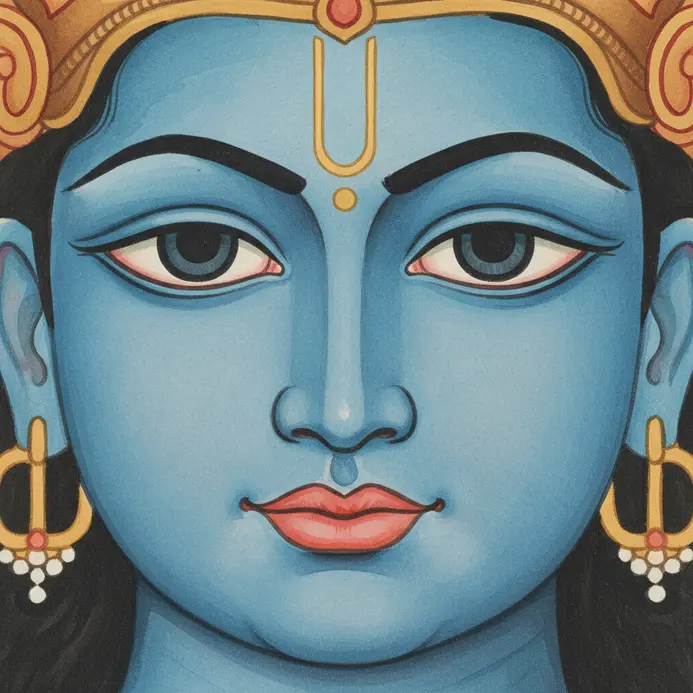
Ever wondered how a few colors can create such a divine feeling? You start with a smooth, even layer of your main blue paint for the entire face when practicing easy simple kerala mural painting ideas. Then, use a fine brush to add the white eyes and forehead marking. I love how this workflow keeps the palette limited while capturing Krishna’s serene essence. Trust me, focus on those little black details for the pupils and brows. Feel the peaceful satisfaction when that straightforward, beautiful face looks back at you.
6. Sketch an Intricate Kerala Border Scroll Pattern

This one looks wonderfully complex, but trust me, it relies on a gentle, flowing vine structure that fits perfectly among easy simple kerala mural painting ideas. Start by lightly drawing two parallel lines as your border guide, ensuring your panel remains balanced and harmonious. Then, let your pencil create a soft curve that dances between those lines. Add your main motifs, like stylized peacock feathers or mango shapes, at the peaks and valleys of that scroll. Fill the gaps with little leaves and buds sprouting from the central vine. The magic lies in keeping everything connected and organic rather than stiff. You will love how this elegant pattern frames your work. It is a fantastic way to add a touch of traditional flair, much like the beautiful borders found in easy Bengali painting styles.
7. Form a Solitary Ornamental Elephant Trunk Feature

Ever wanted to bring grand, three-dimensional energy into your space? Focusing on a single trunk naturally belongs in easy simple kerala mural painting ideas because of its sculptural impact. Start by sketching the graceful curve on paper, then consider your material. For a beginner-friendly project, hand-formed concrete Over a wire mesh armature feels wonderfully tactile, enhancing the artistically rich experience of creating a mural. You build up the layers and carve in the texture of elephant skin. The real magic is how this singular form becomes an instant focal point. I love how it lets you play with texture and depth. For a different take on traditional Indian art, check out these Pichwai painting ideas for art.
8. Yellow Marigold Floral Art Piece: Bright and Bold

Who says your first floral mural needs to be subtle? I love how a big marigold stands out among easy simple kerala mural painting ideas as a cheerful statement piece. Start by painting a simple, round center, then build out the layers of vibrant yellow petals. Work from the inside out, letting each layer overlap the last to create that full, ruffled look. The payoff arrives instantly because those warm, saturated radiance colors bring immediate happiness. Embrace those strong oranges and yellows and you will feel proud of your sunny creation.
9. Draw a Traditional Conch Shell Line Drawing

Ever wondered how to capture that iconic spiral shape? Drafting a conch shell ranks highly among easy simple kerala mural painting ideas for new artists. You begin by lightly sketching a long, curved central axis line for the shell flow. Build the main body whorl around the wider end and add the tapering spire with smaller curves. I love how this method turns a complex natural form into straightforward steps. The real magic happens when you define the flared outer lip and add subtle growth lines for texture. Isn’t it satisfying to see a flat sketch transform into a recognizable shape? The clean lines make it a perfect match for other easy Madhubani painting ideas.
10. Capture a Stylized Swan Swimming Portrait Mural
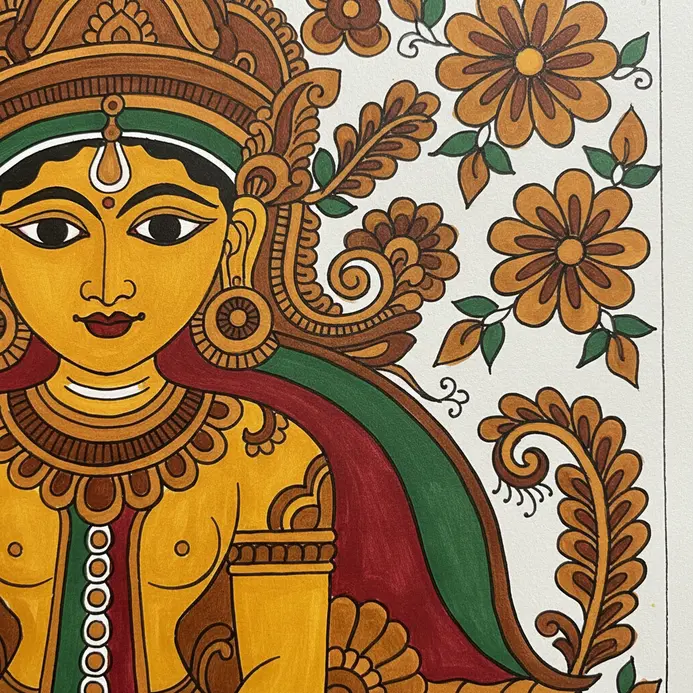
Who would have thought a swan could offer so much artistic potential? This project sits comfortably in many easy simple kerala mural painting ideas collections because it emphasizes graceful styling over perfect realism. Choose an approach like Art Nouveau swirls or a clean minimal look before sketching onto your surface. Paint in layers, starting with the water background before adding the bird’s main shapes. Focus on flowing lines and the mood your chosen approach creates. This works because it transforms a natural subject into a personal, serene piece. The feeling of watching that elegant form appear on your wall remains incredibly rewarding.
11. Achieve a Single Divine Eye Detail Study

Ever wondered how to capture that deep, spiritual gaze in your figures? Practicing focused details forms a crucial step in easy simple kerala mural painting ideas. This study highlights the Ajna chakra symbol itself, often shown as a stylized eye or lotus between the brows. I love using a fine brush to build the shape with soft concentric circles, moving from a dark outer ring to a light center, capturing the essence of devotion. This slow process teaches steady control and builds a connection to the art’s deeper meaning. For a different but equally rewarding project, you can find simple Madhubani drawing inspiration to practice detailed line work.
12. Build a Traditional Gold Crown Headpiece Sketch

This one looks detailed, but trust me, laying out a basic crown structure fits smoothly into any set of easy simple kerala mural painting ideas. Start by lightly sketching a central oval and a vertical line for symmetry. Then, use a kneaded eraser to lift construction lines as you add upright elements and graceful arches. Focus your shading on creating the illusion of polished metal and sparkling gemstones. Does that not feel like creating a piece of history? For another ornate project, you might enjoy exploring try Pichwai drawing designs.
13. Add a Green Leaf Garland Border Design

This border looks elegant yet proves incredibly straightforward for beginners following easy simple kerala mural painting ideas. Start by drawing a basic teardrop leaf shape on your practice surface. Duplicate this shape and arrange copies along a gentle curve, letting them overlap slightly. Using two or three shades of green adds instant depth and makes your garland pop visually. Isn’t that a fresh way to frame your work? The repeating pattern creates a natural, flowing frame that complements larger central motifs effortlessly.
14. Paint a Simple Lord Shiva Trident Illustration

Who would have thought such a powerful symbol draws so easily? The trident naturally appears in easy simple kerala mural painting ideas due to its clean geometry and cultural weight. Start by lightly sketching a vertical shaft, then add the three prongs at the top. I love how you confidently trace everything with a tone that resonates with the devotion of traditional artwork. black fine-liner pen to make the shape pop. Use a grey pencil to add subtle shading along the metal shaft for an ancient appearance. The satisfaction comes from creating a sacred symbol with minimal strokes. It works well for beginners seeking a minimalist piece, much like the approach in some Bengali drawing ideas for beginners.
15. Block In a Symbolic Sun Pattern Wall Motif

This motif looks intricate, but the structured layout makes it highly approachable for easy simple kerala mural painting ideas. You start by marking out a clean block grid using painter’s tape and a level. Inside each section, paint a sun symbol with warm yellows and oranges. The repetition creates a powerful rhythm across the entire surface. I love how this combines geometric order with universal symbolism, bringing bright optimism to any room. Trust me, taking time with the initial tape layout guarantees a crisp finish you will appreciate.
16. Sketch a Miniature Decorative Temple Roof Sketch

Who knew sketching architectural elements could feel so relaxing? Capturing traditional roof forms remains a favorite topic in easy simple kerala mural painting ideas. Start with an HB pencil and ruler for basic rectangles and triangles. Let your arm flow to craft those graceful curves for the upturned eaves. Add the central finial and simple tile patterns to complete the structure. A kneaded eraser lets you gently lift graphite to perfect the lines. For a different traditional experience, try this Bhil drawing for beginners.
17. Create a Traditional Flute Musical Instrument Painting

Ever notice how a flute seems to hold its own melody? Painting musical instruments rounds out collections of easy simple kerala mural painting ideas beautifully. Pick a specific type, like a Japanese Shakuhachi, and gather references to study its shape and texture. Decide whether you prefer a realistic portrait or a stylized folk interpretation. Place it against a textured background to tell its visual story. This approach captures the soul of an object rather than its exact measurements. For more easy Indian drawing inspiration, pair your flute with cultural elements.
18. Draw a Small Symbolic Lingam Stone Drawing

This project explores meaningful geometry in a quiet manner. Drafting sacred stones offers a contemplative path through easy simple Kerala mural painting ideas, bringing a sense of religious devotion to your artwork. Start with a clean circle and a pointed oval at its base for balanced composition. Your goal is not photographic realism but steady, symbolic form. Fill the shape with even layers of black ink or paint. Isn’t it satisfying when basic geometry carries profound cultural weight? Feel the focused calm this exercise brings to your routine.
19. Layer a Detailed Peacock Eye Center Piece

Want to add regal drama to your wall composition? A focused peacock eye brings striking contrast to any design. I love using a tall, slender vase as my base to give the feathers dramatic height. Build the eye by anchoring a few key plume shapes, then surround them with rings of deep blue and purple. The layering creates incredible depth, making your painting feel lush and alive. Remember to tuck in some sparkling crystals or iridescent ribbon to mimic that natural shimmer. Reference easy wall mural painting designs for additional layout inspiration.
20. Form a Flowing Water Wave Pattern Mural

Ever felt your space needs serene, natural movement? Wave motifs bring fluid rhythm to interior walls without overwhelming the eye. Start by sketching main crests with a large flat brush to block big shapes. Build up foam details with smaller tools afterward to enhance the panel’s texture and depth. Blending acrylic paints wet-on-wet creates that soft, translucent water effect. It feels satisfying to watch the ocean rhythm emerge on your wall. Explore the artistic potential of religious themes in your mural designs. DIY wall painting projects for related techniques.
21. Add an Elegant Lotus Petal Corner Accent

Who would have thought corners could anchor a design so beautifully? Framing elements add professional polish to any finished work. Draft one graceful, tapering petal shape using the Pen Tool in your preferred program. Duplicate and rotate copies around a central point for perfect symmetry. This approach adds organic elegance without overwhelming your main composition. Watching those smooth curves align brings quiet satisfaction. Feel the visual balance it introduces to your finished piece.
Applying Protective Varnish For Longevity And Sheen
A final layer of matte acrylic varnish protects weeks of careful work from dust, moisture, and fading. The spray or brush-on sealant locks in your Pancha Varna palette without altering the traditional flat finish you worked hard to achieve. Avoid glossy sheens, as they change the visual character and make the piece look modern. Apply it in a clean area after the painting dries completely. This step ensures your work remains vibrant and true to its roots for years.
Conclusion
Working with easy simple kerala mural painting ideas connects you with a rich tradition on your own terms. You find joy in each steady outline and bold color block. Your first attempt does not need perfection; it simply needs to exist. Choose one motif and practice the outlining technique on paper before moving to your final surface. Remember, the spirit of this art lives in its clarity and grace. We hope these ideas give you the confidence to bring Kerala’s timeless beauty into your space.
FAQs
Q: What is easy simple Kerala mural painting?
A: easy simple Kerala mural painting is a traditional South Indian art form adapted into accessible steps for beginners. It typically uses natural pigments, stylized figures, and flat planes of color—simplified here to make the process approachable while preserving the spiritual and cultural essence of the murals.
Q: What materials do I need to start an easy simple Kerala mural painting?
A: To begin you will need basic brushes, a smooth surface or canvas, poster paints or acrylics to replicate traditional pigments, a light pencil for sketching, and reference images. Many beginner methods substitute complex natural pigments with modern colors to make the process part of a practical learning experience.

Q: How long does a simple Kerala mural painting typically take?
A: Time varies with complexity; a simplified mural for beginners can take anywhere from a few hours to a couple of days. Larger works or those incorporating various traditional motifs will take longer, while practice helps you develop speed and confidence.
Q: Are there major design elements I should focus on in easy Kerala murals?
A: Yes, major elements include bold outlines, flat color fills, ornamental borders, and simplified facial features. Understanding these parts helps you maintain the distinctive Kerala mural look even when simplifying techniques for ease.
Q: Can easy simple Kerala mural painting include spiritual themes?
A: Absolutely. Kerala murals have deep roots in spirituality and temple art, and even simplified versions often depict deities, mythological scenes, or symbols. Respectful representation and understanding of the iconography will enrich the artwork’s cultural meaning.