Traditional Saffron and Gold Palette Balancing
Your devotion shines through with a primary color palette of saffron, white, and gold. Trust me on this, a limited palette grounds your piece in tradition and keeps the focus on Ganesha’s form. Use a heavy-body acrylic for that deep, opaque saffron coverage you need. Then, apply your gold detailing with a fine-liner pen for the intricate jewelry and tilak. The positive news is this high-contrast approach creates a stunning silhouette. You receive that traditional aesthetic without any color confusion. Let the white space work for you as a sacred frame around the deity. This method ensures your Ganesha remains the clear, meditative center of the artwork.
Priming Surfaces for Optimal Pigment Saturation
A layer of gesso on your canvas is the non-negotiable first step for vibrant color. This primer prevents the thirsty surface from absorbing your paint, which might leave you with dull, weak pigment. You want that saffron to pop with devotional energy, instead of looking washed out. Apply the gesso evenly and let it dry completely before you start your sketch. This creates a smooth, consistent base for your brushwork. The result is perfect saturation where every stroke of your soft-synthetic flat brush lays down bold, clean color. Your finished piece will have a professional look with colors that feel alive and full of presence.
1. Paint a Minimalist Geometric Line Art Ganesha
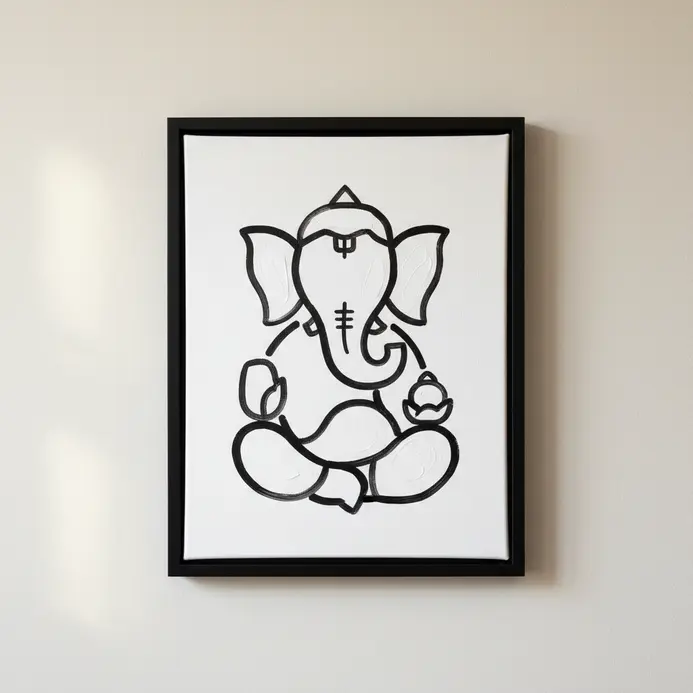
This easy ganesha canvas painting approach uses simple geometry to make a stunning visual impact on the wall. It works incredibly well for beginners because you will break down Ganesha’s form into simple shapes, sketching lightly with a pencil and a ruler. Then, trace those crisp lines with a fine brush and a single color to enhance your Ganesh painting. The magic is in the restraint, stripping away all the ornate details to reveal a clean, modern icon. I love how this style feels both peaceful and striking on the wall. It is a fantastic first project because the geometric structure is so forgiving, making it a great step by step tutorial. Trust me, you will feel a real sense of accomplishment when you step back and see your minimalist masterpiece.
2. Apply Vibrant Saffron Flat Color for a Bold Ganesha Silhouette
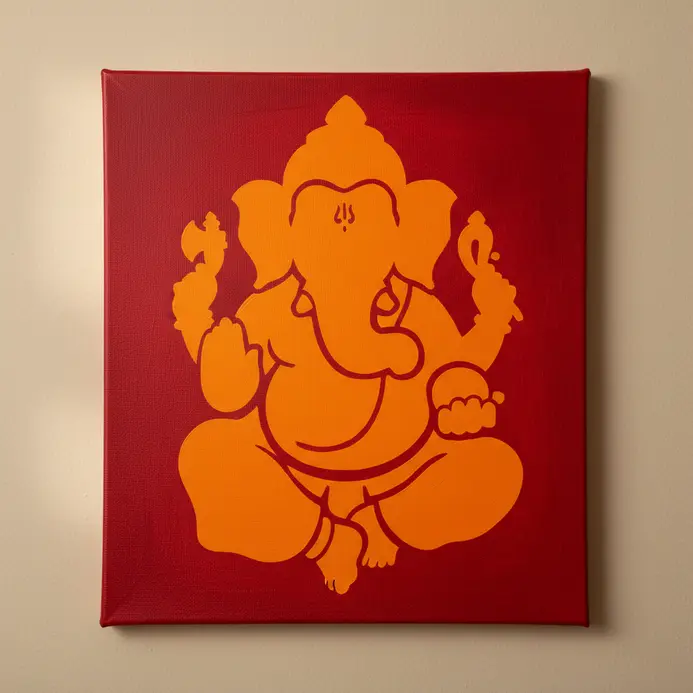
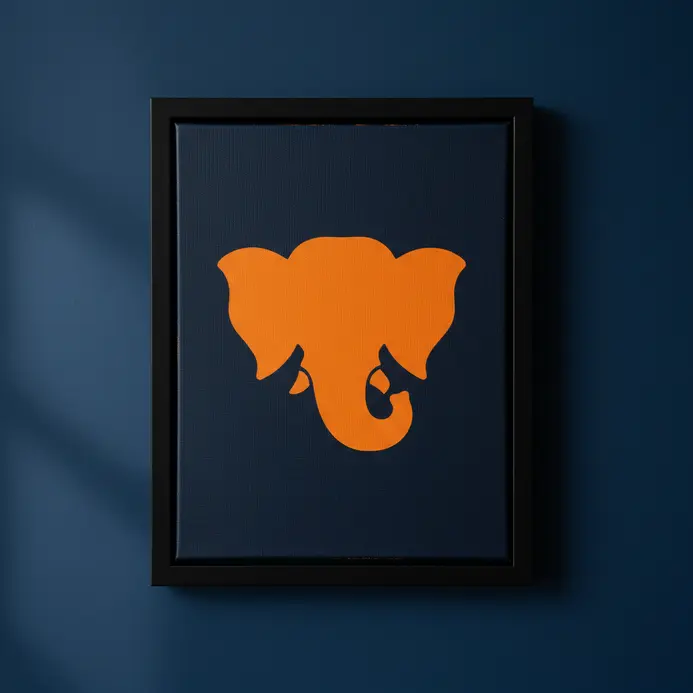
This step looks so professional, but trust me, it is one of the easiest parts. Once you have your outline, you simply fill it in with a single, powerful shade. For an easy ganesha canvas painting, use a flat, opaque paint like acrylics, applying it evenly to avoid any visible brushstrokes. Isn’t it amazing how one color can create such a strong visual statement? The key is choosing the right vibrant saffron. I love a shade with a slightly reddish undertone, as it carries that traditional spiritual warmth. This bold, uncluttered silhouette makes the form of Ganesha the absolute star of your devotional painting. Feel the satisfaction when that last bit of color fills the shape in this acrylic painting tutorial.
3. Layer Gold Metallic Paint for a Sacred Silhouette Profile
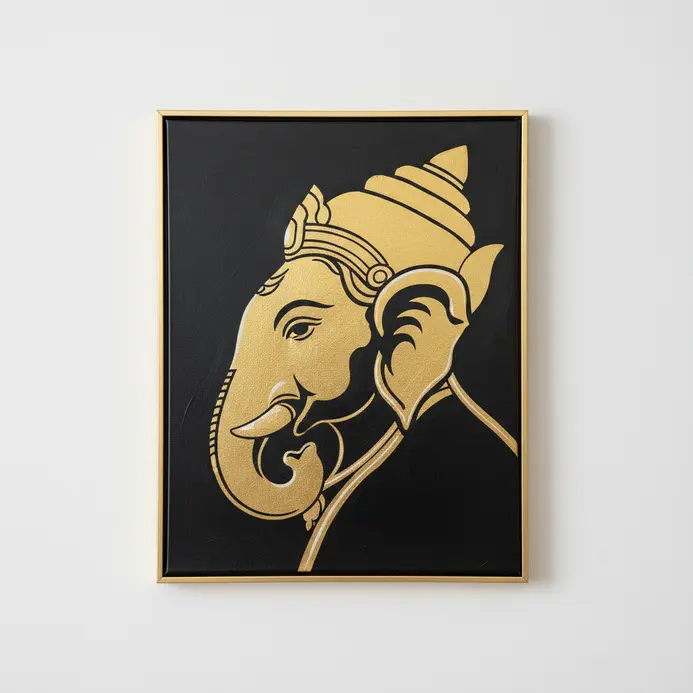
Ever wondered how to make a simple outline feel truly divine? This easy ganesha canvas painting technique relies on building depth and light. You start with a crisp silhouette of your sacred subject, then begin layering different golds. I love using a light gold base coat first, followed by richer, darker shades in the recesses to create shadow. A final touch of a bright interference gold on the highest points makes the whole thing shimmer. Why does this work so well? The layering mimics how light naturally plays across a form, giving that flat profile a beautiful, three-dimensional glow. It feels almost like you are sculpting with light instead of paint. Trust me on this one, do not settle for a single shade. Your piece will look flat. Does that not look stunning when it catches the light?
4. Build a Boho Tribal Patterned Trunk with Repetitive Motifs
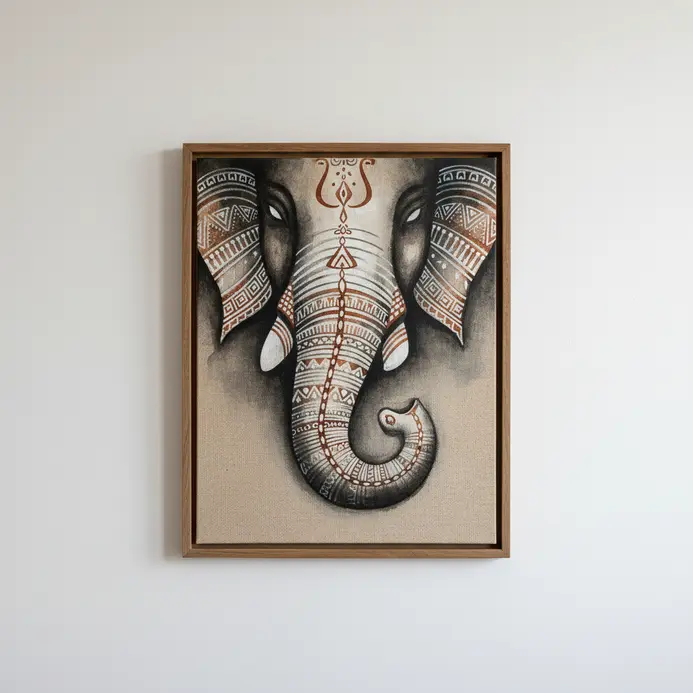
Ever thought a plain old trunk could become a stunning art piece in an easy ganesha canvas painting? This project surprised me with how a simple repetitive motif can transform a functional item into a visual rhythm you will love. You will start by applying a solid base coat, often in a warm, earthy tone, as outlined in the painting tutorial. Then, with a steady hand and a fine-tipped brush, you will paint your chosen geometric shapes. Think triangles, diamonds, or zig-zags, repeating in a sequence across the surface. It works because the pattern creates a sense of organized energy that feels both ancient and fresh. Try it and feel proud when your unique storage becomes a conversation starter.
5. Create a Watercolor Wash Abstract Lotus Ganesha Scene
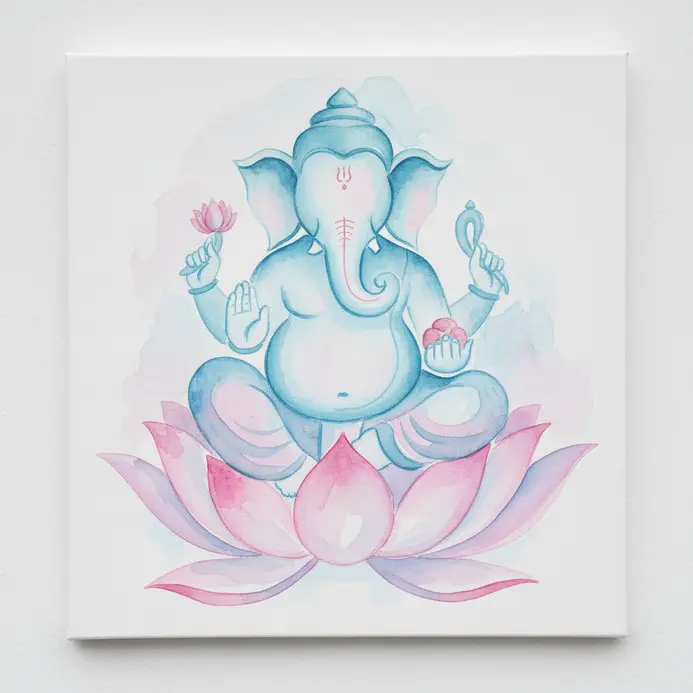
This easy ganesha canvas painting focuses on the serene silhouette of Ganesha emerging from a soft lotus, all created through gentle watercolor washes. You will start with a light sketch, then apply a broad, blended background using the wet-on-wet technique. Next, you will build up the forms with layers of slightly stronger color, letting the pigments bleed softly into each other. I love how this method makes the process meditative and the result look ethereal. The abstract quality is forgiving and lets you focus on the emotion rather than perfect lines. Your final artwork will have a beautiful, dreamlike quality that feels both personal and divine.
6. Capture a Starlit Galaxy Background for Ganesha Contour
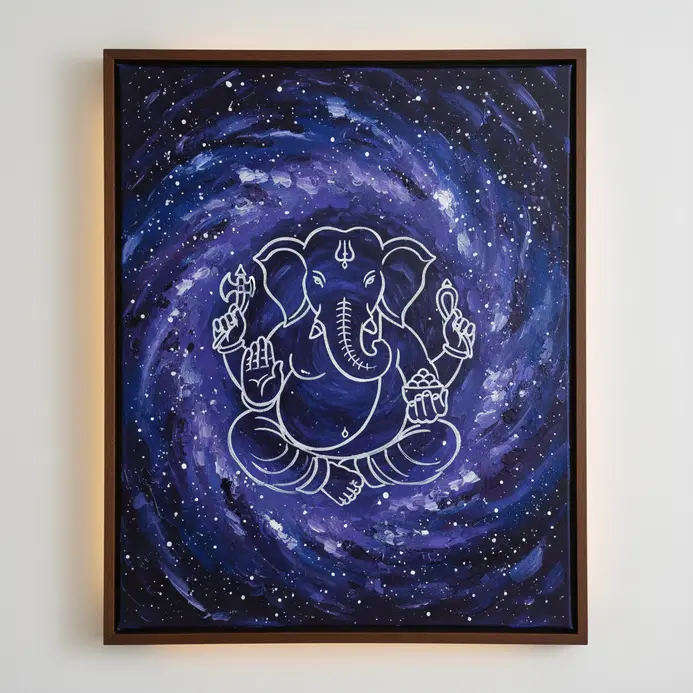
Ever looked at a starry sky and thought, “I wish I could paint that?” Capturing that cosmic feel for your easy ganesha canvas painting is easier than you think, so you do not need a telescope. Start with a wide-angle lens on your camera and find a dark spot away from city lights. Set your camera on a sturdy tripod, open the aperture wide, and use a long exposure. This lets in all that faint starlight, adding depth to your painting ideas. For a purely painted approach, a deep blue and black acrylic base is perfect. I love using a dry brush technique with white and a touch of purple to dab on clusters of stars. Spatter some paint for distant galaxies. The contrast makes your Ganesha silhouette pop beautifully against the universe. Feel that awe when your divine subject meets the infinite.
7. Blend Pastel Ombre for a Soft Focus Ganesha Portrait
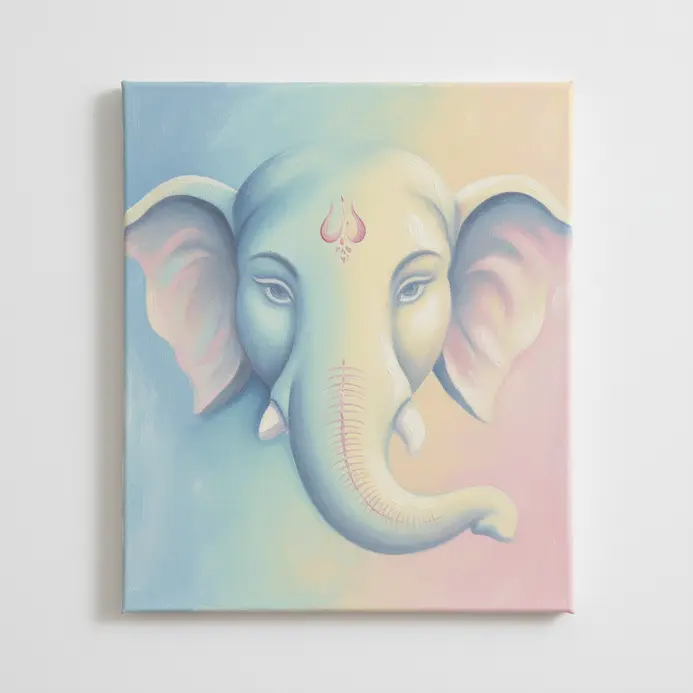
Ever wondered how to make your easy ganesha canvas painting look soft and dreamy? The secret is a pastel ombre background. Start by choosing two or three harmonious colors, like soft blues fading into lavender. Apply them in broad strokes to your textured paper, then blend them together with your finger or a soft brush until the transition is seamless. This creates a hazy, ethereal atmosphere that makes your subject glow. Once your background is set, lightly sketch Ganesha’s gentle features as part of your step by step painting tutorial. Use soft pastel pencils for subtle outlines and let the edges of your drawing gently melt into the ombre. Avoid sharp lines and build up his form with light layers of warm grays or ochres. This controlled diffusion keeps the focus on his serene expression while maintaining an overall sense of peace. It is a beautiful way to create a devotional piece that feels both traditional and contemporary. Trust me, the final look of your soft focus portrait is incredibly satisfying and serene.
8. Form an Earthy Terracotta Folk Art Ganesha with Simple Lines
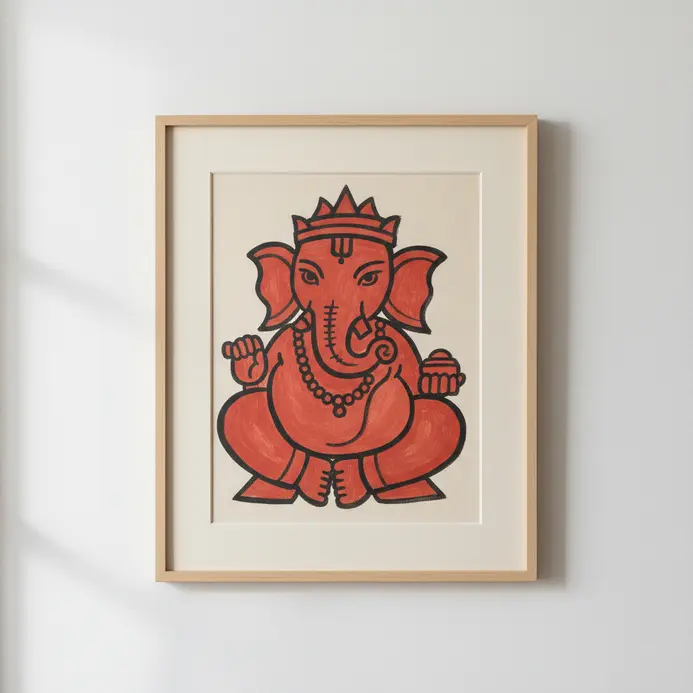
Who would have thought the humble charm of folk art could feel so grounding in an easy ganesha canvas painting? This style focuses on the raw, natural beauty of terracotta, using basic shapes and clear lines to suggest Ganesha’s form rather than detailing it. You will start by shaping the main body and head from air-dry terracotta clay, then add the ears and trunk as simple, bold attachments. I love how this approach makes the process feel accessible and the result feels warm and authentic, perfect for a mini canvas painting. Why does it work so well? The simplicity is freeing, letting you focus on the joyful act of shaping without pressure for perfection. Your finished piece will have that wonderful, slightly rustic texture that makes folk art so special. Trust me, embracing those simple lines and earthy tones is incredibly satisfying.
9. Outline a Neon Pop Art Vector Ganesha with Sharp Contrast
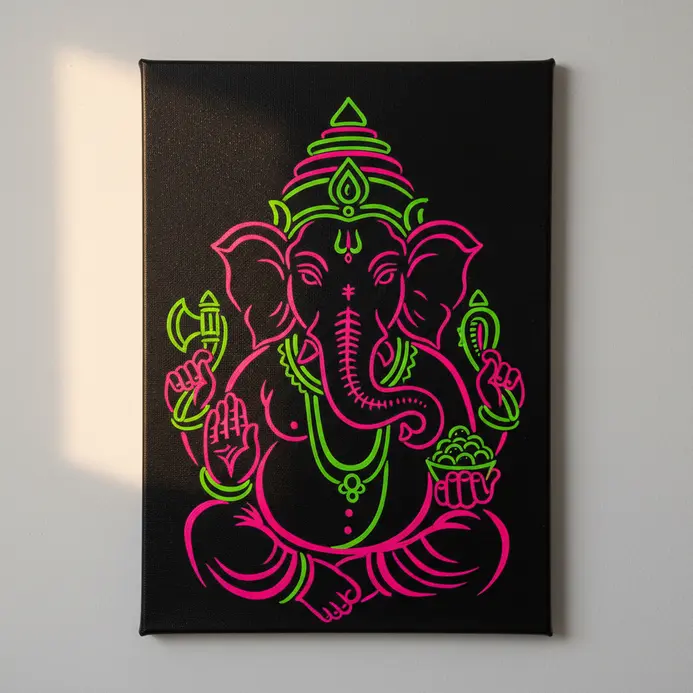
This easy ganesha canvas painting looks like it belongs in a gallery, but honestly, it is surprisingly approachable. The magic starts with a simple sketch of Ganesha’s key shapes, which you then trace into crisp Explore vector line art as part of your painting ideas for a unique touch.. Think big geometric ears and a round belly, all defined by those bold, clean lines. Next comes the fun part: filling those shapes with flat, electric colors. Choose a super vibrant shade for Ganesha himself, like a hot pink or lime green, and pair it with a deep, dark background. The sharp contrast is what makes the whole piece pop. For that final electric kick, add a glowing neon halo or jewelry to your Ganesh painting. The graphic style here reminds me of the playful simplicity you see in Bhil painting art for beginners, where bold outlines and flat colors create such strong stories. Why does this work so well? It takes a sacred, traditional form and makes it feel fresh, modern, and full of energy. The key is to avoid over-detailing and keep your colors intensely saturated. Trust me, when you see that neon Ganesha glow against the dark backdrop, you will feel a real sense of creative joy.
10. Add Vintage Mandala Detail to the Trunk for Ornate Focus
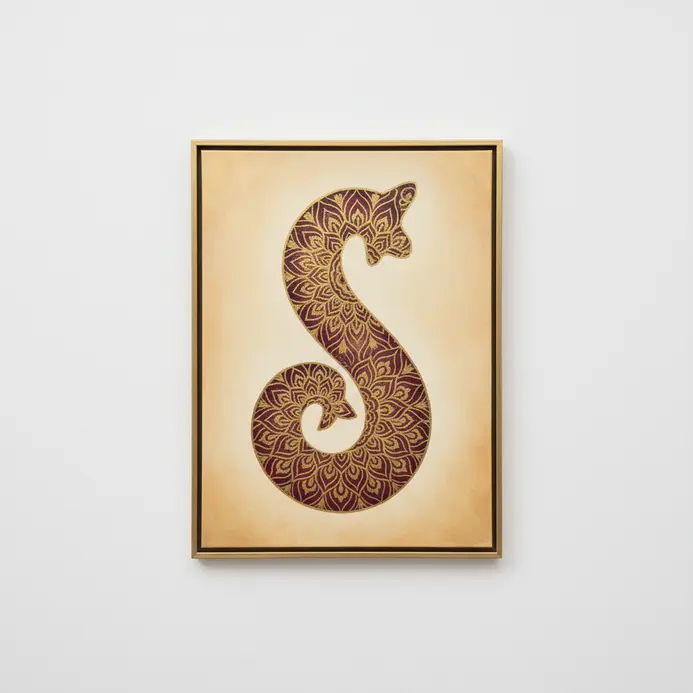
Ever feel like an easy ganesha canvas painting needs a little extra magic? This detail is my personal favorite for adding that wow factor. Adding a vintage mandala pattern to his trunk creates an ornate focal point that feels both spiritual and artistic. You can use a stencil with a dry brush technique for a crisp look, or try hand-painting for complete control over the design in this painting tutorial. I love using muted golds and deep teals to get that antique, historical feel. The key is to place it carefully so it enhances the trunk’s shape without overpowering it. This approach to devotional art adds wonderful texture and depth, making your piece look incredibly sophisticated. The patterns in Bengali painting styles for beginners often share this love for intricate, symbolic detail. Trust me, the moment you step back and see that finished mandala, you will feel a huge sense of accomplishment. Does that not look stunning?
11. Achieve a Serene Blue Hue Meditating Ganesha Composition
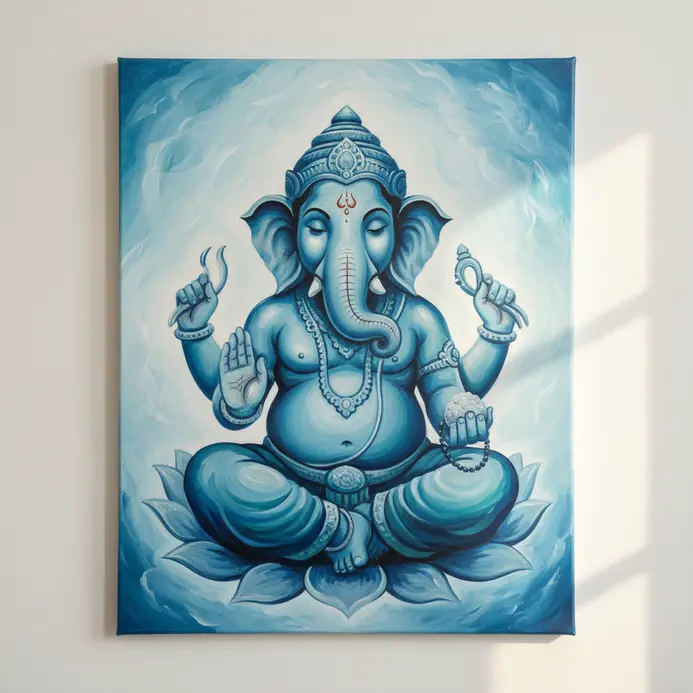
You know how a calm blue sky instantly makes you feel peaceful while working on your easy ganesha canvas painting? This composition captures that exact feeling. The goal is to portray Lord Ganesha in deep meditation, using a palette dominated by tranquil blues. Focus on giving him a gentle, inward gaze and a serene expression. I love how the Dhyana Mudra hand gesture reinforces the mood of quiet contemplation. Start by building your color scheme around shades like Cerulean and Ultramarine Blue. Use different tones and tints to create visual depth, avoiding a single flat shade. Add subtle accents with muted gold or soft grey for details like his jewelry, but keep them minimal. This approach works because blue inherently symbolizes spiritual depth and calm, perfectly matching Ganesha’s wise and soothing presence. Try layering your blues from light to dark, and feel the composition come together with a wonderfully soothing energy.
12. Sketch a Bold Black and White Ganesha for Graphic Impact
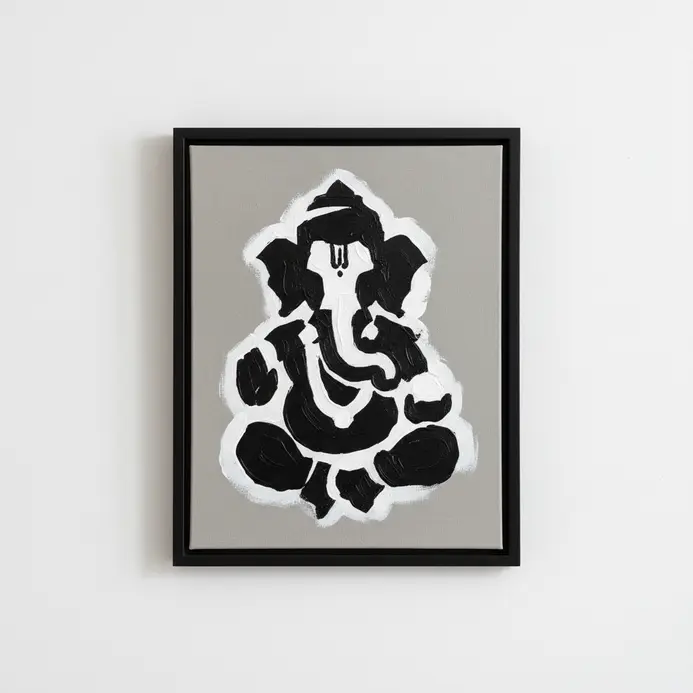
Ever feel drawn to a design that is pure power and simplicity for your easy ganesha canvas painting? This style strips away all the details to focus on the essential, powerful shape of Ganesha. Start with a light pencil sketch, focusing on a large, stable body and broad head. Use strong, curving lines for his trunk and arms, and simplify his attributes like the tusk and modak. The goal here is a Create a bold silhouette of Ganesh for a striking visual impact. that commands attention before you even pick up a pen. Once your sketch feels solid, commit to it with ink. Trace your lines with a black fineliner pen, varying the thickness to add weight and interest. Then, go for the ultimate contrast by filling in large areas, like his body or the space between his arms, with solid black using a marker. This creates that stunning, high-impact graphic look. It is incredibly satisfying to see a complex form become so iconic and strong. Remember, the graphic style is about deliberate choices, not a lack of skill. Avoid the temptation to add small lines or textures. For a different take on using bold shapes and patterns in traditional art, you can explore Pichwai painting techniques. Now, step back and feel the impact of your stark, beautiful creation.
13. Stencil a Jeweled Crown Detailed Portrait with Metallic Accents
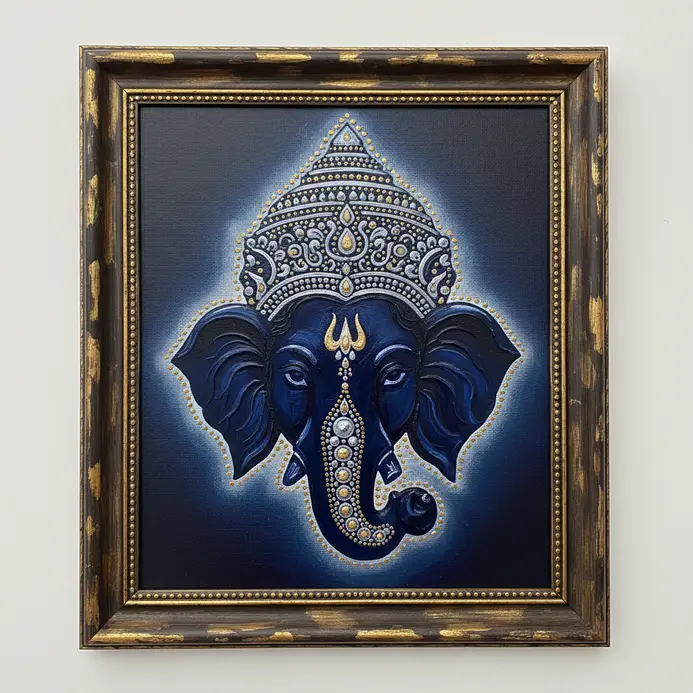
This easy ganesha canvas painting looks like it belongs in a gallery, but you can create it with a secret weapon. Sound complicated? It is really not. The magic is in using repositionable spray adhesive to lock down your stencils. This stops paint from bleeding under the edges and gives you those sharp, clean lines for the portrait and crown. The real fun starts when you dab on the metallic paints. I love how a little gold or copper instantly makes the jewels look expensive and deep in this painting tutorial. Use a stencil brush with a light touch, building the shimmer in thin layers so it feels elegant, not overwhelming. Trust me, seeing that crown sparkle under the light is the best payoff. You will feel so proud of your regal masterpiece.
14. Draw a Whimsical Cartoon Style Cute Ganesha with Large Eyes
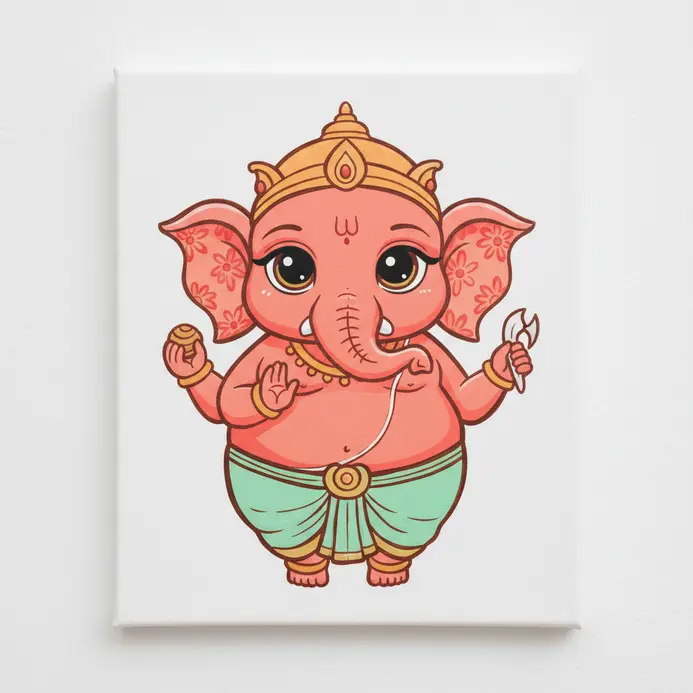
Ever wondered how to make a traditional figure feel extra friendly and approachable? This whimsical cartoon style is all about leaning into exaggerated cuteness. You start by sketching a large, slightly squashed oval for the head and an even rounder one for the chubby body. The real secret is drawing those very large, circular eyes close together with tiny highlight dots. They become the heart of the character. I love how this style transforms the form into something so lighthearted. The key is to keep everything soft and rounded, from the floppy ears to the stubby limbs. A gentle S-curve for the trunk makes it look natural. Does that not just feel wonderfully charming?
15. Mix Textures for a Rustic Wood Grain Background Ganesha
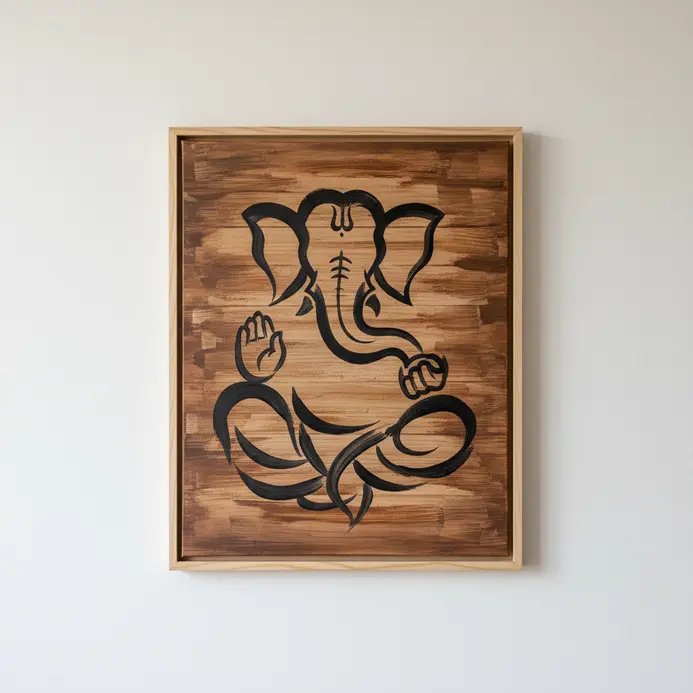
Ever wondered how digital artists make those backgrounds look so real and full of character in an easy ganesha canvas painting? This technique is all about layering. You start with a primary wood grain image as your base layer. Then you add a distressed wood texture on top, playing with blend modes like Multiply or Overlay to let those scratches and dents peek through naturally. I love how this approach builds depth without you having to draw a single line. It works because it taps into the warmth and tradition of natural materials, creating a perfect, earthy stage for Ganesha. The key is subtlety. Keep your texture layers at a low opacity so they complement, not compete with, your main subject. For a fantastic next step once you are comfortable, explore more simple painting subjects for beginners. Does that not feel like a satisfying way to build a complete scene?
Applying Protective Varnish for Long Term Preservation
One coat of matte acrylic varnish is your final, essential act of care for the artwork. This clear sealant locks in all your hard work and protects the surface from dust and light. Apply it only after your painting is completely dry, using gentle, even strokes. The varnish creates a unified finish that brings out the depth of your colors while safeguarding them. Your Ganesha painting will maintain its visual clarity and devotional impact for years. This simple step takes minutes but preserves the weeks of intention you poured into the piece. It is the respectful completion your traditional ink art deserves.
Conclusion
Your devotion finds its voice not in perfect lines, but in the act of creation itself. Each of these styles offers a different path to that moment of connection, letting you focus on the feeling rather than flawless technique. Remember, the best next step is often the simplest one. Choose a single color you love and start blocking in a basic shape. Your easy ganesha canvas painting personal artistic journey with Lord Ganesha grows with every brushstroke, building a visual prayer that is uniquely yours.
FAQs
Q: What supplies do I need for an easy ganesha canvas painting?
A: For an easy ganesha canvas painting you’ll need a pre-stretched canvas (8×10 or 12×16 works well), acrylic paints (basic set: white, black, red, yellow, blue, brown), a few brushes (flat 1″, round size 4 and 2), a pencil for sketching, an eraser, a palette or plate for mixing, a cup of water, and paper towels. Optional supplies include a palette knife, a liner brush for details, and a reference image of Ganpati or Lord Ganesha to guide shapes and colors.
Q: How do I start sketching Ganpati on the canvas for a beginner-friendly painting?
A: Begin by lightly sketching simple shapes: an oval for the head, a curved triangle or rounded rectangle for the trunk, and circles for the ears and body. Block in the position of the arms and legs with simple lines. Keep the proportions simplified—beginner-friendly Ganpati paintings often use stylized, rounded forms rather than detailed anatomy. Use light pencil marks so they can be easily painted over or erased later.
Q: Which acrylic paint techniques make the easy ganesha canvas painting look professional?
A: Use layering and blending to build form—start with a base color, then add mid-tones, highlights, and shadows. Dry brushing adds texture to clothing and background, while glazing (thin, translucent layers) can deepen color without obscuring detail. Use a small round brush for outlining and facial features. A clean white highlight on the trunk, tusk, and eyes brings the painting to life. For a soft background, wet-on-wet blending creates a smooth gradient behind Ganpati.
Q: Can I customize colors and styles in an easy ganesha canvas painting?
A: Absolutely. Traditional depictions of Ganpati use warm colors like saffron, red, and gold, but you can personalize the palette to match your home decor or artistic style. Try a monochrome blue ganpati for a modern look, or jewel tones with metallic gold accents for a festive feel. Stylized or abstract versions simplify shapes and emphasize color and pattern rather than realism.
Q: How long does a typical easy ganesha canvas painting take to complete?
A: Time varies by complexity and drying times. A simple, stylized Ganpati can be completed in 1–3 hours over a single session if you work efficiently. More detailed pieces with multiple layers, textures, and metallic accents may take several sessions across a few days to allow acrylic layers to dry. Plan breaks between detailed steps to assess and refine your painting.