Heavy Body Acrylic Paint Consistency And Selection
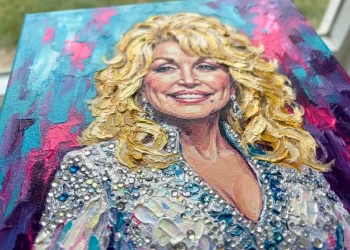
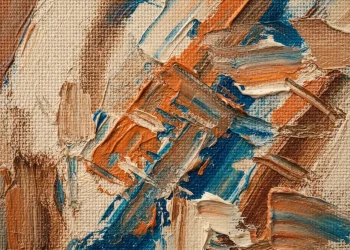
Your paint must hold a stiff peak when you lift the knife, which is why heavy body acrylics are the only option for real impasto work. Craft paints or fluid acrylics will slump and flatten, losing the sharp edges that define this style if you don’t use a palette knife. I tell my students to look for the words ‘heavy body’ or ‘high viscosity’ on the label, not simply ‘acrylic.’ The professional art brands offer a dense, buttery consistency that supports itself. This physical quality lets you build those crisp, stacked layers of paint without the colors bleeding into a muddy mess. The paint’s body is your foundation for every texture you create.
Selecting Palette Knife Shapes For Different Textures
A long, flexible trowel-shaped knife will glide paint on for smooth, sweeping backgrounds, while a short, stiff diamond tip is your tool for precise, jagged marks. Think of the knife shape as an extension of the mark you want to make. For mimicking petals or rounded forms, a rounded tip lets you push and twist the paint into soft shapes. A pointed tip is perfect for etching fine lines or adding sharp highlights into wet paint. Your kit should include a few different shapes because each one creates a distinct surface. The trowel-shaped knife is your workhorse for covering large areas quickly and laying down those first bold foundation strokes.
1. Paint an Impasto Sunset Horizon Landscape
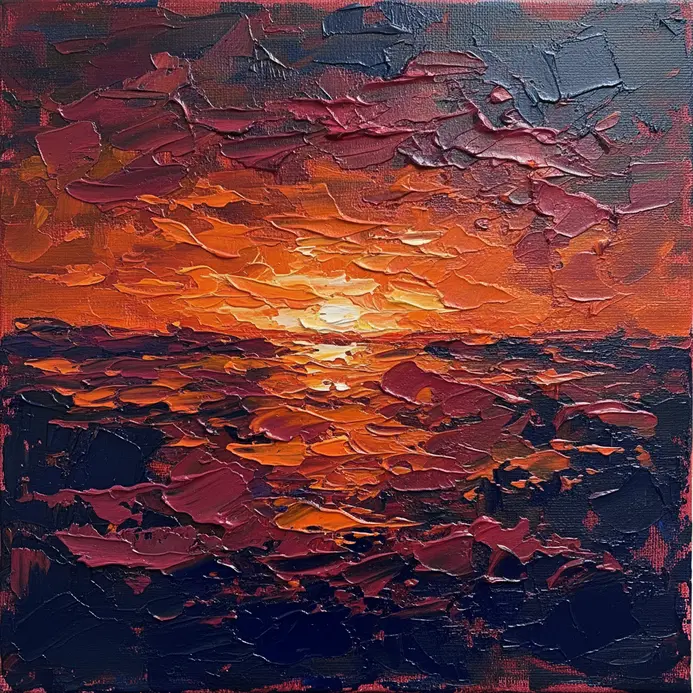
Ever wondered how to make the light in a painting feel like you could almost touch it? When exploring easy acrylic palette knife painting ideas, this project shows you exactly how to proceed. You will build up thick, buttery layers of acrylic paint with a palette knife to create a stunning sunset. I love the sculptural quality this technique gives the sky. It turns a simple horizon into something with real presence. Start with a light sketch of your horizon line on the canvas. Mix your warm sunset colors with a heavy gel medium to get that perfect, thick consistency. Use a large palette knife to drag bright oranges and yellows right along that line. Do not blend it smooth. Let the knife strokes and texture do the work for you. This works so well because the thick paint catches the light, making the colors glow with dimension. It is incredibly satisfying to see those bold strokes come together. For your next steps, you can find more foundational guidance with these easy acrylic painting for beginners. Try this and feel how powerful simple, confident texture becomes.
2. Create a Textured White Birch Forest Scene
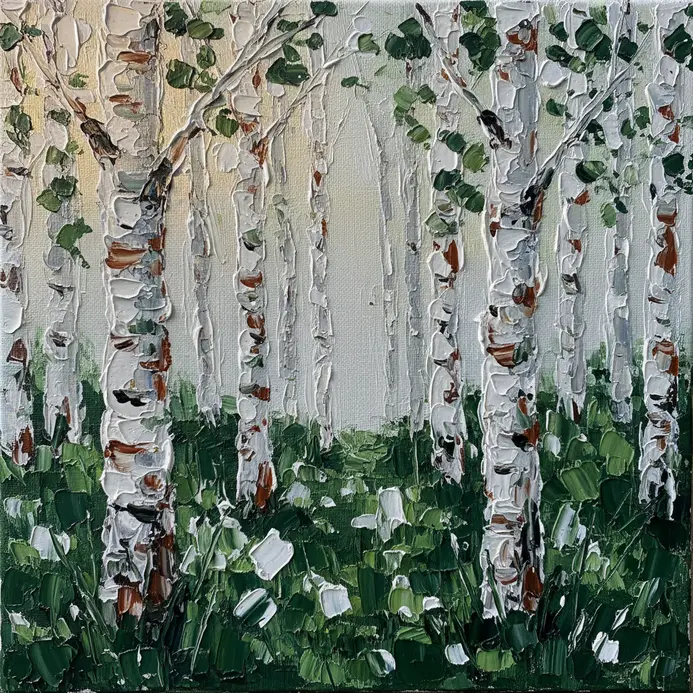
Among many easy acrylic palette knife painting ideas, this one is a perfect example of how texture creates the entire illusion with palette knife techniques. Forget blending and fine lines. Use your palette knife to build up the birch tree trunks with thick, vertical strokes of white and grey paint. Scrape in some dark lines for the characteristic black markings. For the forest floor, mix greens and browns and apply them with a dabbing motion to suggest foliage and earth. I love how this technique focuses on physical texture over detail. The rough, impasto application of paint mimics the peeling bark and uneven ground perfectly. It works because your eye reads the texture as much as the color, creating instant depth and realism. Pro tip: let your first layer of trunk colors dry before adding the dark marks, so they stay crisp. Feel the satisfaction of building a whole landscape with bold, textural moves using a painting knife.
3. Achieve a Minimalist Abstract Golden Sunscape
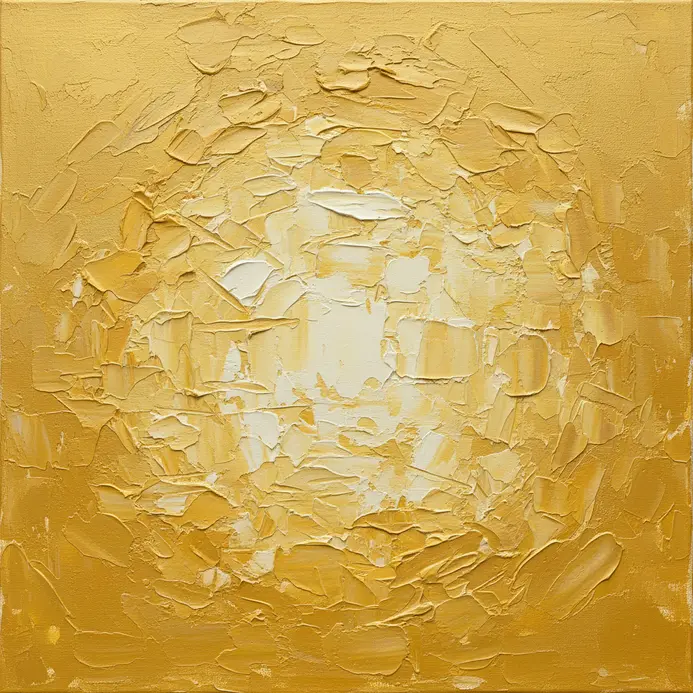
Exploring easy acrylic palette knife painting ideas leads me here because it is all about feeling, not perfect detail. You will load your knife with warm yellows and oranges, then use broad, sweeping strokes are essential in palette knife painting techniques. to build your sky. Let the colors mix right on the canvas for those gorgeous sunset blends. Place your sun element off-center, maybe using the edge of a smaller knife to create a textured circle. The magic is in the negative space you leave around it. That empty area makes the light feel expansive and calm. Isn’t that a lovely way to create mood? Trust me, the thick, buttery texture from the knife adds physical depth. It turns a simple idea into a rich, tactile statement piece. Feel the warmth when you step back and see your golden glow from the layer of paint you applied.
4. Layer Vibrant Green Rolling Mountain Hues
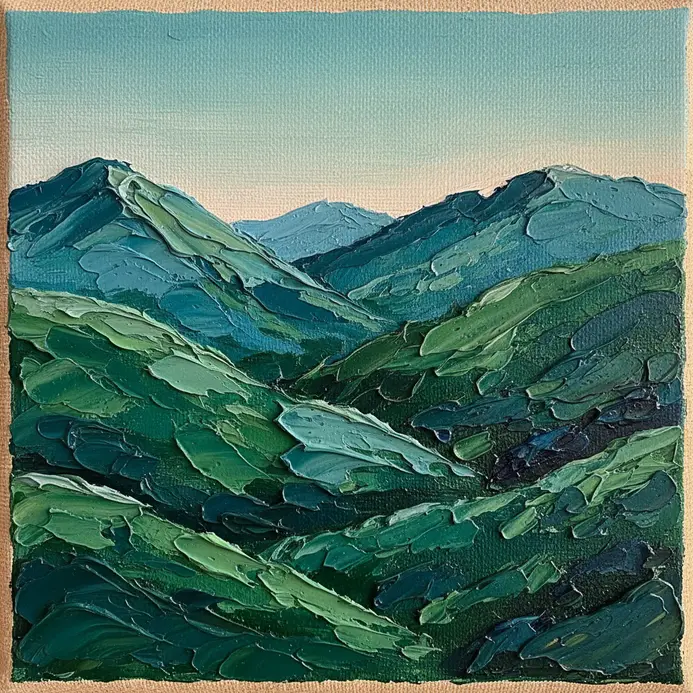
When you review easy acrylic palette knife painting ideas, you will find this approach creates instant depth without needing perfect drawing skills. Start by blocking in the farthest mountains with a cool, pale blue-green. Then, work your way forward with progressively warmer and more intense greens, using your palette knife to create those soft, rolling shapes. Isn’t it satisfying to see a flat canvas suddenly pop into a three-dimensional scene? The trick is to embrace a whole spectrum of greens, not one single shade. Use lemon yellow mixed with a touch of phthalo green for brilliant sunlit peaks. For the mid-ground, a rich emerald or forest green adds weight. Then, drop in some deep teal or viridian for the shadowy valleys in the front. This varied palette is what makes the mountains feel alive and vibrant. Avoid the common pitfall of using a single flat green, which makes your landscape look dull. Remember, the ‘rolling’ part comes from the motion of your tool. Use the flat edge of your knife to sweep in those long, gentle curves. Let the colors mix a little right on the canvas for a natural, textured look. Trust me, this technique builds a scene full of life and serenity. Feel the freshness of your vibrant green world.
5. Build Thick Layered Sunflower Petals
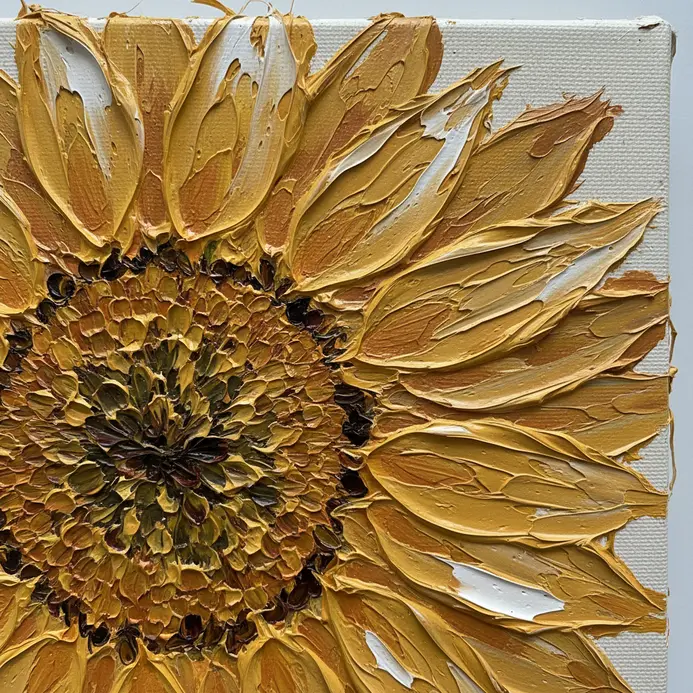
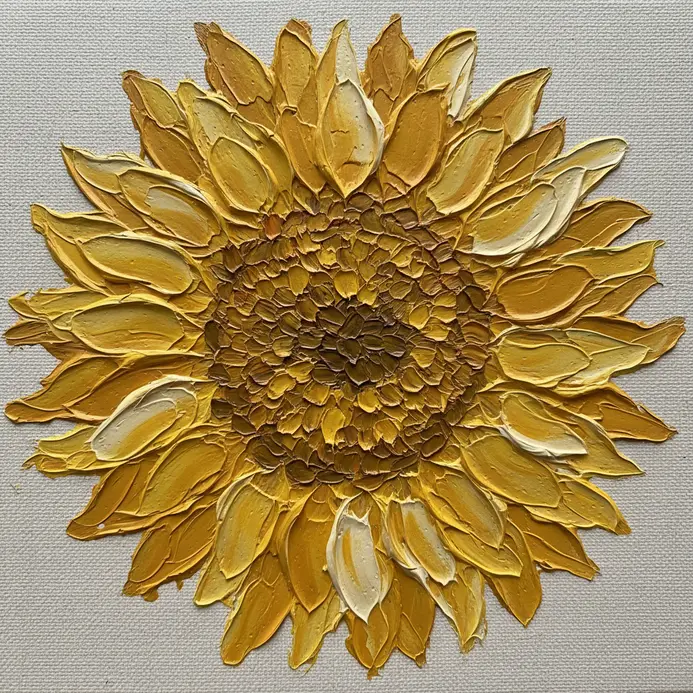
Doesn’t a sunflower look like it was made for the palette knife? Those petals have such lovely, overlapping layers. To master these easy acrylic palette knife painting ideas, start with a generous yellow base shape. Use the side of your palette knife to press and pull smaller, curved strokes around the center. Work from the outside in, letting each new ring of petals sit slightly higher as you apply paint. I love how the thick paint naturally creates a three-dimensional texture. The secret is to avoid over-blending. Let those distinct, textured strokes show. You will be amazed at how quickly this simple layering technique with various palette knife techniques. builds a flower with real depth and cheer. Does that not look stunning?
6. Capture a Stormy Ocean Crashing Wave
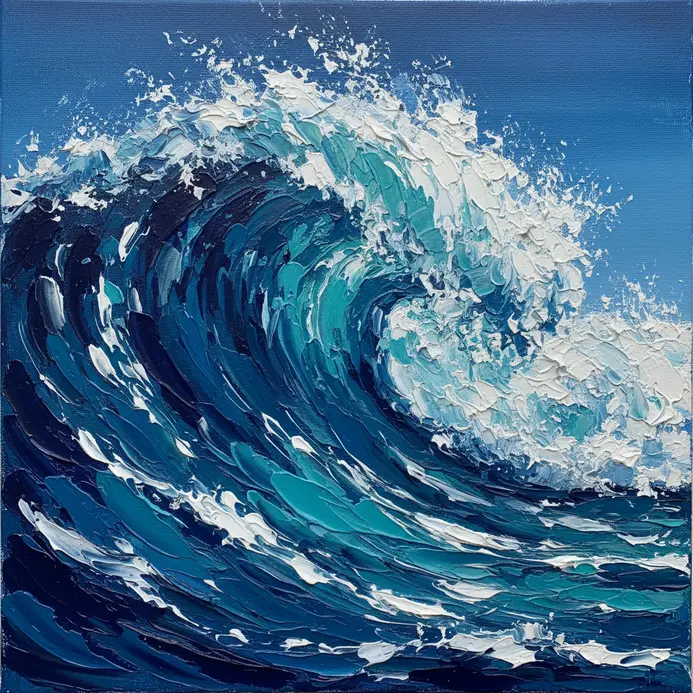
Trying out easy acrylic palette knife painting ideas means this scene will look dramatic since it is all about bold, simple gestures. Forget brushes and grab a large palette knife. Start by laying down deep blues and greens for the dark ocean base. Then, use the knife’s edge to pull up thick, churning strokes of lighter blues and grays to form the wave’s body. I love this part. The real magic is in the foam. Load your knife with generous amounts of titanium white and tap, drag, and scrape it onto the wave’s crest using a palette knife. This creates that frothy, chaotic spray. The thick paint naturally catches the light, making the water look alive. Trust me, it brings incredible satisfaction to build up those textures. Do not try to blend it all smooth. Let those sharp, textured strokes stand out. They capture the wave’s explosive energy perfectly. When you step back, you will feel the motion you have created. For a completely different but equally rewarding textural project, try your hand at some easy flower painting for beginners.
7. Form a Still Life Ceramic Vase Arrangement
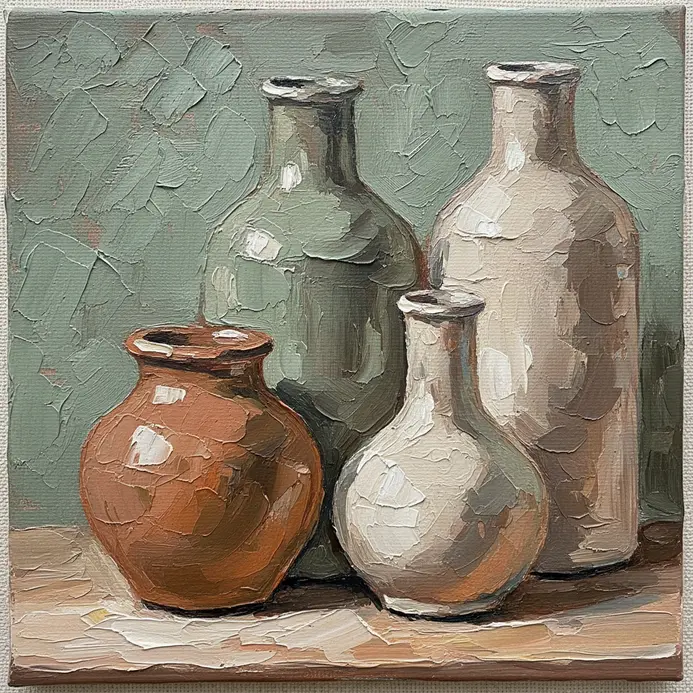
Of all the easy acrylic palette knife painting ideas available, this is my go-to setup for practicing bold texture and light. You will start by choosing a single ceramic vase with a distinctive shape or texture. Then, arrange a few complementary items around it, like a piece of fruit, a book, or some dried flowers. The magic happens in the interplay of these varied forms. When you paint this, use your palette knife to capture the hard edge of the vase and the softness of a flower petal in one bold stroke. The contrast between the smooth glaze and a rough tabletop is where the painting comes alive. It works so well because you are training your eye to see and translate different textures, which is the heart of great still life work. I love how this exercise builds your compositional skills almost without you noticing, especially when you use a palette knife. For more foundational practice, try these easy still life painting techniques first.
8. Apply Autumn Forest Foliage Textures
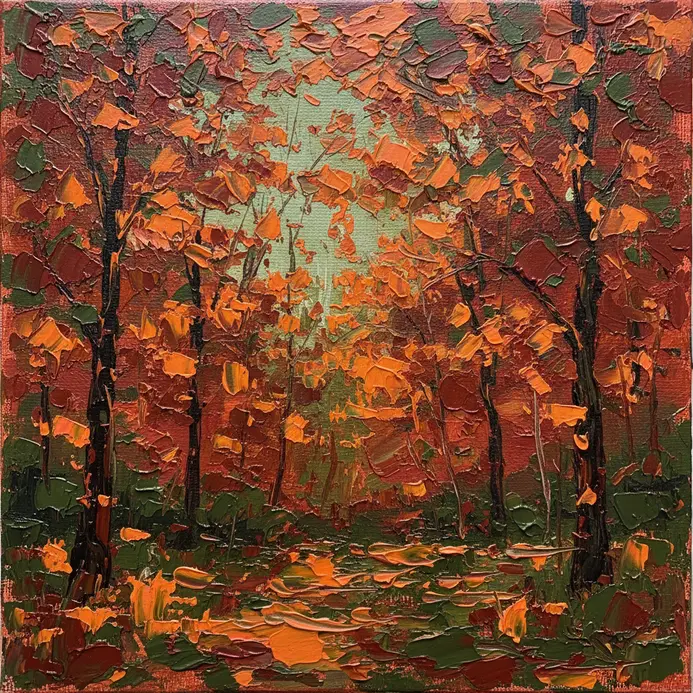
If you study easy acrylic palette knife painting ideas, you will quickly learn how to capture the rich chaos of an autumn forest with a few strokes. This is where your palette knife truly shines. Scoop up generous amounts of burnt orange, crimson, and ochre on the flat of your blade. Then, press and drag with a light, twisting motion to create clusters of textured leaves directly on the canvas. The thick paint builds up beautifully, mimicking the layered look of foliage. For the ground, mix a little burnt umber into your leftover colors and use the knife’s edge to scrape and dab. This creates a wonderful sense of depth where leaves have fallen. I love how this technique lets you build a whole scene with a few energetic applications. The payoff is immediate and so satisfying. Remember to vary your pressure to get different leaf sizes and let some of the background peek through for realism. Try it and feel the wonderful crunch of color you achieve.
9. Block In Snow Capped Jagged Mountain Peaks
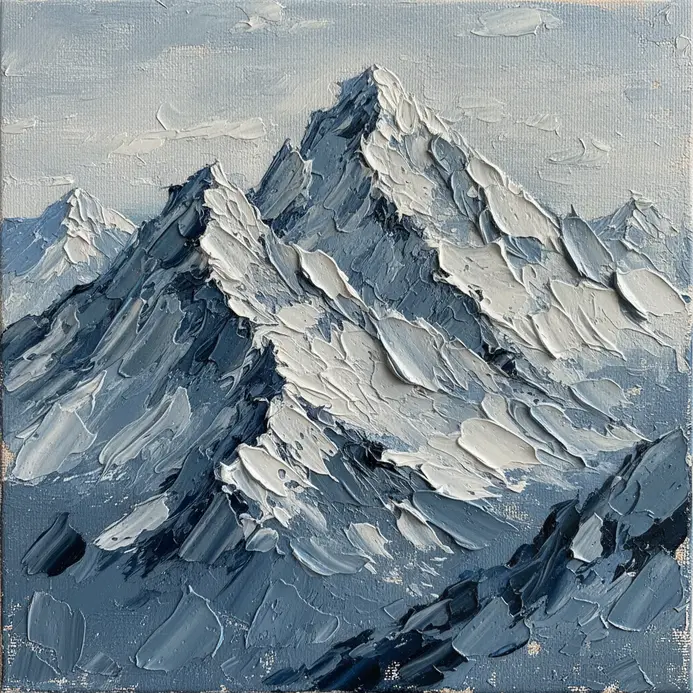
Understanding easy acrylic palette knife painting ideas requires you to forget all that fine detail for now. Instead, use your large flat brush to lay down the massive, angular shapes of the rock using a palette knife. Think of it as drawing the mountain’s powerful silhouette with paint. Then, with a lighter color, block in the general areas where the snow clings to the peaks and crevices. This foundational step is crucial because it sets the entire scale and mood of your landscape painting. By focusing on the big forms first, you ensure your jagged peaks look solid and imposing. I love how this simple method prevents the whole scene from feeling flat or disjointed later on. Trust me, getting those big value relationships right between the dark rock and bright snow makes all the difference. Feel the satisfaction of seeing your majestic mountains emerge from those first bold strokes.
10. Blend a Soft Pastel Cloudscape Sky
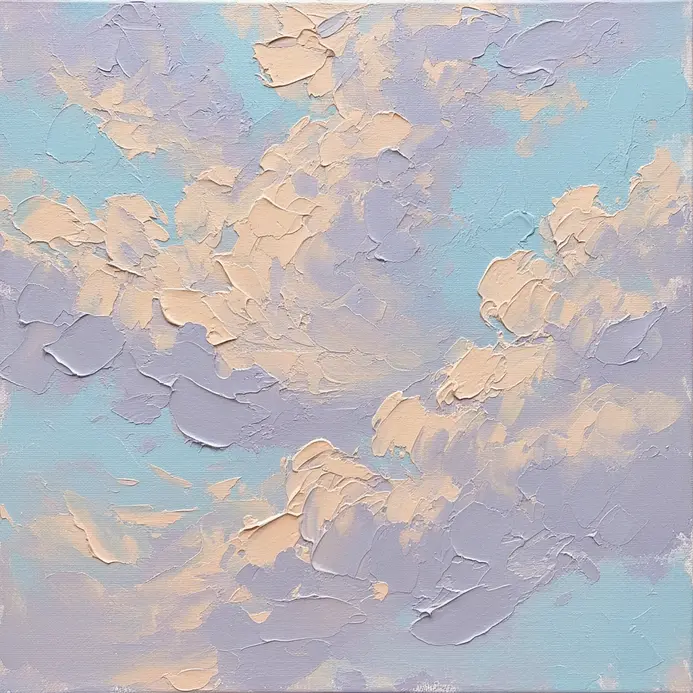
Among the best easy acrylic palette knife painting ideas, this technique is all about creating those seamless, dreamy transitions. Start by laying down broad washes of your sky and cloud base colors on a textured surface like sanded pastel paper. Then, use your palette knife to gently drag and blend the edges where colors meet, building up soft layers. It works because you are letting the paint’s texture and your blending do the work, not trying to draw perfect cloud shapes. Trust me, the payoff is a wonderfully serene sky that feels effortless.
11. Create an Abstract Geometric Colorful Patchwork
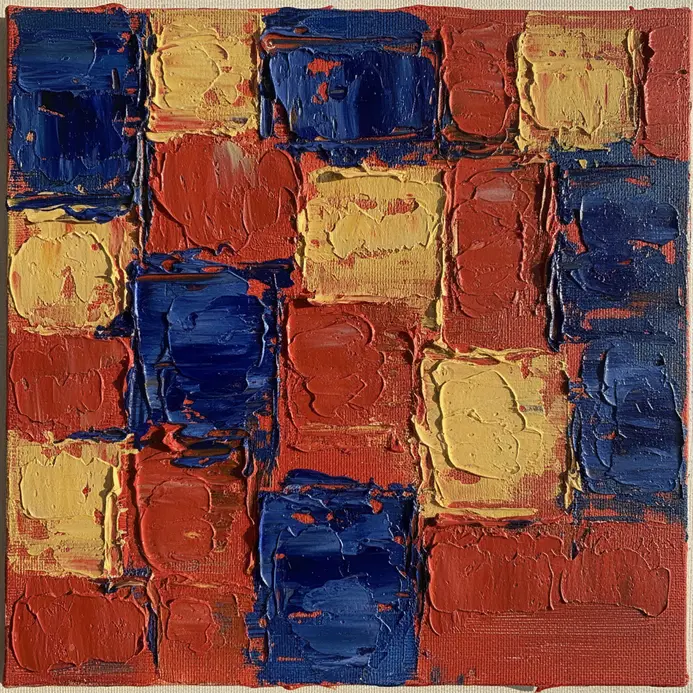
One of the most structured easy acrylic palette knife painting ideas relies on laying down blocks of color in sharp geometric shapes with your palette knife. Think squares, triangles, and rectangles interlocking and overlapping across the canvas. The real magic happens when you play with varying opacities, letting semi-transparent layers blend into new colors and create a sense of depth. It is like assembling a vibrant, textured puzzle where every piece is a bold, flat stroke of paint. I love the freedom this gives you to experiment with color and form without needing perfect drawing skills. Start with a high-contrast palette and focus on creating clean, decisive edges between your shapes to keep the patchwork effect crisp. Does that not look stunning? Feel the energy and satisfaction of building your own abstract composition.
12. Outline a Distant City Skyline Silhouette
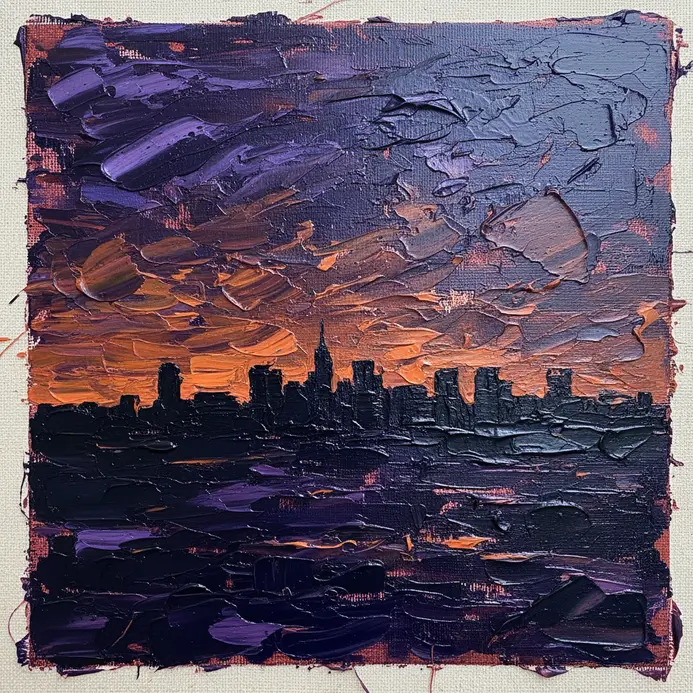
When testing easy acrylic palette knife painting ideas, you will see this one focuses entirely on capturing that iconic profile. It is much easier than it looks. Start by drawing a straight horizon line across your canvas. Then, build your city using varied rectangles and squares, making sure to change their heights and widths for a realistic, jagged look. Focus on the overall outline and those gaps between buildings, known as negative space. This technique creates instant atmosphere and depth with minimal effort. I love how a strong silhouette makes a textured background pop. For a different kind of creative challenge, you might also enjoy trying some creative portrait painting. Isn’t it satisfying to see that skyline take shape?
13. Add a Single Red Rose Petal Detail
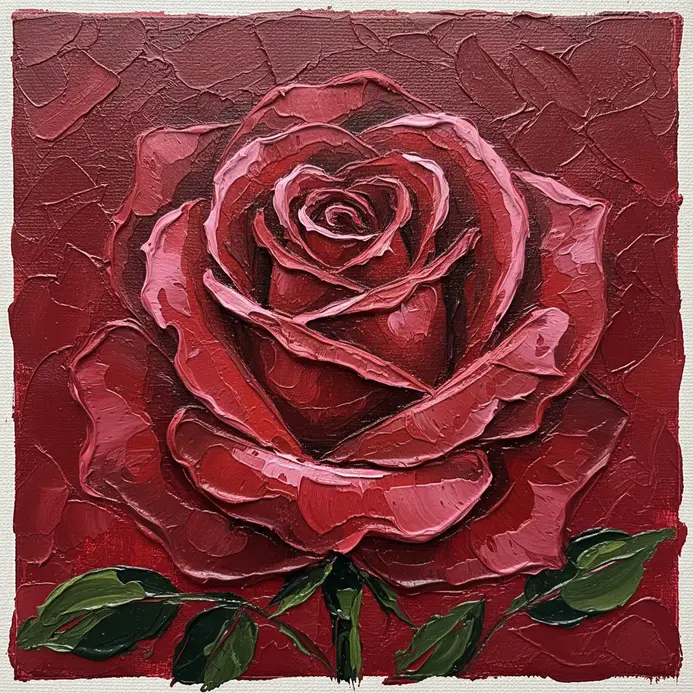
Ever feel like a painting needs one more touch to feel complete? When considering easy acrylic palette knife painting ideas, you quickly realize this detail is my go-to for adding a powerful dose of romance and focus. You are not painting a whole flower here. Instead, use the corner of your palette knife to lift and place a single, small petal shape onto your wet or tacky background. Think of it as a tiny, textured accent of pure crimson or deep red. Why does it work so well? That one bold spot of color creates an instant focal point, telling a story of love or beauty without saying a word. The thick, impasto texture from the knife makes it feel like a real object resting on the canvas. My tip is to place it off-center for a more dynamic composition. Feel the emotional weight that one simple detail brings to your entire piece.
14. Paint a Wild Lavender Field Meadow Scene
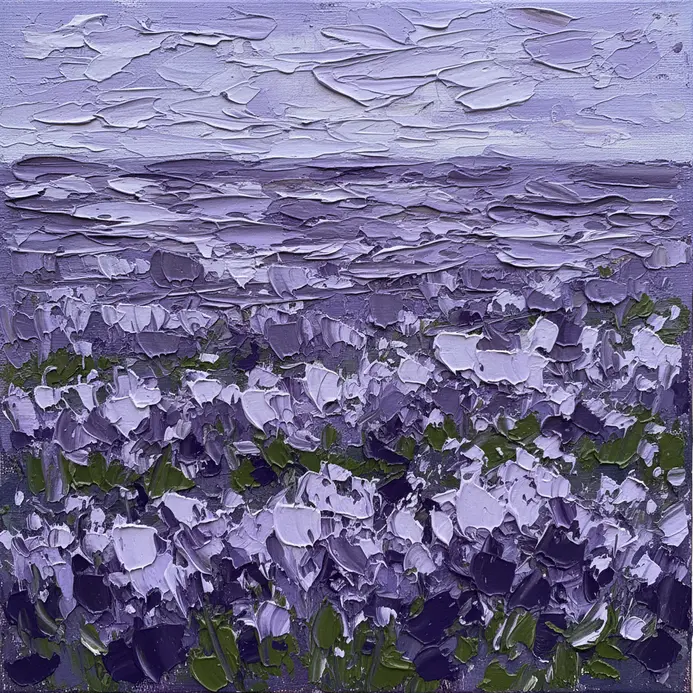
Ever felt that sudden, deep sense of calm when you see a rolling purple field? This scene captures that feeling perfectly, and I love how a palette knife makes it accessible. Start by laying down a simple sky and distant hills with a wide brush, then let the fun begin. Scoop up some violet and white on your knife and use short, upward dabs and scrapes to build the lavender. Mix in touches of green for stems and a few other wildflower colors for variety in the meadow. Why does this work so well? The thick, textured paint from the knife creates instant depth and movement, mimicking the way light plays across a real field. A common mistake is making the lavender look too flat and uniform. Avoid that by varying your pressure and the direction of your strokes to suggest clusters and individual blossoms. Trust me, step back and you will be amazed at the peaceful, vibrant landscape you have created. Does that not look stunning?
15. Use Reflective Lake Surface Water Strokes
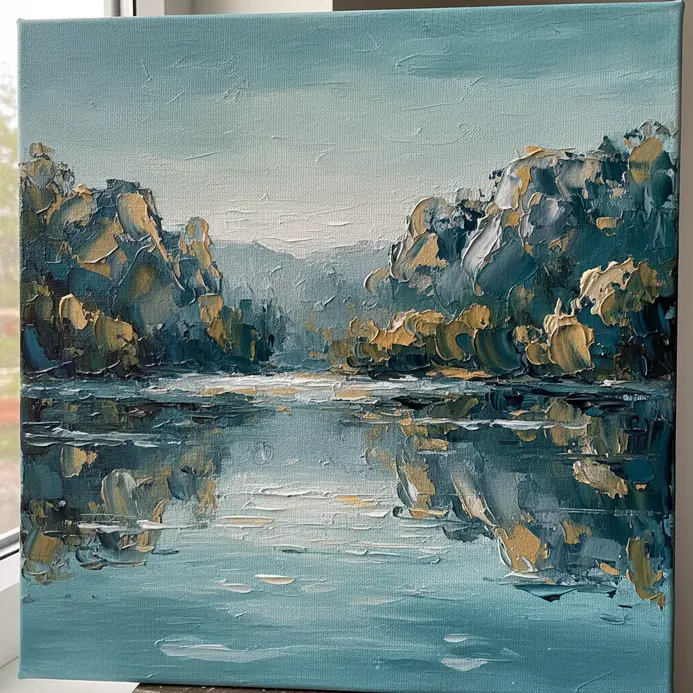
Ever tried painting water and ended up with a flat, lifeless surface? It is a common hurdle, but trust me, the secret is in the horizontal strokes. For a reflective lake, you are not painting a mirror. You are painting the sky’s colors, but slightly darker and less saturated, using broken horizontal sweeps with your palette knife. Think of it as building ripples. Start with your base colors, then layer shorter, choppy strokes on top to break up the reflection of trees or mountains. I love how this mimics the water’s gentle movement. The payoff is instant depth and realism. And if you want a fun, simple project to practice these marks, try this easy canvas painting for kids. Doesn’t that look more like real water? Feel the calm of your finished scene as you apply paint with a palette knife.
Preservation Techniques For Thick Impasto Acrylic Layers
You must wait a full month for thick paint to cure completely before applying any sealant, as varnish applied too soon will trap moisture and cause cracking. This patient drying time is non-negotiable for preserving your dimensional work. When it’s time, use a soft, wide brush to gently apply multiple thin coats of a matte acrylic varnish, allowing each to dry fully. Gloss varnish creates an unwanted shine that flattens the visual depth of your textures, while matte protects without distracting. This final step locks in the color and shields the surface from dust and UV light, ensuring those beautiful ridges and valleys you worked so hard to create last for years.
Conclusion
Your first few strokes with a palette knife might feel unfamiliar, but that is part of the joy. You are not applying color; you are building a landscape, carving a wave, or stacking petals with your hands. Each of these easy acrylic palette knife painting ideas was chosen to give you that immediate, physical satisfaction of seeing texture come to life. For your next step, take one of these scenes and experiment with a completely different color palette—paint that autumn forest in summer greens or that sunset with cool twilight blues. The techniques stay the same, but the feeling changes entirely. Your canvas is ready for your next bold mark.
FAQs
Q: What is an acrylic palette knife painting easy tutorial for beginners?
A: An acrylic palette knife painting easy tutorial usually shows step-by-step how to paint to the canvas using a palette knife, demonstrating how to apply paint using thick layers of paint (impasto paint) and simple shapes and sizes to create expressive textures. It will cover choosing quality acrylics, basic gesso preparation, how to choose a palette knife, and a painting session that helps you start painting and learn how to paint with confidence.
Q: How do I choose a palette knife and what are the common shapes and sizes?
A: Choose a palette knife based on the effect you want to achieve: small diamond-shaped or pointed knives are perfect for knife for fine details and using the tip to paint directly or drag the knife to paint across the canvas, while larger straight blades are perfect for laying down thick layers of paint and covering the entire painting quickly. Palette knives usually come in many shapes and sizes, and knives are great for mixing as well as applying paint onto the canvas.
Q: Can I use oils or acrylics for palette knife painting?
A: Both oils or acrylics work well, but acrylics dry faster and are often recommended for beginners doing an acrylic palette knife painting easy approach. Use quality acrylics like Winsor or other quality paints, and try mixing mediums or impasto paint for thicker textures. Depending on the effect you want to achieve, acrylics like heavy body paints give similar textures to oils without the long drying times.
Q: What basic technique should I try using when applying paint to the canvas with a knife?
A: A common technique to try is loading the knife with much paint and dragging the knife to create strokes, using the edge of the knife to make crisp lines, or the flat to lay down broad areas. You can use the tip for fine lines, drag the knife to blend edges slightly, and apply paint using the knife to build impasto layers. This technique to try helps you expressively paint across the surface and experiment with textures and effects.
Q: How do I keep my knife clean and maintain it during a painting session?
A: Keep your knife clean by wiping excess paint on a rag or palette as you work so dried paint doesn’t affect subsequent colors. Many painters used palette knives for both mixing and painting, so periodically clean the knife when you switch colors. A clean knife is essential if you want to paint directly with bright, unmuddied hues or try mixing on the palette without contamination.