Printable Page Layout For Young Colorists
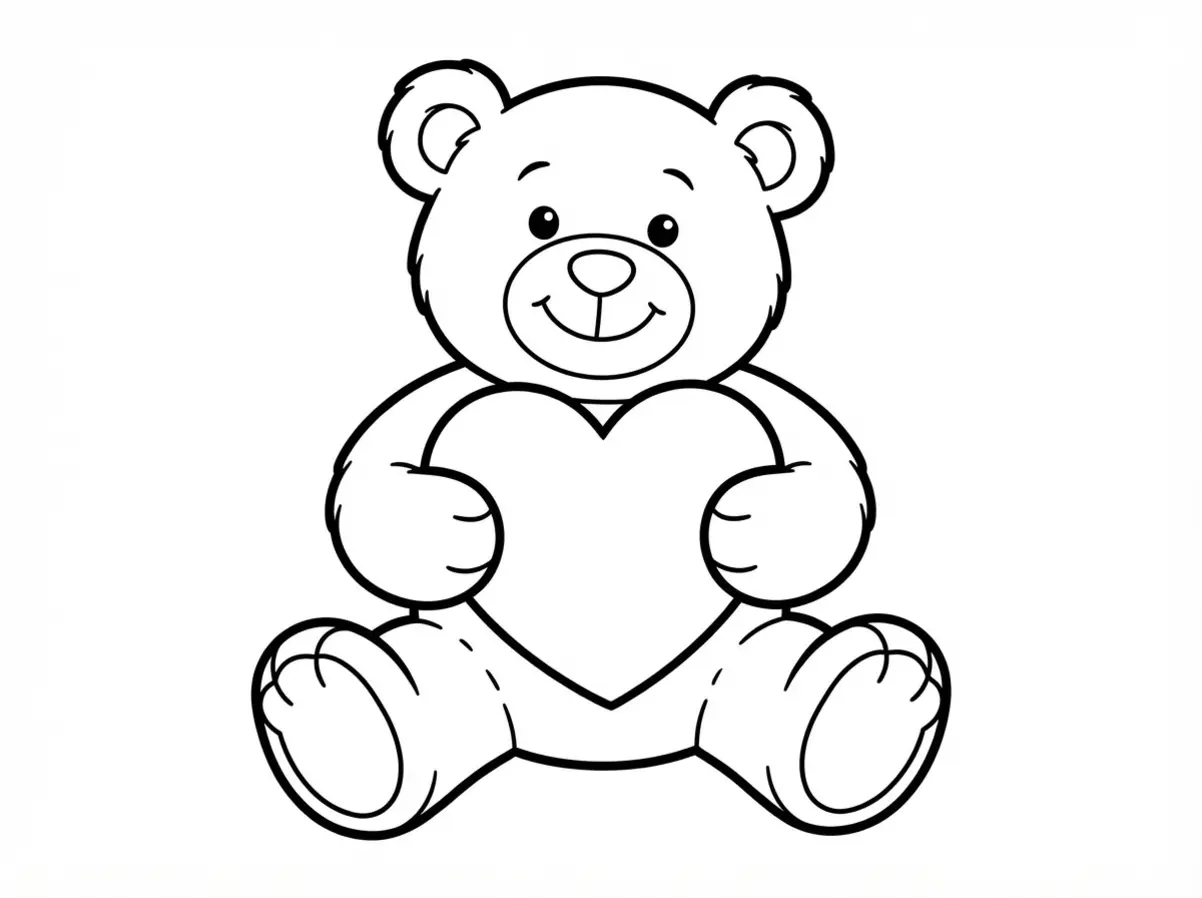
Use a US Letter portrait layout with a white background for pages intended for home printers. When you print fresh bear coloring pages, you get a reliable template for quick setup. Keep the bear’s silhouette broad, with at least two to four point outlines around the body, face, paws, and habitat shapes. Large open areas give crayons and washable markers room for broad strokes without crowding the page.
A centered standing or sitting bear leaves comfortable margins for small children ages three to eight. Standard printer paper suits quick activities, while cardstock gives sturdier pages for repeated coloring. Keep facial features bold and widely spaced so eyes, nose, and smile print clearly in black ink. Avoid gray shading, tiny fur marks, and overlapping branches near the main figure. A portrait page also leaves room for a simple title or child’s name.
Bear Habitats And Friendly Reference Details
Place one clear habitat cue behind the bear, such as pine tree clusters, so the scene feels recognizable without filling every corner. Many parents select bear coloring pages because the clear habitat cues keep young readers engaged. A black bear suits berries, a stream, or mountain grass, while a polar bear reads clearly beside ice and low snow banks.
Bamboo stems give a panda scene its setting, yet broad gaps between stems keep the page easy to color. Friendly poses, including sitting, walking, fishing, or holding food, make wild animals feel approachable for younger readers. Keep trees, flowers, rocks, and water shapes smaller than the bear, with enough white space around the main silhouette. Gentle facial expressions work better than sharp teeth or heavy brows for ages three to eight.
1. Smiling Teddy Bear with Bowtie: Friendly Printable Page
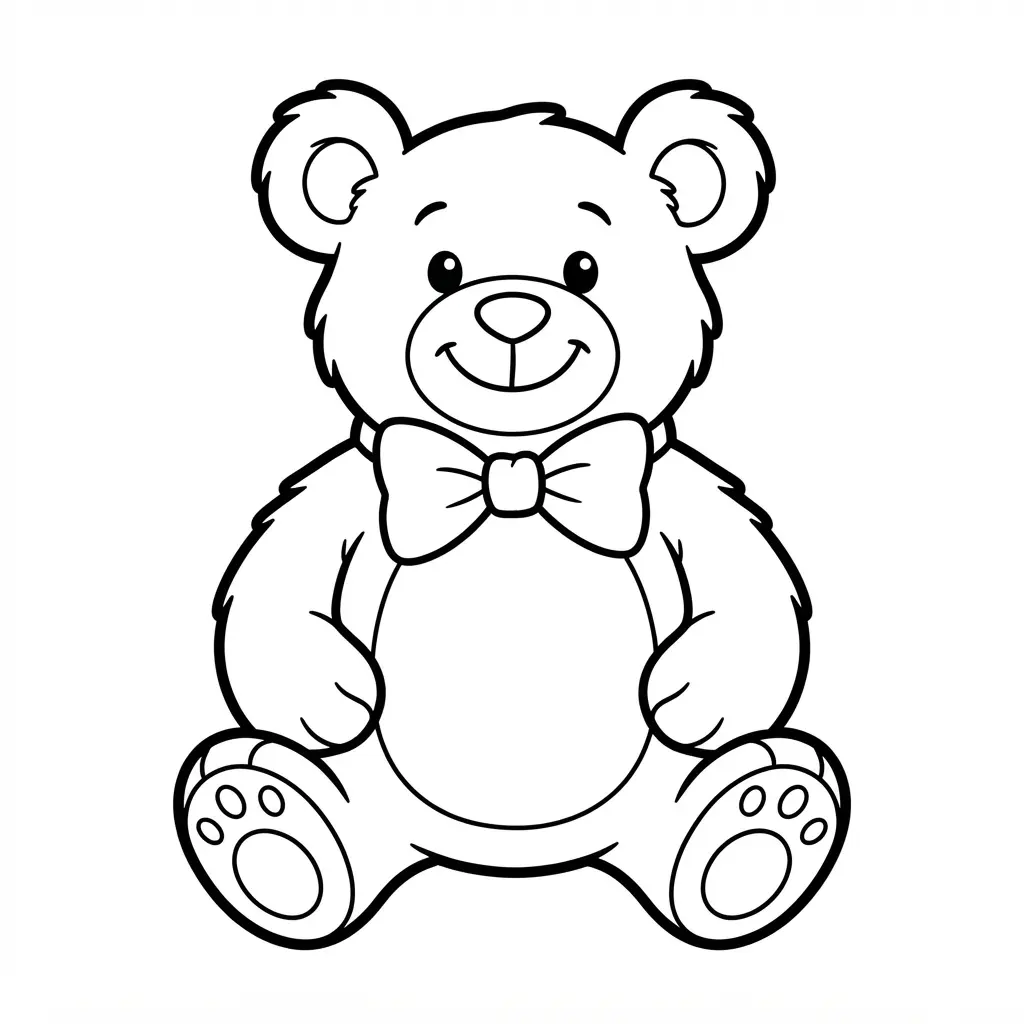
Who doesn’t enjoy a smiling teddy bear ready for a splash of color? This friendly printable page features a rounded bear outline, cheerful expression, and neat bowtie, giving young artists broad sections to fill. Printing bear coloring pages at this size ensures crisp edges and easy handling. I love how the clear design feels welcoming from the first crayon stroke.
Start with large bear shapes, using crayons or colored pencils on ordinary printer paper. Fill the face, ears, paws, and belly before adding color to the bowtie and small facial details. A clear, dark print gives each edge enough definition, while thicker paper is a better pick for washable markers because it limits bleed-through.
Try any palette you like, from classic brown to cheerful rainbow sections or tiny bowtie patterns. Test marker ink on spare paper first, then add a simple background if open space invites more color. Organizing multiple bear coloring pages in a binder keeps the collection tidy and accessible. The big shapes make this page easy to handle, and the smiling face gives every choice a happy result. Trust me, this is a lovely pick for a relaxed coloring session.
2. Grizzly Bear Fishing in River: Outdoor Coloring Scene
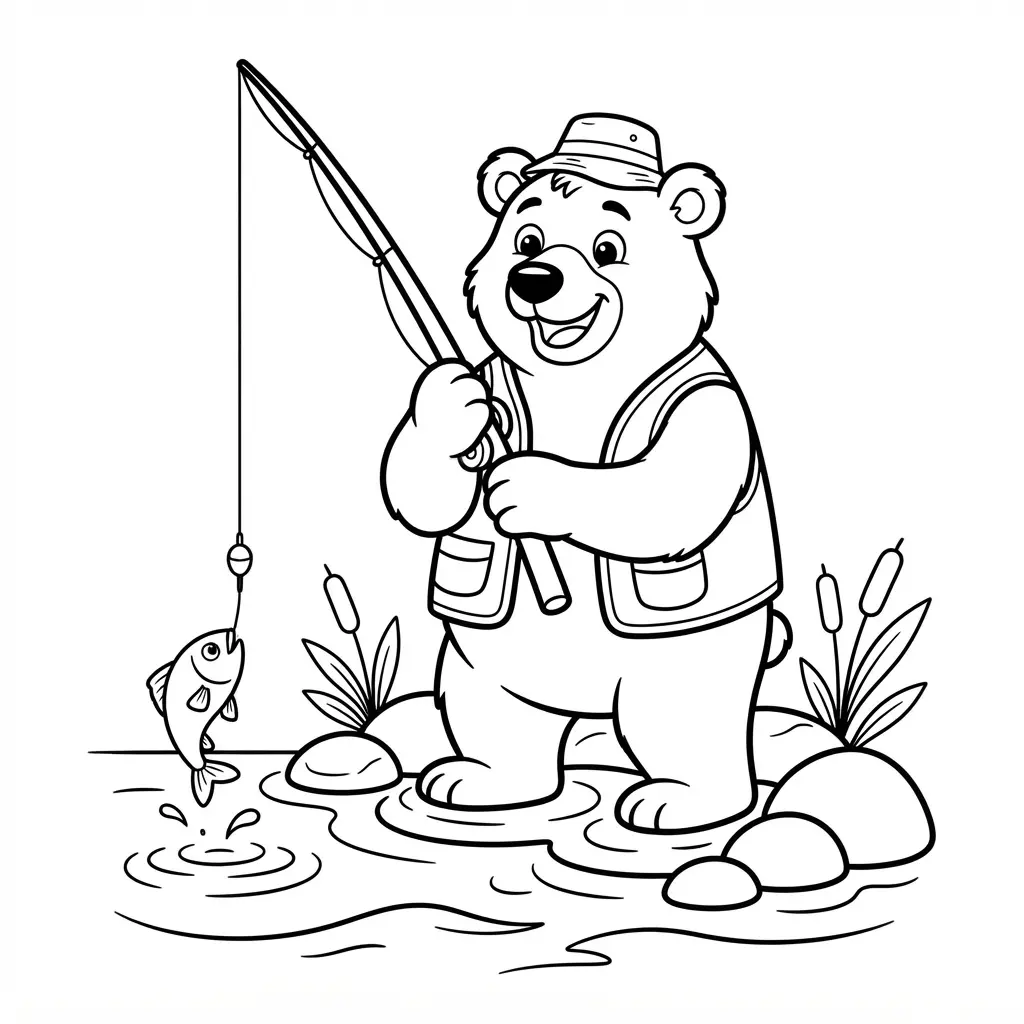
This river scene brings a bear coloring pages favorite to life with clear action and plenty of open space. Parents love using bear coloring pages for afternoon projects because the action draws immediate attention. I love placing the large grizzly in the center, standing in shallow water with its paws reaching toward a leaping fish. Start with the central bear outline, then add a curved shoreline, gentle ripples, and smooth river rocks around its legs. Keep the bear easy to recognize, with a broad body, rounded ears, sturdy legs, and a friendly expression.
Sound tricky? It isn’t. Build the setting in layers with tall grasses near the riverbank, pine trees behind the water, and mountain slopes farther back. Adding bear coloring pages to your weekly routine encourages steady creative practice. Flying birds and soft clouds fill the sky without crowding the picture, while the fish gives the scene its lively focal point. Use bold black outlines and leave wide areas inside every shape for easy coloring.
For a calm outdoor palette, try blue water, green trees, warm brown fur, and bright colors for the fish. A few darker colors on the rocks will help them stand apart, though the drawing itself should stay free from gray tones and shading. Collecting different bear coloring pages gives you variety for every season and mood. This simple layout feels satisfying because every detail supports the fishing action. Trust me, bold lines and open spaces make this one a cheerful favorite.
3. Polar Bear Playing in Snowflakes — Winter Coloring Page
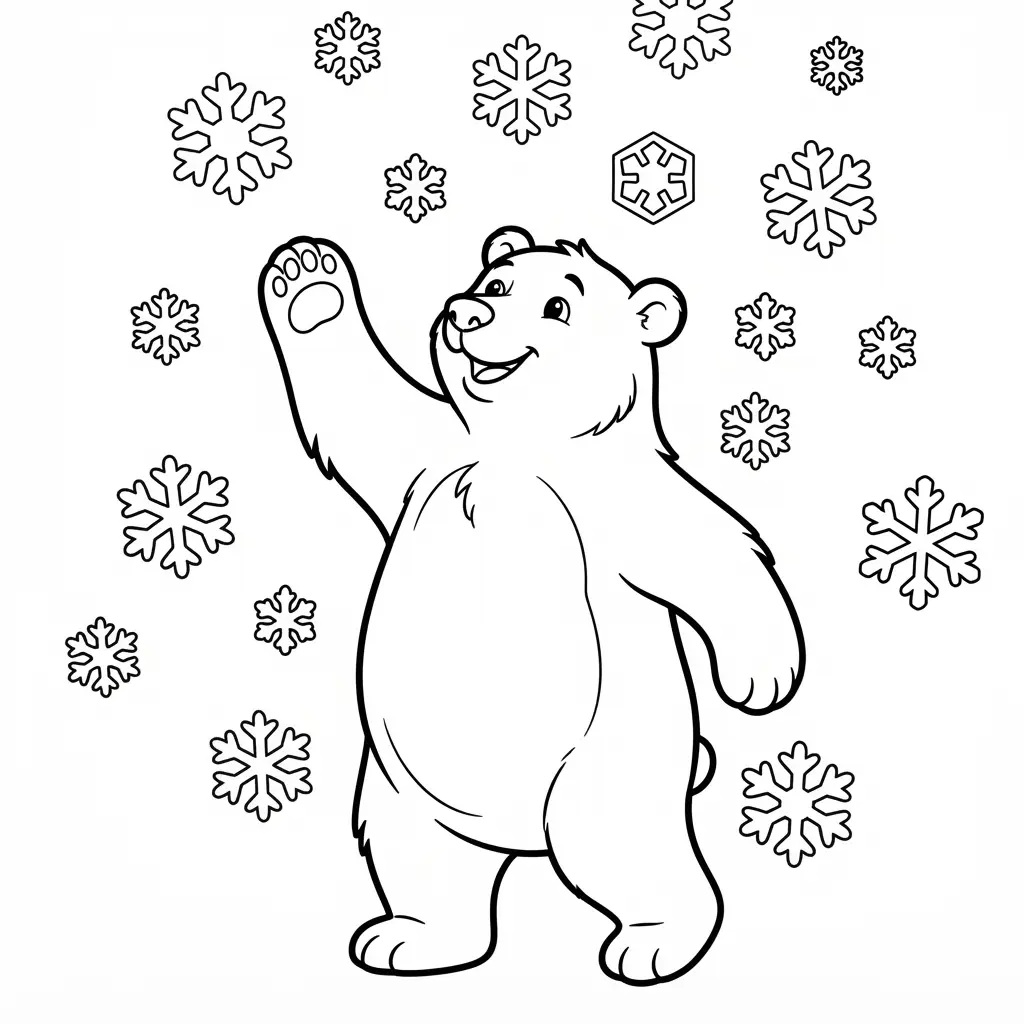
This one is my favorite winter scene because the cub looks ready to leap into a fresh pile of snow. Isn’t it satisfying when a page feels playful before you add a single color? Start with the centered bear cub, keeping its raised paws, round face, and sturdy feet easy to see.
Surround the cub with large snowflakes, soft snowdrifts, tiny ice crystals, and rounded clouds. Give each shape a bold black outline, then leave wide white spaces between the lines for smooth coloring. Avoid gray fills, shadows, words, and crowded patterns, since a clean printable page feels friendlier for young artists. Downloading high-contrast bear coloring pages reduces eye strain during extended sessions. Large open sections help crayons, pencils, or markers move across the scene without constant stopping.
I love choosing cool blue for the snow, pale purple for the clouds, and a warm touch of pink for the cub’s ears, though a rainbow palette feels sweet too. Keep the bear’s face cheerful and let the snowflakes frame its movement rather than compete with it. Bold black outlines keep every winter detail clear after printing, so you can settle in, color freely, and feel proud of the finished page.
4. Baby Panda Eating Bamboo Stalks: Cute Animal Page
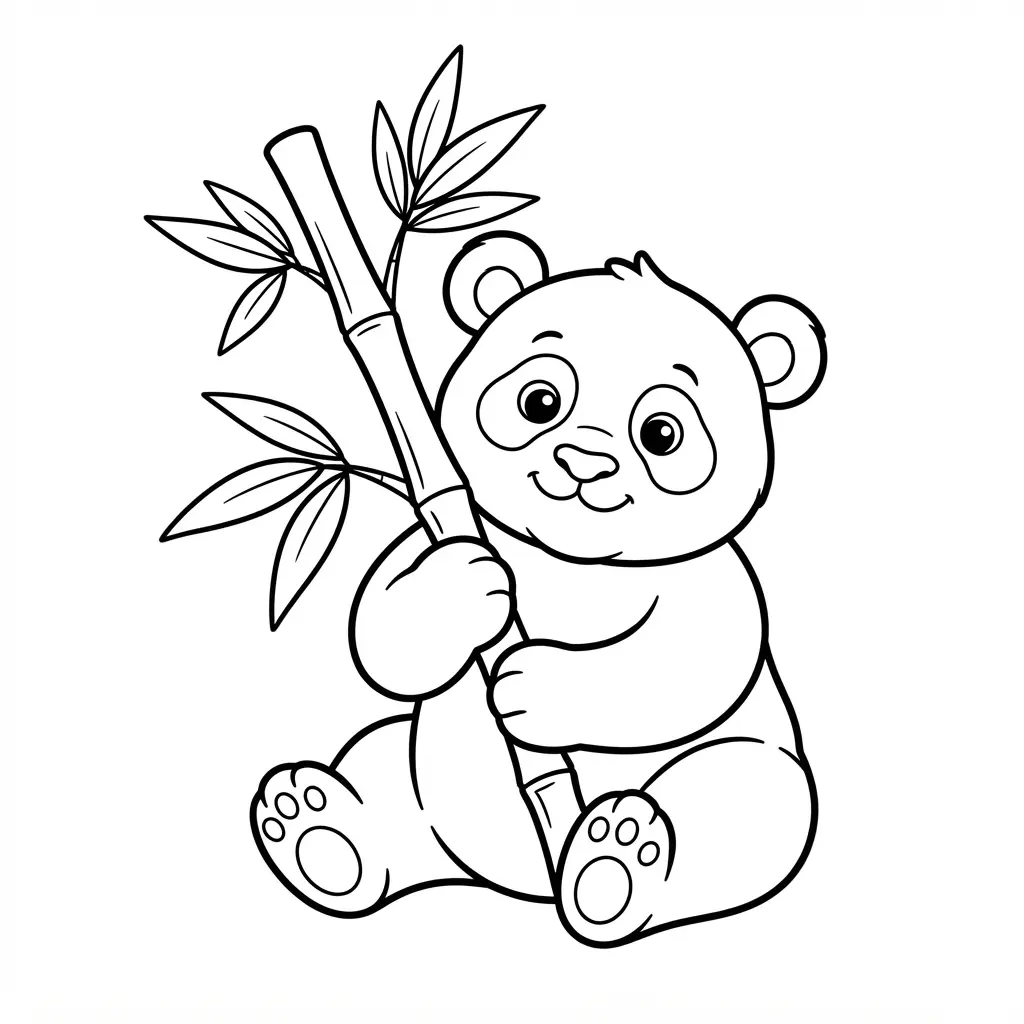
Soft black outlines shape a baby panda sitting on the ground, with round cheeks, bright eyes, and a happy little smile. Bamboo leaves spread around the animal, while a few shoots sit near its feet. The open spaces feel calm and inviting, making this page a sweet choice for children’s coloring time. I recommend printing bear coloring pages on heavier stock to prevent smudging during classroom use. Start with bold black outlines so every part stays clear after coloring.
Place one bamboo stalk near the panda’s mouth and another beside its paws to show its snack. Large leaves add a leafy setting without filling every corner, while a few bamboo shoots give the scene extra interest. Keep the panda’s body, ears, paws, and face built from rounded shapes, since soft forms make the character feel gentle and approachable. Isn’t a cheerful expression the best part of a cute animal page? Leave plenty of room between each shape, and avoid tiny leaf veins or crowded stalks.
I love this one because children get a clear nature scene with plenty of room for broad color choices. Green bamboo, creamy fur, and dark patches create an easy starting palette, while playful choices bring personal style. Trust me on this tip: use wide coloring spaces for young artists, then let them add small details only where they feel comfortable. Your little panda will look happy and ready for lunch.
5. Mama Bear Hugging Small Cub — Gentle Family Scene
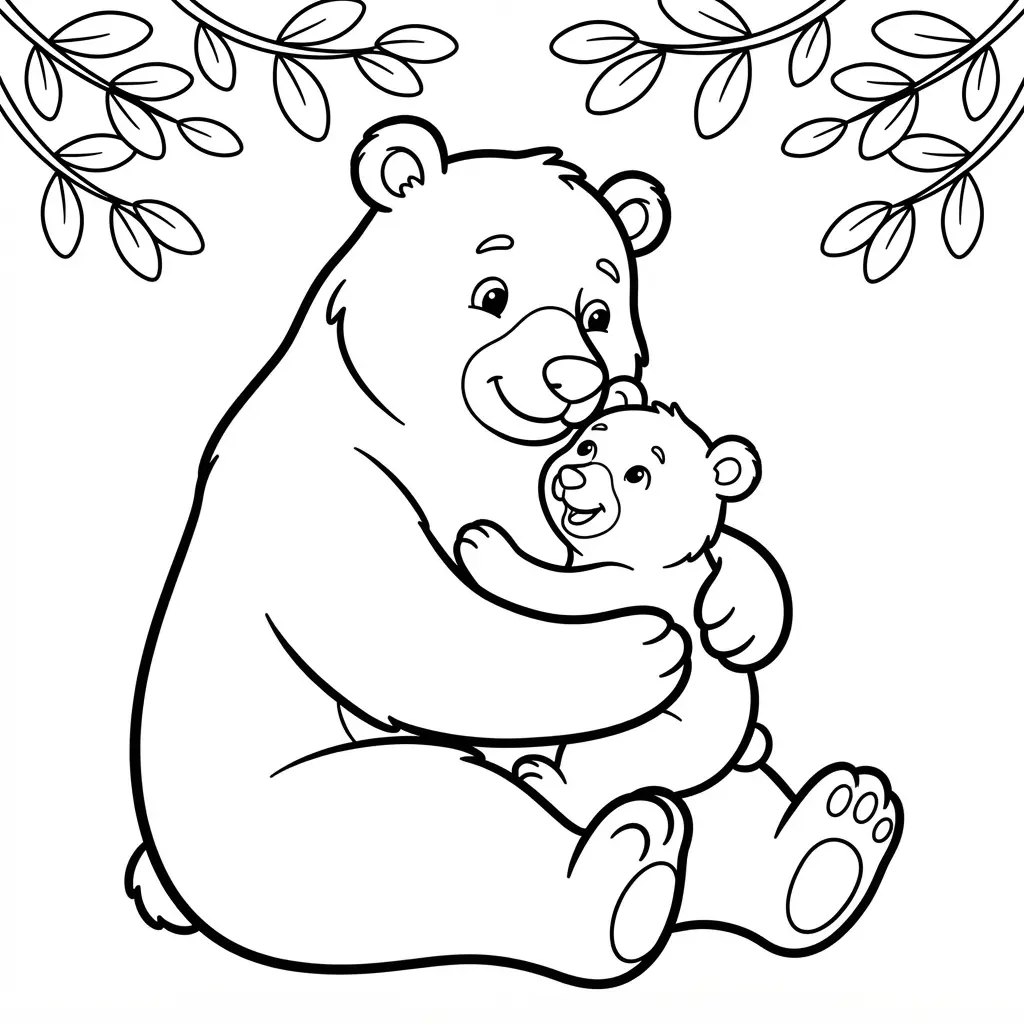
Many beginners think a family scene needs lots of background detail, but the hug itself should lead the picture. Start with the overlapping bear outlines, placing Mama Bear’s rounded body behind the cub and drawing her arms around its shoulders. Sound complicated? It is not, and I love how a few smooth curves make the bond easy to read.
Give Mama Bear a calm face, then add the cub’s smaller ears, soft cheeks, and tucked paws. Keep the forest setting light with two or three leaves, a short ground line, or a simple den opening, leaving broad spaces for crayons or pencils. Warm browns, honey gold, and gentle cream create a cozy palette, while a darker shade beneath the arms separates both figures. Storing finished bear coloring pages flat preserves crayon layers. This scene feels satisfying because the clear shapes invite relaxed coloring without losing the tender mood. Pro tip: trace the outer edge with a smooth black marker before adding color, then soften the inner lines so the hug stays the focus. Feel proud when the finished page looks full of care.
6. Forest Bear Sleeping Under Tree: Calm Nature Page
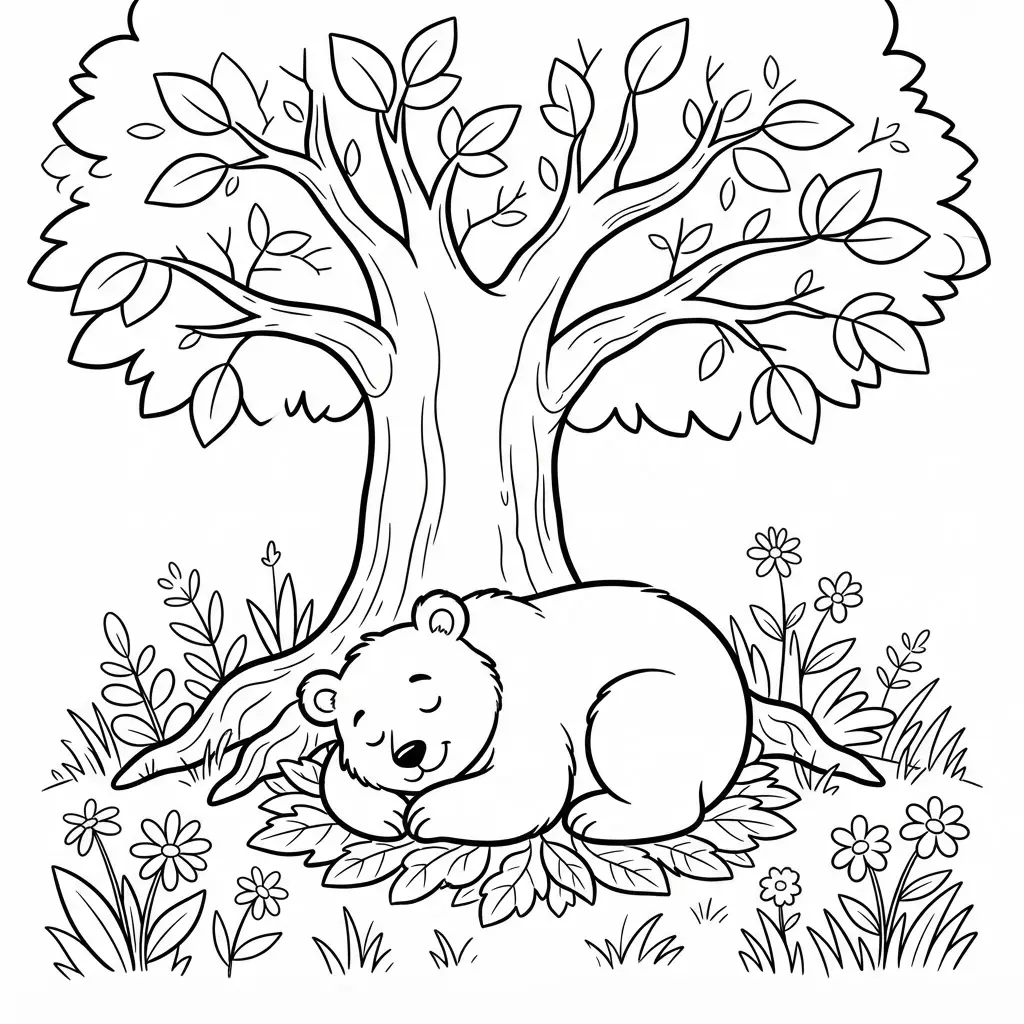
Start with the bear’s curled body near the lower half of the page, then trace its closed eyes, soft muzzle, rounded paws, and relaxed back. Add a wide tree trunk above it, letting broad branches and leafy shapes frame the resting figure without crowding the white space. A few grass tufts, smooth rocks, and mushrooms give the woodland scene context while keeping each section open for crayons or colored pencils. Sound complicated? It isn’t. I love how the quiet pose makes these pages feel gentle and easy to follow.
Choose bold black outlines before printing, especially for young artists who need clear sections. Keep bark marks, leaves, and ground lines large enough to color without frustration, and avoid heavy printed shading near the bear’s body. Pre-selecting bear coloring pages by complexity streamlines your setup. Standard printer paper suits crayons and pencils, while thicker paper handles markers with less bleed. Warm browns, soft greens, and muted grays create an earthy palette, though you choose any colors you enjoy. Trust me, closed eyes and a tiny curved mouth deliver the sleepy feeling at once. Feel proud when the peaceful forest scene comes together.
7. Cartoon Bear Wearing Winter Scarf — Cozy Seasonal Design
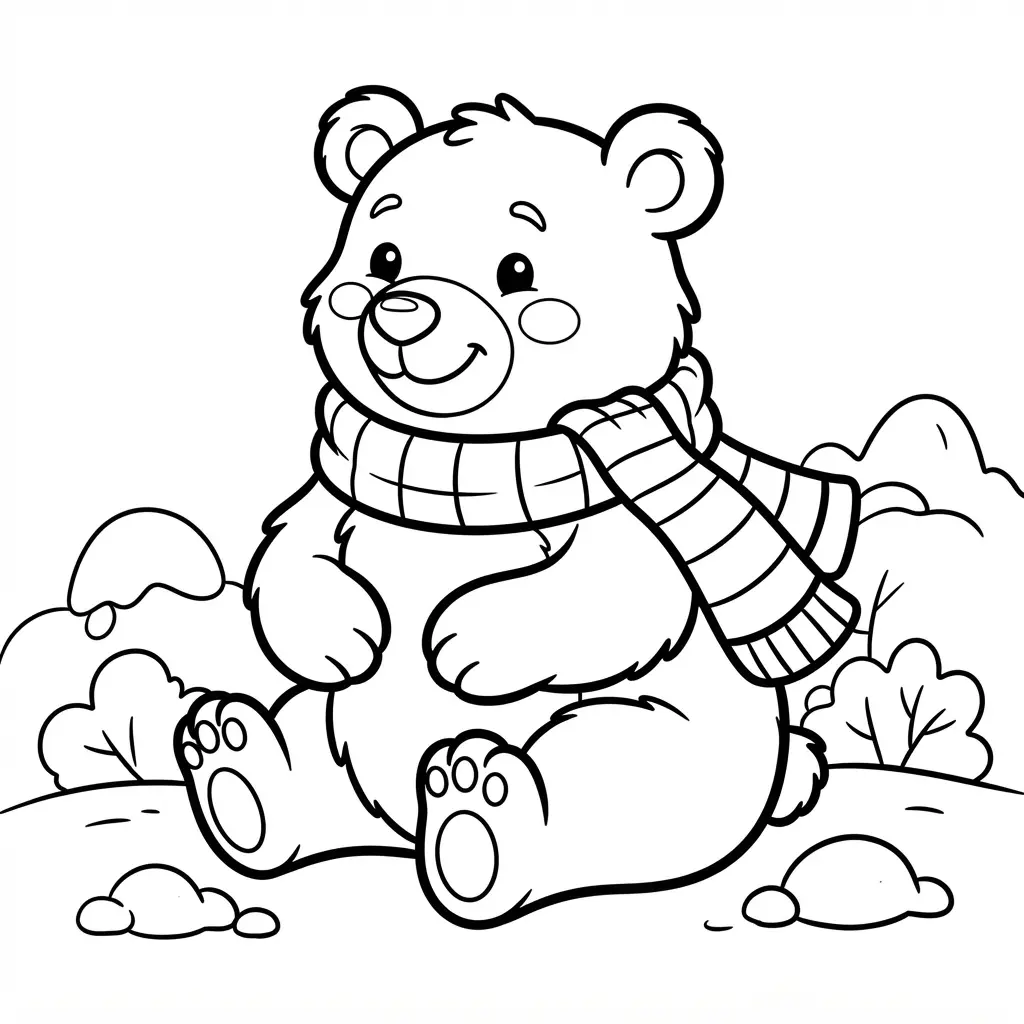
Ever pictured a round bear ready for a snowy woodland walk? Start with a soft, centered shape, then give it bright eyes, rosy cheeks, and a wide friendly smile. A thick knitted scarf adds the cozy focal point, with clear folds, fringed ends, and small lines showing its woven texture. Mixing seasonal bear coloring pages into holiday preparations keeps the activity fresh. Falling snowflakes, pine trees, and evergreen branches fill the background without hiding the cheerful character.
I love how this design lets you mix gentle winter details with warm character features. Try warm brown or cream for the bear, cranberry red for the scarf, icy blue for snow, and forest green for the trees. Keep the outlines smooth and open, so young artists have comfortable spaces to fill with color. This centered scene works beautifully for these designs, greeting cards, stickers, or holiday art. Pro tip: leave a little white space around each snowflake, then enjoy the cozy seasonal feeling as the picture comes together.
8. Bear Holding Large Honey Pot: Sweet Storybook Scene
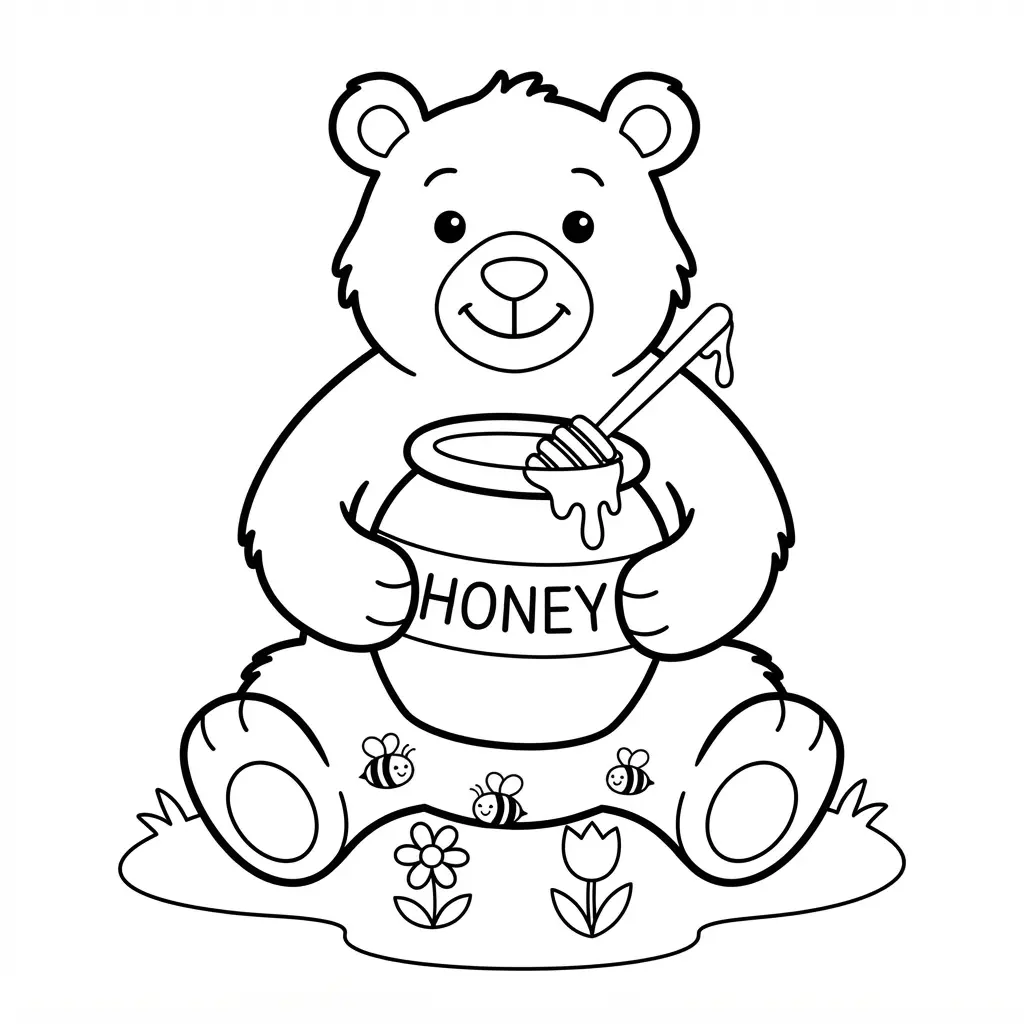
This scene feels cheerful from the first outline, and I love how the oversized pot gives the bear a clear story to share. Place the round bear in the center of a forest clearing, then draw the oversized honey pot in front, held securely with both paws. Keep the eyes friendly, add rosy cheeks, soft fur lines, and a wide smile.
Use warm brown shades across the fur, then give the pot a sunny golden tone with small drips over its rim. A few bees buzzing nearby add movement without crowding the picture. Is there anything sweeter than coloring a happy woodland bear with his favorite treat? The simple visual story makes this one easy for young artists to follow.
Fill the background with grass, wildflowers, mushrooms, leafy trees, and gentle sunbeams. A soft pastel palette keeps the mood light, while golden highlights bring warmth to the clearing. Rotating through various bear coloring pages maintains long-term interest for growing artists. Leave open space around the bear and pot so both stay easy to recognize. Trust me on this tip: keep the honey drips small and neat, then enjoy the cozy storybook feeling as the scene comes together.
9. Sunbathing Bear on Summer Picnic — Relaxed Outdoor Page
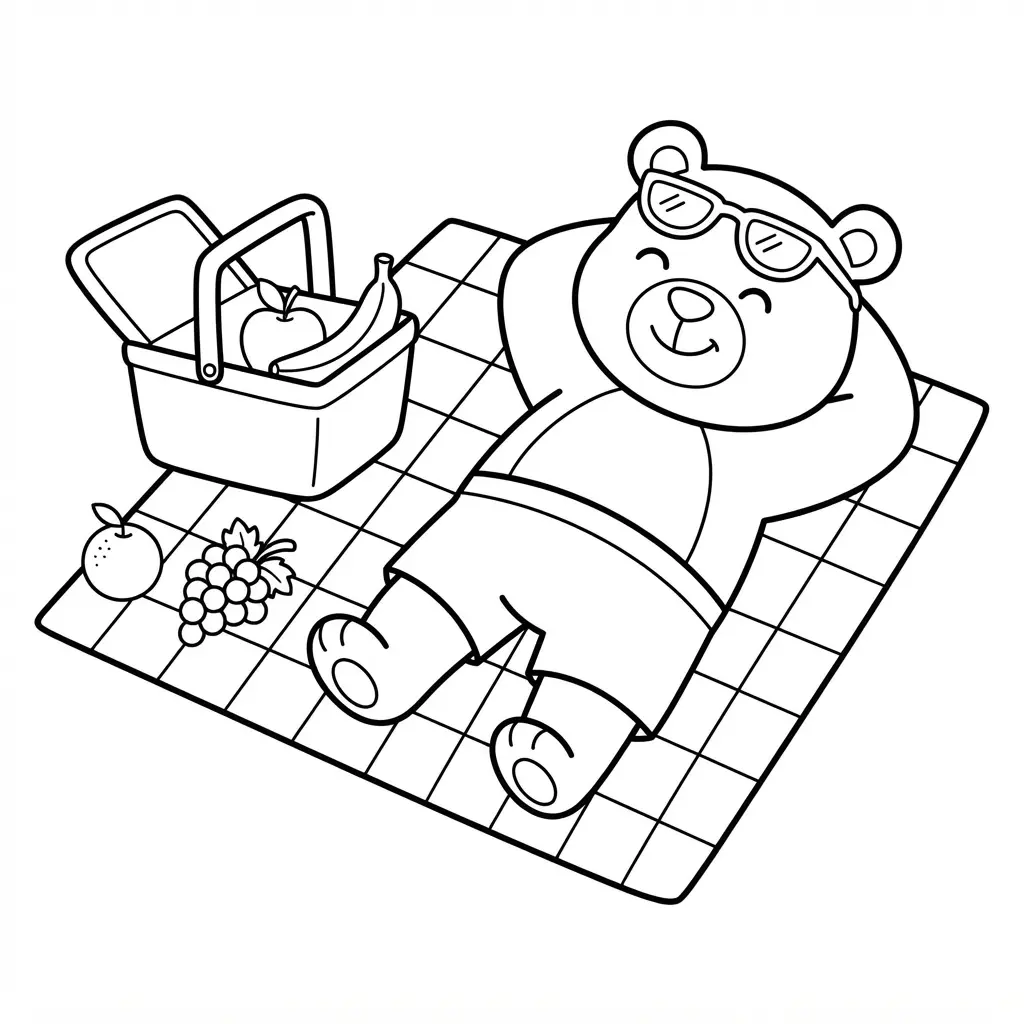
I love this one because the bear looks ready for a peaceful summer break. Start with a friendly bear pose lounging across the picnic blanket, then add round sunglasses and a floppy sunhat for extra personality. Does this scene sound difficult? It is far more beginner-friendly than it looks.
Keep the picnic basket, lemonade pitcher, fruit, and sandwiches large enough to color without crowding the bear. A beach ball beside the blanket adds a playful touch, while a leafy tree, fluffy clouds, butterflies, wildflowers, and a simple meadow fill the background. Use bold black outlines around every object so each shape stays clear.
This page works so well because it mixes relaxed details with familiar outdoor objects, giving children plenty of choices without making the picture feel busy. Leave the bear’s body, blanket, and sky open for broad color areas, then add cheerful shades to the hat, ball, fruit, and flowers. Trust me, bright summer colors will make this calm picnic scene feel happy from the first crayon stroke. Pairing outdoor bear coloring pages with nature walks creates a wonderful afternoon blend.
10. Space Explorer Bear in Helmet: Creative Adventure Scene
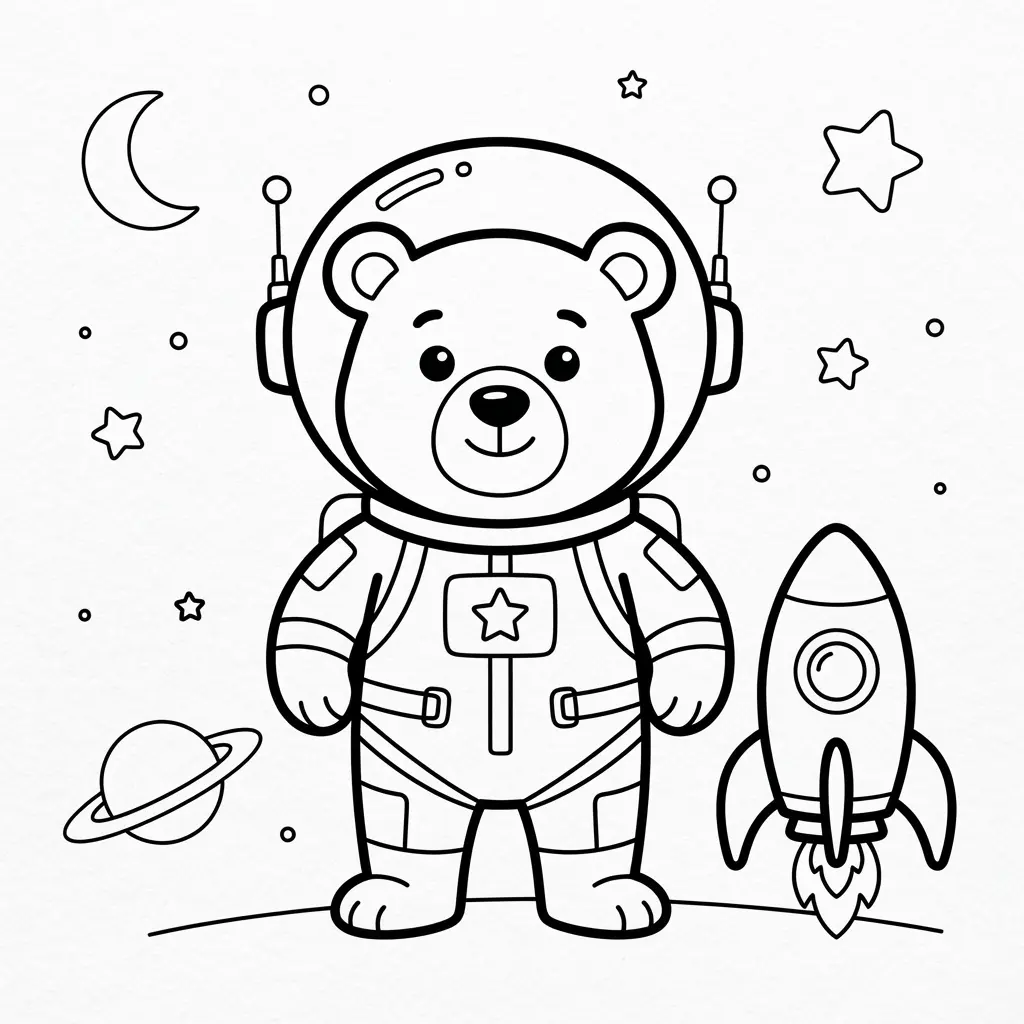
Blue flowers glow beneath a purple planet, while crystal trees scatter tiny reflections across the page. In the center, a friendly bear wears a round glass helmet and a small rocket backpack, with one paw raised toward the sky. Add the spacecraft above the planet, then frame it with floating robots and little star-shaped companions. Sound complicated? It is not, because each detail stays clear when you give the bear the largest, cleanest outline.
I love coloring the temple last, using pale yellow, silver, and soft violet for its sparkling doorway and carved steps. Keep the galaxy behind the bear in deeper blues and purples, then give the flowers bright centers so the foreground stays easy to follow. Use open spaces around the helmet, paws, and backpack, leaving enough room for smooth color changes without covering the small robots or star creatures. Exploring cosmic bear coloring pages expands imagination for weekend projects. The scene works so well because a familiar animal leads the eye through every space detail, and you get a cheerful sense of adventure with each colored section.
11. Floral Pattern Teddy Bear Design — Decorative Coloring Page
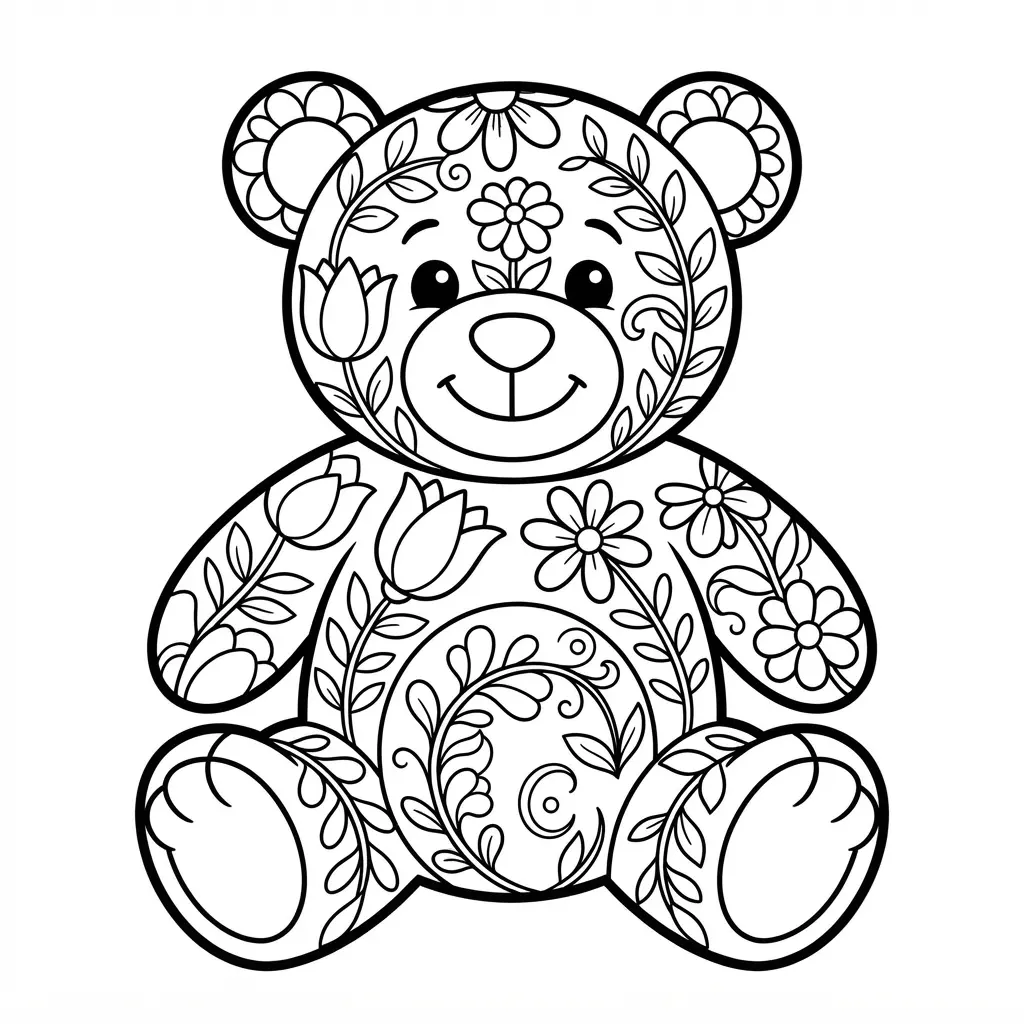
Does a floral pattern make a teddy bear too fussy for young artists? Not at all, when the flowers stay open and easy to follow. Choosing floral bear coloring pages adds a gentle decorative touch to any art session. I love this style because the rounded ears, muzzle, paws, and cheerful face stay clear while petals and leaves add extra coloring fun.
Start with the bear’s main outline, then place flowers inside the belly, ears, paws, or a small outfit. Add curved stems and simple leaves, leaving comfortable gaps between each shape. Use clear black outlines so the page prints cleanly and every section stands apart. Medium flowers suit younger children, while older artists might enjoy a denser arrangement with varied petal shapes.
Keep the face and body contour free from overlapping details, since these features help the bear stay recognizable. Standard printer paper suits crayons and colored pencils, while heavier paper handles washable markers with less show-through. Trust me on this one, a limited pattern area gives you more room for bold color choices, from soft garden shades to playful rainbow petals. Finish with a calm background or leave it white for a crisp, cheerful result.
12. Bear Waving in Mountain Landscape: Friendly Nature Scene
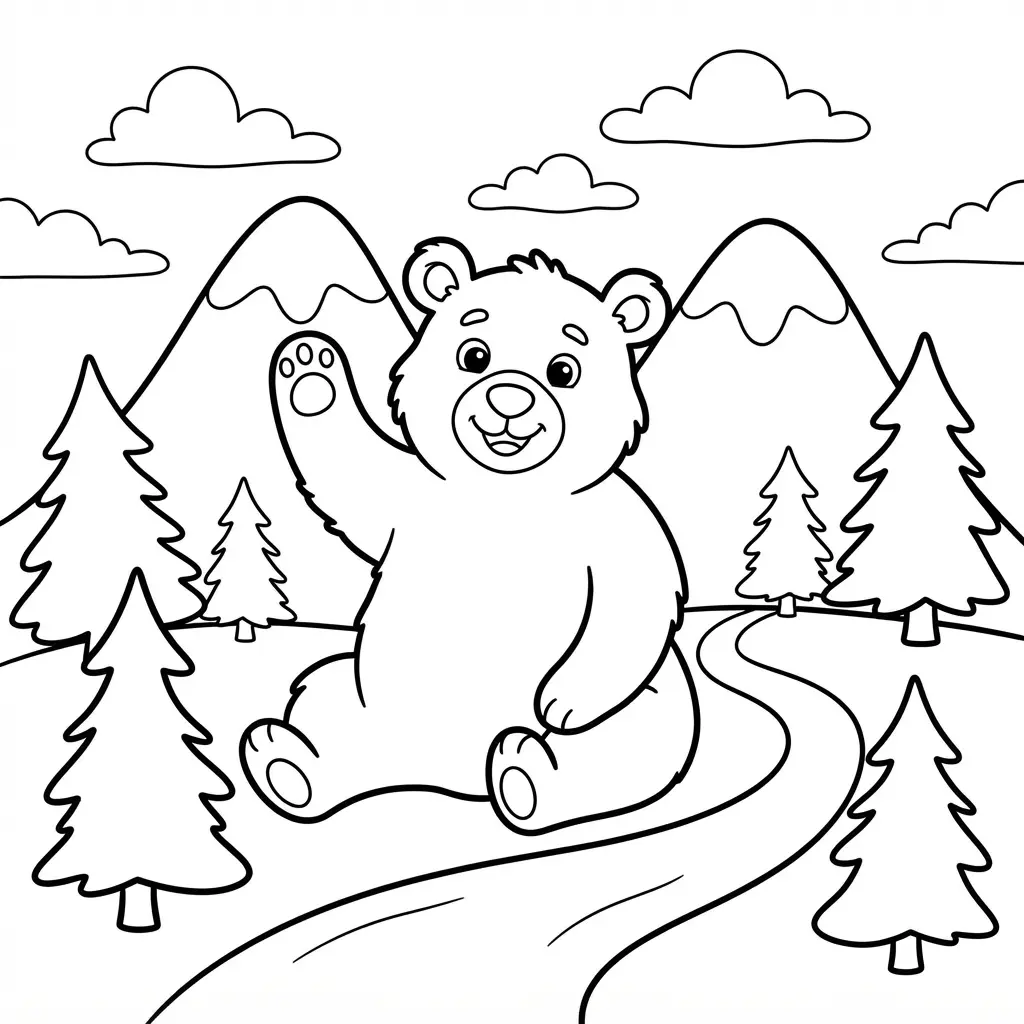
Start by drawing the upright bear in the center of a wide meadow, then give it one clear raised paw and a soft, friendly smile. Use gentle curved lines around the muzzle, cheeks, and eyes so the bear feels welcoming instead of fierce. Add grassy ground beneath its feet, then place snow-capped mountains behind it with pine trees along the middle distance, leaving plenty of open sky above.
A sparkling stream, small wildflowers, soft white clouds, and warm sunlight fill the scene with cheerful details, while short fur marks add a cozy storybook finish. Does the scene feel peaceful already? I love how the waving paw becomes the focal point while every natural feature offers a fresh area to color. Keep the paw away from the mountains and trees so its friendly gesture stays easy to see. Try brown fur, green grass, blue sky, white snow, and bright flower colors for a happy outdoor picture.
Displaying And Sharing Finished Bear Pages
Clear document sleeves protect finished bear pages from fingerprints, bent corners, and crayon dust during sharing. Choose sleeves slightly larger than US Letter paper so the edges stay flat instead of curling. For a refrigerator display, removable adhesive tabs hold lightweight printer paper without leaving visible tape across the bear’s face. Finished pages look neat in a simple frame with glass, while cardstock handles frequent handling better than thin copy paper.
Keep colored sheets away from direct sunlight since strong light fades marker and crayon pigments over time. A folder with one page per pocket gives siblings or classmates a clean way to view each bear without touching the artwork. Add the child’s name and date on the back, leaving the front illustration clear.
Conclusion
So how was your creative session? Look at what you have made, from warm teddy bear colors to cool snowy scenes. Every choice shows a child’s personality, and shared coloring time gives families a relaxed way to talk, laugh, and enjoy a screen-free activity. These designs also suit different ages because simple outlines feel comfortable for beginners, while scenic scenes keep older kids interested. Reviewing our favorite bear coloring pages together highlights personal growth. For the next session, place three finished pages on the table and let each child pick one favorite detail to explain. I love saving these small works in a folder, especially when a child adds a name and date. Keep the supplies nearby, print a fresh page whenever interest returns, and invite a sibling or friend to join. Pick the favorite design and get started right away, because each page brings a personal choice to the table.
FAQs
Q: What paper works best for printable bear coloring pages?
A: Standard letter-size printer paper works well for crayons and colored pencils. Choose thicker paper for markers to limit ink showing through.
Q: How do I print bear coloring pages at home?
A: Open the selected file and choose the letter-size paper setting. Use a high-quality or black-and-white print setting for clean outlines.
Q: Which coloring tools suit these bear designs?
A: Crayons suit younger children and broad open spaces. Colored pencils and washable markers suit older kids who want extra color detail.
Q: Are these pages suitable for different age groups?
A: Yes. Simple portraits suit preschoolers, while scenic pages with trees, rivers, snow, and mountains suit older children.
Q: How do I choose a bear coloring page for my child?
A: Start with a favorite animal or setting. Pick bold, open shapes for beginners and pages with more background details for children who enjoy longer art sessions.