Kneaded Eraser Techniques For Atmospheric Diffusion
Pinch a piece of your kneaded eraser into a fine point and gently dab it into the shaded area of your cloud sketch to lift tiny, irregular spots of graphite. This technique mimics the way light scatters through water vapor, creating those soft, glowing highlights at the edges of a puff. You can incorporate this lifting step into your routine when you are exploring new easy cloud drawing ideas to keep your shading fresh. The magic is in the dabbing motion, not rubbing, which preserves the delicate gradients you worked so hard to build. You want to avoid creating perfect, round eraser marks because real clouds have a rough, organic geometry. Think of it as adding back the light that got lost when you layered on your shadows. This tool is your best friend for achieving that signature fluffy, airy texture without starting over.
Mastering Graphite Pressure For Vaporous Transitions
Start your entire cloud shape with the lightest touch of an HB pencil, sketching loose construction lines you can barely see. The good news is you build the illusion of volume from there by gradually increasing pressure with a softer 4B pencil only in the deepest shadow areas. Practicing pressure control is one of the most reliable ways to expand your collection of easy cloud drawing ideas. Your goal is to create a gradient that feels like the cloud’s density, not a flat shape with a dark outline. Trust me on this, letting your pencil pressure fade to nothing at the cloud’s outer edges is what sells the soft, atmospheric look. You will notice the cloud starts to look three-dimensional when you focus on overlapping shapes within the form, each with its own light-to-dark transition. This approach prevents the floating scribble effect and anchors your cloud with believable weight and light.
1. Sketch a Minimalist Cartoon Rounded Cloud Shape
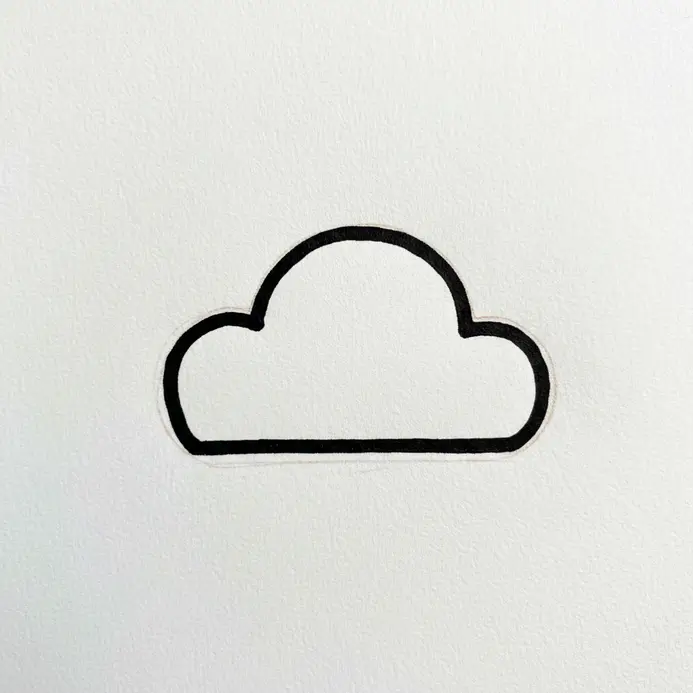
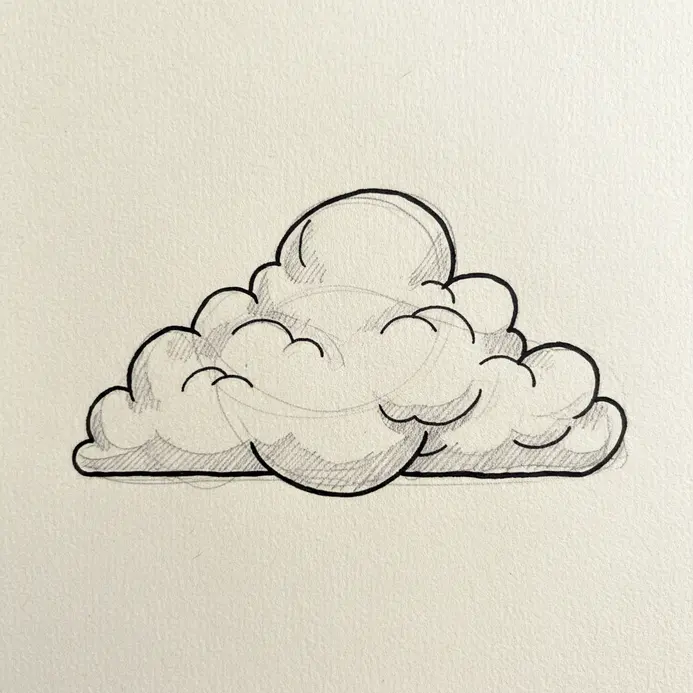
As kids, most of us drew this exact shape in school, often trying to draw clouds. It looks complex, but trust me, it is all about connecting soft, flowing bumps in a step-by-step process. Start with a gentle base curve, then add a few more rounded arcs on top to create that classic fluffy look. The connected bumps approach is my go-to method for its simplicity. It teaches you to control smooth curves, which is a fundamental skill for any artist. Try this method when gathering easy cloud drawing ideas alongside drawing landscapes with clouds, and feel the satisfaction of creating something instantly recognizable.
2. Build an Interlocking Bubble Cluster Cloud Formation
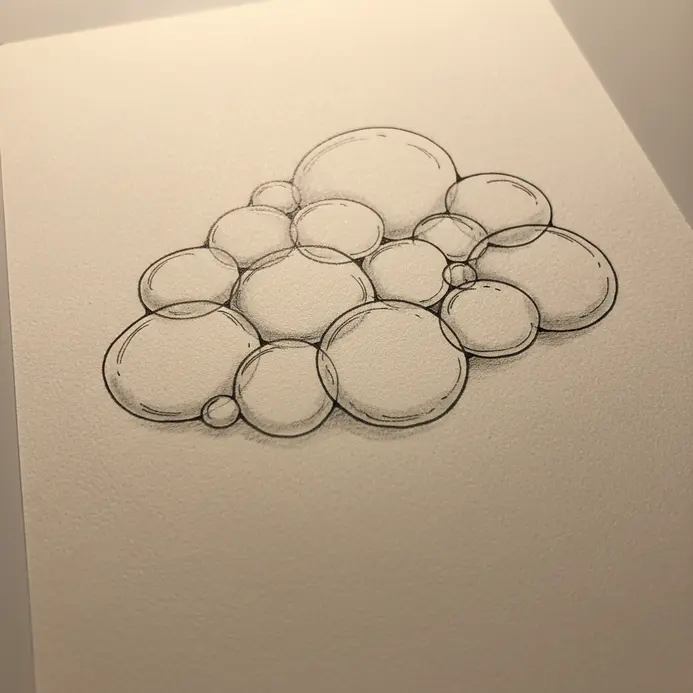
Ever wondered how to make a cloud look full and fluffy, not like a flat blob? Start by lightly sketching a few overlapping circles and ovals of different sizes on your paper. Where they touch, connect them with soft, curved lines so they look like they are merging, not just sitting side by side. Mastering this overlapping method gives you more easy cloud drawing ideas to experiment with later. I love this technique because it teaches you to see a complex form as simple, interlocking bubble shapes. Try it and feel the satisfaction when your cloud suddenly looks three-dimensional.
3. Outline a Lined Minimalist Thought Bubble Cloud
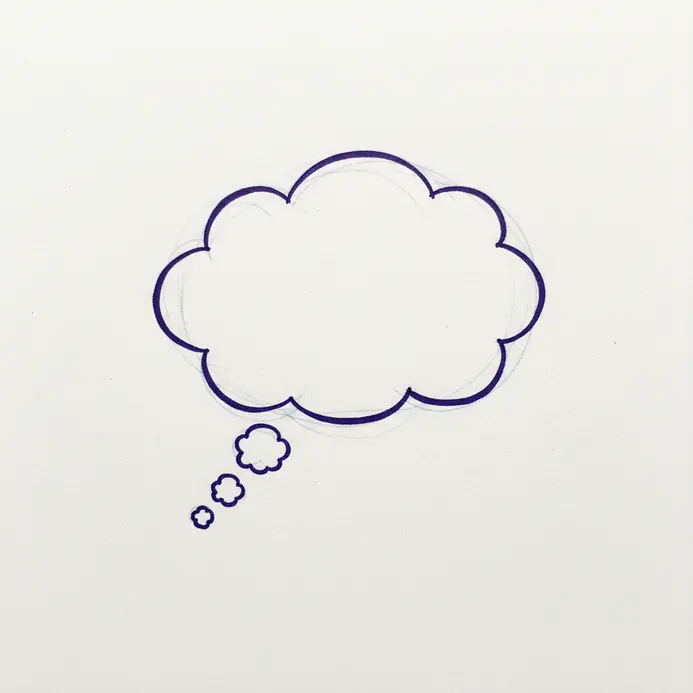
Who would have thought a thought bubble could feel so chic? It looks fancy, but trust me, it is one of the cleanest easy cloud drawing ideas because it relies on a uniform line weight and keeping the inside empty or very lightly filled. You start with a soft, wavy oval for the main body, then add a tail of two or three smaller circles trailing off. This works so well because the clean lines feel modern and intentional, adding a subtle touch to any sketch. For a whole collection of designs with this same clean vibe, check out these more aesthetic drawing ideas. Feel how satisfying it is to create something so effortlessly stylish.
4. Capture Wispy Horizontal Cirrus Cloud Strokes
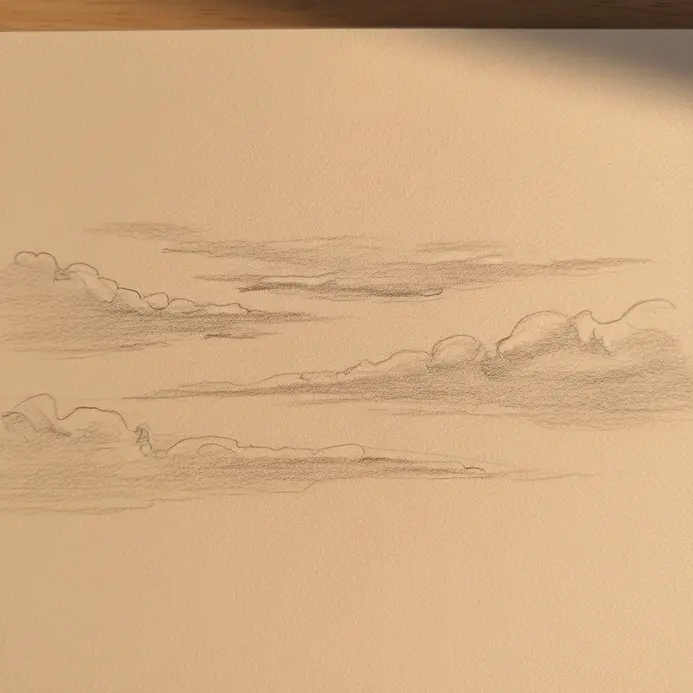
Ever wondered how photographers get those feathery streaks in the sky to look so sharp? It is all about timing and technique. For the clearest, most delicate strokes, shoot during the golden hour. Capturing these delicate strokes opens up tons of easy cloud drawing ideas for atmospheric skies. The low sun casts long shadows and lights up the ice crystals from below. I love using a telephoto lens to zoom in and isolate those beautiful, wispy patterns against a deep blue background. This works because you are capturing the cloud fine texture when the light is dramatic. Trust me, you will feel a real sense of accomplishment when you nail the shot. If you enjoy this ethereal style, you might also like exploring whimsical drawing styles for creative inspiration.
5. Create a Fluffy Stippled Cotton Ball Cloud
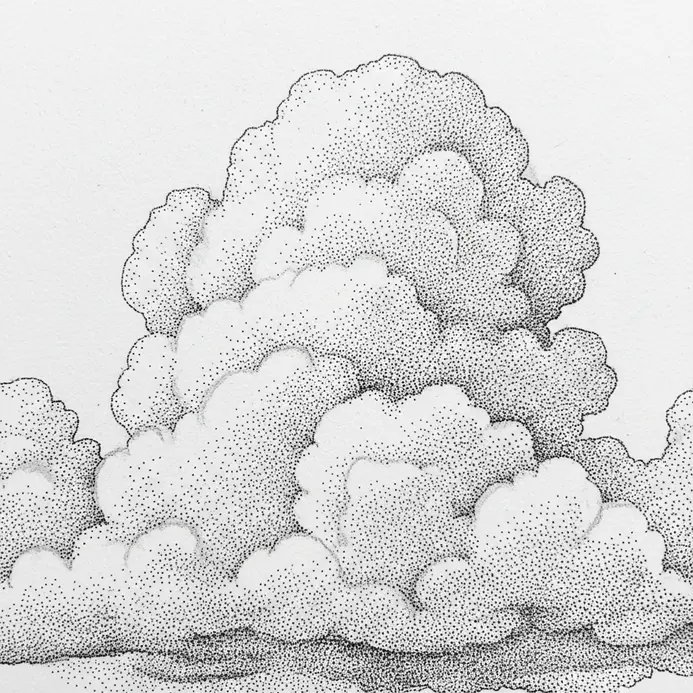
Ever wondered how artists get that soft, textured look in their clouds? This is my favorite method for drawing clouds at sunset. You build the cloud entirely with tiny, irregular dots, starting with a mid-tone color. Concentrate a darker shade in shadowy areas and use a lighter color for the sunlit tops. Building your form with tiny dots is a classic choice for artists compiling easy cloud drawing ideas. The variation in dot density automatically creates light and shadow, giving you instant depth. Pro tip: tap your stylus, do not drag it, to keep each dot distinct and fluffy.
6. Form a Stacked Cumulus Broccoli Shape Cloud
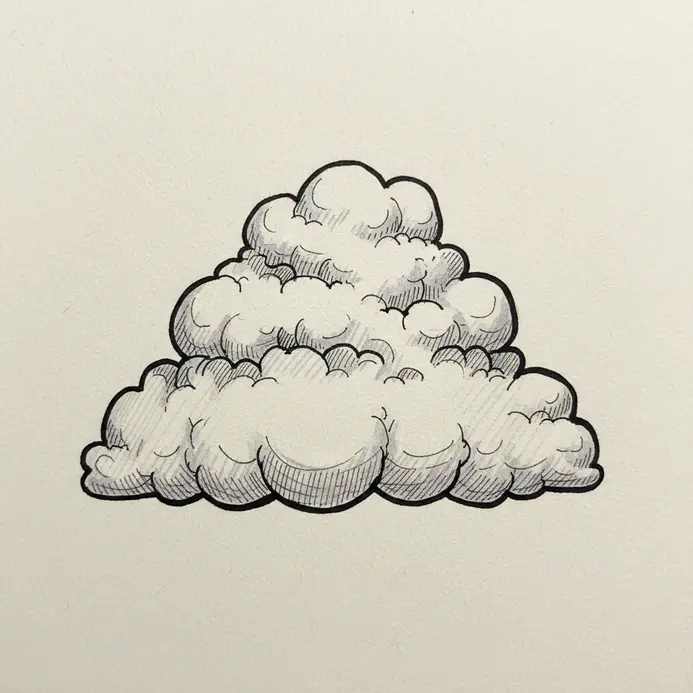
Ever notice those puffy clouds that look like a head of broccoli? They are my favorite to spot. You cannot actually form them yourself, but you can learn to find them. The key is looking for atmospheric instability, which happens on warm afternoons when moist air rises fast. Finding these towering shapes in nature fuels your imagination for realistic easy cloud drawing ideas. This creates towering cumulus clouds with a thick stalk and bumpy, stacked tops. To capture this shape, watch the sky in the late morning through afternoon, especially near coasts or after a summer rain. This type of cloud is a sign of active, energetic weather, making it a perfect subject for whimsical watercolor scenes. Try sketching its rounded, layered silhouette and feel the dynamic energy of the sky.
7. Layer Overlapping Soft Edge Clouds in Your Sketch
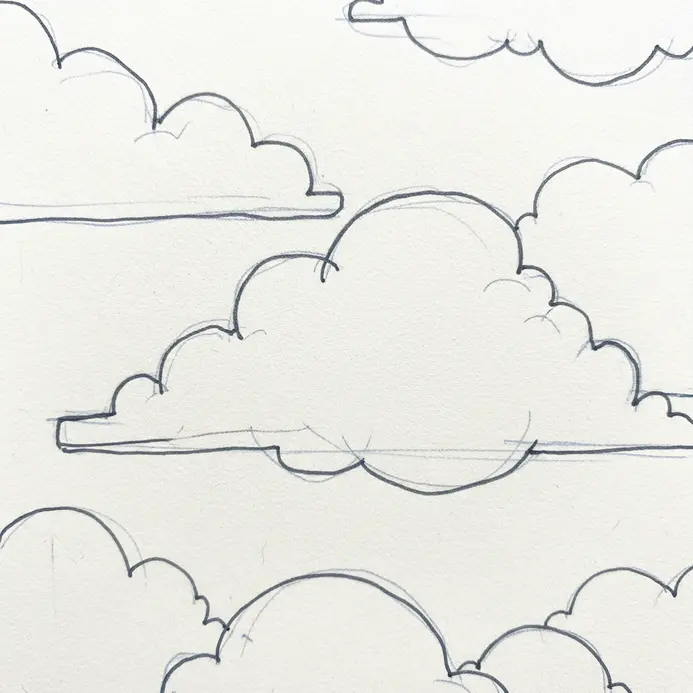
Ever notice how some cloud drawings look flat while others feel deep and real? The trick is layering them with soft edges. Start by lightly sketching the closest cloud shapes with an H or HB pencil, making sure they are all different. Then shade the shadowed sides, using small circular motions to build up soft graphite. Layering forms with broken lines creates depth, which is essential for professional-looking easy cloud drawing ideas. This is where your kneaded eraser becomes your best friend for lifting and softening those edges into a beautiful haze. Now, draw a second, lighter layer of clouds peeking from behind the first. Use less pressure and detail here. This overlap instantly creates that feeling of distance in your sky. I love how this simple step adds so much atmosphere. For a lovely complementary scene, you might enjoy trying some beginner watercolor techniques to paint a soft sky behind your pencil clouds. Feel that sense of depth come to life as you learn how to draw clouds.
8. Add Volume with a Shaded Bottom Heavy Cloud
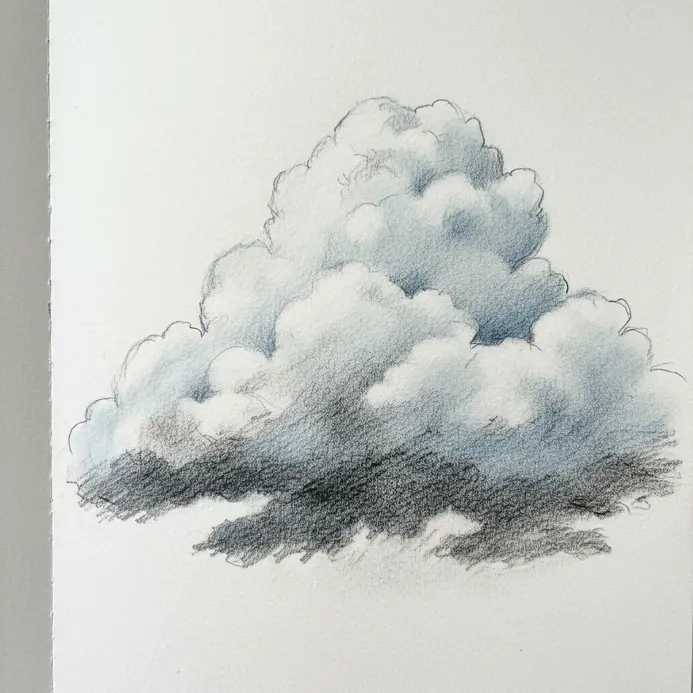
Ever felt your clouds look a bit flat? Try to draw them with more depth. This simple trick adds instant drama and depth. Start by lightly sketching your cloud’s lumpy shape, making the base wider and flatter. Then, imagine your light source is directly overhead. Adding that heavy shading underneath instantly elevates flat sketches into dynamic easy cloud drawing ideas. Apply your darkest tone to the entire underside of the cloud, letting it fade up into mid-tones. Keep your transitions soft and gradating to build that three-dimensional form. I love how this technique instantly suggests weight and mood, like a gathering storm. Trust me, once you see that shaded bottom, your whole composition will feel realistic.
9. Draw a Jagged Edge Stormy Sky Cloud
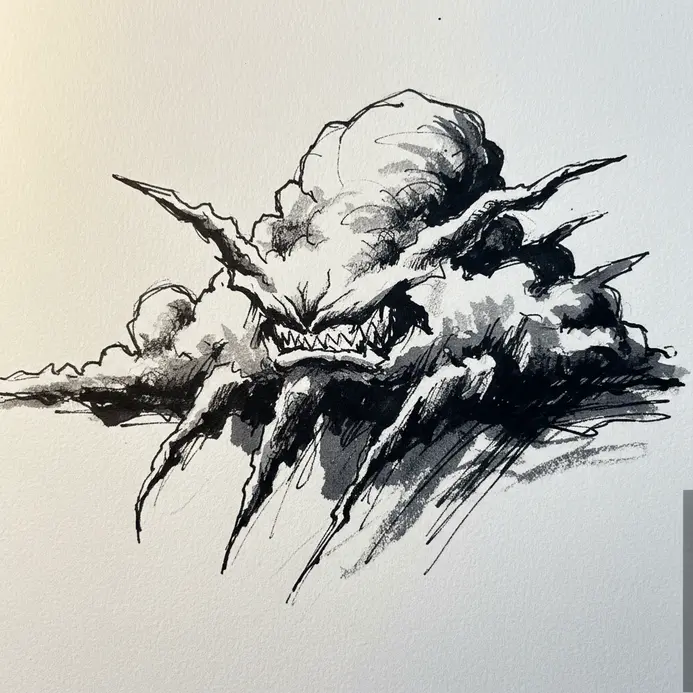
This one is a personal favorite because it looks so dramatic, but the technique is simple. Start with a loose, lumpy horizontal shape using light pressure. Then, break up those smooth curves with short, sharp strokes to create torn, chaotic edges. Using sharp strokes for contrast transforms simple sketches into dramatic easy cloud drawing ideas. Add broken internal lines for volume and use a soft 4B or 6B pencil to build up deep, heavy shadows in the lower areas. This works so well because the contrast between the jagged outline and dark tones instantly sells that ominous, stormy feeling. It is a fantastic exercise for adding mood to a scene, like when you are drawing animals alongside clouds.
10. Sketch a Teardrop Rain Shower Cloud Scene
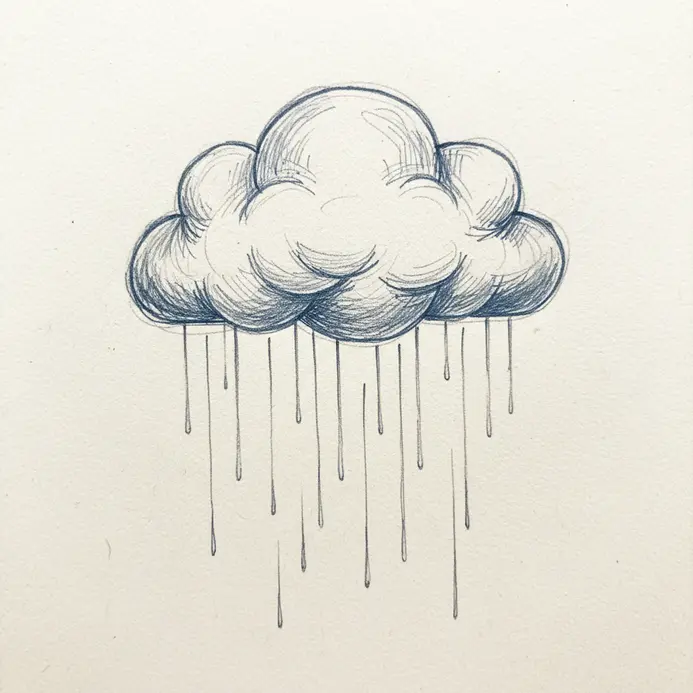
Ever wanted to draw a rainy day that feels peaceful instead of gloomy? This teardrop cloud is your perfect start. Lightly sketch a large, soft egg shape that tapers to a rounded point at the bottom. Sketching those teardrop shapes brings a gentle mood that stands out among typical easy cloud drawing ideas. Then, turn that outline into puffy, undulating curves to give your cloud a fluffy, natural edge. From the pointed base, draw short, slightly angled lines for the falling rain, making sure they vary in length and density to look real. I love how the shading here brings everything to life. Imagine a light source and darken the underside of the cloud and where the puffs overlap, leaving the tops bright. Building up your graphite slowly with light pressure is my go-to tip for that smooth, ethereal look. It creates a gentle, melancholic mood in your sketchbook. Feel that quiet, refreshing atmosphere come together?
11. Create a Small Crescent Moon Cloud Duo
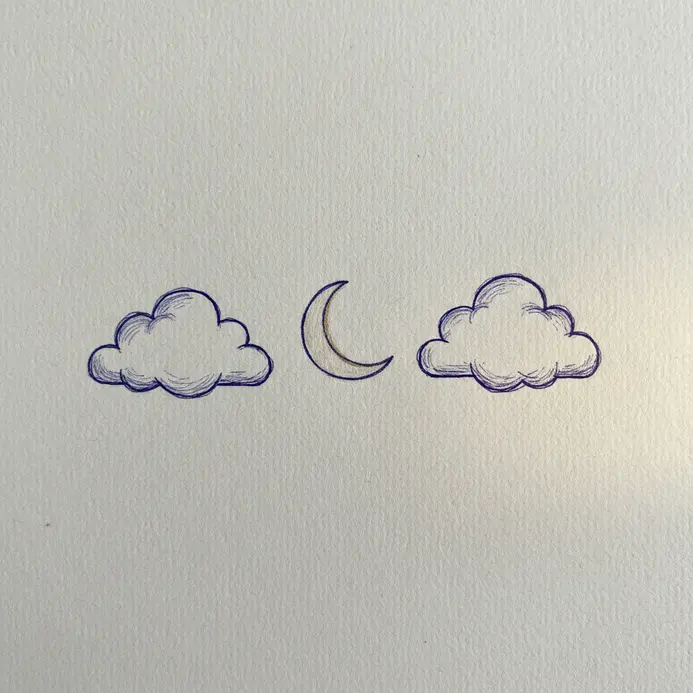
Who would have thought you could make clouds look like crescent moons? I love this one. Start by using the Ellipse Tool to overlap two circles, then use the Pathfinder to cut one out, forming your first moon shape. Pairing crescent shapes with soft edges creates a charming set of easy cloud drawing ideas. The real magic is in the styling. Apply a soft, off-white or pale lavender fill, and then use a feathering effect to blur those hard edges into something fluffy and dreamy. Duplicate your shape, tweak its size and rotation, and you have a charming little duo. This works so well because it combines two lovely, whimsical shapes into a single, atmospheric piece. Try pairing this with In this tutorial, we will focus on drawing flowers and clouds together. for a complete night garden scene.
12. Build a Bold Geometric Polygon Based Cloud
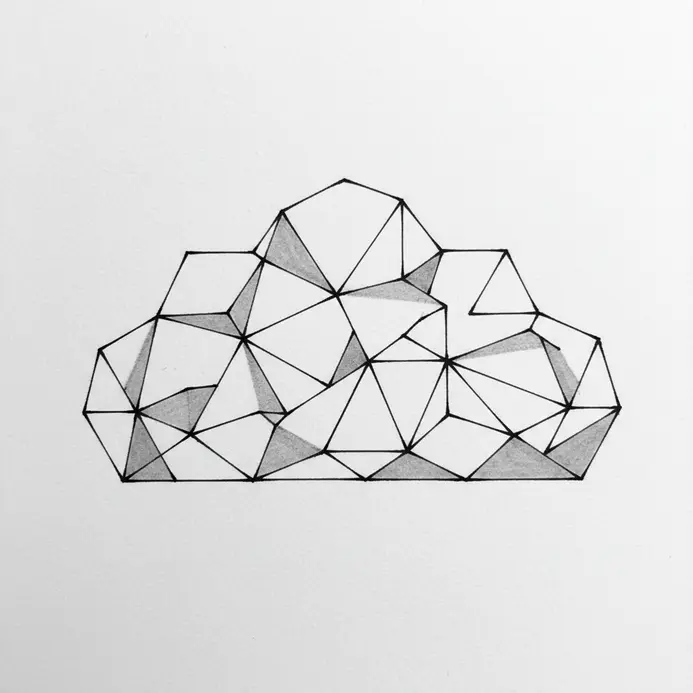
Who would have thought you could make a cloud with straight lines? This one surprised me with its crisp, modern look. Start by sketching a loose, organic cloud shape as your guide. Then, use a ruler to convert those soft curves into sharp polygons like triangles and squares. Converting soft curves into polygons shows you how geometry fits into modern easy cloud drawing ideas. Vary their size and angle to build that billowy volume. Pay attention to light and shadow on each polygon face to make it pop in your sunset drawings. Trust me, this graphic style is incredibly satisfying because it imposes structure on something so fluffy. For a fun twist, check out these whimsical drawing styles to mix with your geometric creations. Feel how bold it looks when you are done.
13. Form a Floating Island Cloud Foundation Sketch
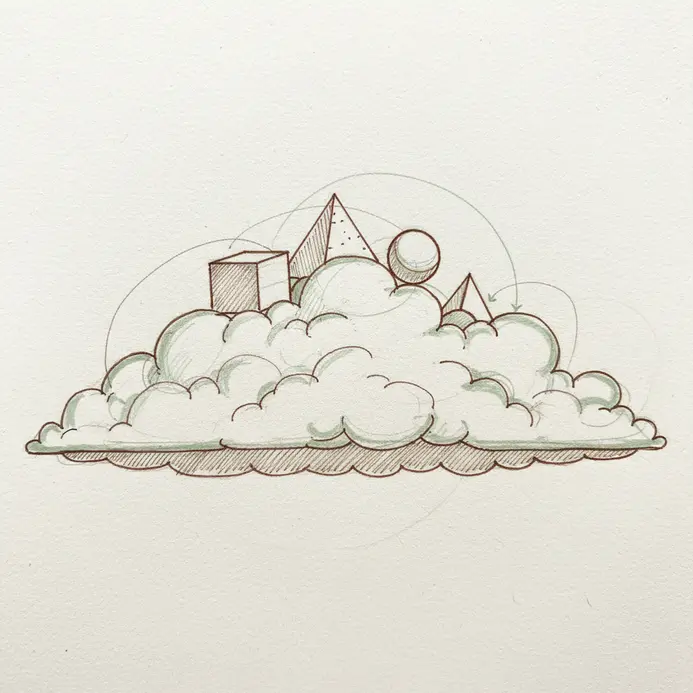
Ever wondered how to make a cloud look strong enough to hold an island? This one is all about creating a believable base. Start with a broad, flat top and rounded, organic sides to give it a heavy, cushiony form. Establishing a solid base with fading edges anchors your composition for sturdy easy cloud drawing ideas. I love using a range of pencil hardnesses to build up a dense, textured core with darker lines, letting the edges fade into lighter wisps. This makes the cloud feel solid and massive, not weak. Establish a single light source to cast a strong shadow underneath, which sells that floating, weighty look. Isn’t that satisfying when you get that perfect balance of fantasy and realism? Feel the power in your pencil.
14. Draw Distant Horizon Long Line Clouds
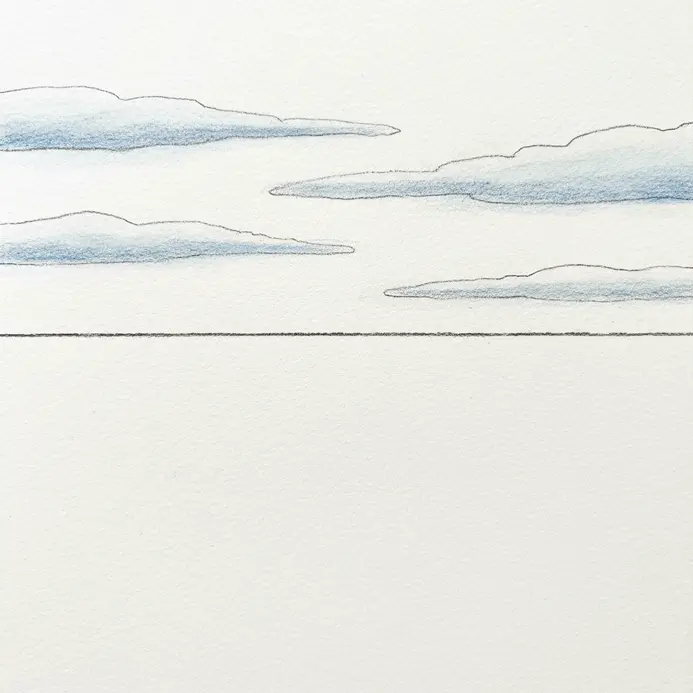
Ever wonder how to make your landscape feel truly vast? Those low, soft streaks on the horizon are your secret weapon. Start by drawing a light horizon line low on your page. Adding those soft streaks near the bottom of your page creates vast easy cloud drawing ideas. Then, sketch a few elongated, wavy shapes just above it. Use light, horizontal strokes to softly shade their undersides and blend everything with a blending stump to keep it all soft and diffuse. This technique works because it uses atmospheric perspective to create incredible depth. I love how it instantly makes a scene look miles deep. For a great way to practice this, try incorporating these clouds into some drawing landscapes with clouds. Feel the sense of space you create!
15. Capture Whimsical Swirling Wind Cloud Draft
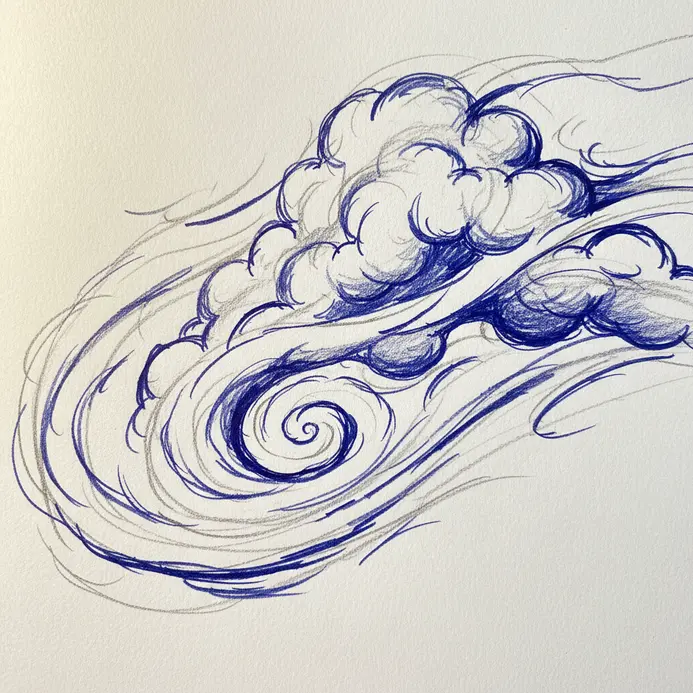
Ever watched a cloud twist and turn like a playful sky dancer? This one surprised me. It looks complex, but the secret is in the light initial sketch. Mapping loose circular strokes helps you explore motion-based easy cloud drawing ideas quickly. Start with loose, circular strokes to map out the main swirl, then let wispy tendrils flow outward from the core. I love how this feels like drawing the wind itself rather than a solid object. Use your kneaded eraser to lift soft highlights and give it that airy, ethereal volume. The real payoff is seeing that dynamic, moving shape appear on your page, bringing your crayon drawings to life. Try it and feel the whimsy come to life.
16. Add a Single Sun Beam Through Clouds
Ever notice how a single sunbeam can completely change the mood of a sky? This is my favorite trick for adding instant drama. The secret is to paint a soft, diverging line on a new layer set to Screen blending mode. Painting that soft diverging line adds instant volume, making it one of the most cinematic easy cloud drawing ideas. Click at the light source, hold shift, and click again where you want the beam to end, using a light yellow color with very low opacity. Then, use a layer mask to make parts of the beam disappear behind clouds, so it looks like it is truly passing through them. It works because that soft, masked interaction creates a believable volumetric light effect. For a softer look, try blending your sunbeam with some Learn how to draw clouds using colored pencil cloud techniques. too. Feel that sense of hope it brings to your scene?
17. Apply Textured Hatching Style for a Heavy Cloud
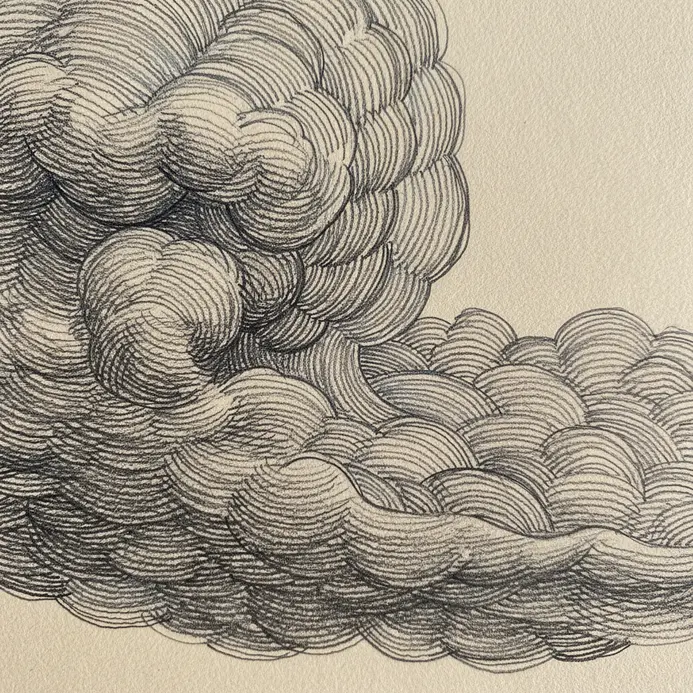
Ever wondered how artists make clouds look so heavy and full in a drawing tutorial? It is all about building up layers of lines. Start by sketching your cloud’s lumpy shape and deciding where the light hits. Use a fine-liner pen for your first layer of light, spaced-out hatching, focusing those denser lines in the shadow areas. Building mass with layered cross-hatching gives heavy, textured looks to traditional easy cloud drawing ideas. Now comes the fun part. To build that textured weight, go back over those shadows with more lines, changing direction to create cross-hatching. Vary your line length and pressure to suggest a chaotic, turbulent interior. I love how this method gives your cloud a real sense of mass. For a great way to practice this, try incorporating your cloud into a drawing landscapes with clouds. Remember, do not try to get it perfect in one go. Build up slowly and watch that dramatic form emerge. Does that not look stunning?
18. Blend an Abstract Soft Mist Cloud
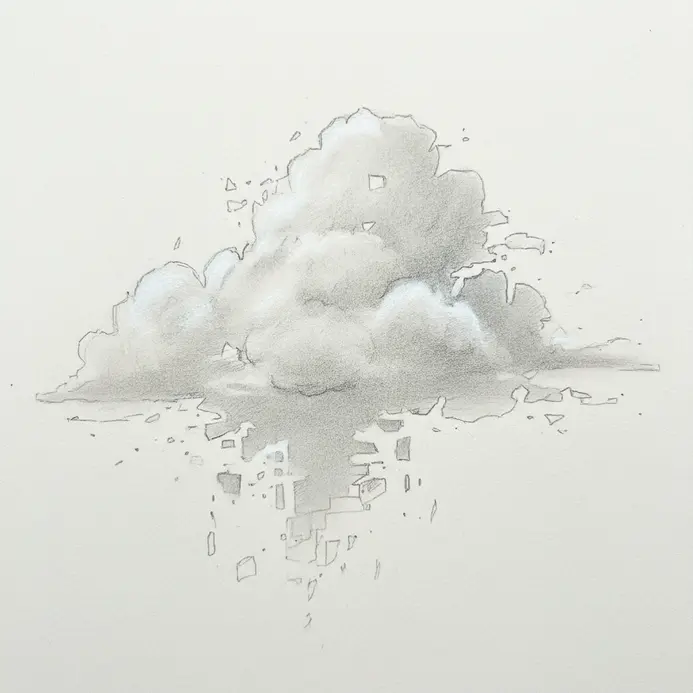
Ever wondered how digital art gets that dreamy, atmospheric feel? This technique is my go-to for adding a soft, ethereal layer to any scene. You will start by creating a new layer and selecting a soft brush set to very low opacity. Then, use gentle, sweeping strokes to build up translucent shapes, focusing on organic flow and avoiding any hard outlines. It works because you are layering light and texture, not painting a solid object. Trust me, the moment you switch your layer to the Screen blending mode and see the mist glow is magic. Feel how it transforms your entire piece.
19. Outline Intricate Filigree Detailed Fancy Cloud
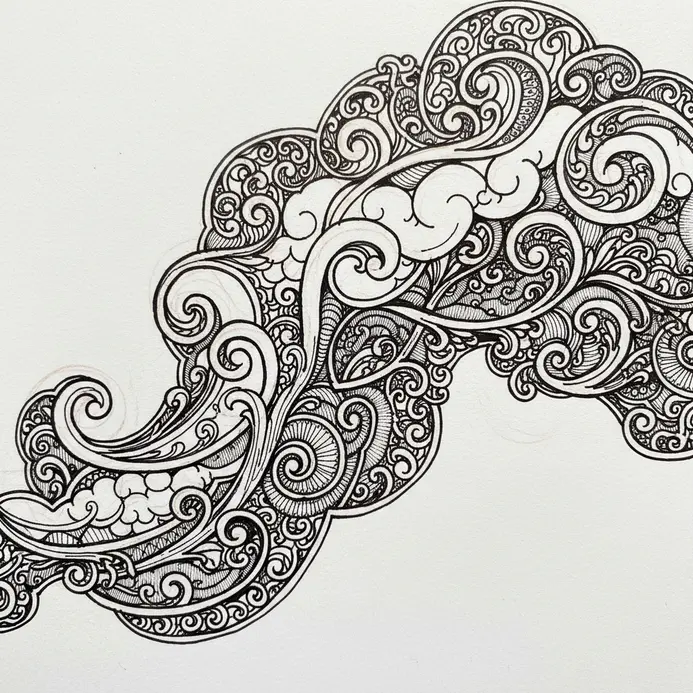
Ever wanted to draw a cloud that looks like a piece of celestial lace? This one is for you. I love starting with a light sketch of the grand, sweeping form, focusing on dynamic curves and overlapping layers. Then, with a fine-tipped pencil, I add those wispy, tendril-like edges and delicate surface patterns. You will feel a real sense of accomplishment when those feathery lines come together, proving how versatile easy cloud drawing ideas can be in a step-by-step tutorial. Trust me, the key is keeping the overall shape light and airy before diving into the intricate details. This prevents the cloud from looking stiff. It turns a simple cloud into an awe-inspiring, fantastical element. more aesthetic drawing ideas.
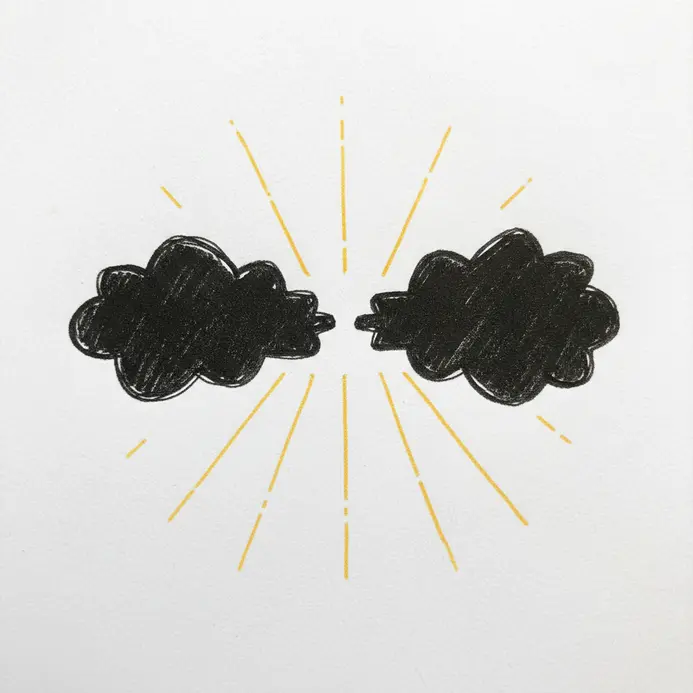
20. Sketch a Dual Lightning Bolt Cloud Pair
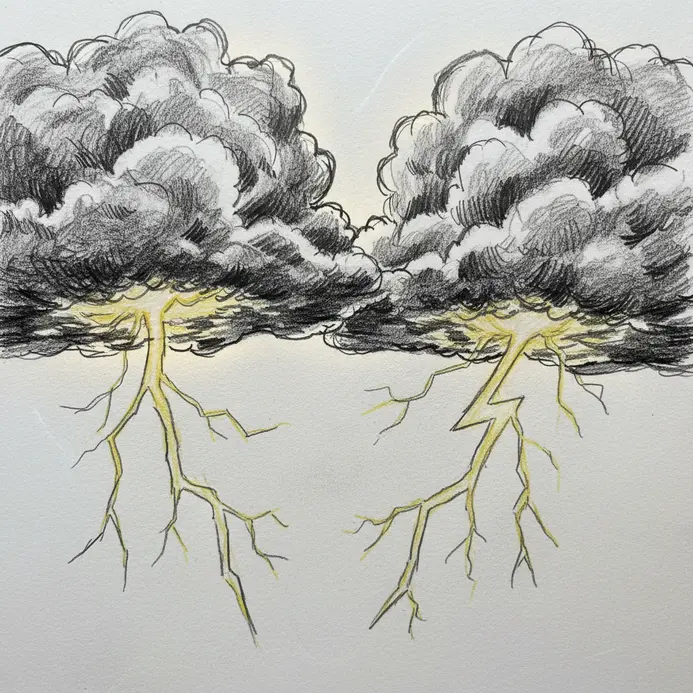
Ever wanted to capture the drama of a full storm? This one looks intense but is simple to build. I love starting with two large, irregular blobs for the main cloud masses, placing them close together on the page. Then, from their flat, turbulent undersides, draw your jagged lightning bolts with a few thin branches to feel that raw energy crackle to life. Contrasting those sharp bolts with shaded masses balances your stormy easy cloud drawing ideas perfectly. You will find this a fantastic way to practice dramatic skies, and it pairs wonderfully with more whimsical drawing styles for contrast.
21. Draw a Heart Shaped Soft Fluffy Cloud
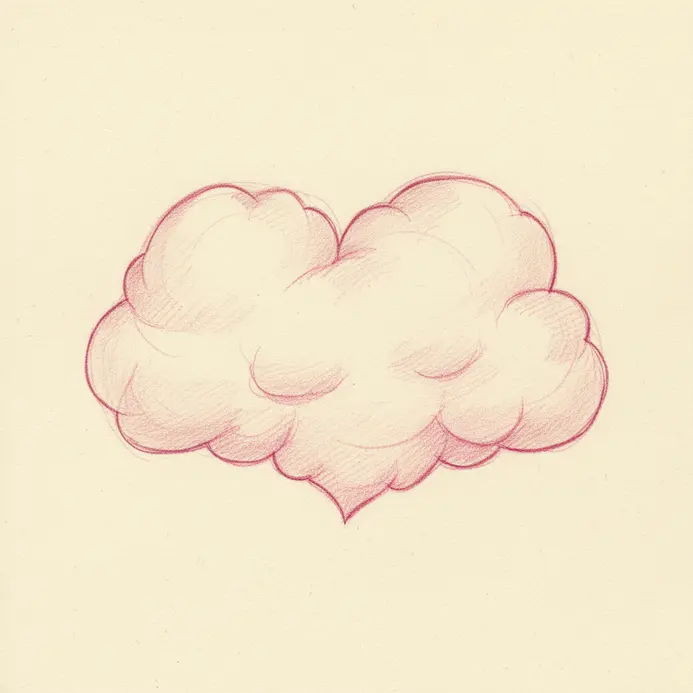
Isn’t it fun to combine a sweet symbol with something so airy? Start by lightly sketching a simple heart shape as your guide. Then, along that outline, draw a series of irregular, overlapping rounded puffs to form the cloud’s edges. Vary their sizes for a natural, billowy look. Once your puffy outline feels full, carefully erase that initial heart guide in your drawing tutorial. For extra depth, you can add a few smaller, lighter puffs inside the main shape. I love how this forgiving technique lets you embrace irregularity, which makes a cloud look soft and fluffy instead of stiff. Trust me on this one, the key is a light hand and letting the shapes flow together organically. Feel the charm when your heart-shaped cloud comes together.
Protecting Graphite Sketches With Fixative Sprays
Hold a can of matte workable fixative about twelve inches from your finished sketch and apply a light, even mist in a steady side-to-side motion. One light coat is enough to lock your delicate graphite layers in place and prevent the smudging that ruins soft cloud sketches. Let this first layer dry completely for the time listed on the can before you even think about adding a second. A workable formula is ideal because it means you can still add more graphite on top later if you want to deepen a shadow. This final step takes two minutes but protects weeks of careful practice on manipulating pressure and negative space. Your sketch stays exactly as you intended, with all its soft transitions preserved.
Conclusion
Your sketchbook is now full of sky, each page holding a little piece of that fluffy, shifting world above us. The real magic happens when you take these easy cloud drawing ideas and make them your own. Do not worry about perfect copies. The best next step is to simply look up. Watch how real clouds merge, drift, and catch the light, then let your hand follow what you see with the line techniques you practiced. Keep your lines loose and your eraser handy. Those soft, atmospheric sketches you create will be a wonderful record of your growing confidence.
FAQs
Q: How can I get started with easy cloud drawings if I’m a complete beginner?
A: Start with a simple drawing by learning a basic cloud shape of the cloud using easy step-by-step guides. The first step is to sketch soft, rounded bumps and then refine the outline. Follow a step by step or step-by-step drawing tutorial—either a printable PDF, a video tutorial, or drawing guides—to make it a bit easier. Clouds are fun and fairly simple, so practice these basic cloud shapes to learn to draw and get started quickly.
Q: What is the best step-by-step method to draw a cartoon style cloud?
A: For a cartoon style, follow an easy step-by-step approach: 1) draw a flat base, 2) add several rounded humps around the top, 3) smooth the connections, and 4) ink the outline. This step-by-step drawing method keeps things simple drawing and coloring later. You can find printable steps or a short video tutorial to watch each stage in motion, which makes it easier to personify the cloud or add playful elements like eyes or a smile.
Q: How do I add shadows and sunlight to make my cloud artwork look three-dimensional?
A: Adding shadows is done by shading the lower and inner areas of the cloud with light gray tones while leaving the top edges lighter where sunlight hits. Use soft strokes around the edges and blend to suggest fluffiness. Adding shadows and highlights gives volume so the cloud looks like it could evaporate or float in sunlight. Try varying pressure with your pencil or use diluted ink washes to create smooth gradients for a more realistic effect.
Q: Can I color in the sky with my cloud drawings and include rain or a rainbow?
A: Yes—coloring in the sky enhances the scene. Use pale blues or even gray gradients for cloudy weather, then add a rainbow across or behind clouds for contrast. To depict rain, draw small raindrops falling from the cloud and add darker tones under the cloud to show wetness. Combining clouds, raindrop details, and a rainbow can turn a basic cloud into a new drawing full of atmosphere and emotion.
Q: What are some different ways to make my clouds more interesting in a simple drawing?
A: Try different ways like personify your cloud with faces, add some birds flying around the edges, include sunlight peeking through, or show evaporation with wispy streaks. You can experiment with cartoon style, ink linework, or soft shading. Small details—like a light gray undersurface, layered puff shapes, or slight transparency—make even a fairly simple cloud more engaging and great fun to create.