


Why I Love Colored Pencils for Artistic Expression
Every stroke of a colored pencil brings joy. It’s not just coloring; it’s about emotions, stories, and the world around us. The process is calming, and it’s especially rewarding when working on simple colored pencil drawing ideas that let you focus on details that make art come alive. Colored pencils offer a unique blend of control and creativity, perfect for artists of all levels. Their precision allows for an exquisite level of detail.
Essential Art Supplies to Get Started
You don’t need much, but the right art supplies make a huge difference. For colored pencil art, grab a pad of colored pencil paper from a place like Blick Art—its texture holds pigment beautifully. While any pencils work, upgrading to artist grade pencils like Prismacolor gives you richer, more lightfast results that won’t fade over time, making your piece of art last.
Fundamental Techniques to Know
Mastering a few basic colored pencil techniques is the secret to unlocking amazing results from even the most Simple Colored Pencil Drawing Ideas. The most important is to layer colors lightly instead of pressing hard. This allows you to blend different hues together to create depth and realism. Practice smooth shading from light to dark. For a dreamy effect, you can even use a watercolor underpainting; this base of dominant color helps make your top layers look more vibrant.
10 Simple Colored Pencil Drawing Ideas to Start Tonight
Drawing Idea #1: Vibrant Fruit Still Life
Don’t overthink realism yet—just juxtapose bold colors! Start with a single pear: burrow into its warm yellows, feather green shadows softly, and dab a highlight with your eraser. Surprise! Layering crimson lightly over yellow creates a believable glow. Prismacolor’s waxiness helps you meld hues effortlessly. A good tip: Sketch lightly first, then saturate color gradually.


Drawing Idea #2: Peaceful Landscape Scenes
Distill a landscape into basic shapes. Block out a sunset sky with horizontal peach streaks, stipple distant trees as dark smudges, and filigree foreground grass with quick green flicks. Here’s the twist: A watercolor pencil underpainting (just swipe, then blur with water) creates dreamy clouds fast. Use texture to suggest fine details—no need to render every leaf.

Drawing Idea #3: Botanical Illustrations and Flowers
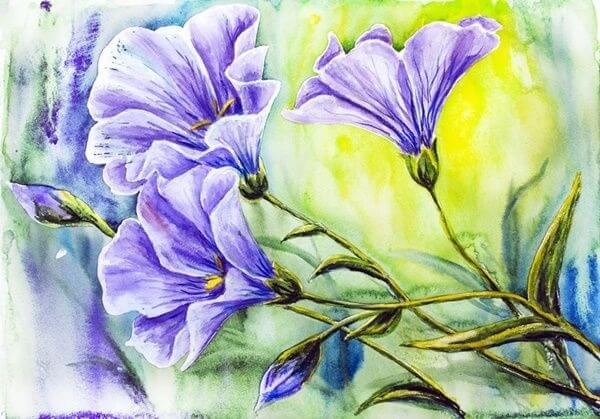
Zero in on one leaf or bud. Map veins with light pressure, corset edges with deeper green, and puddle rich pigment in the center. Burnishing (pressing hard with a light pencil) makes petals glisten. Honestly? Imperfect botanical illustrations feel more alive. Try a dandelion clock: tousle white seeds over a blended blue background for a unique illustration.

Drawing Idea #4: Expressive Animal Portraits
Focus on the eyes and fur texture. Scumble overlapping strokes for fluffy fur—direction matters! Graduate browns in a squirrel’s tail, etch whiskers with a sharp point, and mute the background so your subject pops. Tip: Reference photos help, but exaggerate those highlights for vibrant character in your pencil art.

Drawing Idea #5: Enchanting Underwater Scenes
Layer turquoise, sapphire, and violet for depth. Dapple light through imaginary water with gentle eraser flicks, silhouette simple fish shapes, and bedazzle bubbles with white burnishing. Cheat code? A dark blue underpainting makes lighter colors radiate. Keep it loose—suggest coral with knotted red scribbles.

Drawing Idea #6: Abstract Patterns and Geometric Designs
Unshackle yourself from realism! Grid your paper lightly, then infuse each square with gradients (try muddling orange into purple). Embellish with dots, stripes, or cobbled-together shapes. Big insight: This hones your blending skills without pressure. Use complementary colors (red/green, blue/orange) for maximum pop.

Drawing Idea #7: Mouthwatering Food Illustrations
Amplify shine and texture. For a cupcake: stipple sprinkles, glaze frosting with heavy white layers, and crumble brown pencil for the base. Cast a soft shadow underneath to anchor it. Ooh, and rendering a coffee cup steam? Just smudge pale grey upwards. Your drawing look will appear instantly more lifelike.

Drawing Idea #8: Simple Portrait Studies
Concentrate on values, not likeness. Chisel cheekbones with medium pressure, ruffle hair with directional lines, and pool darkest shadows under the chin. Start small: Sketch just eyes and lips. Artist-grade pencils (like Blick Studio) depict skin tones better—mix peach, ochre, and a touch of rose to create an exquisite portrait.

Drawing Idea #9: Seasonal Nature Scenes
Capture a maple leaf in fall: swirl crimson edges, stitch vein details, and scatter a few loose leaves below. Winter? Dust a pine branch with blued shadows and fleck snow highlights. Pro move: Tinting snow with faint purple makes it feel cold. This is a great way to show color variation.

Drawing Idea #10: Whimsical Fantasy Subjects
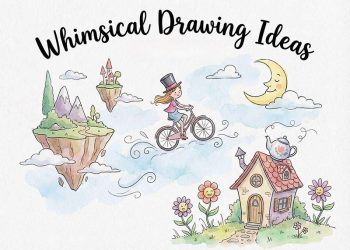
Mash up reality and imagination! Doodle a mushroom house: thatchet the roof with red cross-hatching, moss the base with textured green, and gild windows with yellow. Dot fairy lights using a blunted white pencil. This aesthetic of whimsical nature thrives on imperfect charm.

More Drawing With Colored Pencils Art Style To Try


Conclusion
See? You don’t need advanced skills to create satisfying artwork. The real advantage of starting with Simple Colored Pencil Drawing Ideas is that it builds confidence fast, which is the most important part of any creative journey. So tonight, grab that leaf or apple and get some color onto paper. Your new colored pencil is waiting to bring your ideas to life.
FAQs
Q: What are some simple color pencil drawing ideas for beginners?
A: Beginners can start with simple shapes like fruits, leaves, or flowers. Drawing a basic landscape or a simple portrait can also be a great way to practice. Using colored pencils to create a gradient in the background can enhance the overall look of your drawing while allowing you to experiment with color blending.
Q: How can I create realistic drawings using colored pencils?
A: To create realistic drawings, focus on shading and blending techniques. Start with a light base layer and gradually build up layers of color. Use fine details to add depth and dimension, and consider using a fixative to preserve your work. Practicing drawing realism can also improve your skills over time.
Q: What are some drawing tips for using color effectively?
A: One key tip is to understand color theory and how different colors interact. Experiment with complementary colors to create contrast, and use analogous colors for harmony. Additionally, consider the light source in your drawing to apply shadows accurately, enhancing the realistic effect.
Q: How can I learn more about colored pencil techniques?
A: You can explore online video courses that focus on colored pencil techniques, which often provide step-by-step instructions. Many artists also share their tips and tricks for creating realistic colored pencil art on social media platforms and art blogs.
Q: What is the advantage of using Prismacolor colored pencils for drawing?
A: Prismacolor colored pencils are known for their smooth application and vibrant pigmentation. Their ability to blend seamlessly makes them ideal for achieving realistic shading and fine details in your artwork. Artists often prefer these pencils for both portraits and landscapes.









Discussion about this post