Period Reference Boards For Motif Accuracy
Use portraits dated 1837 to 1901 as your primary reference before choosing a Victorian tattoo motif, ensuring your victorian tattoo ideas remain historically grounded. A board built from cameo jewelry, mourning lockets, lace borders, and Gothic Revival ornament keeps the visual language tied to the period instead of drifting into generic Gothic style. Pair each image with notes on oval framing, beaded edges, scrollwork, and engraved hatching, since those details guide a tattoo artist toward coherent line decisions.
Historical references also clarify clothing, hairstyles, cherubs, ribbons, ravens, and botanical forms without forcing every detail into one design. Keep one centerpiece prominent and leave open skin around it, especially when a face or tiny inscription carries meaning. A period reference board gives your consultation a clear starting point and helps simplify details before they reach the stencil, a proven method for refining victorian tattoo ideas.
Line Weight Planning For Lasting Clarity
Match line weight to the tattoo’s final size, because hairline engraving marks lose clarity faster on a wrist than on a broad upper arm, a key consideration for lasting victorian tattoo ideas. A large cameo or sternum piece supports varied outlines, stippling, and crosshatching, while a small ankle motif needs a simplified border and fewer interior marks. Ask for a readable face at stencil scale, not only in a zoomed sketch.
Consistent outer contours help oval frames and symmetrical filigree hold their shape as skin moves and ink softens. Black and grey ink gives hatching strong contrast, while muted burgundy or deep green needs enough separation from nearby black. A round liner grouping suits crisp ornamental lines, while a curved magnum shader supports controlled grey shading without filling every gap.
1. Black Ribbon Cameo Portrait Tattoo: Framed Romantic Ink

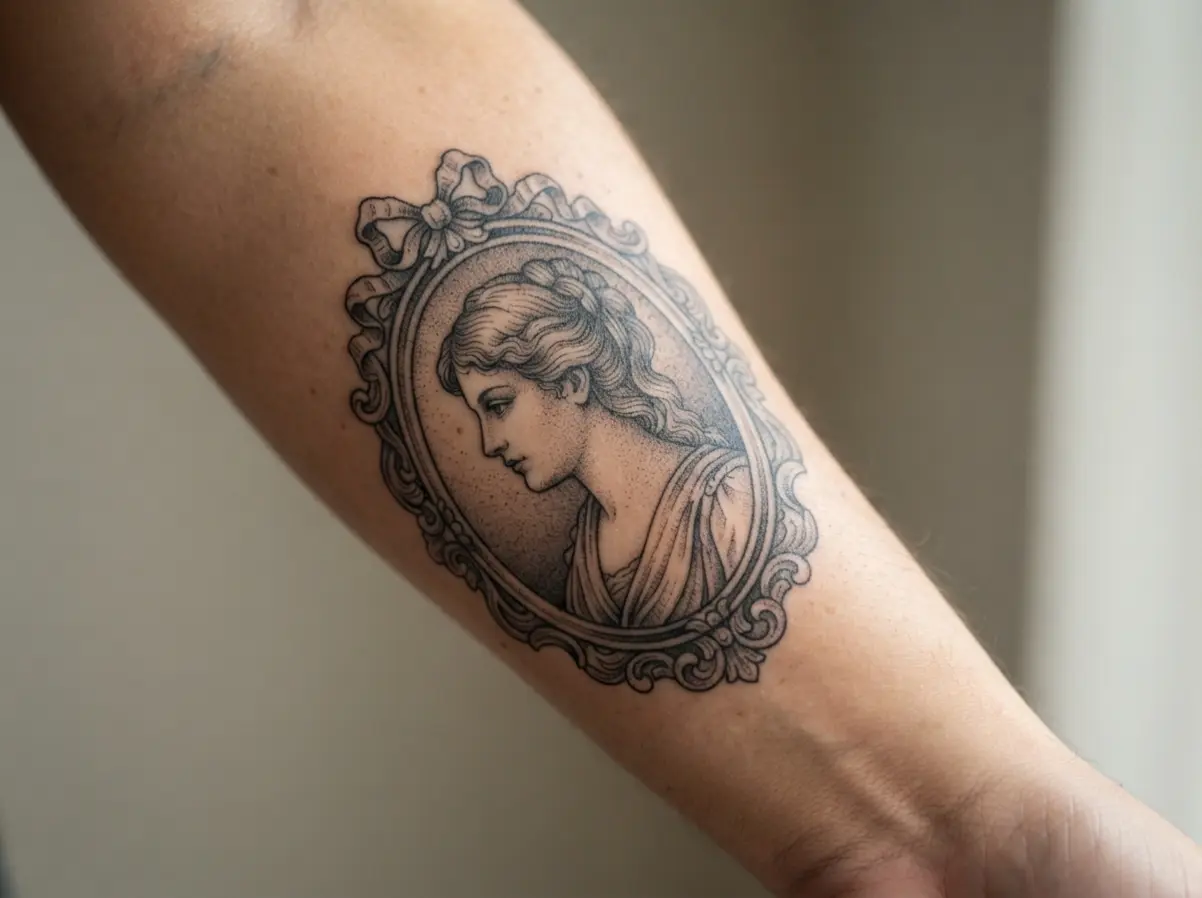
Image SourceEver wondered why a cameo feels so personal in ink? Start with an oval portrait frame, then give it a classical profile, soft gray shading, and delicate Victorian linework, which mirrors how victorian tattoo ideas evolve on skin. A flowing black ribbon wraps beneath or around the frame, while pearls, lace, flowers, or filigree add detail without stealing focus from the face. I love how each element keeps the portrait feeling like a cherished antique keepsake.
Keep the design large enough for fine details and optional script to stay clear. Forearm, upper arm, shoulder, chest, ribcage, and thigh placements suit different scales. Trust me, ask your tattoo artist about needle selection, black-and-gray ink, and shading before booking. A restrained monochrome palette gives the finished piece its old-world, gothic-romantic mood, proving why victorian tattoo ideas endure. Feel proud when every detail settles into place.
2. Engraved Anatomical Heart Stipple Tattoo — Dark Romantic Detail
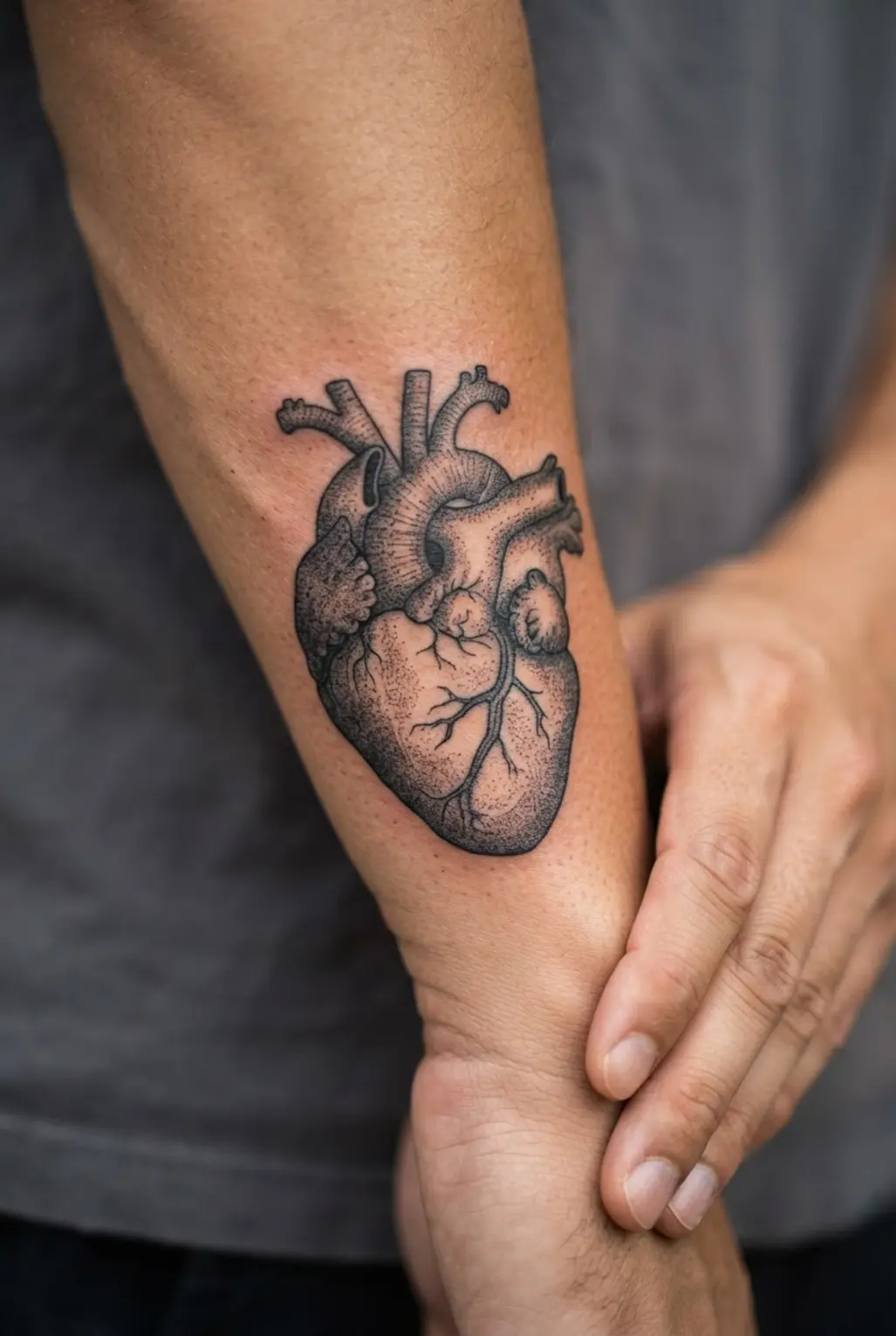
Image SourceThis heart design brings antique detail to a personal tattoo. Start with a clear anatomical outline, showing the veins, arteries, ventricles, and tissue folds. Build the surface with stipple shading, crosshatching, and thin etched lines, leaving open areas between details to balance intricate victorian tattoo ideas. Deep black beneath the ventricles creates contrast without hiding the structure.
Sound complicated? The process feels easier once each texture has a clear place. I love adding a small dagger or thorned stem, then keeping roses, ribbons, cracks, or initials secondary. A sternum, upper chest, ribs, or shoulder blade placement gives fine linework room to stay readable. Ask for an artist experienced with engraving-style work, and protect the negative space during the consultation. Trust me, restraint gives this dark romantic piece its elegant, melancholic finish, much like refined victorian tattoo ideas.
3. Ornate Brass Pocket Watch Tattoo With Aged Engraving
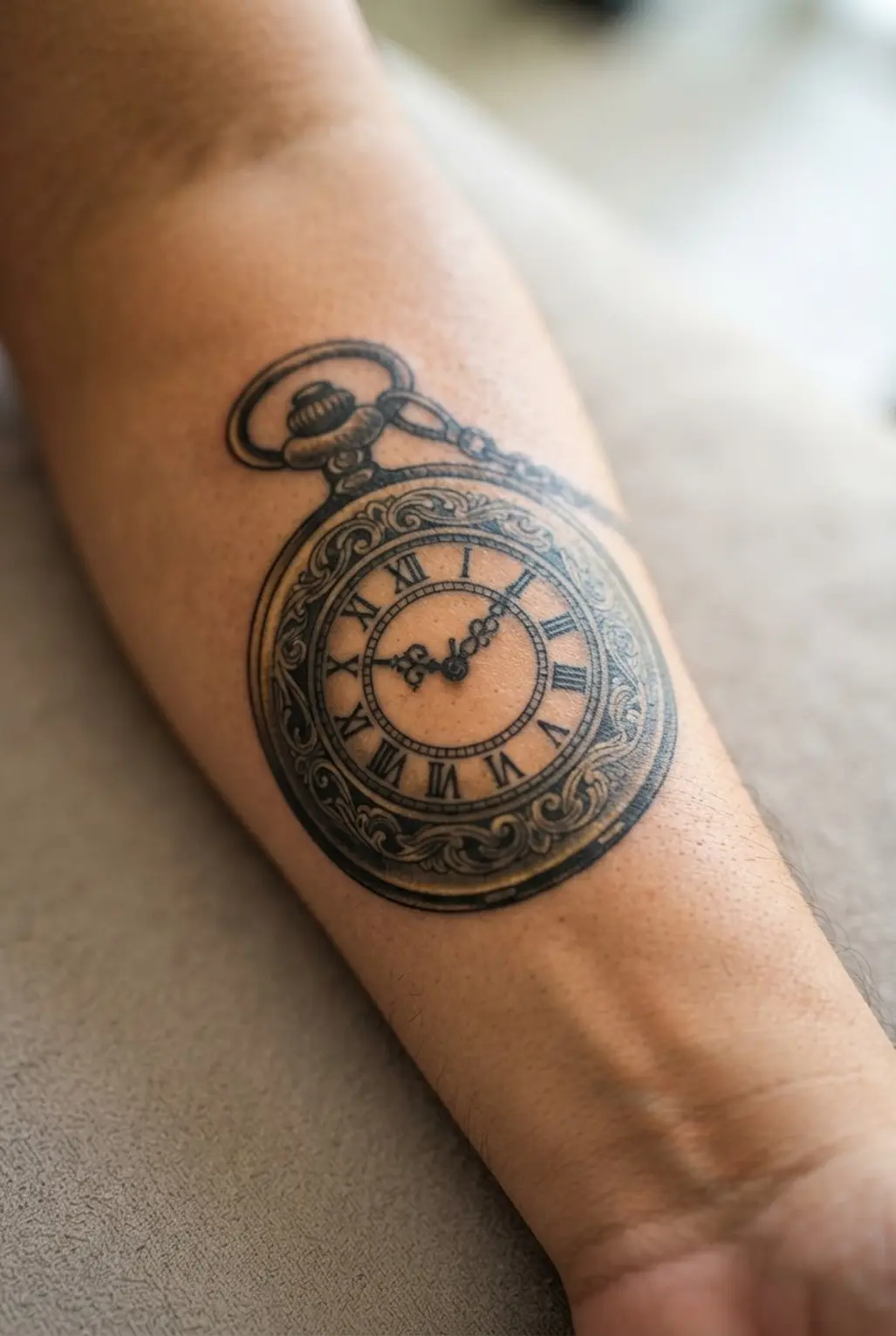
Image SourceI love this design because it feels personal, antique, and full of small details. A pocket watch with Roman numerals, delicate hands, and a partly open cover suits anyone drawn to heirloom-style ink, echoing popular victorian tattoo ideas. Start with the watch outline, keeping its shape clear before adding ornament.
Build the border with fine lines, filigree, and a meaningful date or initials. Sound complicated? It is not, provided the lettering and numerals have enough space to stay readable. Add muted brass-gold shading, stippling, tarnished highlights, and a few glass cracks for an aged finish, which highlights how victorian tattoo ideas age gracefully.
The curved chain gives the compact image movement and leads the eye around the piece. I like this approach on the forearm, chest, shoulder, or calf, with the size matched to the engraving. Keep the chain uncluttered so it supports the watch instead of hiding its face, and enjoy the heirloom feel when every mark settles into place.
4. Veiled Mourning Figure Fineline Tattoo — Quiet Gothic Mood
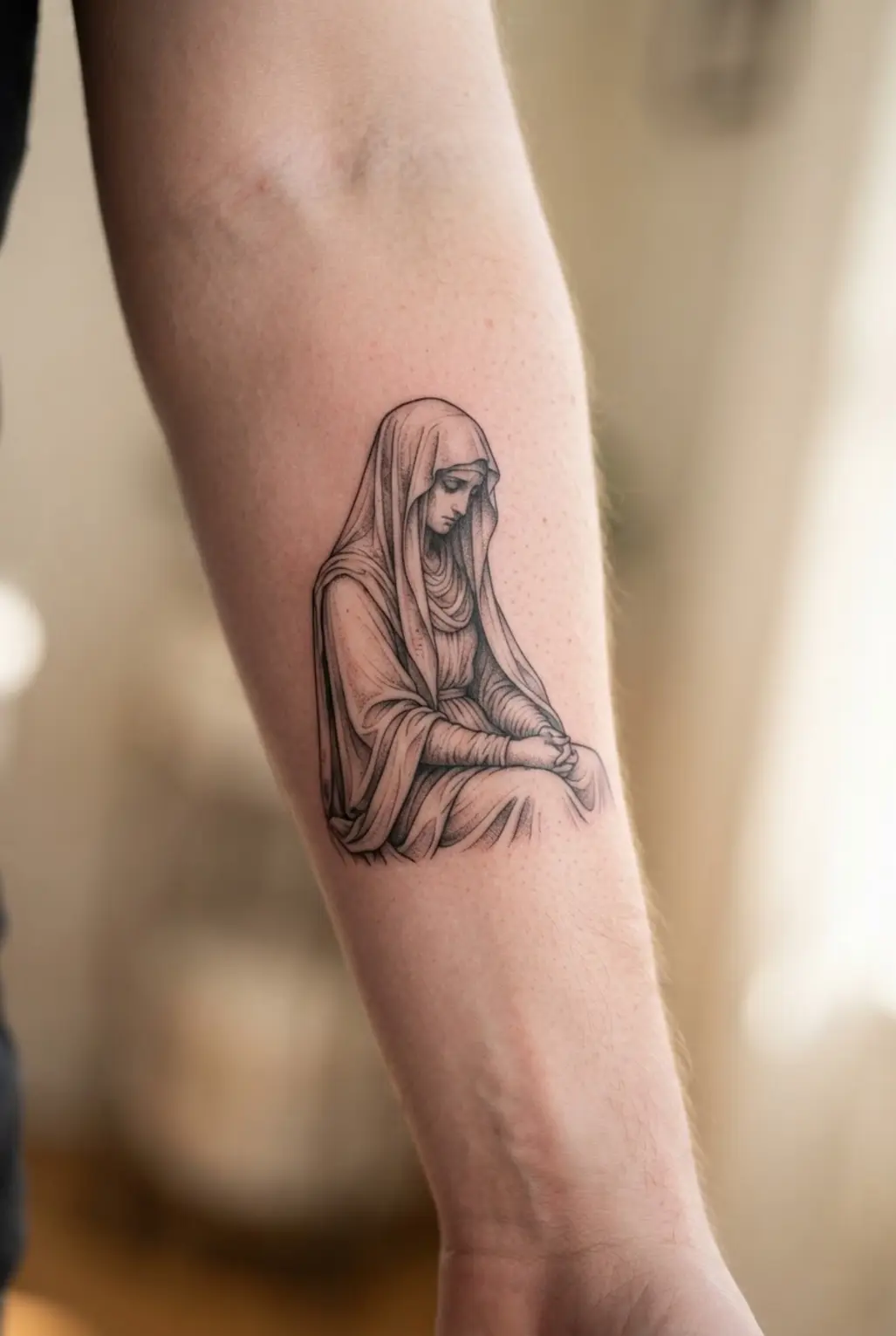
Image SourceThe finished piece feels hushed: a slender woman stands beneath a translucent veil, her bowed head fading into open skin. Fine black linework traces the shoulders and falling fabric, while sparse stippling softens the shadow over her hidden face, capturing the mood of subtle victorian tattoo ideas. A wilted rose or black lily near the chest adds a small note of grief, and a crescent moon keeps the gothic romanticism refined. Isn’t the quiet mood effective?
Begin with a clear stencil, then preserve generous negative space around the veil, smoke, petals, or moths. Keep the face obscured, the secondary details sparse, and heavy black fills out of the design so each delicate strand stays readable. The inner forearm, sternum, ribs, shoulder blade, and calf suit this narrow figure. I love how restrained choices give the tattoo such a personal, solemn feeling, aligning with thoughtful victorian tattoo ideas.
5. Dried Botanical Specimen Plate Tattoo With Fine-Line Labels
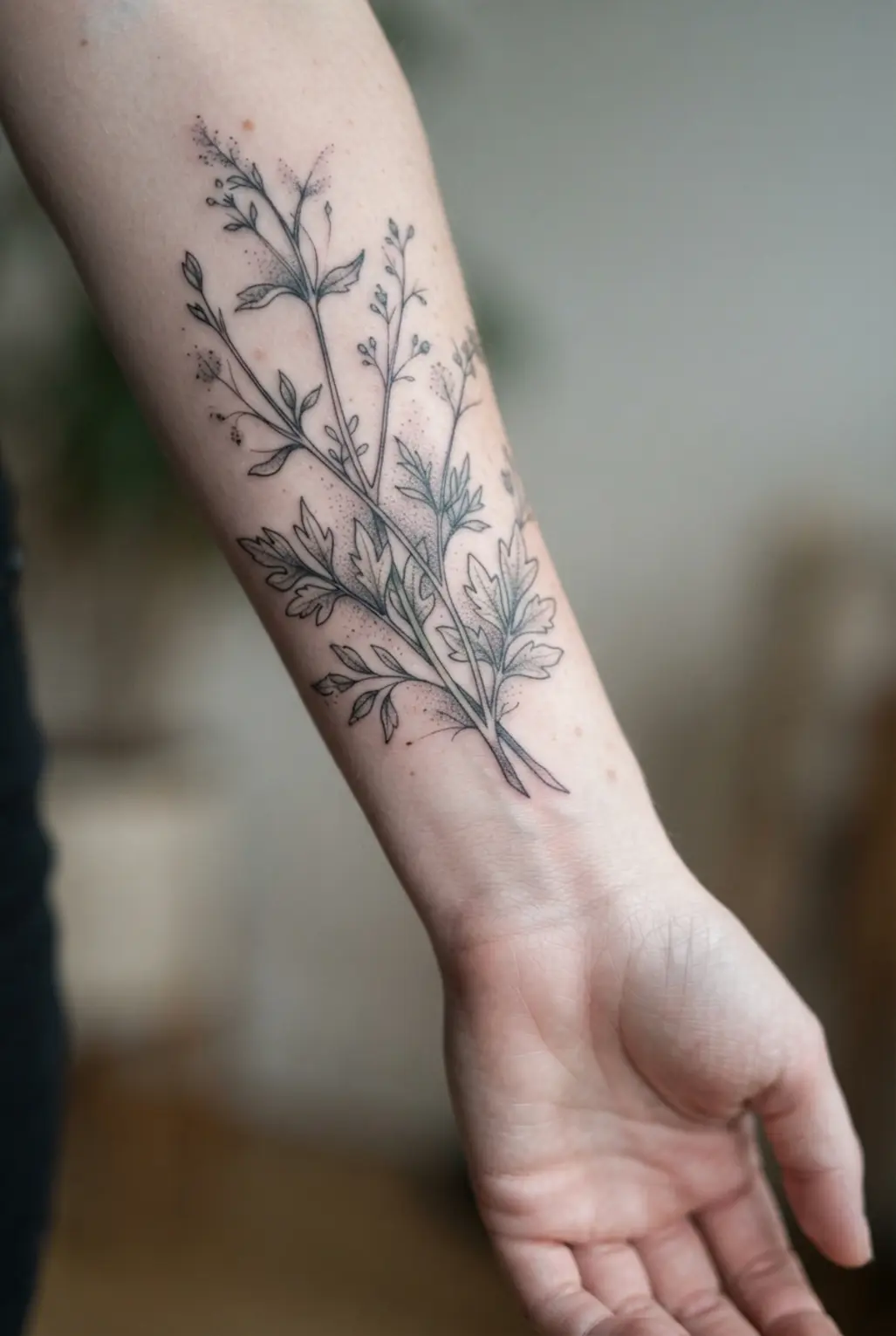
Image SourceMany people think a specimen plate needs dozens of plants, but a small group looks cleaner and ages better. Sound complicated? It is not. Start with fine-line outlines for pressed flowers, leaves, and seed pods, then add light stippling and crosshatching for an old archive feel, which demonstrates organized victorian tattoo ideas. I love how each plant gets its own little identity.
Place handwritten-style labels beneath the specimens, using a Latin name, date, location, or catalog number. A thin rectangle, measurement marks, or muted antique-brown ink adds character without crowding the layout. Keep lettering large enough for your chosen forearm, thigh, shoulder blade, ribcage, or calf placement, and let your artist adjust the spacing. This approach turns personal memories into a tidy natural-history record. Trust me, seeing every label settle into place feels wonderfully satisfying.
6. Skeleton Key Filigree Rib Tattoo — Antique Ornamental Form

Image SourceStart with a rib-placement stencil, scaling a narrow key from beneath the chest toward the waist, a reliable method for sculptural victorian tattoo ideas. Angle the shaft slightly so it follows the rib cage instead of sitting like a rigid line. Keep the bow symmetrical, with Victorian scrollwork, latticework, and a small fleur-de-lis tucked into the open spaces. Sound complicated? It is not, but the spacing needs patience.
Use fine-line blackwork for the outline, then add dotwork beneath the filigree to suggest aged metal and soft depth. Small Gothic teeth and a tiny lock detail give the bit a secretive edge, while tapered flourishes keep the piece light. I love how negative space makes this antique key feel refined rather than bulky, matching elegant victorian tattoo ideas. Trust me, restrained stippling will keep your design elegant as the rib placement moves with your body.
7. Wax Sealed Love Letter Tattoo With Serif Lettering

Image SourceWant a love letter tattoo with an old-fashioned romantic feel? Start with a folded envelope, uneven paper edges, and a rich burgundy wax seal placed as the focal point. Add initials, an anniversary date, or a short phrase like “Forever Yours” beneath the flap. I love how the compact message feels personal without crowding the design, echoing intimate victorian tattoo ideas.
Use a fine-line needle for crisp envelope folds, light texture, and readable serif lettering. Set the text size before adding flourishes, since tiny serifs often blur as ink settles over time. Keep the black linework separate from the coloured seal, then add restrained shading to give the paper a gently aged finish. Trust me, clear lettering and a strong seal make this romantic design feel timeless.
8. Raven Perched on Clock Tattoo — Engraved Gothic Symbol

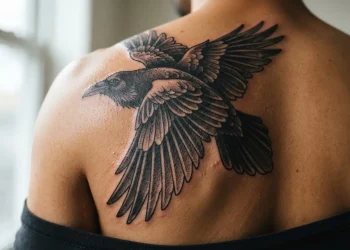
Image SourceThis raven-and-clock piece feels dark, romantic, and full of old-world detail from the first outline. Build the composition around a midnight clock face, using crisp Roman numerals, cracked glass, and ornate Victorian gears beneath a perched raven. Give the bird a clean silhouette first, then layer feather lines, stippling, and crosshatching without burying its shape. Sound complicated? It isn’t, proving why symbolic victorian tattoo ideas remain so popular.
I love how the engraved blackwork makes every feather, crack, and gear look like part of an antique illustration. Place the design on your forearm, chest, calf, shoulder blade, or thigh, choosing enough room for its textures to stay clear. Pro tip: keep filigree, thorned vines, and hidden skulls secondary so the raven and clock catch the eye first. Strong contrast and open skin breaks will keep the tattoo readable for years.
9. Ornate Apothecary Poison Bottle Tattoo With Filigree
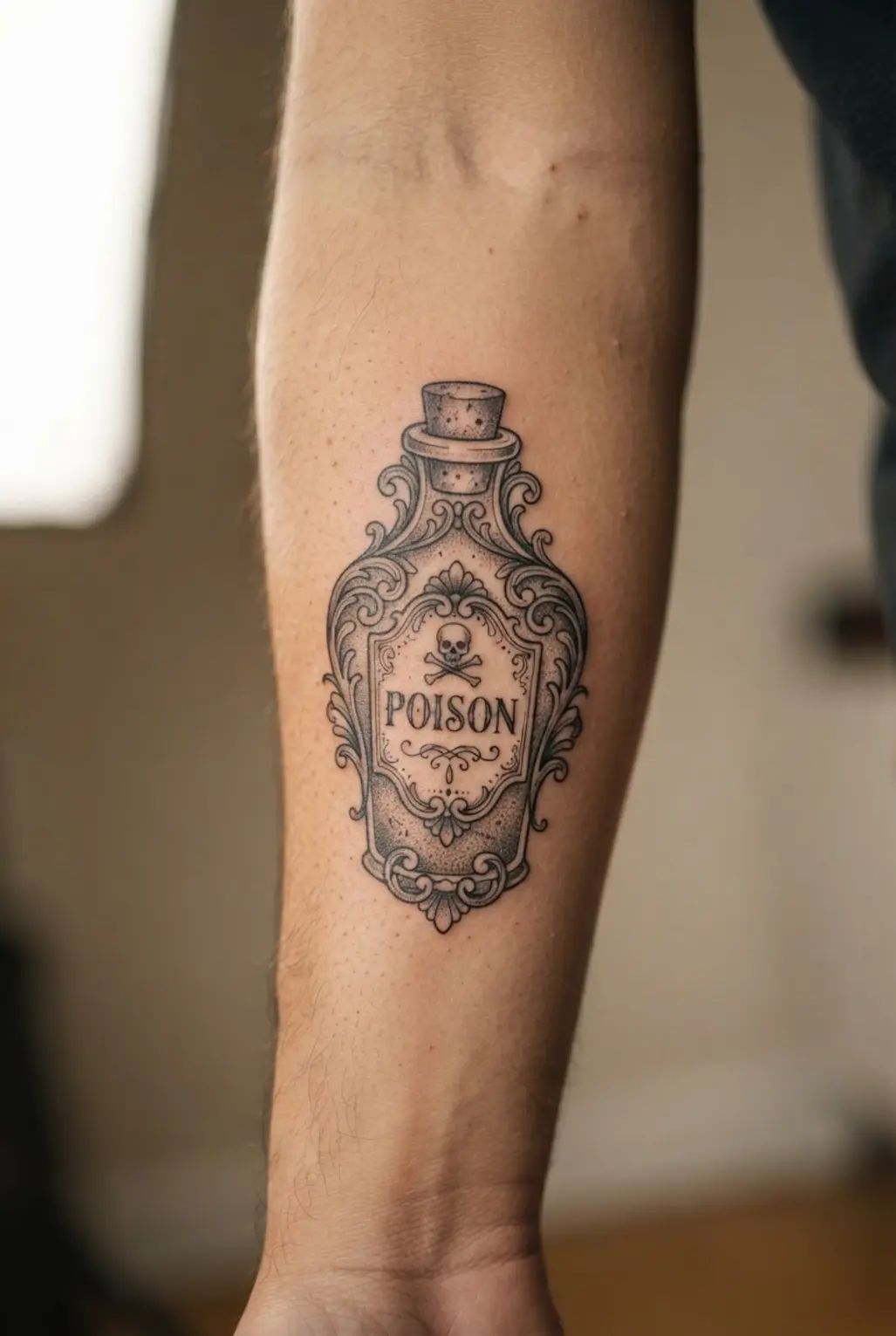
Image SourceI love this design because it feels elegant, eerie, and full of old-world detail. Start with a faceted bottle silhouette, giving it a narrow neck, dark cork, and distressed label marked “POISON.” Sound complicated? It isn’t. A clear outline keeps the bottle recognizable before any decoration goes in, following practical victorian tattoo ideas.
Next, frame the glass with fine-line blackwork filigree, curling vines, thorned leaves, and lace-like flourishes. Add swirling emerald liquid or crimson shading, then finish with a wax seal, moth, raven, rose, or belladonna bloom. I’d keep extra motifs small so the ornament stays airy, especially on the forearm, calf, upper arm, thigh, or sternum. The result feels polished and mysterious without losing its readable shape.
10. Victorian Lace Fan Wrist Tattoo — Delicate Open Linework

Image SourceSoft scallops, slim ribs, and tiny roses give this wrist piece the feel of old lace resting against the skin, highlighting delicate victorian tattoo ideas. Ever wondered how such fine detail stays airy? Start with a 2–3-inch fan stencil, curving its open edge along the inner or outer wrist.
Trace the main outline and ribs first, then add symmetrical filigree, scrollwork, and small floral marks with fine black lines. Leave clear skin between each lace section, using gray only for restrained accents. I love how the fan shape follows the wrist instead of forming a stiff block, while the open space keeps the vintage look light and jewellery-like.
Trust me on this one: ask for clean spacing before adding extra detail, since crowded webbing and heavy shading quickly flatten the lace effect. A steady artist and careful placement will keep these concepts delicate, polished, and easy to admire.
11. Mechanical Butterfly Wing Arm Tattoo With Engraved Parts

Image SourceMany people cram every tiny gear into this design, but crowded details blur after healing. Keep the butterfly readable with a clear mechanical spine, then place larger gears, pistons, screws, and layered plates around it. Does the arm shape guide the wings? Map the stencil along the upper arm, shoulder-to-elbow line, or forearm before the needle starts, letting the wing panels follow the body’s curve.
I love the shift from dark machinery near the center to thin, translucent edges, especially in black-and-gray realism, a hallmark of structured victorian tattoo ideas. Add engraved filigree, crosshatching, Roman numerals, or bronze and blue accents after the structure reads clearly. Trust me, spacing matters more than stuffing in extra symbols, and an artist skilled in fine-line engraving will keep each part crisp. Feel proud when the details settle into one Victorian-inspired piece.
12. Engraved Victorian Sewing Scissors Tattoo — Useful Antique Detail

Image SourceStart with a narrow scissors silhouette, keeping the blades slightly open so the object reads at once as sewing scissors. Add the small central screw, ornate finger loops, and a few floral scrolls inside the handles. Fine etched lines and soft gray shading suggest aged steel, while a loose thread curling around one loop adds movement, echoing functional victorian tattoo ideas. I love how this antique detail feels useful and personal rather than purely decorative.
Sound complicated? It is not. Keep initials, dates, or botanical accents small, then leave open space around every engraved mark so the fine line stays readable as the tattoo ages. A forearm, calf, upper arm, ribcage, or spot above the knee suits the narrow shape. Your artist should use a fine-line needle and a clear stencil, with restrained shading for a clean finish. Trust me, an uncluttered design gives the Victorian mood room to shine.
13. Floral Frame Mourning Brooch Tattoo With Antique Ornament

Image SourceWould an old mourning brooch make a meaningful tattoo? I love this design for its quiet detail. Start with a delicate oval frame, then place a dark cameo silhouette, memorial portrait, or ornate initial in the center. Keep the focal element clear before adding decoration, which mirrors how sentimental victorian tattoo ideas develop.
Surround it with wilted roses, forget-me-nots, trailing vines, ribbon, pearls, and antique filigree. Use engraved-style shading to give each leaf and fold a soft, etched appearance. The heirloom layout works because every detail supports the memorial feeling without stealing attention from the center, proving the value of balanced victorian tattoo ideas. Use black-and-gray ink for the frame and tonal depth, then add muted burgundy accents to a flower or ribbon.
Avoid crowded ornament and heavy shading, since both details reduce clarity in small portraits and initials. Trust me, restrained color makes the finished piece feel personal, timeless, and beautifully somber.
14. Nightshade Foxglove Botanical Stem Tattoo — Gothic Flora
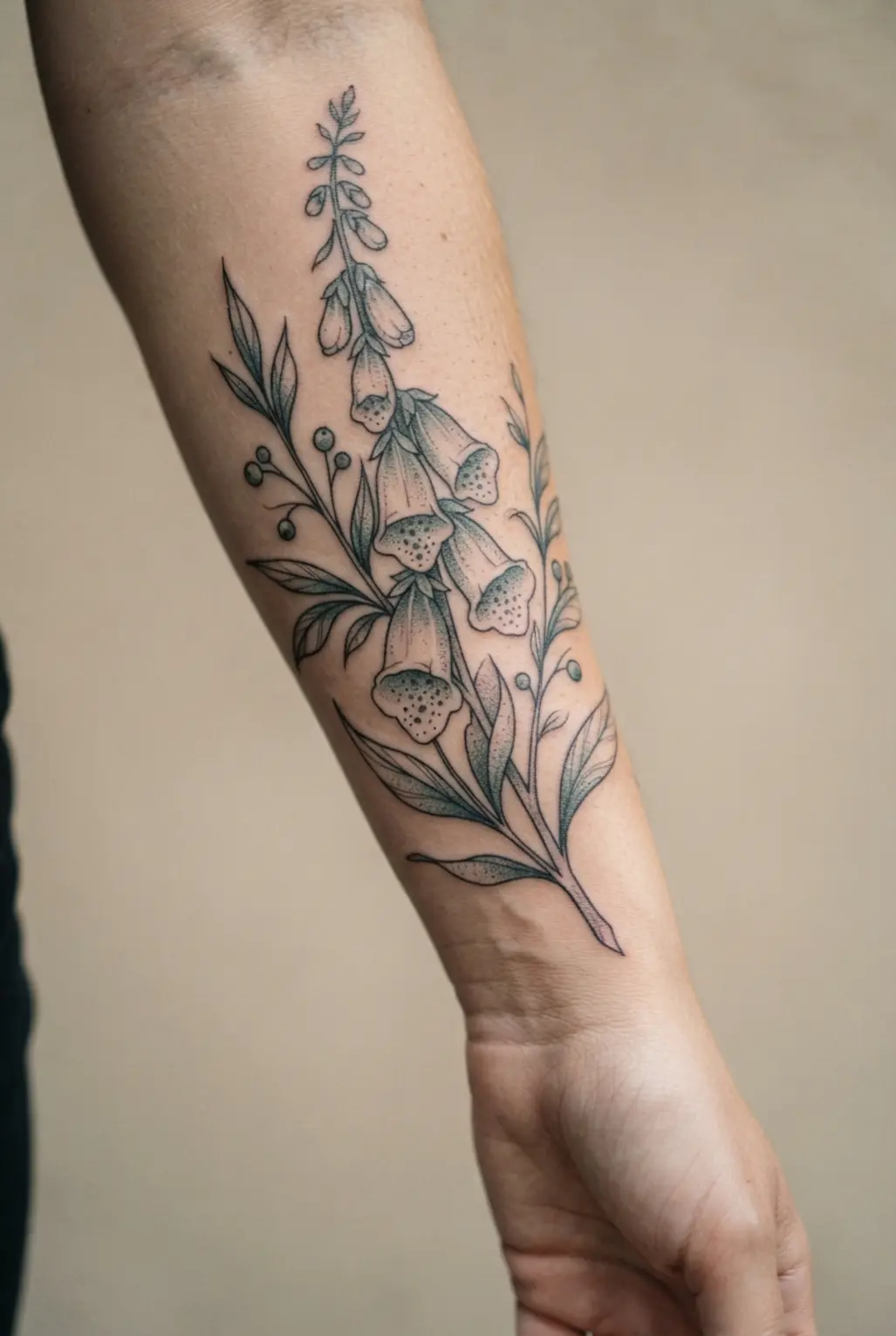
Image SourceThis gothic botanical stem has a graceful, mysterious mood from the first sketch, matching organic victorian tattoo ideas. I love how foxglove bells and nightshade vines create an elegant poisonous-plant look without losing clear structure. Begin with a slender vertical stem following the forearm, calf, rib, spine, or upper arm. Add drooping blossoms, pointed leaves, and a few dark berries along its length.
Sound complicated? It’s not. Build depth with blackwork shading, fine-line details, crosshatching, and shadowed flower interiors. Deep burgundy blossoms or muted violet-black berries add restrained color, while a tiny moth or crescent moon brings extra gothic charm. Keep each botanical form distinct so ornaments don’t crowd the stem. Pro tip: let the body’s natural line guide the flow, and feel proud when every bell and berry reads clearly.
15. Antique Hand Mirror Filigree Tattoo With Reflective Framing
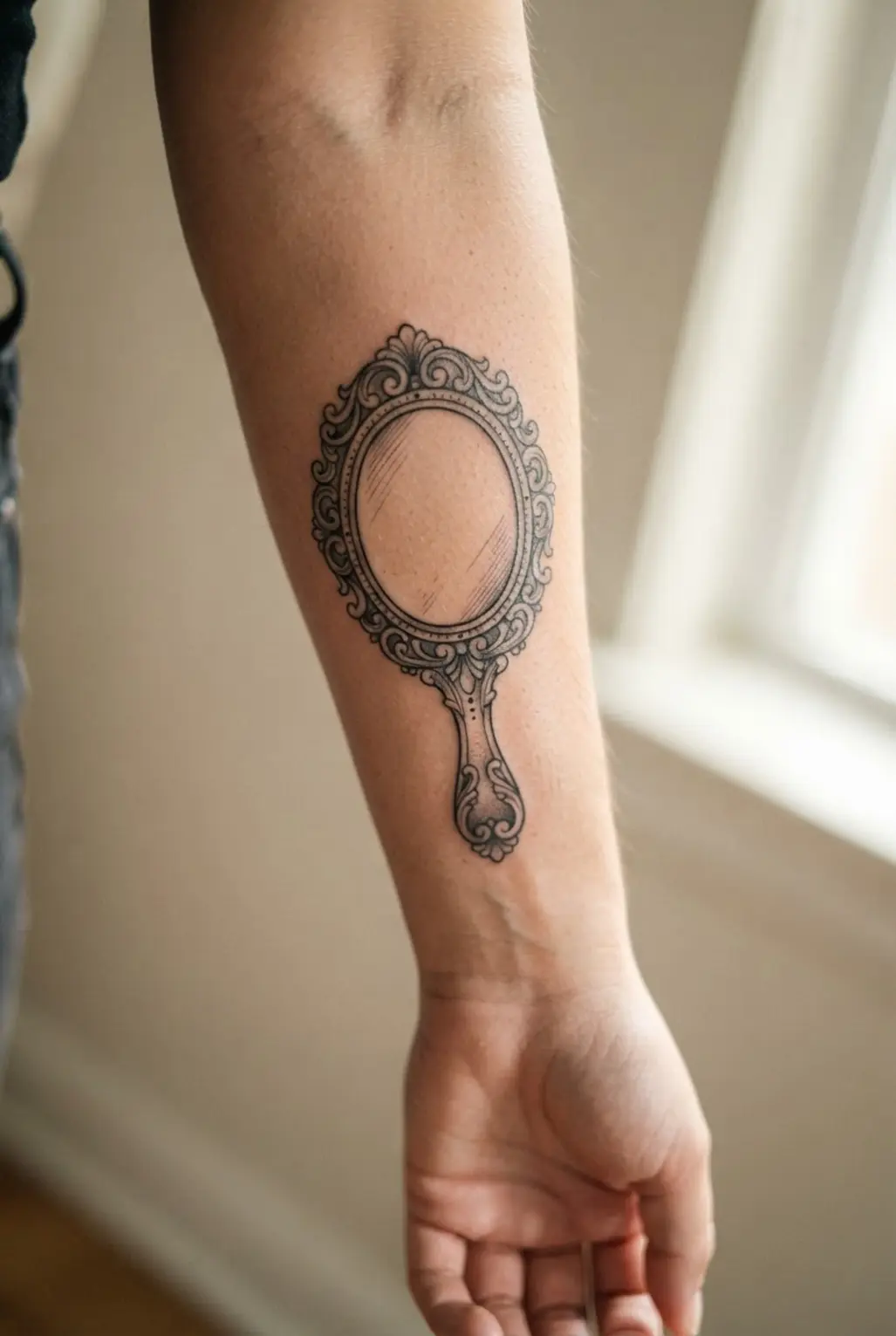
Image SourceI love this one because it feels old-fashioned yet personal, reflecting reflective victorian tattoo ideas. The mirror needs a clear oval or rounded silhouette, a carved handle, and a filigree frame built from even ornamental lines. Use fine-line black and gray ink for the frame, handle, and delicate flourishes, then add soft shading inside the glass. Sound complicated? It is easier to read when the outer details stay lighter than the center.
An eye, rose, moon, or aged face gives the reflection a personal gothic touch, while a few cracked-glass accents add mystery. The contrast between the detailed border and open center makes this design work beautifully as vintage body art, showcasing versatile victorian tattoo ideas. Keep enough room on the forearm, thigh, sternum, or calf for every curve to stay clear. Trust me, protecting the mirror shape before adding extra filigree makes the finished piece feel polished.
16. Victorian Postage Stamp Small Tattoo — Compact Engraved Mark

Image SourceTiny perforated edges frame a black-ink rectangle with a profile, corner numerals, and faint engraved lines. Doesn’t the antique format feel wonderfully personal, matching miniature victorian tattoo ideas? I love its keepsake feel, with every mark kept small and clear.
Keep the border crisp with a fine-line needle, then place the portrait or royal emblem in the centre. Add restrained hatching and a small cancellation mark below. A stencil preserves the 1-to-1.5-inch shape on an inner wrist, ankle, forearm, or upper arm, a reliable template for tiny victorian tattoo ideas. The clear rectangle reads instantly, while restrained hatching gives it old-fashioned character without heavy shading.
Doesn’t this compact scale suit discreet placement? Trust me on this one: prioritize the border, portrait, and numerals before extra details. Your artist should leave open skin between them, so the mark stays clean as it heals.
17. Cathedral Arch Ghostly Statue Tattoo With Gothic Lines

Image SourceMany people think a ghostly statue needs heavy black ink, but too much darkness buries the face and intricate gothic cross patterns. Sound complicated? Start with a tall Gothic arch stencil, then place a solemn, eroded statue beneath it, with hollow eyes and robes tapering into mist, following dramatic victorian tattoo ideas. Fine linework, pointed spires, cracked stone, and crosshatching give the structure an old cathedral feel, while graywash keeps each detail open. I love how the sacred setting and supernatural figure create a mournful focal point.
Keep smoke, chains, bats, or stained-glass marks sparse so the statue stays in charge. Use muted-white highlights on the brow, stone edges, and mist, and leave clear space between dark shadows and narrow architectural lines. Is there enough room for those details? Choose a forearm, calf, upper arm, chest, or back, and ask for a size suited to fine facial features. Trust me, a little breathing room makes this black-and-gray piece feel spectral and elegant.
18. Victorian Gramophone Sound Wave Tattoo — Period Music Detail

Image SourceStart with a flared brass horn, wooden cabinet, rotating record, and engraved metalwork, then let a thin sound ribbon flow from the opening. Sound complicated? Keep its curves layered, slightly uneven, and closer to an etched music ribbon than a digital waveform. Add tiny nineteenth-century notes, ivy, roses, or a fictional label such as “Waltz No. 3” for extra period character, echoing musical victorian tattoo ideas.
I love this design in black-and-gray engraving, with fine lines and stippling giving each panel an antique finish. A forearm suits a horizontal layout, while a shoulder or upper back welcomes a rounded arrangement. Give the tattoo enough room for lettering and filigree to stay clear as the skin ages. Trust me, restrained brass or muted label color keeps the nostalgic mood beautifully intact.
19. Moth With Celestial Details Tattoo — Fine-Line Night Design
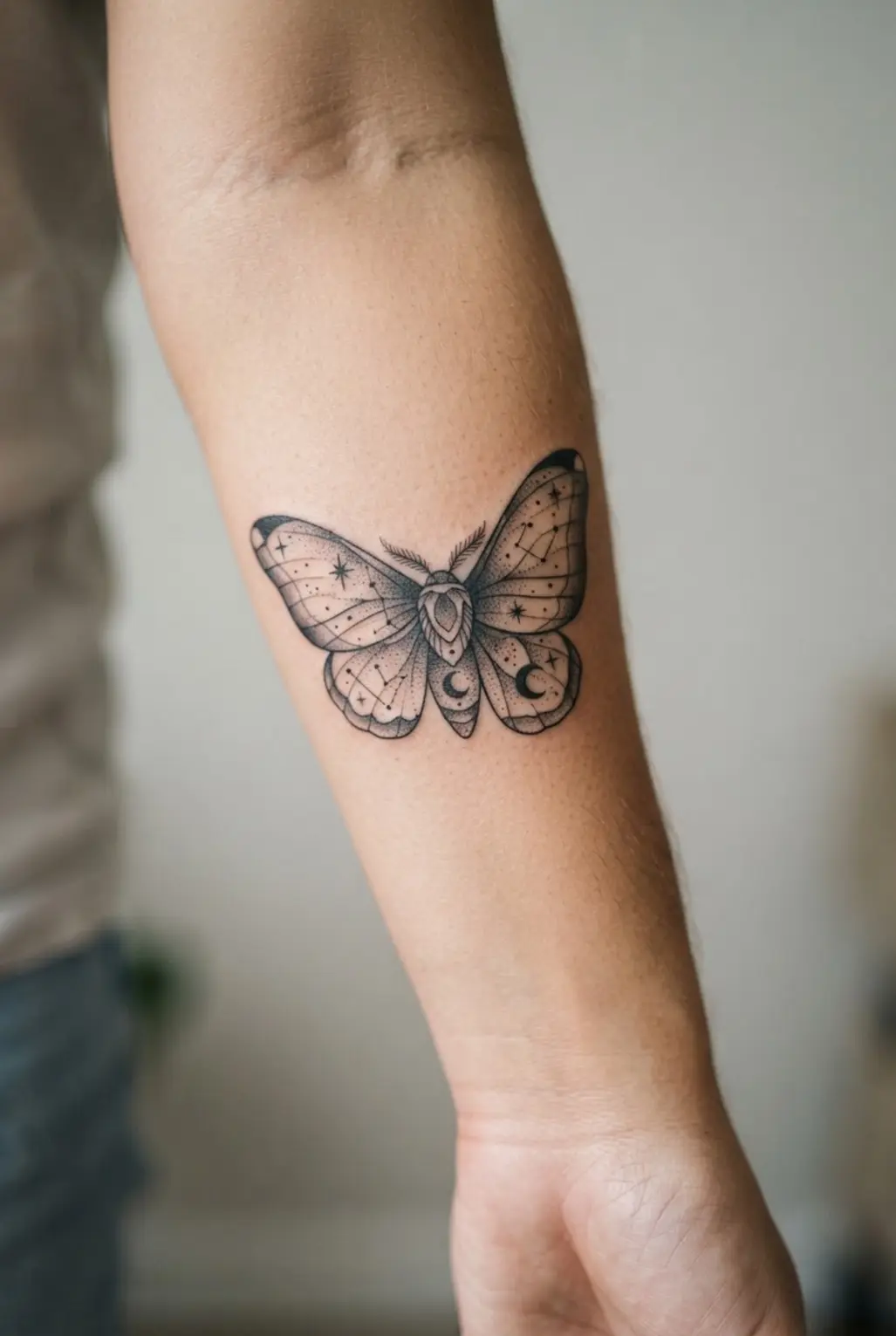
Image SourceEver wondered why a moth feels so at home in a night-themed tattoo? Start with a centered body and gently curved, matching wings, then place crescent moons, tiny stars, and constellation marks across both sides, a staple of atmospheric victorian tattoo ideas. A small sun or full moon on the thorax gives the design a clear focal point. I love how symmetrical wing placement keeps every detail neat.
Use thin black lines, restrained dark fill, and soft stippling near the wing edges for gentle depth. Leave open skin between the celestial marks so the pattern stays clear over time. This fine-line style suits the sternum, upper back, inner forearm, ribs, shoulder blade, or thigh. Trust me on this tip: keep the stencil visible during placement and check both wings before any ink goes in. Fewer details often give this tattoo a cleaner, softer finish.
20. Initial Inside Ribbon Banner Tattoo With Serif Lettering

Image SourceThis ribbon banner design feels personal from the first glance, with one serif initial holding the eye. Start with a clean ribbon stencil, giving the curled ends room and keeping the letter centered inside the band. Sound complicated? It is not, since bold outlines and small fold lines create the vintage flash look, highlighting typographic victorian tattoo ideas.
Use black ink for the outline and initial, then add soft gray shading beneath each fold. Muted red works for tiny accents. I love how the serif terminals make a single letter feel formal, while the banner keeps it warm and readable on a forearm, upper arm, chest, shoulder, or calf. Trust me on this one: settle the letter size first, because crowded details or a tiny initial lose clarity over time.
21. Wilted Rose Bouquet Locket Tattoo — Sentimental Mourning Art

Image SourceI love this design because an antique locket gives grief a tender, personal shape. Sound complicated? It isn’t. Start with an oval or heart-shaped frame, then add fine-line filigree around the edge and soft black-and-gray shading inside. Two or three drooping roses, fallen petals, and curved stems create the mourning focus, while muted red petals bring gentle contrast.
Initials, a date, tiny portrait, or words such as “Forever Remembered” fit inside, though crowded lettering quickly loses clarity. The piece suits the chest, over-heart area, inner forearm, upper arm, ribs, or shoulder blade. Trust me, checking the size with your tattoo artist first keeps every detail readable during stencil planning. The result feels tender, old-fashioned, and deeply personal.
Photographing Ornamental Ink Without Glare
Photograph healed ornamental ink beside a window with indirect daylight, since direct sun creates hard highlights across raised texture and glossy aftercare residue. A phone or camera should sit parallel to the skin, keeping oval borders and symmetrical filigree from bending at the edges. Wipe away excess balm first, then give the surface time to lose its shine, since glare hides stippling and engraving-style hatching, essential when photographing victorian tattoo ideas.
A polarizing filter cuts reflections from burgundy, deep green, and black ink without changing the tattoo’s placement. Keep the background plain and neutral so ivory accents and pale skin tones do not compete with the design. Take one full-placement image and one close view of the centerpiece, with even focus across both. These steps ensure your archived images capture the true tone and texture of the finished work.
Conclusion
So how was your creative session? A Victorian-inspired tattoo often connects with a personal memory, a family keepsake, or a love of old-world design. Victorian tattoo ideas feel strongest when the subject means something beyond its decorative details. Look at the concepts you saved and notice which object still feels right after a little time. Before choosing a final sketch, ask your tattoo artist to show how the smallest lace marks, lettering, and filigree will age at your chosen size. Bring one or two reference images, then leave room for the artist to adjust the balance for your body. I would start with the object you would happily keep on a desk or dresser for years. Your favorite design does not need the most details. It needs a clear feeling and a place where you will enjoy seeing it, which guides lasting victorian tattoo ideas. Pick your favorite and take the next step with care.
FAQs
Q: Will a fine-line Victorian tattoo blur over time?
A: Fine lines soften as tattoos age, especially when many tiny marks sit close together. Ask for open spacing, strong outer lines, and a size suited to the detail.
Q: Which placements suit a small Victorian tattoo?
A: The wrist, forearm, upper arm, shoulder blade, and ankle suit compact designs. Choose a flatter area when the image includes lettering or several small ornamental marks.
Q: How do I keep lace details readable?
A: Give each lace opening enough space and keep the outer contour clear. A tattoo artist often simplifies repeated motifs so the pattern stays readable over time.
Q: Are black-and-gray shades best for Victorian tattoo designs?
A: Black and gray suit engraved objects, mourning jewelry, and antique botanical studies. A small muted accent color fits some designs, though a limited palette keeps the period mood consistent.
Q: What should I bring to a Victorian tattoo consultation?
A: Bring references for the object, lettering style, placement, and preferred size. Share any personal meaning behind the design so the artist understands which details matter most.