Primary Color Theory And Cultural Palette Selection
The fastest way to make your Indian motif feel authentic is to stick with a monochromatic palette for your first project. Trust me on this. We all know that classic Indian art uses those brilliant jewel tones like peacock blue and vermillion, but balancing three or four of those intense hues is a skill that takes practice. Here is the thing. Starting an easy indian wall painting with just one color, like a deep ochre or a rich turmeric yellow, gives you that high-contrast saturated look without the stress. You will notice your simple repetitive pattern feels cohesive and sophisticated, letting the negative space of your wall work as the neutral background. This approach keeps the visual language clean and prevents the beginner pitfall of visual clutter.
Tools For Achieving Crisp Motif Edges
The secret to stopping paint bleed under your stencil is using a high-density foam sponge instead of a brush. You dab the paint on with a gentle stippling motion, which gives you beautiful control over the opacity without flooding the stencil edges. For those sharp geometric lines you see in mandala patterns, painter’s tape is your absolute best friend. The good news is you can create entire compositions for an easy indian wall painting by masking off triangles or diamonds and filling them in. Once your base shapes are down, a fine-line acrylic paint marker lets you add those delicate paisley outlines or connect your stenciled lotus blossoms with confidence. This combination of tools solves the shaky linework problem on large-scale projects.
1. Create a Monochromatic Warli Stick Figure Scene

Ever feel like you need a project that is simple, striking, and full of story? This one surprised me with its powerful elegance. You start with a horizontal base line to ground your scene, then build figures using only triangles for torsos and circles for heads. Arrange them in groups to show community activities like harvesting or dancing, and add a few stylized trees or huts for context. The magic is in the simplicity. Using just black on white forces you to focus on clean shapes and storytelling, which is why it feels so satisfying to create an easy indian wall painting. Trust me, you will love the bold, timeless look it brings to a room. For a whole collection of beginner-friendly projects, check out these easy Indian painting ideas.
2. Apply a Geometric Madhubani Floral Border Design

Does a traditional Indian folk art border sound complicated? It is more structured than you think, and I love this approach. Start by using painter’s tape and a ruler to mark a clean, straight band on your wall. Inside this space, lightly sketch a repeating framework of simple shapes like diamonds or squares with a pencil. Now for the fun part. Within each geometric shape, draw classic motifs like lotus flowers or leaves. Then, take a fine brush and outline everything with the signature bold double lines. Fill the shapes with vibrant colors, and do not leave any space empty. Add tiny dots, lines, and spirals in the gaps for that authentic, intricate look to your easy indian wall painting. This works beautifully because the geometric grid gives it a modern feel, while the hand-painted details add soul. Your room will feel curated and full of life.
3. Paint a Vibrant Gond Animal Pattern Mural

Ever wondered how those intricate tribal patterns come together? Gond art looks complex, but you can start with a simple animal like a fish or bird to add to your Indian home decor. First, get your acrylic paints ready and sketch your chosen creature on the wall with a strong dark outline. Then, fill its body with patterns of dots, dashes, and simple geometric shapes. I love how this turns a plain wall into a story. The real magic happens when you pick vibrant, contrasting colors to make your easy indian wall painting patterns pop. easy wall painting designs. Does that not feel wonderfully creative when you find and save ideas about Indian wall decor?
4. Stencil a Symmetrical Mughal Trellis Floral Pattern

This looks like a masterpiece, but trust me, it is one of the most forgiving projects in Indian home decor. The secret is using repositionable spray adhesive on the back of your stencil. It holds everything flat, so you can dab on thin layers of paint without worrying about messy bleeds under the edges. I love starting from the center of my wall and working outward. This ensures your pattern stays perfectly symmetrical, even at the corners. You will be amazed at how quickly those jewel-toned flowers and vines build up into something grand for any easy indian wall painting. For more ways to decorate your space, try these easy DIY wall painting projects. Does that not feel sophisticated?
5. Outline a Lotus Motif Hand Painted Design

Does drawing a lotus feel intimidating? Trust me, it is not, once you break it down. Start by lightly sketching the central seed pod. Then, draw the larger, overlapping petals around it, making sure they are not all perfectly symmetrical. Add a few curved lines for the stems and some simple, round lily pads. I love how this simple framework gives you so much room to play. You want to keep it minimal or fill it in with vibrant color later as part of your easy indian wall painting. Feel the calm creativity as your beautiful outline takes shape.
6. Add a Peacock Feather Detail Wall Accent

Who thought a single feather could transform a wall? This one is my favorite for adding instant exotic energy. A peacock feather detail introduces those stunning blues, greens, and golds in a way that feels both dramatic and sophisticated. You can find it as a framed print, a removable vinyl decal, or even a dimensional metal piece for a modern twist. The key is to treat it as a singular, powerful focal point to avoid overwhelming your space. I love how its intricate pattern naturally draws the eye and complements other rich colors in your easy indian wall painting. For a related touch of intricate pattern work, check out these easy Gond painting ideas. Does that not look stunning?
7. Stencil a Traditional Elephant Silhouette Wall Art

This one looks so elegant but is wonderfully simple to pull off. You will secure a traditional elephant stencil to your wall and fill it in with a single, bold color. The key is using a dabbing motion with your brush or roller to get crisp edges. It creates a stunning, minimalist piece that brings a sense of wisdom and calm to any room. My favorite tip is to always dab off excess paint on a paper towel first to prevent bleed. For another beautiful way to bring Indian art to your walls, check out these Pinterest’s best ideas and inspiration. easy Bhil painting ideas. Planning an easy indian wall painting makes the process much easier. Does that not look stunning?
8. Paint a Minimalist Sun And Moon Mural

This one surprised me because it looks so sophisticated but is built from the simplest shapes. You will start by sketching circles and crescents directly onto your wall using a thumbtack and string for perfect arcs. Then, you apply painter’s tape along those lines to create crisp, clean edges before filling in the forms with your chosen colors. Why does this work so well in creating a cozy atmosphere in an Indian home? Its minimalist nature brings a calm and serene atmosphere to your space. I love that you can use a monochromatic palette or a soft, limited color scheme for your easy indian wall painting to get maximum impact. Spend extra time pressing that tape down firmly with a credit card to prevent any bleeding. You will feel so proud when you peel it away to reveal your perfect geometric mural.
9. Layer an Intricate Paisley Pattern Wall Border

This one looks complicated, but trust me, it is a surprisingly straightforward way to add major style. You are applying a detailed strip of that classic, elegant paisley pattern just below your ceiling or chair rail. Choose a color palette that complements your room and a peel-and-stick border for the easiest install. Sound like a lot? The result is a beautiful, bohemian focal point that feels rich and personal without the commitment of full wallpaper for any easy indian wall painting. I love how this adds a touch of luxury, and you will too. easy Bengali painting ideas.
10. Build a Village Life Narrative Wall Panel

Ever wanted to tell a story bigger than one picture? A narrative wall panel weaves together the heart of a village into a single, captivating display. The magic starts with gathering oral histories and photographs from the community itself. I love how this transforms a wall into a shared memory book, preserving traditions and daily life. Focus your panel on a clear theme, like a harvest festival or the local market, to keep the story strong. This creates a powerful focal point that educates visitors and fills residents with pride during your easy indian wall painting. Feel the connection as you bring a community’s spirit to life on your wall.
11. Form a Mandala Inspired Circular Wall Focal

This one looks impressively complex, but trust me, you can build it from the center out. Start by marking your center point and using a compass or string to draw your first circle. From there, you simply add symmetrical layers of patterns, working your way outward. I love how this creates a perfect, balanced focal point that feels peaceful and intentional. For a beautiful, related style that also uses repetition and symmetry, check out these easy Pichwai painting ideas. Remember, start with a simple design and let the pattern grow for your easy indian wall painting. Does that not look stunning when you step back?
12. Draw a Stylized Tree Of Life Illustration

Who would have thought a universal symbol could be so fun to stylize? This one is all about flow and meaning, not perfect realism. Start by lightly sketching a large guide circle for balance, then draw strong, intertwining roots and a trunk that narrows upward. Fill the space with harmonious, sweeping branches that feel connected to the essence of Indian home decor. It is satisfying because you are creating a personal symbol of growth. A tip I love is to let your branches mirror the roots for a beautifully balanced look when designing an easy indian wall painting. easy Madhubani painting designs.
13. Stencil an Interlocking Geometric Jaali Work Pattern

Who would have thought you could bring classic architectural detail onto your walls? This one looks intricate, but a repeatable stencil makes it totally doable. You simply plan your layout from a center point, secure the stencil, and dab on the paint with a light touch. I love how this creates a sophisticated, lace-like effect with beautiful shadow play for an easy indian wall painting. Trust me, the key is blotting your applicator to prevent any bleed under the stencil edges. Align each new section carefully for a seamless, interlocking pattern that feels custom. Try it and feel the satisfaction of creating such a timeless look yourself.
14. Add Sanskrit Calligraphy Wall Feature Art

Have you ever wanted a wall feature that feels both elegant and deeply meaningful? This is where Sanskrit calligraphy truly shines. You start by choosing a word or short phrase that resonates with you, like “home” or “family,” to personalize your Indian home decor. Shanti for peace or a beautiful mantra. I love how a touch device users can explore by touch to create beautiful wall decor in Indian style. simple stencil can make this project so approachable, letting you focus on the spiritual significance of your chosen text. Accuracy is everything here, so double-check your spelling with a reliable source before you begin painting your easy indian wall painting. Your final piece will bring a unique sense of calm and cultural richness to your room. It is a stunning way to personalize your space with intention, and you can find more easy Indian drawing ideas to complement this look.
15. Paint an Abstract Marigold Flower Petal Motif

Who would have thought you could capture the spirit of a marigold without painting a single perfect petal? I love this one because it is all about the color energy. Start with loose, curving shapes in your yellows and oranges, letting them overlap on your canvas. Then, build up richer tones with a filbert brush to suggest that soft, layered texture. Isn’t it freeing to focus on the feeling instead of the details when planning an easy indian wall painting? Your wall will feel so warm and cheerful.
16. Apply a Traditional Diya Lamp Wall Stencil

Does your space need a touch of warmth and tradition? A Diya lamp stencil is a surprisingly simple way to get it. First, prep your wall so it is clean, dry, and smooth. Use painter’s tape to hold the stencil flat, then apply your chosen paint with a stencil brush using a light dabbing motion. This prevents the paint from bleeding under the edges and ruining your crisp design for any easy indian wall painting. I love how this technique lets you bring cultural significance into your home with just a few supplies. You can use traditional golds and reds or choose modern colors to match your room. The result is a beautiful, custom accent that feels both personal and elegant. easy Indian traditional art.
17. Capture a Bird Of Paradise Botanical Illustration

This one looks so intricate, but the method is wonderfully simple. You start with a careful observational sketch to get the unique shape of the flower’s spathe and petals just right. Then, build up the vibrant colors with layers of transparent watercolor washes for your easy indian wall painting. I love using a fine-tipped Kolinsky sable brush for those tiny details. The payoff is a stunning, scientifically accurate piece of art that brings a tropical feel to any room. easy things to paint.
18. Build a Tribal Fish Pattern Wall Mosaic
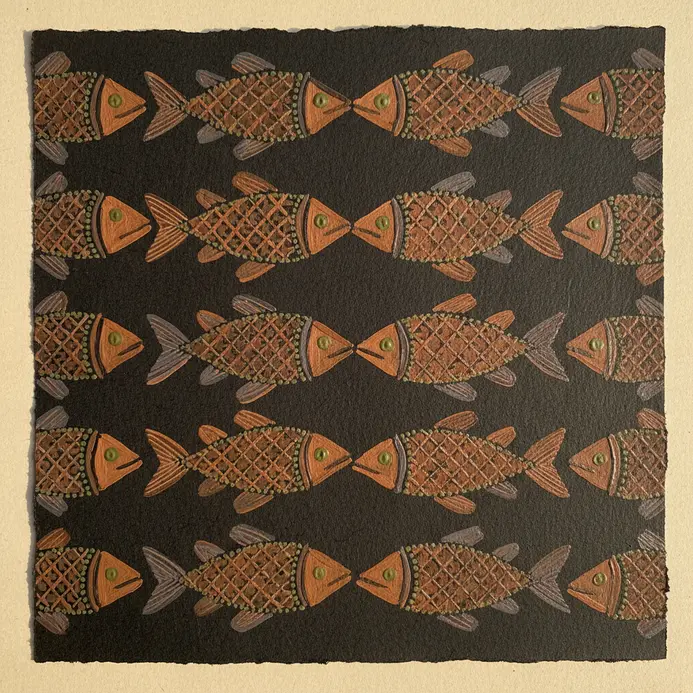
Ever wanted a piece of art that feels ancient and personal? This tribal fish mosaic looks intricate, but it is all about assembling simple shapes. You will start by creating a full-scale paper template of your fish, then fill it with cut tiles arranged in geometric patterns. I love how the earthy tones and bold lines create such a textured, handcrafted focal point. Trust me, the key is to work in small sections so your adhesive does not dry. Use tile nippers to shape your pieces, and remember to seal that grout afterward. Your wall will have incredible depth and character, and you will feel so proud of the result.
19. Outline a Golden Archway Architectural Wall Decor

Ever wondered how to add instant grandeur without a major renovation? This idea is all about creating a beautiful illusion. You will outline the arch shape directly onto your wall, focusing on its key parts like the keystone and voussoirs. Then, you fill it in with your chosen shade of gold, whether that is bright and opulent or a soft, antique finish. It works because the clean, arched outline frames your space and draws the eye, creating a stunning focal point. I love how this single element can make a room feel more architectural and designed for your easy indian wall painting. For a completely different approach to creating visual impact, check out these abstract painting ideas for beginners.
20. Achieve a Dotted Texture Indian Folk Motif

Ever wondered how those intricate dot patterns come together? The secret is in the dotting technique itself, which adds amazing depth and a handmade feel to any folk art piece. I love how you can use the back of a paintbrush or a cotton swab dipped in acrylic paint to create uniform dots. Start by planning your pattern and then gently touch the tool to your surface, lifting straight up for a crisp dot. It is so satisfying to watch your motif fill in with texture. easy Madhubani drawing styles.
21. Block In a Bold Red And Gold Chevron

This pattern looks intricate, but trust me, it is surprisingly simple to execute. You will create dynamic, repeating V shapes using a chevron stencil or painter’s tape for crisp lines. First, paint the bold red sections, let them dry completely, and then fill the alternating spaces with shimmering gold. The key is using a dabbing motion with your stencil brush to prevent any paint from bleeding underneath. Why does it work so well? The sharp contrast and metallic sheen bring a powerful, traditional energy to your space. For the cleanest result, practice your technique on a piece of cardboard first. You will feel so proud when that bold, rhythmic pattern comes to life on your wall.
Protective Clear Topcoat Application For Longevity
The final step that locks in your work for years is a Consider using a matte acrylic varnish to finish your Indian home decor project beautifully.. You want to apply it once your design is completely bone dry, which usually means waiting a full day. A matte finish protects the surface from dust and occasional moisture without adding a distracting shine that fights the traditional aesthetic. Use a clean, wide brush and apply thin, even coats in one direction to avoid streaks or bubbles. Let each coat dry thoroughly before adding the next. This clear sealant is what turns your weekend project into a permanent part of your home decor, ensuring those jewel tones stay vibrant and your crisp lines stay crisp.
Conclusion
The best part about bringing these patterns into your home is that they tell a story you helped write. Each brushstroke connects you to a rich artistic tradition, making your space feel more personal and alive. For your first easy indian wall painting, pick the motif that makes you smile the most—that is the one you will enjoy bringing to life. Start with a small test area or a single accent wall to build your confidence. The colors and shapes you choose will transform a room, giving it a warmth that feels both timeless and uniquely yours.
FAQs
Q: What are simple Indian wall painting ideas suitable for a house?
A: Simple Indian wall painting ideas for a house include minimalist rangoli patterns, single-motif paisley designs, stenciled mandalas, and block-printed borders. These options offer wall decor indian style without overwhelming a room, and can be scaled to fit living rooms, bedrooms, or pooja spaces for a cohesive look.
Q: How can I create wall decor Indian style on a budget?
A: A budget-friendly approach is to use stencils, acrylic paints, and painter’s tape to create repeatable patterns. Repurpose simple materials, try accent walls instead of full-room painting, or layer inexpensive wall decals with hand-painted motifs. For ideas and inspiration for Indian decor, explore related boards and discover Pinterest’s best ideas for low-cost techniques and color palettes.
Q: Which colors work best for inspiration for Indian wall designs?
A: Rich jewel tones like deep saffron, indigo, maroon, and emerald are classic, while muted terracotta, mustard, and dusty teal suit contemporary takes. Combine a neutral base with bold accents to balance vibrancy and calm—perfect for both living areas and dedicated pooja ideas where color symbolism often matters.
Q: Can I mix modern and traditional motifs for an Indian-style wall?
A: Yes. Blend modern geometry with traditional motifs such as lotus, paisley, or temple arches to create a fusion look. Use contemporary color blocking and simplified outlines to keep the design fresh while preserving cultural elements, which makes the result suitable for varied related interests and home zones.
Q: Where can I find decor Indian style on Pinterest for inspiration?
A: Search Pinterest for keywords like “Indian wall painting,” “pooja wall decor,” and “Indian mural ideas.” You can discover Pinterest’s best ideas by following curated boards and explore related boards that collect motifs, color schemes, and step-by-step tutorials to help plan your project.