Paper Weight And Printer Settings
Use 120–160 gsm printer paper for wet markers or watercolor pencils, since ordinary copy paper buckles under heavy ink, much like other cow coloring pages do with saturated color. Print at 100% scale so hooves, tails, and fence lines stay inside the page margins. Select black-and-white mode with strong contrast, then check one sample sheet before printing a full set. Standard home printers often leave narrow margins, so inspect the preview for clipped ears or horns. A slightly heavier sheet feeds more slowly, but it gives crayons a smoother surface and keeps marker ink from soaking through quickly. Store finished pages flat until the paper dries. A recycled sheet with a gray cast also dulls black outlines.
Matching Line Detail To Age
Choose printables with thick black outlines and broad body sections for preschoolers, because narrow hoof gaps and tiny background objects create coloring frustration. A single standing animal with large eyes, clear ears, short horns, and separated spots gives early learners open areas for broad crayon strokes. Older children handle realistic anatomy, patterned coats, and farm scenes with fences, hay bales, clouds, and wildflowers. Select layouts with balanced spacing when several objects share the pasture, so each figure stays recognizable, which is exactly why cow coloring pages remain so reliable for early learners. Faint lines make spots and hooves hard to identify after shading, especially with pale crayons. Teachers often get better results from bold outlines around each body part than from extra background detail.
1. Cute Cartoon Cow Portrait Illustration With Bold Coloring Lines
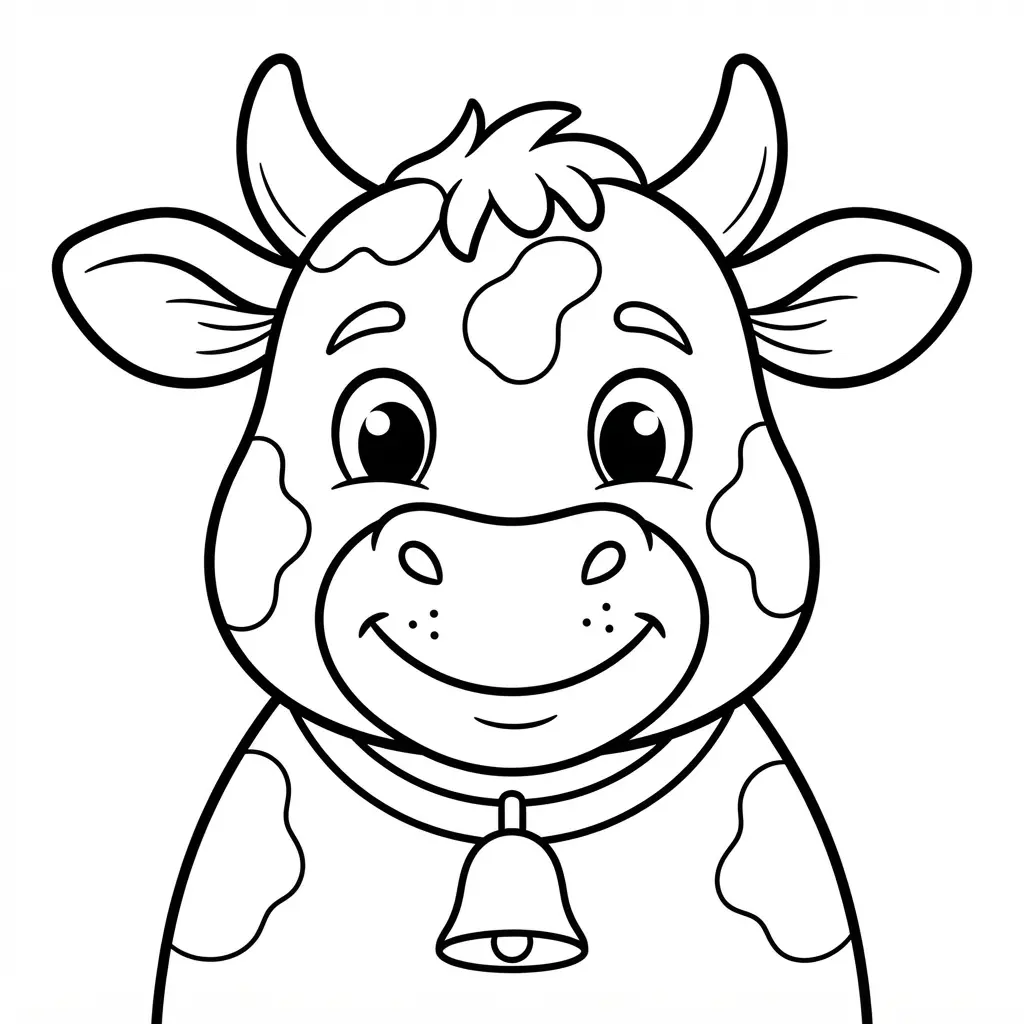
Ever wondered why a friendly face feels so inviting to color? This close-up portrait begins with a rounded head placed in the center of the page, giving the character a sweet, balanced look, making cow coloring pages a wonderful starting point. Large expressive eyes, rounded cheeks, floppy ears, small curved horns, and a gentle smile bring instant personality to the farm favorite. Strong bold black outlines keep every section easy to follow.
Add the nose and cheeks as broad, simple shapes, then place a few irregular spots across the forehead and outer face. Leave the spots large enough for broad crayons or markers, with plenty of white space between each section, a method that prepares cow coloring pages perfectly for young artists. Soft pink inside the ears and around the nose adds a tender accent without crowding the picture. This uncluttered approach makes the activity friendly for beginners.
The forward-facing layout also gives you a clear focal point, so the eyes and smile stay at the heart of the picture. Use smooth rounded contours instead of thin, uneven strokes, since crisp lines help small hands stay inside each area. Skip tiny hairs, realistic wrinkles, and busy scenery. I love how the simple cartoon proportions make the expression feel cheerful before a single color touches the page, which reminds me why cow coloring pages feel so lively.
Finish with a warm pastel background such as pale yellow, mint, or sky blue, keeping it light enough for the black-and-white pattern to stand out. Try bright colors for the spots, ears, and nose while leaving a few white areas untouched. Trust me on this tip: print or draw the face at a generous size, then enjoy the satisfying contrast of bold lines and happy color.
2. Mother Cow Grazing Meadow Scene for Gentle Farm Fun
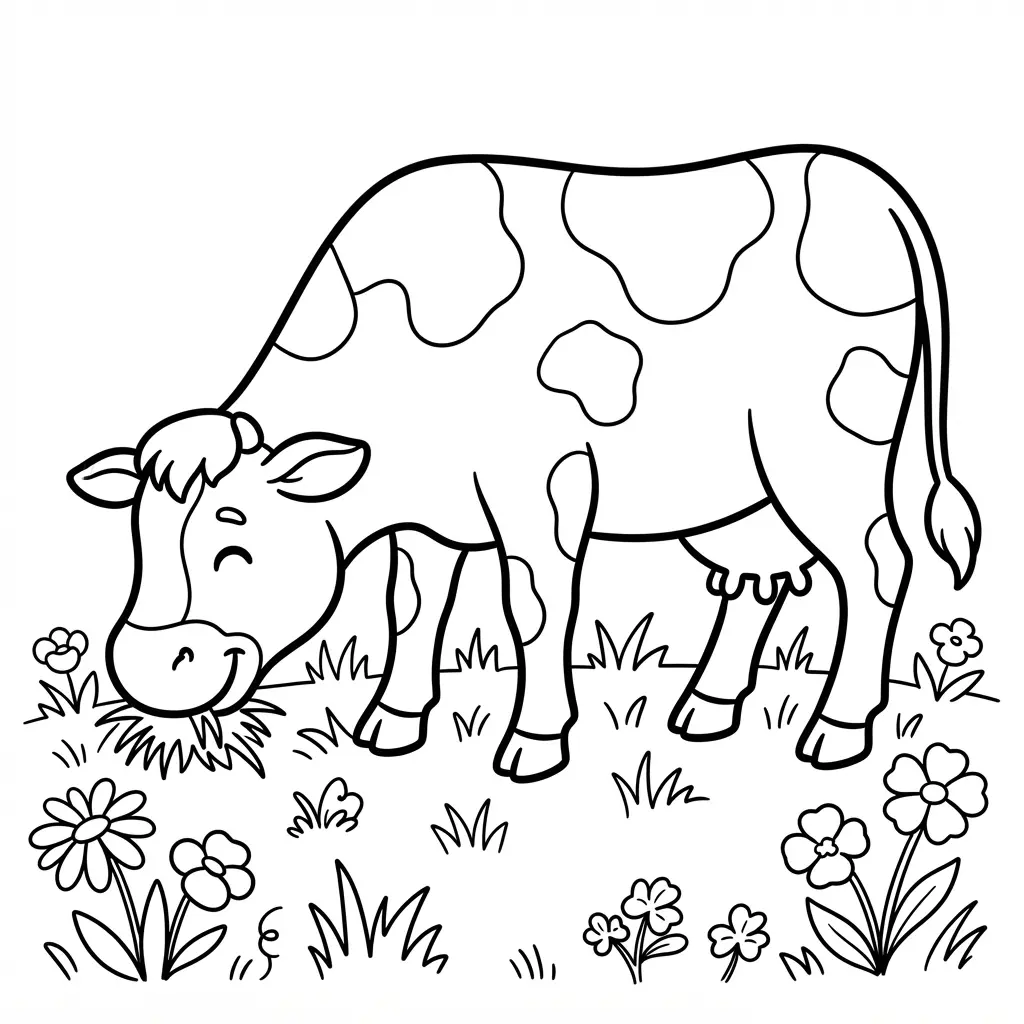
This gentle farm scene feels calm from the first line. Place the mother animal as the main subject, with her head lowered toward the grass and her body drawn with friendly rounded shapes. I love adding a small mother-and-calf pose because it gives the picture a sweet storybook feeling. This idea suits cow coloring pages beautifully, especially for children who enjoy peaceful animal scenes.
Set the calf close by, perhaps looking toward a butterfly or taking a few steps through the meadow. Fill the foreground with open grass and a few soft wildflowers, leaving plenty of room for easy shading. Sound complicated? It is not, since each detail has its own clear space. A rustic fence and low rolling hills help frame the setting without making the layout feel cramped, which keeps cow coloring pages feeling spacious.
Finish with a bright blue sky, fluffy white clouds, and warm sunlight spreading across the field. Choose soft pastel colors for a cheerful mood, then keep every outline smooth and easy to follow. This arrangement works because the mother, calf, and natural details tell a simple story at a glance. Pro tip: leave broad open areas around the meadow grass, then enjoy the calm feeling as the scene comes together.
3. Playful Baby Calf Jumping Hoof With Cheerful Motion

This one is a favorite because the calf looks full of happy energy. Is there anything sweeter than a baby animal caught mid-hop? Begin with a leaping calf pose, lifting one hoof while keeping the rounded body slightly raised to show a soft bounce. Give the little face bright, curious eyes, perked ears, and a small playful smile. Keep the shapes smooth and gentle so the picture feels like a wholesome storybook scene.
Next, curve the tail outward as if it is swishing during the jump. Add a few light dust marks or tufts of grass beneath the hooves, leaving open space around the calf so the action stands out. Sunny golden light, warm browns, creamy whites, and fresh greens will suit this pastoral picture. I love how these small details turn a simple farm animal into a joyful character, proving that cow coloring pages offer a fun challenge. Pro tip: angle the raised hoof and tail in different directions for a livelier composition, then enjoy the cheerful result.
4. Cow Standing Near Red Barn With Simple Farm Details
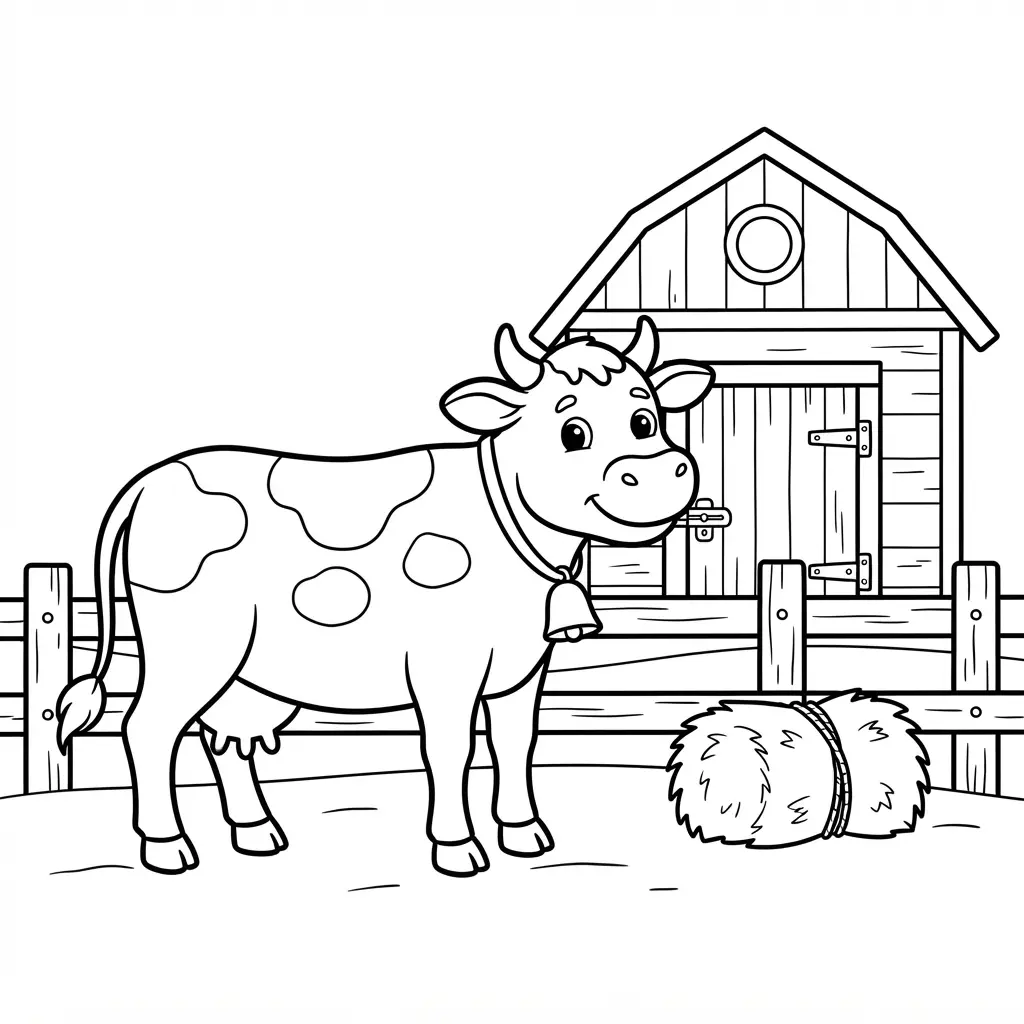
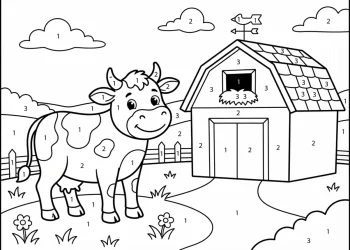
A friendly animal stands in soft green grass beside a bright red barn, with blue sky stretching across the top of the page. The black-and-white patches catch the eye first, while a wooden fence and small hay bales give the scene a cozy storybook feel. Could a farm picture feel any more welcoming, and I often see this in cow coloring pages for quiet time? I love how this layout gives each shape room to breathe without making the layout feel empty.
Start with the main subject and the barn as focal points, then add clean, simple outlines around the fence, grass, and hay. Keep the structure clear, with a peaked roof, large doors, and a few easy panels for warm red coloring. Use broad green areas for the ground and leave plenty of open space for a calm blue sky. These printables work well because children get several clear sections to fill without losing sight of the main picture. Pro tip: keep the main figure in front of the fence so its friendly face and patch pattern stay easy to see. A small touch of yellow on the hay brings the whole scene together.
5. Friendly Cow Wearing Flower Crown in a Sunny Meadow

Many people think a portrait feels complete once the animal is outlined, but the meadow and flower crown create the cheerful heart of this scene. Start with a gentle subject, a soft smile, and a rounded flower crown placed around the head. Build the sunny meadow with curved grass, tiny wildflowers, warm golden sunlight, and soft, fluffy clouds, leaving open spaces between details for easy shading, a layout I love seeing in cow coloring pages today. Sound complicated? It is not, and I love how pink, yellow, blue, and green accents give the picture a peaceful storybook feeling.
Keep the expression kind rather than serious, since a warm face brings the whole setting together. Add small petal shapes, light cloud edges, and varied grass lines for a detailed finish without making the layout feel crowded. Trust me on this one, let the crown stand out first while fresh green tones support the background. Your finished page will feel friendly, sunny, and ready for a little color-filled fun, which makes these printables so rewarding.
6. Cow Grazing Under Summer Sun With Open Field Details
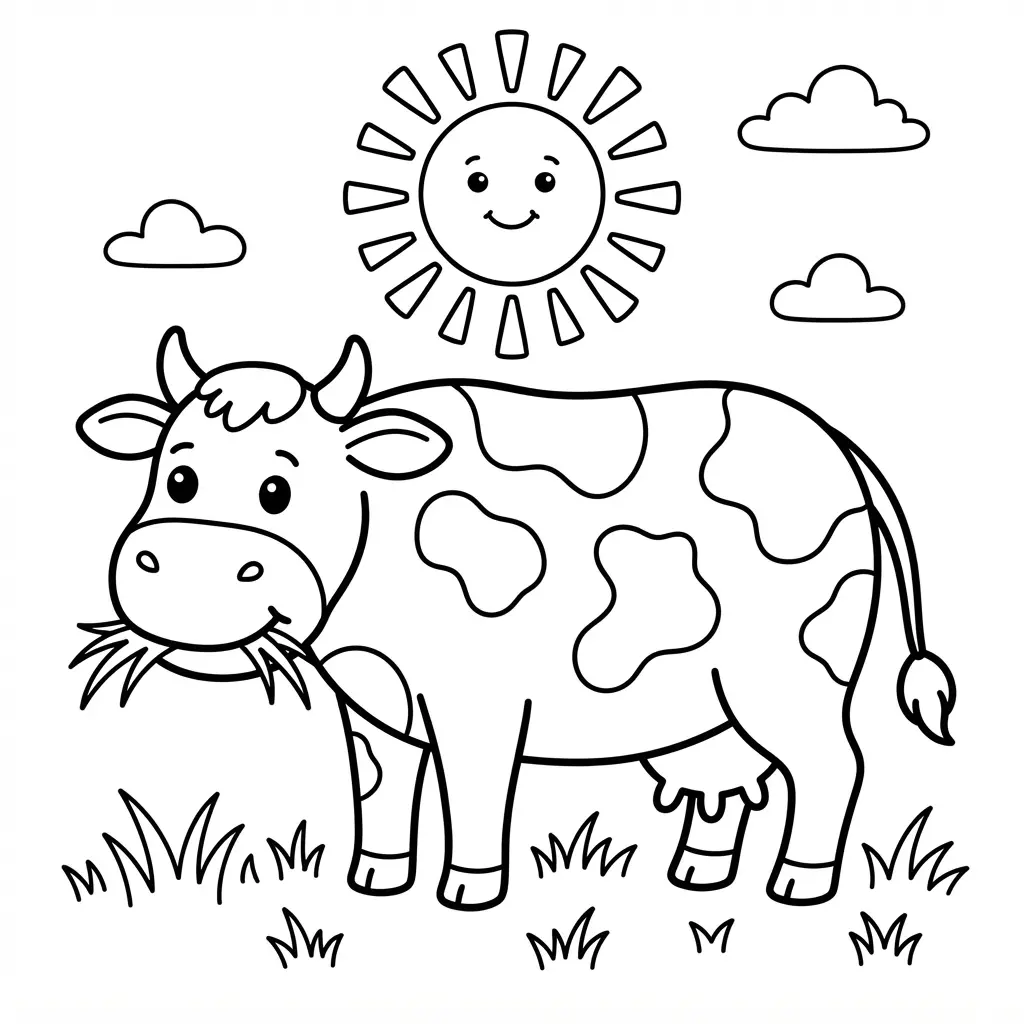
Place the animal in the foreground, then angle the body across the page so the scene feels wide and airy. Lower the head toward the grass and give the neck a gentle curve for a lowered grazing pose. Stretch grass across the lower section, mixing tall blades with small wildflowers and patches of dry meadow vegetation. Add rolling hills, scattered trees, soft white clouds, and a clear blue sky behind the figure, a trick that elevates cow coloring pages instantly.
Use natural fur marks along the body, leaving a few enclosed shadow shapes beneath the belly and legs. Warm yellow areas along the back and nearby grass suggest bright summer sunlight, while green, brown, blue, and soft white shades bring the farm setting together. I love how the large sky and field give children room for broad strokes while tiny flowers and fur lines keep the layout interesting. Sound complicated? It isn’t. Keep the outline bold and the distant details lighter, then enjoy the calm countryside feeling as the picture takes shape, showing why cow coloring pages encourage patience.
7. Detailed Cow Face Close Up for Spot and Feature Practice
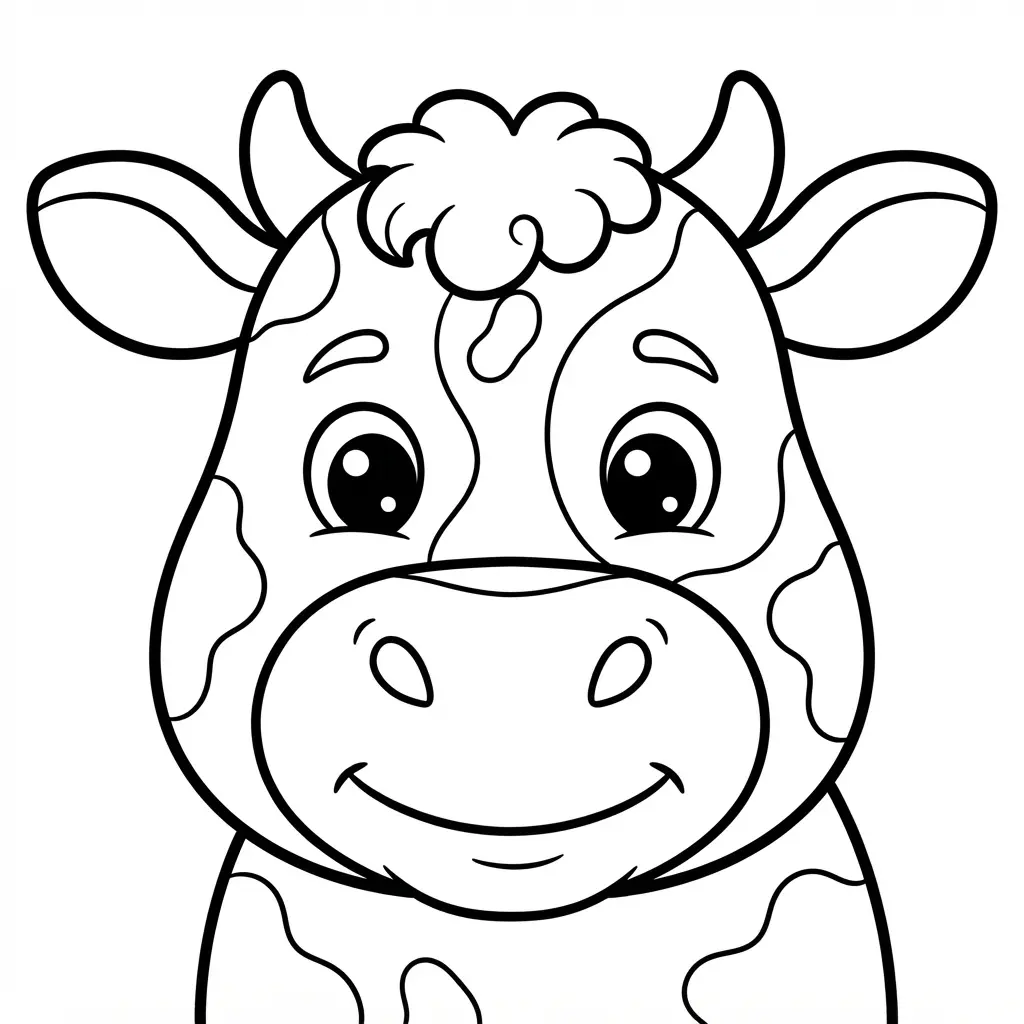
Ever tried giving an animal face your full attention instead of exploring broader scenes? This close-up starts with a front-facing outline, centered so both ears, eyes, cheeks, and the muzzle sit in balanced positions. The large view makes each part easy to study, including small eye highlights and gentle forehead wrinkles, which really defines great cow coloring pages.
Next, follow the facial contours around the forehead, cheeks, and muzzle, then add clearly spaced nostrils and expressive eyes. Place varied coat spots across the face, leaving enough open space for each marking to stand apart. I love using soft browns, pinks, and warm creams here, though your own palette might take the layout in a fresh direction.
Keep every section enclosed with clean outlines, especially around the muzzle, ears, spots, and fur marks. A plain background keeps attention on the features and makes these printables satisfying for focused practice. Pro tip: color matching spots on both sides with care, then add tiny eye highlights last. Feel proud of those details!
8. Happy Cow With Bird Friends in a Farmyard Scene

This cheerful farm scene gives you plenty of friendly details to shade, while the smiling subject stays at the center. I love starting with the smiling animal in the foreground, using a wide grin and gentle eyes to set a happy mood. Add colorful birds along the back, then place a few more on nearby wooden fence posts. Sound complicated? It isn’t, since each animal has a clear space and simple outlines, a layout that keeps cow coloring pages organized.
Build the setting with a layered farmyard background featuring a red barn, stacked hay bales, wildflowers, and a small pond. Rolling green hills and soft clouds fill the distance without pulling attention away from the main figures. Keep the lines clean and choose warm colors for the barn, fence, and birds, while fresh greens give the ground a lively feel, proving that cow coloring pages offer endless farm fun for kids. This arrangement works because children get several small areas to enjoy without losing sight of the playful friends. Leave a little open space around the main subject, and feel proud when the whole yard comes together.
9. Cow In Rolling Hill Meadow Scene With Open Sky

I love this cow coloring pages scene because it feels calm from the first glance. Start with a wide page layout so the subject has room to graze in the foreground while the hills sweep gently behind it. Keep the upper half open, with only a few rounded clouds and plenty of clear sky. Isn’t the spacious view soothing, and a wide view like this keeps these printables from feeling cramped?
Place the figure near the center, using a strong outline so its face, legs, spots, and tail stay easy to see. Add short grass marks around the hooves, then draw two or three curved hill lines in the distance. Leave broad sections between each layer, giving young artists room to choose colors for the meadow, hills, clouds, and sky. Small shadow shapes beneath the body and along the grass add depth without filling the layout with dark areas.
This design works well because each part feels familiar while the full scene encourages a little farm story. My go-to tip is to keep the cloud outlines rounded and sparse, so the sky keeps its airy feeling. Grab green, blue, brown, or any colors you love, then enjoy the peaceful picture taking shape.
10. Simple Spotted Cow Line Art for Young Colorists

Bright green grass, sunny yellow flowers, and broad black spots make this friendly page feel cheerful before a single color goes down. Is there anything sweeter than a round animal with floppy ears, tiny horns, big eyes, and a smiling mouth? Start with a printed sheet and thick black outlines, then fill each large closed shape with crayons, colored pencils, or washable markers. Keep the face open and uncluttered so young colorists have plenty of room for happy choices.
Place the figure in a simple meadow with a few flowers and one puffy cloud. Use brown, pink, green, blue, or any favorite mix, while keeping every spot broad enough for easy strokes. I love how the bold shapes help children practice staying inside the lines without feeling pressured. Skip shading, gray tones, tiny marks, and extra background objects, since a clean layout feels easier to read. Trust me on this tip: a flat coloring surface and steady hand placement make the first pass smoother. Finish with a proud smile when the friendly farm scene comes alive.
11. Cow Standing By Wooden Fence With Meadow Details

A fence is not a random strip behind the animal. It belongs beside the figure, helping the meadow feel like one friendly farm scene, so start with a large outline and leave generous space around the body. Ever wondered why some layouts feel cramped? Clear borders between the subject, fence posts, and grass keep every area easy to fill.
I love adding three or four sturdy fence posts with broad planks, then placing short grass marks beneath them. Give the animal a calm stance, clear legs, a rounded belly, ears, and a simple tail, keeping each body feature separate. In the distance, small hills, clouds, or a few wildflowers add meadow details without crowding the layout. Use a simple grass pattern near the bottom, while open sections invite brown, cream, green, blue, and warm wood colors. This farm scene works so well because children get several recognizable parts to fill, yet the main figure stays easy to notice. Trust me, the clean spacing makes the finished layout feel cheerful and welcoming.
12. Farmer Cow With Sun Hat in a Farm Scene

Start with a large central figure, placing the feet firmly in the pasture so the character stays easy to see. Give the subject a cheerful smile, round eyes, and a wide straw sun hat with a clear brim. Keep the pose open, with one hoof holding a small wooden pitchfork.
Add blue overalls across the body and a red bandana beneath the friendly face. Behind the figure, draw a rustic red barn, two golden hay bales, and a brown wooden fence with generous spaces between each rail. Rolling farmland and a few fluffy white clouds fill the distance without crowding the main figure.
Use clean bold outlines around every shape, especially the hat, clothing, pitchfork, and fence. Sound complicated? It is not, because each area stays separate and easy to fill. I love how this scene gives children clear choices between green grass, blue sky, warm yellow sunlight, and natural patches.
Try white with black or brown patches for the subject, then add small brown details to the fence and pitchfork handle. Leave enough open space around the character so the layout feels calm and welcoming. Finish with golden rays near the barn, and feel proud when your cheerful farm helper stands out.
13. Cow Eating Fresh Green Grass Near a Pasture Fence

Ever wondered why a grazing subject feels so peaceful to draw? Begin with the figure beside the fence, keeping its lowered head pointed toward the grass. I love how this pose gives the whole scene a quiet farm feeling before any color touches the page.
Trace the rounded body with soft curved lines, then add short strokes for the brown-and-white fur. Leave clear spaces around the eyes, muzzle, legs, and fence rails so each area stays easy to fill. Fresh green grass should spread beneath the hooves, with small wildflowers placed near the lower edge. Rolling farmland and distant trees add depth without pulling attention from the animal.
Use gentle morning shading along the underside, beneath the fence, and behind the grass clumps. Warm sunlight suits the brown patches, while creamy white areas keep the coat fresh and clear. Keep the fence in muted wood tones and the background lighter for a realistic agricultural scene with natural color choices. Pro tip: vary the greens in the grass, but leave a few pale blades near the hooves for texture. Feel proud as your peaceful pasture scene takes shape.
14. Baby Calf Sleeping Near Haystack With Soft Farm Details

This sleeping farm scene feels calm from the first outline, and I love how gentle it looks on the page. Begin with a curled baby subject, keeping its head lowered, eyes closed, and legs tucked close beneath the rounded body. Place a loose-edged haystack beside its back, then add short curved marks for straw, soft grass under the body, and a few stray pieces near the hooves. Doesn’t the quiet pose make the whole picture feel cozy?
Use a clear open outline around the subject so young artists have room to add warm browns, creamy whites, or soft gray patches. Behind it, sketch simple fence posts, two rails, a distant red barn, and broad spaces for golden sunlight. Small circles or tiny curved marks suggest dust motes without crowding the scene, while uneven hay edges keep the mound from looking solid. This arrangement works because each section offers a separate coloring area while the sleeping calf stays the central subject. Pro tip: leave generous white space around the face and body. Feel the peaceful farm mood grow as each soft detail receives color.
15. Artistic Mandala Style Cow Pattern With Repeating Shapes

This is one of my favorite printables because the gentle animal outline hides so many small details. Start with a centered figure and trace a firm bold outer contour before filling the inside. Add matching flowers near both sides, then place diamonds, circles, leaves, and paisley shapes across the forehead, cheeks, neck, and body. Ever tried repeating one shape across an entire drawing? Keep each motif similar in size and spacing so the design feels calm and organized.
The open sections between the black lines give your pencils clear places to work, while the high contrast keeps every detail easy to follow. I love how the symmetrical layout makes each color choice feel connected to the next, even with a simple palette. Use a fine-tip black pen for crisp internal lines, then leave a few small areas white so the finished piece does not look crowded. Try warm flowers, cool geometric shapes, and soft greens in the leaves, then feel proud when the pattern looks complete.
Farm Vocabulary And Classroom Display
A laminated display board keeps labeled sheets neat during a farm vocabulary lesson and protects them from fingerprints. Use large print for calf, adult, bull, udder, hoof, horn, pasture, and barn, since young readers need letters they recognize from across the room. Place the body-part labels beside matching features rather than covering ears, spots, or tails. Reusable sticky tack holds paper without tearing corners, while clear page protectors suit displays near busy classroom tables. Add a short question beneath each sheet, such as “Which animal has three spots?” to invite quiet observation. Rotating the work weekly gives more children space on the board and lets teachers compare progress without ranking students, making these printables perfect for classroom display boards.
Conclusion
So how was your creative session? Look at what you have made, from bold spots and bright grass to careful barn details. These printables give children room to make simple choices, share farm stories, and enjoy time away from busy schedules. Parents and teachers also gain an easy activity for lessons about animals, food, seasons, and life on a farm. For the next session, print two copies of a favorite page and invite children to use different color plans. One child might choose a classic black and white subject, while another picks pink spots, a blue sky, and a red barn. Keep finished pages nearby for display or story prompts. Choose one new scene, prepare three favorite colors, and set up the next activity while the good mood is still fresh.
FAQs
Q: What age group suits cow coloring pages?
A: Thick outlines and large spaces suit toddlers and preschoolers. Older children often prefer scenes with fences, barns, animals, and small background details.
Q: Which supplies work well for printable cow pages?
A: Crayons suit younger children, while markers and colored pencils suit older children. Place a sheet of scrap paper beneath the page when using markers.
Q: How do I print cow coloring pages clearly?
A: Use standard white paper and select the highest print quality available. Check the preview first so the full outline fits within the page edges.
Q: How do cow coloring activities support farm lessons?
A: Pair each page with a short talk about animal care, food, seasons, or farm jobs. Ask children to name visible items and explain their color choices.
Q: Which cow page works best for beginners?
A: Choose a simple spotted subject with thick black outlines and wide open spaces. A portrait or standing figure also gives new colorists an easy starting point.