Matching Line Detail To Coloring Skill
Preschool pages need bold black outlines and large open shapes so crayons stay inside the panda, bamboo, and leaf areas, much like classic panda coloring pages. Use rounded bodies, clear eye patches, and separated facial features instead of tiny fur marks or overlapping branches. Older children and adults often prefer layered foliage, decorative borders, and mandala patterns with smaller enclosed sections. Keep a single panda portrait in portrait orientation when the face should draw attention. Family scenes and forest settings suit horizontal orientation, with enough white space around each figure for easy coloring. Clean line art also prints better than faint gray shading, especially on home printers. Choose a cute printable coloring sheet with detail suited to the child’s patience, hand control, and preferred coloring tool.
Selecting Paper For Different Coloring Tools
Standard printer paper suits crayons and colored pencils, particularly for panda coloring pages, because its smooth surface handles broad strokes without demanding extra preparation. Choose cardstock paper for washable markers, watercolor pencils, or oil pastels, since heavier stock resists wrinkling and ink bleed. Thicker paper also keeps a printable coloring page flatter when children press firmly across large black-and-white areas. Gel pens work best on a dry, firm sheet, especially around eye highlights, flower centers, and small bamboo details. Test marker saturation near the page edge before coloring the panda, since thin office paper often lets bright ink show through. US Letter paper fits most home printers and folders. Store finished sheets with a rigid backing so corners stay smooth between sessions.
1. Cute Sitting Panda Eating Bamboo Coloring Page
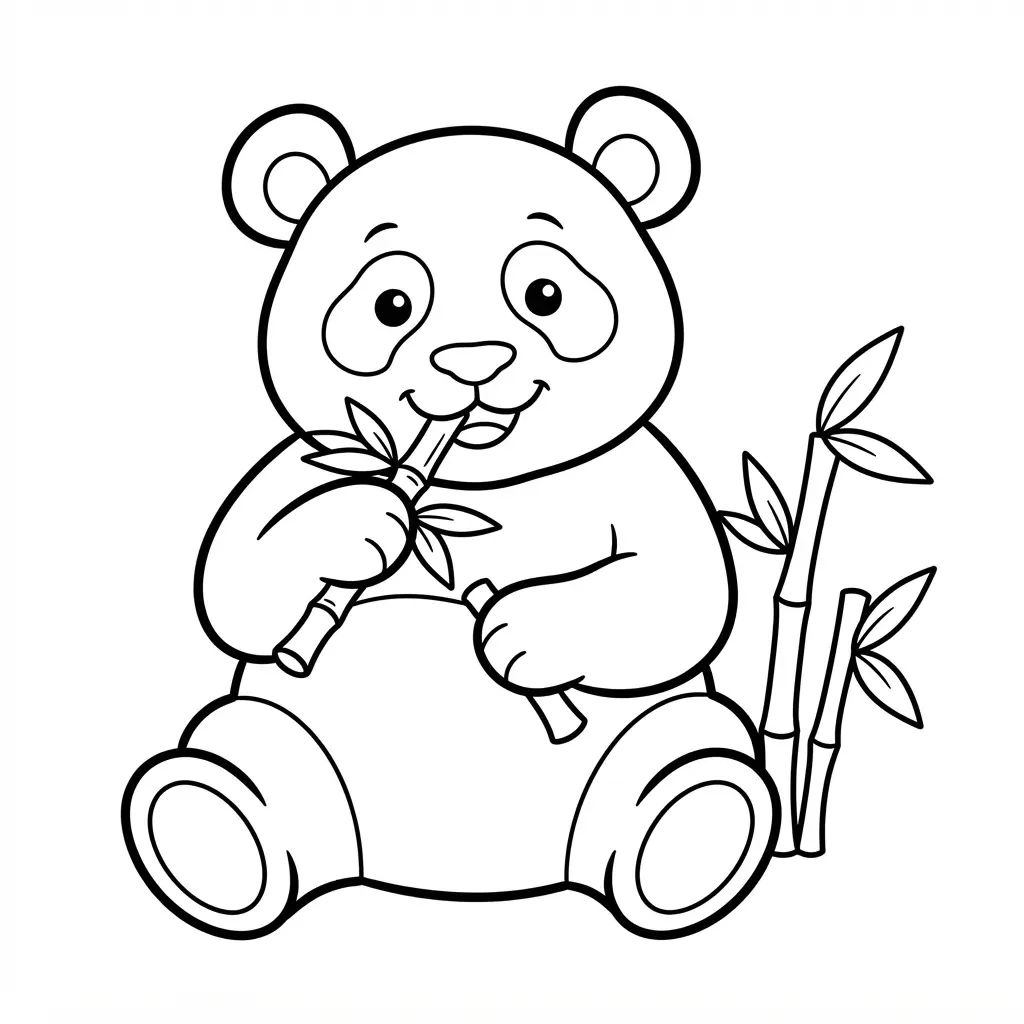
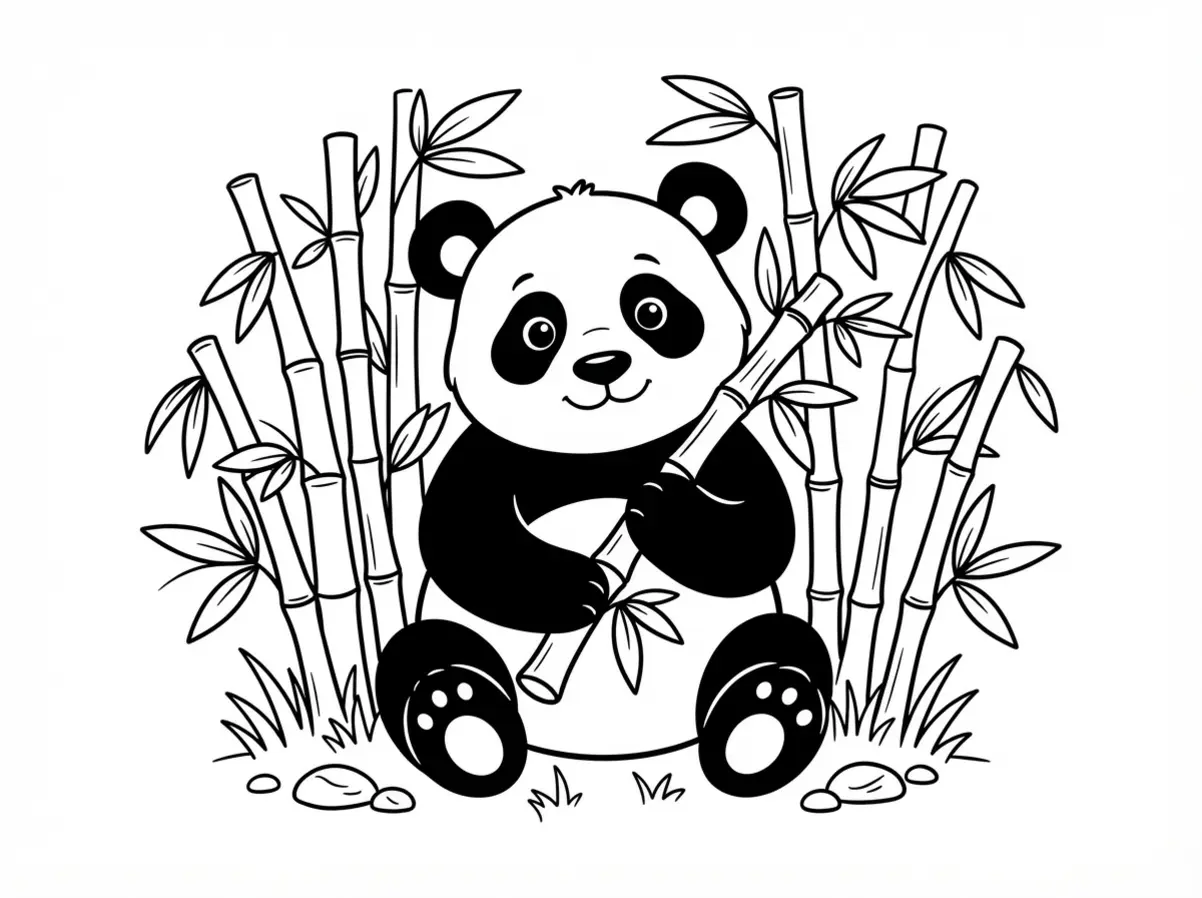
Who doesn’t smile at a round panda holding bamboo, a familiar scene in panda coloring pages? This cheerful page shows the animal sitting upright in the center, with large eyes, rounded cheeks, and a happy smile. A centered portrait layout keeps the panda as the clear focal point while small flowers and bamboo leaves fill the edges without crowding the scene.
I love how friendly this picture feels, especially for young colorists. The thick outlines make each shape easy to see, from the bamboo stalk between the panda’s paws to the soft curves of its body. Use thick clean outlines and keep the inside areas open, so the page stays calm and easy to color, as seen in panda coloring pages.
Keep the artwork in black and white, with no gray tones or extra shading. A white background gives every colored section room to stand out and helps the printable page look neat. For the best result, print it on an 8.5 × 11-inch portrait sheet, then enjoy adding soft greens, warm flowers, and your own cheerful panda style to panda coloring pages.
2. Playful Baby Panda Climbing Tree: Cheerful Forest Scene
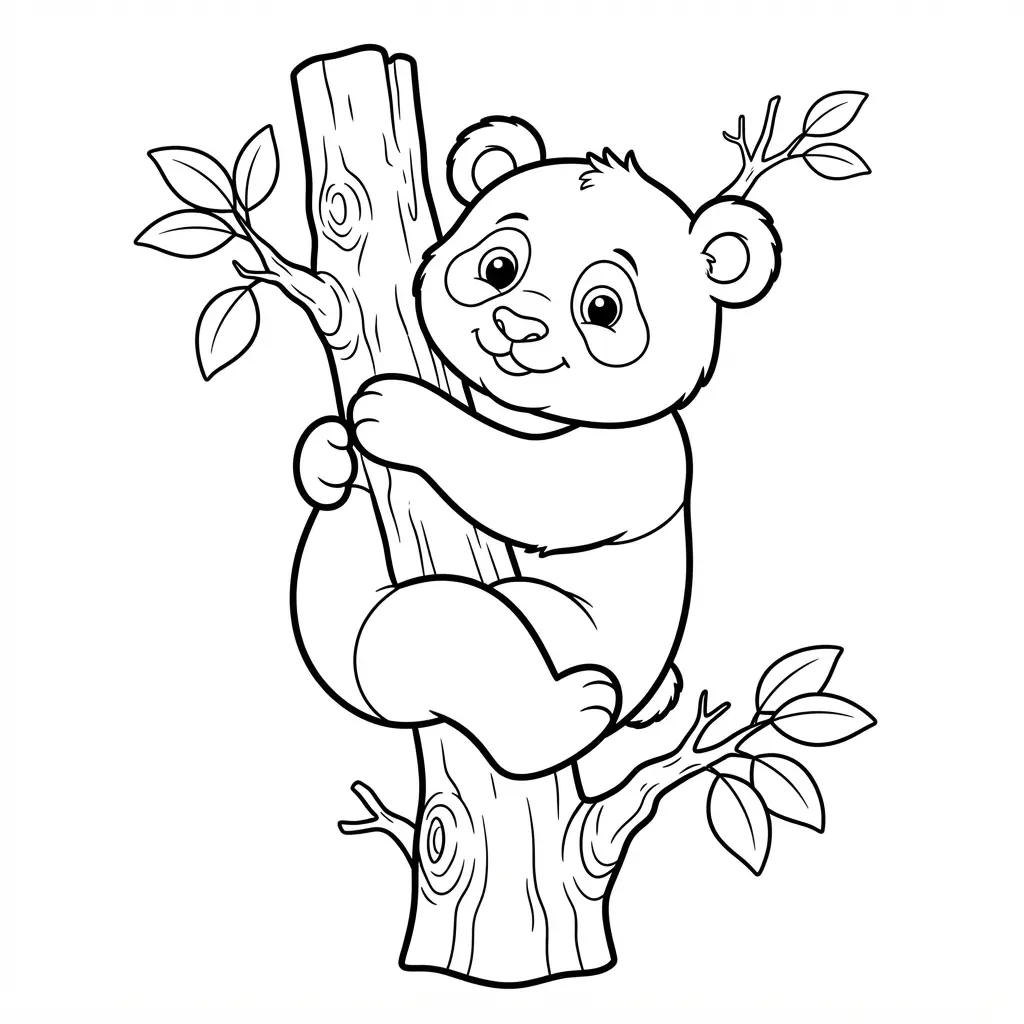
This playful forest scene gives your little panda plenty of personality and movement, bringing panda coloring pages to life. Start with a large panda outline gripping the trunk, then add round eyes, rosy cheeks, a soft smile, and paws reaching toward a leafy branch.
Build the setting around the main character with a moss-covered trunk, simple bark marks, broad leaves, and a leafy canopy above. Add flowers, ferns, mushrooms, and butterflies along the ground, keeping each shape open and easy to fill. How hard is it to make the climbing pose clear, especially in panda coloring pages? Keep one paw and both feet connected to the trunk or branch so the action reads at a glance.
I love how this page invites bold black-and-white panda markings alongside fresh greens, warm browns, and bright flower colors. Leave open sunbeam shapes between the leaves to give the picture space and a cheerful glow. Trust me on this tip: let the panda have the strongest outlines, then use lighter textures for bark, fur, moss, and leaf veins. Your finished forest scene will feel sweet, lively, and welcoming.
3. Panda Face Portrait Close Up — Bold Line Art
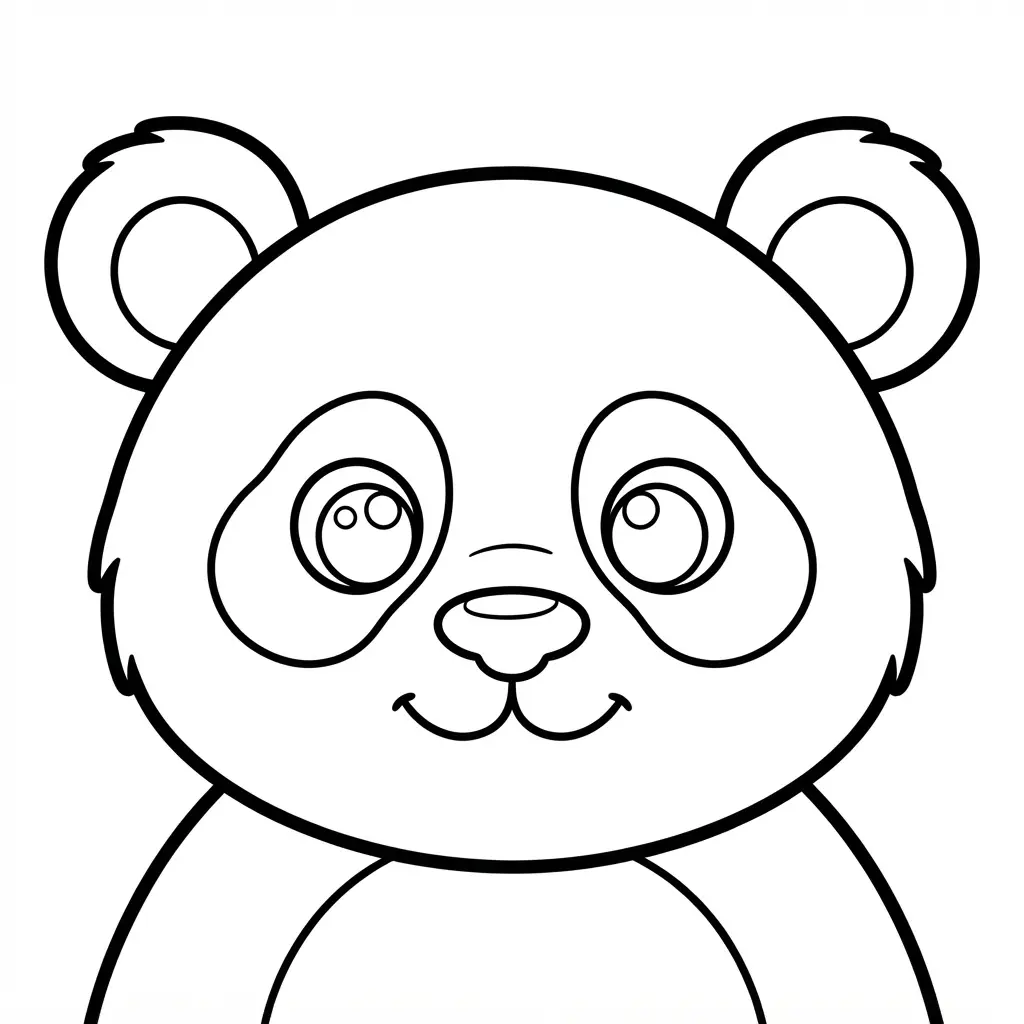
I love this close-up because the panda’s expression takes center stage, which explains why panda coloring pages remain so popular. A rounded head, two soft-looking ears, and wide eyes give the portrait a friendly feel. Use bold black outlines around the outer head, ears, cheeks, and small nose so every section stays easy to fill. A plain white background keeps the face clear and uncluttered.
Start with a light circle for the head, then place the eyes along a centered guide. Add matching dark eye patches around both eyes, keeping their shapes balanced from side to side. Thick contours around the center line help the nose and mouth sit neatly between the eyes. Leave each interior space open, with no gray shading or filled color in the line-art version.
Sound complicated? It’s not. The simple layout works well for panda coloring pages because strong facial features show clearly, even for younger artists. I love how the eye patches create instant recognition while the open spaces invite playful color choices. Keep the lines smooth and even, and check both sides before finishing. Your portrait will look crisp, cheerful, and ready for coloring.
4. Panda Relaxing in Forest Glade Coloring Page
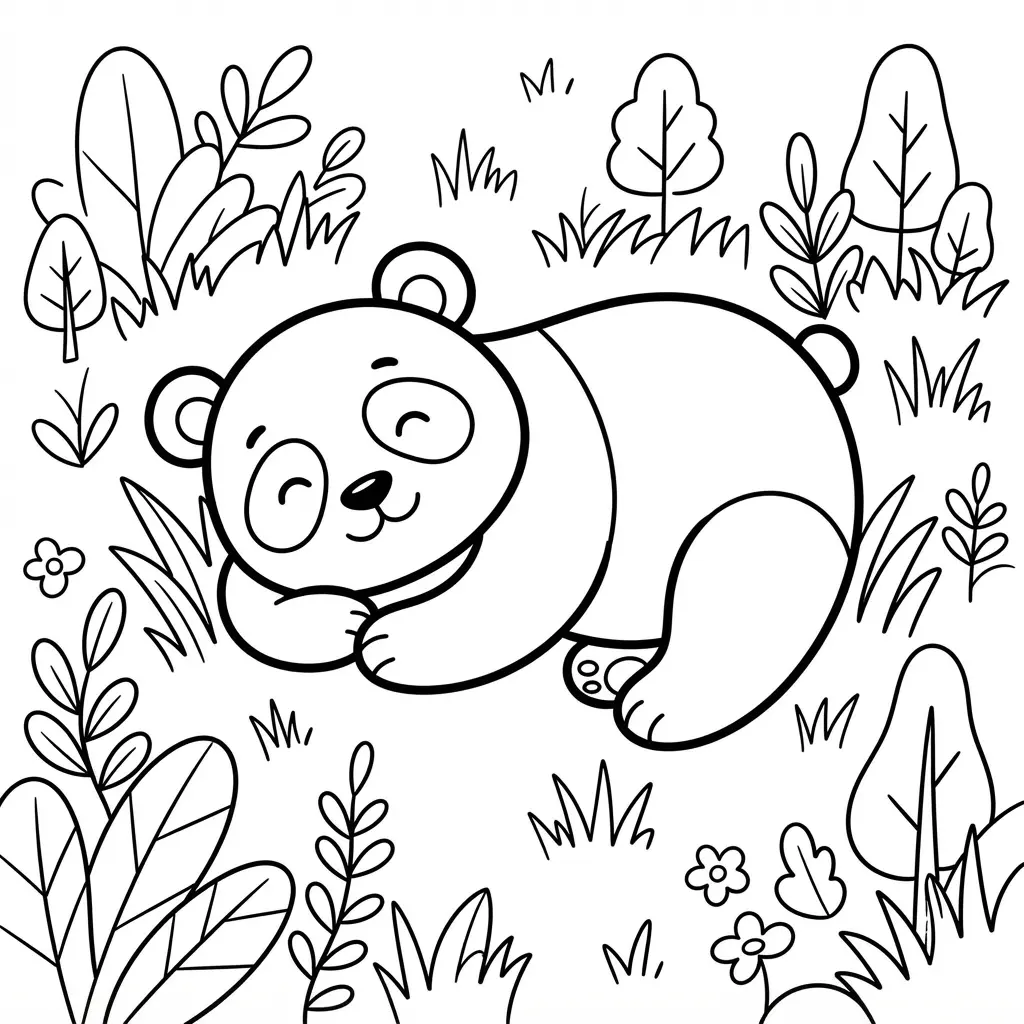
Soft sunlight filters through leafy branches, touching a happy panda seated in a quiet forest glade. Bamboo frames the clearing while ferns, wildflowers, mushrooms, rounded stones, butterflies, and tiny birds fill the open space around it. Ever tried making a nature scene feel calm without adding too many details, much like in panda coloring pages? Start with the seated panda on a small patch of grass, then build the plants and woodland shapes outward with thick, clean outlines.
Keep the trees tall but uncluttered, with a few simple rays passing through the canopy. Leave plenty of white space inside each shape so young artists have room for crayons or markers, and avoid shading so every section stays easy to fill. I love this one because the relaxed pose gives the whole page a peaceful mood while each forest detail offers a fresh color choice. Use soft greens for bamboo and ferns, warm browns for trunks, and cheerful colors for the flowers and butterflies. Trust me on this one, a gentle smile makes the finished printable coloring page feel extra friendly.
5. Group of Pandas Playing Together: Friendly Animal Scene
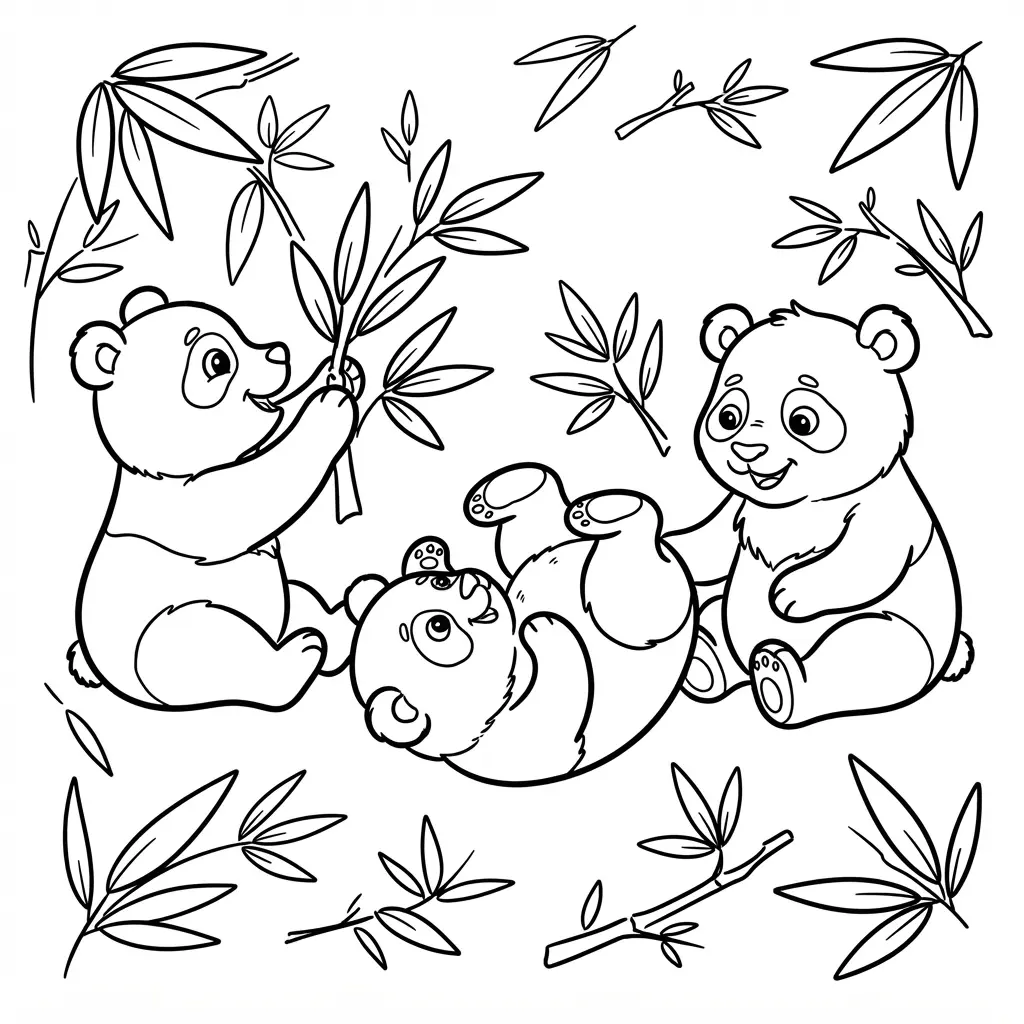
A common mistake is giving every panda the same pose, which makes panda coloring pages feel flat. Start with five distinct panda figures: two wrestle on the grass, one rolls down the gentle hill, and two sit nearby with bamboo. Keep each rounded face, ear, eye patch, paw, and limb clearly outlined so every animal stays easy to recognize.
Sound complicated? It is not. Place the wrestling pair in front, then add the rolling panda along the curved slope and the seated pair behind them, sharing a bamboo stalk. Leave small open spaces between overlapping bodies, and surround the scene with bamboo leaves, grass, and a few simple forest lines instead of filling every gap. Warm sunlight between the leaves gives the page a cheerful feeling without adding extra coloring areas.
I love this scene because each pose tells part of a friendly story, giving children plenty of shapes and expressions to enjoy. Use bold black markings around the ears, eyes, shoulders, and legs, then choose gentle greens for the vegetation and hillside. Your finished picture will feel connected, playful, and full of happy movement.
6. Panda Holding Heart Shaped Balloon Coloring Page
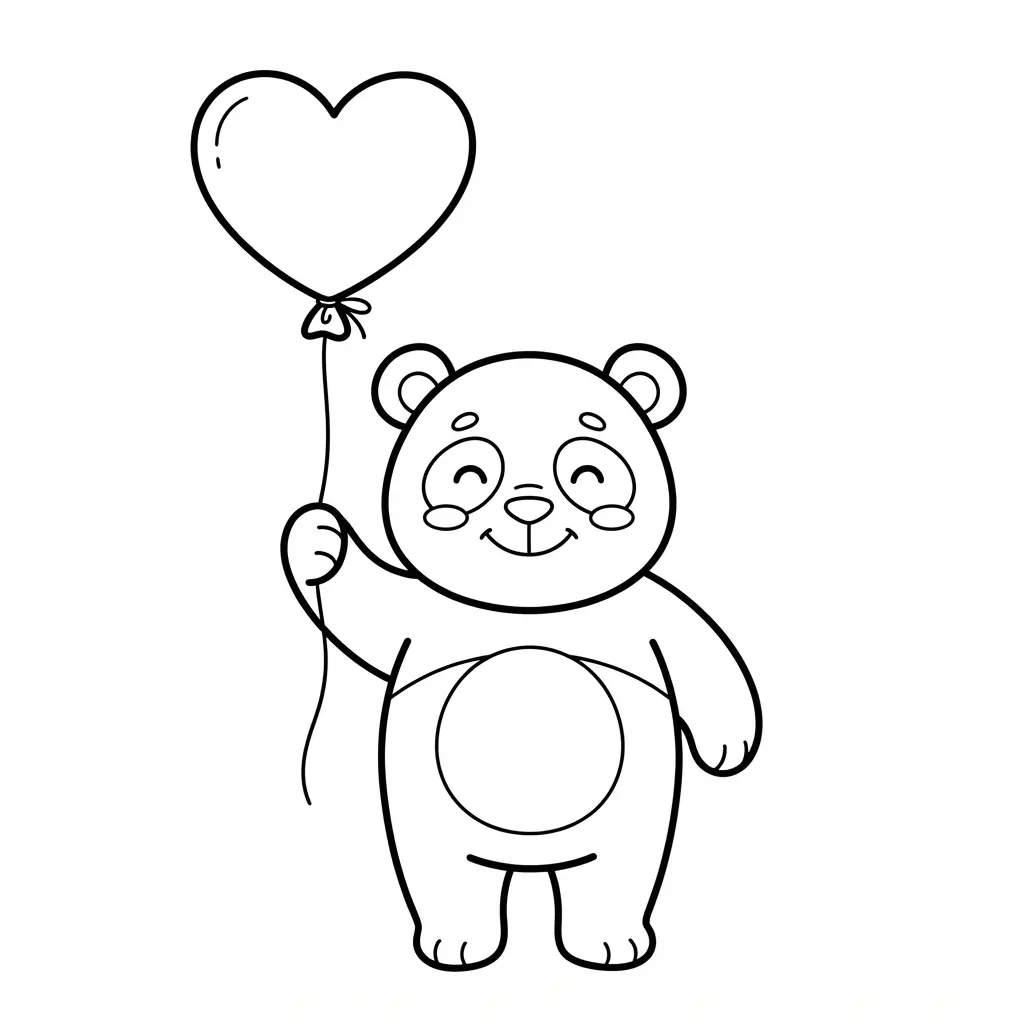
Start with the panda’s round face, fluffy ears, and wide happy eyes, then trace the body standing upright in the center. Add the heart-shaped balloon between its paws, keeping the heart broad and easy to recognize. A small bow beneath the chin adds a sweet detail, while a smiling mouth gives the character a friendly personality. Use thick black outlines around each part so young artists have clear edges to follow when creating panda coloring pages.
Finish the scene with a few floating hearts and soft clouds behind the panda, leaving plenty of open space around every shape. Keep the background white and skip gray areas or interior shading, so crayons and markers glide across the page without crowded sections. Sound complicated? It is not, and I love how quickly this cheerful picture comes together. Keep the balloon as the largest feature, then add gentle pink, red, or purple accents for a warm finish. Feel proud when your smiling panda is ready to share.
7. Zen Panda Meditating Near Water — Calm Line Art
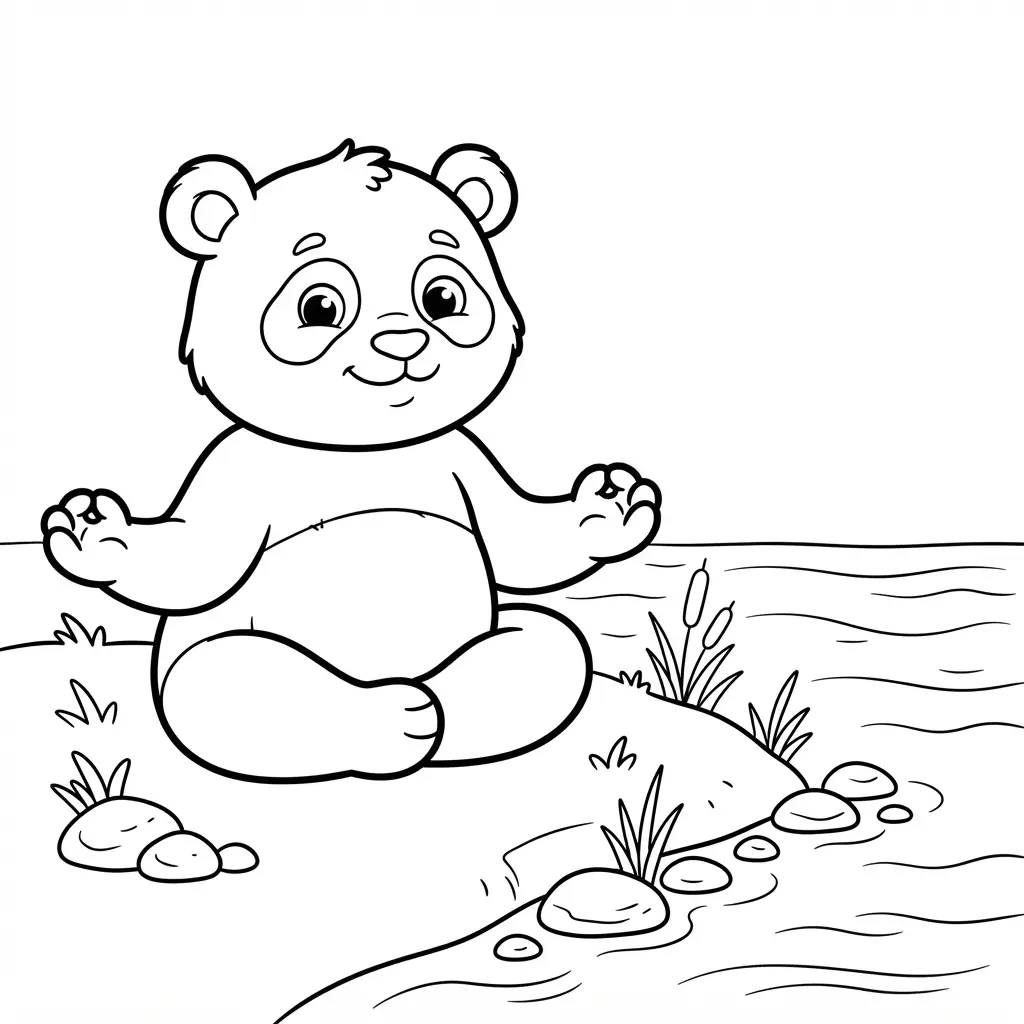
Ever wondered why a quiet pond makes panda coloring pages feel so soothing? In this scene, a cross-legged panda sits at the center with relaxed paws and a gentle expression, while smooth stones frame the water’s edge. Bamboo, lotus flowers, and curved reeds guide your eye around the page without crowding the peaceful pose.
The pond stays simple with rounded ripples, a few lily pads, and open white spaces between each shape. Distant hills sit behind the panda as light outline forms, giving the picture depth without dense textures or built-in shading. Trace or color the clean black outlines with crayons, colored pencils, or markers, then leave broad areas open for soft color choices.
I love using pale blues and greens here, though warm stone tones and gentle pink lotus petals feel lovely too. Keep the water lines smooth rather than sharp, and let each natural detail support the central figure. Pro tip: color the panda first, then repeat one or two water colors across the reeds and lily pads for a balanced finish. Feel the calm settle in as the page takes shape.
8. Panda Cub Hiding Behind Leaves Coloring Page
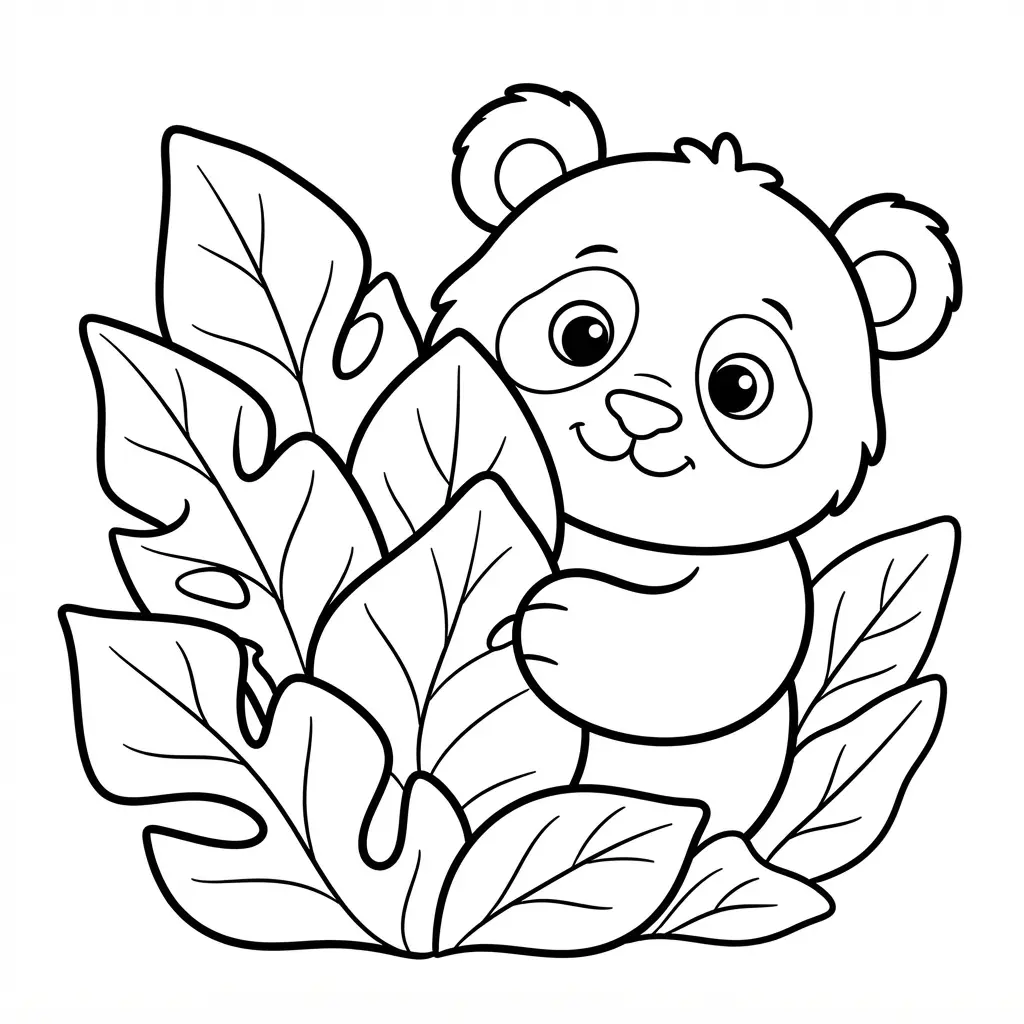
This page has a sweet peekaboo pose, with a round cub peering over broad jungle leaves. Sound complicated? It’s easy to follow. The friendly smile and two visible paws keep the face clear, while bamboo leaves and small flowers fill the white background. I love how the portrait layout gives each shape plenty of room for panda coloring pages.
Start with the large leaf shapes, then add color to the cub’s ears, eye patches, and paws. Keep the outlines bold and clean, leaving the face separate from nearby foliage. Crayons suit the open sections, while colored pencils bring gentle detail to the flowers and bamboo. Skip gray fills and heavy shading so the black-and-white line art stays fresh.
These panda coloring pages work well for young artists because every section feels open and friendly. Trust me on this tip: use washable markers with a light touch around the small flowers, then choose soft greens for the leaves and warm tones for the cub’s setting. The hiding pose creates a playful little story, and finishing it feels cheerful.
9. Artistic Panda Mandala Pattern Design: Detailed Circular Page
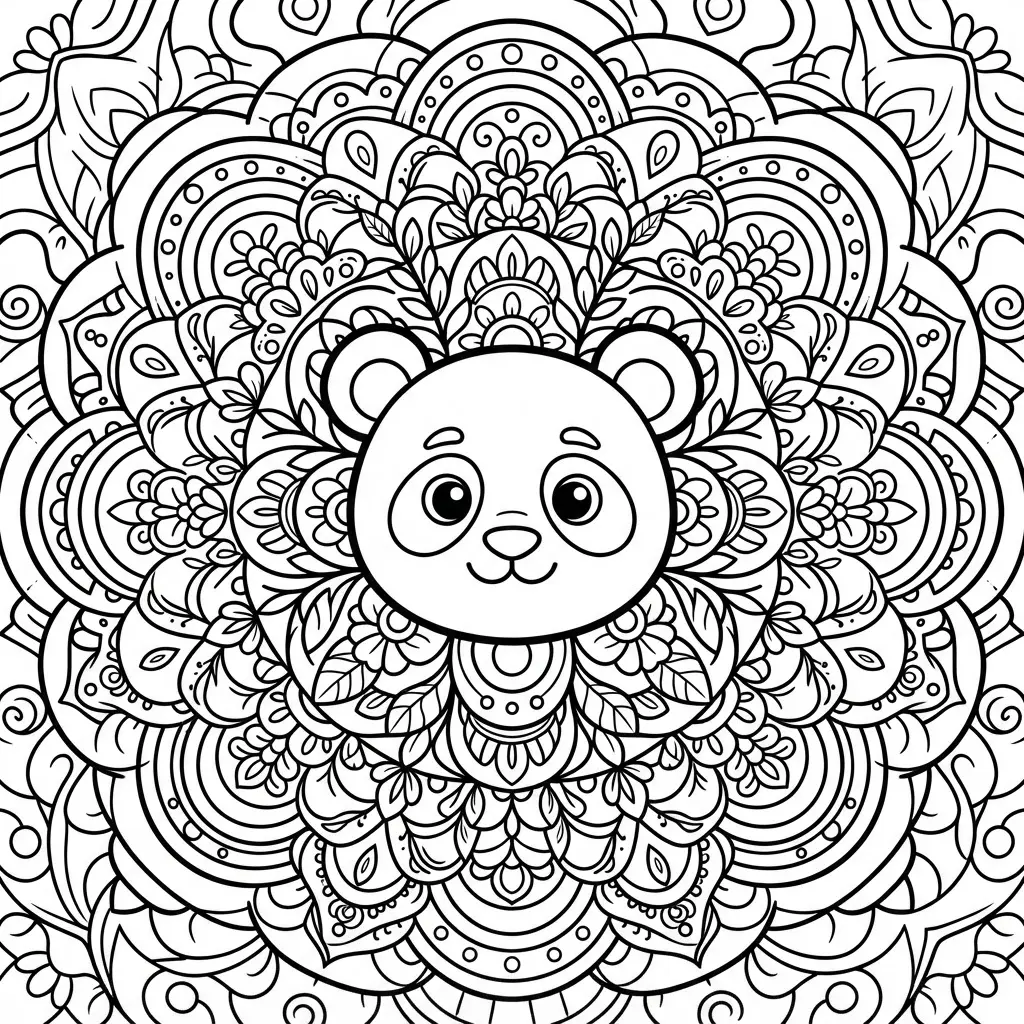
This one is my favorite because the panda gives the mandala an instant focal point, while every ring adds a fresh place to color, a hallmark of panda coloring pages. Work outward from the face with layered circles, then repeat bamboo leaves, vines, lotus petals, flowers, stars, geometric shapes, and curls around each ring. Keep the spacing even and the mirrored details tidy, so the composition stays balanced rather than crowded. Use bold black outlines on a white background, leaving out gray tones and shading so every coloring area stays easy to read.
I love how the repeated pattern feels calm and focused, even with so many small sections. Pro tip: leave open space between motifs, and check the panda’s ears and facial markings before filling the outer rings. Your finished page will feel orderly, personal, and satisfying.
10. Panda Wearing Party Hat Accessory — Festive Coloring Page
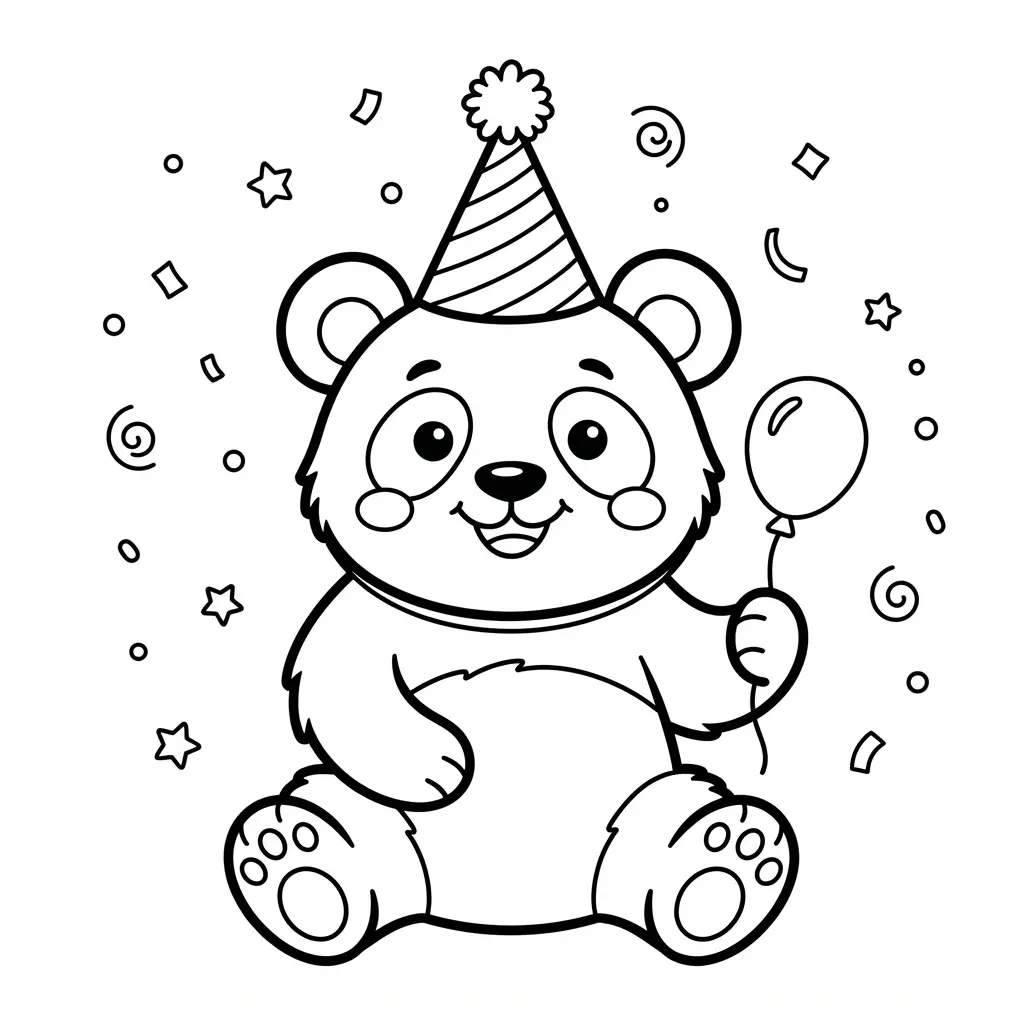
Bright confetti, tiny stars, and curling streamers surround a round panda with a cheerful smile, while a pom-pom bounces above its cone-shaped party hat. A small balloon rests in one paw, and wrapped presents fill the lower part of the portrait-format scene. Ever tried choosing colors for a celebration picture? I love how this page feels happy before the first crayon touches the paper, with bold black outlines separating every clear coloring area.
Give the hat a bright color, then choose a different shade for the balloon, ribbons, stars, and gift boxes. The white background and open spaces keep each section easy to fill with crayons, colored pencils, or markers without gray tones or shading. This simple layout works well for children because the panda stays the focal point while the decorations add playful detail around it. My tip is to color the large panda areas first, then finish with tiny confetti pieces for a neat, festive result. Pick cheerful colors and enjoy the smile when your coloring tools bring the party scene to life.
11. Cartoon Panda Waving Hello Greeting Coloring Page
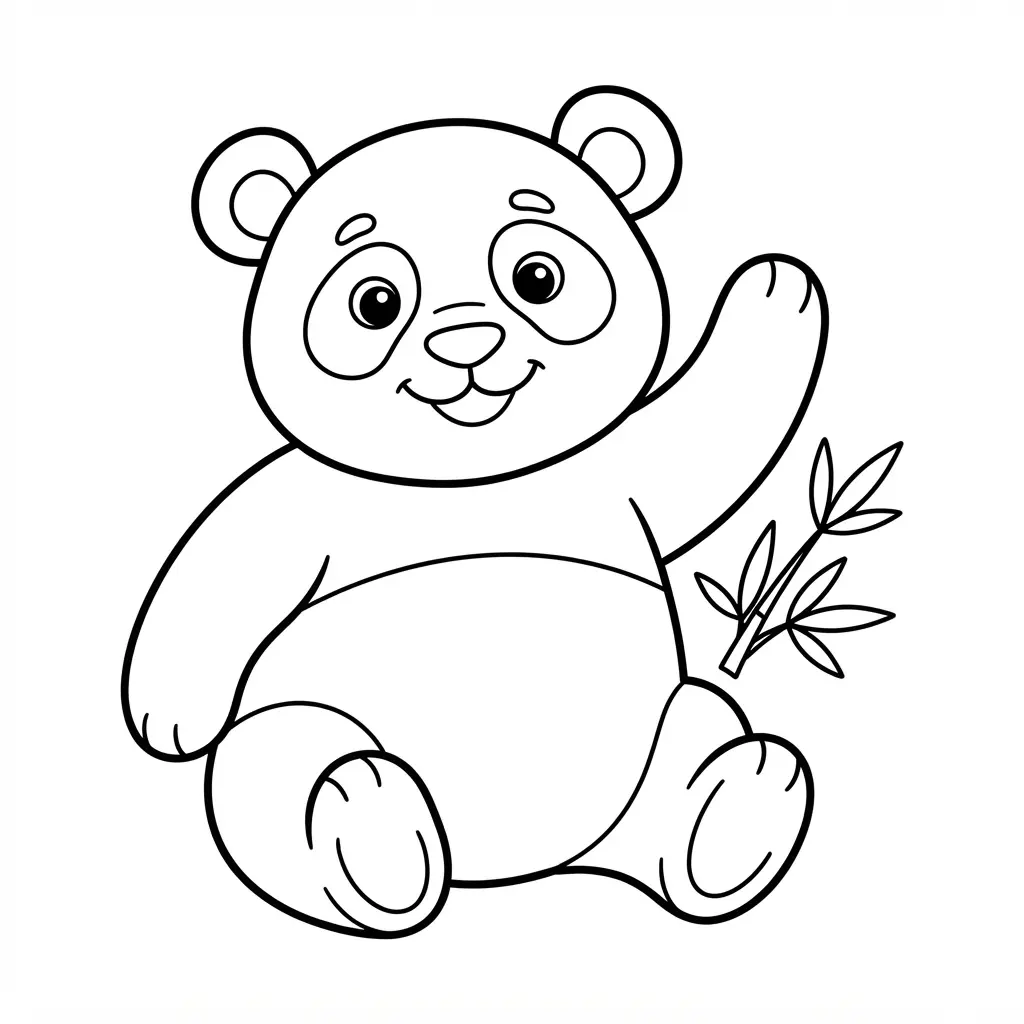
Some people treat a waving panda as a realistic animal study, but this page is meant to feel playful and easy. Start with the bold cartoon outlines, then fill the upright body, round belly, fluffy ears, large eyes, smiling mouth, and raised paw. The small bamboo stalk keeps the scene connected to the panda, while oversized “HELLO!” bubble letters give you broad spaces for bright color. Sound complicated? It is not, since each section stays clean and open against a white background.
I love using this design with younger artists because the simple line art leaves room for personal choices. Try black ears and eye patches with a soft gray belly, or swap in cheerful colors for a fun fantasy look. Crayons, colored pencils, and markers all suit the broad areas, though markers work best with a protective sheet beneath the paper. Keep the greeting letters in a contrasting shade so the wave and smile stay easy to notice. This friendly page makes a sweet first pick from panda coloring pages, and your finished greeting will feel warm and welcoming.
12. Panda Sleeping on Bamboo Branch: Peaceful Animal Scene
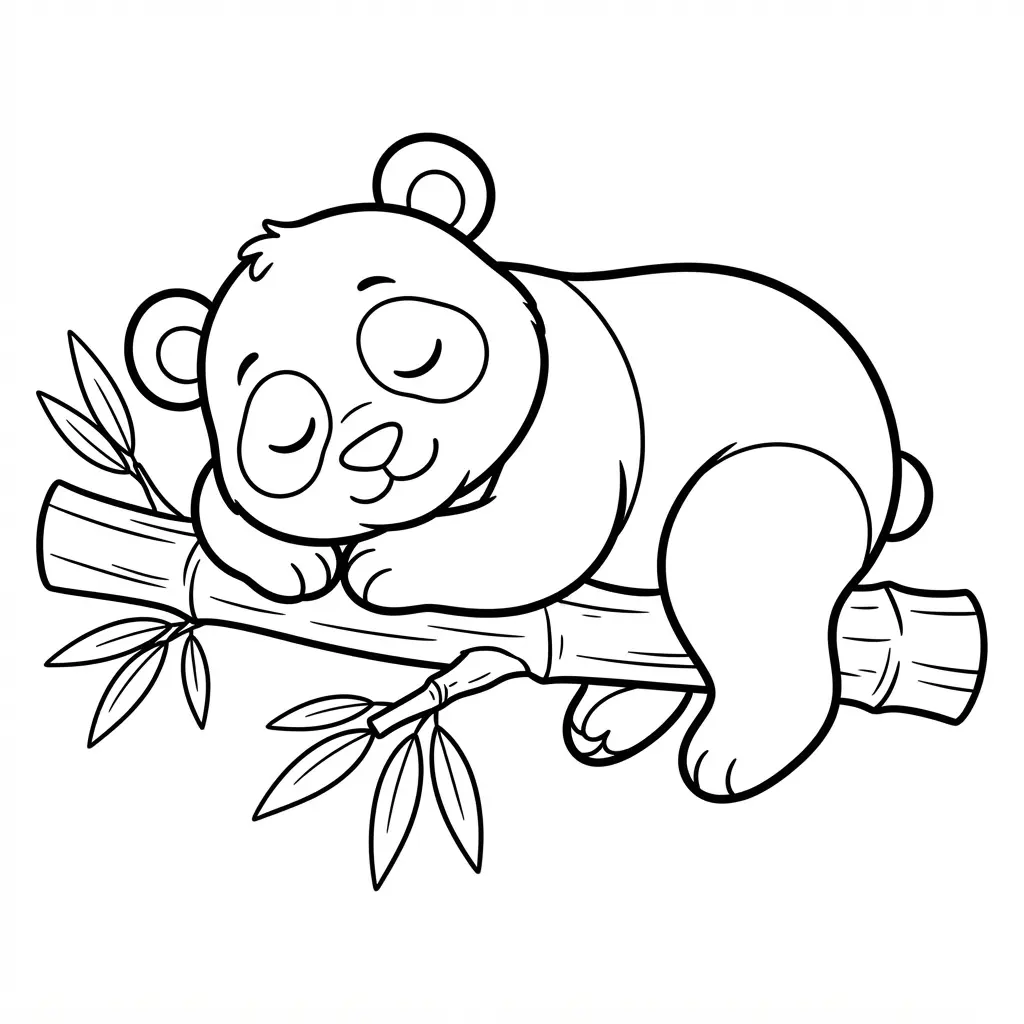
Start with a soft pencil and draw the curled panda outline, keeping its back rounded and its paws tucked beneath its face. Add a gentle curve for the sleeping body, followed by two small closed eyes. Does the pose feel peaceful already?
Place the body over a sturdy bamboo branch so the panda looks safely supported. Give the branch a natural bend, then add short ridges and a few smaller twigs near the paws. Leave the black-and-white fur markings open and easy to follow, with rounded patches around the ears, eyes, shoulders, and legs.
Surround the subject with simple leaf clusters, placing some leaves near the head and others behind the branch. A few pale lines for a misty forest background and warm morning sunlight near one side add depth without crowding the animal scene. Use green leaves, a brown branch, and pale yellow or light orange for the sunlit areas.
I love how the gentle pose makes this one feel cozy and approachable. Keep open coloring spaces around the panda so the main subject stays clear, then add light gray mist for a soft finish. Trust me, those calm details make the whole page feel restful.
Printing And Organizing A Panda Activity Collection
Export each page as a 300 DPI PDF or PNG, then check the white margins before sending it to your home printer. US Letter sizing fits common printers, while portrait files suit single panda portraits and horizontal files suit family or forest scenes. Keep one theme per folder, such as bamboo, panda families, or playful accessories, so children find a matching activity quickly. Use clear filenames with age range and orientation, such as panda-bamboo-preschool-portrait, instead of vague labels. Print a test sheet first to catch clipped outlines, faint lines, or crowded edges. A simple folder or binder keeps clean pages together with crayons, colored pencils, and washable markers. Leave blank space between themes when building a printable coloring collection, since crowded storage makes page selection slower.
Conclusion
So how was your creative session? Look at what you made, from the panda’s cheerful face to every bamboo leaf and background detail. Panda coloring pages give kids a calm way to enjoy animals while making personal color choices. They also give families an easy activity for quiet afternoons, school breaks, or shared art time, which makes panda coloring pages a perfect choice. For your next page, choose one favorite color for the panda and two or three supporting colors for the setting. This keeps the scene clear while leaving room for playful details. I love adding a small name or date in the corner after finishing a page, since it helps save the memory of the activity. Pick your favorite design, place paper and colors nearby, and start your next picture today.
FAQs
Q: What paper works best for printable panda pages?
A: Regular printer paper suits crayons and colored pencils. Choose heavier paper for markers, with a blank sheet beneath to protect the table.
Q: How do I print panda coloring pages at home?
A: Select standard letter or A4 paper in your printer settings. Use a high-quality print setting for darker outlines and check the preview before printing.
Q: Which coloring tools suit bold panda outlines?
A: Crayons, colored pencils, and washable markers all suit bold outlines. Pencils support small details, while crayons work well for broad areas.
Q: How do I stop marker ink from showing through?
A: Place a spare sheet under the page before coloring. Pick thicker paper for repeated marker use and allow each area to dry before adding another layer.
Q: Are panda coloring pages suitable for preschool children?
A: Yes. Pages with large shapes, thick outlines, and open backgrounds suit preschool children. Choose simple scenes first, then introduce pages with leaves and patterns.