Achieving Correct Surface Texture And Preparation
Your surface needs a subtle tooth to grip the opaque paint layers without bleeding. Trust me on this, the traditional treated cloth remains a hurdle you skip entirely. A sheet of heavy-stock watercolour paper gives you that perfect, forgiving texture when you test simple pattachitra art ideas. The good news is these materials stay easy to find and handle. They hold the flat, saturated layers of gouache or acrylic beautifully, which matches the authentic look of the art form. This preparation step sets the stage for everything that follows, so do not rush it. A smooth, slightly textured base makes applying those bold, dark outlines so much easier later on.
Mastering The Signature Black Outline Technique
The entire character of your piece depends on a clean, confident, and consistent line. Here is the thing, beginners often press too hard at the start and lose thickness control. You want to practice the rhythmic flow of each stroke on scrap paper first. Use a fine liner brush with a good snap to achieve that iconic, bold outline. Incorporating simple pattachitra art ideas means your linework should be the final step, applied over completely dry, flat colour blocks. You will notice the style demands strict symmetry in figures, so let your outline define that perfect balance. Focus on keeping the line weight even, as uneven thickness remains the most common giveaway of a novice piece. This precise detailing is what makes the iconography pop.
1. Paint a Stylized Lord Jagannath Face Motif
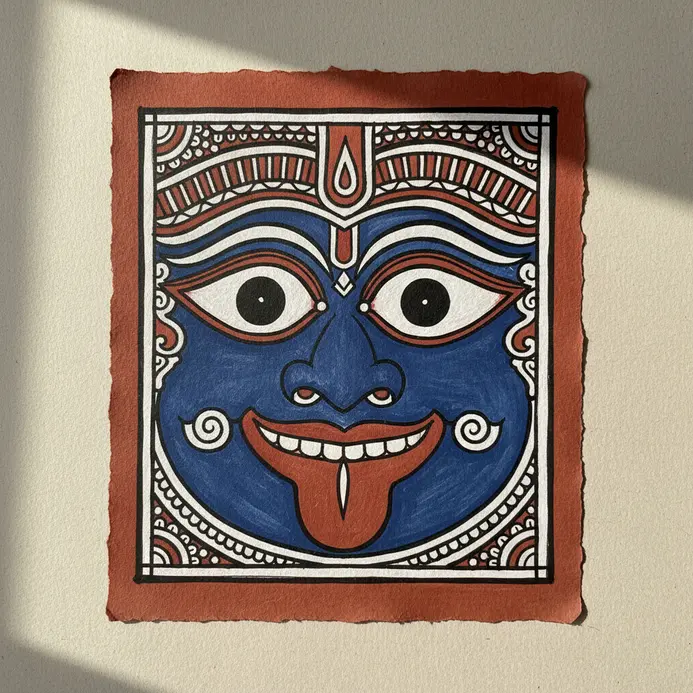
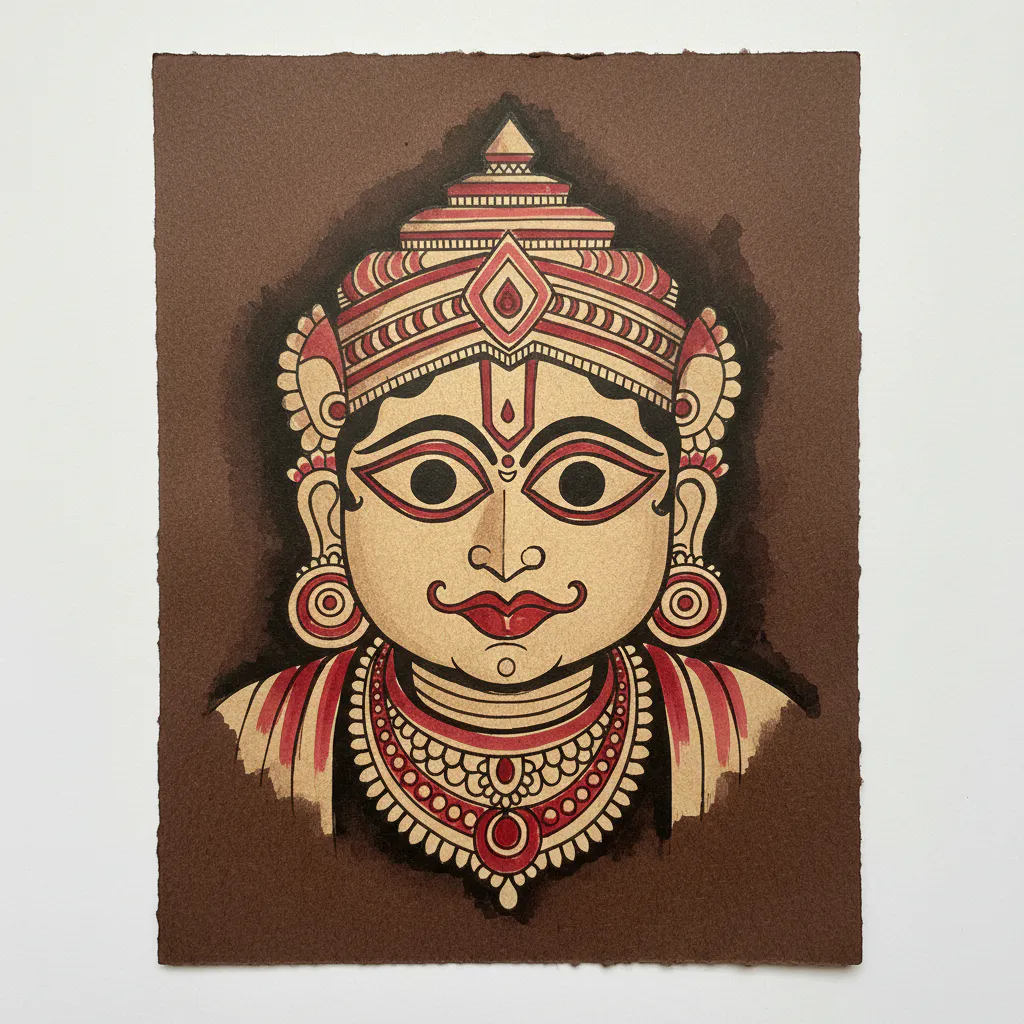
This one surprised me – it looks so iconic and complex, but it stays built from a few bold shapes. You start by sketching a large oval face, then focus on drawing two huge, perfect circles for the eyes. I love how forgiving this remains, as you then simply fill the face with flat black paint and add bright outlines and a smiling mouth. It works because the stark contrast and simplified features create an instantly powerful, devotional image. Gathering simple pattachitra art ideas helps you see how traditional forms translate to modern practice. For more inspiration on related techniques, you can explore easy Indian painting ideas.
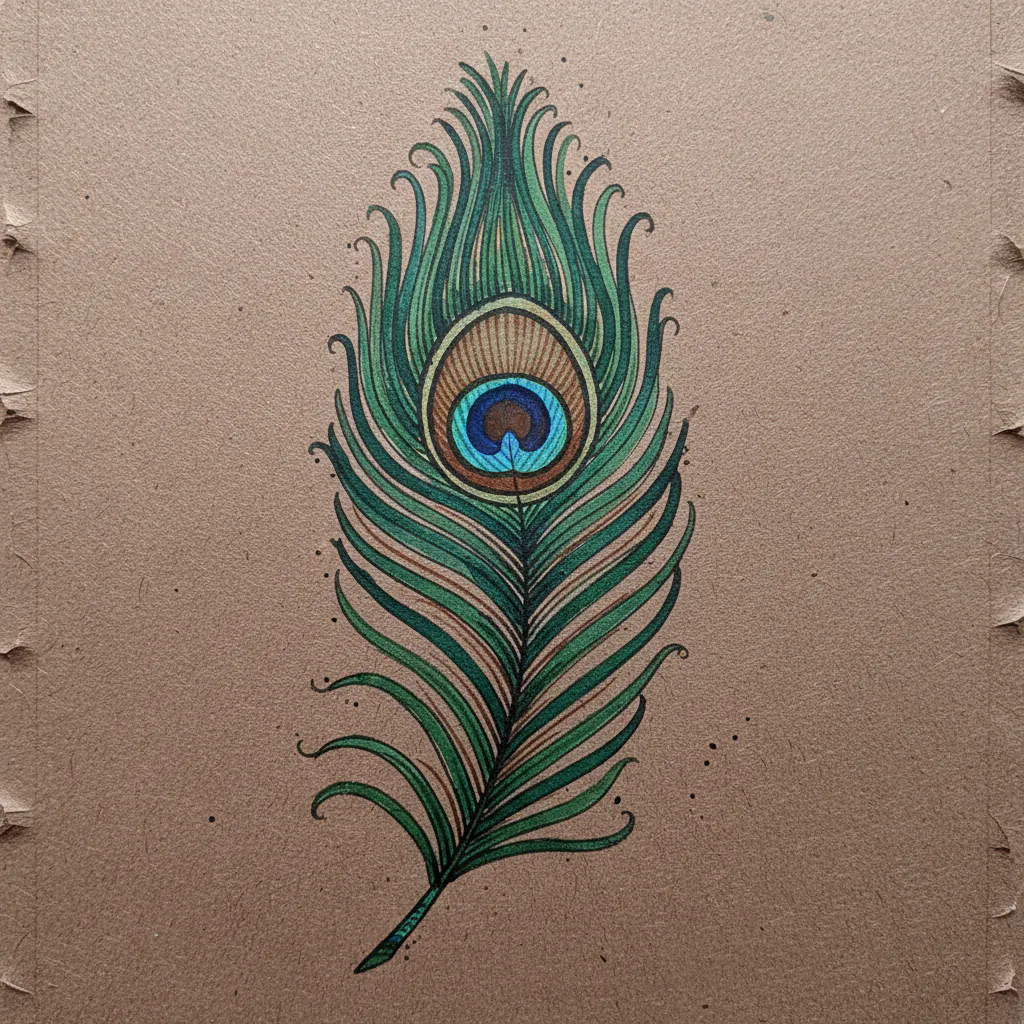
2. Draw a Detailed Peacock Feather Ink Illustration
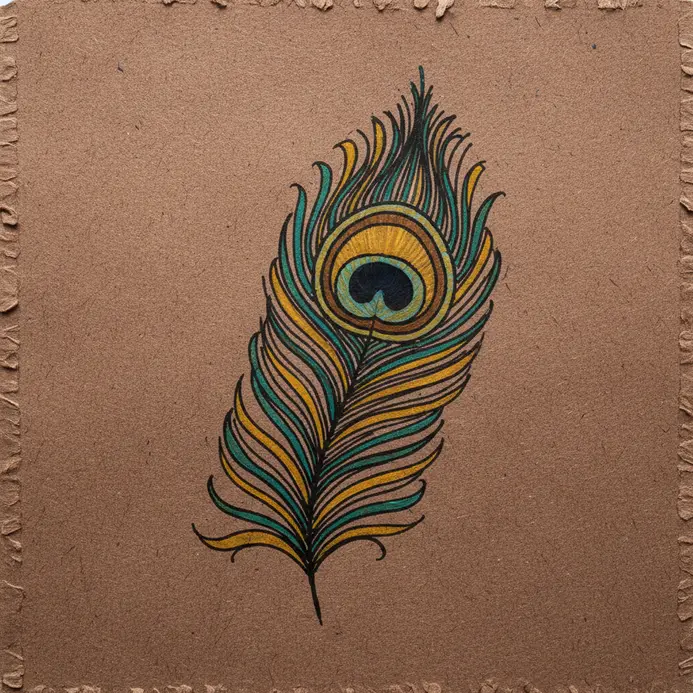
Ever wondered how to capture the shimmer of a peacock feather without color? The secret sits in the texture. Start with a light pencil sketch to map out the feather’s shape and the iconic eye. Then, work your ink from light to dark, using tiny dots and lines to build up the delicate barbs. I love how this process forces you to see light and shadow instead of color. Trust me, building up those layers slowly makes the piece look iridescent. You will notice that collecting simple pattachitra art ideas often starts with observing nature closely. Focus on the intricate rings of the eye, using your finest pen nib for the tightest details. Vary your line pressure to create the fluffy base and the structured barbs. Isn’t it satisfying when those monochrome textures start looking so rich? Feel the magic as your drawing comes to life with pure detail.
3. Create a Symmetrical Lotus Flower Border Design
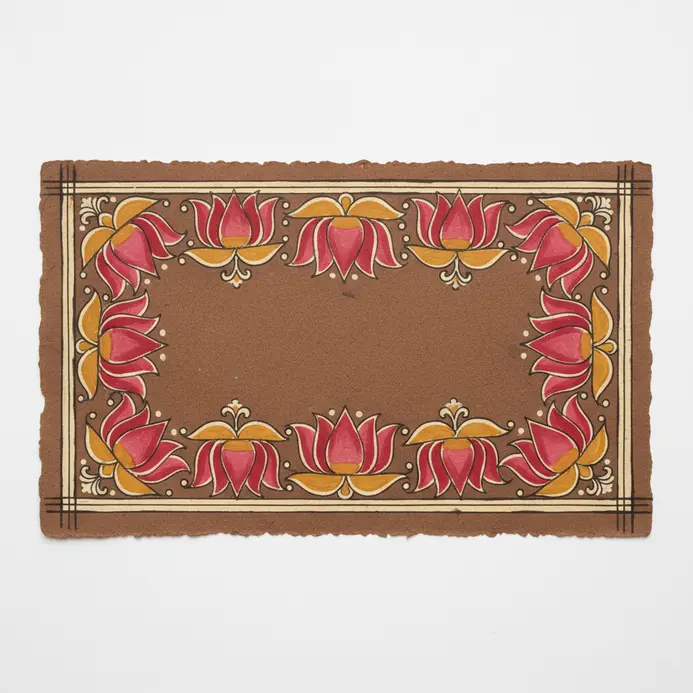
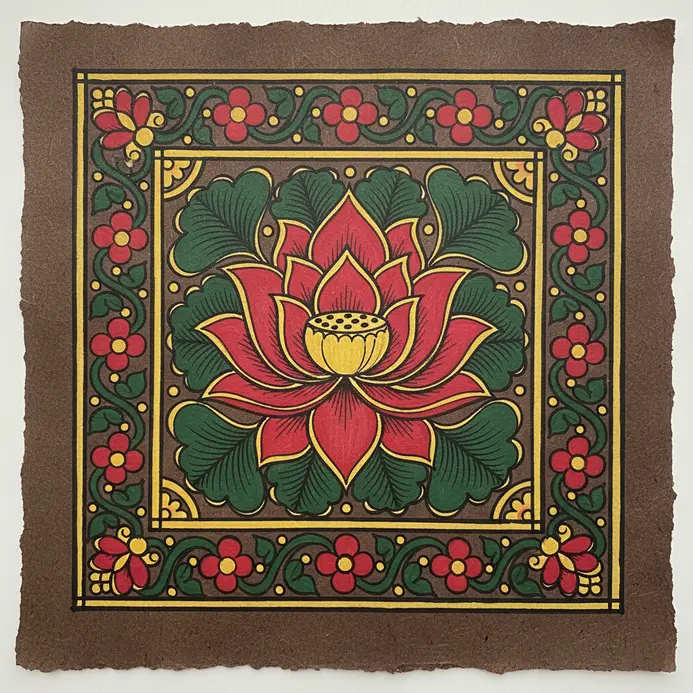
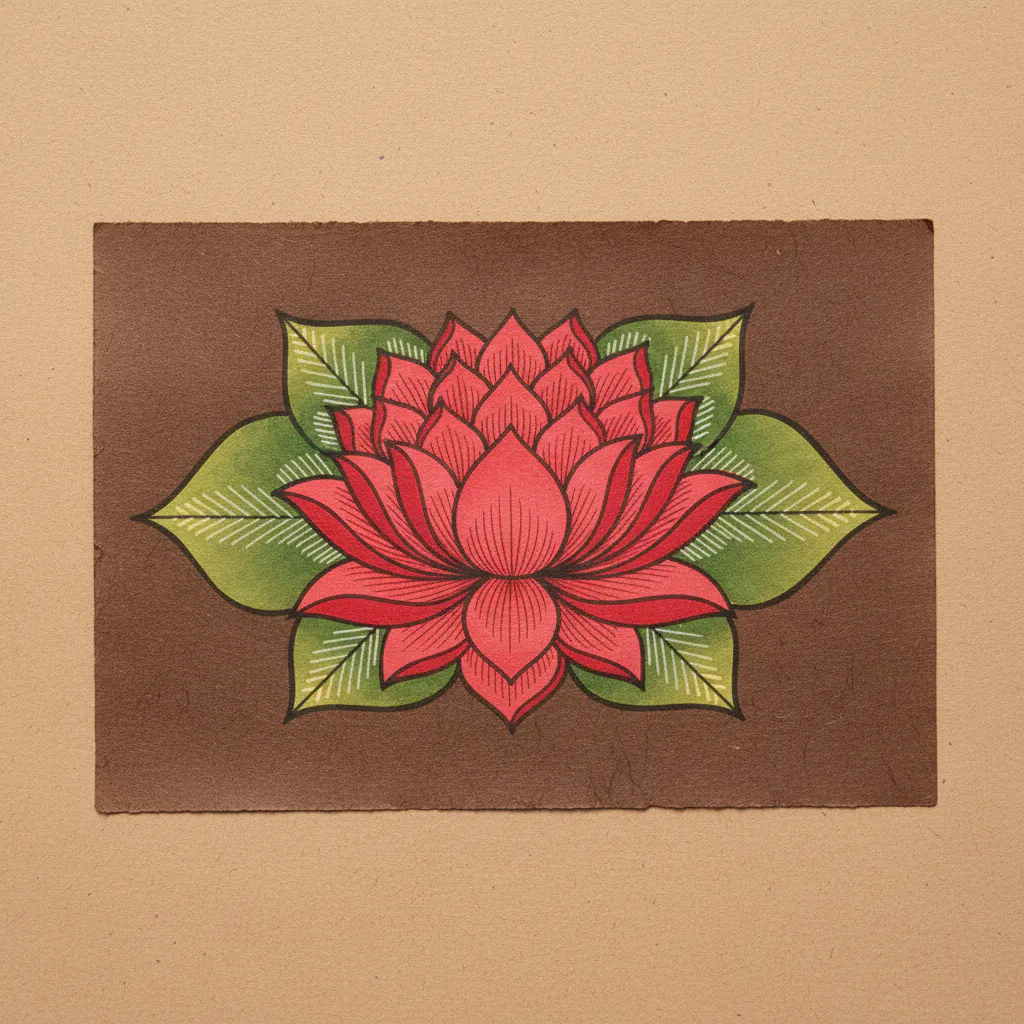
Ever wondered how to make a decorative pattern feel so balanced? Start by drawing a rectangle for your border’s height and length, then lightly mark a Use a vertical center line to help guide your design in madhubani painting. down the middle. I love sketching a central lotus on this line, building out layers of petals and symmetrical leaves or vines that mirror perfectly from side to side. The key rests in ensuring the elements on the left and right edges of your repeatable module connect seamlessly when you copy it. This repetition creates a beautiful flow that guides the eye, and the lotus itself adds a layer of meaning with its symbolism of purity. Tracking your simple pattachitra art ideas ensures your borders maintain cultural authenticity.
4. Outline a Small Clay Pot Krishna Figure
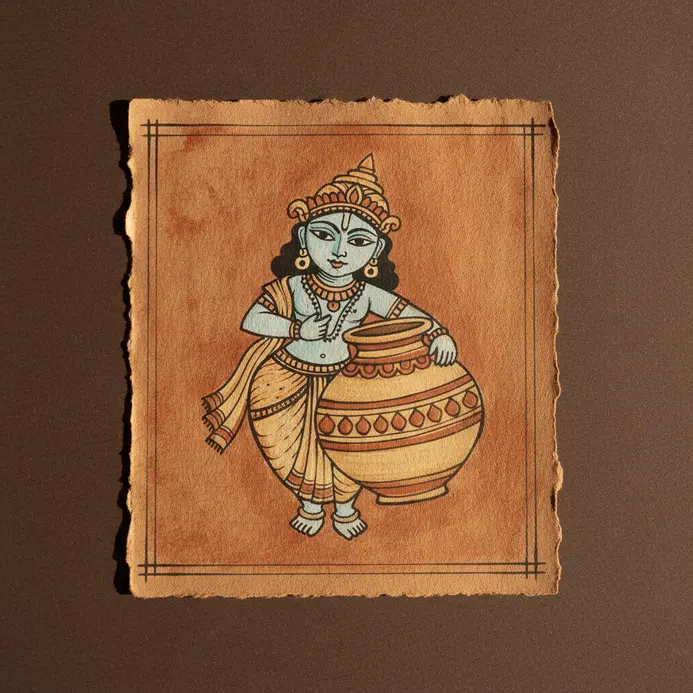
Who would have thought a simple terracotta pot becomes a charming Krishna? This project looks complex but stays wonderfully beginner-friendly. You will shape the head, arms, and dhoti from air-dry clay before attaching them to the pot’s body. I love how the small scale keeps it manageable. Paint with traditional colors like blue for skin and yellow for the dhoti. Adding a tiny peacock feather and flute brings it to life. The result stays a delightful devotional piece perfect for a desk or altar. For a different approach to traditional art, try these simple Bhil painting techniques. Gathering simple pattachitra art ideas helps you balance sculptural forms with painted details. Doesn’t that feel like a satisfying way to create something special? Let your clay dry completely before sealing it for protection.
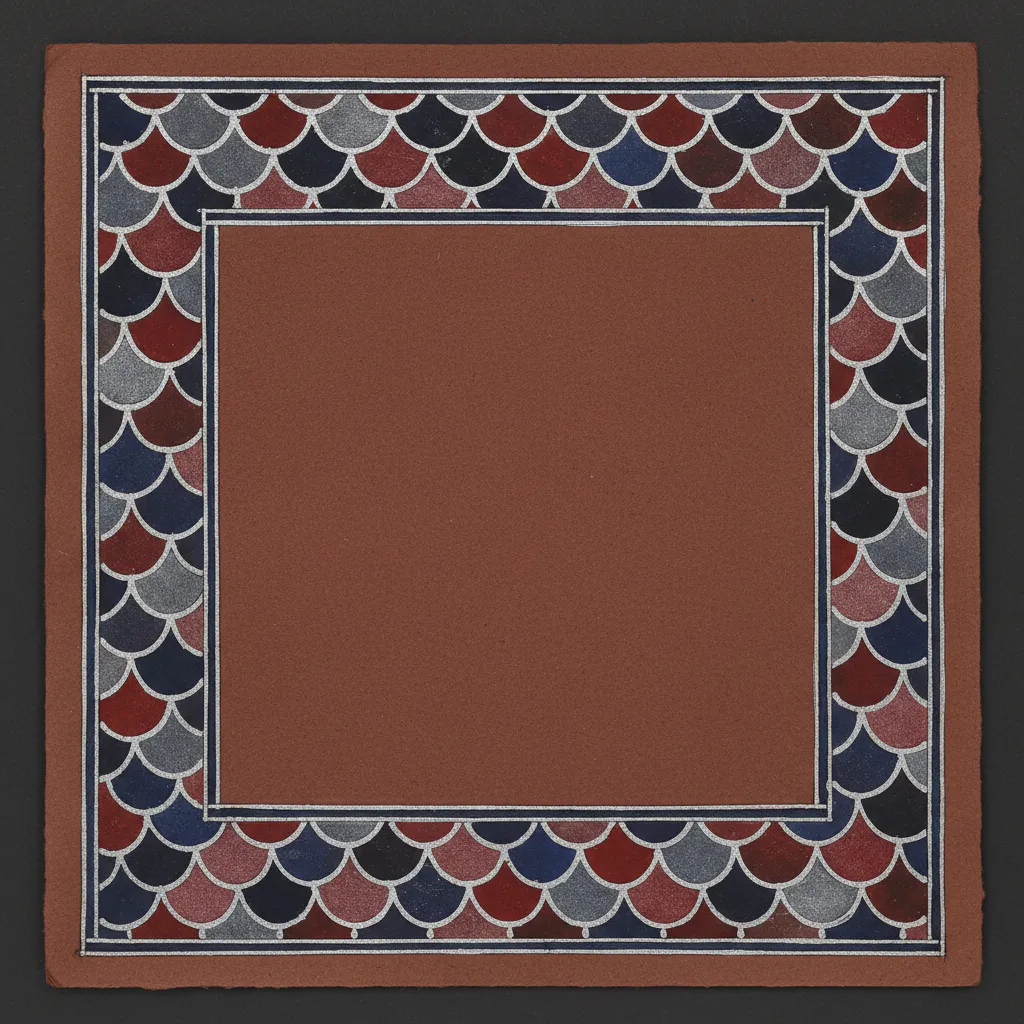
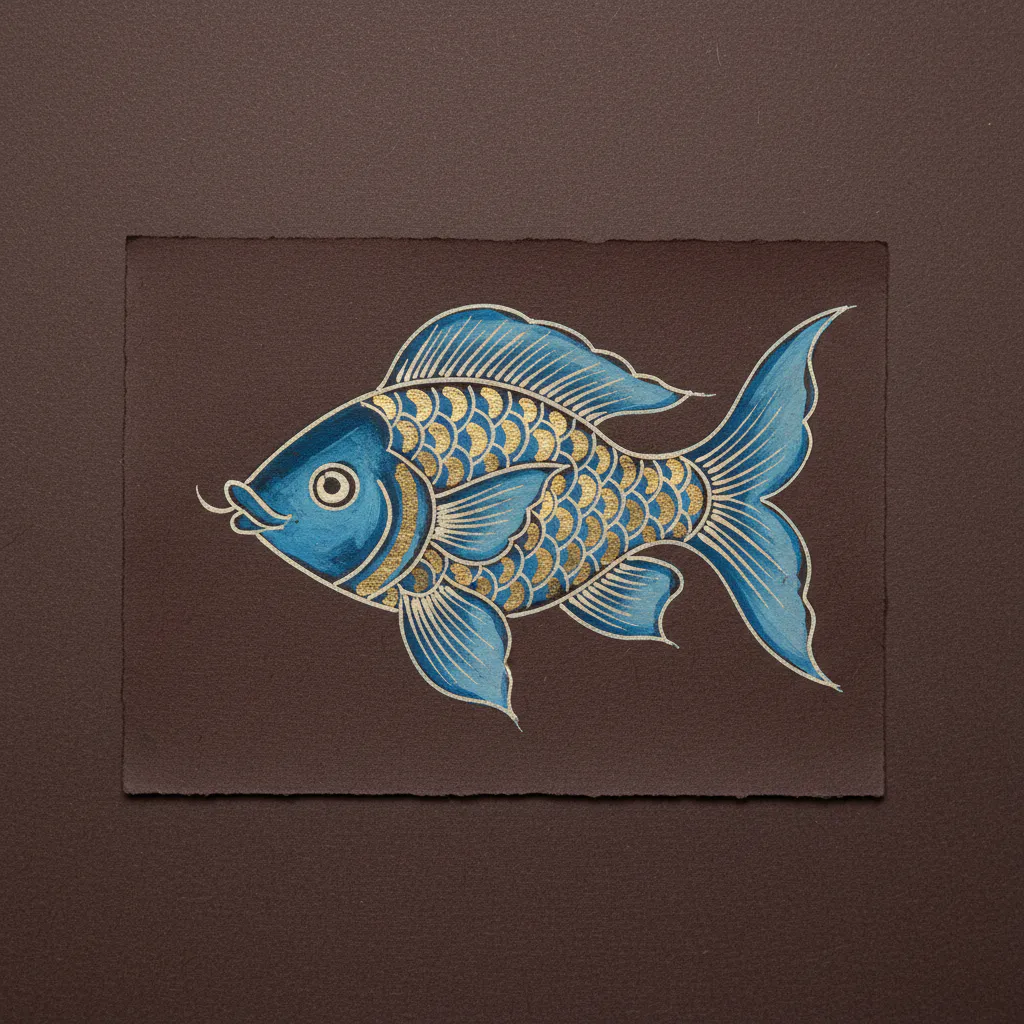
5. Add a Flowing Fish Motif for Borders
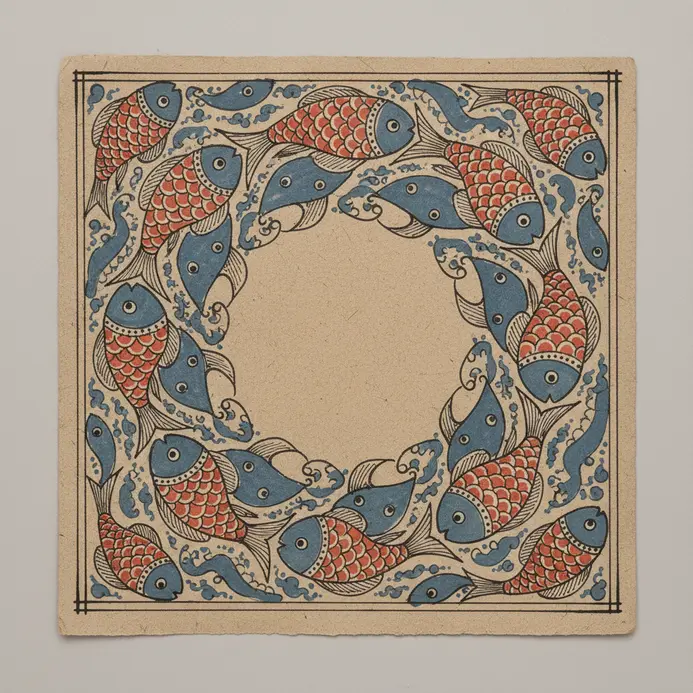
Ever wondered how artists create those beautiful, moving borders? A flowing fish motif answers that question. It looks intricate, but the core idea stays simple. You start by sketching the classic S-curve of a swimming fish. Then, you repeat and overlap that graceful shape to build a seamless, rhythmic pattern. This works because continuous movement feels tranquil and dynamic, adding harmony to your piece. Tracking your favorite simple pattachitra art ideas keeps your borders fresh and culturally grounded. Trust me, once you see that graceful line dance around your border, you will feel real accomplishment.
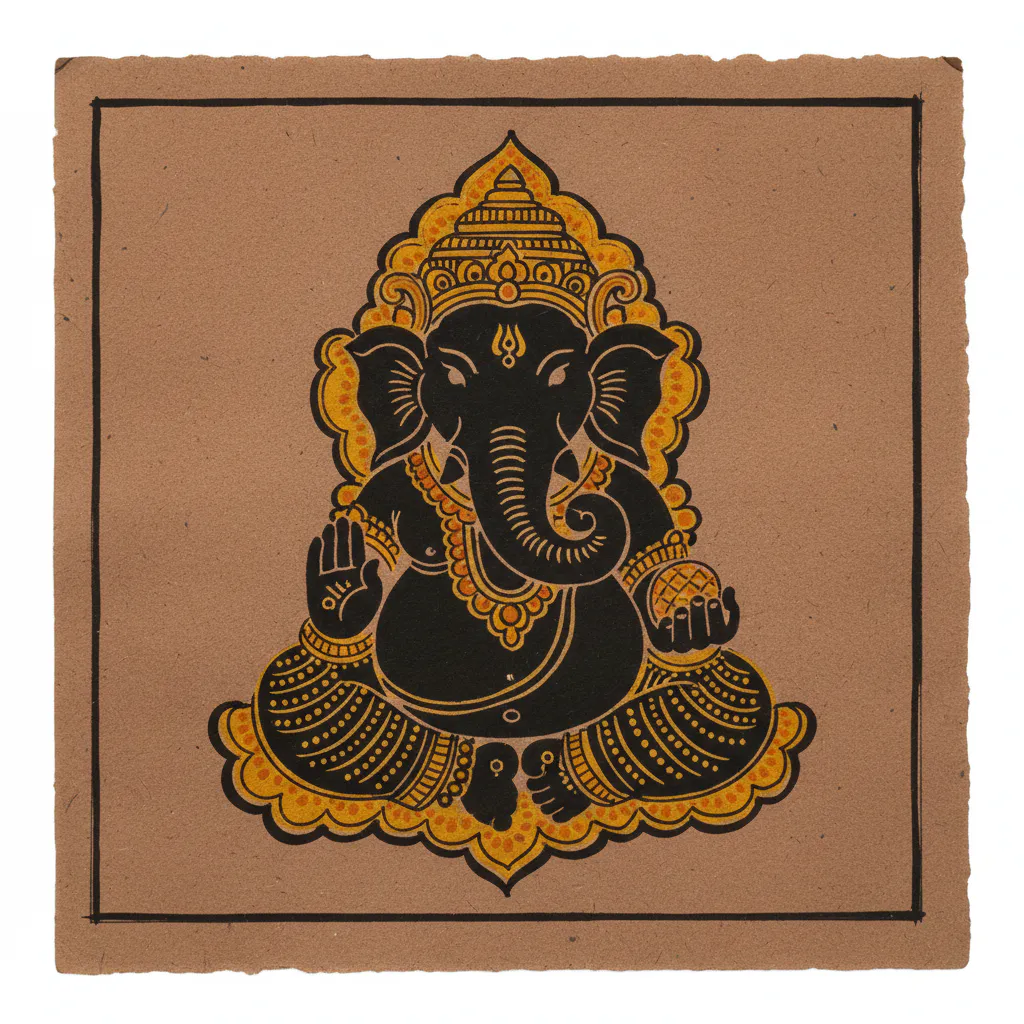
6. Draw a Ganesha Elephant Head Decorative Outline
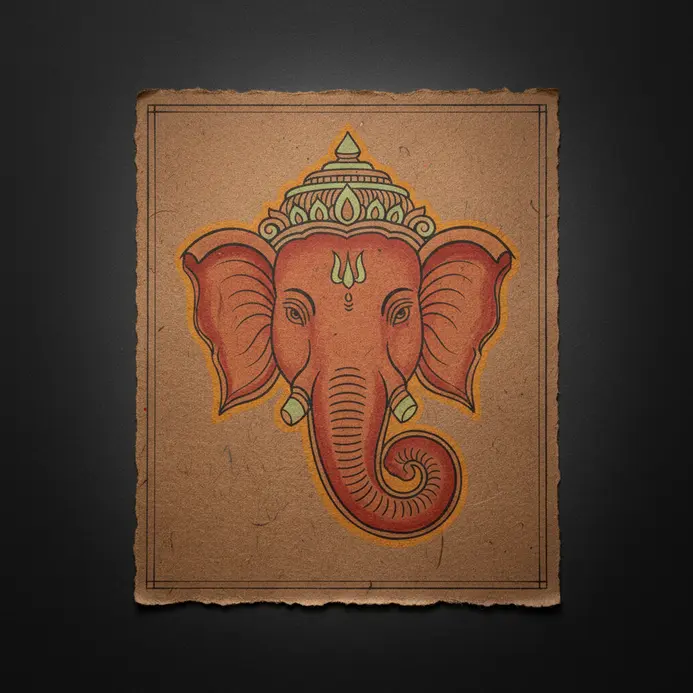
Ever feel intimidated by starting a detailed drawing? This step sits all about letting go of perfection. Use a light HB pencil to sketch a large, soft oval right in the center of your paper. This acts as a guide for the head’s shape, so keep your pressure gentle and your lines easy to erase. Trust me, using your whole arm for this big shape in pattachitra painting makes it feel smoother than relying on your wrist alone. That relaxed approach forms the foundation of many simple pattachitra art ideas.
7. Sketch a Pair of Folk Art Stags
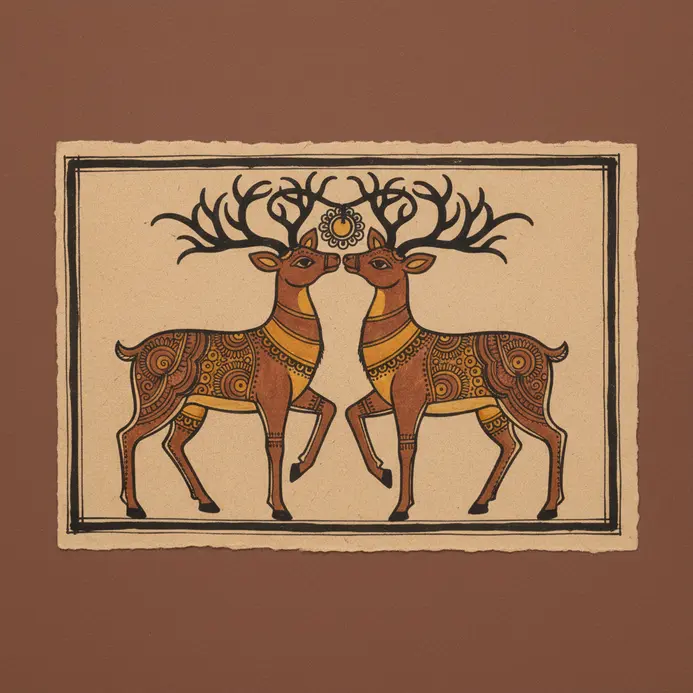
This one looks more complex than it stays. Start by deciding how your stags will face each other, then lightly sketch two large ovals for their bodies. Connect smaller head ovals with elegant, curved neck lines. Use simple stick lines to block out the legs, keeping your pencil pressure feather-light. The magic lives in these basic shapes, not realism. Trust me, this initial planning makes the whole composition feel balanced. Reviewing simple pattachitra art ideas often reveals how symmetry anchors wildlife illustrations.
8. Create a Traditional Paisley Mango Shape Design
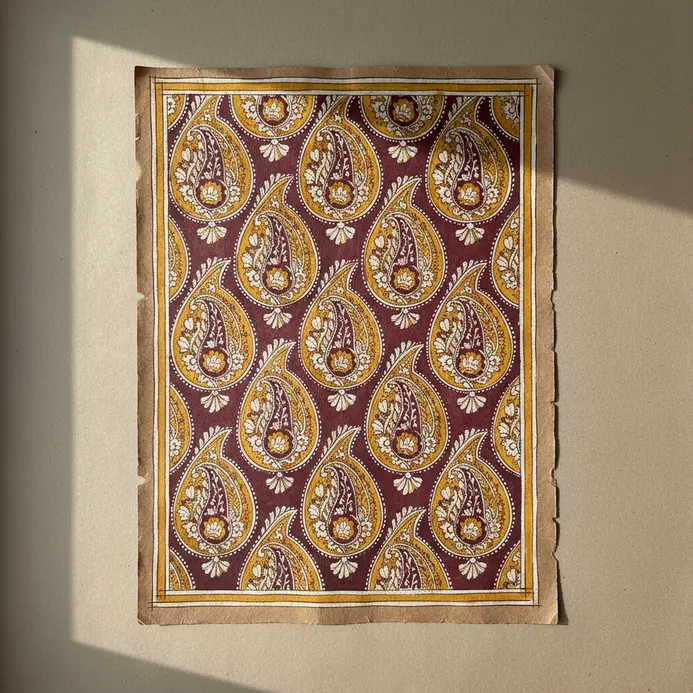
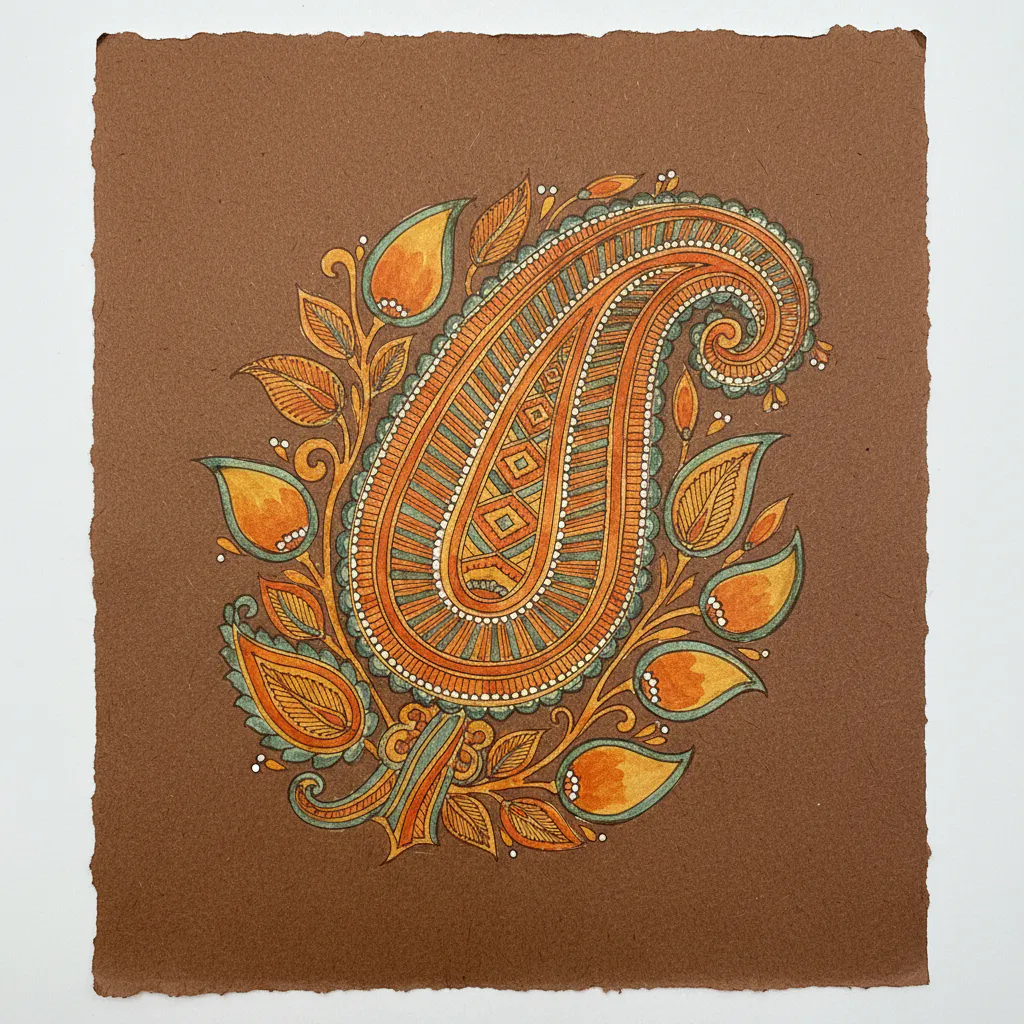
Ever wondered how that classic, elegant mango shape gets drawn? It looks intricate, but trust me, it starts with one simple gentle S-curve. Use that curve as your spine, then build the rounded head and tapered tail around it. I love filling the inside with flowing swirls and tiny floral patterns. The magic lives in that beautiful asymmetry, which makes the design feel alive and dynamic. Your main job keeps those lines fluid and lets the internal patterns flow organically from the tail up. Simple pattachitra art ideas thrive on this kind of organic curve work. Try it and feel the satisfaction when that traditional motif comes together on your surface.
9. Paint a Simplified Village Hut Scene Motif
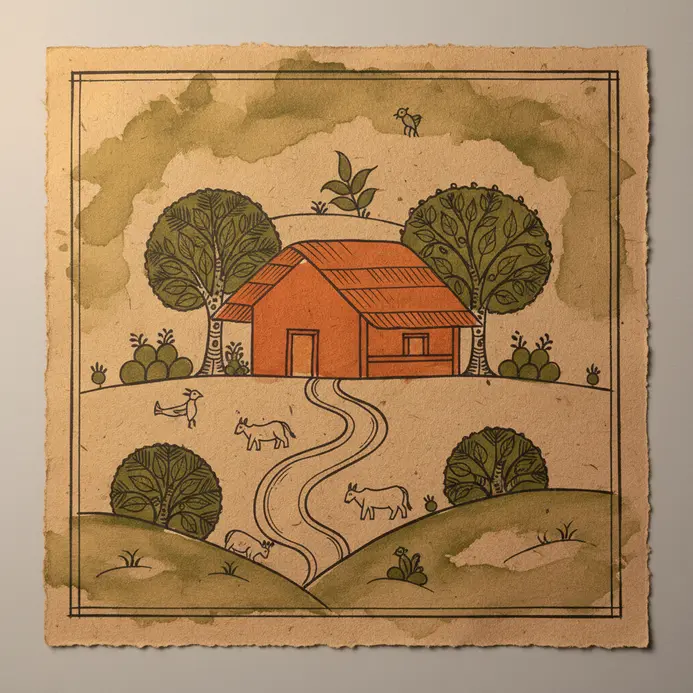
Ever doodled a cozy hut in the margins of your notebook, inspired by traditional Indian art? This motif brings that childhood sketch to life with a folk-art twist. I start by drawing simple shapes—a box for the hut, a triangle for the roof. Use a flat brush to lay down warm, earthy colors in solid blocks. The charm comes from leaving out the fussy details; a few lines for a door or a cloud-like tree in pattachitra painting remain enough. It works because the simplicity feels intentional and utterly charming. My tip stays embracing the graphic look and outlining your shapes with a fine marker for extra pop. Collecting simple pattachitra art ideas helps you capture rural life accurately.
10. Outline a Stylized Archer Rama Silhouette Sketch
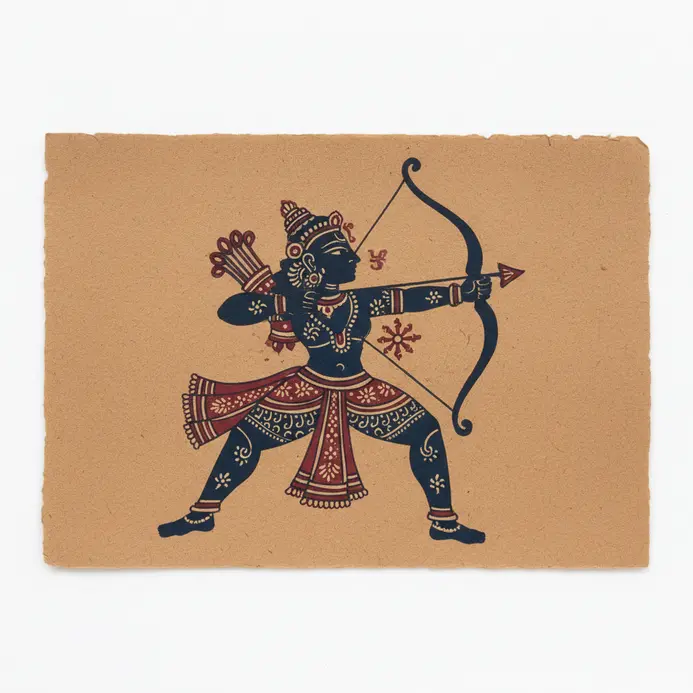
This step might look complex, but trust me, it offers a fantastic way to focus purely on form in your madhubani art. You are going to outline a stylized silhouette, capturing Archer Rama’s essence through strong, continuous lines without internal details. Start with a light sketch to get the dynamic pose right, then use a confident, firm stroke to define the solid outer edge. This works because a clean silhouette forces you to see the subject as a single, powerful shape. Simple pattachitra art ideas always benefit from sharp negative space. Remember, the key stays avoiding lines for clothing or features inside the outline. I love how this simplification makes the figure instantly recognizable. Does that not look striking when you finish?
11. Build a Continuous Vine and Leaf Pattern
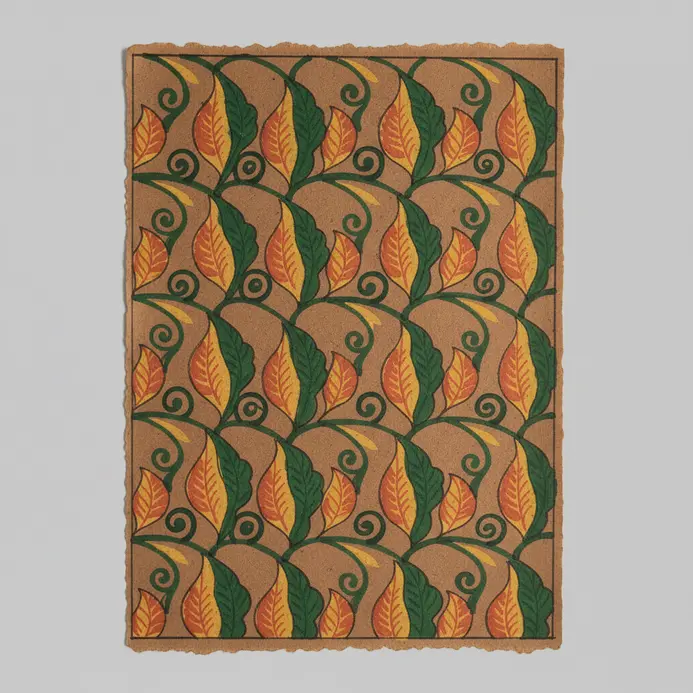
Ever wondered how those lovely, seamless patterns in textiles get made? It all revolves around designing a single repeat unit or tile where the vine flows perfectly from edge to edge. You draw a vine segment that starts on one side and ends at the exact matching point on the opposite side, then add leaves within that boundary. I love this one because the magic happens when you test it. Simple pattachitra art ideas rely heavily on modular repetition to build confidence. Duplicate your tile into a grid and check for any breaks. The key stays ensuring every element that exits a border re-enters seamlessly on the other side. Sound complex? It remains wonderfully logical once you try it. Start with a simple, gentle curve for your vine. This foundational step makes achieving that continuous, organic flow so much easier and more satisfying.
12. Draw an Elegant Standing Musician Figure Motif
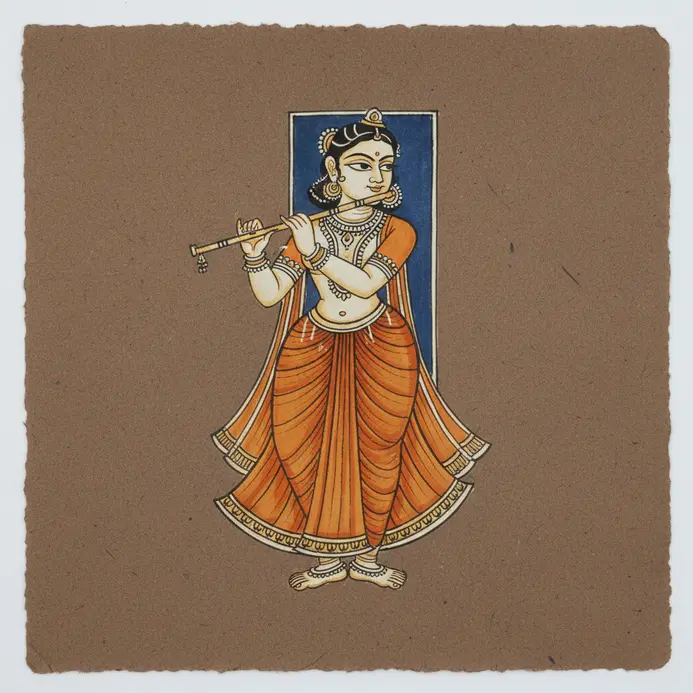
Ever felt like your figure drawings look a bit stiff? This musician motif offers your perfect practice for grace. The secret starts with a light, sweeping line of action before you draw a single limb. Sketch a gentle S-curve for the spine, then build the head, torso, and flowing arms around it. I love how this simple step instantly gives the pose a sense of movement. Curating simple pattachitra art ideas teaches you to prioritize rhythm over anatomy. Keep your initial lines light and focus on the overall flow. For a violinist, tilt the head toward the instrument and let the arms curve naturally. Your goal stays a stylized, elegant form in your madhubani painting, not perfect realism. Once you secure this flowing foundation, you refine the details and discover aesthetic drawing ideas for the final rendering.
13. Form a Classic Geometric Diamond Border Design
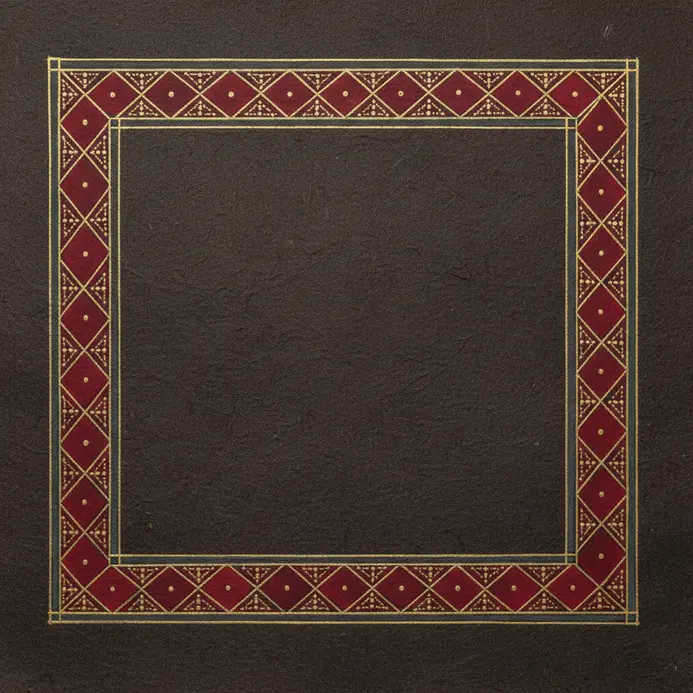
Ever noticed how a structured border instantly elevates a piece? The classic geometric diamond design looks intricate, but it stays built from a simple, repeatable shape. Start by planning your border width and diamond size. Use a light pencil grid to map out the points, then connect them to form your uniform rhombus shapes. The magic happens when you fill them with contrasting colors, making each diamond pop. Simple pattachitra art ideas thrive on this structured predictability. I love how this technique creates a sense of elegant order. The visual rhythm of the pattern frames your main artwork beautifully, giving it a polished, traditional finish. Try it and feel the satisfaction of a perfectly balanced border.
14. Sketch a Flying Hanuman Outline Ink Drawing
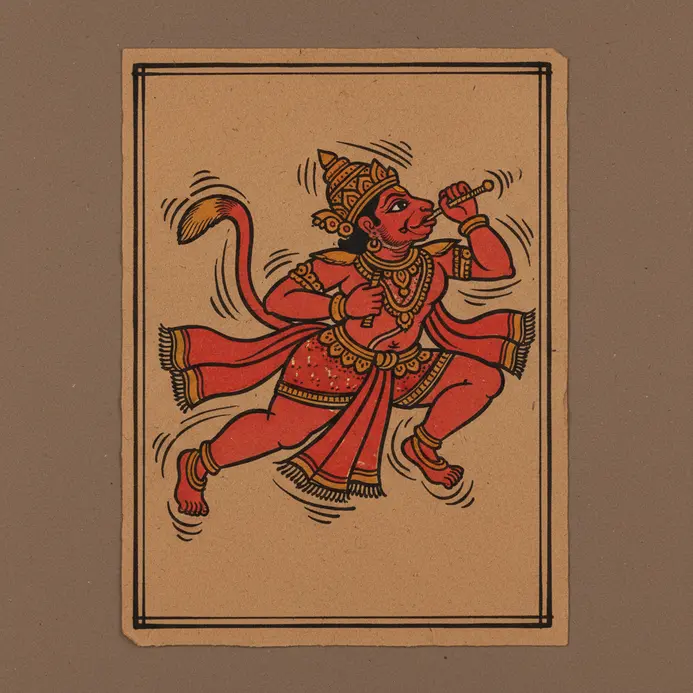
This pose looks dynamic, but it starts with one simple line. Begin with a light graceful S-curve for your action line. Build the figure with basic ovals for the head, torso, and hips, then add those powerful bent limbs and a flowing tail. I love how this simple structure creates such a sense of motion. For more fluid practice with foundational shapes, try these simple drawings to practice techniques. Exploring simple pattachitra art ideas keeps your character work dynamic. Keep your pencil pressure light and use your whole arm for the long curves. Isn’t it satisfying to see the form take flight so quickly?
15. Paint a Round Temple Facade Art Piece
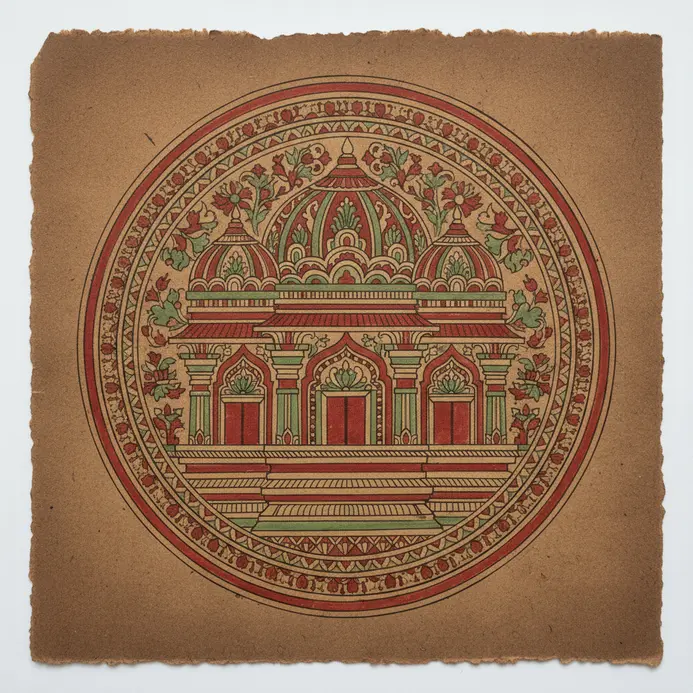
Ever feel intimidated by architectural art? Trust me, this one looks more complex than it stays. The key remains starting with a strong light pencil sketch and a compass to get that perfect circular form. From there, you build up the layers of stone and shadow, focusing on how light wraps around the columns and dome. Getting the perspective right makes the whole piece feel grand and solid. I love how this project lets you play with history and mood. You paint a serene, ancient ruin or a bright, fantastical structure. Simple pattachitra art ideas often use this circular framing to highlight sacred architecture. The real satisfaction comes from seeing that flat circle become a three-dimensional temple right on your canvas. For a great way to practice circular patterns and symmetry first, check out these mandala drawing ideas for beginners. Does that not feel like a wonderful challenge?
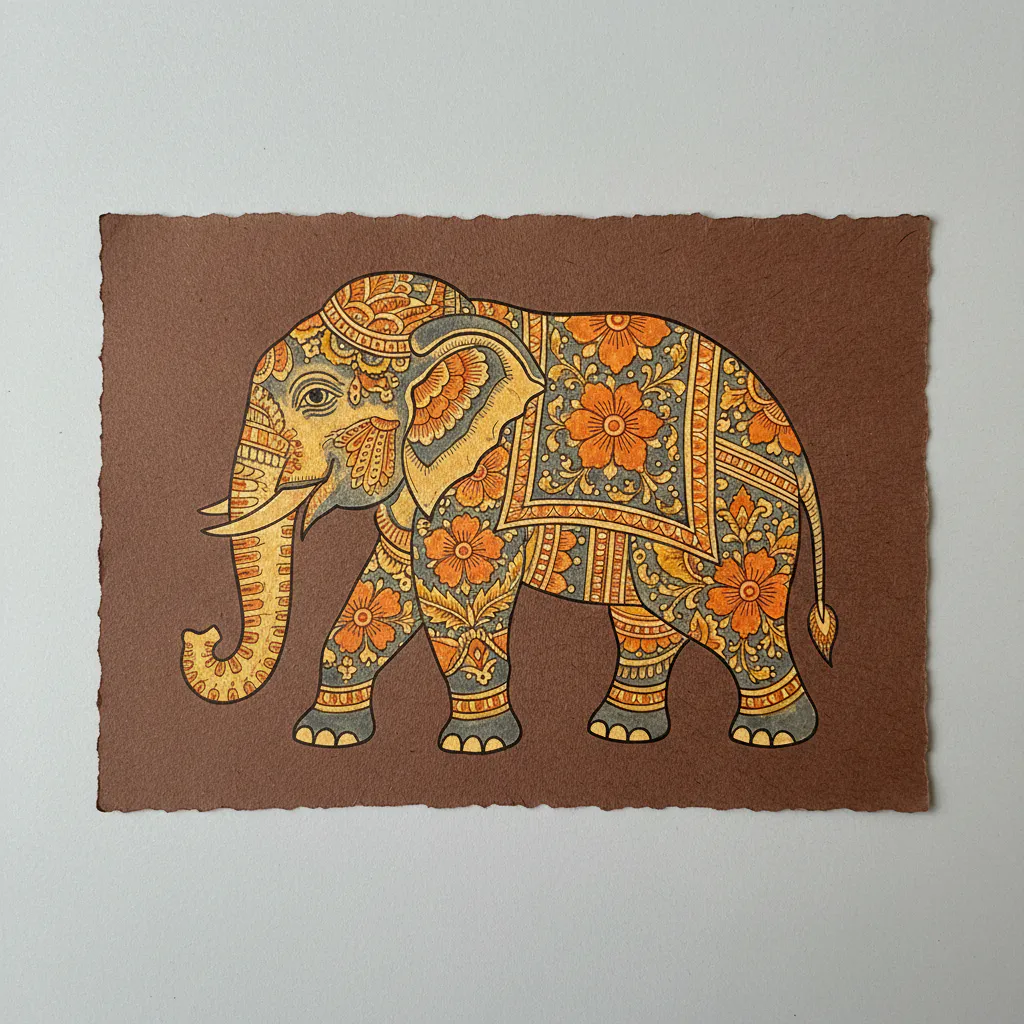
16. Create a Decorative Elephant Procession Pattern Design
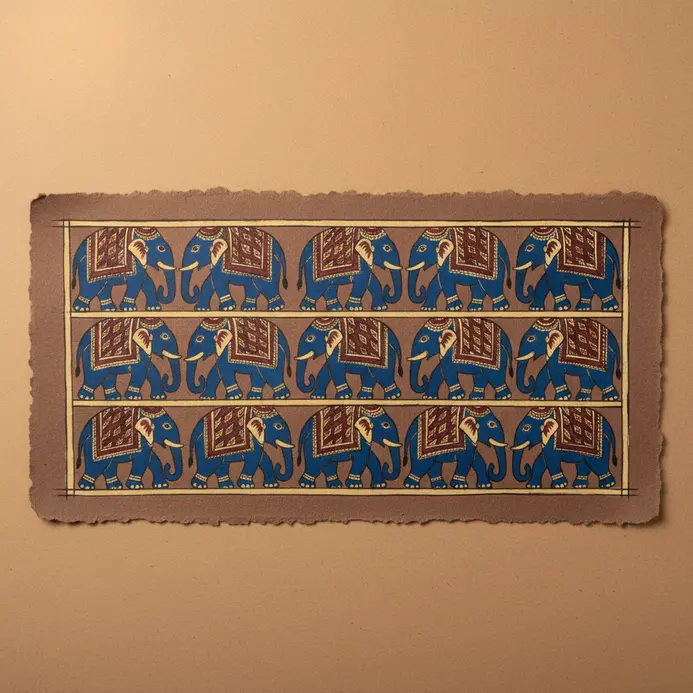
Ever wanted to create a pattern that feels grand and celebratory? This design looks intricate, but its secret sits in a strong, simple foundation. Start by sketching a clear elephant side profile. I love focusing on that iconic shape first. Next, layer on the ornate details. Add an elaborate cloth covering its back and a decorative forehead plate. Fill the space around it with floral motifs or geometric shapes to create a full, luxurious look. It works because the repeating procession feels traditional and elegantly modern. Gathering simple pattachitra art ideas shows how repetition elevates ceremonial subjects. Trust me, seeing your first seamless repeat tile come together stays incredibly satisfying.
17. Draw a Small Flute Playing Krishna Motif
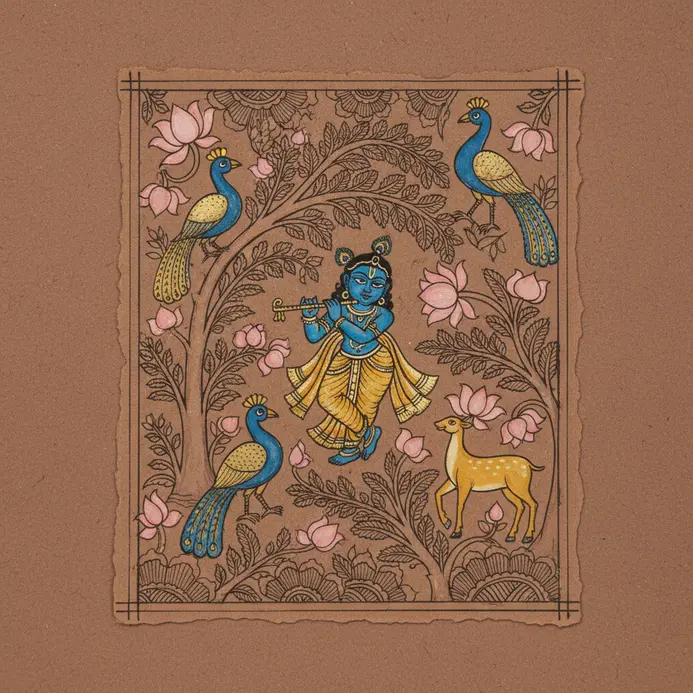
Ever wondered how to capture the essence of a deity with a few simple lines? Start by lightly sketching the basic shapes for the head, body, and a horizontal rectangle for the flute. Then, refine the form by adding the iconic peacock feather and a serene face with dots and a tiny smile. I love how this works because it focuses on graceful, essential shapes instead of overwhelming detail. It feels incredibly satisfying to see such an iconic figure emerge from your page. Simple pattachitra art ideas teach you that restraint builds reverence. You find more inspiration for similar projects in the world of Indian art if you want to.
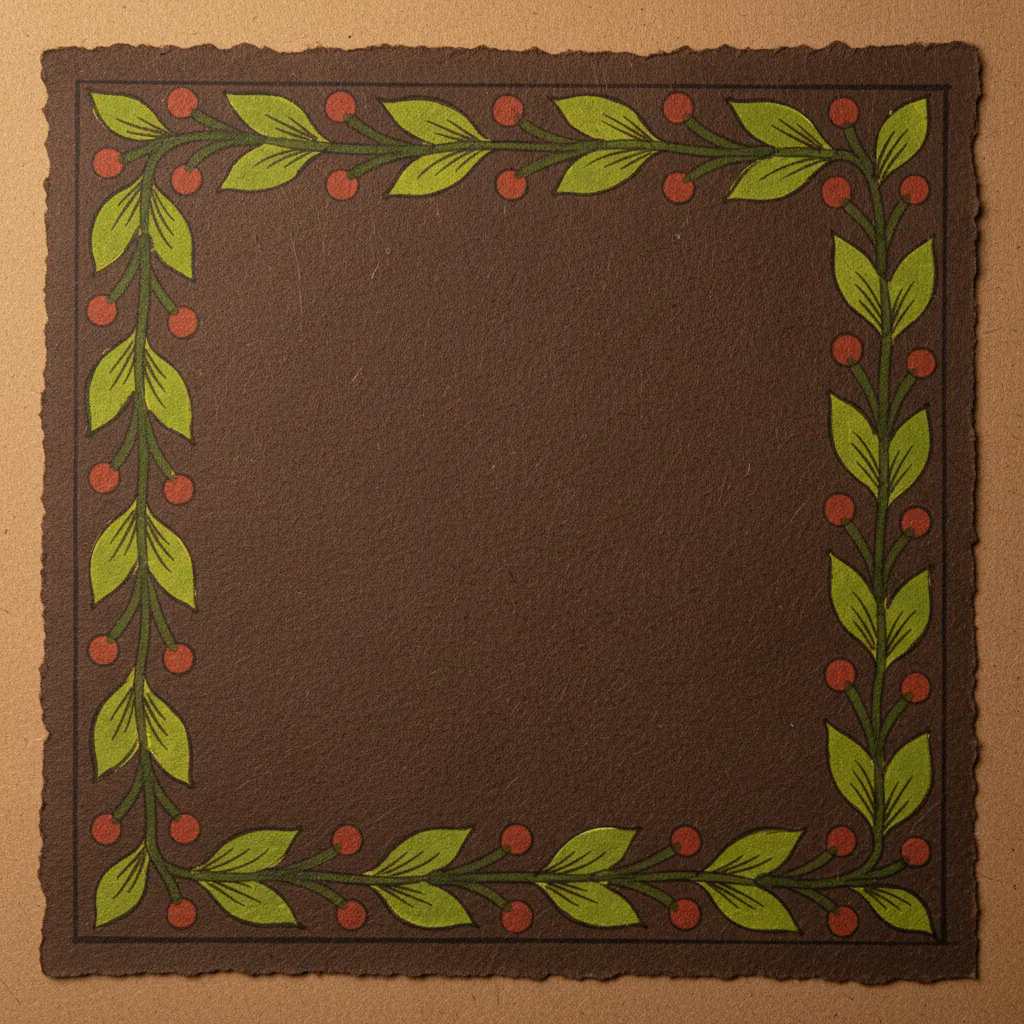
18. Add an Alternating Floral Pattern Border Design
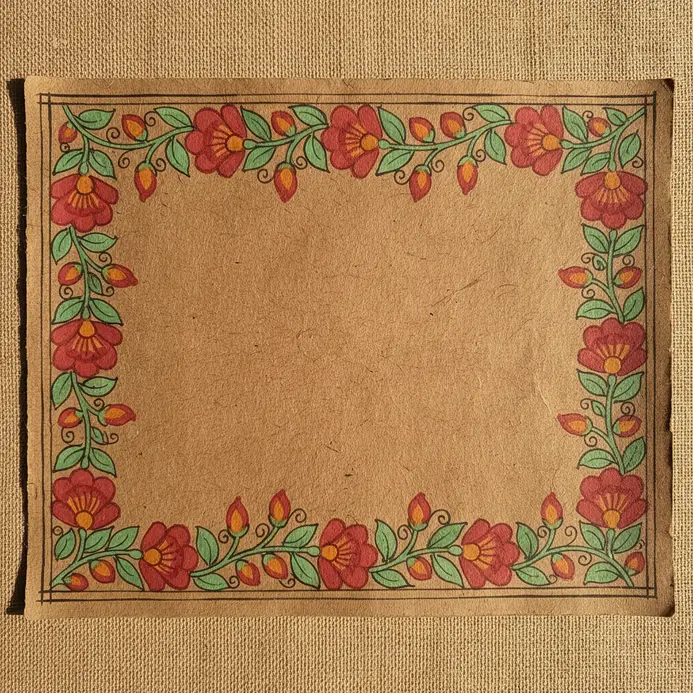
Ever think a floral border sits just one type of flower repeated? The magic happens when you break that rule. I love using an alternating sequence in my Pattachitra work, like pairing an open lotus with a bud, or a flower with a detailed leaf. It creates a dynamic rhythm that stops your artwork from feeling static. Start by sketching two distinct floral motifs that complement each other. The key rests in defining your repeat unit clearly before you begin painting. This ensures your pattern flows perfectly around the entire piece, even at the corners. For another great way to explore traditional patterns, you learn easy Gond painting for beginners. Simple pattachitra art ideas thrive on this rhythmic variety. Does that not look more sophisticated? Feel the satisfying rhythm as your border comes to life.
19. Build an Abstract Checkered Grid Motif
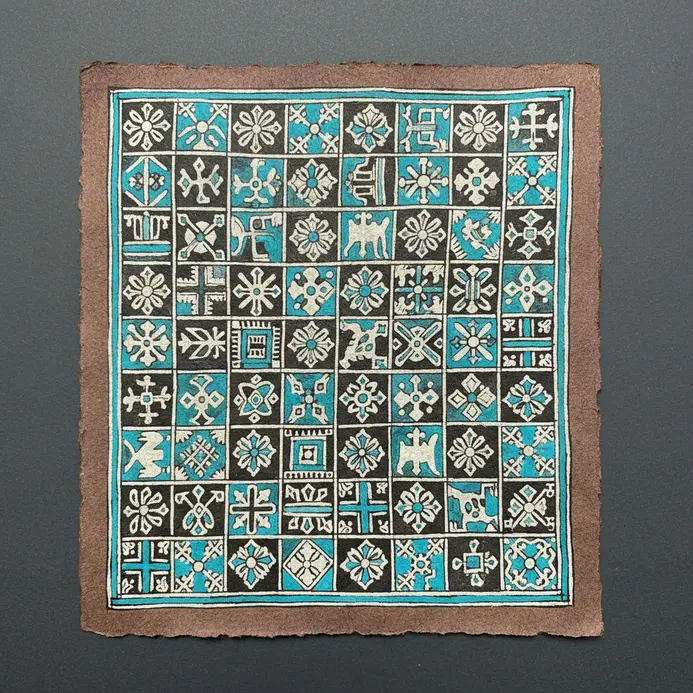
This one looks so structured, but it stays surprisingly simple to execute. Start by drawing a light pencil grid of equal squares on your paper. Then, pick two bold colors and fill in the squares, making sure every square next to another holds the opposite color. That alternating rhythm creates the dynamic visual movement. I love this motif because it combines perfect order with playful contrast. Your eye naturally follows the pattern, which makes the whole piece feel alive. Compiling simple pattachitra art ideas reveals how geometry anchors folk traditions. For a clean finish, let your first row of colors dry completely before starting the next one to prevent smudging. Feel how satisfying it stays to see that crisp, rhythmic pattern come together.
20. Capture a Stylized Bird in Flight Motif
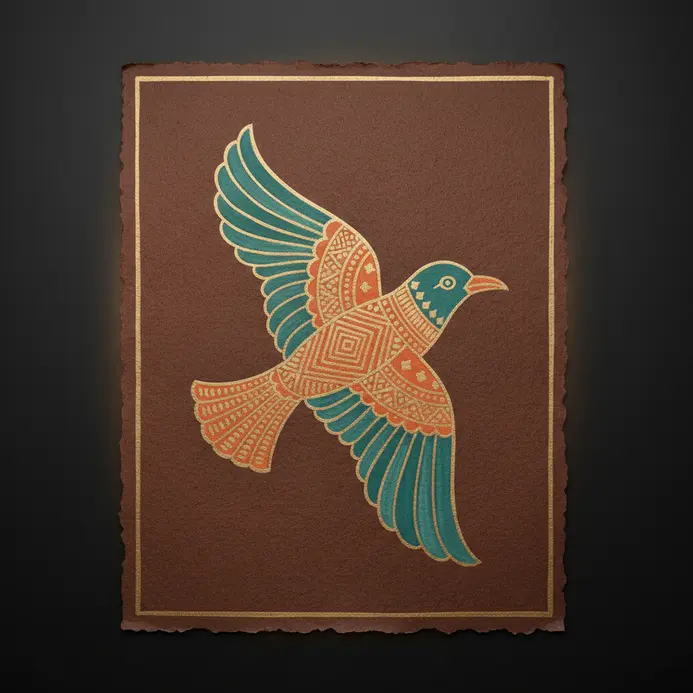
Ever tried to draw a realistic bird and felt stuck? A stylized version offers your freedom ticket. Forget every feather. Instead, focus on the gesture of flight with a few sweeping lines. Lightly sketch a simple, exaggerated silhouette first, then add any internal patterns or implied feathers with a fine brush. This works because it captures the feeling of speed or grace without the pressure of accuracy. Simple pattachitra art ideas prove that suggestion beats literal representation. I love how a single flowing line for the wing makes the whole piece feel alive. For a different approach to simplifying natural forms, explore simple Bhil painting techniques. Feel the joy of movement in your art.
21. Sketch a Traditional Dancer Pose Outline
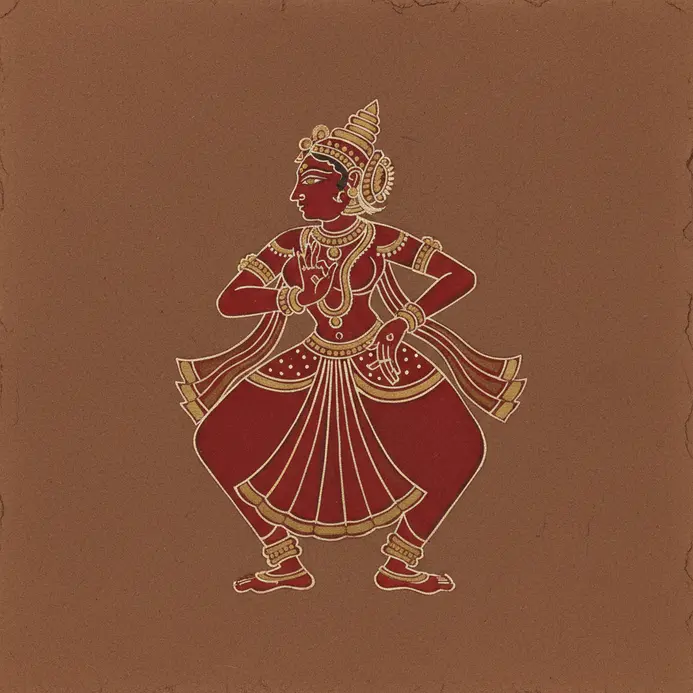
Ever wondered how to capture that flowing grace without detail? This one stays all about movement and form. Start with a tilted oval for the head and sketch a gentle, curved bean shape for the torso. Use flowing lines for the limbs and suggest the drape of a skirt with a few sweeping curves. This works because focusing on the basic S-curve of the spine and asymmetrical balance creates a dynamic, elegant figure instantly. Simple pattachitra art ideas always reward you for studying classical dance postures. I love this approach for its simplicity, and it pairs beautifully with other traditional styles, like the techniques you Bengali painting ideas for artists might explore.
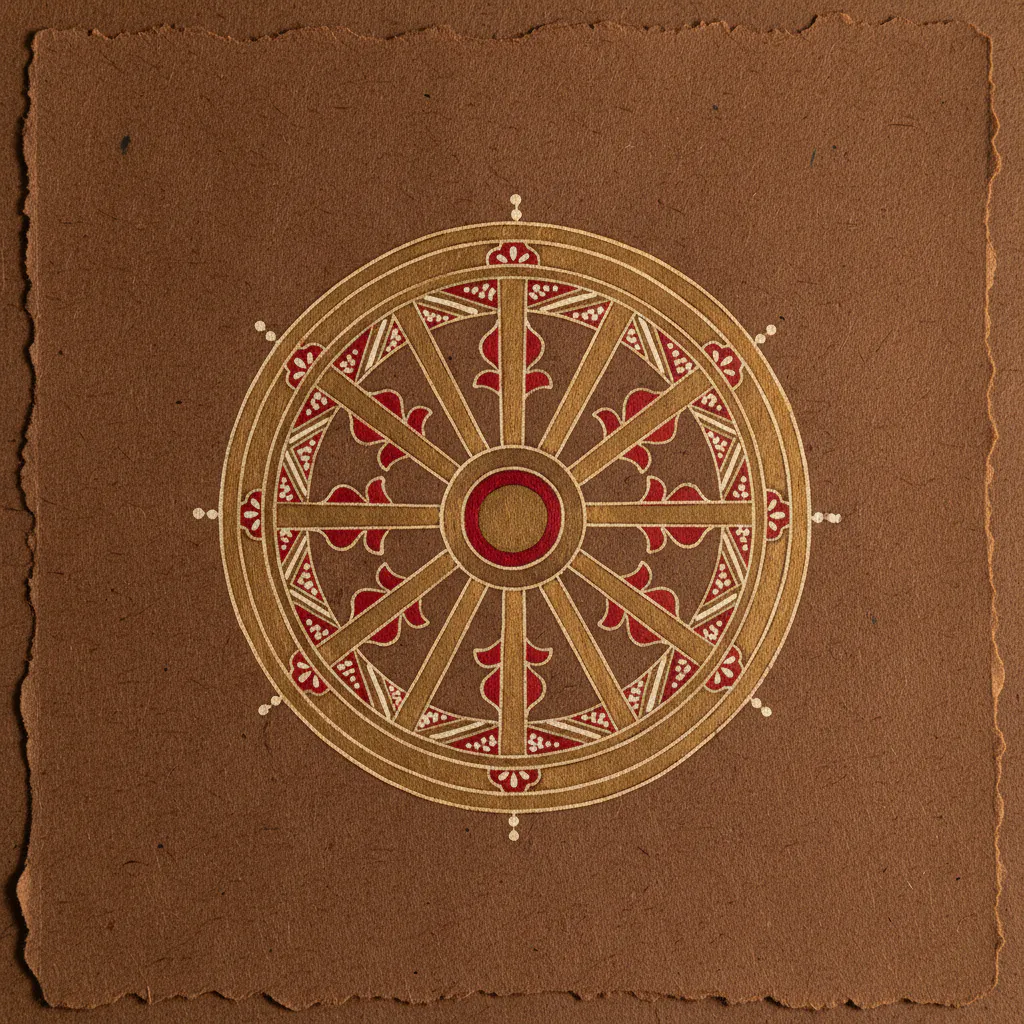
22. Form a Basic Chariot Shape Concept Design
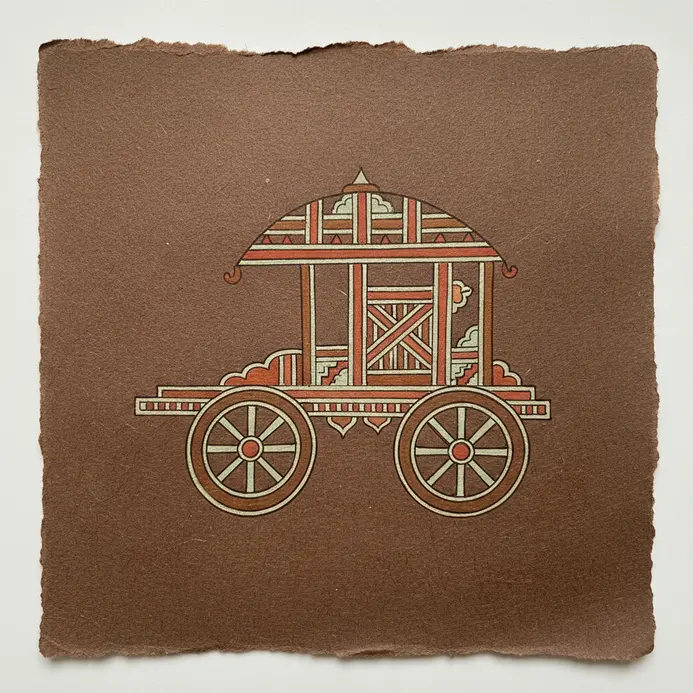
Ever looked at a chariot and thought it looked too complex to draw? Trust me, breaking it into a few key shapes makes it approachable. Start with a slightly trapezoidal platform as your base, wider at the back for stability. Build a low U-shaped cab from that, with an open front for the driver. Place two large spoked wheels toward the rear, sitting behind the platform’s center. This balances the driver’s weight against the pull from the long draft pole attached up front. Simple pattachitra art ideas depend on understanding structural weight in traditional Indian art forms. I love how this functional breakdown gives your art a solid, grounded feel. Try it and see how a strong structure makes your chariot motif look authentic and ready to roll.
23. Add a Flowing River Wave Border Motif
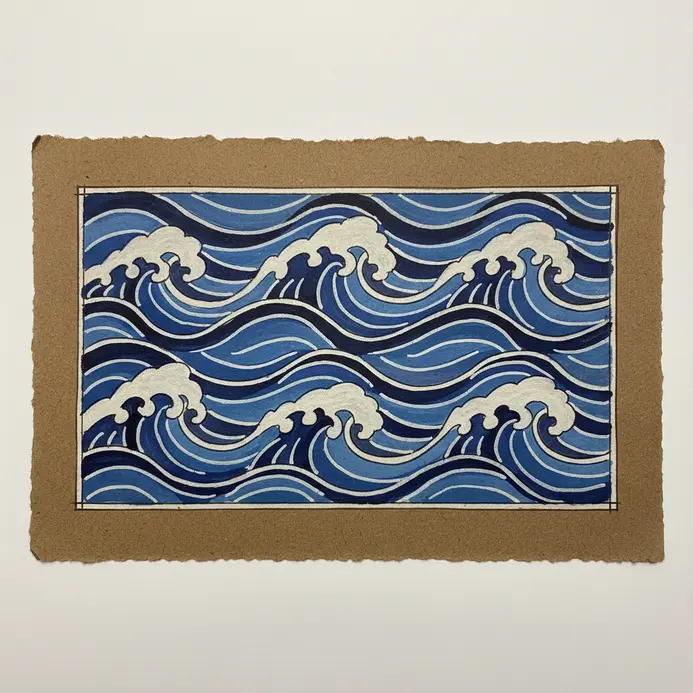
Ever look at a border and feel it needs a bit of movement? A flowing river wave motif fixes that exact moment. It remains all about drawing smooth, undulating lines that mimic water. I love using the Pen Tool in digital software to get those perfect, organic curves. Keep the waves moving in one consistent direction for a natural feel. This design works because it evokes calm and continuity. Tracking simple pattachitra art ideas keeps your digital borders fluid. Try using a gradient of blues within the waves for depth. It stays a wonderfully versatile element that frames your main artwork beautifully.
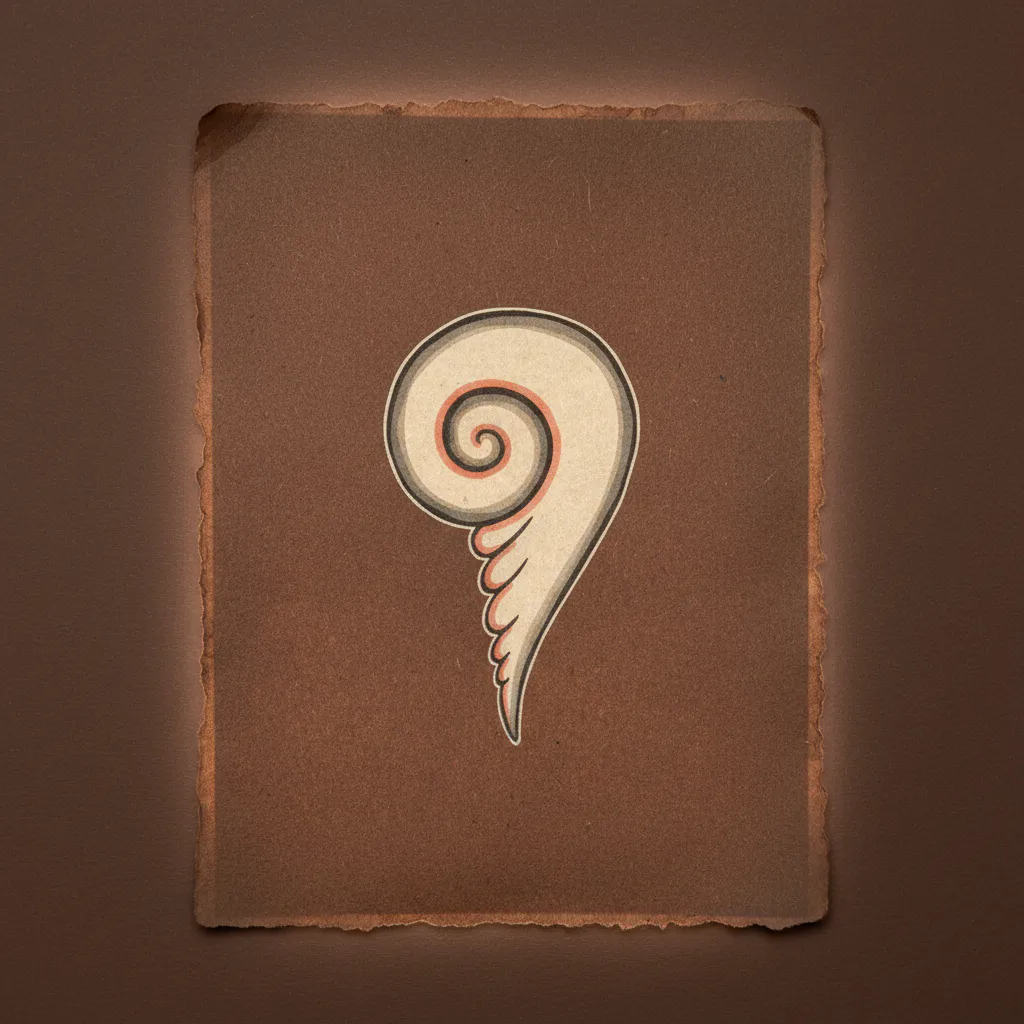
24. Draw a Symbolic Conch Shell Graphic Design
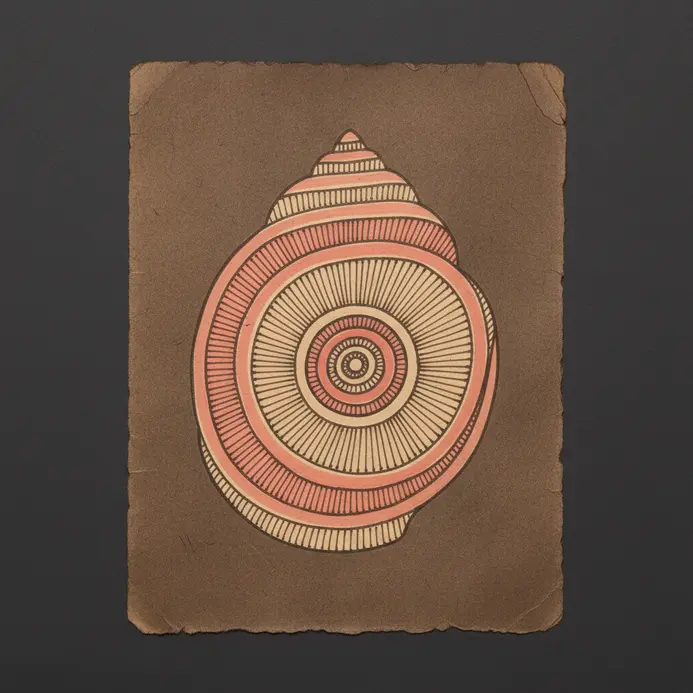
Who would have thought a simple shell holds so much meaning? This design looks intricate, but it stays built on elegant layers. Start by sketching a soft, graceful spiral for the conch’s core body. I love this part because the unbroken spiral line feels like drawing the journey of life itself. Next, add those delicate, arcing echo lines flowing from the shell’s opening. They represent sound and shared wisdom, creating beautiful movement. Then, integrate a subtle, wavy base to connect it to the ocean. Simple pattachitra art ideas honor these sacred curves. The final, magical touch stays a soft internal glow from within the spiral, symbolizing inner light. Isn’t it satisfying to see all the symbolism come together in one graphic? For more inspiration on this style, you discover new ink painting ideas.
25. Paint a Small Decorative Star Flower Motif
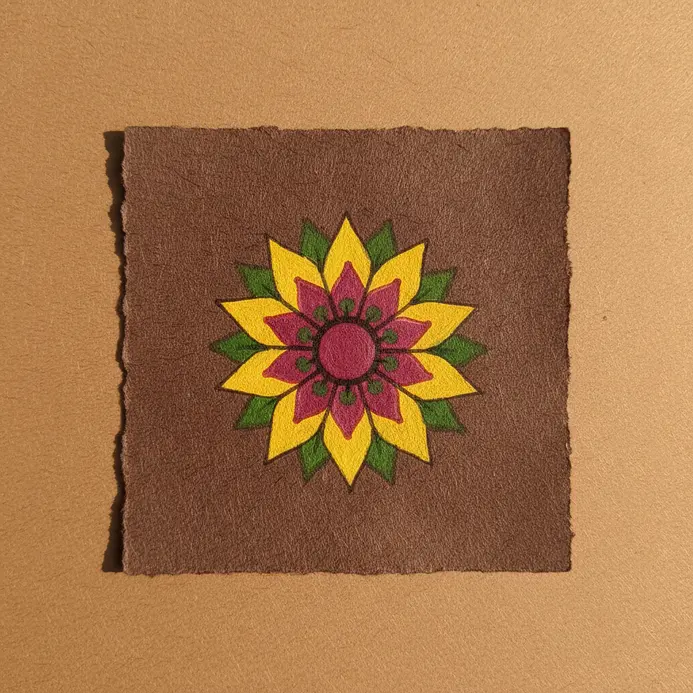
This little motif stands as a personal favorite for adding charm in minutes. Ever feel like a project needs a quick, pretty finish like a goddess in a pattachitra painting? A small round brush serves as your best friend here. Start with a simple dot for the center, then paint short, even strokes radiating out to form the petals. Embrace a slightly imperfect, folk-art style for the delightful result. Simple pattachitra art ideas prove that small accents elevate larger canvases. You will love the whimsical touch it adds.
Varnishing Techniques For Longevity And Lustre
A single coat of matte acrylic varnish locks weeks of careful work into two minutes. This final seal protects vibrant colours from dust and fading, giving the piece a professional, unified finish. Apply it with a soft, wide brush in one smooth direction over the completely dry painting. Avoid going back over areas as they start to dry to prevent streaks or cloudiness. The matte finish stays traditional and prevents glare, letting decorative elements and fine linework shine. Let this protective layer cure fully for a day before handling or displaying your madhubani art. It represents the simplest step with the biggest payoff for preserving your creation.
More Simple Pattachitra Art Ideas Gallery for Inspiration
Conclusion
You started with a love for bold shapes and flat, vibrant colors, and now you hold a collection of your own. The real joy in simple pattachitra art ideas comes from seeing traditional forms take shape under your own pen. For your next step, pick one motif you loved and draw it three times, playing with different filler patterns inside the outlines each time. This practice builds muscle memory and lets you make the style your own. We wait eagerly to see what you create next.
FAQs
Q: What is simple pattachitra art and how does it relate to traditional patta chitra paintings?
A: Simple pattachitra art is a pared-down version of traditional patta chitra paintings, focusing on basic motifs, bold lines and limited color palettes while preserving elements known for its intricate details. These simplified works still reflect the story-driven composition of patta chitra and can be a great entry point for beginners interested in handmade scroll painting techniques from odisha and bengal patachitra traditions.
Q: Where did pattachitra originate — odisha or west bengal?
A: Pattachitra has strong regional roots in both odisha and west bengal. Odisha’s patta chitra often features mythological narratives and folktales inscribed with fine brushwork, while west bengal’s bengal patachitra and scroll painting traditions have their own styles and storytelling methods. Both regions are known for intricate details as well as mythological themes, and exploring both gives a fuller picture of the craft.
Q: Can beginners create simple pattachitra art by hand, and what materials are needed?
A: Yes, beginners can create simple pattachitra art by hand using basic materials: handmade or machine-made canvases or patta (cloth boards), natural or acrylic pigments, fine brushes, and a pencil for initial sketches. Focus on simplified motifs and mythological narratives and folktales inscribed in clear panels to practice composition before attempting the more complex, detailed patta chitra paintings.
Q: How can I simplify traditional scroll painting compositions for a modern craft project?
A: To simplify a scroll painting, choose a single short story or a few scenes from mythological narratives and folktales inscribed, reduce background details, use fewer colors, and emphasize clear, bold outlines. Keep figures and motifs stylized rather than highly intricate, so you maintain the essence of bengal patachitra or odisha styles while making the work more approachable for DIY projects.
Q: Where can I find inspiration for simple pattachitra art online, such as Pinterest?
A: You can discover pinterest’s best ideas and pinterest’s best ideas and inspiration by searching for terms like patta chitra, bengal patachitra, odisha scroll painting, and handmade pattachitra. Use features to find and save ideas, explore related boards, and follow pins that highlight motifs, color palettes, and step-by-step tutorials to build your own simplified designs.