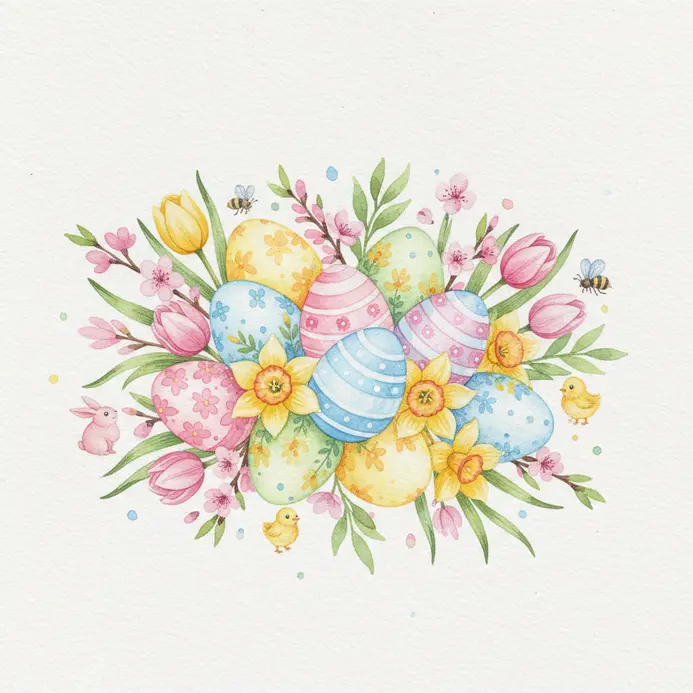


What You Need for Easy Easter Watercolor Paintings
For smooth execution, keep your workspace organized with a sturdy paper pad, a standard tube or pan palette, a size eight round brush for broad washes, and a size two detail brush for fine lines. Add a small jar of clean water, a wooden stirring tool, and soft paper for testing mixtures. Cotton swabs and masking fluid provide excellent reserve protection, while coarse sea salt introduces organic crystalline textures when dampened. Thinner paper cups quickly, preventing controlled saturation. Choose a nine by twelve inch sheet size to maintain manageable dimensions during early practice stages. Expensive materials remain unnecessary when you focus on pigment behavior and paper absorbency.
Before You Start: Easy Easter Watercolor Basics
Select one small subject before beginning, keeping initial outlines loose so shapes remain open and fluid. Test your chosen pigments on scrap paper to observe transparency levels and pigment granulation before applying them to your main sheet. When dampening portions for soft backgrounds, limit moisture to the exact section needing diffusion to preserve crisp boundaries elsewhere. Allow each layer to reach complete dryness before introducing secondary washes or fine line work to prevent unwanted color migration. Preliminary mapping guarantees cleaner edges and reduces correction time later.
1. Start With A Pastel Wash Egg
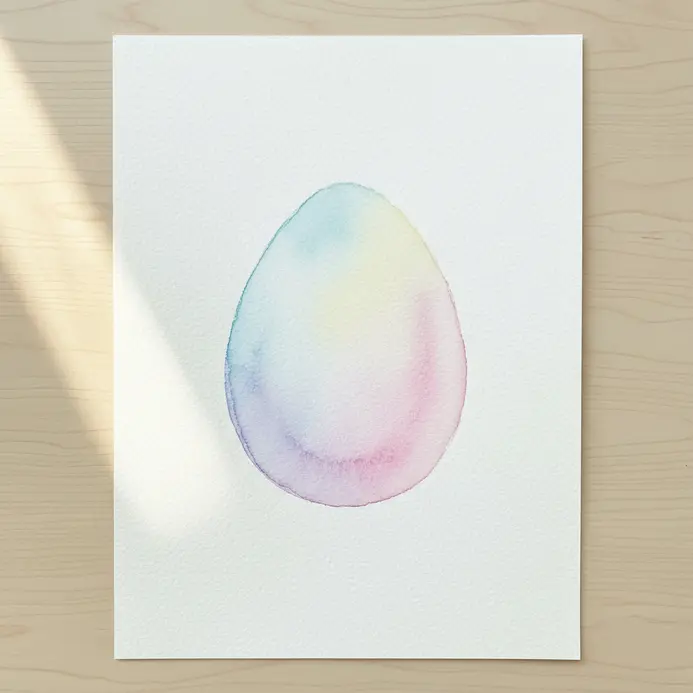
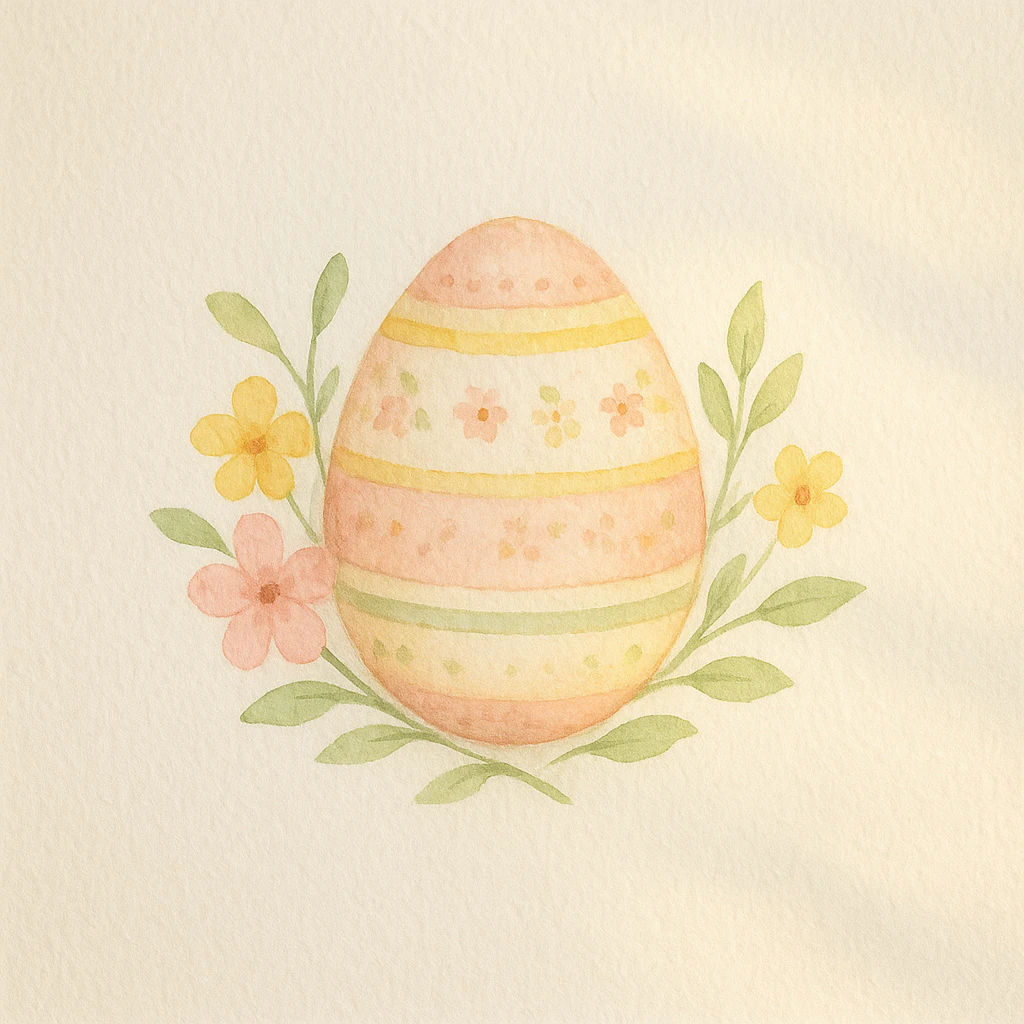
Creating a softly tinted egg begins with a highly diluted pigment mixture that stains without obscuring the paper surface. This approach relies on transparent color application to generate a luminous underlayer that feels lighter than traditional opaque coverage. You mix warm water with a minimal pigment drop ratio to achieve translucency that preserves underlying texture. Applying the wash with a flat synthetic brush ensures even distribution across curved boundaries. This foundational skill supports many easy easter watercolor paintings ideas, and you can study additional pigment dilution methods through specialized technique tutorials.
2. Paint A Speckled Robin Egg
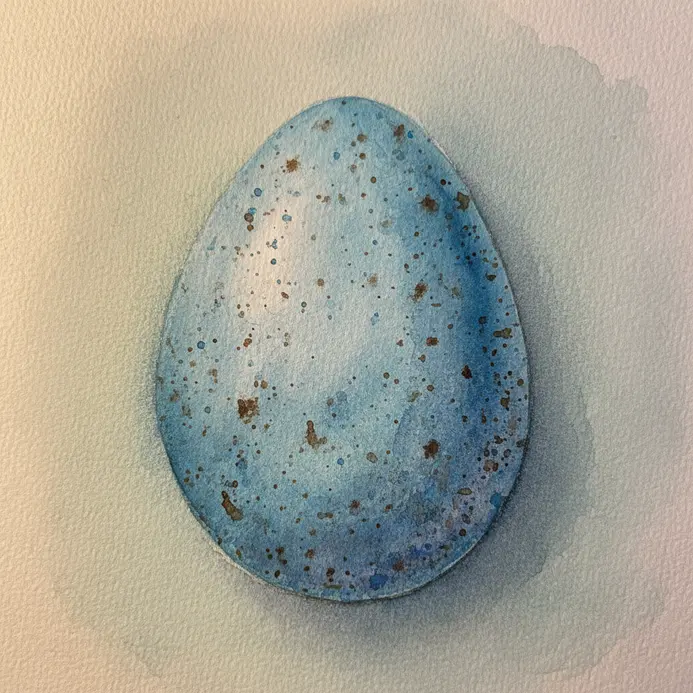
Mastering this miniature easter egg requires blending a pale blue-green mixture before introducing organic surface texture. Combine cobalt blue with a single leaf-green drop and ample water to achieve a muted turquoise tone that mirrors natural shells. You will notice this ranks among the most popular easy easter watercolor paintings ideas because the speckling process remains highly forgiving and visually rewarding. The technique thrives on controlled spattering rather than rigid precision, allowing pigment pools to settle randomly. Once the base layer dries completely, load a stiff toothbrush with diluted burnt umber to scatter fine droplets across the surface. Tilt the bristle ends slightly and tap a wooden dowel to direct falling patterns toward the broader end of the oval. Concentrating spots near one side mimics natural biological distribution and enhances visual authenticity in your fun easter decorating. You can deepen certain areas with an extra pass of darker pigment to establish subtle depth without overwhelming the composition. Mastering these transparent base washes prepares you for advanced easy easter watercolor paintings ideas and helps refine your overall pigment control.
3. Build A Botanical Floral Egg
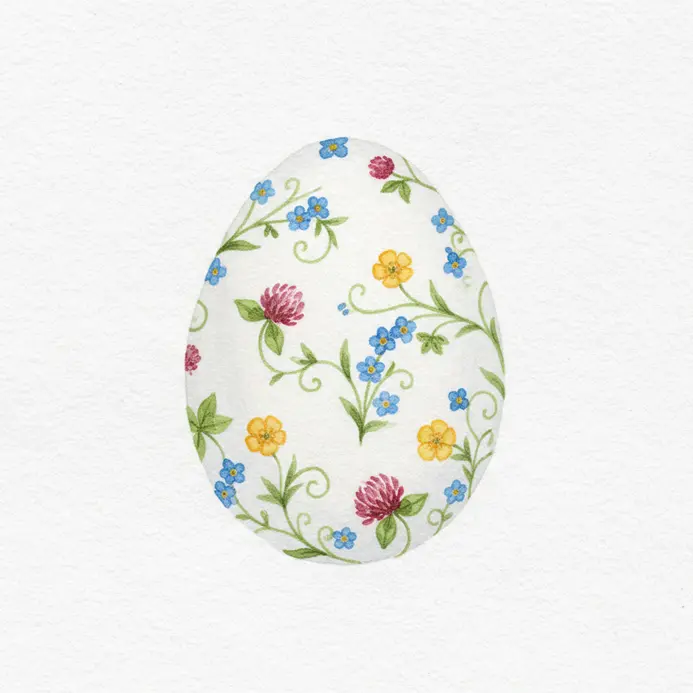
Transform a basic egg outline into a miniature garden by arranging dried botanical elements along its curved surface. Begin painting a pale cream or sage undercoat to establish neutral contrast before layering leaf shapes and floral centers. Use a fine liner to sketch gentle vine pathways that curve naturally around the middle section. This approach adapts beautifully to easy easter watercolor paintings ideas that require organic composition and balanced negative space, enhancing your creativity. Layer larger foliage first using a damp round brush to push color toward leaf tips while leaving lighter centers for dimension. Add smaller blossoms and fern fragments along the outer edges to frame the central focal area. Keep brush pressure light to maintain soft transitions between overlapping elements. These botanical layout guides complement many fun and easy easter watercolor paintings ideas and provide clear direction for seasonal subjects. Reference dedicated floral tutorials to refine your petal rendering and leaf tapering skills before attempting complex arrangements.
4. Add Bold Gold Stripe Egg Accents
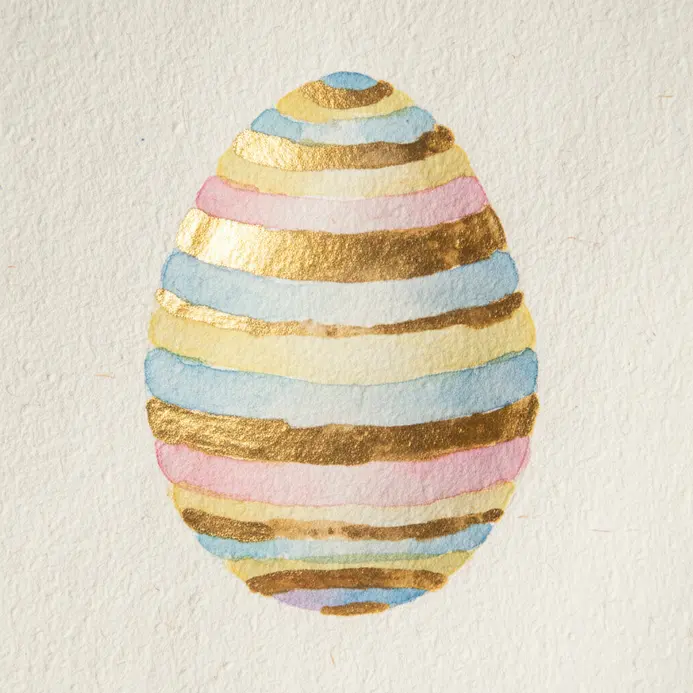
Introduce metallic accents by painting strong base layers in navy or burgundy before blocking off parallel bands with masking tape. Allow the dark foundation to reach complete dryness before applying pressure to the tape edges to prevent pigment bleeding underneath. Apply gold metallic paint using small stippling motions with a square brush to build opacity in thin layers. This metallic approach transforms standard easy easter watercolor paintings ideas into elegant statement pieces that catch ambient light beautifully. Remove the tape immediately after applying the final gold stroke while the paint remains slightly damp to prevent edge tearing. Repeat the taping and painting sequence for additional parallel lines if you desire a complex geometric pattern. Seal the completed piece with a matte fixative to protect the metallic layer from oxidation over time. A protective clear coat elevates your easy easter watercolor paintings ideas and extends their display longevity on shelves or mantles.
5. Create A Moss Nest Egg Nestling
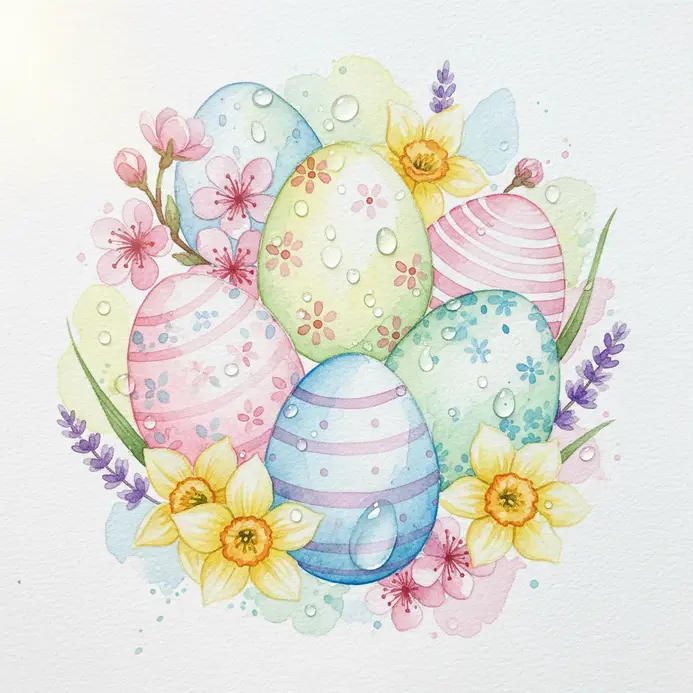
Construct a miniature woodland scene by arranging preserved moss sheets into a shallow bowl shape and positioning painted stone centers inside. Shape the base using dried grapevine fragments or flexible twigs to provide structural depth before introducing soft green tones. Paint subtle shadow washes along the interior curves to simulate natural depth and ground the central elements securely. This tactile method completes several easy easter watercolor paintings ideas that emphasize natural textures and gentle color palettes. Add scattered dried leaves and tiny twig fragments around the moss edge to enhance realism without overwhelming the focal point. Introduce pale ochre and raw umber dots to represent pebbles and forest debris naturally settling into the arrangement. Keep the overall color harmony cool and muted to maintain a cohesive spring atmosphere throughout the composition. Reference foundational landscape exercises to improve your bark rendering and moss texturing accuracy.
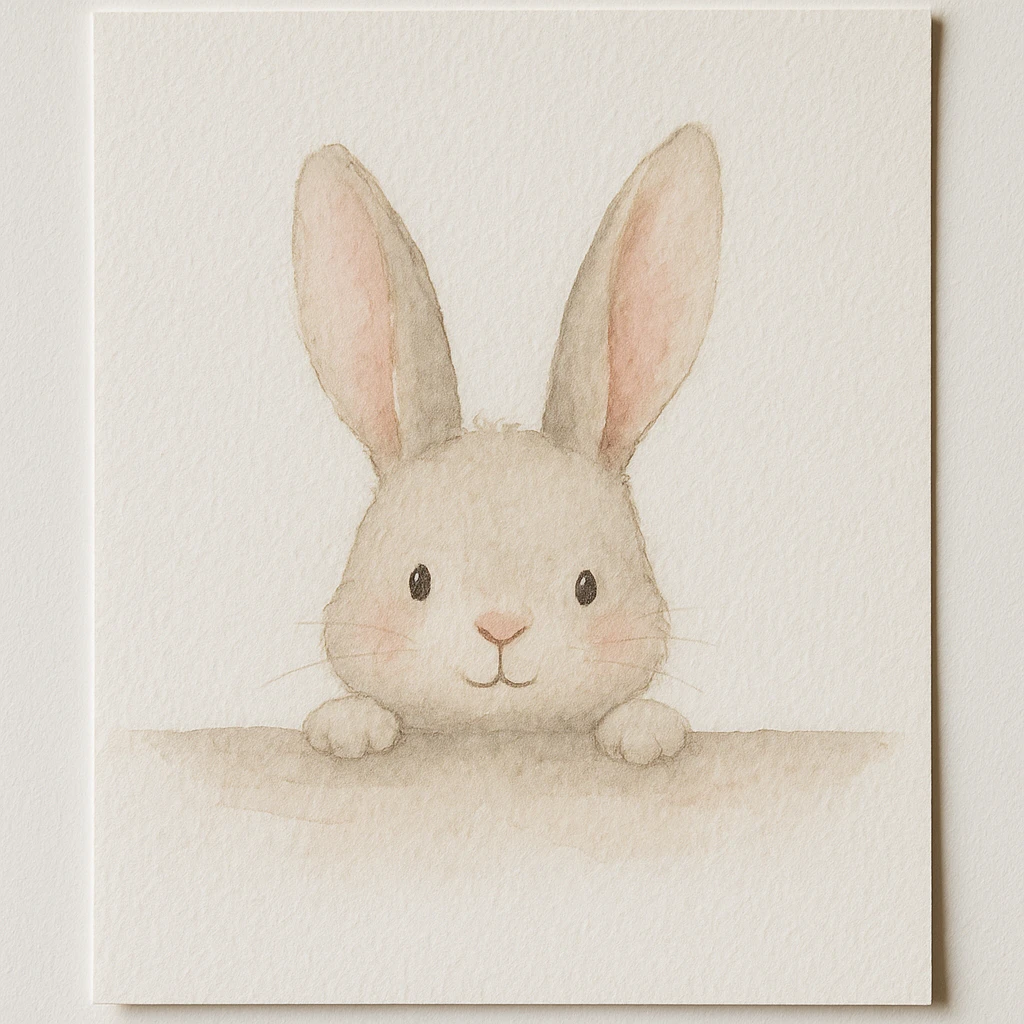
6. Sketch A Soft Watercolor Bunny Silhouette
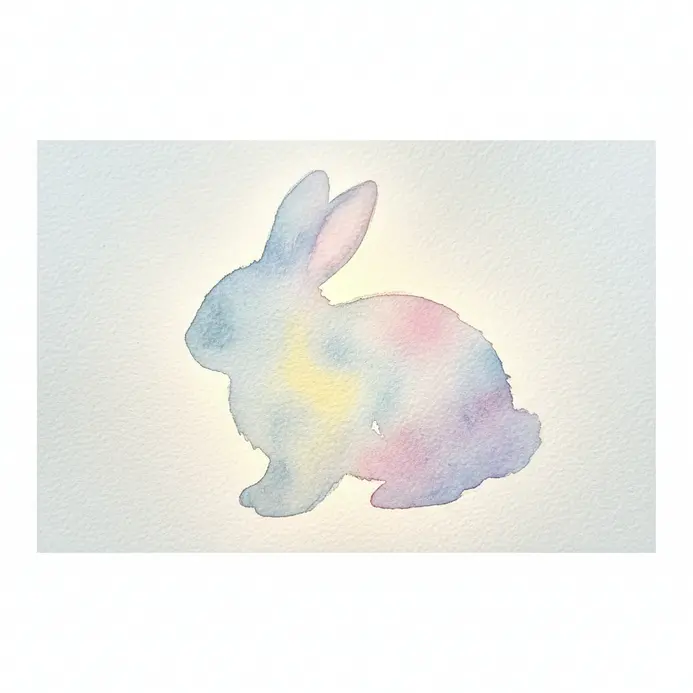
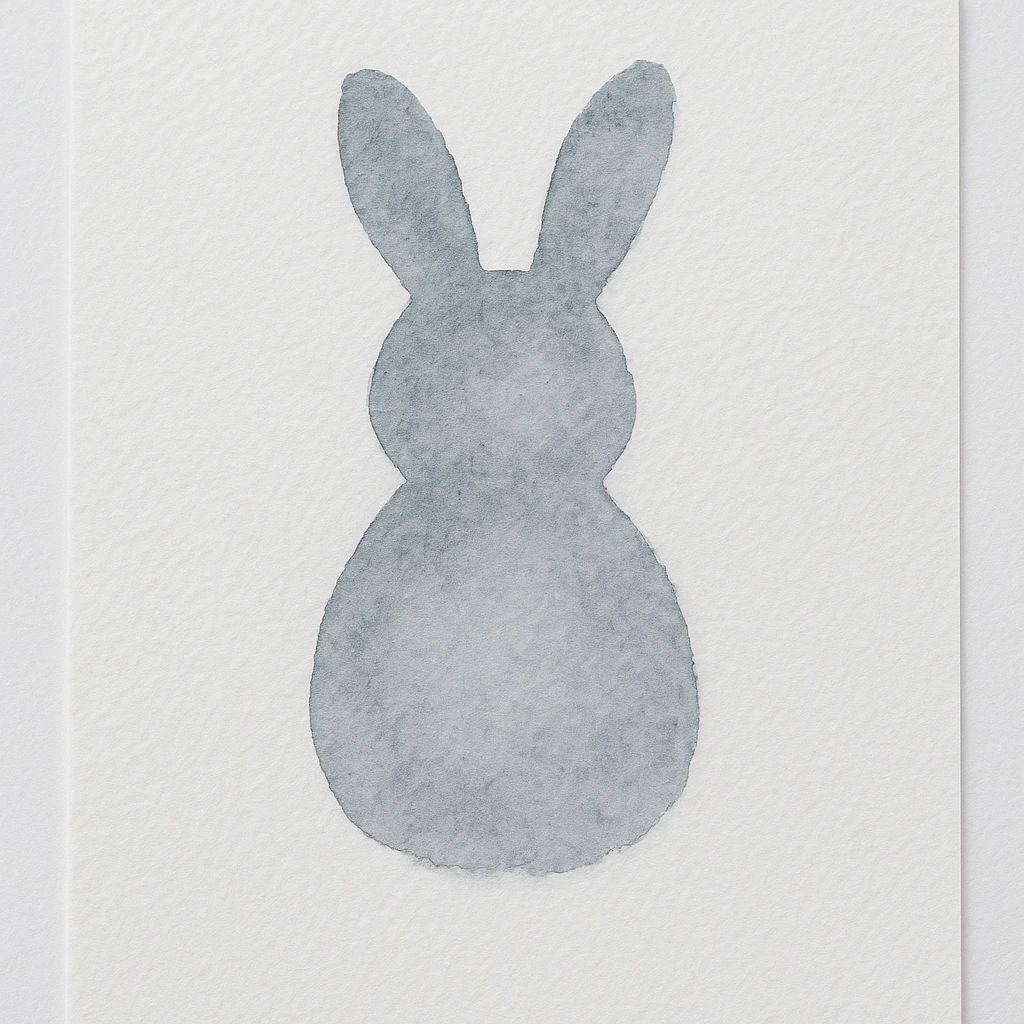
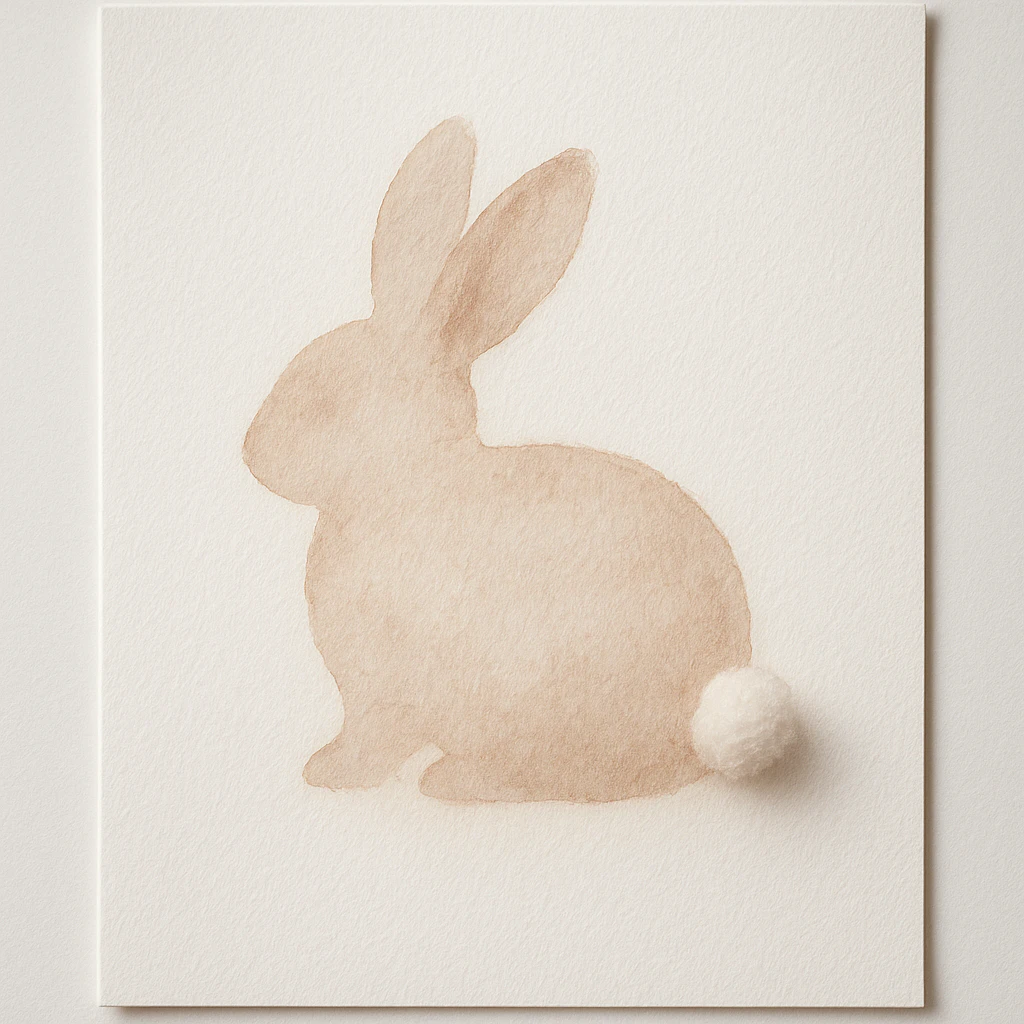
Create a dreamlike atmosphere by outlining gentle curves that suggest a resting rabbit without relying on strict anatomical details. Dampen the interior boundary lightly with a clean brush before dropping diluted ultramarine or violet into the wet area to allow natural pigment flow. This silhouette method defines many easy easter watercolor paintings ideas because it trades precise linework for atmospheric color blending. The soft edges form automatically through capillary action, reducing the need for corrective detailing. Reserve small white sections along the ear tips and spine using masking fluid or careful brush steering to simulate backlighting effects. Introduce cool shadow tones along the lower body once the initial wash dries to establish volume and weight. Add a faint background wash in complementary warm peach to push the silhouette forward visually in your easter paintings. These mood-focused exercises teach pigment control and color temperature balancing while keeping the process highly enjoyable.
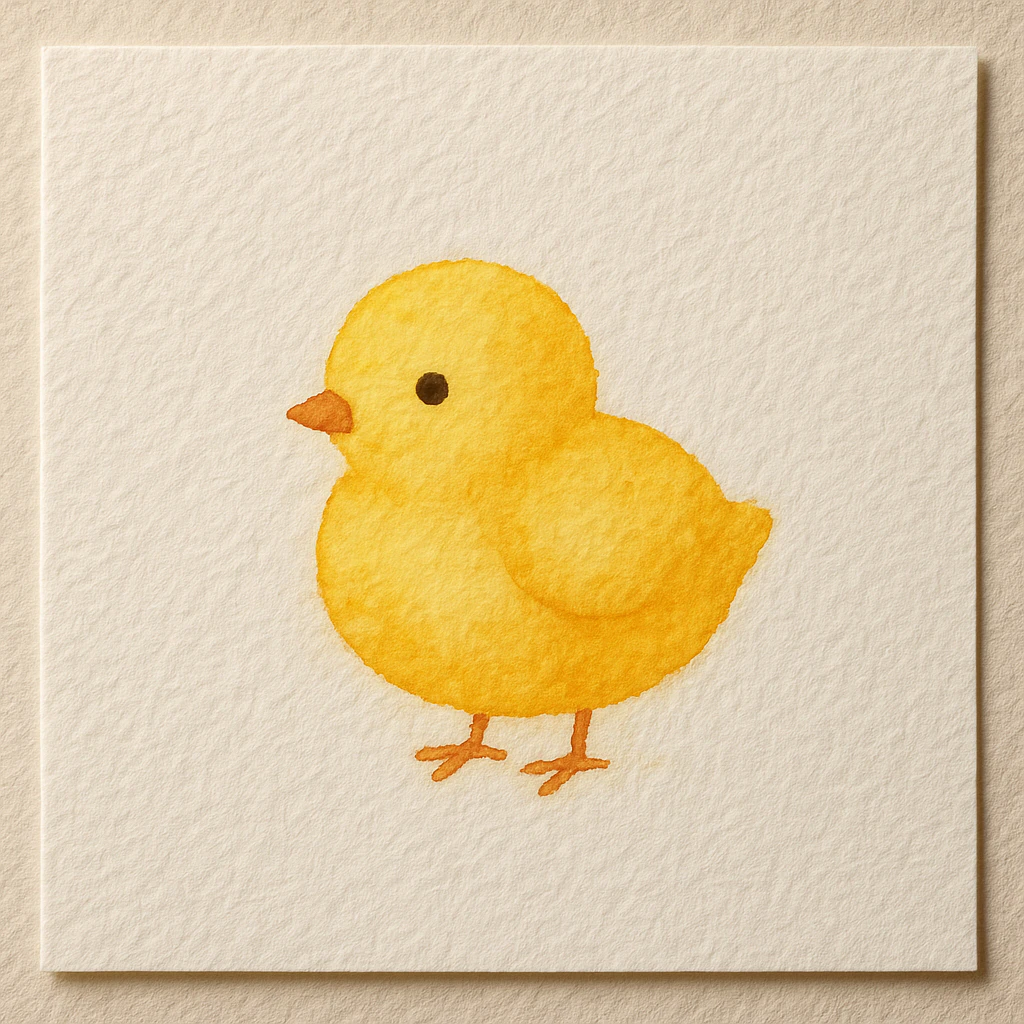
7. Paint A Fuzzy Yellow Chick Shape
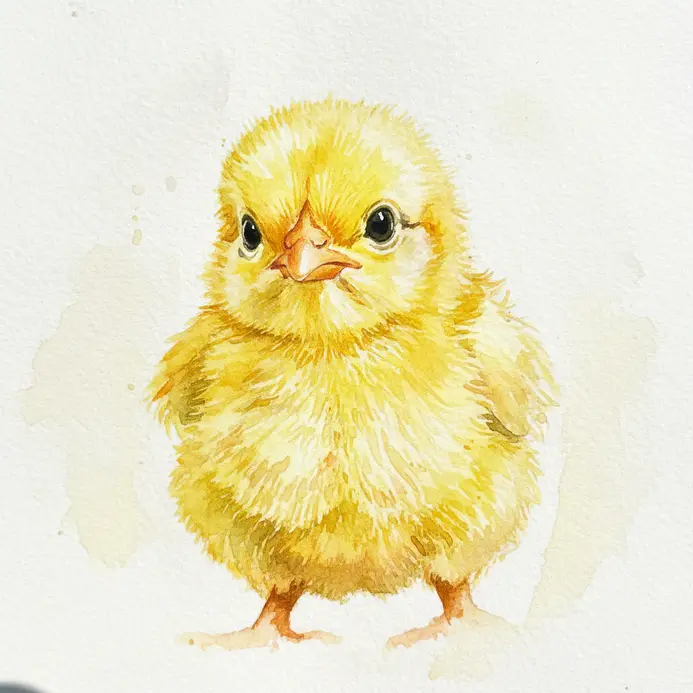
Form a rounded body outline using a faint graphite sketch before applying a warm cadmium yellow wash to establish the primary color field. Load a worn bristle brush with diluted yellow ochre and drag it lightly across the surface to create broken hair-like strokes. The technique remains popular among easy easter watercolor paintings ideas due to fast drying times and forgiving application methods. Overlapping short directional strokes along the belly and back enhances fluffiness without requiring precise rendering skills. Introduce a soft burnt sienna shadow beneath the folded wings to separate overlapping shapes and add dimensional weight. Keep facial features minimal by painting a single dot for the eye and a tiny triangle for the beak. Lift a thin highlight line along the crown using a damp sponge to catch imaginary overhead light sources. Review holiday-themed composition guides to refine your seasonal palette choices and character arrangement strategies.
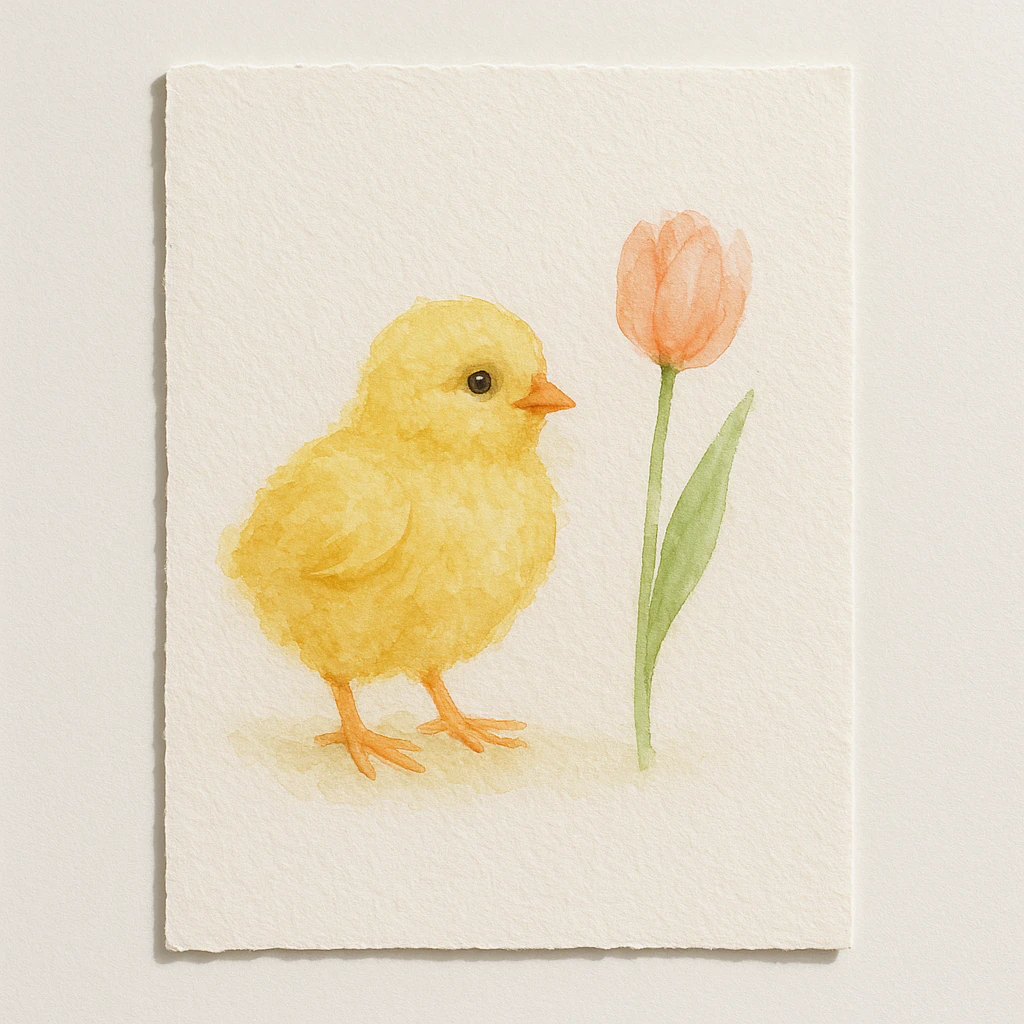
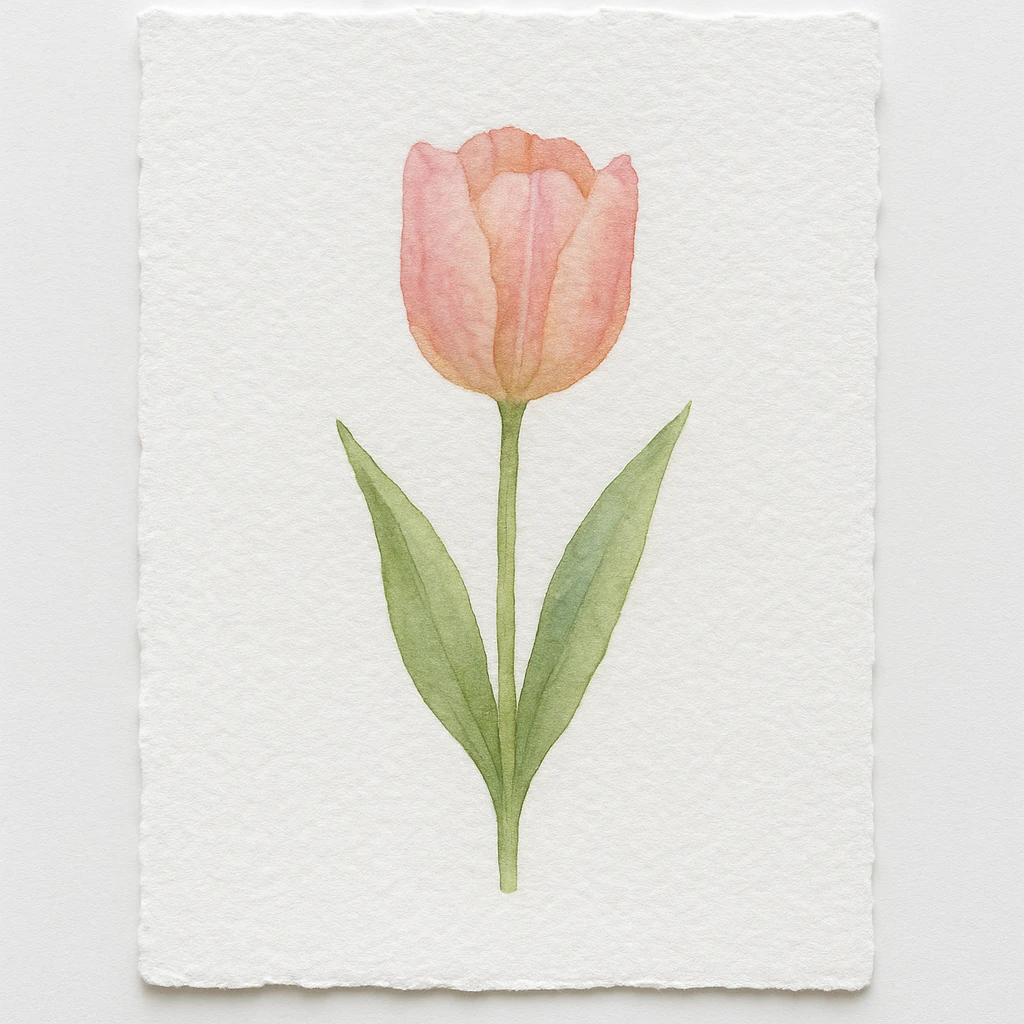
8. Arrange A Pink Tulip Cluster
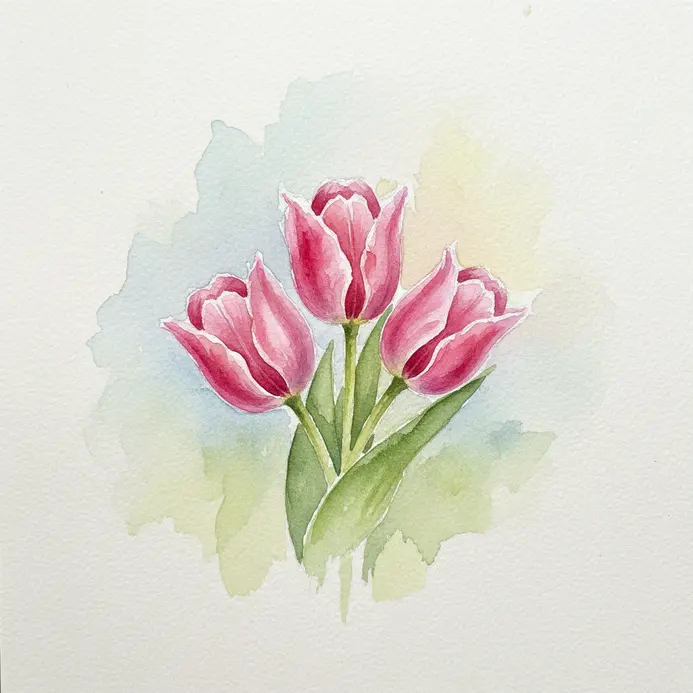
Design a dense gathering of curved petals by painting vertical stems first and building cup-shaped blooms toward the top. Select varying heights and slight tilt angles for each stalk to mimic natural growth patterns and avoid rigid symmetry. Mix alizarin crimson with abundant water to generate translucent blush tones that transition smoothly into deeper salmon centers. This arrangement strategy strengthens your easy easter watercolor paintings ideas and improves compositional balance through asymmetrical grouping. Introduce green washes along the lower stem regions using hooker green and yellow ochre to establish leaf bases before adding midribs. Leave unpainted gaps between overlapping cups to reserve negative space and maintain visual breathing room in your easter paintings. Paint thin curved lines to suggest subtle stem curves without overcomplicating the lower foliage area. Study foundational stem rendering tutorials to refine your line confidence and color transition accuracy before tackling complex bouquets for your easter paintings.
9. Lift A White Daisy Sprig
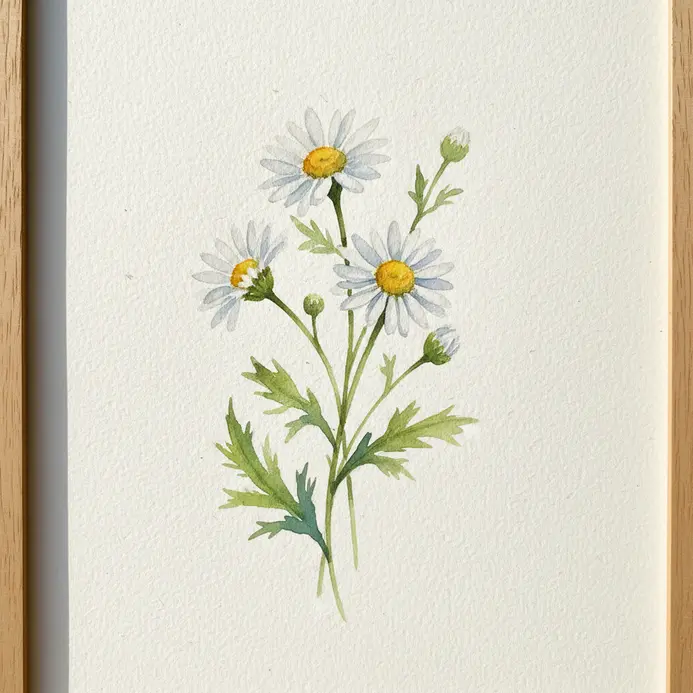
Capture delicate botanical forms by painting a soft azure wash across the background before lifting petal outlines with a clean damp brush. Draw slender green stems curving upward using a fine detail brush and dilute sap green to maintain gentle tonal separation. This lifting technique refines most easy easter watercolor paintings ideas by highlighting negative space and reducing reliance on opaque white paint. The contrast between the dark background and reserved white shapes creates immediate focal depth. Add a warm yellow center dot to each lifted bloom to anchor the floral arrangement and provide visual warmth. Keep petal widths narrow and slightly curved to mimic natural daisy growth habits observed in early spring meadows. Introduce tiny green sepals beneath each flower head to connect the stems smoothly to the bloom base. Explore seasonal floral study collections to expand your petal shape vocabulary and lifting precision techniques.
10. Shape A Purple Crocus Bloom
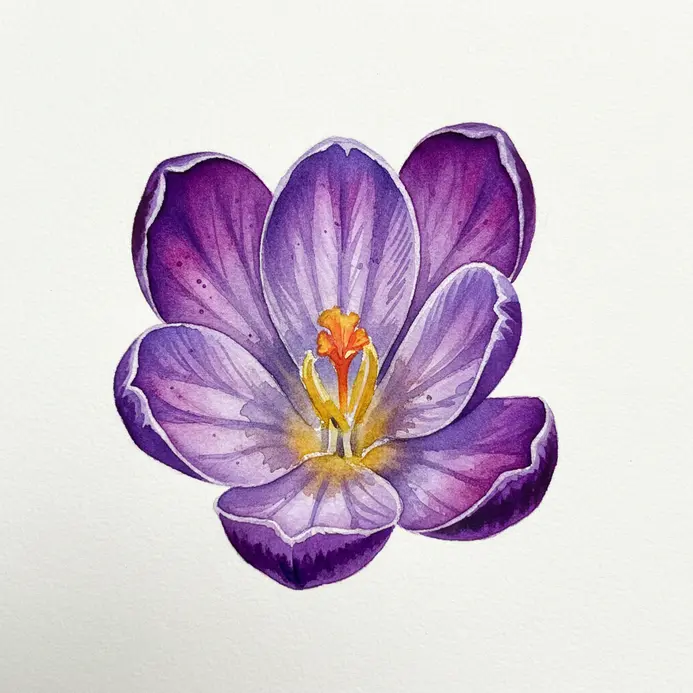
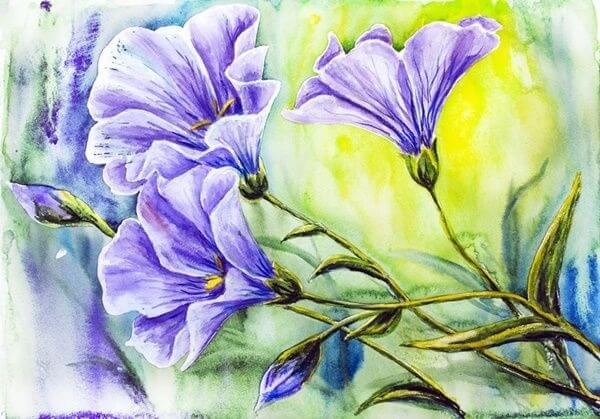
Construct a tapered cup shape by sketching three overlapping arcs that converge at a narrow base before applying pale violet washes. Introduce deeper plum tones along the overlapping edges and stem attachments to generate immediate volume and structural clarity. The layering method supports countless easy easter watercolor paintings ideas by teaching controlled pigment saturation and edge softness. Gentle wet-into-wet transitions between petal sections create seamless gradients that mimic natural light diffusion. Add fine yellow-orange stamen lines using a zero-point round brush once all foundational layers reach complete dryness. Keep the central core slightly warmer to draw the viewer eye inward toward the reproductive structures. Extend faint green strokes downward to form the calyx tube that connects to the supporting stalk. These botanical detailing exercises reinforce color temperature management and microscopic feature placement.
11. Frame A Simple Spring Wreath Circle
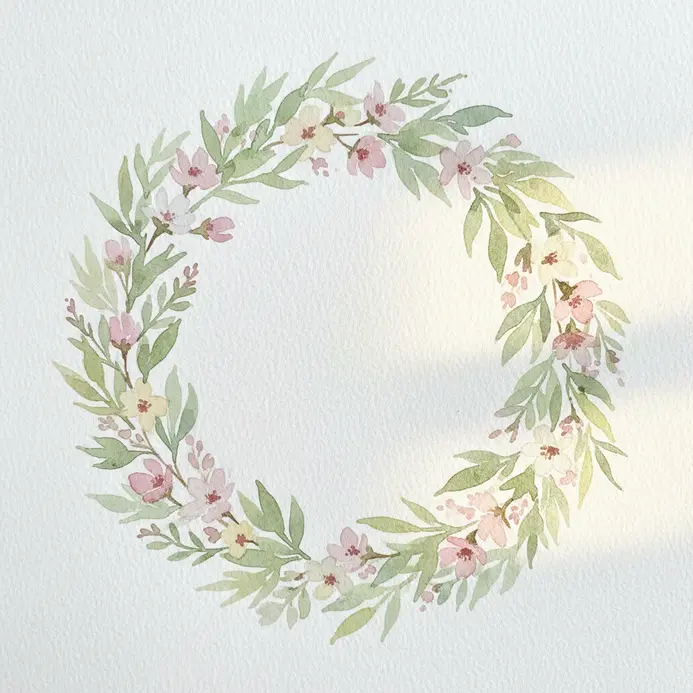
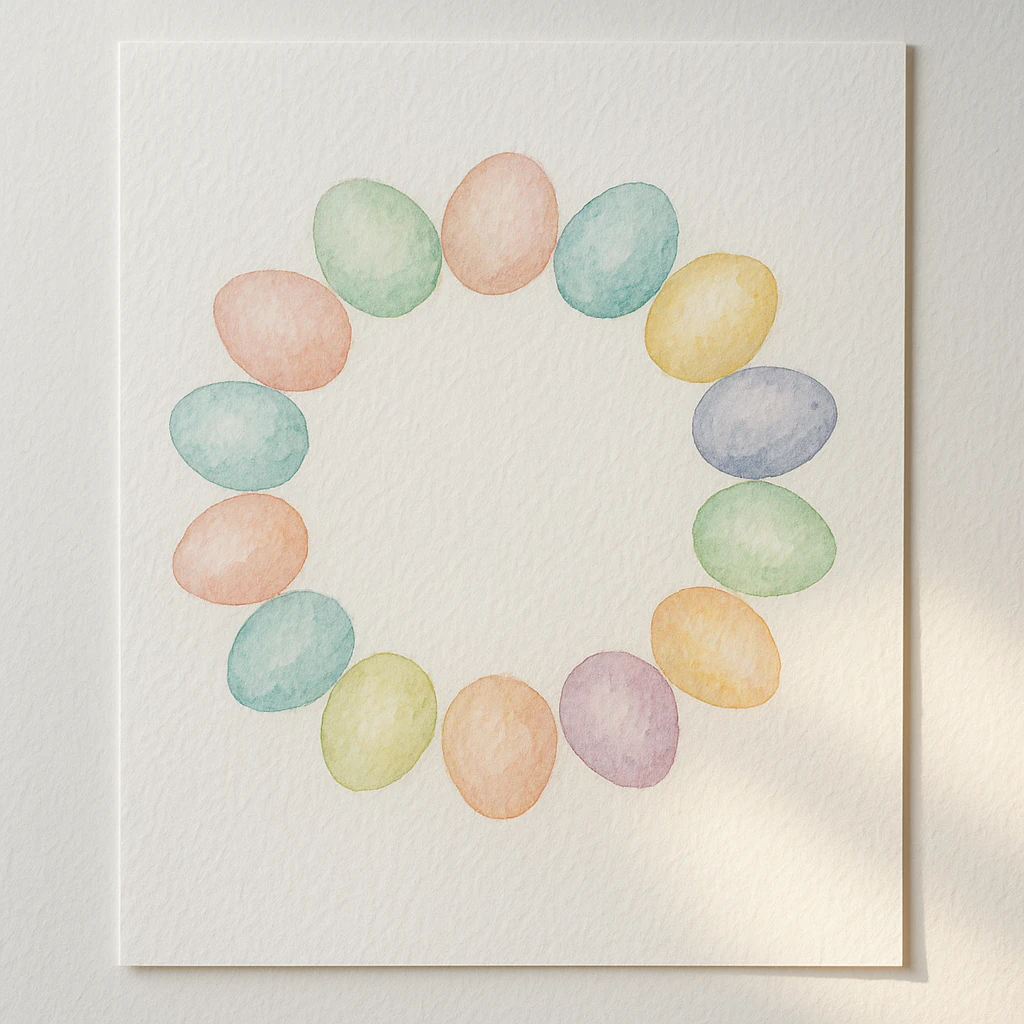
Design a circular border arrangement by mapping a faint compass guide and populating the perimeter with alternating leaf clusters and small blooms. Start painting from the bottom center and work outward in both directions to maintain symmetrical density distribution. Use a damp sponge to soften outer edges and create a gentle atmospheric fade that blends softly into the surrounding page. This wreath structure complements many easy easter watercolor paintings ideas when you focus on repetitive rhythm instead of isolated focal points. Introduce pastel ribbon bows at the lower intersection to provide structural weight and seasonal decorative context. Keep background elements highly diluted to ensure the foliage and flowers in your easter paintings remain visually dominant. Rotate your workspace frequently while painting to maintain comfortable brush access and consistent angle control. Review botanical composition manuals to refine your circular framing strategies and seasonal color coordination methods.
12. Paint A Lavender Garland Egg
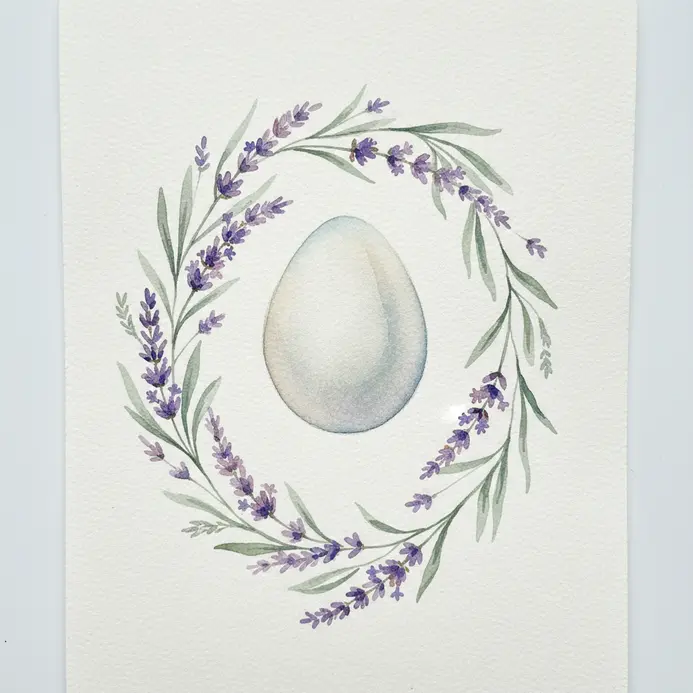
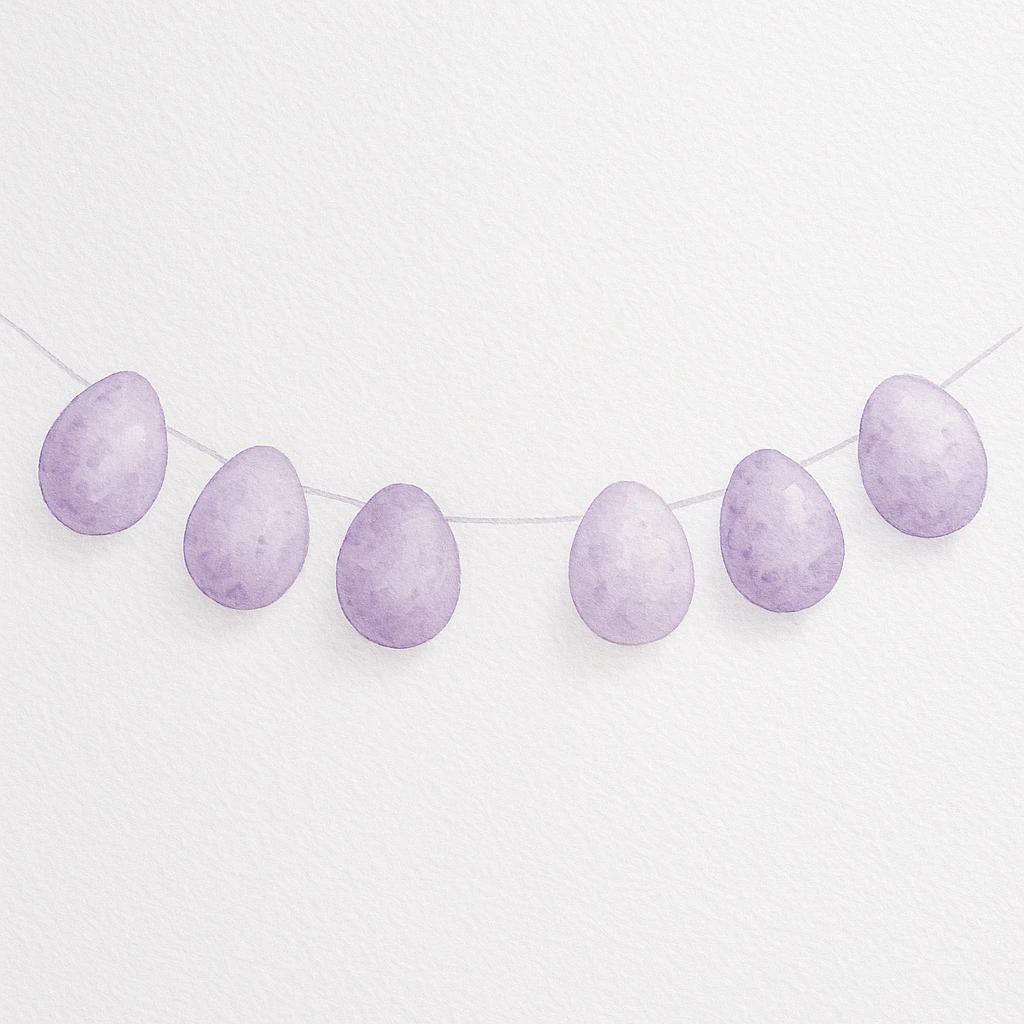
Wrap curved surfaces in flowing botanical vines by sketching a continuous wavy line before adding dense floral clusters along the peaks. Apply pale violet dots using a stippling motion to simulate tiny lavender florets gathering tightly along the stem pathway. This floral draping enhances typical easy easter watercolor paintings ideas and creates romantic movement that guides the viewer eye around curved forms. Maintain irregular cluster spacing to preserve an organic wildflower aesthetic. Introduce slender green leaves beneath each floral grouping using upward sweeping strokes with a fine detail brush. Keep the background surface highly translucent to allow the egg curvature to remain visible beneath the decorative elements. Anchor lower stems with a slightly darker wash to establish gravity and prevent visual floating. Reference seasonal arrangement tutorials to master trailing vine placement and balanced weight distribution.
13. Bundle A Carrot Bouquet With Leaves
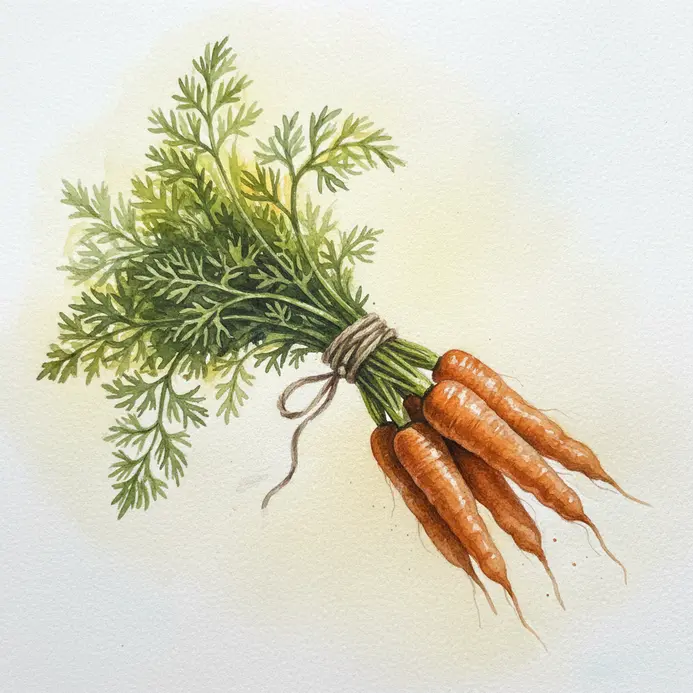
Construct a tied vegetable grouping by painting vertical orange wedges first and layering sprawling green crowns above the bundled section. Blend cadmium orange with yellow ochre along the tapered tips to generate natural color variation and surface warmth. This vegetable arrangement expands your easy easter watercolor paintings ideas by introducing edible subjects that require confident linear stroke application. Keep root tips slightly darker to simulate soil residue and enhance agricultural authenticity. Apply sweeping green washes above the bundle using phthalo green diluted with ample water to create feathery top canopies. Overlapping vertical and horizontal strokes generate convincing leaf mass without requiring individual blade rendering. Add thin twine wraps around the middle section using fine brown lines to secure the visual grouping and establish focal tension. These farm-to-table studies teach structural grouping and contrasting texture separation.
14. Paint A Bunny Under A Small Umbrella
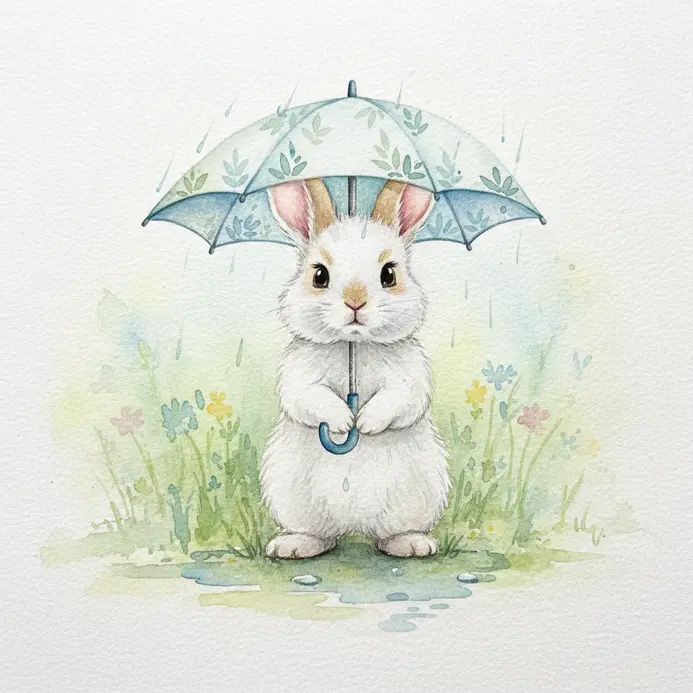
Create a whimsical narrative scene by positioning a rounded canopy structure above a simplified rabbit silhouette against a pale damp wash. Paint the dome shape first using a flat brush, then drop alternating pastel bands to suggest decorative striping without strict precision. This umbrella composition ranks highly in easy easter watercolor paintings ideas due to storytelling appeal and forgiving shape requirements. Keep the rabbit body highly simplified using overlapping ovals and curved ear extensions to maintain stylistic harmony. Introduce fine vertical streaks across the background using a zero-point liner to simulate gentle spring rainfall. Add subtle shadow reflections beneath the umbrella edge to ground the composition and establish spatial depth. Use a damp brush to soften outer background areas and push focus toward the central sheltered figure. Reference narrative illustration guides to improve scene composition and emotional tone balancing techniques.
15. Add A Sunrise Cross Window Glow
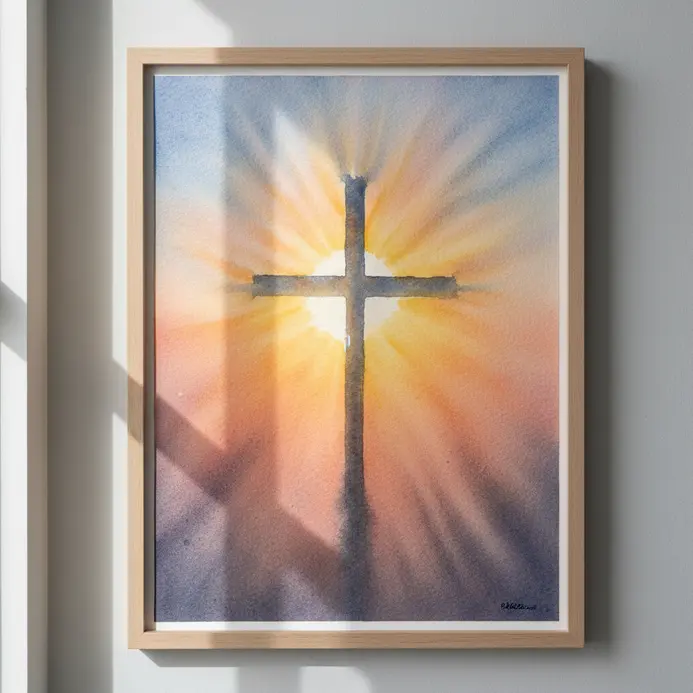
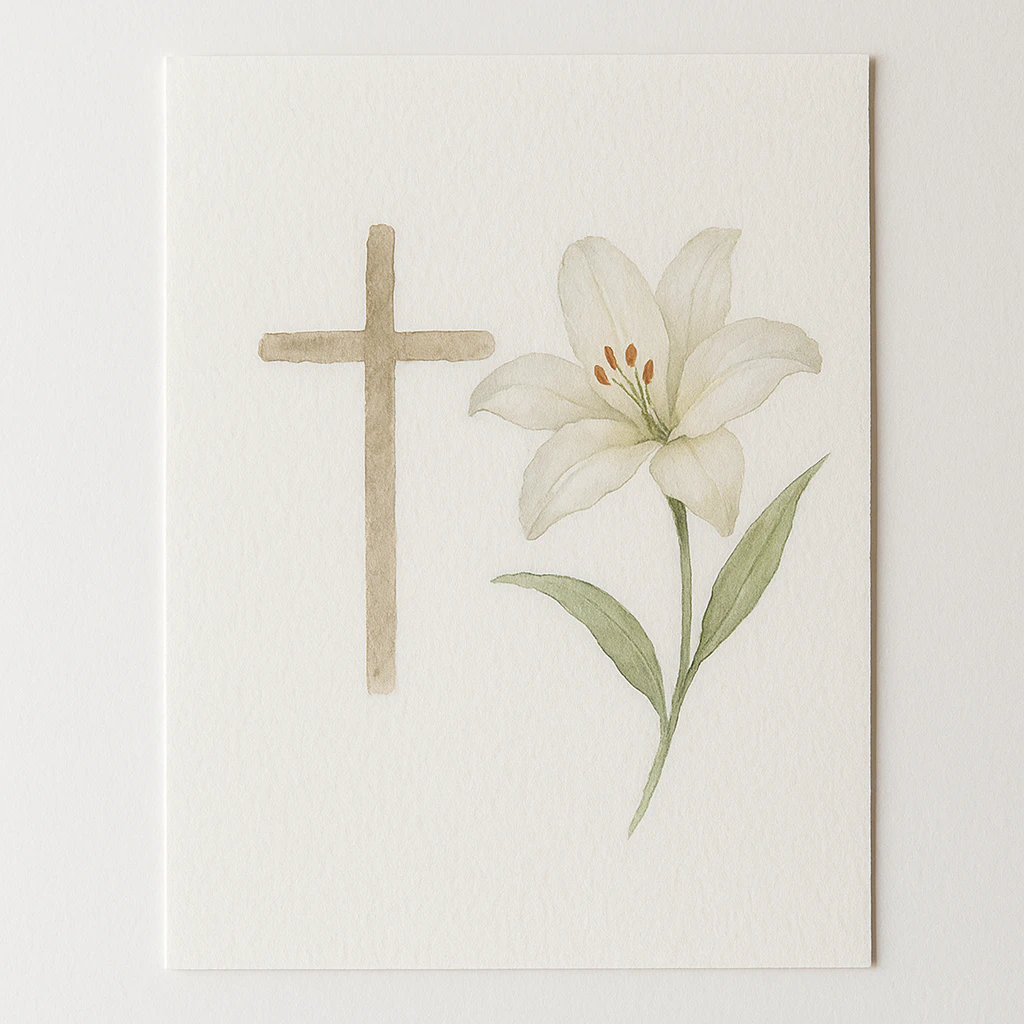
Establish peaceful interior lighting by painting cool shadow tones first before lifting rectangular frame windows using a damp natural sponge. Float warm peach and golden washes around the lifted boundaries to simulate morning light diffusing inward from outside. This window scene anchors peaceful easy easter watercolor paintings ideas that focus on atmospheric mood and architectural simplicity. Gradate the background from saturated amber at the top to pale cream near the bottom for realistic light falloff. Keep the central cross silhouette highly simplified using two overlapping dark bands that contrast sharply with the glowing perimeter. Add soft gray reflections along the lower glass section to suggest room interiors without detailing furniture or walls. Allow edges to blend naturally through controlled moisture to avoid harsh geometric transitions that disrupt atmospheric flow in your easter decorating. These architectural lighting studies improve your value control and perspective rendering capabilities across all seasonal projects.
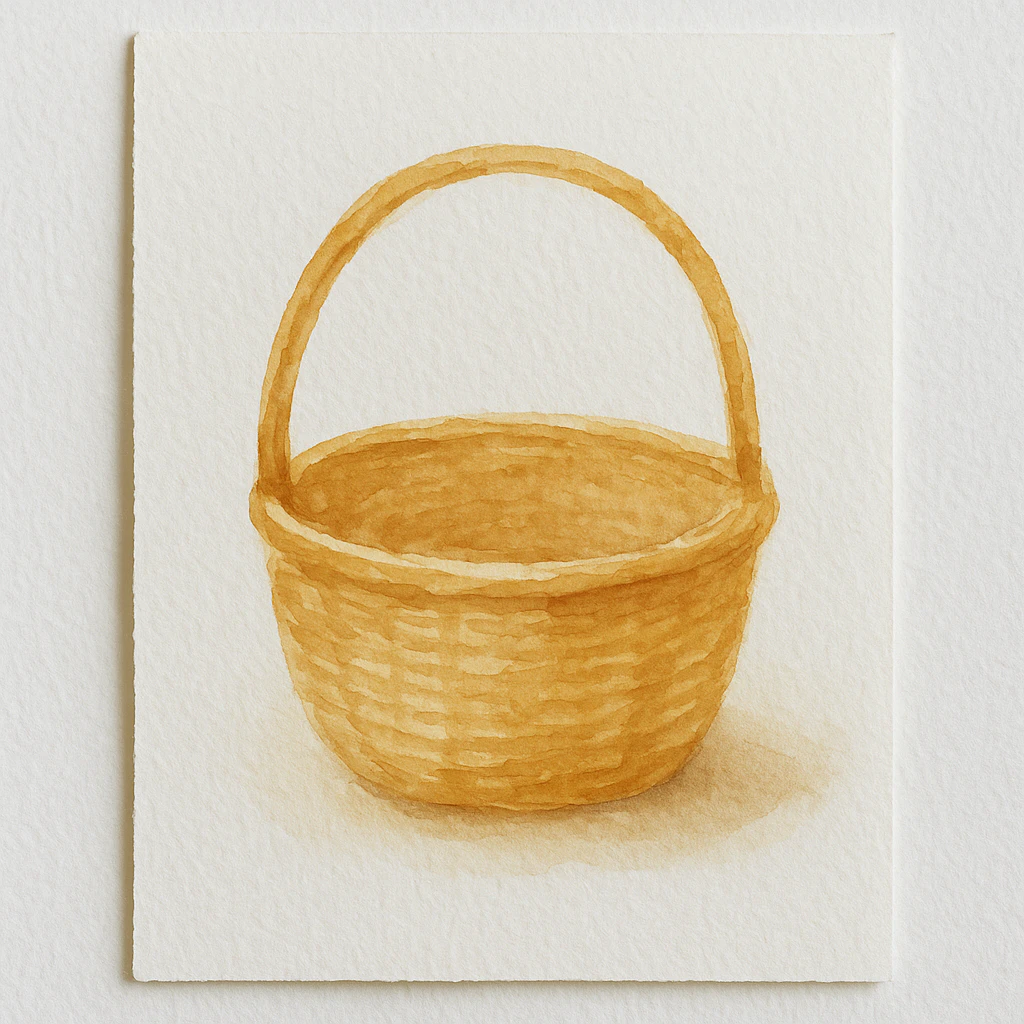
16. Layer A Pastel Basket Still Life
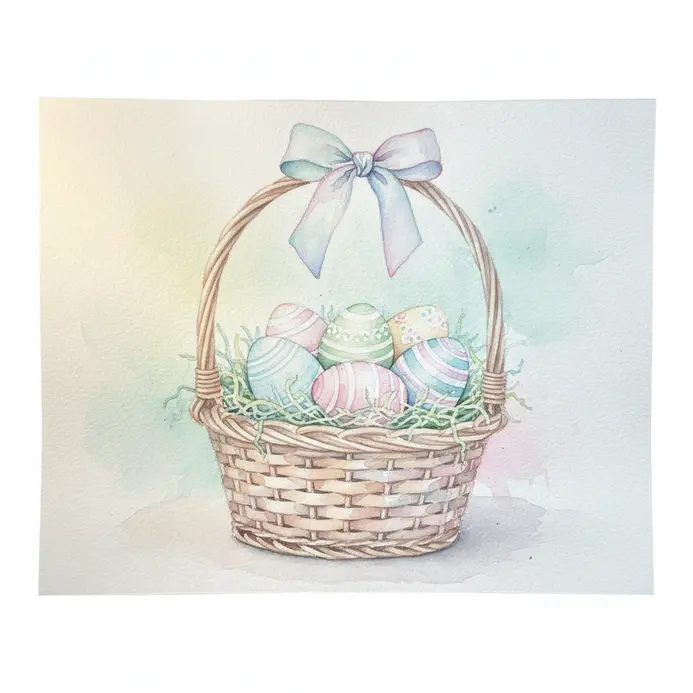
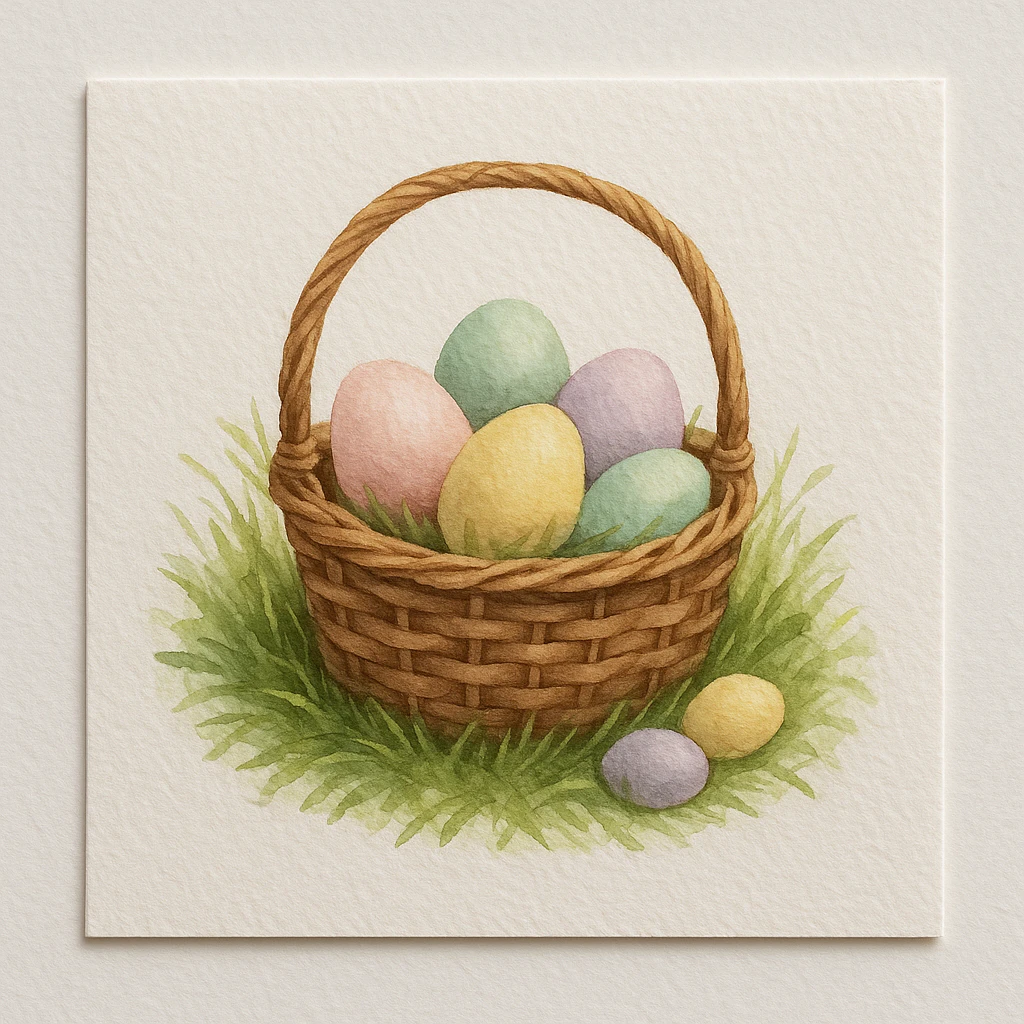
Build woven textures by blocking base masses in pale violet before layering horizontal strokes in raw sienna to simulate interlaced fibers. Keep pressure light on the bristle tips to preserve paper tooth and generate natural granular separation between strokes. This layering process defines advanced easy easter watercolor paintings ideas that require systematic color stacking and directional control. Introduce darker brown washes along the interior curves to establish depth and container volume. Place softly tinted eggs along the rim using circular glazes that overlap slightly with the basket edge to anchor them securely. Lift thin vertical highlights along handle curves to suggest woven rigidity and structural tension. Add scattered pastel petals across the foreground to soften harsh linear intersections and unify the color palette in your holiday artwork. These still life exercises reinforce material differentiation and reflective surface rendering skills.
17. Press Loose Flowers Into Easter Card Art
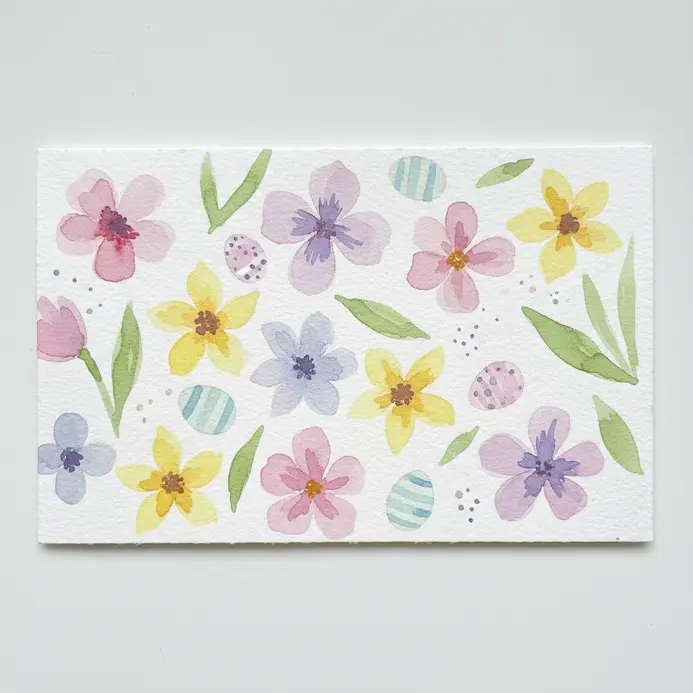
Create botanical stationery by applying a pale background wash before arranging dried botanical fragments into festive geometric layouts. Secure pressed specimens using archival glue applied sparingly beneath petal edges to prevent visible adhesive residue. This card decoration rounds out easy easter watercolor paintings ideas and produces tangible seasonal gifts that combine natural preservation with artistic design. Maintain generous negative space around the arrangement to preserve paper elegance and visual balance. Introduce soft watercolor borders along the outer margins to frame the central composition and provide seasonal color context. Keep typographic areas clear and highly contrasting to ensure readable greeting messages without obscuring decorative elements. Apply a final protective spray coating to prevent moisture damage during mailing and long-term storage. These hybrid media studies teach adhesive handling and layout planning for professional stationery production.
18. Paint A Grass Meadow Around An Egg
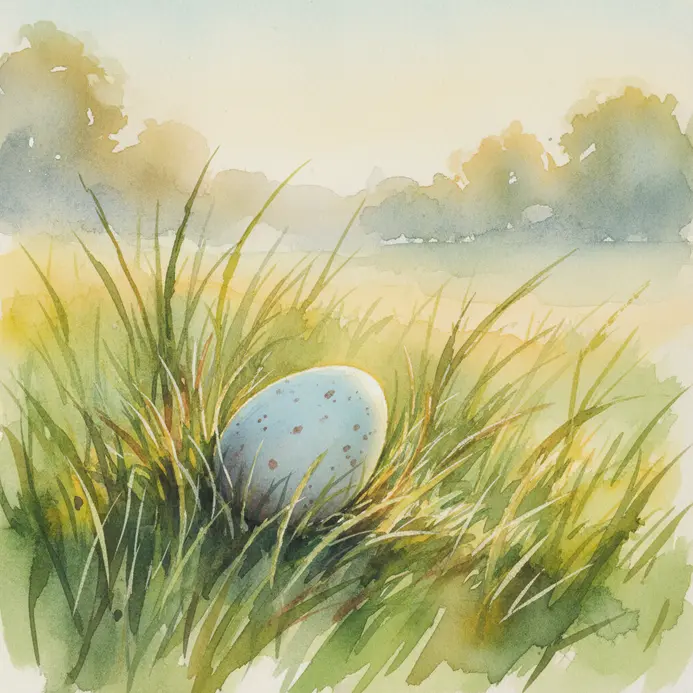
Establish grounded landscapes by painting distant horizon washes in pale blue before layering forward foreground grasses in varying green tones. Position the central oval object slightly off-center using compositional grid lines to avoid rigid symmetry and encourage visual movement. This meadow layout supports outdoor easy easter watercolor paintings ideas and builds confidence in environmental scene construction. Keep distant foliage highly diluted to maintain atmospheric perspective and depth illusion. Apply upward sweeping strokes along the bottom third to simulate individual grass blades catching directional morning light for a cute holiday touch. Add tiny wildflower dots in pink and yellow along the edges to break monochromatic green dominance and enhance seasonal vibrancy. Soften shadow transitions beneath the central object to establish weight and prevent optical floating. Review perspective landscape manuals to improve horizon alignment and foreground detail distribution accuracy.
19. Dot A Cheery Chick With Patterned Spots
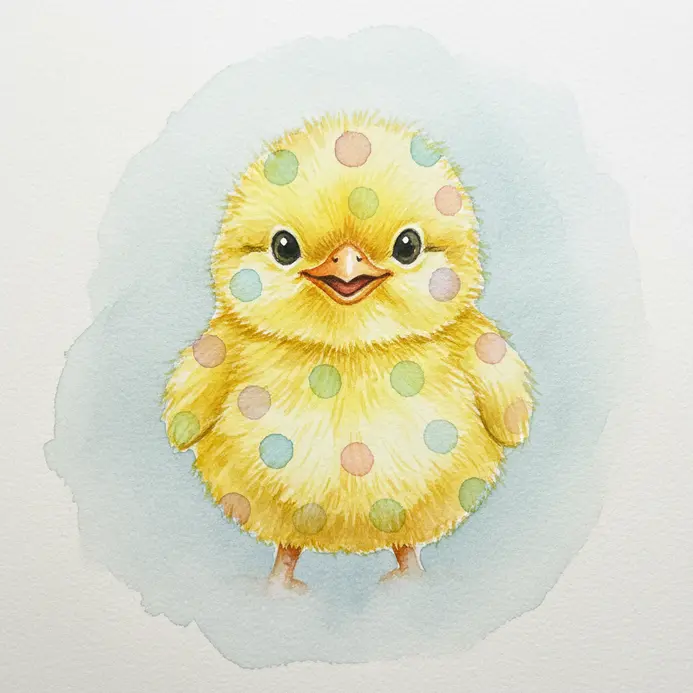
Introduce decorative surface design by applying uniform circular marks across a previously dried yellow base shape using a fine liner tip. Space the dots evenly along the body curvature while slightly increasing cluster density toward the center to maintain visual interest. The dotted technique refines playful easy easter watercolor paintings ideas and teaches rhythmic repetition without requiring complex drafting skills. Use a ruler or template underneath tracing paper to ensure consistent spacing and size alignment for your DIY projects. Select contrasting pastel tones like coral or sky blue to maintain harmonious seasonal vibrancy against the primary yellow field. Keep facial features minimal by adding two small black dots and a tiny triangular beak to preserve character simplicity. Allow all pattern work to dry completely before adding any final sealant layers to prevent unwanted smearing. These repetitive pattern exercises develop steady hand control and decorative design awareness.
20. Finish With A Rainbow Jelly Egg Glow
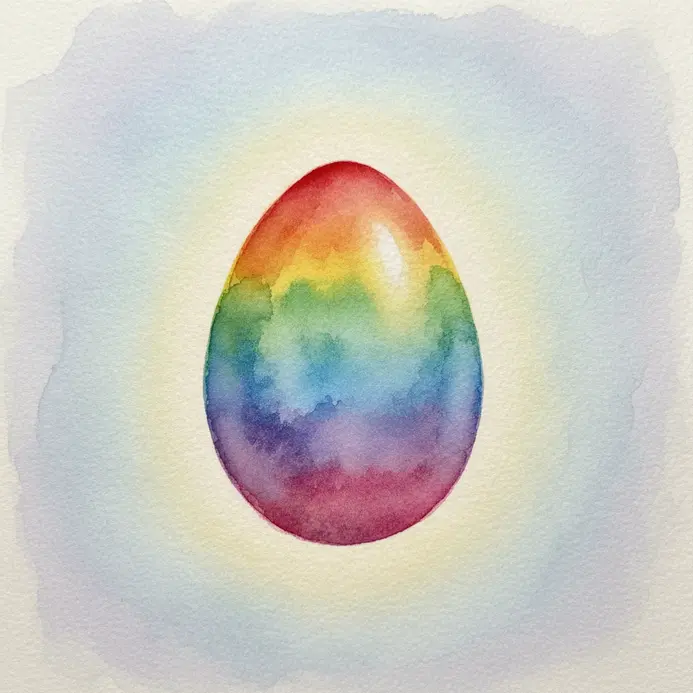
Achieve translucent luminosity by layering ultra-diluted color bands across a dried central form and allowing slight pigment bleeding between adjacent sections. Float each spectral hue carefully using a damp round brush to maintain clean separation while preserving a soft fused appearance at contact points. This jelly finish completes strong easy easter watercolor paintings projects while demonstrating advanced glazing transparency and moisture timing control. Keep brush water ratios extremely high to prevent muddy transitions between overlapping color fields. Introduce a single lifted highlight spot near the upper center using a clean sponge to simulate a primary overhead light source reflecting off a smooth curved surface. Seal the entire composition with a water-soluble varnish to lock pigment layers and enhance final surface gloss without altering underlying tones. Review glazing technique manuals to master multiple transparent wash application and optical color mixing strategies. These finishing exercises develop precision moisture management and final presentation expertise.
How to Choose the Right Easy Easter Watercolor Painting Idea for You
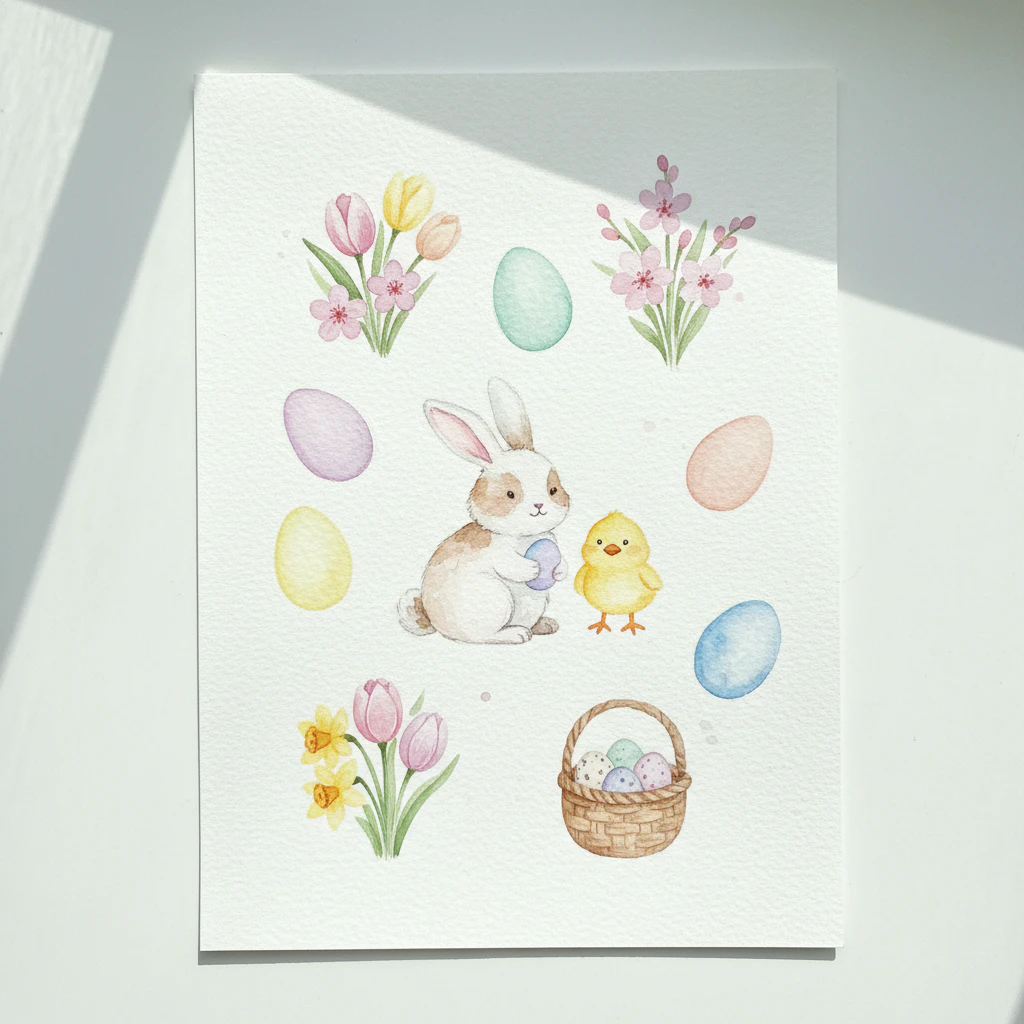
Select single objects with minimal internal detailing if you prefer rapid completion times and reduced correction cycles. Opt for layered compositions featuring multiple overlapping elements when you seek greeting card formats suitable for mailing or framing. Prioritize texture-heavy exercises if your primary objective involves mastering pigment granulation and brush hair control. Focus on layout-balanced pieces with clear highlight pathways when preparing display-ready gallery submissions. Begin projects that align directly with available drying space and daily schedule constraints before advancing toward larger multi-panel arrangements.
More Easy Easter Watercolor Paintings Ideas for Beginners
Conclusion
You now hold a complete seasonal collection designed to maintain gentle pacing, accessible techniques, and consistent visual satisfaction. Transparent washes, structured egg formations, and floral accents provide clear pathways for practicing brush control, layer timing, and final detailing without overwhelming complexity. Mastering these easy easter watercolor paintings ideas requires tracking drying intervals, maintaining clean palette mixing habits, and reserving white zones strategically throughout the painting process. Apply foundational washes methodically, introduce decorative accents only after complete moisture evaporation, and review each composition for balanced negative space before finalizing.
FAQs
Q: What are some easy watercolor Easter painting ideas for beginners?
A: For beginner-friendly watercolor Easter projects try simple subjects like pastel eggs, a single bunny silhouette, spring flowers, or an Easter basket. Use wet-on-wet washes for soft, bright backgrounds and basic shapes for the focal elements. These easter-themed paintings are forgiving and great for learning how to paint techniques like gradients and color blending.
Q: Can I find free tutorials for watercolor Easter painting ideas?
A: Yes—many artists and craft blogs offer free tutorials and printable templates specifically for watercolor easter projects. Search platforms like Pinterest for step-by-step guides, free video lessons, and downloadable practice sheets that help you learn how to paint without cost.
Q: How do I create bright, colorful Easter eggs with watercolor?
A: To make bright, vibrant Easter eggs, layer transparent washes, let each layer dry, and use concentrated pigment for vivid reds, blues, and yellows. Add white highlights with gouache or a gel pen once the paint is dry. Keep patterns simple—stripes, dots, and zigzags—so the colors remain the main focus.
Q: Are there beginner-friendly techniques for painting Easter bunnies?
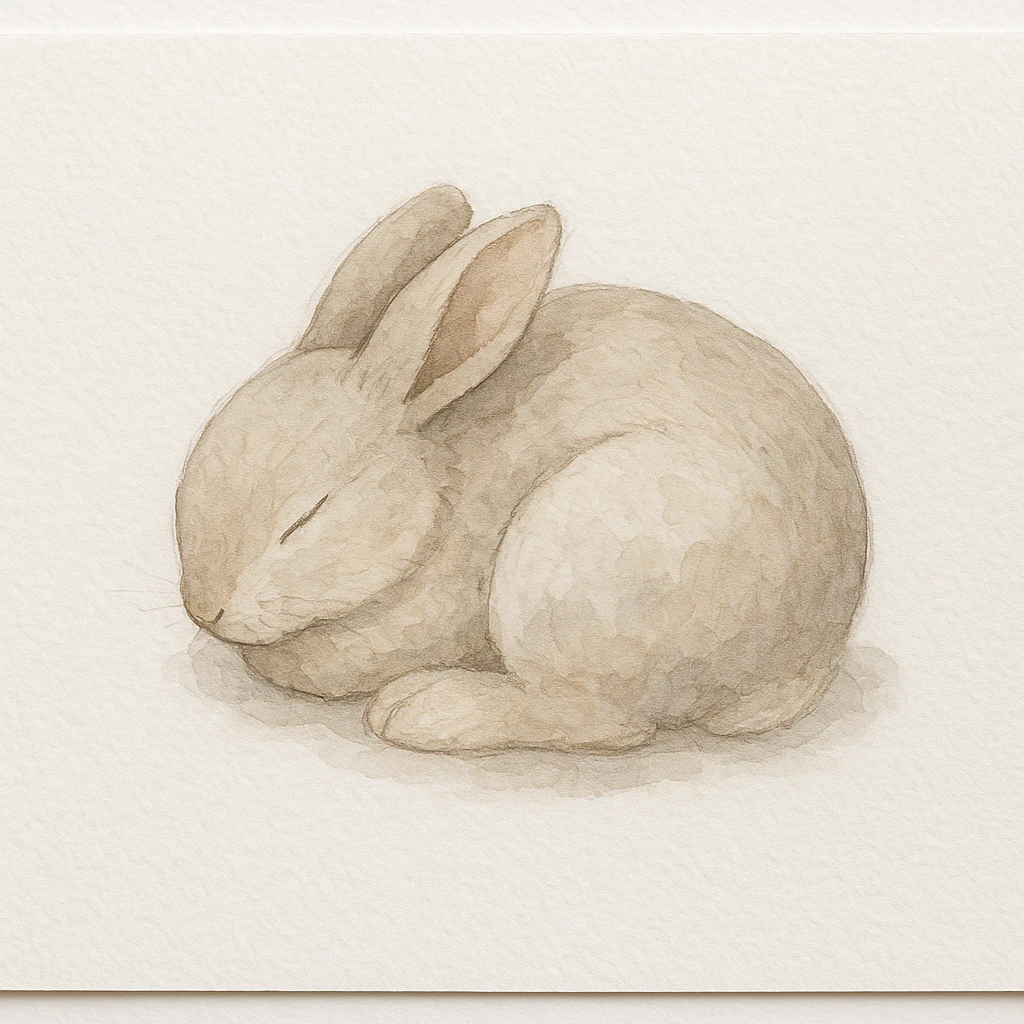
A: Absolutely—start with a light pencil sketch of the bunny’s shape, then apply a light wash to block in the body color. Use a slightly darker wash for shadows and a small brush for facial details. Soft, feathery brush strokes create a fluffy look that’s very forgiving for beginners.
Q: How can I make my watercolor Easter paintings more creative and unique?
A: Combine unexpected color choices like bright teals or a bold red accent, mix media by adding colored-pencil details, or create an easter-themed scene with florals and tiny chicks. Use collage elements or gold leaf for texture. Browsing Pinterest can spark creative compositions and color palettes.