Foundational Motifs And Essential Drawing Shapes
Every complex folk design starts with a circle, triangle, or straight line you will draw with a pencil and ruler. Trust me, your brain wants to jump straight to the detailed peacock, but the secret is building it from these three simple shapes. The primary challenge when starting with easy indian art for beginners is maintaining symmetry, so sketch your basic geometric framework first with light pencil marks. You will notice that a Madhubani fish is merely a triangle with a curved line, and a Warli dancing figure is simply a circle atop two lines. This initial structure prevents your final composition from feeling unbalanced or overcrowded, which remains the most common pitfall. Focus on repeating these core shapes to create rhythm before you ever pick up a paintbrush.
Selecting Materials For Authentic Folk Textures
Your finished piece will look most authentic on a slightly rough, absorbent surface like handmade paper or unpainted terracotta. These natural textures grab the pigment and give that classic, earthy folk art feel. For paint, you want a high-pigment, opaque formula like basic acrylics or gouache that lays down flat, bold colour without streaks. A set of fine-liner pens in black and white acts as your best friend for creating those crisp, double-line borders while practicing easy indian art for beginners. Avoid watercolour or thin inks on these surfaces, as they will feather and bleed, ruining your clean lines. Preparing your surface with a quick coat of gesso or primer creates a perfect base that prevents this muddy colour blending.
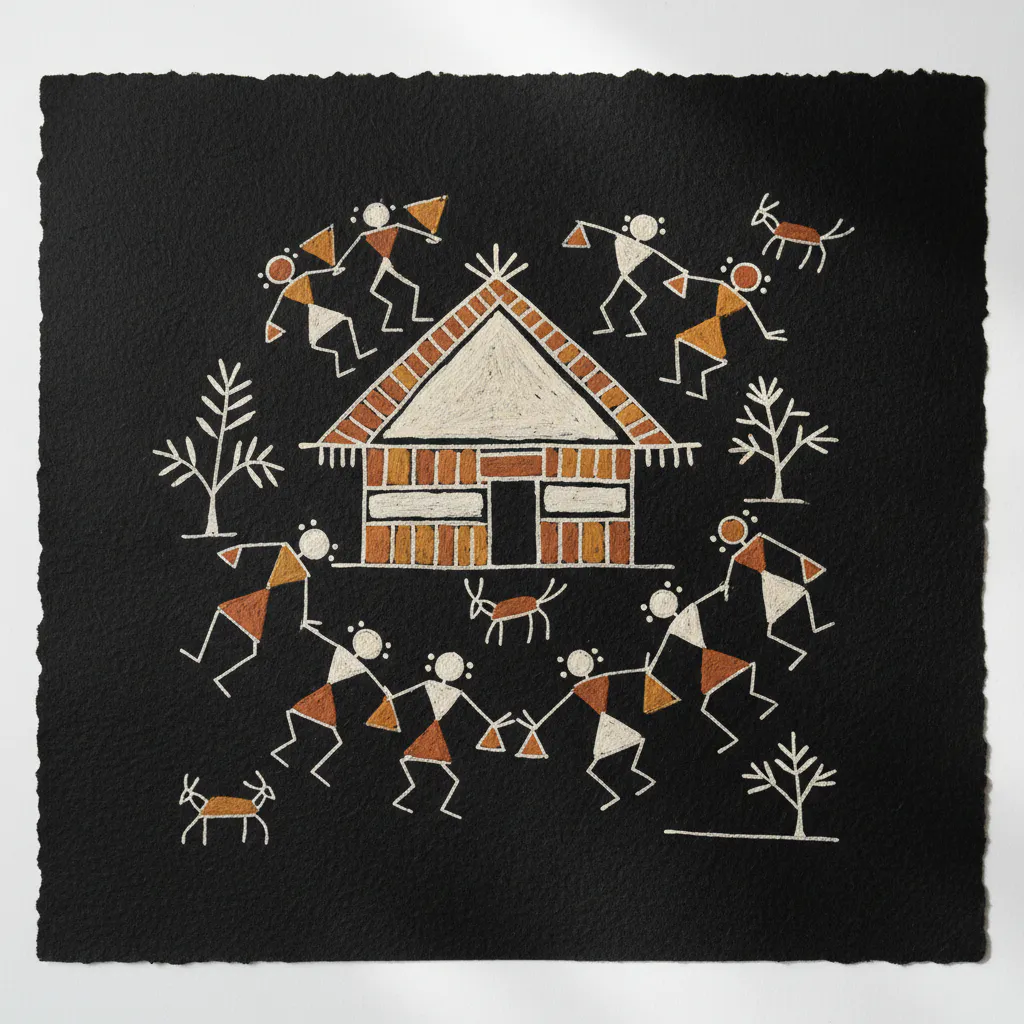
1. Paint a Monochrome Warli Village Life Scene
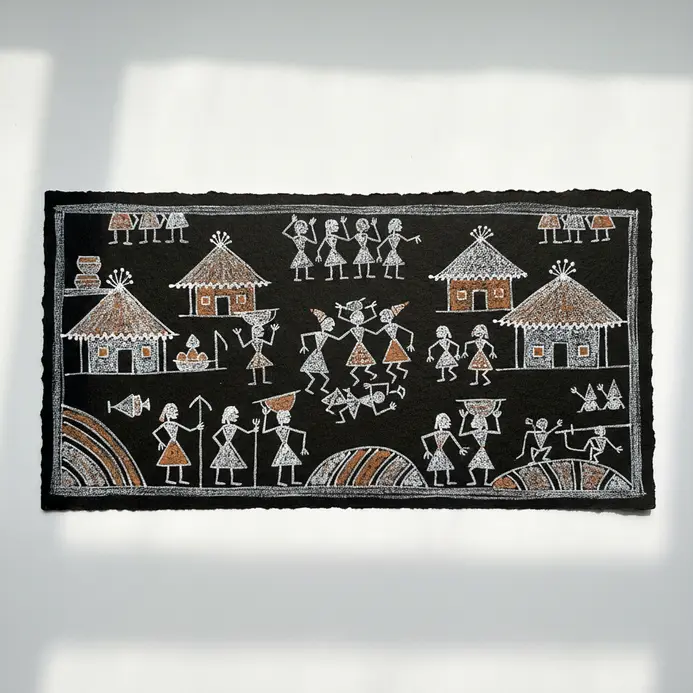
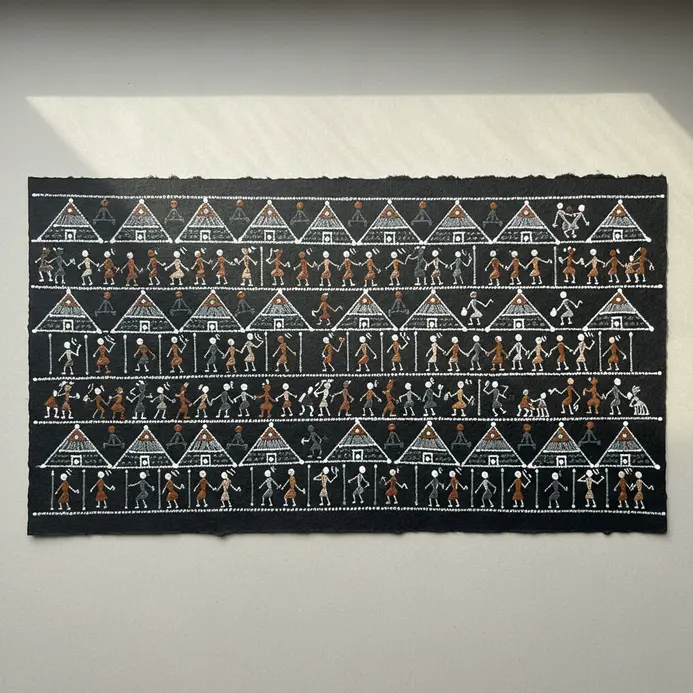
Ever felt intimidated by detailed art when exploring easy indian art for beginners? Warli painting serves as your perfect start. This style originates from the Warli tribe of Maharashtra, and it focuses entirely on capturing communal spirit through stark simplicity. You begin with an earthy-toned background, like beige or ochre, which instantly provides that traditional feel. Then, grab some black acrylic paint and a fine brush. When studying easy indian art for beginners, you will draw the iconic Warli figures: an inverted triangle for the torso, a small circle for the head, and straight lines for limbs. Add huts as simple geometric outlines and trees with stylized canopies, enhancing your scene with a touch of tribal art. Depict ploughing, water collection, or the Tarpa dance using these basic shapes. I love how dynamic these stick figures appear, even with minimal detail. Remember, perspective remains entirely unnecessary; fill the space with interconnected activities instead. This art form works so well because it celebrates everyday life through simplicity. The monochrome palette lets the narrative shine without distraction.
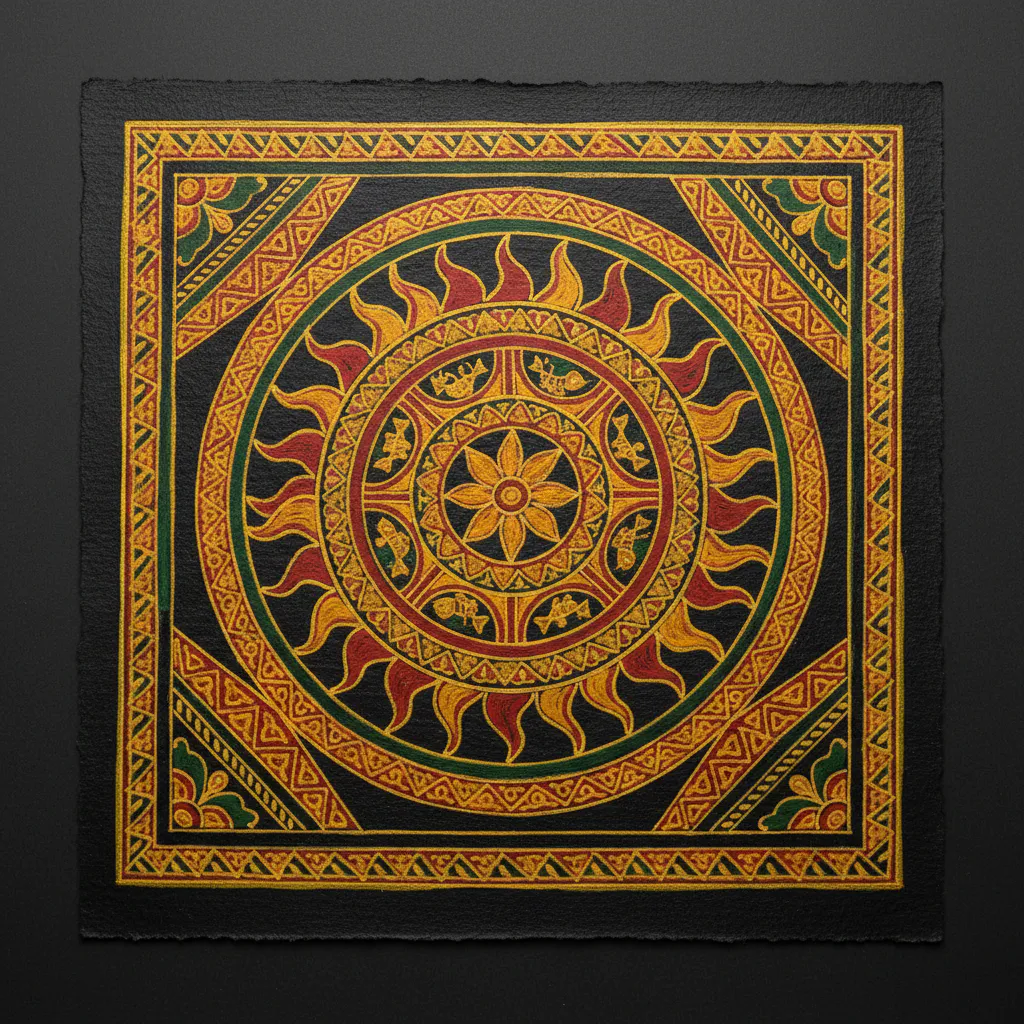
2. Create a Geometric Madhubani Sun Motif Painting: Bold Lines and Bright Colors
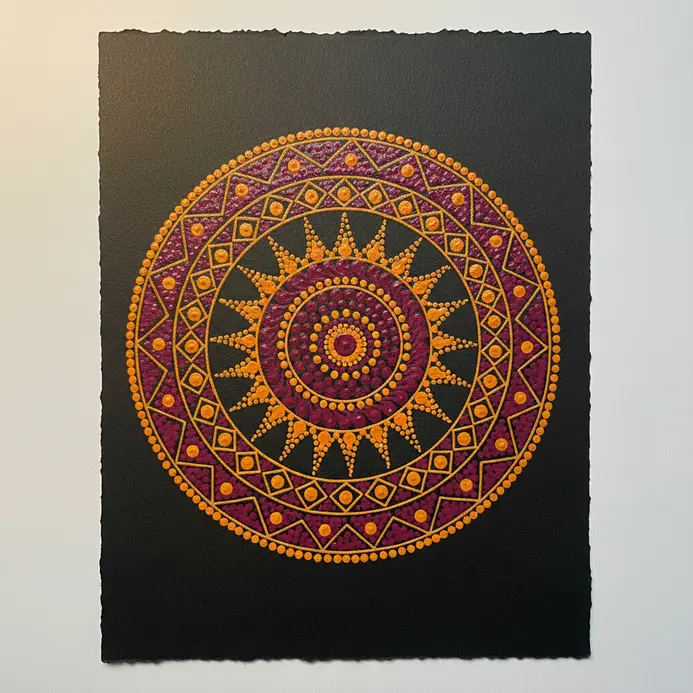
This project looks intimidating, but trust me, its structured geometry makes it surprisingly doable when tackling easy indian art for beginners. Start by using a tutorial to guide your techniques. ruler and compass to sketch your central sun and perfectly straight rays. Then, fill those sections with smaller triangles or concentric circles, always keeping your pencil lines light. Once your geometric framework is set, go over everything with a fine-tip black marker to create those iconic, bold Madhubani outlines. Does that clean definition not feel satisfying? Finally, bring it to life by filling each section with bright acrylics. I love how the high contrast between the black lines and vibrant colors creates such a joyful, energetic piece. You have mastered this.
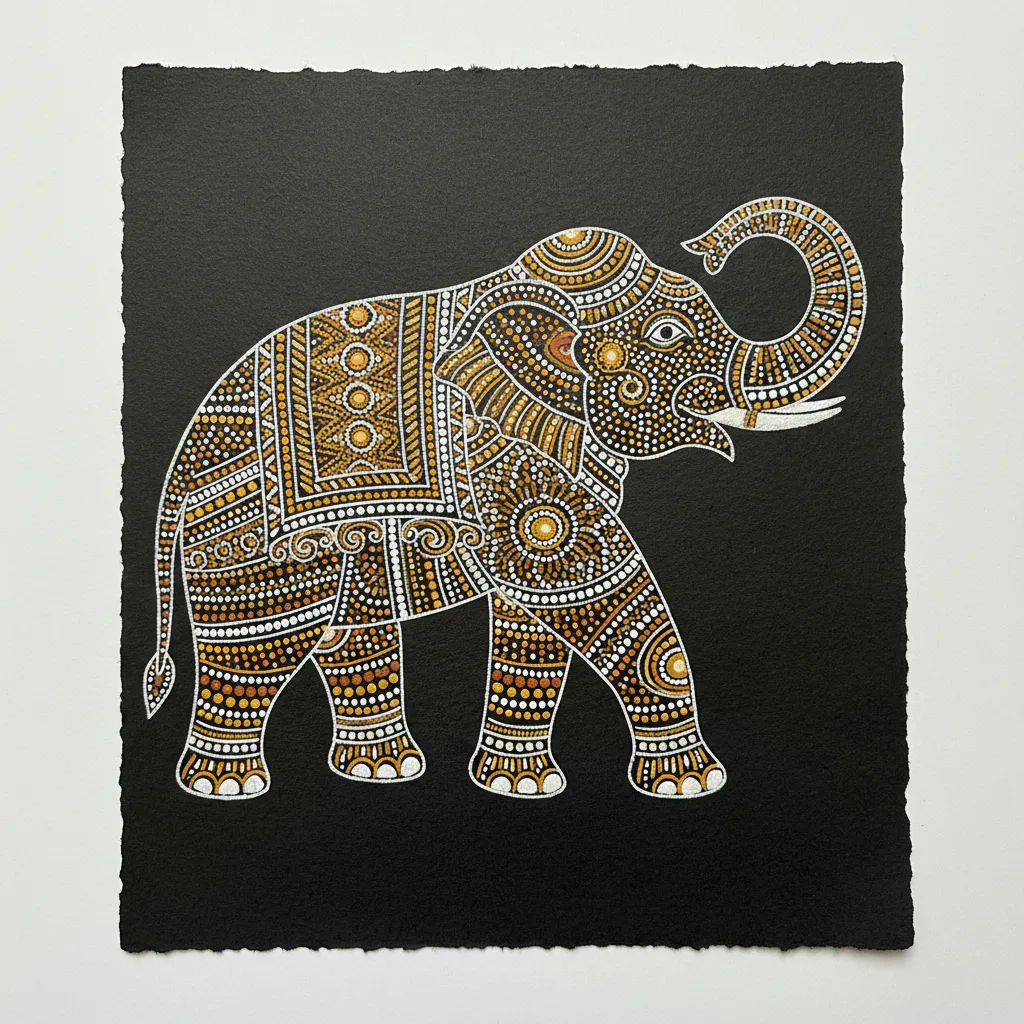
3. Draw a Dot Pattern Gond Elephant Illustration
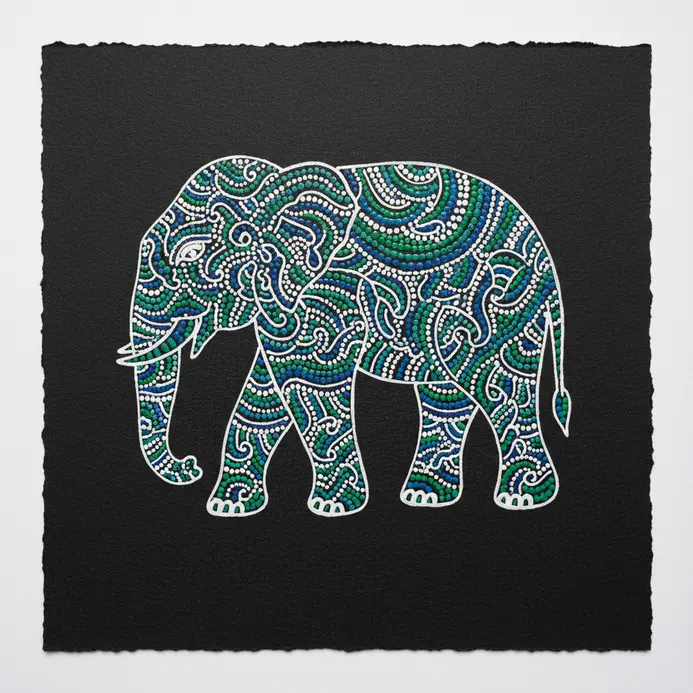
Ever wondered how those elaborate dot patterns truly work? This technique looks complex, but trust me, it remains one of the most meditative approaches available for easy indian art for beginners. You start with a simple elephant outline, then fill the shapes with a fine-tip black pen. The magic happens when you use dots to create texture and energy, rather than merely filling space, similar to techniques used in Rajasthan crafts. I love how this turns a basic sketch into a vibrant piece of folk art. Your goal prioritizes rhythm over perfection. For a complete collection of inspiration, check out these Gond painting ideas for beginners while you practice easy indian art for beginners. Does that not look stunning when you finish?
4. Sketch an Intricate Kalamkari Floral Fabric Pattern
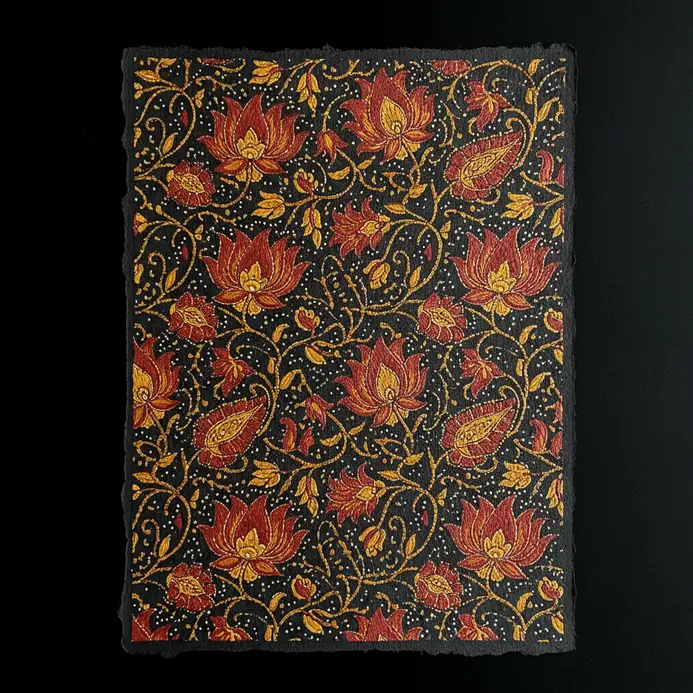
Kalamkari patterns look elaborate, but breaking them into simple layers makes them highly approachable for anyone exploring easy indian art for beginners. You start by lightly drawing a square repeat unit on your paper. This serves as your design’s playground. Inside it, sketch a main flower shape and let elegant, curving vine lines flow outward from it. The hand-drawn aesthetic stems from those graceful, organic curves. Trust me, using your whole arm for these lines instead of your wrist makes all the difference. Next, add smaller flowers and leaves along those vines. Variety remains key here, so mix open blooms with closed buds and different leaf shapes. I love this part because it feels like you are growing a garden on the page. To finish the elaborate look while focusing on easy indian art for beginners, sprinkle in tiny dots and swirls as filler motifs. Feeling inspired to try more? You might find additional easy Indian drawing ideas too to build your skills. Does that not look stunning already?
5. Outline a Symmetrical Paisley Henna Design Sketch
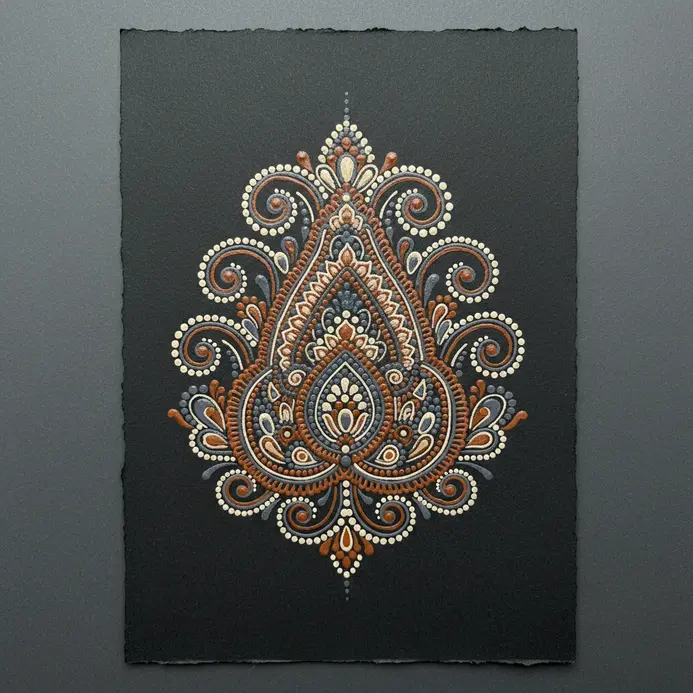
Ever feel like symmetrical designs prove too tricky? I love this one because that central line handles the hard work for you when tackling easy indian art for beginners. Start by drawing a faint vertical center line on your paper. This acts as your guide. Now, sketch a simple teardrop shape on one side of the line, using light pencil strokes. Here is the satisfying part. Mirror that exact shape on the other side of your line to create the main paisley. Isn’t that neat? Keep your initial outlines clean and simple, focusing on the basic mirrored form. A common mistake involves adding too much detail too soon. Trust me, getting the symmetry right first makes everything else flow smoothly. Once your mirrored outline stands ready, you might begin thinking about the internal swirls and dots. Feel proud of that perfect balance.
6. Paint a Stylized Pattachitra Mythical Sea Creature
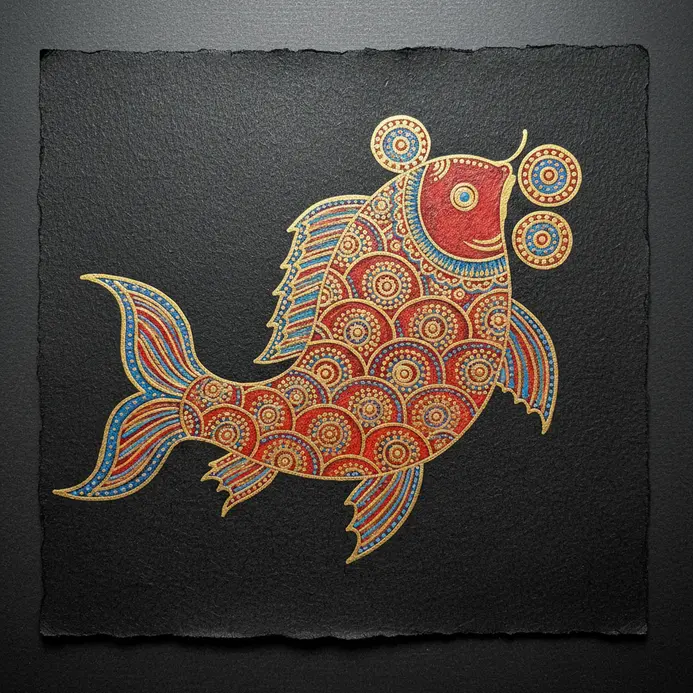
Who said traditional art should remain strictly formal? I love how Pattachitra allows you to design your own creature from mythology while studying easy indian art for beginners. Draw a bold, flat silhouette of a sea monster, perhaps featuring a serpent’s tail or a fish’s scales. Then, define every curl and scale with a fine-tipped brush and crisp black outlines. Fill your shapes with solid, vibrant colors like bright red or deep blue. The magic resides in the decorative details, so add patterns to the fins and a simple border. Does creating something so lively from your imagination not feel satisfying? For a different take on folk art, you might also learn easy Bhil painting. Trust me, this process opens up wonderful creative pathways.
7. Draw a Minimalist Terracotta Indus Seal Motif
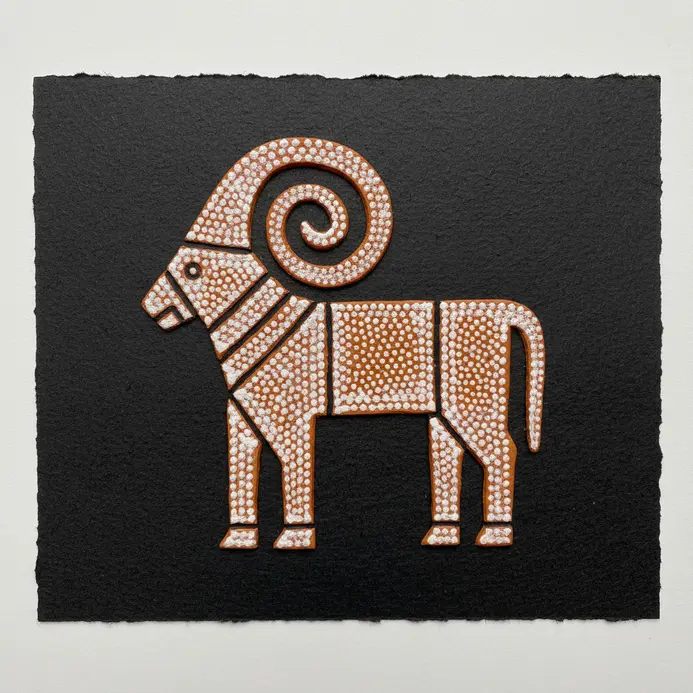
Who would have thought a 4,000-year-old symbol might prove so approachable? This design looks complex, yet its power stems from stripping away every extra detail. You will start by lightly sketching a rounded rectangle for the body alongside a simple, blocky head with one sweeping horn, which can be decorated with sequins for extra flair. Next, you add sturdy legs and a curving tail. The magic happens when you trace those final lines with a bead to enhance the design. fine-tip black pen to create that crisp, iconic silhouette. This minimalist approach captures the essence of the ancient seal without any fuss. I love how focusing on that strong shape makes the result feel both modern and timeless. Try it and feel proud when your clean-lined bull appears on the page. You might discover that this bold, graphic style pairs beautifully with other regional forms, such as the fluid lines found in Bengal folk art styles.
8. Capture a Vibrant Miniature Painting Peacock Study
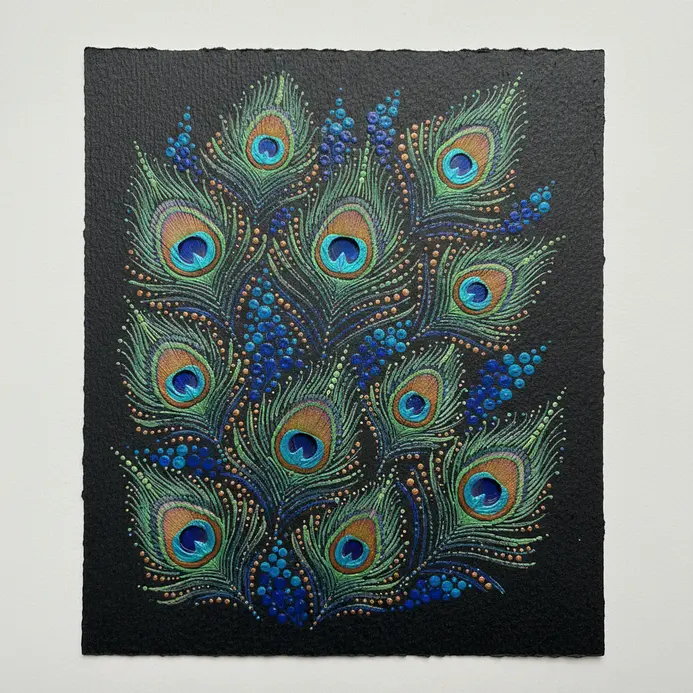
Have you ever been mesmerized by a peacock’s iridescent feathers? Creating a miniature study offers a fantastic way to capture that beauty without feeling overwhelmed. I love how this project concentrates on rich colors and fine details while serving as excellent material for easy indian art for beginners. Begin with a light pencil sketch on smooth paper. Use fine brushes to apply opaque paints in thin layers, building up the vibrant blues and greens of the body and neck, reminiscent of tribal art from Madhya Pradesh. For the elaborate tail, dedicate time to painting each eye-spot with contrasting colors. The key relies on steady, deliberate strokes. This method succeeds because it teaches precision and color theory in a rewarding manner. My top tip involves keeping the background simple so your peacock remains the absolute star. You will feel proud when those elaborate details unite. Does that not bring deep satisfaction?
9. Build a Traditional Rangoli Floor Pattern Design
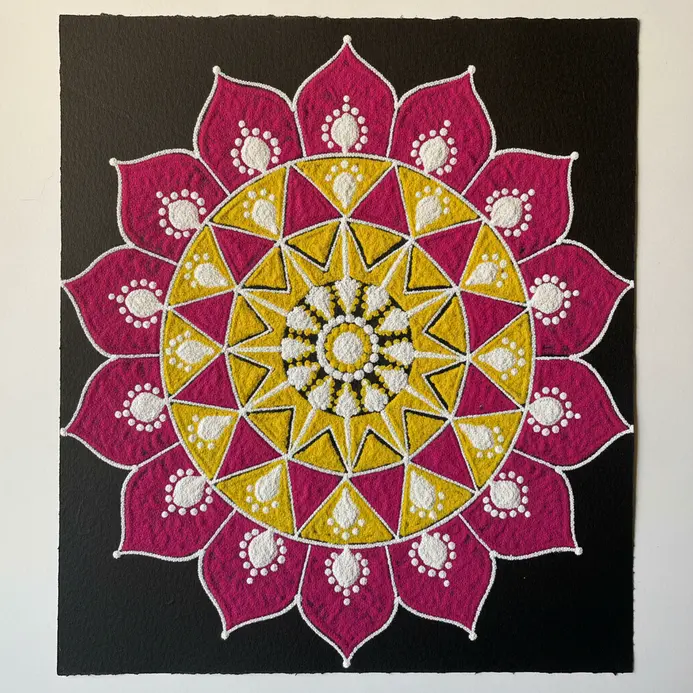
Ever wondered how those stunning geometric floor patterns come together? Rangoli stands as a fantastic folk art that appears elaborate yet builds from simple, repeatable steps. You start by creating an even grid of small dots on a clean, dry floor. Then, connect those dots with flowing lines to form a symmetrical design before filling the shapes with vibrant colored powders. I love this technique because it feels like a beautiful puzzle assembling right under your fingers. The satisfaction emerges from watching perfect symmetry arise from your initial guide dots. For smooth application, try using a fine kitchen sieve to sprinkle your colored powder evenly and prevent patchy spots. This practice serves as a wonderful way to welcome positivity and celebrate tradition. If you enjoy working with traditional Indian motifs, you might like exploring Pichwai painting for beginners.
10. Sketch a Symbolic Lotus Petal Mandala
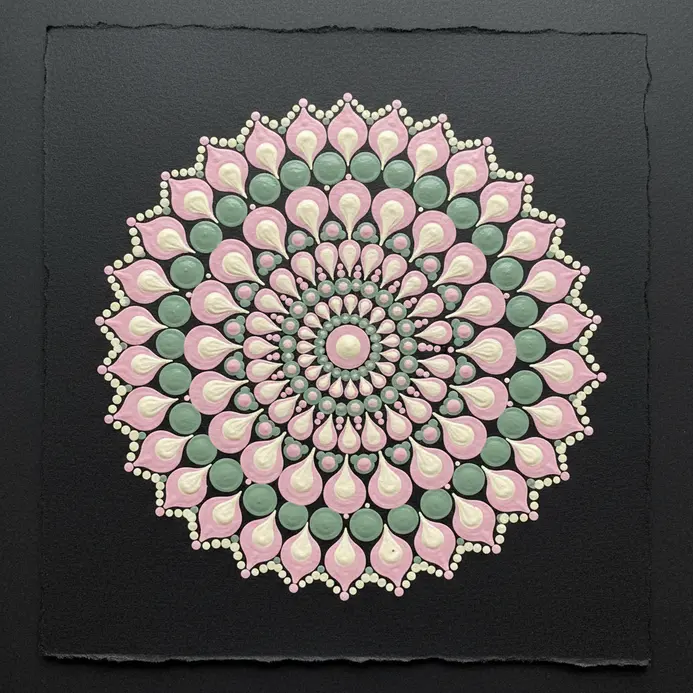
This project appears elaborate, but trust me, that visual complexity fuels the meditative fun. You start by marking your center point and drawing a small central circle. Then, lightly sketch your radial guidelines radiating outward. These lines serve as your secret to flawless symmetry. Build outward by drawing layers of graceful petals that suit easy indian art for beginners perfectly while they expand. The process revolves around starting light and allowing the design to grow organically. It works because the repetition proves incredibly calming. You are not merely drawing lines; you are crafting a beautiful symbol of harmony. For a complementary project utilizing simple shapes, check out these Simple Madhubani art projects can be a great way to decorate your space.. Now, watch your mandala unfold with pride.
11. Paint a Detailed Rajput Style Warrior Portrait
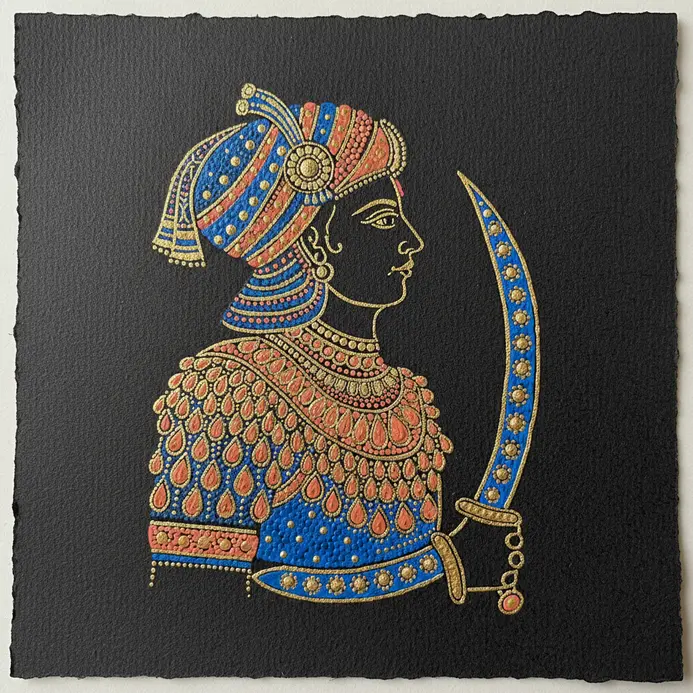
Who would have thought painting a historical portrait proves this accessible? The secret lies in starting with an H or 2H pencil for your initial sketch. Focus on those graceful, elongated forms and the signature almond-shaped eyes. I love how this method builds the portrait in clear stages, making the complexity manageable. Once your sketch feels accurate, color takes center stage. Apply flat, vibrant washes of gouache paint to achieve that classic jewel-toned appearance. Work patiently, letting each layer dry completely before applying the next to maintain clean, bright colors. Finally, return to your finest brush and define every element with strong, flowing lines. This emphasis on line work gives Rajput art its elegant energy. Trust me, seeing those elaborate details emerge on the turban and armor brings incredible satisfaction. You will feel deeply proud of your finished piece.
12. Draw an Abstract Tribal Tree Of Life
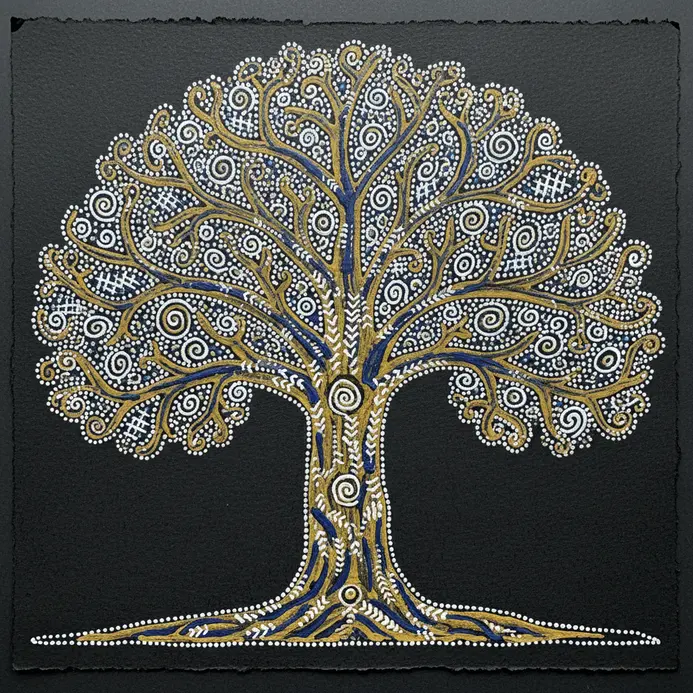
This one surprised me completely because it relies on building strong, simple shapes first. Ever wondered how those bold tribal patterns unite? Start with a pencil sketch of a powerful trunk alongside thick, sweeping roots and branches. Skip the tiny twigs entirely. The magic activates with a black fineliner pen. Trace your lines confidently and fill the interior spaces with repetitive patterns like zigzags, spirals, or dot work. This approach succeeds because realism remains unnecessary; you merely chase a powerful, symbolic atmosphere. Trust me, the satisfaction of watching that ancient-looking design emerge from your own hand proves unbelievable. The repetitive patterns you apply here closely mirror the detailed line work found in Madhubani drawing techniques. Embrace the organic feel.
13. Outline an Ornate Kerala Mural Style Eye
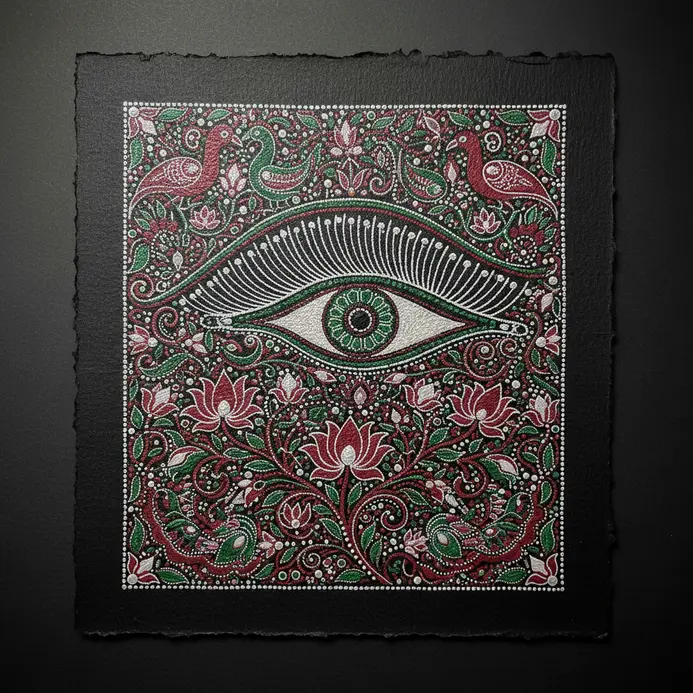
Who would have guessed the key to this stunning art form rests in a single, graceful line? The elongated almond shape becomes your starting point, drawn with a slight upward tilt at the outer corner. Trust me, this specific shape carries the structural weight. Next, define the space with a strong, sweeping curve for the upper eyelid paired with a softer curve below. The magic hides in the details, such as the pointed inner corner mark and the fine line stretching outward. This precise outline, traditionally called Rekha, holds all the emotional energy. Does it not fascinate you how mere lines convey so much expression? Your final step involves tracing over the pencil sketch with a confident dark stroke using a fine-tipped pen. I love how this process teaches you to view art symbolically rather than merely realistically. For stylized practice, you might sketch Pichwai motifs. Feel the deep satisfaction of creating such a classic form.
14. Create a Graphic Folk Art Human Figure
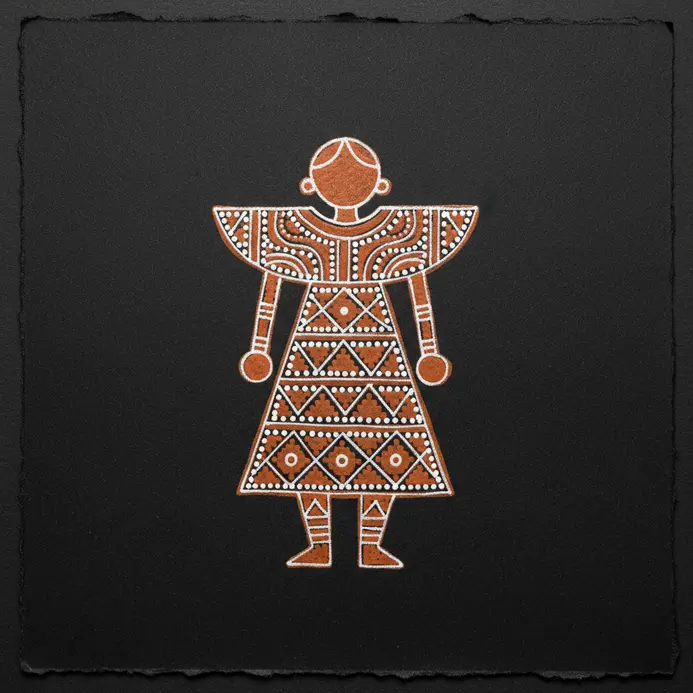
Ever feel like drawing people demands advanced training? This style disproves that entirely. You begin by brainstorming a simple narrative for your figure, perhaps choosing a dancer or a farmer. Sketch the entire body using a series of basic geometric shapes rather than anatomical parts. Clean lines and flat color blocks take priority over realistic proportions. I love how this approach transforms a complex subject into an engaging puzzle. Your opening move should involve tiny thumbnail sketches to locate a dynamic pose, which can be a fun activity to introduce children to art. Consider simple clothing and a restricted color scheme to preserve that graphic impact. Expressive results arrive from simplicity rather than complexity. Does watching your character take shape not feel wonderful? Keep experimenting with scale and proportion to find your unique voice.
15. Paint a Textured Madhubani Fish Scale Pattern
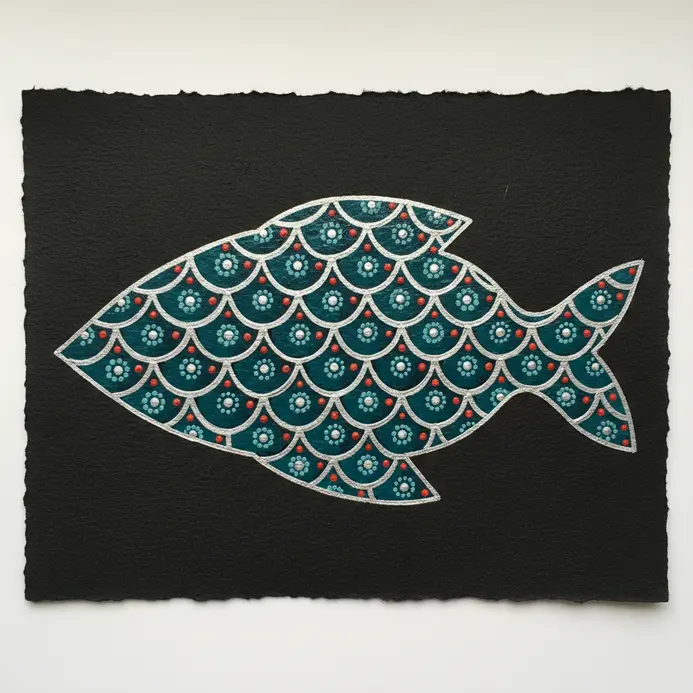
Ever wanted to inject extra visual excitement into your folk art? This project invites you to play with surface texture and bring a classic Madhubani motif alive under your fingers. Sketch overlapping almond shapes first, then apply texture paste With a palette knife to raise each scale, you can add texture similar to the intricate designs found in Rajasthan textiles. Allow the paste to dry fully, paint your base colors, and layer beautiful details with a fine liner brush. I love how this technique fuses traditional folk patterns with modern mixed-media flair. The raised surface forces the design forward visually in a way flat paint simply refuses to achieve. Tactile engagement makes this method unforgettable to execute. For another skill-building exercise with detailed patterns, you might explore how to draw Bengali folk patterns. Trust me, touching your finished work will fill you with genuine pride.
Preserving Painted Folk Art For Display
A single light coat of matte acrylic spray varnish seals your work from dust and UV exposure while preserving that flat, traditional appearance. This quick two-minute step safeguards weeks of careful painting effort. Hold the can roughly twelve inches away and apply a thin, even layer using steady side-to-side motions. Allow that first coat to dry completely before considering additional layers, as indoor displays often require only one application. Paper-based pieces respond well to brush-on matte mediums, yet testing scrap paper beforehand prevents unexpected colour darkening. This protective step locks down your pigments and fine-liner ink, guaranteeing lasting vibrancy for years ahead.
More Easy Indian Art For Beginners Gallery for Inspiration
Conclusion
Your first attempts at these traditions serve as a wonderful gateway to a rich visual heritage. Repeating simple shapes or constructing scenes from basic geometric forms proves surprisingly relaxing. Pick a motif you loved, perhaps a fish or a sun, and redraw it on a larger board like canvas or heavy fabric. Remember that easy indian art for beginners relies entirely on embracing the pattern and letting rhythm direct your hand. Your unique style will naturally surface with every stroke.
FAQs
Q: What are some easy Indian art for beginners that even young children can try?
A: Many easy Indian arts and crafts are perfect for beginners and little ones — think simple pot painting, basic Warli stick figures, and block print stamping on fabric. These crafts for kids use affordable materials like paper, paint, matchstick tools, and fabric scraps, and can be taught step-by-step so even young crafters can create colorful designs inspired by Indian culture and popular themes such as peacocks, diyas for Diwali, or simple motifs from Madhubani paintings.
Q: How can I adapt traditional styles like Warli, Gond, and Madhubani for children?
A: To adapt warli art, gond art, and madhubani paintings for children, simplify the motifs into basic shapes (dots, lines, circles) and focus on bold color blocks. Provide templates and step-by-step instructions, encourage storytelling about mythological stories like Ramayana or Krishna scenes, and use safe materials and natural dyes or washable paints. This approach preserves the rich culture and world of Indian folk while making the process accessible for little ones and craft ideas sessions.
Q: Can simple projects teach children about Indian history and stories like the Mahabharata and Ramayana?
A: Yes — small crafts make excellent gateways into indian culture and mythological stories. Create a tanjore-style deity collage of Krishna, a phad-inspired scroll illustrating episodes of the Mahabharata, or a cheriyal puppet retelling Ramayana scenes. These hands-on activities combine craft ideas with storytelling, helping children learn about the taj mahal, bihar or gujarat regions, and the popular themes and deities that appear across traditions.
Q: What are beginner-friendly techniques to adorn pots with Indian designs?
A: Pot painting with designs on the pot can be done using simple steps: clean the pot, apply a base coat, sketch motifs lightly, then fill with colors inspired by kalighat or mughal palettes. Use stencils or matchstick tools for fine lines and natural stains for an earthy look. Encourage children to add patterns like block print borders or folk motifs from gond and madhubani to celebrate craftsmanship and regional styles.
Q: Which indian arts and crafts ideas are best for festive activities like Diwali?
A: For Diwali, choose crafts that focus on light and decoration: diyas decorated with madhubani patterns, rangoli-inspired paper cutouts, pot painting with gold accents inspired by tanjore art, or creating small phad-style banners depicting mythological stories. These projects let children adorn homes while learning about the festival’s themes and the craftsmanship behind traditional motifs.