Essential Brushes and Pigments for Pichwai Art
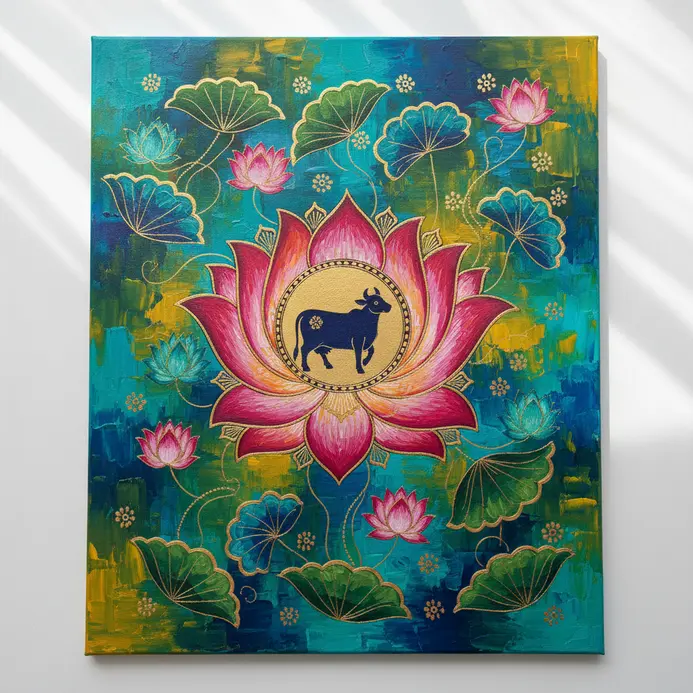
Beginner success in Pichwai relies on tools that offer maximum control for the style’s fine details. For line work, invest in round brushes in sizes 0 to 2. Their pointed tips are essential for creating the consistent, flowing outlines that define motifs like lotus creepers and peacock feathers. Modern acrylic or gouache paints provide the vibrant opacity needed without the complexity of traditional stone pigments. Prioritize a base palette of vermillion red, indigo blue, emerald green, and a warm yellow. Adding a tube of gold acrylic paint or gold leaf adhesive allows for authentic metallic accents. These materials deliver the required bold color and fine detail on accessible surfaces like cold-press watercolor paper. Exploring easy pichwai painting ideas reveals that beginner success relies heavily on proper equipment selection. You must maintain a steady supply of distilled water for cleaning your brushes between color changes. This practice prevents muddy mixtures and keeps your pigment opacity strong throughout the entire session.
Selecting Your First Traditional Motif and Canvas
Your initial Pichwai project should focus on a single, iconic element to build confidence. Choose a simplified lotus bloom or a cow silhouette rather than a complex Shrinathji diorama. This approach lets you practice the core skills of steady linework and flat color application without the intimidation of an overcrowded composition. A high-quality cold-press watercolor paper or a small, pre-primed wooden panel offers the ideal surface. These materials have enough tooth to hold fine lines but are smooth enough for even washes of color. Working on a modest scale with one motif helps you master the deliberate line weight and balanced negative space that are hallmarks of the tradition. Your initial selection should align with common easy pichwai painting ideas that prioritize manageable scales. You should measure your reference image against your actual canvas before applying any paint. This quick comparison guarantees accurate proportions and prevents awkward cropping issues during the final detailing phase.
1. Outline a Minimalist Lotus Bud Pencil Design
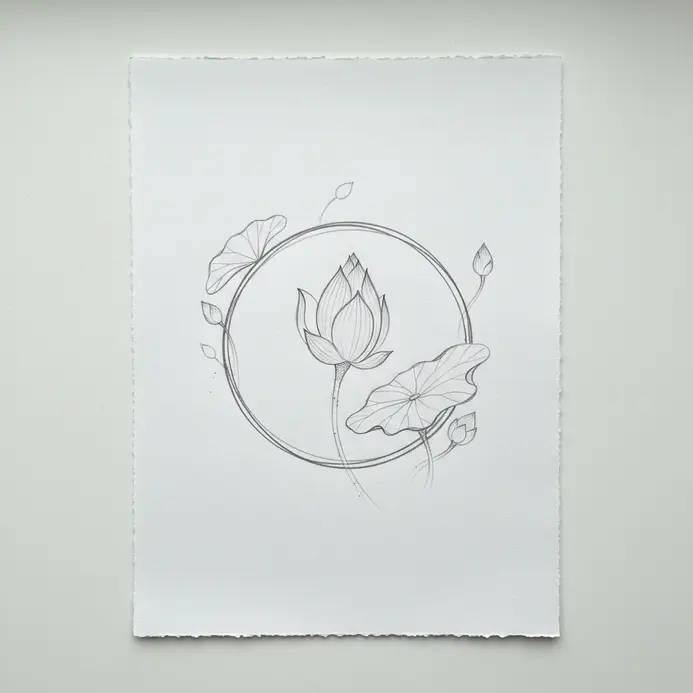
Many easy pichwai painting ideas start with clean pencil work. Let us examine a design that proves simplicity holds immense visual power. This minimalist lotus bud focuses on the elegant, clean silhouette of a single teardrop shape on a slender stem. Its beauty lies in fluid lines and negative space, creating a serene folk-art look. This approach serves as a perfect introduction to the traditional motifs of this art form. You need smooth paper and an HB or 2B pencil. Begin by lightly drawing a vertical guide line for symmetry. Sketch the bud with one fluid motion on each side, then add a slightly curved stem. The trick involves using light ghost lines that you erase easily before committing to your final confident outline. It works because this stripped-down composition highlights balance and shape, offering a modern take on a classic symbol. For a great next step, explore more minimalist painting ideas to build on this clean aesthetic. Keep your eraser clean to prevent smudging your delicate guide marks.
2. Golden Shrinathji Crown Outline Sketch: A Focused Practice Step
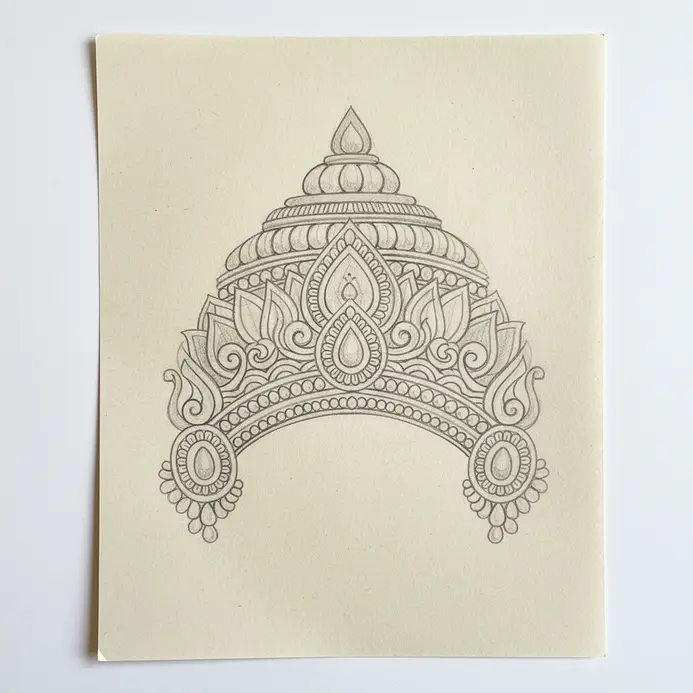
Practicing crown outlines represents one of the most reliable easy pichwai painting ideas available. Let us build confidence by starting with the crown’s elegant silhouette. The ornate Shrinathji Mukut forms a perfect, symmetrical shape for steady practice. You focus on its flowing curves and central structure, which anchors the entire painting. Mastering this outline trains your eye for the iconic Pichwai balance of geometry and ornament. Use the flip test as a reliable pro technique. Turn your paper upside down while sketching to spot symmetry errors more easily. This simple adjustment guarantees mathematical precision in your decorative arches. Exploring landscape paintings continues your technical development. You should trace your initial curves with light, rapid strokes before settling into final lines. This layered approach prevents heavy graphite buildup and maintains crisp paper texture.
3. Stylized Peacock Plumage Pattern Study Simplified
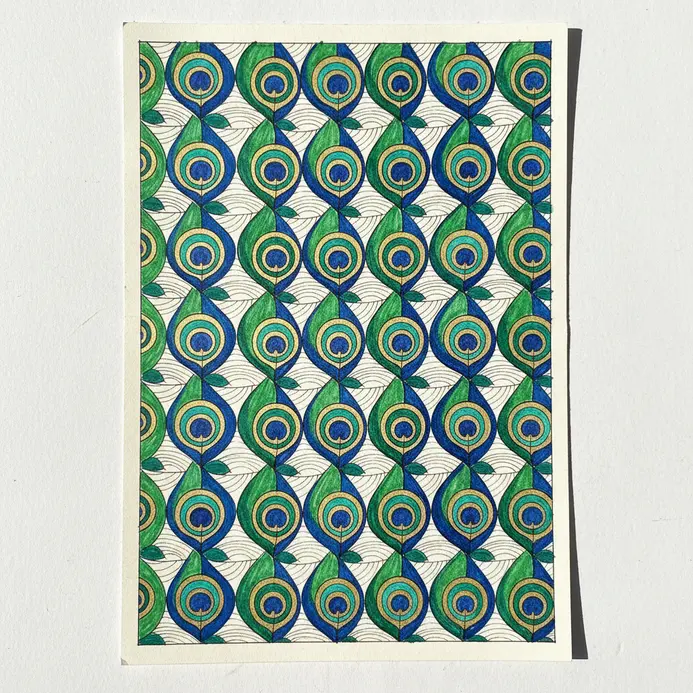
Studying simplified feathers ranks among the most popular easy pichwai painting ideas for texture practice. Let us remove the pressure to paint every single feather perfectly. A simplified peacock plumage pattern uses bold, rhythmic shapes to capture the spirit of the bird’s magnificent tail. We focus on a repeating fan of U-shaped strokes radiating from a central spine, with each one crowned by that gorgeous, teardrop-shaped ocelli. The magic resides in the repetition. You create a stunning, graphic effect that feels both traditional and modern. It operates through that satisfying rhythm of your brushstrokes building the pattern across the page. Use the press-and-lift method for each curved stroke to keep your lines sharp and confident. Exploring landscape paintings continues your artistic education. You must allow each U-shape to dry slightly before layering adjacent colors. This drying interval prevents pigment bleed and preserves the sharp boundaries of your plumage design.
4. Paint a Simple Leaf Motif Border Design
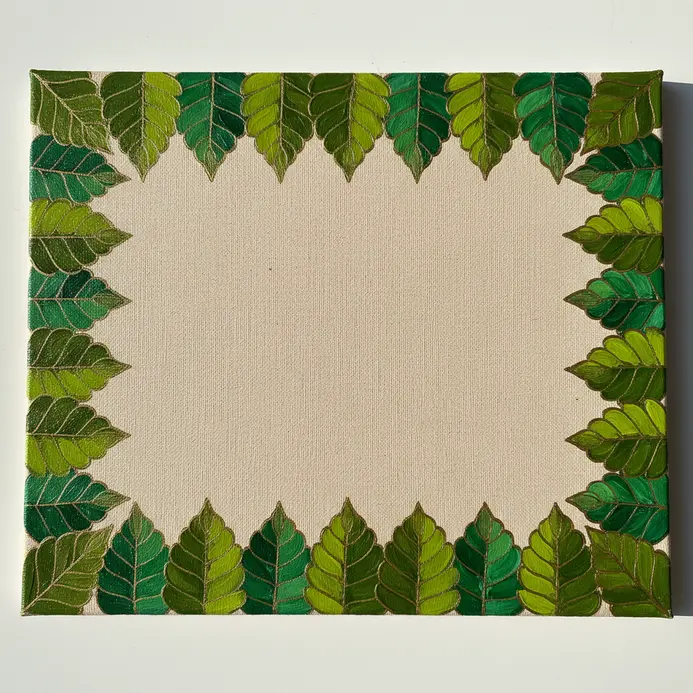
Designing repetitive borders demonstrates how easy pichwai painting ideas build foundational skills. I appreciate how a simple leaf border transforms a composition from plain to polished in minutes. This design employs a rhythmic, teardrop-shaped leaf pattern along a winding vine, often inspired by the kadamba tree found in Indian folk art. You work with a minimalist palette of earthy ochre or indigo on a cream background, creating a beautiful frame for your central subject. This project remains a fantastic beginner exercise because the repetitive motion proves meditative and forgiving. The key focuses on mastering the pressure-based stroke with your brush. Apply light pressure at the start, press down for the leaf body, and flick your wrist to create a sharp point. Start with a light pencil sketch to map your vine before introducing paint. This border succeeds because it provides structured, organic contrast to busier centerpieces. It guides the viewer’s eye with a natural flow. Apply more watercolor techniques to refine your glaze application here. Keep your water container nearby for quick brush rinsing during continuous vine work.
5. Small Pastel Cow Silhouette Icon: High Impact Shapes
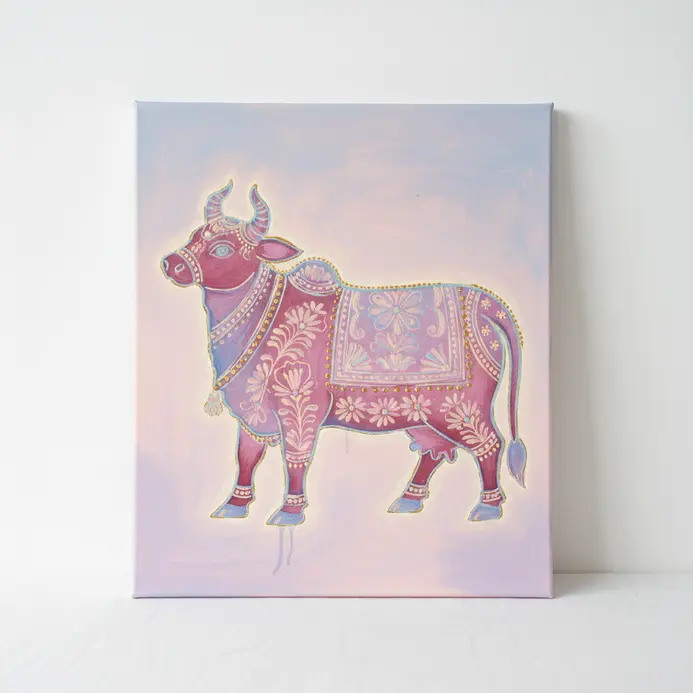
Reducing complex animals to basic forms highlights why easy pichwai painting ideas succeed so consistently. You add a touch of traditional charm to small spaces through modern iconography. We take the classic cow form from Indian folk art and strip it down to its most beautiful, simple shape. Dress the silhouette in soft pastel colors for a look that remains bold and gentle. This minimalist approach works so effectively because it delivers a powerful, recognizable symbol without intimidating detail. The solid form makes a strong graphic statement, perfect for cards or tiny canvases. Focus directly on the iconic hump and neck curve. If your sketch reads clearly as a cow from a distance, you captured the Pichwai spirit perfectly. Exploring landscape paintings continues your practice routine and helps you find and save ideas for future projects. You should test your pastel mixtures on a separate sheet before touching your final canvas. This quick color check prevents overwhelming washes and maintains your desired gentle aesthetic throughout the piece.
6. Why Choose a Symmetrical Floral Roundel Wall Art Design for Practice?
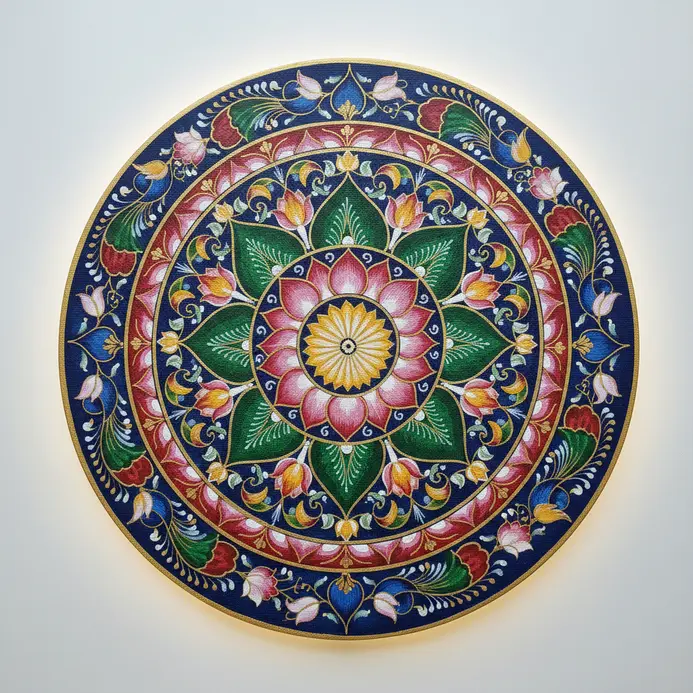
Constructing symmetrical floral patterns showcases how structured easy pichwai painting ideas train hand control. You want a practice project that feels meditative and looks professional. Picture a bold, decorative medallion with repeating lotus buds or vines radiating from a single center point. This arrangement creates a harmonious, self-contained design centered around rhythmic repetition and geometric balance. The beauty of this design stems from its predictable nature, which is a hallmark of Indian folk art. You only need to perfect one single element, like a specific petal shape, and repeat it around the circle. This method reduces the mental load of designing a complete scene and lets you focus on consolidating core skills. You practice consistent hand pressure and brush control, which represent the absolute foundations for complex work. Establish your radial grid with a compass and ruler to guarantee perfect symmetry. Always rotate your paper as you work to keep your hand aligned with the natural curve. This approach builds muscle memory for smooth, uniform lines that serve countless future projects. You explore more easy indian painting ideas to expand your structured practice in DIY Indian folk art. Maintain light pencil marks during this phase to preserve paper integrity.
7. Geometric Lotus Petal Grid Pattern Basics
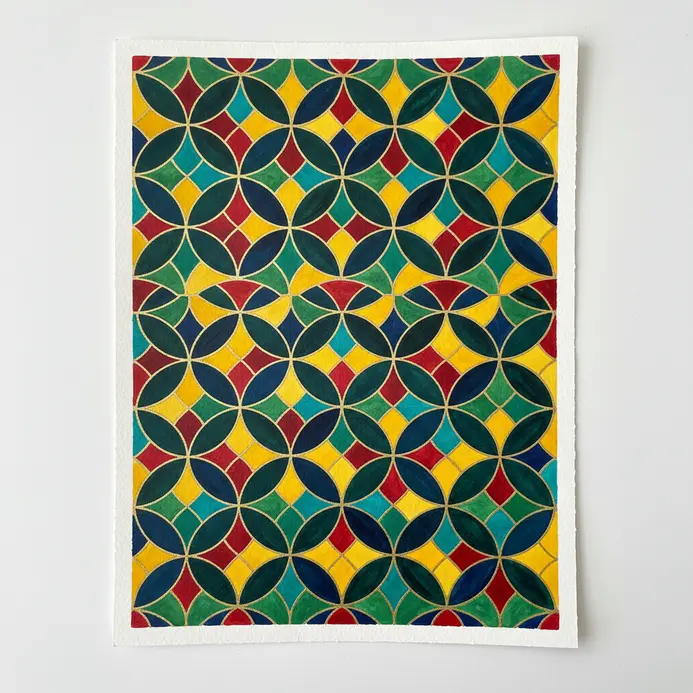
Mapping geometric petals illustrates the precision required for advanced easy pichwai painting ideas. Have you admired the beautiful, textile-like backgrounds in traditional works? The geometric lotus petal grid serves as your secret weapon for creating that organized, rhythmic feel. It uses uniform, stylized petal shapes arranged within a crisp, repeating layout, often in a diamond or semi-circular formation. This pattern fills borders and panels with a flat, decorative texture that never overpowers the central scene. Draft your grid with a mechanical pencil and ruler to ensure perfect symmetry. Sketch a simple lotus petal shape inside each grid unit, keeping the size and curvature consistent every time. Fill each shape with a solid, opaque color like gouache, and let it dry fully before adding outlines. Use a fine-tipped brush to trace a clean, contrasting outline around each petal, often adding a tiny V shape at the base for that authentic folk-art touch. This pattern succeeds because it generates a dynamic background that provides quiet, visual rhythm, balancing the flowing forms of central figures like Shrinathji or cows. It mimics the appearance of traditional cloth hangings, which marks the true origin of Pichwai art. Always draw your complete grid first and use it as a strict boundary for your petals. This strict framework prevents inconsistent sizing, which remains the most common beginner mistake. Exploring landscape paintings supports your technical growth. You should wipe your ruler periodically to prevent graphite transfer onto your painted sections. Clean tools guarantee sharp edges and maintain the crisp geometry central to this technique.
8. Layer a Dainty Vine and Flower Corner Decor
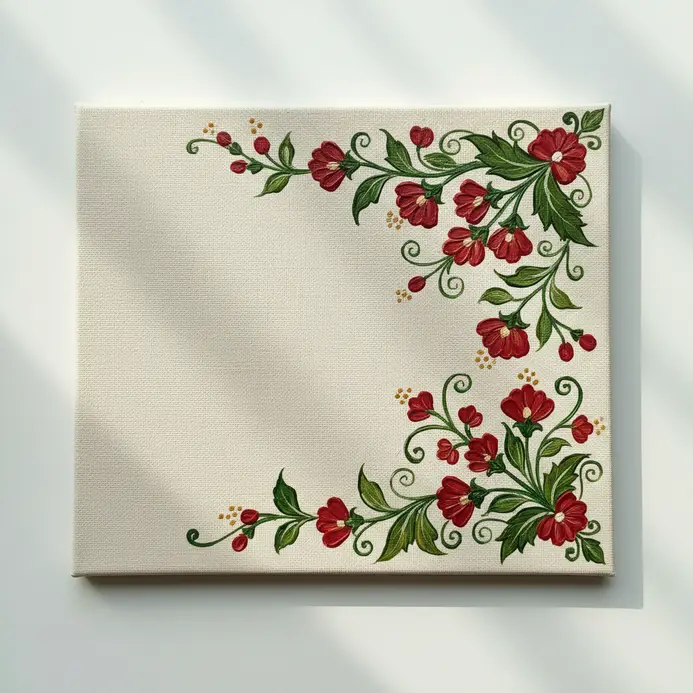
Layering corner vines proves that easy pichwai painting ideas often prioritize natural movement. Let us soften those hard corners with elegant, natural detail. This concept focuses on creating a delicate, flowing frame of vines and tiny flowers right at the edge of your painting. It adds a traditional feel without requiring a complex central figure, making it a perfect beginner-friendly project. The appeal rests in how this decor visually anchors the composition, guiding your eye gently toward the middle. Start with a light pencil sketch of a graceful S curve originating from the corner. Use a fine-tipped round brush to paint the main vine, remembering to vary your pressure for a natural, tapered look. Add overlapping tendrils in a lighter shade once that base layer dries to build lovely, layered depth. Dot small, simple flower buds and leaves along the stems. The key relies on restraint. Leave generous negative space between clusters to preserve that dainty, uncluttered aesthetic. Apply a final touch of tiny dots for stamens to give your corner decor an authentic, finished appearance. Exploring landscape paintings extends your decorative vocabulary. You should practice these corner sweeps on scrap paper before committing to your final canvas.
9. Solid Color Shrinathji Eye Detail: Focal Point Mastery
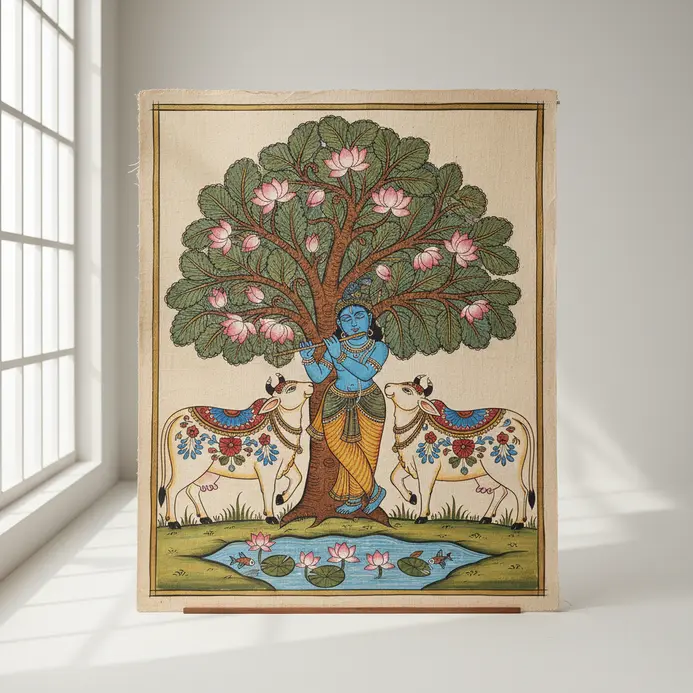
Isolating eye details demonstrates how focused easy pichwai painting ideas create strong focal points. You make your entire painting come alive with one simple shape. The Shrinathji eye, painted in a solid, bold color, achieves exactly that result. It forms a smooth, almond-shaped block of deep black pigment that sits as the undeniable heart of the piece. This minimalist approach establishes a powerful visual anchor, drawing the viewer’s gaze directly to the deity’s face. You need a fine round brush and highly opaque black ink or gouache. The goal focuses on achieving a perfectly flat, untextured surface with zero bleeding. Practice the outline in two smooth strokes on scrap paper first, connecting the top and bottom curves for a clean shape. This simple eye works so effectively because its graphic clarity and unwavering gaze generate an immediate devotional focus that feels timeless and powerful. For a different approach to bold, simple shapes, explore these abstract painting ideas for beginners. Keep your brush loaded evenly to prevent pooling inside the delicate almond shape.
10. Repeating Paisley Motif Row Design Fundamentals
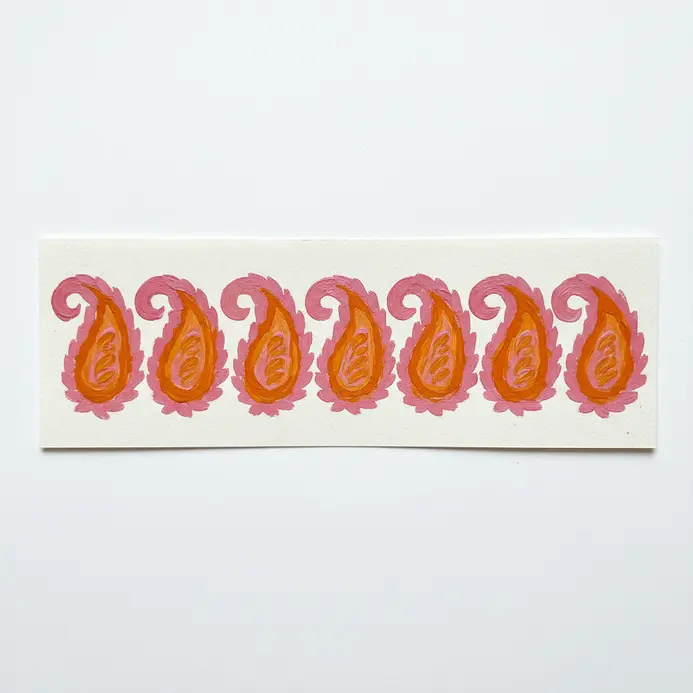
Repeating paisley rows shows how rhythmic easy pichwai painting ideas establish visual unity. Let us create a perfect, elegant border that looks professionally finished. A repeating paisley row forms a line of identical teardrop shapes, often called a buta row. It frames your main artwork with a synchronized, rhythmic pattern. This design succeeds because its repetition creates a powerful sense of order and seamless continuity. Draw two light parallel guide lines with a ruler. Mark small, equal ticks along these lines to space each motif perfectly. Outline the paisley shapes with a slightly larger brush, ensuring they lean in the same direction for flawless flow. Your critical success factor relies on keeping your paint thinned to an ink-like consistency to prevent jagged edges. Exploring landscape paintings strengthens your background skills. Practice your teardrop flick motion separately to guarantee smooth termination points on every stroke.
11. Blend a Flowing River Stream Watercolor Effect

Blending water effects explains why fluid easy pichwai painting ideas capture traditional landscapes. Let us add a beautiful sense of movement to your traditional scene. This effect uses soft, blended colors to make a river look like it flows naturally across the paper. You start with a damp surface and apply gradient blue washes that transition smoothly from deep to light. The final touch adds tiny, crisp ripple lines once everything dries completely. You always paint your strokes in the exact direction you want the water to travel. This simple habit makes a huge difference in selling the illusion of a flowing stream. Build beautiful backgrounds by exploring landscape paintings for beginners. Tilt your board slightly during the wash application to let gravity stretch your pigment evenly across the channel area.
12. Basic Leaf Garland Backdrop Pattern: The Perfect Framework
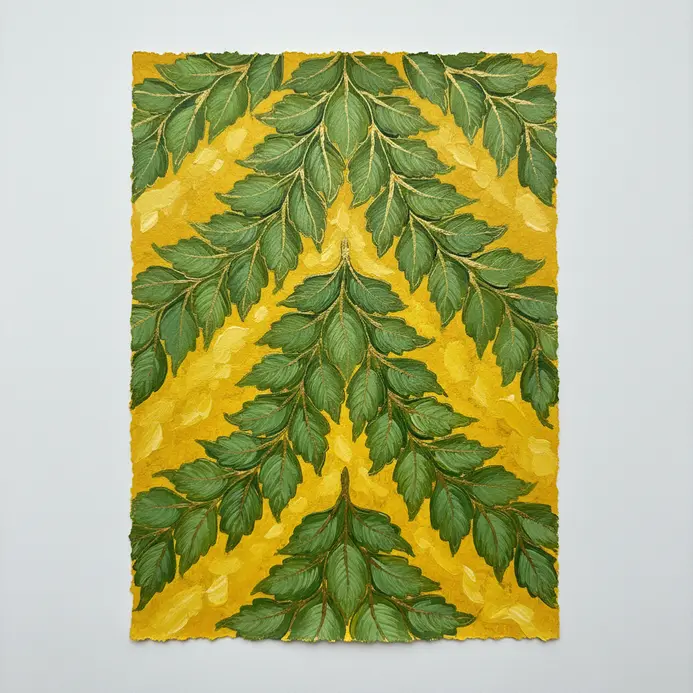
Creating leaf garlands outlines how framing easy pichwai painting ideas organize composition space. You want a simple method to make your painting look polished and complete. The Basic Leaf Garland pattern serves as your reliable foundation. It features a repeating chain of stylized leaves that builds a decorative border resembling a natural frame. This border directs attention toward your central figure and gives your work immediate structural integrity. Start by lightly sketching a flowing, wavy line for your main vine. Use a fine-tipped round brush to paint alternating teardrop-shaped leaves along this line. The repeating rhythm proves forgiving and adds a professional touch, even if you remain at the beginning stages of your journey. I love this motif because it remains deeply traditional and provides essential visual balance. It transforms intimidating blank zones into a beautiful, finished stage. For an authentic feel, try adding a tiny flower bud between every pair of leaves. Exploring landscape paintings expands your framing options and offers inspiration for your Indian folk art projects. Keep your paint mixture at a creamy consistency to guarantee uniform coverage across each leaf shape.
13. What Makes the Bright Orange Marigold Flower Head Iconic?
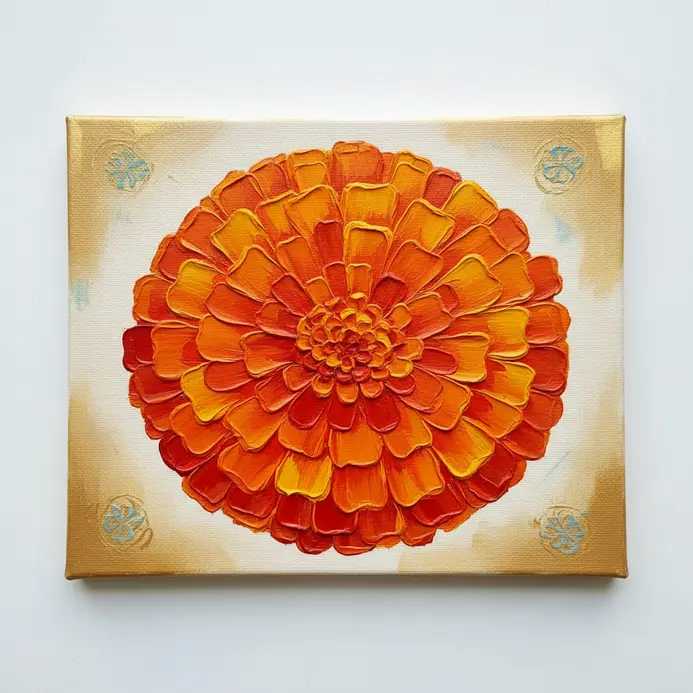
Painting saturated blooms connects color theory to successful easy pichwai painting ideas throughout history. That vibrant orange sphere feels instantly recognizable and full of life. In Pichwai, the marigold, or Genda, transcends ordinary floral representation. It becomes a stylized dome of joy, painted with overlapping, scalloped strokes and tiny dots to create a ruffled, textured head that glows from within. This specific saturated orange pigment proves essential, as it delivers that warm, luminous pop against deeper fabric tones. This color approach succeeds because the hue symbolizes pure devotion and service, making the composition feel both abundant and spiritually resonant. Avoid flat circles by building your flower from the outer edge inward with those rhythmic curved strokes. Exploring landscape paintings continues your botanical study. Mix a generous batch of orange before starting to maintain consistent saturation throughout all your overlapping scales.
14. Add a Linear Sun Icon Decor Motif

Adding geometric accents blends sharp lines with classic easy pichwai painting ideas for modern balance. Let us introduce some geometric sunshine to soften those flowing curves. The Linear Sun Icon forms a minimalist, stylized sun constructed from a central circle and clean, radiating lines. It serves perfectly as a decorative accent in corners or borders. This motif succeeds because its sharp geometry creates a beautiful contrast with organic shapes in traditional art. Use a fine-liner pigment pen for the most consistent and crisp lines, ensuring your rays stay perfectly thin. You find more inspiration for clean, geometric designs in the guide to minimalist painting ideas. Maintain light, even pressure while drawing to prevent pen skipping or uneven pigment distribution across the page.
15. Tiny Bird Trio Ornament Sketch: Swift Visual Details

Sketching small birds integrates narrative details into decorative easy pichwai painting ideas effortlessly. You explore the Tiny Bird Trio Ornament Sketch, a swift visual detail that brings charm to traditional borders. You see three minimalist birds resting on a curved vine, often featuring almond-shaped bodies and simple linework. Typically, artists depict them in profile, with one bird looking back or tilted to inject added vitality into the scene. Paint this using a fine squirrel-hair brush and thinned earth pigments on prepared surfaces, similar to techniques used in Indian art paintings. Begin with a light pencil sketch of an asymmetrical branch, then mark bird placements with varied spacing. Paint the outlines with confident, fluid motions, adding dots for eyes and tiny beaks. This element gains popularity because it provides visual relief in dense scenes and applies the Rule of Three for balanced aesthetics. Avoid heavy-handed lines. Practice the flick motion for tail feathers and always vary the birds’ directions to maintain dynamic energy throughout the composition. Exploring landscape paintings enhances your wildlife rendering skills.
16. Simple Abstract Tree Branch Silhouette Techniques
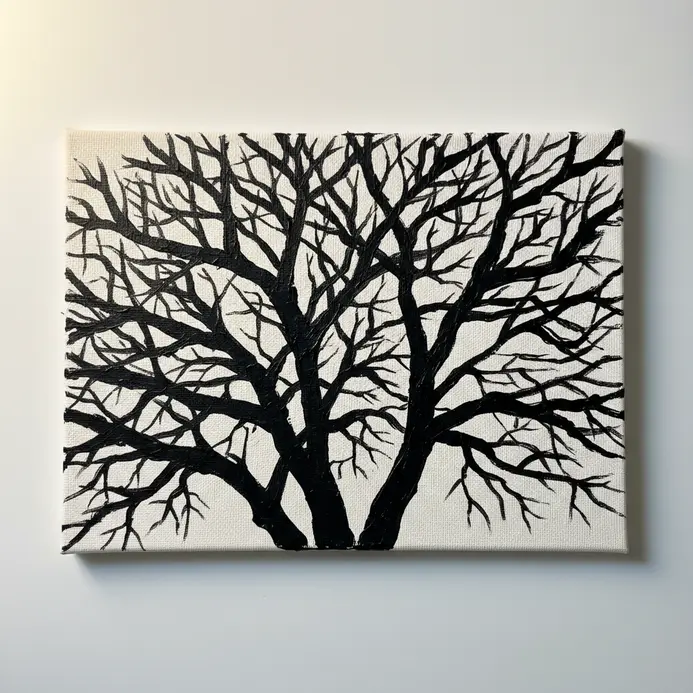
Drawing branch silhouettes teaches contrast techniques through minimal easy pichwai painting ideas. You elevate your traditional artwork with an abstract tree form, a simplified method that adds depth and visual harmony. Create high-contrast imagery using deep black or earthy tones on a light background. The technique relies on fluid, S-curved lines that taper naturally, often incorporating stylized floral elements like lotus buds. A fine-tipped liner brush remains crucial for achieving elegant strokes with thick-to-thin transitions. This method suits beginners perfectly because it emphasizes brush control and confidence, staying completely aligned with Pichwai spiritual traditions. Practice with a light charcoal sketch first, then paint using steady, continuous motions. Explore neo traditional tattoo designs for additional structural inspiration. Keep your wrist relaxed and paint from the elbow to guarantee smooth, uninterrupted branches across your composition.
17. Paint an Ornate Cow Face Close Up Study

Zooming into facial features refines detail application across portrait-focused easy pichwai painting ideas beautifully. Let us examine the soulful expression and ornate details that make a Pichwai cow so distinctive. This study isolates the bovine face, featuring large, expressive almond eyes and a profile that feels both noble and gentle. You work with a rich palette of earth tones and jewel colors to highlight the elaborate jewelry like nose rings and flower garlands. This project proves fantastic because it lets you practice micro-detailing that defines the tradition without managing a complex background. The key requires keeping your hand steady for that final, defining black outline. Remember that capturing the eyes correctly, especially that tiny white sparkle, brings the entire piece to life instantly. Exploring landscape paintings supports your atmospheric background skills. Layer your jewel colors thinly, allowing each coat to dry before applying the next for maximum vibrancy.
18. Delicate Butterfly Wing Shape Design: Elegant Symmetry
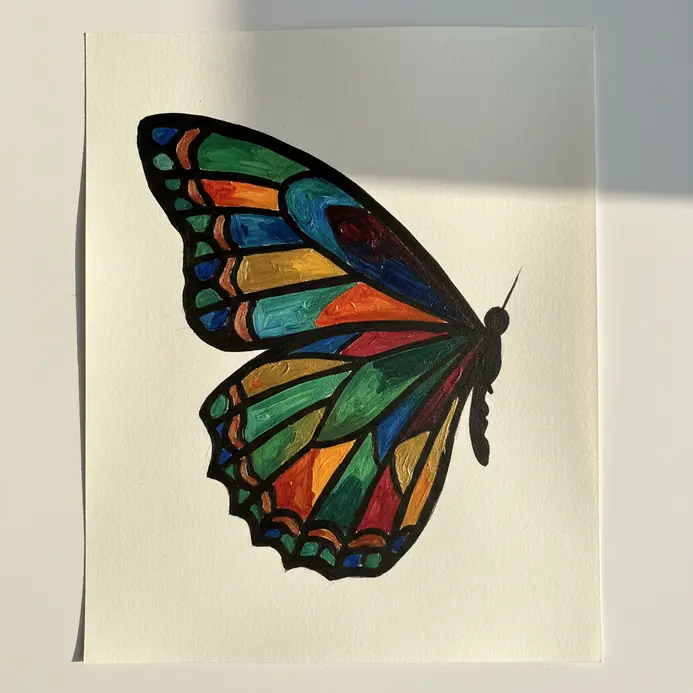
Mapping wing symmetry applies geometric harmony to structural easy pichwai painting ideas with elegance. You find deep calm when creating a perfectly balanced, symmetrical design. This butterfly wing motif operates entirely around that geometric balance, utilizing the traditional Pichwai style of bold outlines and delicate interior patterns. We achieve this by marking a strong vertical center line as our primary axis. We then sketch the mirrored wing shapes, often with scalloped edges echoing classic lotus borders. Once the framework stands established, the real work begins with intricate fill patterns. You apply rich, opaque color blocks first. After they dry completely, use your tiniest liner brush to add fine, lace-like details inside each wing segment. This contrast between the simple silhouette and the complex interior elevates the entire piece. It succeeds because that perfect symmetry, known as samata, generates a deeply meditative and visually pleasing focal point. A great method to prevent wobbly wings involves lightly folding your paper to establish a central crease. This physical guide guarantees both sides match precisely from the very first sketch. Exploring landscape paintings continues your symmetrical studies. Maintain consistent paint viscosity across both halves to prevent uneven drying times that compromise your final alignment.
19. Minimalist Temple Architecture Shape Sketch Practice
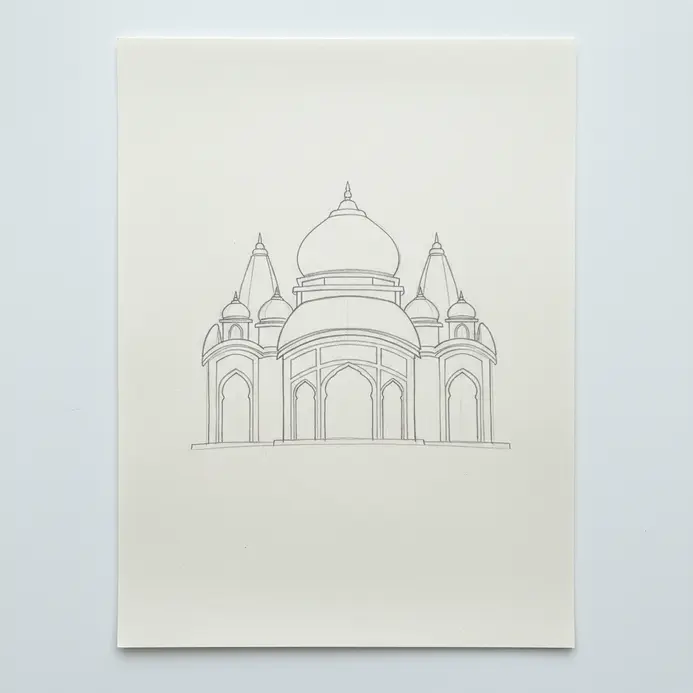
Constructing spiritual architecture integrates structural planning into guided easy pichwai painting ideas seamlessly. You want to build a serene backdrop that feels modern and highly focused. Let us strip temple architecture down to its essential, beautiful shapes. We create a clean, graphic silhouette of the iconic spire and arched entrance, utilizing confidence and simple linework. This method highlights the spiritual heart of the scene by embracing negative space and basic geometry. You require a fine-tip archival ink pen or a small brush for those clean, final strokes. Work on thick watercolor paper, and begin by mapping a central vertical axis with a pencil. Break the entire structure into basic triangles and rectangles before committing permanent ink lines. This sketch practice succeeds because it eliminates visual clutter, making it an excellent entry point when detailed ornamentation feels overwhelming. Fight the urge to add tiny carvings, as simplicity is key in DIY Indian art. Use a single, continuous stroke for the roof edge to maintain that strong minimalist aesthetic found in Indian art paintings. You find additional inspiration for clean, graphic approaches in the guide to minimalist painting ideas. Test your archival pen on scrap paper first to verify smooth ink flow before touching your final architectural sketch.
20. Stencil an Interlocking Half Moon Border Motif
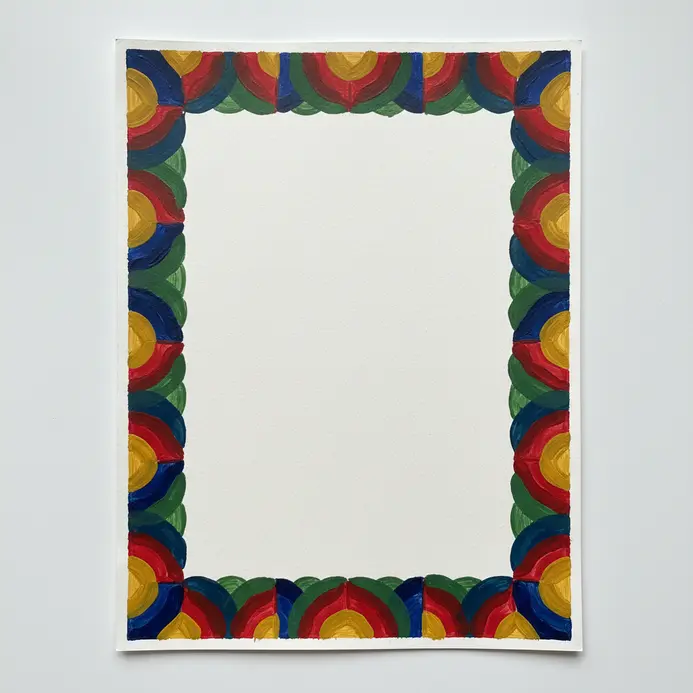
Applying stenciled edges guarantees professional consistency across repeated easy pichwai painting ideas. You want to give your painting a polished, traditional border without freehand stress. Stenciling an interlocking half-moon motif provides a brilliant shortcut to precision. This rhythmic pattern, resembling a scallop or fish-scale chain, frames your artwork with clean, repeating crescents. Align your stencil along the edge and secure it with low-tack painter’s tape. Use a dabbing motion with a nearly dry brush to apply the paint, which prevents messy bleeding. This technique succeeds because it adds a disciplined, professional finish that perfectly balances the entire composition. Once the stencil dries, add tiny dots where the half-moons meet using a fine liner brush. The interlocking chain creates a finished frame that elevates your central imagery instantly. Exploring landscape paintings expands your border repertoire. Clean your stencil immediately after painting to keep the edges sharp for future use.
21. Single Petal Flower Mandala Design: Calming Repetition
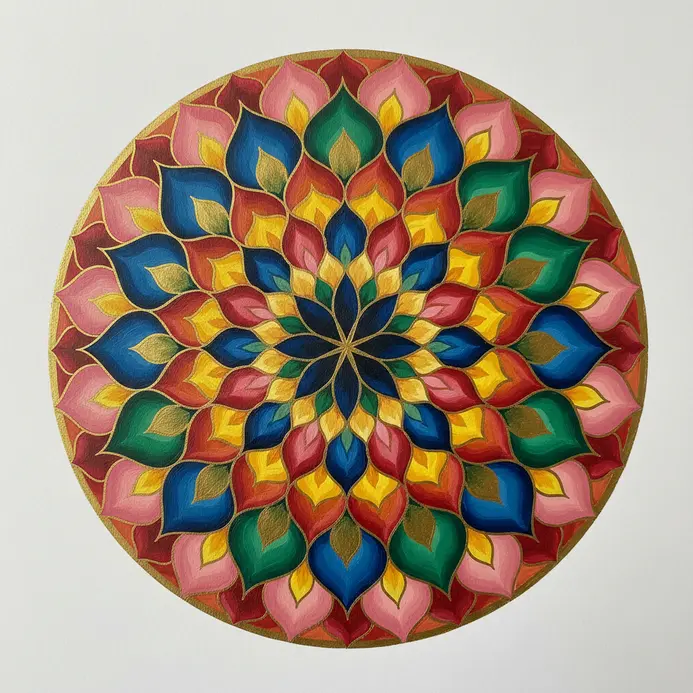
Mastering circular repetition builds patience required for complex easy pichwai painting ideas across multiple sessions. Let us create a meditative border that feels like a rhythmic dance for your brush. This design relies on a single, elegant petal shape repeated around a central point to form a perfect circle. It generates that calming, geometric harmony visible across traditional decorative arts worldwide. Start by drawing faint concentric circles with a compass to guide your petal placement precisely. Paint each petal using the same fluid stroke, focusing entirely on a consistent touch, press, and lift motion. The repetition remains highly forgiving, so small imperfections disappear into the balanced overall pattern. I love this method because it allows intense brush control practice while entering a relaxing flow state. Keep your wrist anchored and rotate the paper instead of your hand for perfectly uniform petals. Reference essential watercolor techniques that complement this circular style. Maintain steady breathing to prevent hand tremors during tight concentric work.
22. Why Start With a Curved Scrollwork Frame Corner Accent?
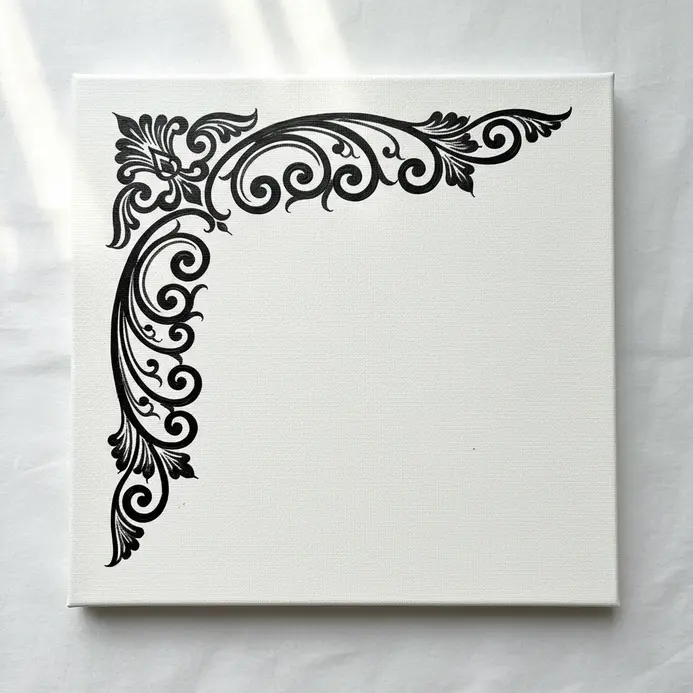
Establishing frame boundaries anchors all subsequent easy pichwai painting ideas securely within defined space. You hit obstacles with clunky corners in standard Pichwai border designs frequently. Let us solve that by beginning with the curved scrollwork frame corner accent. This technique applies traditional Bel-Buta motifs to form a flowing vine that turns corners elegantly. Mapping this accent first establishes firm boundaries for your entire painting, which prevents spacing complications later. You achieve the best results by using a fine Kalam brush with gouache on prepared cloth for those delicate lines. The secret focuses entirely on the primary curve’s flow. If it remains graceful, the corner appears intentional and perfectly balanced. This method guarantees smooth border transitions, framing your central scene with undeniable traditional flair. Exploring landscape paintings supports your scrolling practice. Practice your primary sweep separately until your hand memorizes the exact pressure curve needed for seamless turns.
23. Detail a Tiny Starry Night Motif Pattern
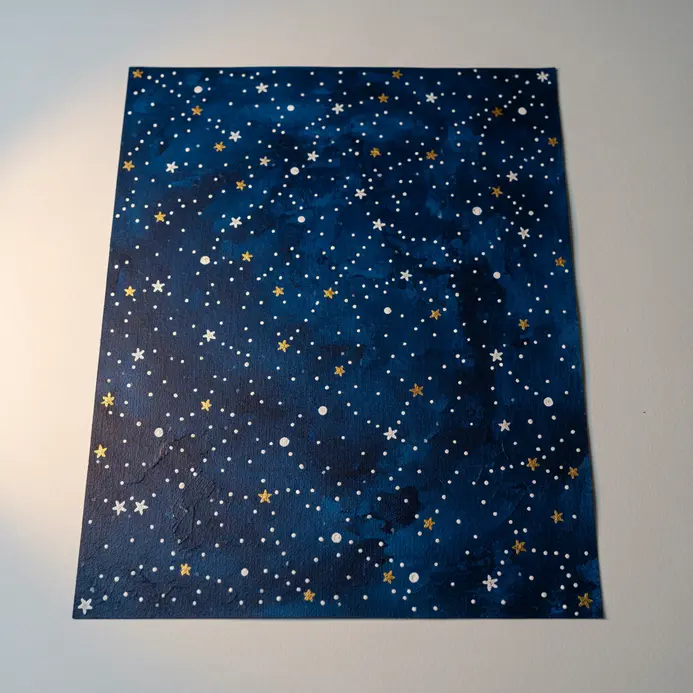
Scattering celestial details connects atmospheric effects to thematic easy pichwai painting ideas effectively. Nothing adds quiet magic to a traditional scene like a careful arrangement of tiny stars. We examine the classic tara-mandala pattern, a decorative sky filled with four or eight pointed stars and crescent moons. It appears painted in opaque white or soft yellow over a deep indigo ground, generating a stunning flat and folk-art appearance. This represents one of those straightforward approaches that instantly elevates visual complexity. Achieving that delicate look relies entirely on your tool selection. You need a size 00 round brush for the finest points and creamy, opaque white gouache. Practice the star shape on scrap paper first to build essential muscle memory. Avoid perfect grids and place your motifs across the dark background using a gentle, irregular rhythm. This organic placement mimics natural night skies far more convincingly than rigid mathematical layouts ever accomplish. For hand stability, place a toothpick dot as the center of each star first, then flick your brush outward to create sharp points.
24. Decorative Lotus Leaf Shape Study: Mastering Natural Forms

Studying organic geometry reinforces the structural foundation behind all easy pichwai painting ideas successfully practiced by traditional masters. You create a stunning visual anchor that brings serene, natural balance to your composition. This decorative lotus leaf avoids realistic botanical accuracy in favor of a beautiful, geometric heart shape featuring a scalloped edge and intricate vein patterns. I appreciate how it grounds busy scenes through simple, elegant forms. Start by sketching the symmetrical silhouette on your handmade paper using a faint pencil guide line. Fill the shape with a deep green base layer. Use a fine-tipped brush to paint delicate, radiating veins in white or gold. The transformation occurs when you master that incredibly light touch required for the thinnest lines. This shape succeeds because it remains a foundational element of traditional adornment, offering a perfect exercise in brush control and symmetry. Practice precise line skills alongside other natural forms found in easy indian painting ideas. Let your green base dry completely before attempting the delicate gold veining work.
25. Simple Cloud Formation Line Art Final Touches

Refining atmospheric elements completes the visual harmony established through all easy pichwai painting ideas in your collection. This final step brings your clouds to life with classic, rhythmic flow. We move past basic outlines to add delicate inner details that define the traditional aesthetic. Use a fine squirrel hair brush to draw smaller, overlapping scallops inside your main cloud shape. This builds rolling, billowing movement echoing historic textile designs. The magic operates through contrast between bold outer lines and fine inner squiggles. Add small, repeating patterns like dots or tiny commas inside the cloud body to generate rich texture. This layering delivers sophisticated depth and cosmic order, which anchors the entire monsoon scene aesthetic perfectly. Treat this step as a meditative exercise. Guide the brush from your shoulder instead of your wrist if lines feel shaky. Pencil in your scallop guides lightly first to focus on achieving one smooth, consistent curve per brushstroke.
Varnishing and Preserving Your Traditional Artwork
Apply protective coatings to guarantee longevity once your painting dries completely. For acrylic or gouache works on paper or wood, use a brush-on matte acrylic varnish. This sealant delivers a durable, non-yellowing shield that guards pigments against dust, moisture, and harmful UV exposure. Work in a clean, dust-free environment using a soft, wide applicator. Move the brush in one thin, even coat traveling in a single direction to prevent streaks or trapped bubbles. Follow the manufacturer drying times strictly.
Conclusion
Mastering structural motifs transforms a challenging historical style into an approachable daily practice routine. Your dedicated time spent learning these individual shapes builds a reliable foundation for larger traditional compositions moving forward. Compiling your efforts into an organized sketchbook generates a personal reference guide for all future projects. Choosing familiar subjects allows complete concentration on brush control and color blending techniques instead of stressing over complex layout decisions. You now hold a comprehensive collection of easy pichwai painting ideas to reference when planning your next canvas assignment. Combining smaller elements like a floral roundel with a detailed center creates striking results while minimizing frustration. Organize your specialized brushes and selected acrylic paints on your workspace immediately. Pick the specific motif matching your current energy level and outline your foundational sketch on fresh paper today.
FAQs
Q: What are some easy pichwai painting ideas for beginners?
A: Easy pichwai painting ideas for beginners include simplified motifs of Lord Krishna, lotus (kamal talai) designs, single-color backgrounds with hand painted accents, and basic border patterns inspired by Rajasthan. Start with large central figures and minimal detailing to practice composition and get comfortable with the chosen medium.
Q: What medium is best for creating hand painted pichwai artworks?
A: The best medium depends on preference and surface: acrylics are forgiving and quick-drying for beginners, watercolors and gouache offer soft effects for traditional looks, and fabric paints are ideal for Pichwai painting on cloth. Choose a medium that suits your skill level and the type of art work you want to create.
Q: Where can I discover pinterest’s best ideas and inspiration for easy pichwai?
A: You can discover Pinterest’s best ideas by searching for “easy pichwai painting ideas,” saving pins that resonate, and creating boards to save ideas about easy pichwai. Pinterest’s vast collection includes step-by-step tutorials, color palettes, and examples of hand painting art influenced by traditional pichwaipainting from India and Rajasthan.
Q: How do I adapt traditional Pichwai story elements like Lord Krishna into simple designs?
A: To adapt traditional story elements, focus on iconic symbols of Lord Krishna—flute, peacock feather, cows, and the kamal talai lotus—rather than intricate scenes. Use bold outlines and flat color fields to convey the narrative simply, and add small decorative motifs to hint at the larger story without complex detailing.
Q: Can I use pichwaipainting techniques on different surfaces and how?
A: Yes, pichwaipainting techniques can be applied to cloth, canvas, wood, and paper. Prepare the surface appropriately—priming canvas or wood, and stretching or backing fabric—and select compatible paints. For authentic hand painted effects, layer colors carefully and use fine brushes for detailing typical of Rajasthan Pichwai art.