Unlock the Cosmos: Beyond Basic Celestial Painting Ideas
The night sky has captivated artists for millennia, but modern celestial painting is about far more than swirling galaxies and splattered stars. While tutorials on those foundational techniques are plentiful, true artistry lies in mastering the specialized methods that bring cosmic phenomena to life with depth, realism, and personal symbolism. This guide is designed to bridge the common gap between inspirational idea lists and practical execution, offering a deep dive into the technical skills—from the Hubble color palette to lunar dry brushing—that will transform your canvas from a simple starry night into a compelling window to the universe.
From Inspiration to Canvas: The Technical Bridge
Many aspiring space artists find themselves with a head full of stunning imagery but unsure how to achieve the effects they envision. The competitive landscape is saturated with surface-level lists but lacks the detailed how-to for concepts like creating planetary dimension, aurora translucency, or accurate nebula colors. The following sections are built as standalone, actionable guides. Each one addresses a specific technical challenge or artistic concept, providing clear definitions, step-by-step methods, and pro tips to equip you with the knowledge to execute your celestial visions with confidence and creativity.
1. Watercolor Galaxy Painting Examples with Salt Texture Effects

Let’s start with one of my absolute favorite celestial painting ideas because the result looks like magic but the process is so simple. You lay down a gorgeous wet wash of deep blue and purple for your space scene, then sprinkle salt while it is still shiny and wet. As everything dries, the salt pushes the pigment away to create organic little star clusters and nebula textures. We love this technique because it gives you that authentic, speckled depth of real space without needing a single tiny brush. Want a pro tip? Try using coarse sea salt on your pink galaxy clouds for bigger, more dramatic starburst effects.
2. Acrylic Wet-on-Wet Nebula Painting Styles for Beginners
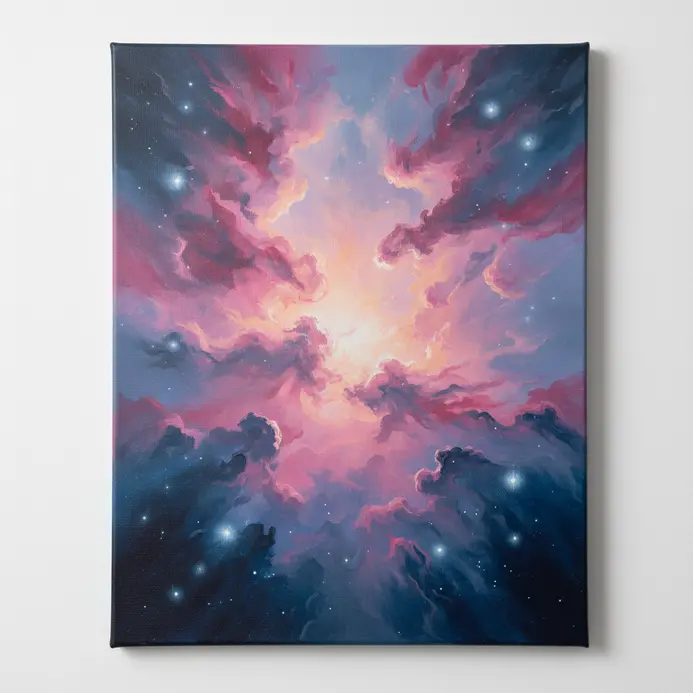
Picture this: you get those gorgeous, soft clouds of cosmic color without fighting the usual fast-drying acrylic paint. The wet-on-wet style is your secret weapon for creating dreamy nebula effects, and it is surprisingly forgiving. We are talking about applying fluid paint onto a wet canvas so the colors blend and swirl into those perfect gas clouds you see in space photos. I love this method because it is all about organic, happy accidents. You start with a dark, wet background and then add your brilliant blues and purples while everything is still fluid. The key is using an acrylic retarder to slow down the drying time, giving you room to breathe and blend. Want a pro tip for celestial painting ideas? Try gently tilting your canvas to let the colors flow into each other for a natural, gravity-assisted blend.
3. Ink and Wash Celestial Silhouette Art Examples
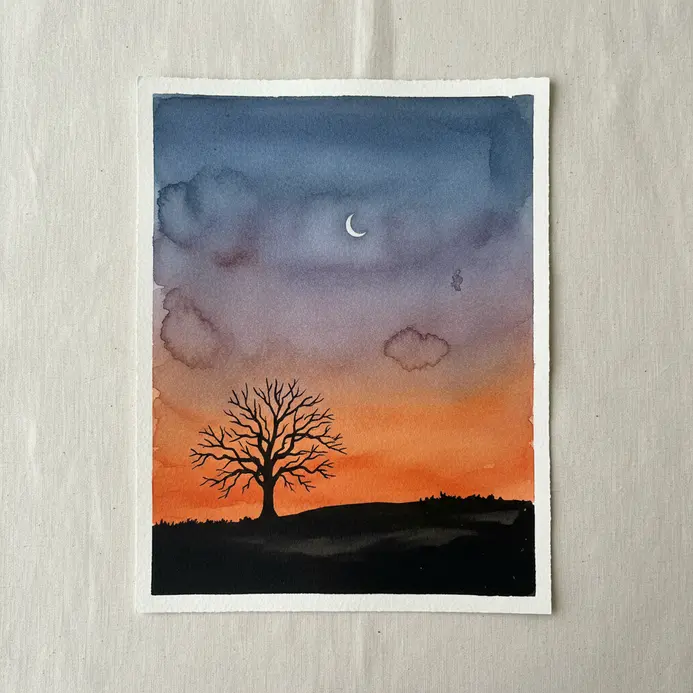
Let’s talk about one of the most magical ways to bring celestial painting ideas to life: the stark, beautiful contrast of ink and wash silhouettes. Picture a jet-black mountain range or a graceful heron cut out against a sky filled with soft, watery blends of indigo and speckled stars. It is that balance between a bold, simple shape and an ethereal background that makes your eye travel across the whole piece. You get to play with amazing techniques like the wet-on-wet method for those soft, blooming nebulas or dry brush splattering to create a fine mist of stars. The power is in the negative space—the untouched paper that becomes your moon or brightest star—which gives everything room to breathe. Here is a fun tip: try using a round brush loaded with water to lift pigment from damp paper; you can create glowing galactic cores or hazy comets with that simple trick, similar to the way light plays on water.
4. Mixed Media Textured Moon Surface Painting Ideas

Ready to make a moon you can almost feel with your eyes? This approach is all about layering materials like modeling paste mixed with sand or joint compound to build up that ancient, cratered lunar landscape right on your canvas. We are talking real, gritty dimension that transforms a flat circle into a world you want to explore. It works so well because it mirrors how the moon’s surface formed over eons, with layers of dust and impacts. My favorite quick tip is pressing the rim of a bottle cap into wet texture paste to create instant, round little craters. It is a fantastic way to add realistic detail without stress, opening a new direction for celestial painting ideas.
5. Oil Painting Galaxy Examples with Glazing Techniques

Isn’t it amazing how glazing can make your galaxies glow from within? We build up thin, transparent layers over a dry base, with each glaze adding depth and vibrant color. This approach is ideal for celestial painting ideas because it mimics the luminous, gaseous look of real nebulae. The secret is in the way light reflects through the layers. Try using transparent pigments like Ultramarine Blue for your first glaze to establish a cool cosmic background.
6. Gouache Celestial Art Examples with Opaque Star Fields

Ready to make stars that truly pop against the void? Let’s talk about the magic of gouache for celestial painting ideas. Its super-opaque, matte finish lets you paint a dense, velvety dark sky and then layer brilliant, unblended stars right on top. The result is a graphic, impactful piece with strong contrast, perfect for that classic velvet space look or more modern illustrative styles. We love this because it gives you total control—those stars sit on the surface with no transparency, creating intense brightness that feels both ancient and fresh. A fun tip is using a stiff brush for a spattering technique to create realistic distant star clusters in seconds.
7. Digital Painting Space Art Styles with Nebula Brushes

Ready to paint the cosmos from your screen? Nebula brushes are a secret weapon for creating stunning digital space art. These are not average round brushes; they have textured, cloud-like tips that let you build up soft, glowing gases and spray perfect star fields with a single stroke. We use them to create two main styles: Cosmic Realism for Hubble-like accuracy, and Space Fantasy for emotional, sweeping vistas. The reason these brushes are so beloved is that they do much of the heavy lifting, letting you focus on bringing celestial painting ideas to life. A quick tip: start with a dark background and use low-opacity cloud brushes to layer your colors; it creates incredible depth and makes those hydrogen-alpha reds and oxygen-III blues stand out, acting like a celestial tapestry.
8. Alcohol Ink Galaxy Painting Examples on Dark Surfaces

Have you seen how alcohol inks explode with color on a dark surface, creating a similar effect to a nebula? It is perfect for celestial painting ideas. We love creating spiral galaxies or ethereal nebulae on black tiles. The Drop and Blow technique with isopropyl alcohol creates those beautiful, flowing arms. The dark background provides instant depth, making whites and bright tones glow like real stars. A quick tip: add metallic inks last for shimmering accents that catch the light beautifully.
9. Pour Painting Celestial Abstract Art Styles

Let’s make the cosmos flow right onto your canvas. Pour painting celestial abstract art is all about capturing galaxies and nebulas with swirling, liquid colors. We are talking deep space black and purple with pops of metallic gold and neon, all moving to create stunning depth and light. The swipe technique is your go-to for creating epic nebula effects. You lay down a bright base, cover it with a dark color, and then drag a tool like plastic wrap across to pull the light up through the darkness. Try a dirty pour with your metallics at the bottom of the cup so they burst through the dark top layer when you flip it. I love adding a final touch of splattered white paint for a perfect starfield, and these easy moves turn into striking celestial painting ideas.
10. Palette Knife Starry Night Painting Examples

Ready to see Van Gogh’s masterpiece get a wonderfully chunky, textured upgrade? We are looking at artists who take the swirling drama of Starry Night and exaggerate every curl and star with a palette knife. The result is not only a painting you look at; it is a surface you want to touch, with thick ridges of paint that cast real shadows and sculptural stars you could almost pluck from the sky. You will find direct reinterpretations where the cypress tree becomes a jagged silhouette and the village is built from tiny, geometric blocks of color. Then there are wild, abstract versions where the composition dissolves into pure, vibrant movement. The knife’s impasto technique is a perfect match for expressive brushwork, increasing the texture and drama. A great tip is using the tip of your knife to lift and place little dollops of paint for stars that truly pop off your canvas.
11. Celestial Painting Examples Featuring Lunar Phase Progressions
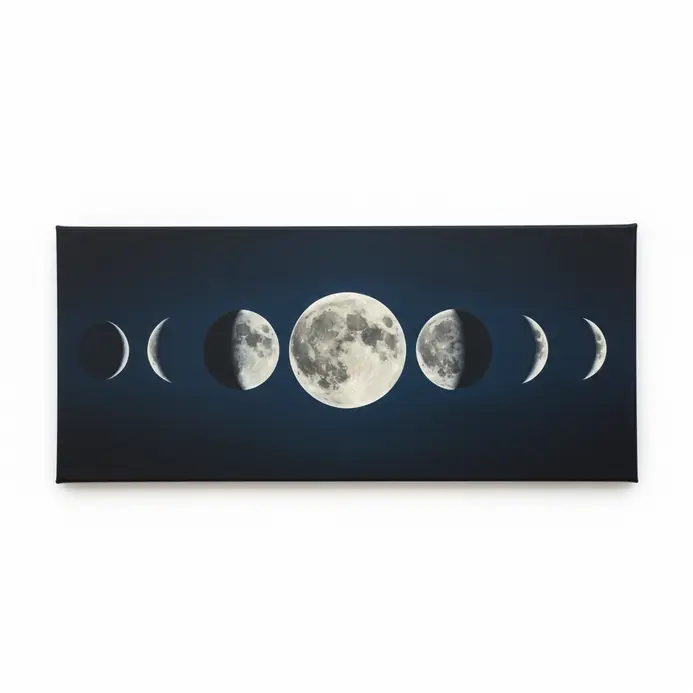
Have you ever seen a painting that feels like it holds a month of nights in one frame, inspiring a sense of wonder? These pieces show the moon’s progression from a slim crescent to a glowing full circle and back, often in a single, powerful image. Artists like Elihu Vedder used this sequence as a profound symbol for life’s cycles, packing so much meaning into the visual rhythm. This theme works so well because it gives celestial painting ideas a built-in narrative about time and change. You can try a simple version by painting a series of smaller connected canvases, each showing a different phase. That setup creates a gorgeous wall piece that feels both decorative and thoughtful.
12. Planetary Portrait Painting Styles with Atmospheric Effects

You know that breathtaking moment when a planet feels alive, not like a flat colored circle? That is the magic of painting atmospheric effects. This style focuses on light, haze, and weather to give a world its mood and story, from the soft glow of a limb to the drama of storms and aurorae. There is the highly accurate scientific illustration approach, like NASA artists use, and there is romanticized realism, where colors and light are pushed for emotional impact. My tip is to start by studying Rayleigh scattering for blue skies and Mie scattering for haze; that science gives structure to celestial painting ideas and helps you decide whether you are painting a thin atmosphere or a glowing gas giant.
13. Aurora Borealis Painting Examples with Fluid Light Techniques

Want to make those otherworldly lights look like they are dancing and inspire your audience? Fluid art methods capture that magical flow, where colors blend and glow on their own. The Pour and Tilt method with acrylics is a fantastic start, creating wispy, cell-like veils of color over a dark background. If you love unpredictable results, alcohol inks on slick Yupo paper are pure fun. You can blow on them with a straw to direct the flow into precise auroral rays, using the white paper as your built-in light source. This approach is perfect for anyone exploring celestial painting ideas that feel spontaneous and vibrant. The key is embracing the lack of control while the media does much of the beautiful work.
14. Constellation Narrative Painting Ideas with Mythological Figures

Picture Orion and Scorpius locked in their eternal chase across your canvas, with the Milky Way flowing between them like a river of stars. We are not only painting a pretty night sky here. We are telling the story of the constellations, where each star is a point in a mythological figure’s body or a moment in an epic. This idea works so well because it offers a perfect framework to explore contrast and depth on the canvas. You get the stark geometric lines of star patterns against the organic flow of robes, hair, or a dramatic face. It is a strong way to bring a classic myth into a modern space art piece, and celestial painting ideas like this carry both narrative and visual power.
15. Solar Eclipse Painting Examples with Corona Details

Let’s talk about the most stunning and challenging detail in any solar eclipse painting: the wispy, glowing corona. This is where celestial painting ideas come alive with light. Artists like Howard Russell Butler memorized the exact look of those radial streamers and curved polar brushes to paint with scientific precision right after totality. These paintings are so compelling because they capture a fleeting moment of cosmic beauty that feels both awe-inspiring and personal. The key is balancing that intense luminosity against the black sky to create a striking visual that can inspire others. Try starting with a deep dark background and building your light outward from behind the moon’s disk with soft, layered brushes.
16. Meteor Shower Painting Styles with Trailing Light Effects

Let’s make those shooting stars look like they are ripping across your canvas. The magic is in the trail: a bright, burning head followed by a luminous path that fades from intense color into the night. You will layer colors wet-on-wet, starting with hot white or yellow at the front and blending out to cool blue or fiery orange. This works because it captures that split-second flash of motion and light we all love in the night sky. A quick tip for strong contrast is painting your dark background first with a rich, textured sky. This makes every streak of light pop right off the surface, and it gives celestial painting ideas a sense of speed and energy.
17. Comet Painting Examples with Ion Tail Variations

Have you ever seen a painting where a comet’s tail looks like a straight, electric-blue spear shooting across the sky? That is the ion tail in action. Artists have shown it in many ways: as a dense, ominous cluster in the Bayeux Tapestry, a divine pointer in Giotto’s work, or a delicate scientific stream in Trouvelot’s drawing. These variations blend historical symbolism with astronomical truth, making the cosmos feel both majestic and understandable. For your own celestial painting ideas, try mixing phthalo blue with a touch of white to capture that electric glow. This method adds instant depth and helps bridge art and science in a visually striking way.
18. Supernova Explosion Painting Styles with Shockwave Effects

Let’s make your canvas scream with the raw, explosive energy of a dying star. This style is all about capturing the violent beauty of a supernova shockwave, that thin luminous shell where stellar material crashes into space. We combine thick impasto brushstrokes to build the structure with glowing glazes of color to show intense heat. A fantastic tip is to start with a palette knife to lay down the rough ridged shape of your shockwave using thick white or yellow paint. Then build translucent layers of orange and red acrylic glaze over the top, allowing the bright underpainting to glow through. This mirrors the physics of a hot compression front and adds serious depth to celestial painting ideas. Want to practice your glazing technique on something simpler first? Our guide on easy things to paint for beginners has some perfect starting points.
19. Black Hole Painting Examples with Gravitational Lens Effects

Let’s make your black hole more than a dark circle by adding the mind-bending look of gravitational lensing. This is where a black hole warps the light from stars and galaxies behind it, creating swirls, rings, and duplicate shapes in the sky. We get this stunning visual from scientific simulations, which artists use as precise reference. This works so well because it shows both artistic vision and respect for the physics. For a cool tip, try painting a warped accretion disk that seems to wrap both over and under the black hole’s shadow at the same time. Celestial painting ideas like this feel alive, complex, and dramatic.
20. Nebula Variety Painting Styles by Scientific Classification

Let’s get scientific with our art, because knowing the astronomy behind a nebula changes how you paint it and can inspire new techniques. You can match each major scientific type, from glowing emission clouds to ghostly reflection nebulae, with a specific approach and color palette. That structure gives celestial painting ideas an authentic foundation, even when the final look is expressive. A great tip is starting with a dark background for any nebula to make those colors stand out. Once the base is set, you can decide whether your piece needs dusty blue reflection tones, pink hydrogen glow, or smoky contrasts between light and shadow.
21. Star Cluster Painting Examples by Density and Age

Have you ever wondered how to paint star clusters with scientific flair? When we tackle open clusters, we paint distinct sparkling stars with ample dark space, which is perfect for highlighting individual color notes. For globular clusters, we create dense glowing spheres where stars blend into a luminous center. Age guides the palette: young clusters burst with blue and nebular red, while older clusters glow with warm yellow and orange. This approach merges astronomy with art, making the result feel both informed and stunning. Try using a dry brush to add texture to a globular cluster halo, and let celestial painting ideas grow from those visual differences in density and age.
22. Galaxy Type Painting Styles: Spiral, Elliptical, and Irregular

Picture your canvas as a window looking out on the cosmos. We can map the three main galaxy types onto classic painting styles, turning astronomy into art. Spiral galaxies suit luminous, swirling brushwork, while elliptical galaxies lean toward minimalist abstraction with soft, glowing gradients in warm, monochromatic tones. The chaotic beauty of irregular galaxies calls for the loose energy of abstraction, with drips, splatters, and bold contrast. This fusion works because it lets you explore massive cosmic concepts through the familiar joy of paint on a surface. A great tip is to start celestial painting ideas by picking your favorite galaxy type first, then build your palette and technique from there.
23. Celestial Landscape Painting Examples with Multiple Moons

You know that instant, jaw-dropping feeling when you look up at a sky that could never be from Earth? That is the pure magic artists create with multiple moons. This move builds entire worlds, from epic fantasy book covers to surreal dreamscapes, and it tells us we are somewhere else before we even study the land below. These are not only cool skies; they are powerful visual storytelling. A great tip is to study how artists handle the complex light and shadow cast by several light sources. That attention makes celestial painting ideas feel otherworldly and strangely believable at the same time.
24. Space Station Painting Styles with Earthrise Views
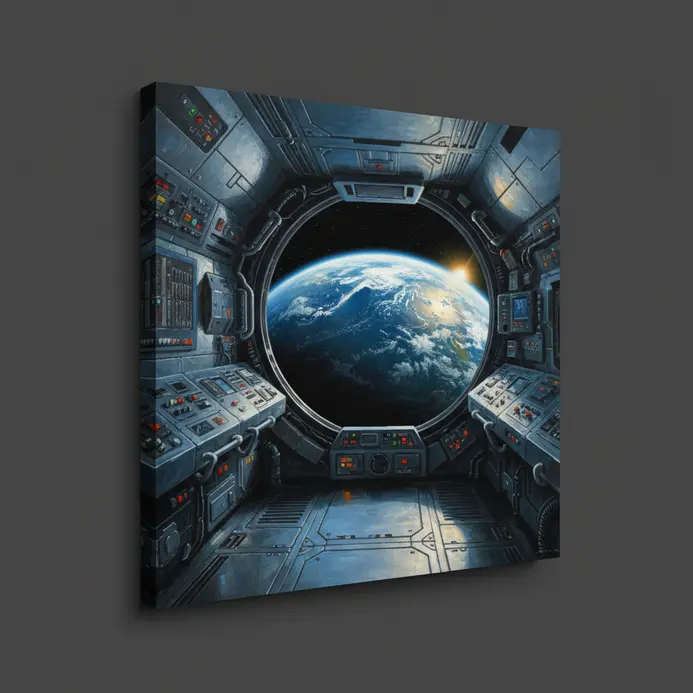
Picture floating by a huge window with our blue marble hanging in an infinite black sky and trying to paint that moment. The styles artists use here are born from a mix of human engineering and cosmic beauty. Some focus on fleeting orbital light with loose glowing strokes, while others frame Earth’s curve against the hard geometry of rails and windows. These scenes work because they translate the overview effect—the sense of unity astronauts describe—into something visual and immediate. A cool tip is to think about how paint behaves in zero gravity, with floating droplet patterns and unusual curves. That thought alone can push celestial painting ideas into fresh territory.
25. Deep Space Object Painting Examples Beyond Our Galaxy

Let us think beyond our own galactic neighborhood. Painting objects outside the Milky Way is a thrilling mix of science and imagination, since we are visualizing sights no human eye has seen directly. Artists use telescope data to paint plausible views of galaxies like Andromeda or dramatic galaxy collisions. I love this approach because it makes the universe’s grandest structures feel personal and visually stunning. A great tip is to use a dark background as your base so those distant galactic colors and lights stand out with more depth.
26. Zodiac Constellation Painting Ideas with Symbolic Elements

Ready to make your art tell a personal, cosmic story that can inspire others? Zodiac constellation painting layers the actual star pattern with its symbolic glyph and elemental essence. This trinity approach adds meaning to the canvas, so you are not only painting stars; you are painting a complete astrological identity. Start with an elegant metallic wash on a deep navy background, then plot the constellation in silver and integrate the zodiac symbol. If you want a stronger statement, try a negative space silhouette for a sign like Leo, placing the star pattern inside the figure. Celestial painting ideas like this connect the viewer to timeless mythology and personal symbolism.
27. Celestial Still Life Painting Examples with Astronomical Instruments

Let’s talk about a painting genre where antique telescopes and dusty books are the real stars. These celestial still lifes are a brilliant mash-up of art and science from the 17th and 18th centuries. Artists arranged a celestial globe beside a skull, or a gleaming astrolabe next to an hourglass, building a scientific vanitas theme around time, knowledge, and our tiny place in the cosmos. The contrast is everything. You get the human ambition to map the stars, symbolized by a perfect orrery, next to a wilting flower that reminds us life is short. If you are looking for celestial painting ideas with narrative weight, this is a perfect place to start. Try sketching a modern version with a vintage compass, a favorite science book, and a plant on a dark cloth under soft light to create a silver contrast.
28. Abstract Celestial Painting Styles Emphasizing Color Theory
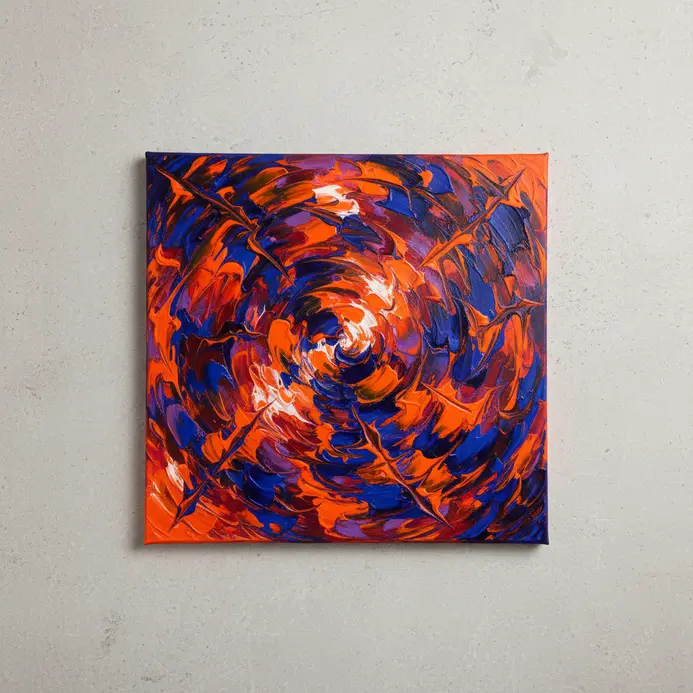
Let’s forget painting a perfect star and focus on the raw energy of the cosmos through pure color. Abstract celestial painting uses color theory as a visual language to evoke space, mystery, and scale. When a vibrant orange sits beside a deep blue, the whole piece starts to hum with stellar energy. This works because it taps straight into emotion and scale, letting you create something cosmic without a single literal planet. A fun tip is trying a stain painting method with watery acrylics on raw canvas to create seamless color fields that feel infinite. These kinds of celestial painting ideas rely on feeling as much as form.
29. Minimalist Celestial Painting Examples with Negative Space

Let’s talk about the magic of saying less to suggest more. A single moon floating in a sea of deep blue is not only a painting; it is a feeling of vast, quiet space. We focus on one strong element, like a crisp constellation or a soft planetary gradient, and let the empty canvas do the heavy lifting. This approach creates balance and makes you feel the cosmic scale. The negative space becomes the star, evoking that serene atmosphere so many artists love about the night sky. Try placing your subject off-center for a dynamic, modern composition, especially if you want celestial painting ideas that feel calm and refined.
30. Geometric Celestial Painting Styles with Constellation Patterns

Ready to trade the messy star splatter for something with serious structure? This style is where the cosmos gets a makeover with a ruler and compass. We are talking about transforming the wild night sky into crisp, intentional design through circles for planets, lines for constellations, and symmetrical forms that make the universe look ordered and inspire creativity. This fusion works because it satisfies our love for patterns while keeping the wonder of the stars. A fantastic tip is to start with vector software or a precise pencil drawing to map your constellation lines first. Then build your geometric shapes, like a low-poly moon or tessellated nebula, around that framework. This gives celestial painting ideas a solid skeleton and helps the final piece feel both cosmic and composed.
31. Surreal Celestial Painting Examples Blending Earth and Space Elements

Have you ever seen a dandelion puff where each seed is a tiny planet? This is the magic of surreal celestial painting ideas, where we blend Earth and space to create something wonderfully strange. Think of a floating island with a waterfall that pours stars instead of water, or a tree whose bark is made of star-dusted rock. These pieces work because they make the universe feel intimate and touchable. For a cool variation, try painting a soap bubble reflecting a whole galaxy. It is a fantastic way to play with scale, light, and dreamlike transformation on your canvas.
Your Celestial Toolkit: From Technique to Personal Vision
Armed with these specific techniques—from vortex perspectives to spherical shading—you now possess a more sophisticated toolkit than most generic tutorials provide. The goal is not replication alone; it is using these methods as a vocabulary for your own cosmic expression. Whether you are applying the Hubble palette to a nebula or integrating mythological symbolism into a planet’s rings, these skills empower you to move beyond basic patterns and create space art that feels uniquely yours, filled with scientific intrigue and personal narrative.
The Final Frontier is Your Canvas
Celestial painting is a journey of endless exploration. Each technique you master, from creating earthshine to balancing celestial silhouettes, opens new compositional possibilities. Do not be afraid to mix and match these methods—combine fluid pours with precise constellation linework, or use glazing for star halos over a palette knife-textured nebula. Let the technical foundations covered here ground your work, then give yourself permission to experiment widely. The universe is vast and mysterious; let your art reflect that boundless wonder. Now, go bring the cosmos to life.
Conclusion
We have journeyed through a whole universe of celestial painting ideas, from simple techniques to complex cosmic phenomena. I hope one of these styles has sparked that creative fire for you. Remember, the best part about space art is that there are no rules. You can blend these ideas, mix the media, and create something uniquely yours. So what are you waiting for? Grab your favorite brushes, pick a color palette that speaks to you, and let celestial painting ideas guide your next mark on the cosmos. Your next celestial masterpiece is waiting, so start painting today.
FAQs
Q: What are some easy celestial painting ideas for beginners?
A: Start with simple sun and moon silhouettes against a gradient sky, use a sponge or brush to blend colors, add dots for stars, and keep elements large rather than detailed. Include a few various sized stars and a balanced composition by placing the moon on one side and the sun on the opposite to practice contrast.
Q: How can I incorporate a celestial theme into home decoration?
A: Use framed celestial paintings as focal points, paint a small moon and star series on glass candle holders, or create a gallery wall with different night-sky scenes. You can include metallic paints for highlights and position works on the side of a mantel or headboard to enhance the room’s ambiance.
Q: What materials work best for a glass celestial painting?
A: Use specialized glass paints or acrylics formulated for non-porous surfaces, a good primer or glass medium to help adhesion, and soft brushes for detail. Allow each layer to cure fully and finish with a clear sealant to protect the end result and keep dots and fine stars from flaking.
Q: How do I design a balanced composition with sun and moon elements?
A: Place the sun and moon on opposite sides of the canvas or use one as a central focal point and the other as a subtler accent. Vary the scale and brightness—make the sun vibrant and the moon muted—and include various star patterns to create movement and visual balance.
Q: What techniques create realistic star fields and dot patterns?
A: Use a toothbrush or a stiff brush to flick diluted white paint for a natural scatter of dots, employ a fine-tipped brush or toothpick for precise stars, and layer small dots over darker areas for depth. Try varying dot size and opacity to suggest distance and include tiny clusters to represent star clusters.