You walk through the city and see murals on every wall. The colors are bright. The lines are sharp. You want to create work like this. You have spray paint cans and an idea. You need techniques to bring that idea to life. This article provides 21 spray painting art techniques. Each technique serves a specific purpose. You learn to control your tool. You learn to layer colors. You learn to create texture. These methods come from experienced street artists. You apply them to your own work. Your art improves with each new skill.
Street art demands bold visuals and often incorporates safety gear for the artist’s protection. You work fast. You work outside. You need techniques that deliver results. Spray painting art offers many ways to achieve different looks. You use stencils for sharp edges. You use freehand for flow. You use texture tools for depth. This list covers 21 techniques. Each one helps you express your vision. You learn to choose the right method for each project, sometimes opting for black and white techniques. You gain confidence in your process. The techniques here move you from beginner to skilled urban artist.
Essential Safety Practices For Aspiring Spray Paint Artists
Before you grab a spray paint can, let’s talk safety. This is the most important step you will take. You need to protect yourself and respect the space around you. Proper ventilation is non-negotiable. Are you working outside? Watch the wind direction. Working indoors? You absolutely need a professional spray booth or a highly ventilated garage with fans. A simple dust mask will not protect your lungs from the fine particles and chemicals. You need a proper respirator with organic vapor cartridges. Don’t forget safety goggles and gloves. Now, what about the legal side? Painting on public property without permission is vandalism. It can lead to serious fines. Research local laws and always seek permission. It is the only way to ensure your art form is respected and preserved.
The Evolution Of Spray Art: From Subway Vandalism To Gallery Walls
Let’s take a trip down memory lane. Modern spray paint art has a rebellious origin story. It exploded in the 1970s on New York City subway trains. Artists used the moving trains as their canvas to get their names across the city. It was raw, it was illegal, and it was a powerful form of self-expression. So how did we get from subway cars to museum walls? Key moments shifted public perception. Artists like Jean-Michel Basquiat and Keith Haring brought the energy and style of the streets into the fine art world. Their success helped the broader culture see the skill and artistic vision behind the spray can. Today, spray painting is a legitimate and celebrated art form with over 25 distinct styles practiced globally. It is a vibrant part of our modern visual language.
1. The Top Wildstyle Lettering Evolution

Let’s start at the very beginning, shall we? Wildstyle didn’t just appear out of thin air. It grew from those simple, quick tags in NYC, where legends like Phase 2 took basic writing and puffed it up into playful bubble letters. This was the foundation of all the intricate spray painting art we see today. It was pure, raw self-expression on subway cars, a visual language born from the streets. Can you picture those early pieces, buzzing with a new kind of energy? The 1980s is where things got wild, literally. Artists like Dondi White took those letters and twisted them into mind-bending 3D puzzles, adding arrows and connections that made your eyes dance. The goal became less about reading a name and more about admiring a complex signature of pure skill. I mean, have you ever stared at a classic Wildstyle piece and gotten totally lost in the layers? That’s the whole point. It’s a beautiful, intentional puzzle. So what’s a real-world example you can look for? Next time you’re scrolling, check out the work of DAIM. This German artist pushed those 3D effects into hyper-realistic territory, making letters look like they’re floating off the wall with insane depth. His work shows how Wildstyle evolved from street corners into a respected global art form, constantly adapting while staying true to its rebellious roots.
2. Artistic Stencil Art Political Commentary
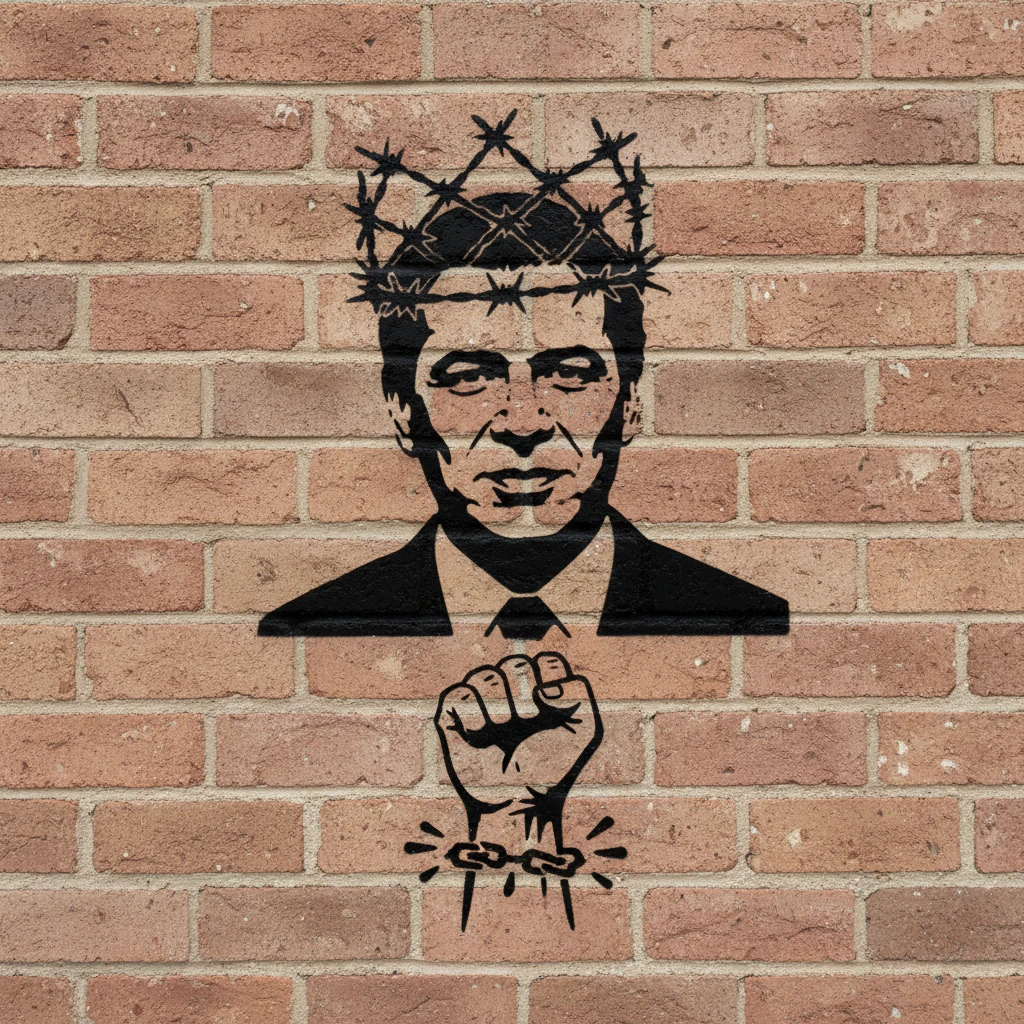
Let’s talk about how a simple piece of cardboard and a can of spray paint can shout louder than a megaphone. Artistic stencil art is the ultimate tool for political commentary on the street. Its genius lies in speed and repetition. An artist can cut a template, hit a wall with a few bursts of video art to create dynamic effects. spray paint, and vanish, leaving a powerful message for the public. Isn’t it wild how this accessible art form bypasses all the official channels? We see it used everywhere from anti-war protests to movements for social justice, turning the city itself into a living newspaper. One iconic example you’ve probably seen? Banksy’s ‘Flower Thrower’. Instead of a Molotov cocktail, the figure hurls a bouquet. It’s a perfect, silent protest against violence, using beauty as its weapon. This piece, and so many like it, prove that stencil art isn’t just about decoration. It’s a direct conversation with power, asking us all to look closer and think harder about the world we’re walking through. What message would you put on a wall?
3. Customize 3D Abstract Spray Murals

Okay, let’s get our hands digitally dirty. Customizing a 3D abstract spray mural isn’t just about grabbing a can. We’re blending physical textures with digital dreams. Think about starting in Blender or Cinema 4D to model your wildest shapes before you ever touch a wall. You can project those digital designs directly onto your surface to guide your spray layers, which is a total game-saver for complex patterns. Now for the fun part, the textures. Are you ready to make it pop? Instead of a flat wall, you attach lightweight 3D printed elements or sculpted foam to create real depth. I saw an incredible piece in Lisbon where the artist used recycled plastic shapes, sprayed them with Montana Gold, and then sealed everything with a tough epoxy. The way the light hit those raised sections was pure magic. Remember, your material choice, like a UV-resistant varnish, is what makes your spray painting art last outdoors. So, what wild combo will you try first?
4. Spray Paint Art Post-Graffiti Neo-Expressionism

We’ve all admired those bold street pieces, but have you seen spray paint art in galleries? Post-graffiti neo-expressionism takes this medium to new heights. Artists now use specialized nozzles on canvases to create explosive, emotional works. For example, many start with a base sketch on wood or posterboard, then layer colors with controlled sprays. Isn’t it amazing how they achieve such depth? Always wear a safety mask to protect yourself. This evolution proves that spray painting art is a versatile and powerful form of expression.
5. A Top Post On Photo-Realistic Spray Portraits

Have you ever seen a spray paint portrait so real it makes you look twice? We all love that wow moment, don’t we? Let’s peek behind the curtain to see how artists utilize video to enhance their street art. Creating photo-realistic faces with spray cans is all about layered stencils and masterful spray control. I watched a top post where artist Nychos tackled a huge wall. He began with a grayscale reference, cutting stencils for each tonal layer. Using Montana Gold paints, he built up shadows and highlights with short, precise bursts. This spray painting art form takes time, but that final, lifelike portrait from a distance? Totally worth it. What say, ready to grab a can?
6. Spray Painting Brazilian Pixação Architectural Styles

Alright, let’s talk about spray paint art that isn’t about pretty pictures. Brazilian Pixação is raw rebellion, and its canvas is the city’s architecture. We’re talking about those massive, stark concrete towers from the modernist era. Artists, or pixadores, see these buildings as symbols of power and inequality. So what do they do? They use fire extinguishers loaded with paint to tag them with these wild, angular letters, often in pure black. It’s a direct, physical clash with the building’s form. Have you seen photos of the Edifício Copan? Its iconic curved facade becomes a backdrop for this urgent, monochromatic statement. This isn’t just tagging a random wall. It’s a deliberate conversation with the architecture itself, using spray painting to question who the city truly belongs to.
7. A Tip For Berlin Bubble Letter Traditions

Let’s talk about a classic Berlin move for bubble letters. We all know the city’s style is playful and bold, but how do artists get that signature 3D pop? The trick is in the shading and shadow work. I love spotting this on a stroll through Kreuzberg. You’ll see a bright, rounded tag on a wall, and right beside it, a carefully sprayed shadow that makes the letters look like they’re floating off the surface. It’s such a simple visual trick with a huge payoff, don’t you think? This technique turns basic spray painting art into something with real depth. Next time you’re checking out street art, look for that shadow. It’s a little nod to the tradition of making your art stand out in a busy urban landscape.
8. The Supply For LA Chicano Spray Calligraphy

Alright, let’s geek out over the supply list for LA Chicano spray calligraphy! This isn’t just any spray painting art; it’s a cultural expression with deep roots. We’re talking Montana Gold cans for vibrant hues and skinny caps for those fine, flowing lines. Have you ever visited MTN World in Downtown LA? I did last summer, and the wall of caps alone was inspiring—artists were testing fat caps for bold drips right there. You need a good respirator too, because those fumes are no joke. Supporting local shops like this keeps the tradition alive and kicking. So, what’s your favorite tool for hitting the streets with style?
9. Artistic Melbourne Laneway Abstract Pieces

Let’s get lost in Melbourne’s laneways, where the spray paint art gets wonderfully weird and abstract. It isn’t all portraits and tags down here. We’re talking about mind-bending shapes and colors that make you stop and think, right? One absolute must-see is in Duckboard Place. You have to check out Kaspar Schmidt Mumm’s massive geometric mural. It uses these sharp, angular lines and metallic tones that play with the lane’s own shadows and architecture. It feels less like a picture and more like a puzzle for your eyes. How do they even plan something so precise with spray cans? It shows the incredible range of this art form, from intricate paper designs to large-scale murals. The artist likely used a mix of stencils and freehand control to get those crisp edges. Visiting these pieces is a different kind of street art tour. You’re not looking for a story. You’re feeling a vibe. So, grab your camera, head out on a quiet weekday morning for the best light, and let the city’s hidden abstract wonders blow your mind. What will you see in the shapes?
10. Customize NYC Subway Car Throw-Ups

Alright, let’s dive into customizing those iconic NYC subway car throw-ups! Have you ever spotted a vibrant ‘NYC’ in bubble letters zipping past? We’re talking about starting with classic bubble letters like ‘SUB’ in neon colors. Then, to make it uniquely New York, add NYC-themed motifs – think a cartoon rat peeking out or a skyline silhouette. For a real-world example, I once saw a throw-up where the artist used motion lines and silver drips to mimic subway speed, often enhanced by video projections. It had a jagged skyline at the base and a tiny crew logo. Remember, this spray painting art is about raw expression, but always practice legally, like on canvases or at spots like 5 Pointz was a legendary site where artists showcased their work on a massive scale. (or modern legal equivalents).
11. Spray Paint Art Japanese Kanji Spray Fusion

Okay, so we’re mixing street art with ancient calligraphy. How cool is that? Let’s talk about this awesome spray painting art fusion. The key is balancing the wild energy of a spray can with the precise, meaningful strokes of a kanji character. I love seeing artists use pre-cut stencils for characters like ‘love’ or ‘peace’ as the centerpiece of a cosmic background. It creates this stunning contrast between the orderly symbol and the chaotic, beautiful spray paint nebula swirling around it. Have you seen those murals where the kanji looks like it’s part of the landscape? One real-world example I adore is a piece where the character for ‘wind’ is sprayed with a fine cap, and the paint drips and splatters to look like cherry blossoms are blowing off the letters. It’s pure magic. Remember, picking a kanji with personal or powerful meaning is way better than grabbing a random one. Let’s respect the culture while we make something totally modern and fresh.
12. A Top Post On Eco-Solvent Spray Innovations

Hey art friends! Ever worry about the fumes when you’re into spray painting art? Well, let’s talk eco-solvent innovations. These new sprays use safer, plant-based solvents that cut down on nasty VOCs. It’s better for our health and the planet. For a real-world example, BASF’s waterborne eco-solvent coatings used in car manufacturing cut VOC emissions by 70%. That shows how effective green tech can be! When you pick your next can, look for low-VOC options or bio-based formulas. This small step makes your art practice more sustainable. What do you think? Ready to try it out?
13. Spray Painting Augmented Reality Spray Layers

Okay, so we need to talk about the future of spray painting art, and it’s wild. Picture this: you point your phone or put on some AR glasses at a blank wall, and a full-color mural appears over it like a digital ghost. That’s augmented reality spray layers. You can test a whole graffiti piece, change the colors, or add a stencil effect without wasting a single drop of paint. How cool is that? It’s like having a magical undo button for the street. Here’s a concrete example I love. A company like BMW uses these AR systems to let designers preview custom paint jobs and wraps on real car models. They avoid costly physical trials and get the visual perfect before any spray can is even picked up. For us, imagine planning a massive piece on a difficult surface. You could walk around, see your design from every angle, and make sure that the scale is appropriate for the space. fade looks right. This tech turns guesswork into precision, letting you focus purely on the creative, artistic side.
14. A Tip For Reverse Graffiti Clean Techniques

So you want to make a statement by cleaning, not painting? Reverse graffiti is a brilliant twist on our usual spray painting art, and the trick is in the tool. We are not adding color, we are revealing it by removing years of grime. Let’s talk about the most accessible method, pressure washing. You need to think of the surface like a delicate canvas. Using the wrong nozzle type or too much force can permanently damage the brick or concrete underneath. I saw this in action on a massive project for the London Underground. Artists used precise, low-pressure washes and stencils to create stunning images on tunnel walls, all cleaned with collected rainwater. They proved you can create powerful, temporary street art without a single drop of paint. Isn’t that a clever way to make your mark? The key is control, not power. Always test your settings on a small, hidden section first to protect the integrity of your chosen wall.
15. The Supply For Anamorphic Street Illusions

Forget the simple spray paint can. Modern anamorphic street illusions need a whole tech stack, including video technology for enhanced visuals. We’re talking about artists using Maya or Cinema4D to calculate the crazy perspective, mapping every bump with a Lidar scanner, and even simulating shadows with VFX software. Did you think this spray painting art was just freehand? It’s more like a Hollywood production hitting the pavement. The real magic comes from the materials too. They use thermochromic paints that shift color with the sun and nanoreflective films to make the illusion pop at the perfect angle. Want a real-world example? Look at the massive piece in Dubai’s Miracle Garden, which showcases a scale that is truly impressive. That installation used 34 tons of these smart materials. They even had autonomous painting drones place everything with millimeter precision. How cool is that? It shows you can’t create a 3D street masterpiece without this insane supply chain backing it up.
16. The Top Anti-Gentrification Protest Pieces

Have you ever stumbled upon a piece of street art that made you stop and think about the city’s soul? We’re diving into one of the most poignant examples: Banksy’s 2013 stencils in New York’s Lower East Side. Using simple spray painting art, works like ‘Hammer Boy’ critiqued the rush of luxury development, acting as a silent protest against gentrification. What makes this so impactful? Banksy didn’t just decorate a wall; he ignited a conversation about who our cities are for. In areas facing rapid change, this stencil art served as a reminder of the communities being displaced. For more on starting your own artistic journey, easy things to paint for beginners can offer some tips. But back to the point: this is spray painting art with a purpose, turning public spaces into platforms for resistance.
17. Artistic Glow-In-Dark Phosphorescent Works

Let’s talk about the magic that happens when the lights go out. We’re not talking about glow-in-the-dark stars on a kid’s ceiling, but serious, jaw-dropping art that often features video elements. spray painting art that comes alive at night. The secret is in those modern strontium aluminate pigments. They soak up light like a sponge and release it for hours, creating a whole second piece you only see in the dark. Isn’t that the coolest trick for a mural or a canvas? One of my favorite real-world examples is from artists who create daytime street art with hidden messages. They’ll paint a vibrant city scene on a wall, but layer in phosphorescent paint for specific elements. When the sun sets, a glowing constellation or a hidden animal appears over the original scene. It completely changes the story and makes you see the surface in a whole new way. Have you ever seen a piece transform like that? It turns a static visual into an experience you have to wait for, which is pretty special for any art form.
18. Customize Vandalism Vs Commissioned Art

Okay, let’s get real about the big debate. What separates a wild, illegal tag from a celebrated city mural? It all boils down to one word: permission. Vandalism happens without consent, like a surprise spray paint art piece on a subway car. Commissioned work, though, starts with a contract and a handshake. The artist gets paid, the city gets a beautified wall, and everyone knows the plan. But here’s the fun part, the line gets super blurry. Did you know about 5Pointz in New York? It was an old factory covered in graffiti that became a protected art site, showcasing both ceramic and paper art. The courts literally had to decide if it was vandalism or legitimate art, considering the use of ceramic materials in some pieces. So, where do you stand? Does the artist’s intent or the property owner’s say matter more to you? It’s a messy, fascinating conversation at the heart of street culture.
19. Spray Paint Art Feminist Street Art Movements

Have you ever seen spray painting art used as a secret weapon? We love how feminist street artists turn city walls into platforms for bold statements. Let’s zoom in on Tehran’s underground collective ‘ZanGraph’. They use infrared-reactive paints that only show up through smartphone filters, keeping their work hidden from authorities. Isn’t that smart? By embedding Morse code in spray drips and employing magnetic stencils, they create and remove art in seconds to avoid trouble. This spray paint art tactic lets them address issues like gender inequality safely. You can see how this medium isn’t just about aesthetics; it’s a tool for resilience and voice in tough spots.
20. The Pressure Secret: Your Can’s Hidden Rhythm

Alright, let’s talk about the number one thing that separates a messy splatter from a clean, pro piece of spray painting art. It’s all about pressure, especially when using thinner to achieve the desired paint effects. You know that feeling when the can sputters and ruins a perfect line? We’ve all been there. The trick is in your trigger finger’s rhythm. Don’t just hold it down. You want to start and stop your spray off the surface every single time. Picture this: you’re working on a detailed stencil on a brick wall. You begin your motion in the air, press the nozzle as you sweep across, and release before you finish the pass. This prevents those awful drips at the start and end of each line. It feels like a dance, doesn’t it? Combine this with keeping the can a steady 6 to 12 inches away, and your control will skyrocket. Trust me, mastering this pressure technique changes everything.
21. The Supply For Cultural Heritage Preservation Murals

Okay, let’s get real about saving our most important street art and murals. It’s not just about grabbing a few cans and a cap. Preserving cultural heritage requires a whole supply chain of specialized stuff. We’re talking about Using conservation-grade paints ensures that the artwork remains vibrant over time, even in black and white. that match original pigments, not just any spray paint art you’d use on a fresh wall. Did you know teams working on historic murals often use UV-resistant varnishes and climate control to fight sun damage and humidity? It’s a science! One amazing example? Look at the community-led efforts to restore the great Mexican muralism works. They didn’t just paint over cracks. Experts sourced historically accurate materials, used 3D scanners for documentation, and involved local artisans to keep the soul of the piece intact. It shows that having the right structural support and community buy-in is everything. So next time you see an ancient piece of spray painting art in your city, remember the massive, careful effort behind keeping it alive for us all.
Future Trends In Spray Paint Artistry
So where is this dynamic art form heading next? The future is blending the physical and digital worlds. Augmented reality is becoming a tool for spray paint artists. Imagine viewing a finished mural through your phone and seeing animated elements come to life. This technology adds a new, interactive layer to street art. Another huge trend is the move toward eco-friendliness. Artists and paint manufacturers are developing formulas with lower volatile organic compounds. These paints are better for the artist’s health and the environment. The demand for sustainable materials is growing fast. These innovations show that spray paint art is not stuck in the past. It is constantly evolving, embracing new tools and ideas while keeping its core spirit alive. Are you ready to be part of its next chapter?
Conclusion
We have traveled through a world of color, rebellion, and innovation. From the foundational throw-ups of New York to the glowing future of augmented layers, spray painting art proves it is a dynamic and legitimate global art form. Each style we explored tells a different story about place, people, and purpose. This journey shows us that the urban canvas is constantly evolving. What is your next step? Grab a can, find a legal wall, and start experimenting with your own voice. The street is waiting for your contribution to the ever-expanding lexicon of spray painting art.
FAQs
Q: What is spray painting art and how does it differ from other painting styles?
A: Spray painting art uses aerosol paint to create images, textures, and effects that are often hard to achieve with brushes. It differs from traditional painting in its tools, surface preparation, and ability to produce smooth gradients, stencils, and layered sprays quickly, making it popular for murals, street art, and contemporary studio work.
Q: What basic materials do I need to start with spray painting art?
A: To start spray painting art you need quality spray paint cans, primers and clear coats, a selection of nozzles (caps) for different spray widths, protective gear (mask, gloves, goggles), and surfaces like canvases, wood panels, or walls. Additional helpful items include masking tape, stencils, and a spray-friendly card or palette for testing colors.
Q: How do I avoid a common spray painting art mistake like drips or uneven coverage?
A: A frequent mistake is spraying too close or holding the can in one spot, which causes drips and pooling. To avoid this, keep the can 6–12 inches from the surface, use multiple light passes instead of one heavy coat, and allow drying time between layers. Practicing on a scrap card or test board helps adjust distance and pressure before working on the final piece.
Q: Are there safety tips specific to spray painting art I should follow?
A: Yes. Always work in a well-ventilated area or outdoors, wear a respirator rated for paints, use gloves and eye protection, and keep flammable materials away. Proper disposal of empty cans and avoiding inhalation of overspray are important safety practices when doing spray painting art.
Q: Can I learn spray painting art from online sources like YouTube, and which types of videos help most?
A: YouTube is an excellent resource for learning spray painting art; look for tutorial series that cover surface prep, cap selection, layering techniques, and finishing. Time-lapse demonstrations, step-by-step lessons, and videos focused on common mistakes give practical insight. Combine watching with hands-on practice to build skill.