Essential Philosophical Foundations For Beginners
Ever wonder why Chinese landscape paintings feel so serene and balanced? It all starts with philosophy. These works are not just pictures of the external world; they are visual expressions of core Taoist and Confucian ideas. The concept of yin and yang is crucial in this national painting tradition. Artists sought to depict the harmonious interplay between solid rock (yang) and flowing water or mist (yin).
This balance reflects the Taoist pursuit of living in harmony with the natural world. So when you see a towering peak next to a deep valley in famous Chinese paintings, you are looking at a philosophical statement. The composition guides your spirit on a journey through the painting, much like the narrative depth found in Chinese art history. It is about feeling a part of nature, not just observing it from the outside. This foundational mindset is what separates a true Chinese landscape scroll from a simple landscape paintings for beginners project.
Traditional Tools And Materials Demystified
Before we get to the brushwork, let us geek out over the classic toolkit used since the Tang Dynasty, which has influenced countless Chinese artists. The Four Treasures of the Study are your must-knows: the brush, ink, paper, and inkstone.
A single traditional Chinese brush is incredibly versatile, able to create lines as fine as a hair or ink washes as broad as a cloud, all based on the Chinese artist’s pressure and speed. Traditional ink comes in a solid stick. You grind it with water on an inkstone to create your ink painting medium. This ritual itself is a meditative practice deeply rooted in Chinese culture. The paper is typically xuan paper, made from plant fibers. It is absorbent and perfect for those beautiful, bleeding ink effects. Understanding these materials is key, as they actively shape the texture, tone, and spirit of the final painting.
1. Mastering Five Ink Tones For Atmospheric Perspective

Want your painting to feel like you can walk right into it? The secret is mastering the five classic ink tones, a system that’s all about creating incredible depth. Let’s break it down, starting with the darkest, Jiāo Mò (Burnt Ink), for sharp foreground rocks, and moving through to the faintest, Qīng Mò (Clear Ink), for hazy distant mountains.
Why does this work so well? It mimics how our eyes see the real landscape, with closer objects crisp and dark, and faraway ones soft and light, much like the techniques found in ancient Chinese paintings. Actionable Tip: Practice your gradation control on a separate sheet, making seamless transitions between each tone so your scene feels unified and vast. Mastering this gradation is essential for bringing your chinese landscape painting ideas to life.
2. Axe-Cut Cun Techniques For Mountain Textures

Want to paint mountains that look like they could withstand a thousand years? Let’s talk about the axe-cut cun texture technique. This method uses sharp, angular strokes that mimic the marks an axe makes in wood, perfect for creating those dramatic, rugged cliffs we love.
It gives your rocks an incredible sense of solidity and power, making the mountain feel alive. Grab a stiff wolf-hair brush, press the side firmly onto your paper, and drag it at a steep angle. You’ll create bold strokes for big rock faces or finer, dense ones for detailed cracks. Remember to layer your strokes and let each one dry a bit to build up that awesome depth.
3. Contemporary Splashed Ink Abstract Backgrounds

If you are exploring abstract chinese landscape painting ideas, let’s get messy! Picture a background that’s all dramatic, fluid emotion instead of a literal mountain. We’re taking that ancient ink-wash spirit and throwing it into the modern world. It’s about capturing movement and feeling with wild splatters, gorgeous bleeds, and colors that go way beyond simple black.
They blend organic, unpredictable ink flows with intentional design. You might layer a delicate wash under a bold gold splash or use a tool like Procreate’s fluid dynamics brush to mimic the spread. Actionable Tip: Try limiting your palette to just two or three colors for maximum impact in your Chinese painting.
4. Digital Tablets Meet Traditional Brushwork

Have you ever stared at a blank scroll and wished you could undo a stroke? Blending digital tablets with traditional brushwork opens up a whole new world for your work, bridging modern techniques with the legacy of artists like Gu Kaizhi. We’re talking about using a tablet to nail down your composition layout before any ink touches paper. This mix lets you play with perspectives and mist effects digitally, then bring them to life with real brushes.
It gives you the freedom to experiment endlessly without wasting precious rice paper, making those daunting mountain scenes feel totally doable. Try starting with a quick digital sketch on an app like Procreate to map out your valleys and peaks. It helps you visualize the final piece and builds confidence for the traditional ink work.
5. Urban Skyline Ink Compositions

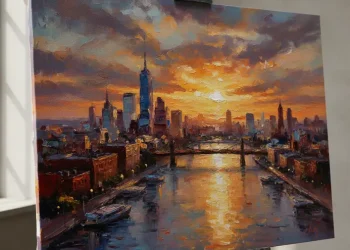
Have you ever looked at a city skyline and thought, ‘This would make an incredible ink painting?’ Urban skyline ink compositions take the chaotic beauty of our cities and translate it into flowing, monochrome art. We use precise linework for buildings and soft washes for skies, creating a dynamic contrast that reflects modern China while using ancient Chinese techniques.
This approach offers a fresh spin on traditional methods, applying timeless techniques to modern subjects. People love this style because it strips away the noise of color, letting the raw form and emotion of the city shine through, much like the works of a traditional Chinese artist. Before you start, try sketching your composition lightly in pencil to nail the perspective.
6. Gold Leaf Accents In Modern Shan Shui

Picture a traditional ink-wash mountain suddenly catching the light with a flash of radiant gold. That’s the stunning visual you get when modern artists fold gold leaf into their Shan Shui compositions. We’re seeing a beautiful mash-up where ancient reverence for nature meets a contemporary, human-made material.
The gold isn’t just decoration. It makes us think about our place in the natural world, sometimes questioning modern materialism by literally placing a precious, crafted element right into the misty peaks. Actionable Tip: Try using small, fragmented pieces of leaf instead of large sheets for a more subtle, twinkling effect that plays with light, similar to techniques found in Chinese art history.
7. Mi Fu’s Dot Technique Reimagined

Picture a painting that breathes and shifts before your eyes, turning ancient Song Dynasty mist into a live environmental report. We’re taking Mi Fu’s classic dot technique and launching it into the future with tech that feels like pure magic. Think nanotech inks moved by magnets to create landscapes that change by the hour.
This isn’t just about looking cool. It works because it captures the original spirit of change and impermanence those ancient artists loved. You could even try a simple version yourself by using an easy things to paint for beginners approach with dots that fade or blend. Let’s embrace the dots; they’re a whole new language.
8. Xuan Paper Alternatives For Texture Effects

Let’s talk about texture, because sometimes you want your painting to have a bit more grit and character than smooth Xuan paper allows. For a fibrous, organic feel that holds bold ink beautifully, you have to try mulberry or kozo paper. Its long, visible fibers are perfect for creating torn edges or layered washes that add so much depth.
What if you want something dramatically different? Enter the world of synthetic Yupo paper. This non-absorbent plastic surface is a playground for alcohol inks and resist techniques, letting you scrape back into pools of color for misty, atmospheric effects. Grab some small samples of these papers and play to find a whole new dimension for your landscapes, expanding your toolkit for new chinese landscape painting ideas.
9. Seasonal Motif Color Palettes

Let’s talk about one of my favorite ways to make a landscape painting feel alive: using the natural color shifts of the year. I’m obsessed with how a simple change in palette can transport a viewer from a crisp winter morning to a hazy summer afternoon. This isn’t about slapping on random colors; it’s about capturing a specific feeling of time and place.
A spring palette, with its cherry blossom pinks and fresh greens, feels like renewal and growth, while a winter scheme of icy blues and deep pine greens brings a serene, luxurious chill. Actionable Tip: Start by mixing your main ink washes to match the season’s core feeling, then add those tiny, vibrant accent details last.
10. Three-Distance Composition In Vertical Scrolls

Ever feel like a painting is pulling you right into its world, taking you on a journey? That’s the magic of the Three-Distance Composition in a vertical scroll. This classic approach, with roots in the Ming Dynasty, uses three perspectives to guide your eye from the bottom to the top.
You start with a calm, level view, get lost in deep, overlapping layers, and finally look up in awe at towering peaks. When you’re looking for inspiration, think about structuring your scroll like a story. Use lighter ink for the far-away elements and save the darkest, richest tones for the foreground to make the space feel vast and real.
11. Ink Washes For Misty River Effects

Isn’t it magical how a simple ink wash can transform a river scene into a misty, ethereal dreamscape, akin to those found in the earliest paintings of ancient Chinese art? To create that soft, hovering mist over water, we start with a light, watery ink wash applied to damp paper.
Using horizontal strokes, we let the ink diffuse naturally, leaving some areas unpainted for breaks in the mist. Then, we layer gently, building depth without losing that airy feel. Actionable Tip: Keep a clean, damp brush handy to soften edges before the ink dries—it makes all the difference!
12. Calligraphic Line Integration

Alright, let’s talk about the secret sauce for dynamic, expressive lines in your work. This is all about the calligraphic stroke, where your line thickens and thins with the flow of your brush, much like a Chinese painter would write calligraphy. Instead of a boring, even line, you get one that breathes and has rhythm.
You’re not just drawing a line; you’re integrating weight and movement into every mark. This technique is what separates a flat, static sketch from a painting that feels alive. Try varying your pressure as you pull the brush, pressing down on the turns and lifting on the straights to see that beautiful, organic variation.
13. Ecological Themes In Mountain-Water Paintings

Have you ever gotten lost in a Chinese landscape painting, feeling the serene balance of mountains and water? These artworks, called Shan Shui, are more than pretty scenes—they’re profound reflections on ecology. They show how humans fit into nature’s grand scheme, with tiny huts nestled in vast mountains teaching us humility.
We adore these pieces because they whisper a timeless truth about respecting and coexisting with the natural world. If you need fresh chinese landscape painting ideas, why not try a composition where man-made elements, like a simple bridge, blend seamlessly into the misty rivers and towering peaks?
14. Tea-Stain Weathering Techniques

Let’s give your next project an instant story of age and travel without any fancy chemicals. We’re talking about tea-stain weathering. This technique uses the natural tannins in black tea or coffee to create those perfect, subtle stains of dirt, rust, or water damage, reminiscent of aging seen on a Southern Song scroll.
It’s ridiculously affordable, completely non-toxic, and gives you a beautifully organic effect that’s hard to fake with regular paints. You can start with a simple soft brush application for streaks or use a sponge for random grime textures, echoing the methods of Shen Zhou. Always test your brew on a scrap piece first to nail the color intensity.
15. Minimalist Void Space Applications

Let’s talk about the quiet power of nothingness in our painting. Have you ever felt a sense of deep calm looking at a scroll where most of the paper is just empty? That’s the magic of minimalist void space. This is a deliberate, powerful choice where the untouched paper or silk, reminiscent of the qing dynasty aesthetics, becomes as important as the mountains and rivers.
In Song Dynasty masterpieces, vast expanses of mist or water aren’t just background. They’re active participants that suggest distance, atmosphere, and infinite possibility. The painter isn’t showing you everything; they’re inviting you to complete the picture in your mind. Try sketching a single, elegant tree on a huge sheet and resist the urge to fill the space around it. Incorporating void space is one of the most powerful chinese landscape painting ideas you can practice.
16. Guo Xi’s Depth Layering Methods

Have you ever looked at a painting and felt transported into the scene? That’s what Guo Xi aimed for with his depth layering methods! He developed the Three Distances—Gao Yuan for height, Ping Yuan for breadth, and Shen Yuan for depth—to make landscapes immersive.
Each distance guides your gaze and stirs specific emotions, from awe to tranquility. We love this technique because it lets the painting ‘breathe’ and invites personal exploration. For your own work, try using atmospheric perspective with lighter ink for distant mountains to mimic Shen Yuan’s effect seen in later Chinese landscapes.
17. Abstract Expressionist Brush Gestures

Have you ever wanted to make your brushstrokes shout with pure feeling? Let’s dive into Abstract Expressionist brush gestures, where the canvas becomes a stage for your raw emotions, reminiscent of the expressive styles of Wei. This style is all about bold, spontaneous marks that ditch realism for energy.
We adore it because it lets you paint from the gut, turning each swipe into a personal performance. When exploring ideas, why not grab a frayed stick, a thick brush, or your hands to add some gritty, abstract texture to those serene, traditional mountains?
18. Traditional Bamboo Brush Alternatives

Ever felt limited by your bamboo brush? Let’s explore some fun alternatives that add unique textures to your work! We use things like reed pens or even frayed sticks to create varied line work. These tools mimic the flexibility of bamboo but offer a rougher, more organic feel.
Artists adore these alternatives because they bring an authentic, rustic touch to depictions of mountains and rivers. Try dipping a reed pen in ink and practicing on scrap paper first to control the flow. It transforms your art by adding unpredictable, beautiful marks.
19. Digital Ink Layer Effects

Picture your digital ink painting coming to life with misty depths and soft light. Let’s uncover how layer effects make it possible! We’re diving into effects like shadows, where you control opacity and angle to cast perfect light. Blurs add that hazy, distant look, and blend modes like Screen or Multiply mix inks seamlessly.
This tech lets you experiment without any mess, giving you studio-level control at home. It’s all about enhancing the natural beauty of ink with digital precision. For a quick start, set your blur radius to 5 pixels and play with different blend modes to see instant transformations.
20. Contemporary Seal Carving Practices

Picture a master carver finishing a delicate soapstone seal, then using it to add the final, perfect red mark to a stunning landscape. Contemporary seal carving is an incredible blend of ancient hand-carving techniques with modern tools like laser engravers and digital design software.
Artists today aren’t just making official stamps; they’re creating personal symbols and embedding them in everything from digital art to mixed-media installations. If you’re new to this, try sketching your design digitally first. It’s a low-pressure way to play with the classic scripts before you ever touch a chisel.
Modern Adaptations For Contemporary Artists
So, do these ancient principles still matter for artists today? Absolutely. The core philosophy of harmony is timeless. Modern painters are brilliantly blending tradition with contemporary life. They apply those graded ink washes and texturing techniques to cityscapes and digital canvases. Think of a skyscraper rendered with the same cun texturing strokes used for a mountain, drawing inspiration from the rich tradition of Chinese history.
I love seeing artists use the shan shui format to comment on ecology. They paint forests affected by climate change or urban rivers. The materials are evolving too. Some are mixing traditional ink with coffee or experimental pigments. The goal is not to copy the old masters, but to channel their spirit into the modern era, creating a bridge for future chinese landscape painting ideas.
Conclusion
We’ve covered a lot of ground, from the foundational ink tones of the old masters to the digital layers of today’s creators. The beauty of Chinese landscape painting lies in its flexibility. It’s a living painting tradition that welcomes your personal voice. Whether you try tea-staining your paper for an antique feel or sketch a cityscape with a digital brush, the core principles of balance, spirit, and composition still guide you.
I hope this comprehensive guide gives you a fresh batch of chinese landscape painting ideas to play with. The best next step? Pick one idea that excites you, grab your brush or tablet, and make your first mark. If you need more artistic inspiration, explore our home gallery. Your unique mountain-water journey starts now.
FAQs
Q: What are some classic chinese landscape painting ideas inspired by masters like Wang, Li, and Fan Kuan?
A: Classic ideas include monumental mountain-and-water scenes in the style of Fan Kuan and Li Cheng, misty river views recalling Wang and Jing Hao, and intimate literati studies inspired by Wang (Wang Wei) or later scholar-painters. You can explore vertical compositions, layered ink washes, and sparse figure painting to evoke a contemplative mood typical of the age of Chinese landscape.
Q: How can I create a painting that blends traditional Chinese painting with western painting techniques?
A: Combine Chinese traditional brushwork, ink wash and calligraphic line with western perspective or easy watercolor painting ideas for beginners glazing. Many contemporary artists experiment with Chinese and western approaches—using western techniques for atmospheric depth while keeping literati painting brushstrokes and narrative subjects rooted in Chinese cultural themes.
Q: What themes from “Along the River” and “River During the Qingming Festival” are good for classroom projects?
A: Use the bustling court life and market scenes from Zhang Zeduan’s painting called Along the River to teach narrative composition and figure painting. Students can recreate sections showing imperial garden views, bridges, boats, and daily activities to explore how paintings depict social structures and Chinese society during the Song.
Q: Which museums have important Chinese landscape works I can study, like the Metropolitan Museum of Art or Nelson-Atkins Museum of Art?
A: Major collections include the Metropolitan Museum of Art, the Nelson-Atkins Museum of Art, and other museum of art institutions that hold works by Huang Gongwang, Qiu Ying, Wen Zhengming, and Yuan scholar-painters. Visiting these collections or their online databases helps you study brush techniques, compositions, and how paintings had become valued across time.
Q: How did the Mongol Yuan dynasty and literati painting influence landscape painters and the wu school?
A: Under the Mongol Yuan dynasty, many scholar-officials turned to painting as personal expression, giving rise to literati painting and the wu school’s aesthetic. Yuan scholar-painters emphasized poetic inscription, brush freedom, and inner feeling, shifting focus from court painting and commissioned court artist works to more individualistic landscapes.