

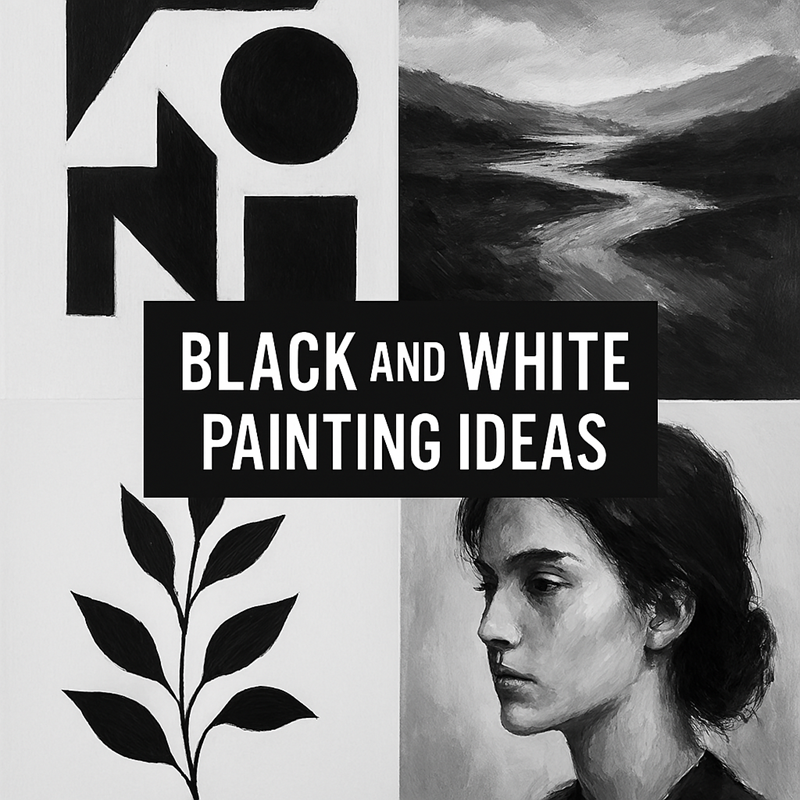
Why Choose a Black and White Palette for Your Artwork?
Focusing on a black and white painting strips away the complexity of color theory, allowing an artist to concentrate on composition, texture, and the powerful interplay between light and darkness. This limitation is not a weakness but a strength; it can make an abstract painting feel more dramatic and an iconic portrait more profound. In many cultures, these two colors are packed with meaning and symbolism, representing opposite concepts that create a powerful visual tension in any piece of artwork. This timeless approach makes black and white a powerful medium for any artist.
1. Geometric Patterns: Creating Contemporary Black and White Art
Working with black and white geometric patterns such as triangle, circle and square shapes maintains a clean and contemporary vibe. These smooth aesthetics are ideal for introducing a striking but understated flair to any environment. For this theme, a stark white background makes the black color of the shapes pop, creating a bold visual statement.
To create your geometric pattern:
- Begin with a blank white canvas, around 18×24 inches for good measure.
- Draw your shapes first in pencil to figure out the best composition.
- Use masking tape to section off areas if you want any sharp or crisp edges.
- Create a pattern of geometric shapes with paint, allowing each one to dry completely before adding the next.
- Peel the tape away slowly when finished for crisp, sharp lines.
Implementing an optical illusion with sidewalk art can help add depth and movement. Layer geometric shapes at different angles or combine them in various sizes to create a striking contrast, much like the dramatic shadows in a film noir edition.



2. Abstract Landscapes: A Prominent Theme in Black and White Painting
Abstract landscapes showcase an appreciation for the natural world in stark blacks and whites, creating a clean, simple look that feels starkly contemporary. Mixing black and white acrylics achieves atmospheric effects such as layers of mountains, serpentine rivers, or stormy overcast skies. This style is a prominent part of abstract art, allowing artists to depict nature’s mood through strong emotions. These abstract works are often found in an exclusive online collection or gallery.
Using palette knives or sponges can add texture, layering to create the effect of rushing water or the depth of stones beneath the current. Vertical techniques work well when painting tall trees or a waterfall that flows down a cliff face, adding to the feeling of movement and scale.
To balance light and dark areas, consider incorporating white portions that contrast with bold black elements.
- Use darker tones to anchor the composition.
- Add a highlight to draw attention to focal points.
- Layer textures for depth and contrast.
- Keep empty spaces for visual balance.

3. Minimalist Silhouettes on a Stark White Background
Minimalist silhouettes create a crisp, dramatic look in contemporary wall art. Painting large, simple black silhouettes of natural or manmade forms on a plain white background results in an iconic style. Imagine the outline of a black tree branch arching across a white wall or the silhouette of a cat perched quietly. This approach is perfect for enhancing your white wall art ideas and embraces simplicity.
In their execution, these designs look clean and simple yet incredibly chic and sophisticated. Whether it’s stencils or freehand techniques you use, a minimalist approach aids in creating defined edges. Stencils are particularly effective for sharp edges and defined shapes, making them a great choice for your bedroom style.
The stark white background, a design element we often overlook, is utilized to help keep attention on the stark black silhouette. To make the silhouettes more creative and fun, delicate white patterns, such as a thin line or circles, can be printed on the inside of the shape. This creates a richness that doesn’t sacrifice the minimalist aesthetic.

4. Monochrome Portraits: Using Two Colors to Depict Strong Emotions
Working from life or a photo reference, practicing monochrome portraits using charcoal or black ink is an excellent way to train your eye on contrast and shape. Focusing on black and white portrait photography using one color allows you to focus on light, shadow, and mood without being sidetracked by color. This is a classic theme prevalent in the art world.
Charcoal is ideal for smooth blending, while ink is better for crisp, dark lines. Drawing facial features is easy if you focus on where to place shadows and highlights. A white gallery canvas further underscores the dramatic contrast, intensifying each detail. Many renowned artists have used this format; Picasso’s masterpiece “Guernica” is a powerful example of how a black and white painting can depict the horrors of war with raw intensity.
Black and white portraits are inherently classic and iconic, putting the entire focus on your subject’s natural emotion or expression.
| Tool | Features | Best For |
|---|---|---|
| Charcoal | Soft, blendable texture | Smooth shading |
| Ink | Bold, precise lines | High contrast |
| Acrylics | Versatile, quick-drying | Layered textures |

5. Black and White Animals: An Iconic and Symbolic Theme
Black and white animals such as pandas, zebras, or penguins are ideal for this color palette. Their high-contrast coloration is naturally striking. Whether you decide to paint a panda’s soft fur or a zebra’s bold stripes, this theme will be a success. Van Gogh famously painted “Cart with Black Ox,” and while not strictly an animal portrait, it shows how even famous artists were drawn to this powerful imagery. The “Cart with Black Ox is one” of his most somber and powerful pieces, showing how this palette can be deeply symbolic.
Adding texture with small brushstrokes allows us to really create the vividness of individual fur or feathers. That new touch makes it visually interesting without making the design too busy. A purely black background makes all the white areas pop like crazy. This contrast produces a refined, fine-art, gallery-ready aesthetic.
For something more modern, go for abstract line art. Pair these animals with thick black outlines and very simple shapes. This approach looks clean and modern without being flashy or overdone.

6. Textured Canvas Art: Exploring a Different Approach
Next, textured canvas wall art is unique in its power to bring dimension and personality to any room. Add elements such as sand, acrylic gel medium, or even fabric. You’ll be awash in surfaces that delight the eye and touch! This is a different approach that invites a tactile experience.
Combine acrylic gel medium with paint to make 3-D patterns. Techniques like combing, carving, or stamping let you create one-of-a-kind designs. Some artists even use stamping techniques to create intricate designs resembling skull motifs, adding a layer of gothic symbolism. The use of used black and white paints in bold textures or soft gradients lends a contemporary, modern art style to the design, making these ideal for sleek, minimalist spaces.
| Tools | Materials | Techniques |
|---|---|---|
| Palette knife | Sand | Layering |
| Stamps | Acrylic gel | Stamping (can create skull motifs) |
| Combs | Fabric pieces | Combing, carving |

7. Optical Illusions: Playing with Space and Visual Perception
Black and white illusions play with a sense of space and distance that confuses the viewer. Interleaved spirals, grids, and laced whorls can render shapes that appear to be moving in three dimensions, making them excellent choices for contemporary wall art. These designs work an optical illusion, bringing a sense of realism to a two-dimensional surface.
Repetitive patterns are the secret ingredient to creating that feeling of movement. Spirals that converge to a center point or grids which spiral out ever so slightly can introduce energy and dynamism. Changing the angle of alternating black and white stripes creates a mesmerizing pattern. A great way to do this would be a chevron pattern that appears to undulate over the canvas.

8. Nature-Inspired Mandalas in the Art Industry
Nature-inspired mandalas add an organic feel to black and white art, reminiscent of the delicate balance found in the art industry. Creating complex patterns inspired by the shapes of petals, foliage, or even fractal snowflakes brings a vibrant, naturalistic element to contemporary wall art. A sunflower’s petals or the delicate veins of a leaf could inspire beautiful intricacies.
An artisan approach with fine-tipped pens or brushes gives rise to intricate lines on a bright, white wall. Every brushstroke contributes to the gracefulness of the work. With symmetry at the heart of every mandala, these artworks embody beauty and balance, perfect for creating a soothing ambiance. The clarity of nature’s repeating patterns imbues the subject matter with a rich sense of purpose and rhythm.

9. Vintage Film Noir Style: A Prevalent Theme for Artists
The vintage film noir style really gets to play in black-and-white paintings. Its stylized gravitas pulls muscular inspiration from film noir of the 40s and 50s. Just dressing a set with noir touches like dimly lit city streets or enigmatic figures immediately captures the genre’s sultry vibe.
Intensely high-contrast lighting with dramatic shadows are absolutely essential to recreating that signature aesthetic. Focusing on moody elements, such as a rain-slicked road or a solitary figure, lends character and suspense. For added texture, use black ink or charcoal to replicate the dark, moody texture of the film noir style. Many artists like to explore this theme in their abstract works.
| Theme | Setting | Mood |
|---|---|---|
| Urban crime | Dark alleys | Suspenseful |
| Failed romance | Smoky bars | Melancholic |

10. Dramatic Shadows in Black and White Composition
Dramatic Shadows love the strong contrast between dark and light, especially when paired with a bold black color palette. Manipulating light and shadow brings a new level of mystery to your painting. A single light source helps cast sharp, defined shadows on objects or figures.
This arrangement draws focus to the silhouettes and textures, causing them to pop dramatically against the used white and black color scheme. Adding acrylic black and white paints in layers to deepen the shadows provides your work with a lush, three-dimensional quality. Choose a super thin black base for your shadows and then build them up with a lighter shade to make the transitions a little more seamless.

Finding Your Custom Style in Black and White
Developing a unique, custom style is a journey of exploration. The best Black and White Painting Ideas often come from personal experimentation. Start by exploring the themes that resonate with you, whether it’s the starkness of a desert landscape or the complex patterns of religion and mythology. Don’t be afraid to scratch the surface and try a different approach. The modern era of art is defined by individuality. Your visual voice is what will make your black and white art truly your own and help you to represent your unique perspective.
Gallery of Renowned Black and White Painting Ideas for Inspiration
To see how master artists have approached this medium, it helps to study their work. Look for visual references from abstract painters of the 20th century or the stark realism of photographers who perfected the monochrome form. Seeing how one of O’Keeffe’s pieces or Picasso’s “Guernica” uses this limited palette can provide powerful inspiration. Notice how these artists create a compelling visual narrative using only black, white, and the grays in between. These references are invaluable for any aspiring artist looking to collect ideas.


Conclusion
Black and white painting is the gateway to endless creative possibilities. These Black and White Painting Ideas allow you to explore contrasts, textures, and depth. From bold graphic geometric patterning to quiet minimalist silhouettes, there are exciting opportunities to represent contrasting ideas in your own custom artwork. The magic is in how these muted tones create an evocative narrative. The painting represents whatever feeling you pour into it, whether you get lost in the shadows of classic film noir or the fine lines of nature-themed mandalas, the power is in your hands.
Choose an idea that resonates deeply with you. Try new things, combine methods, and let your unique self come out in your work. Art is simply another mode of expression, and black and white is a classic yet profound approach. Pick up your paintbrush and make something that speaks to you, intimately and deeply.
FAQs
Q: How can a black and white painting represent contrasting ideas?
A: A black and white abstract painting is a perfect medium to represent contrasting ideas through symbolism. The stark opposition of black and white colors can symbolize the universal dualities of darkness and light, chaos and order, or despair and hope, creating powerful strong emotions in the viewer.
Q: Can I use black and white to celebrate important life events?
A: Yes, many people celebrate significant moments like a wedding or baptism with black and white art. The timeless, elegant nature of the palette lends a sense of power and prestige to the occasion, focusing on the core emotions rather than distracting colors. Its use in religious and spiritual contexts is prevalent for this reason.
Q: What does the void of color symbolize in a painting?
A: In a painting, the void of color can have many meanings. It can symbolize simplicity and clarity, but it can also represent emptiness, loss, or melancholy. For some abstract painters, it is a way to highlight the fragility of their subject, stripping it down to its essential form.
Q: Are there any famous black and white artworks I should know?
A: Absolutely. Besides Picasso’s renowned “Guernica,” many famous works utilize a monochrome palette. Van Gogh’s “Cart with Black Ox” is one powerful example. Many artists like Georgia O’Keeffe also created stunning drawings and paintings in black and white, often inspired by the stark beauty of the desert.
Q: Why is black and white painting so popular in the modern era?
A: The popularity of black and white painting in the modern era stems from its versatility. It can feel both classic and contemporary. In a world saturated with imagery, the simplicity of black and white makes a bold statement, allowing artists and viewers to focus on composition, form, and meaning without distraction.



Discussion about this post