


What does the color purple symbolize in literature? In literature, the color purple carries rich symbolism, representing various themes and concepts. It is often associated with royalty, spirituality, transformation, and mystery. The color purple is used to convey deeper meanings and emotions in storytelling, adding depth and complexity to the narrative.
Throughout different literary works, purple represents the growth and evolution of characters, their empowerment, and independence, as well as their connection to spirituality and divine influence. The color purple serves as a powerful symbol that enhances the overall meaning and impact of literary works.
Key Takeaways:
- Purple symbolizes royalty, spirituality, transformation, and mystery in literature.
- It adds depth and complexity to storytelling.
- Purple represents the growth and evolution of characters.
- It signifies empowerment, independence, and connection to spirituality.
- The color purple enhances the overall meaning and impact of literary works.
The Color Purple Symbol in “The Color Purple” by Alice Walker
In Alice Walker’s renowned novel “The Color Purple,” the color purple is imbued with profound symbolism. Although it may not appear frequently in the text, purple holds significant meaning for the protagonist, Celie, and her transformative journey. From the early stages of the novel, Celie expresses her fondness for purple, often choosing clothing and shoes in this color. This affinity for purple becomes a powerful symbol as Celie undergoes various life experiences and evolves into a mature woman.
“The symbol of purple becomes more prominent as Celie goes through various life experiences and evolves into a mature woman.”
A notable example of the significance of purple in the novel is when Celie returns to Georgia after living with Shug in a romantic relationship and starting her own business. Mr. carves a purple frog for Celie, symbolizing her previous remark about men reminding her of frogs. The image of the purple frog represents not only Celie’s resilience and personal growth but also her connection to the natural world.
“The color purple, like Celie’s inner strength, is found in nature and represents an improbable joy and the influence of a higher power.”
Visually engaging and emotionally evocative, the color purple in “The Color Purple” reflects Celie’s inner strength, her path to self-discovery, and the eventual triumph of her spirit. It serves as a powerful reminder of the improbable joy and inherent power within all individuals, echoing themes of hope, transformation, and the influence of a higher power within Walker’s masterpiece.
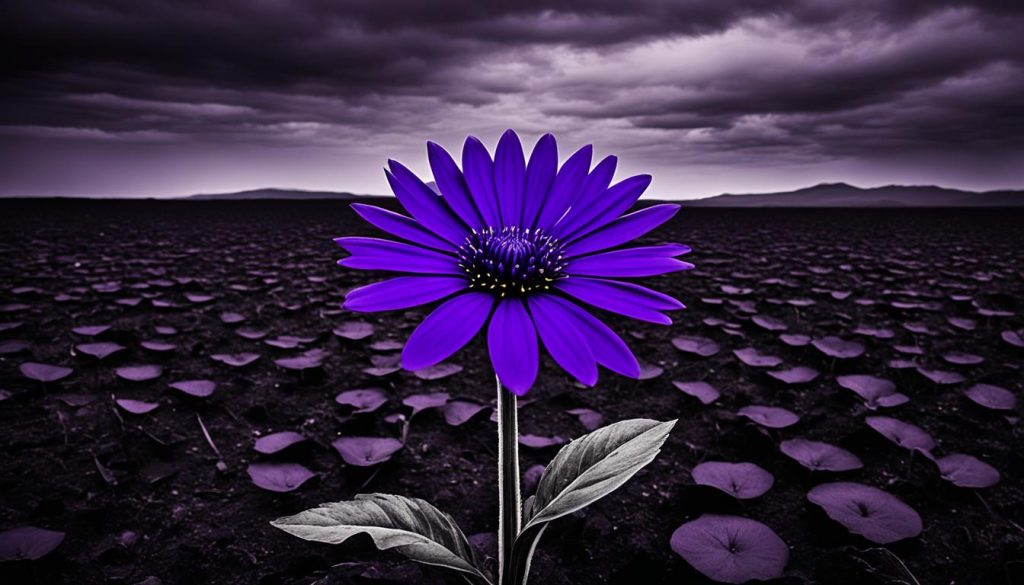
Purple as a Symbol of Spirituality and Transformation in Literature
In literature, purple is often used as a symbol of spirituality and transformation. This vibrant color carries a profound significance, signifying a connection with the divine and representing spiritual growth and enlightenment. The spiritual symbolism of purple invites readers to delve deeper into the narrative, as it evokes a sense of mystery and otherworldliness.
Purple is frequently associated with characters who undergo profound personal transformations or experience spiritual awakenings. This symbolism serves as a visual representation of their inner journeys and highlights their evolution, newfound wisdom, and spiritual connection.
Through the transformative symbolism of purple in literature, authors create a deeper understanding of their characters’ growth and development and their quest for spiritual enlightenment.

| Examples of Purple Symbolism in Literature | Book/Author |
|---|---|
| Spiritual Awakening | “Siddhartha” by Hermann Hesse |
| Transcendence | “The Alchemist” by Paulo Coelho |
| Inner Transformation | “Jane Eyre” by Charlotte Bronte |
| Divine Revelation | “The Divine Comedy” by Dante Alighieri |
Famous Quotes:
- “In the depth of winter, I finally learned that within me there lay an invincible summer.” – Albert Camus
- “And, when you want something, all the universe conspires in helping you to achieve it.” – Paulo Coelho
- “Either you run the day, or the day runs you.” – Jim Rohn
Purple as a Symbol of Royalty and Power in Literature
Purple has long been utilized in literature as a potent symbol of royalty and power. In history, purple dye was both expensive and challenging to procure, making it a representation of wealth and prestige. This regal symbolism is echoed in numerous literary works, where characters who possess authority, noble lineage, or wield significant power are often associated with the color purple.
Through the symbolism of purple, these characters’ social status and dominance are further enhanced. Whether it is a king, queen, or other influential figures, their connection to the color purple serves to reinforce their elevated position in society and highlight their influence over others. It creates a visual representation that resonates with readers, emphasizing the strength, stature, and control these characters hold.
The color purple symbolizes in literature not only underscores the significance of royal bloodlines and inherited power but also explores the assertion of personal power. Many literary works feature characters who break free from societal constraints and challenge the existing power structures. Through the symbolism of purple, authors depict the journey of these characters as they claim their authority and assert their dominance, independent of their noble lineage. Purple serves as a beacon of empowerment, signifying the strength and resilience required to carve one’s path.
Purple Symbolism in Literature
| Literary Work | Symbolic Use of Purple |
|---|---|
| “Macbeth” by William Shakespeare | The color purple represents the royal power and ambition of Macbeth and Lady Macbeth, as well as the corrupting influence of their actions. |
| “The Picture of Dorian Gray” by Oscar Wilde | Purple symbolizes the hedonistic and decadent lifestyle of Dorian Gray and serves as a representation of the darker aspects of his personality. |
| “The Scarlet Letter” by Nathaniel Hawthorne | Purple is used to symbolize the sin of adultery and the moral struggles faced by Hester Prynne. |
| “Harry Potter” series by J.K. Rowling | Purple is associated with the Weasley family’s magical prowess and serves as a symbol of their inherent power and resilience. |
| “A Song of Ice and Fire” series by George R.R. Martin | Purple represents the royal houses’ power struggles in the fictional world of Westeros, highlighting their desire for dominion and control. |
The color purple symbolized in literature extends beyond the mere portrayal of royal authority. It holds the power to captivate readers, fostering a sense of awe and reverence. Purple’s rich symbolism invites readers to explore the complexities of power dynamics, the portrayal of strength, and the struggles faced by characters in their quest for dominance.
Purple as a Symbol of Mystery and Intrigue in Literature
Purple is frequently utilized in literature to evoke a sense of mystery and intrigue. The color’s association with the unknown and enigmatic aspects of life adds depth and complexity to the narrative. Purple can create an atmosphere of suspense, capturing readers’ attention and drawing them further into the story.
It represents the unexplained, the hidden, and the secrets that lie beneath the surface. In literary works, purple can symbolize the allure of the unknown, the exploration of hidden truths, and the revelation of mysteries. Its presence adds an element of fascination and captivation to the storytelling.

The Intrigue of Purple
Purple’s mysterious symbolism has been harnessed by many renowned authors to create narratives that keep readers on the edge of their seats. Its association with secrets and hidden truths adds layers of complexity to the plot, leaving readers guessing and yearning for answers.
Just like the color itself, purple symbolism in literature invites readers on a journey of exploration and discovery. It sets the stage for unexpected twists, puzzling enigmas, and a sense of anticipation that keeps the pages turning.
Through the use of descriptive imagery and carefully chosen details, authors can create a world of intrigue where the color purple serves as a guide into the unknown. As readers immerse themselves in these literary works, they become captivated by the mystique and allure that purple brings to the narrative.
| Literary Work | Purple Symbolism |
|---|---|
| “The Great Gatsby” by F. Scott Fitzgerald | Purple represents the opulence and allure of the upper class, highlighting the hidden secrets and the fragility of their extravagant lifestyle. |
| “Gone Girl” by Gillian Flynn | Purple is used to create an atmosphere of suspense and uncertainty, reflecting the mysterious nature of the central characters and their motives. |
| “Rebecca” by Daphne du Maurier | Purple represents the enigma and haunting presence of the deceased Rebecca, symbolizing the lingering mysteries that overshadow the protagonist’s life. |
The Color Purple in Various Literary Works
Purple symbolism can be found in various literary works across different genres. From novels to poetry, authors often utilize the color purple to convey specific meanings and themes.
In Alice Walker’s “The Color Purple,” purple symbolizes Celie’s transformation and connection to nature. As Celie evolves throughout the story, her affinity for purple becomes a visual representation of her growth and empowerment. It also signifies her spiritual connection to the natural world.
In other literary works, purple may represent the complexity of human emotions. It can symbolize the intricate layers and nuances of characters’ inner thoughts and feelings, offering readers a deeper understanding of their experiences.
Purple symbolism is also seen in the exploration of spirituality and earthly existence. It represents the merging of the physical and spiritual realms, highlighting the interconnectedness of both aspects of human existence.
Furthermore, purple symbolizes the questioning and breaking of societal norms. In certain works, it represents characters who challenge conventional beliefs and expectations, ultimately leading to personal growth and liberation.
Here are a few examples of what the color purple symbolizes in literature:
- “The Color Purple” by Alice Walker – Purple signifies Celie’s transformation, connection to nature, and spiritual journey.
- “The Catcher in the Rye” by J.D. Salinger – Purple symbolizes Holden Caulfield’s desire for innocence and the preservation of childhood.
- “The Picture of Dorian Gray” by Oscar Wilde – Purple represents the decadence and moral corruption of the character Dorian Gray.

These examples demonstrate the versatility and significance of what the color purple symbolizes in literature. Each work utilizes purple in its unique way, enhancing the overall depth and impact of the narrative.
| Literary Work | Purple Symbolism |
|---|---|
| “The Color Purple” by Alice Walker | Celie’s transformation, connection to nature, and spirituality |
| “The Catcher in the Rye” by J.D. Salinger | Holden Caulfield’s desire for innocence and preservation of childhood |
| “The Picture of Dorian Gray” by Oscar Wilde | Decadence and moral corruption of Dorian Gray |
These examples highlight the diverse range of meanings and themes associated with purple in literature, allowing readers to engage with the stories on a deeper level.
Conclusion
The color purple holds significant symbolism in literature, representing spirituality, transformation, royalty, and mystery. It serves as a visual representation of characters’ growth and connection to higher powers, adding depth and complexity to storytelling. Whether it signifies a character’s inner journey, their regal status, or the allure of the unknown, purple enhances the overall meaning and impact of literary works.
Through the symbolism of purple, authors evoke powerful emotions and engage readers on a deeper level. The color’s association with transformation and spirituality resonates with audiences, inviting them to explore profound themes and messages. It captivates attention, drawing readers further into the narrative, as they navigate the complexities of characters’ lives and the mysteries that lie within.
In conclusion, purple symbolism in literature enriches the reading experience, making it more thought-provoking and memorable. It serves as a powerful tool for authors to convey deeper meanings and evoke a range of emotions. From the exploration of personal growth to the representation of power and intrigue, the color purple leaves a lasting impression on readers, transcending the boundaries of words and immersing them in the world of literature.
FAQ
Q: What does the color purple symbolize in literature?
A: The color purple carries rich symbolism in literature, representing themes such as spirituality, transformation, royalty, and mystery.
Q: How is the color purple symbolized in “The Color Purple” by Alice Walker?
A: In “The Color Purple,” purple symbolizes Celie’s transformation and connection to nature.
Q: What does purple symbolize in terms of spirituality and transformation in literature?
A: Purple represents spiritual growth, enlightenment, and the journey of personal transformation in literature.
Q: What does purple symbolize in terms of royalty and power in literature?
A: Purple symbolizes royal status, power, and influence over others in literary works.
Q: How does purple symbolize mystery and intrigue in literature?
A: Purple adds depth and complexity to the narrative, evoking a sense of mystery, suspense, and fascination in literary works.
Q: Can you provide examples of purple symbolism in different literary works?
A: Yes, purple symbolism can be found in various works, where it represents different meanings and themes.
Q: What is the conclusion regarding purple symbolism in literature?
A: Purple symbolism enhances the meaning and impact of literary works, making them more engaging and thought-provoking for readers.










Discussion about this post